

You are eating dinner, your cat wanders over, and suddenly a green pea on the floor has become the most interesting thing in the kitchen. Can cats eat peas, or should you move that little green snack out of reach? The reassuring answer is that plain peas are generally safe for healthy cats in small amounts when prepared properly. They are not a necessary part of a cat's diet, though, and the way you serve them matters. Fresh peas, frozen peas and canned peas are not quite the same choice. Plain cooked peas are usually the simplest option, while canned varieties can contain added salt or other ingredients you do not want your cat eating. You will also want to think about portion size, the pea pods themselves, and whether your cat has an existing health condition that affects their diet. Here is how to make a sensible choice without turning a vegetable into a regular meal for your cat.
Are peas safe for cats to eat?
Yes, most healthy cats can eat a few plain peas without a problem. Green peas are not generally considered toxic to cats, and a small taste is unlikely to cause trouble for an otherwise healthy adult cat. Peas contain plant fiber, carbohydrates and some vitamins, but cats are obligate carnivores. Their bodies need nutrients supplied by a properly balanced, meat-based diet, so vegetables should never take the place of their regular cat food.
Are peas good for cats? They can provide a little variety, but there is no particular health benefit that means you need to add them to your cat's bowl. A complete and balanced cat food already supplies the nutrients your pet needs when fed according to their individual requirements. If your cat steals one plain pea from your plate, there is usually no reason to panic. Just keep the serving small, leave out seasonings, and do not encourage your cat to fill up on vegetables instead of their usual food.

Can cats eat fresh green peas?
Fresh green peas are a reasonable choice if they are clean, plain and prepared with your cat in mind. Remove the peas from their pods, rinse them under running water, and cook them until soft. Let them cool before offering a small amount. Cooking softens the peas and makes them easier to mash, which is helpful if your cat tends to swallow food without chewing much. Avoid giving your cat peas that have been cooked with butter, oil, garlic, onion, sauces or seasoning.
Can cats eat green peas straight from the garden? A freshly picked pea is not automatically dangerous, but raw peas are firmer and may be harder for some cats to chew. I would choose a plain cooked pea instead, particularly for a cat that gulps food or has dental problems. Remove any tough pod material and do not offer peas that have been exposed to garden chemicals or are spoiled. If your cat turns away from the vegetable, leave it there. There is no nutritional reason to persuade a cat to eat peas.

Can cats eat frozen peas?
Yes, plain frozen peas can be suitable for cats once they have been thawed and prepared properly. Check the package to make sure the product contains only peas, without added sauces, salt or seasonings. Thaw a small amount and cook the peas until soft, following the package directions where appropriate. Allow them to cool completely before offering any. Frozen vegetables are often convenient because you can take out just a small portion instead of preparing a large batch of fresh peas.
What about giving your cat a frozen pea straight from the freezer? I would skip that idea. Hard, frozen peas can be uncomfortable to bite and may present a choking concern, particularly for a cat that swallows food quickly. Do not use frozen peas as a toy or let your cat chew on a frozen lump of vegetables. A soft, room-temperature pea is a better choice. If your cat has trouble chewing or swallowing, ask your veterinarian before introducing foods with a different texture.

Can cats eat canned peas?
Canned peas need a closer look at the ingredient label. Some contain added salt, and others may include flavorings or ingredients intended for human meals. A plain, no-added-salt product is preferable if you want to offer your cat a taste. Drain the liquid and rinse the peas under running water to remove some of the surface sodium. If the can lists onion, garlic, sauces or other seasonings, do not feed those peas to your cat. Onion and garlic are particularly concerning because they can damage cats' red blood cells.
Even peas labeled low sodium are not automatically the best choice, since the amount of salt and the full ingredient list still matter. If you cannot confirm what is in the can, choose plain cooked fresh or frozen peas instead. Canned peas are often soft enough to mash, but check the texture and let them reach room temperature before serving. If your cat needs a restricted-sodium diet or has a medical condition, do not add canned vegetables without checking with your veterinarian first.

How to prepare peas for your cat
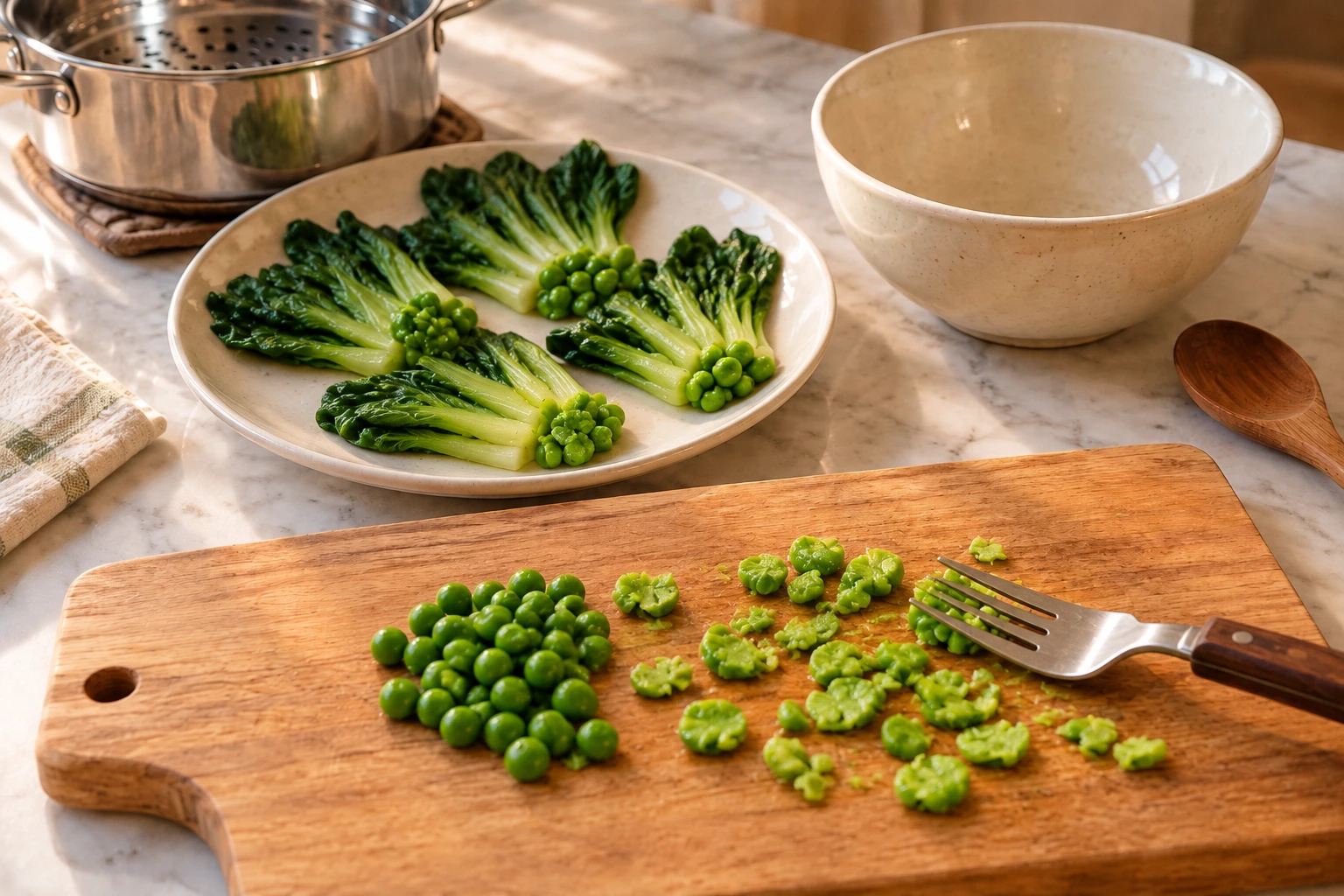
Start with plain peas and keep the preparation simple. Remove the peas from their pods, rinse them, and cook them in water without salt, oil, butter or spices. Once they are soft and cool, mash them lightly or split them into smaller pieces. This reduces the chance of a whole pea becoming difficult to swallow. Do not offer the tough pod as a substitute, since it can be fibrous and difficult to chew or digest. Avoid pea dishes prepared for people, including pea soup, creamed peas and peas mixed with seasoned meat or gravy.
How much should you offer? Begin with just one or two small, soft peas as a taste, rather than a full spoonful or a regular serving. This is a cautious starting point, not a prescribed amount for every cat. Your cat's size, overall diet, health and digestive tolerance all matter. Treats and extras should account for no more than about 10 percent of daily calories, with most calories coming from complete and balanced cat food. If peas cause loose stools, vomiting or a change in appetite, stop offering them and contact your veterinarian if symptoms occur or persist.

When peas may not suit your cat
Peas are not suitable for every cat, even when they are plain and cooked. Their fiber and carbohydrates can upset the digestion of some animals, particularly if a new food is introduced in a large amount. You might notice softer stools, gas or a change in appetite after an unfamiliar snack. These signs do not establish what caused the problem, so do not assume peas are responsible for every digestive change. Stop offering the new food and speak with your veterinarian if your cat becomes unwell.
Cats with diabetes, kidney disease, food sensitivities or other conditions may need a carefully managed diet. A cat eating a prescription veterinary diet should not have new extras added without approval from the veterinary team. The same caution applies to kittens, cats with swallowing difficulties and pets with a history of significant digestive problems. If your cat already eats well and enjoys a complete diet, there is no need to introduce peas at all. When an individual health concern changes what your cat can eat, your veterinarian is the right person to guide that decision.

Can Cats Eat Peas Safely? Fresh, Frozen and Canned Peas Explained FAQ
Can cats eat peas every day?
Peas do not need to be part of a cat's daily diet. A few plain, cooked peas may be tolerated occasionally by a healthy cat, but regular treats should remain limited so they do not displace complete and balanced cat food.
Can cats eat raw peas?
A plain raw pea is not generally considered toxic to cats, but it is firmer than a cooked pea and may be harder to chew. Plain peas cooked until soft are the more cautious choice, especially for cats that gulp their food.
Can cats eat peas and carrots?
A small taste of plain, cooked peas and carrots is generally suitable for many healthy cats. Both vegetables should be soft, cut or mashed as needed, and served without butter, salt, onion, garlic or seasoning. Neither vegetable is required in a cat's diet.
Can cats eat pea pods?
It is better to remove peas from their pods before offering them. The pods are more fibrous and can be difficult to chew or digest, with a possible choking concern. Give your cat only a small amount of soft, shelled peas.
Can cats eat canned peas from a tin?
Sometimes, if the peas are plain and have no unsuitable added ingredients. Choose a no-added-salt variety, drain and rinse it, and check the label carefully. Avoid canned peas containing onion, garlic, sauces or other seasonings.
What should I do if my cat eats seasoned peas?
Check the ingredients and contact your veterinarian promptly if the peas contained onion, garlic or another potentially harmful ingredient. Explain what your cat ate and roughly when. Do not wait for symptoms or attempt home treatment without veterinary guidance.