

A little rabbit and pumpkin crumble is an easy way to bring a new smell and texture to your cat's usual meal without replacing the food that already provides their nutritional needs. This topper is baked in a thin layer, cooled, and broken into small, soft flakes that are easy to sprinkle over dinner. It's a good option for cats who prefer savory pieces of meat to a smooth puree or long strands. Use plain, thoroughly cooked boneless rabbit and a small amount of plain pumpkin puree. There's no seasoning, oil, onion, garlic, or added salt. This is a supplemental topper, not a complete meal, since rabbit and pumpkin alone don't provide every nutrient cats need in the right proportions. Keep servings small and talk with your veterinarian before making major changes to your cat's diet.
Safety first: Every cat is different: age, allergies, and health conditions all matter, so check with your vet when in doubt.
Foods to avoid
Never use raw or undercooked rabbit, bones, seasoned meat, onion, garlic, leeks, chives, salty stock, gravy, butter, or pumpkin pie filling. Remove all bones before chopping, since cooked bones can splinter. Avoid hard, dry, sharp-edged pieces that may be difficult to chew. Do not use this recipe as a complete diet or make major diet changes without consulting a veterinarian. Cats on prescription diets, cats with ongoing health concerns, kittens, and cats with a history of food intolerance may need individual guidance before receiving homemade extras.
Ingredients
Instructions
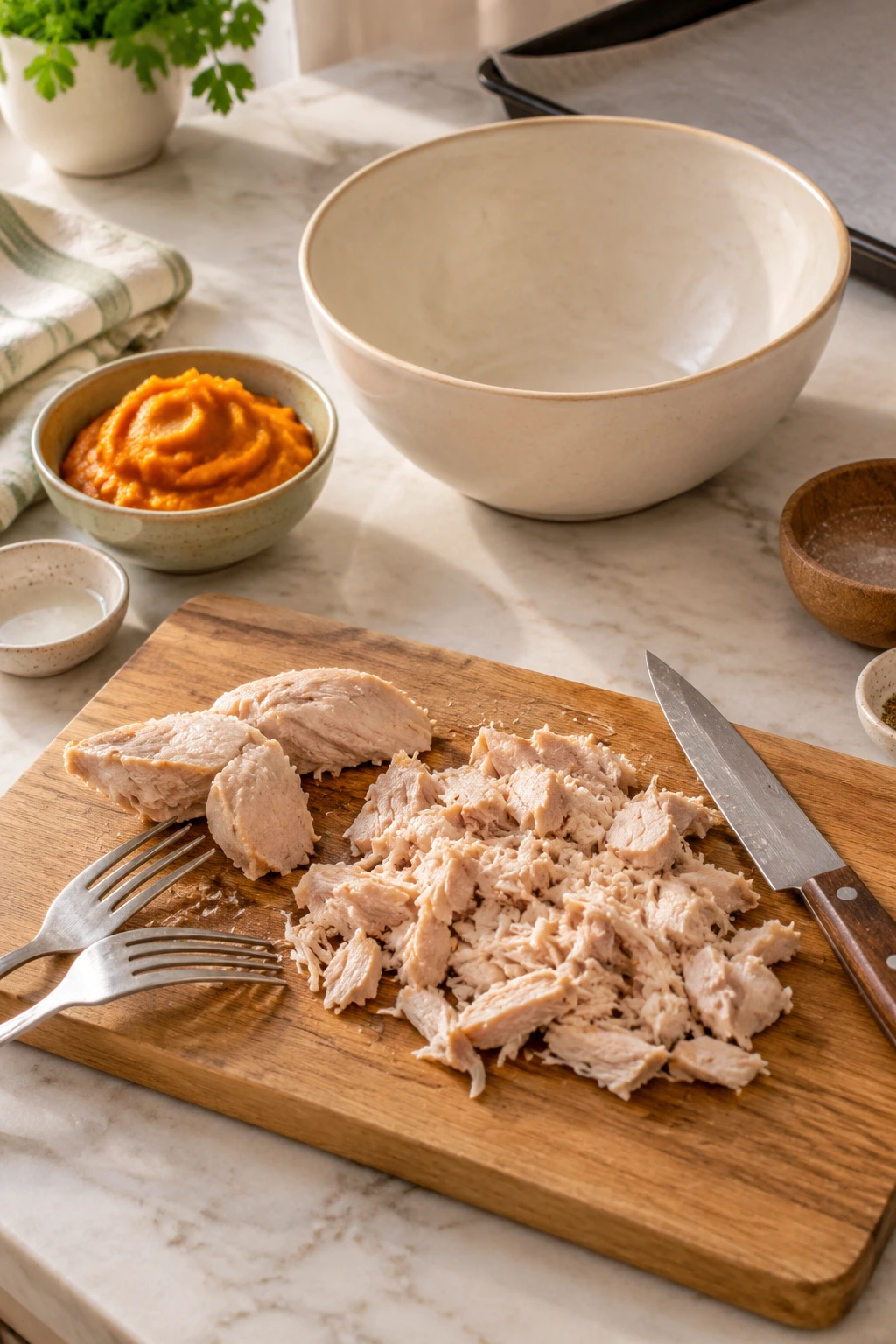
Prepare the cooked rabbit: Preheat the oven to 160°C (320°F). Check the cooked rabbit carefully for bones, cartilage, or tough pieces, then finely chop or shred it with a clean knife and fork. If you're starting with raw rabbit, cook it separately until the thickest pieces reach at least 74°C (165°F), checking with a food thermometer. Avoid meat seasoned with onion or garlic, or rabbit that has been left at room temperature for an extended period. Let freshly cooked meat cool slightly before mixing, and keep your preparation surfaces clean.
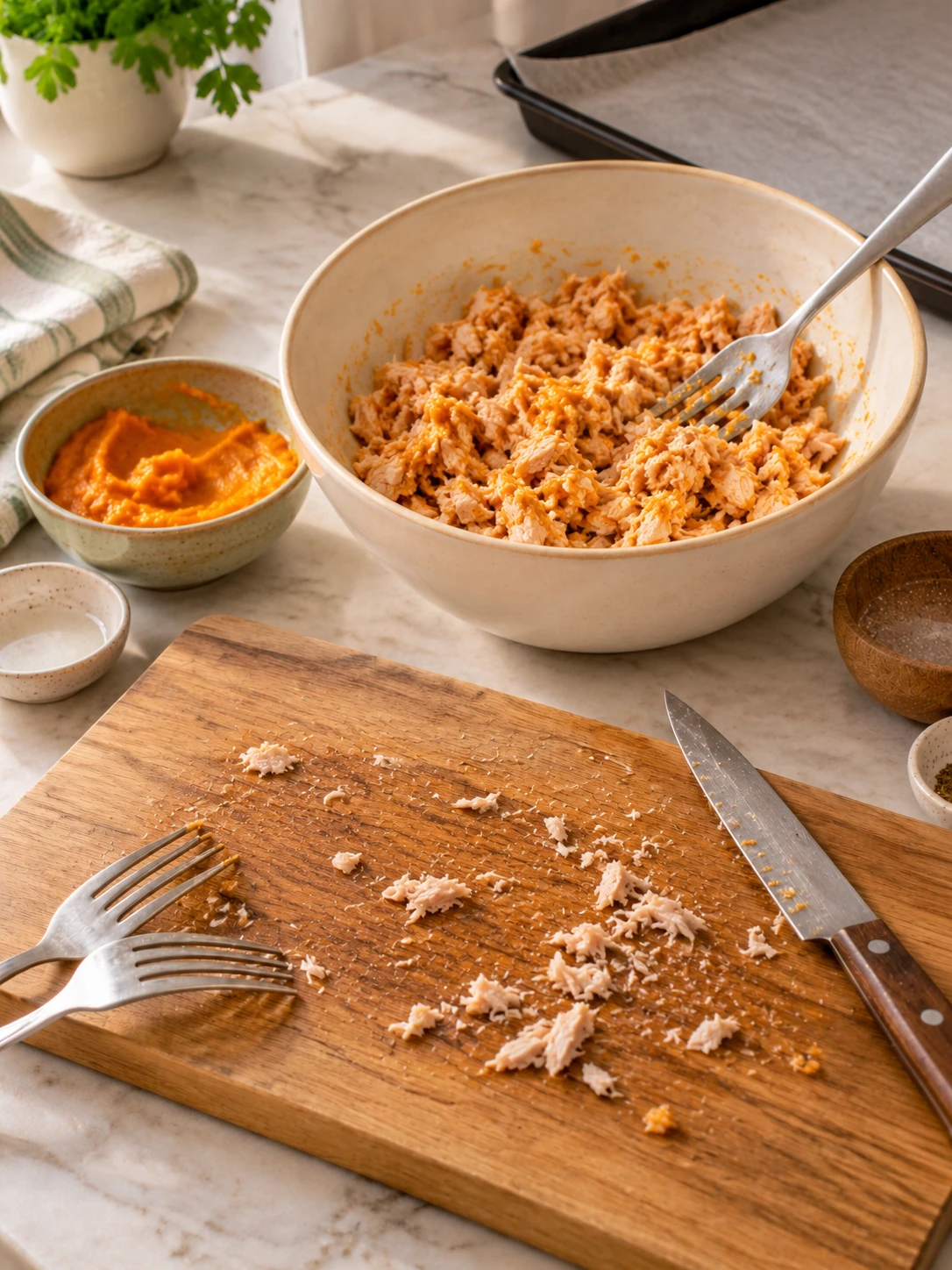
Mix in the pumpkin: Put the finely chopped rabbit in a small mixing bowl and add one tablespoon of plain pumpkin puree. Stir and gently press everything together with a fork until the pumpkin is evenly mixed in and the meat starts to hold together. The mixture should be moist enough to spread but not wet or runny. If it's too dry, add water a teaspoon at a time. Skip stock, gravy, butter, oil, herbs, and seasoning, which can add unnecessary salt or ingredients that aren't suitable for cats.
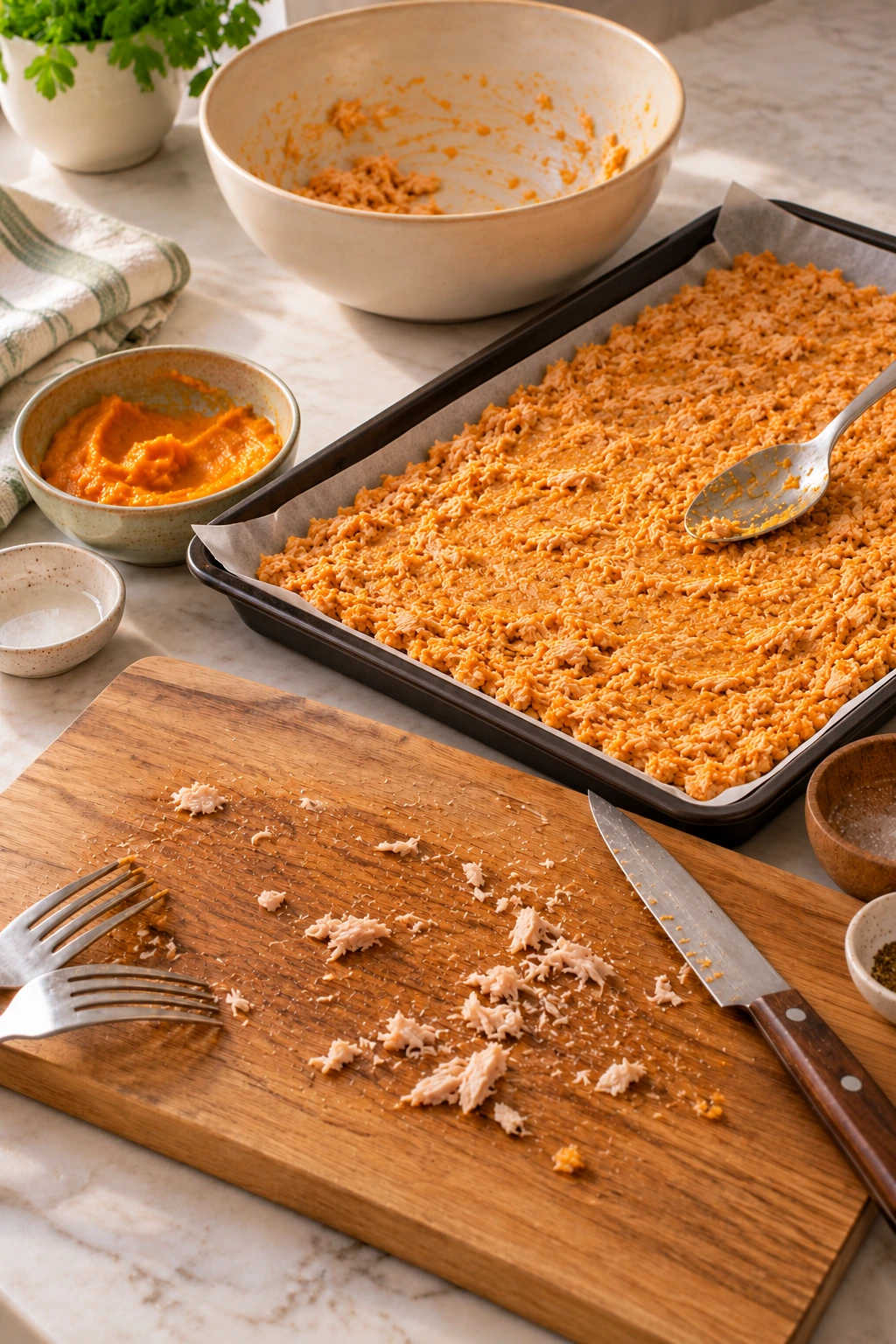
Spread a thin layer: Transfer the mixture to the parchment-lined baking tray and press it into an even layer about 5 to 8 mm thick. Keep the edges roughly as thick as the center so everything cooks at a similar rate and is easier to crumble later. Smooth the surface gently with the back of a spoon, taking care not to press it into a hard slab. A small tray helps keep the mixture together instead of spreading it into a very thin patch.
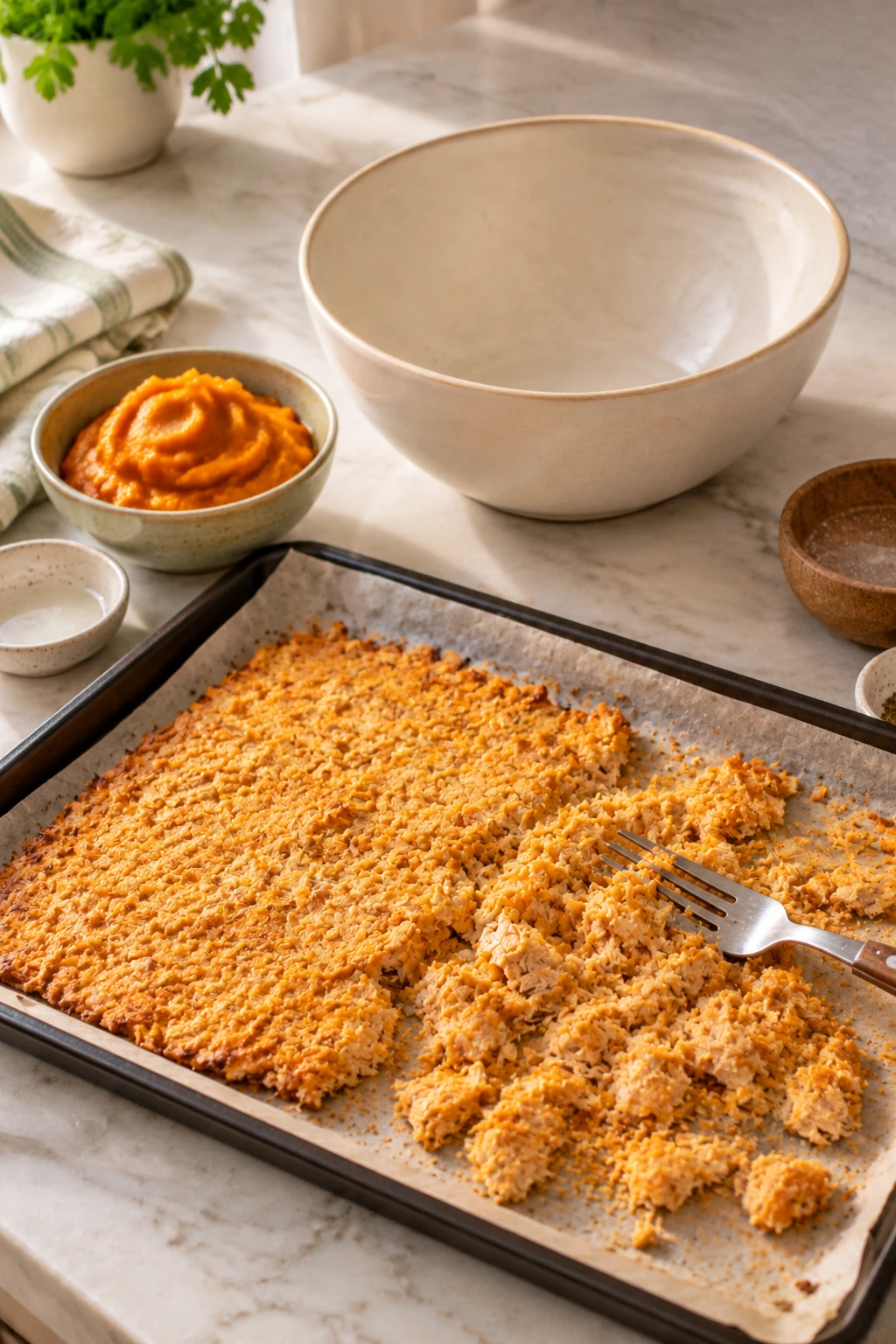
Bake until set: Bake at 160°C (320°F) for about 20 to 25 minutes, checking as the cooking time draws to a close. The mixture should be set and cooked through, with no raw-looking rabbit remaining. Take it out before the edges turn dark, crisp, or hard. Ovens and layer thicknesses can vary, so check the mixture itself rather than relying on the timer alone. Carefully remove the tray and let the mixture cool before handling or breaking it apart.
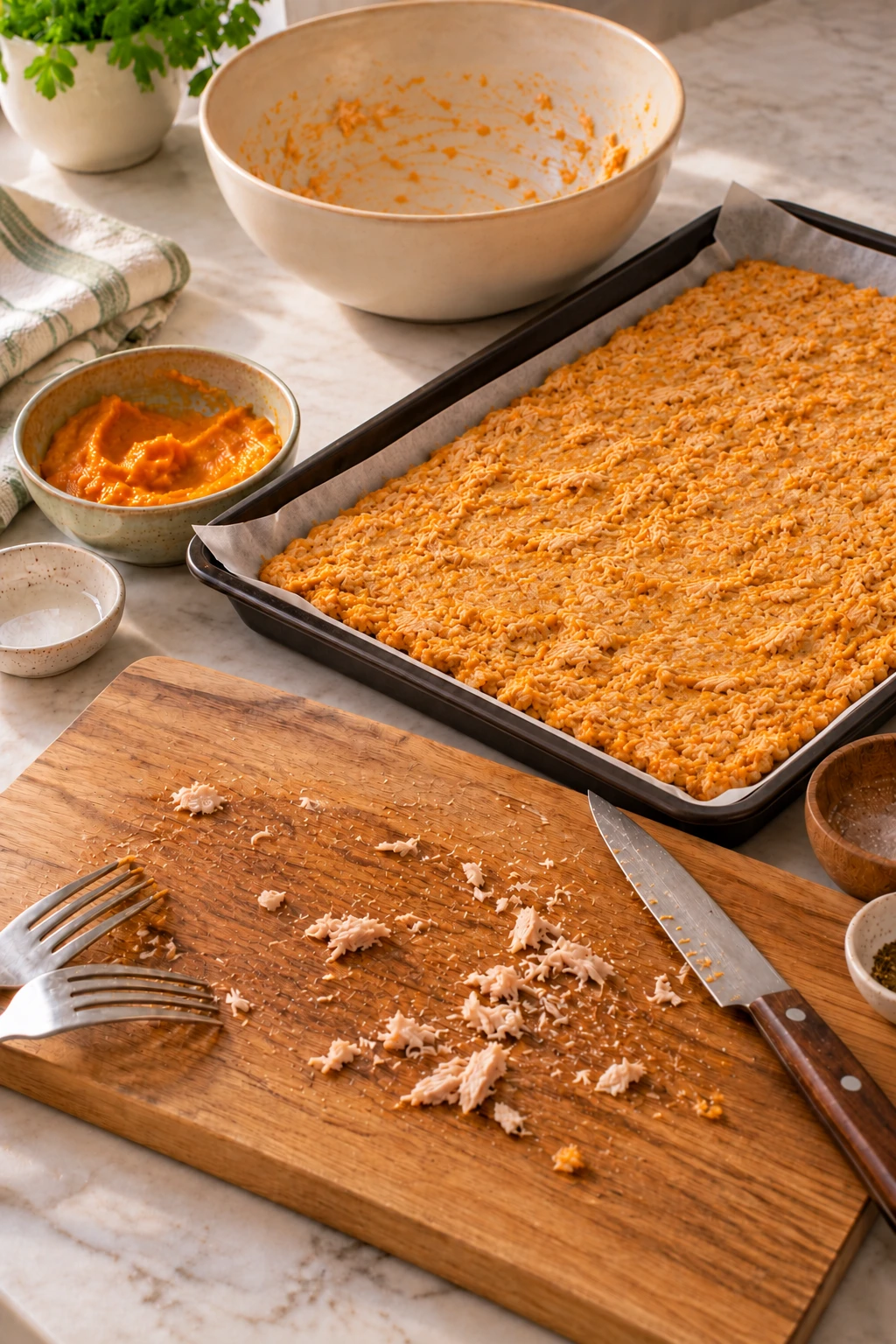
Cool and crumble into soft flakes: Let the baked layer cool completely on the tray, then break it into small, soft flakes with clean fingers or a fork. The pieces should crumble easily, without being hard, dry, or sharp. Start with a very small serving sprinkled over your cat's usual food, keeping their regular complete food as the main meal. Transfer any leftover crumble promptly to a clean, covered container and refrigerate or freeze it according to the storage guidance.
Made this recipe?
Tap the paw so other pet parents know it’s worth making.
Be the first to make it
Tips & serving
Start with just a few small flakes mixed into your cat's usual complete and balanced food, and observe whether your cat accepts the texture. Treat this as an occasional supplemental topper, not a meal replacement. Keep all extras, including treats and toppers, to a small share of daily calories, generally no more than 10 percent. Individual needs vary, so ask your veterinarian about an appropriate portion, especially if your cat has a medical condition, follows a prescribed diet, or is sensitive to dietary changes. Discuss major diet changes with a veterinarian.
- Rabbit offers a savory alternative for owners looking to vary the flavor and texture of occasional homemade toppers.
- The soft flakes can be sprinkled in small amounts over familiar food without turning the entire meal into a puree.
- A short ingredient list makes it easier to identify what has been added to the cat's bowl.
- Preparing a small batch lets owners portion the topping carefully and store the rest for later meals.
- Chop the cooked rabbit finely before mixing so larger meat pieces do not separate from the pumpkin during baking.
- Spread the mixture to an even thickness because thin edges can dry out before the center has fully set.
Storage
Discard any portion that has been left out too long or shows an unusual smell, discoloration, or sliminess. Label the container with the preparation date, thaw portions in the refrigerator, and use them promptly after thawing.
Substitutions
If plain pumpkin puree is unavailable, a small amount of thoroughly cooked, plain mashed butternut squash can provide a similar texture, but use no butter, salt, sugar, or spices. Keep the quantity modest and introduce the substitute gradually. If rabbit is unavailable, plain thoroughly cooked boneless turkey or chicken can be used for a similar crumbly preparation, provided those ingredients are already suitable for your cat. The flavor and texture will change, and the finished topper remains supplemental rather than nutritionally complete.
Cats recipe FAQ
Can Cats Rabbit and Pumpkin Oven-Baked Crumble replace my cat's regular diet?
Treat it as an occasional extra, not a meal plan. Start with just a few small flakes mixed into your cat's usual complete and balanced food, and observe whether your cat accepts the texture. Treat this as an occasional supplemental topper, not a meal replacement.
Can cats have cooked boneless rabbit meat?
This recipe uses cooked boneless rabbit meat in a small, cat-appropriate amount. Skip it if your cat has a known sensitivity, and read the foods-to-avoid note on this page before serving.
How do I store this topper?
Cool the crumble completely, then place it in a clean, airtight container in the refrigerator and use it within 3 days. Do not leave the cooked mixture at room temperature for more than 2 hours, or 1 hour in very hot conditions.
What's the safest way to try this with my cat?
Offer a small amount beside regular food, introduce one new recipe at a time, and watch appetite, stool, skin, and behavior for a day or two.
Can cats eat cooked rabbit?
Plain rabbit meat that is thoroughly cooked and completely boneless can be offered to many cats in small amounts. Keep it unseasoned and serve it as a supplemental food. This recipe is not nutritionally complete, so it should not replace a balanced cat food.
Can I use canned pumpkin for this crumble?
Yes, provided the can contains plain pumpkin with no added sugar, spices, or other ingredients. Do not use pumpkin pie filling. Pumpkin adds moisture and helps bind the meat, so measure a modest amount and avoid making the mixture wet or paste-like.
Sources