

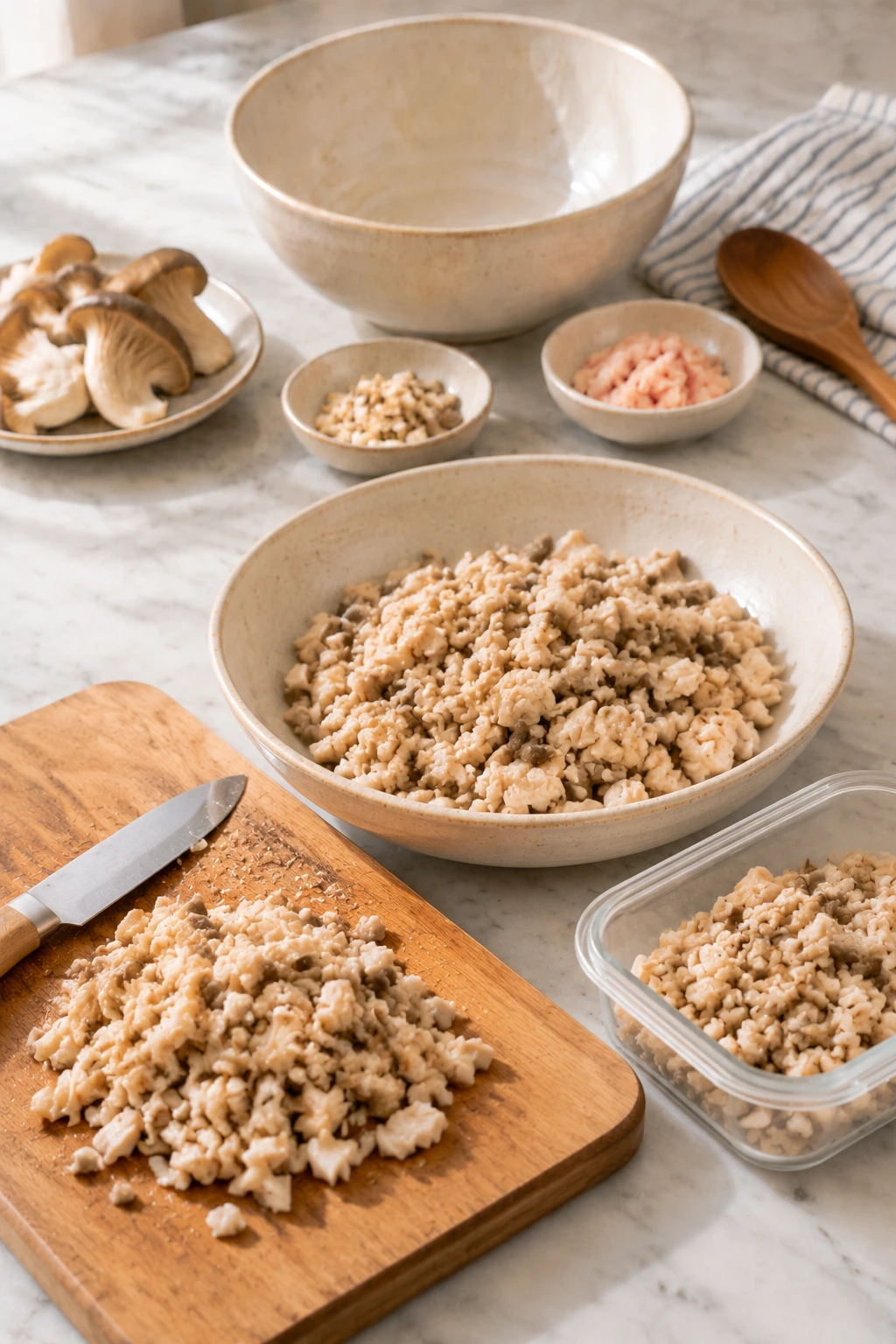
Plain cooked chicken is an easy way to add a little variety to your cat's usual meals without fussing over a long ingredient list. This simple saute uses boneless, skinless chicken thigh, gently cooked in a pan with water instead of oil, butter, sauces, or seasoning. Once cooled and finely chopped, the chicken can be mixed into a small portion of your cat's familiar food as an occasional topper. The oyster mushroom is entirely optional. Wild mushrooms can be hard to identify, and appearance alone cannot tell you whether one is safe for your cat. Only use a specific, positively identified variety if your veterinarian has confirmed it is suitable. When in doubt, leave the mushroom out and stick with plain chicken. Either way, this recipe is a topper, not a nutritionally complete meal.
Safety first: Start with a small portion beside your cat's usual food and confirm bigger diet changes with your veterinarian.
Foods to avoid
Never use wild, unidentified, or foraged mushrooms in this recipe. Mushroom species cannot be reliably judged as safe from appearance alone, and cooking does not make every poisonous mushroom safe. Oyster mushroom is optional and should be used only after a veterinarian has confirmed the specific, positively identified variety is appropriate for your cat. If that confirmation is unavailable, leave the mushroom out. Avoid garlic, onion, chives, leeks, salt, pepper, seasoning blends, stock cubes, gravy, butter, oil-heavy sauces, and cooked bones.
Ingredients
Instructions
Prepare the Ingredients: Wash your hands and clean your work area before handling the ingredients. Check that the chicken is boneless and skinless, trim any visible excess fat, and cut it into small, even pieces so it cooks consistently. If your veterinarian has confirmed that a positively identified oyster mushroom is suitable, wipe off any dirt with a clean, damp paper towel and finely chop a tiny amount separately. Never use foraged or unidentified mushrooms, and keep raw chicken and its utensils away from ready-to-eat food.
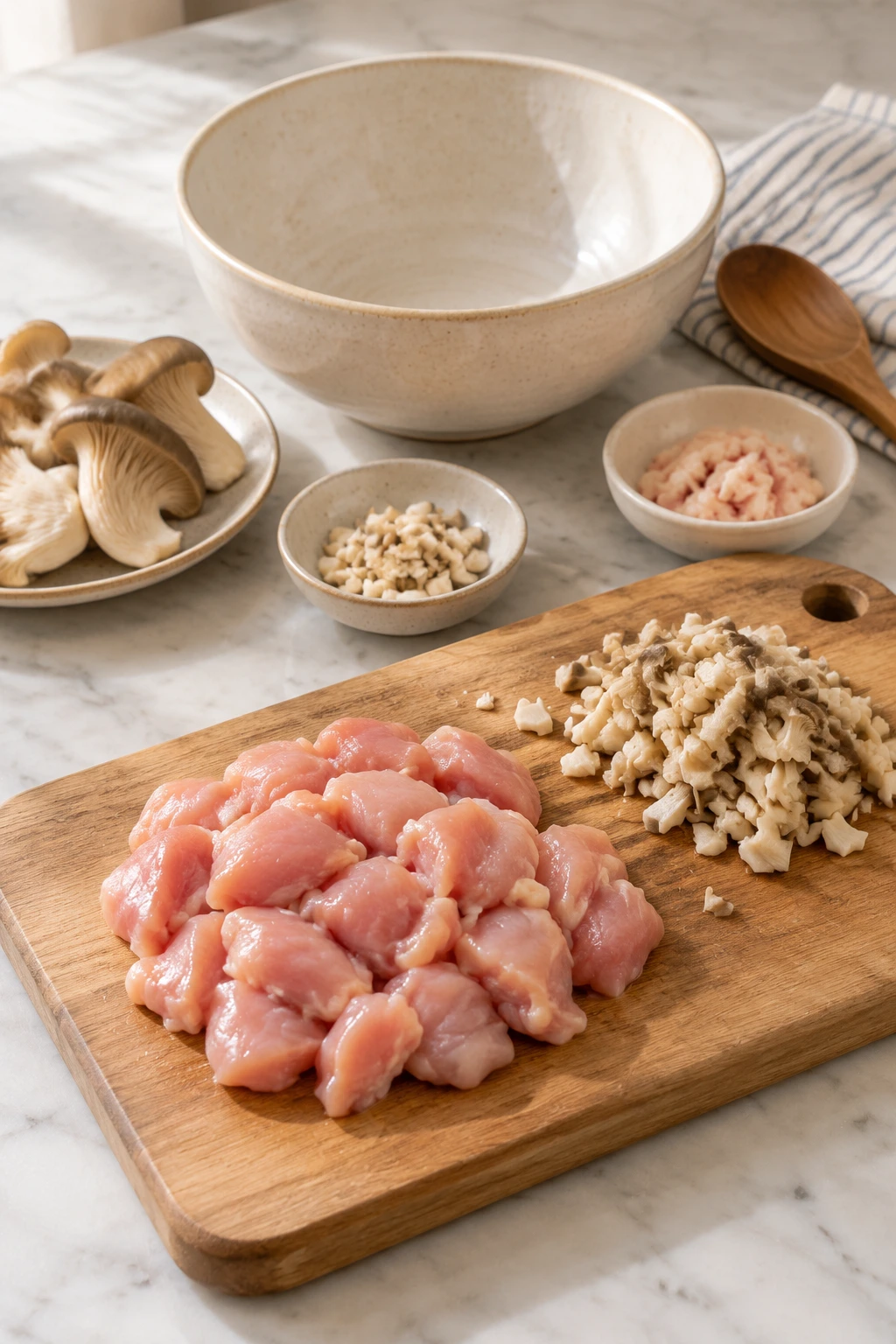
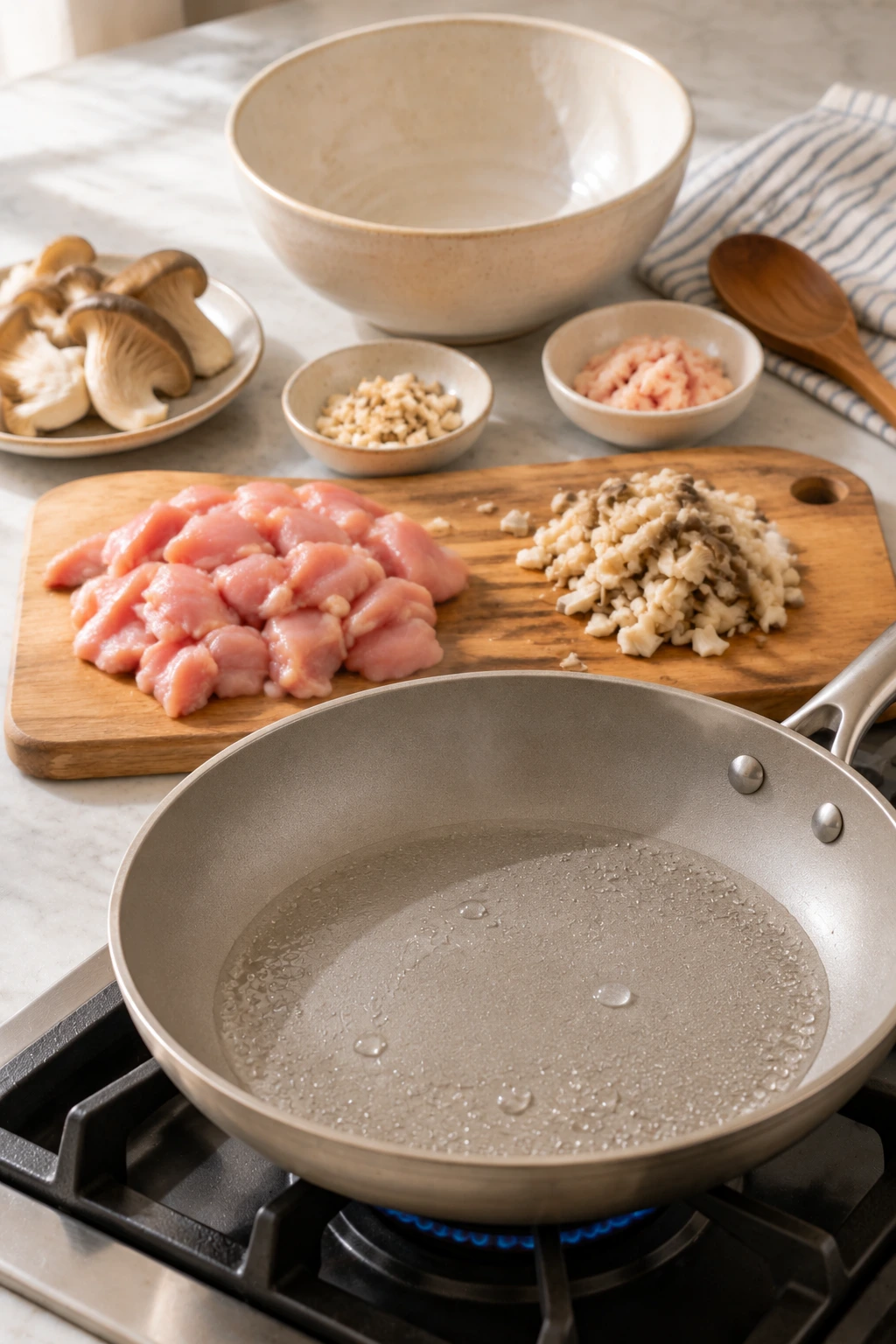
Warm the Pan with Water: Set a clean frying pan over medium-low heat and pour in two tablespoons of plain water. Let it warm gently, making sure the pan does not dry out or become smoking hot. This keeps the cooking simple without needing oil or butter. Keep the prepared chicken close by, with the optional mushroom separate until the chicken has started cooking.
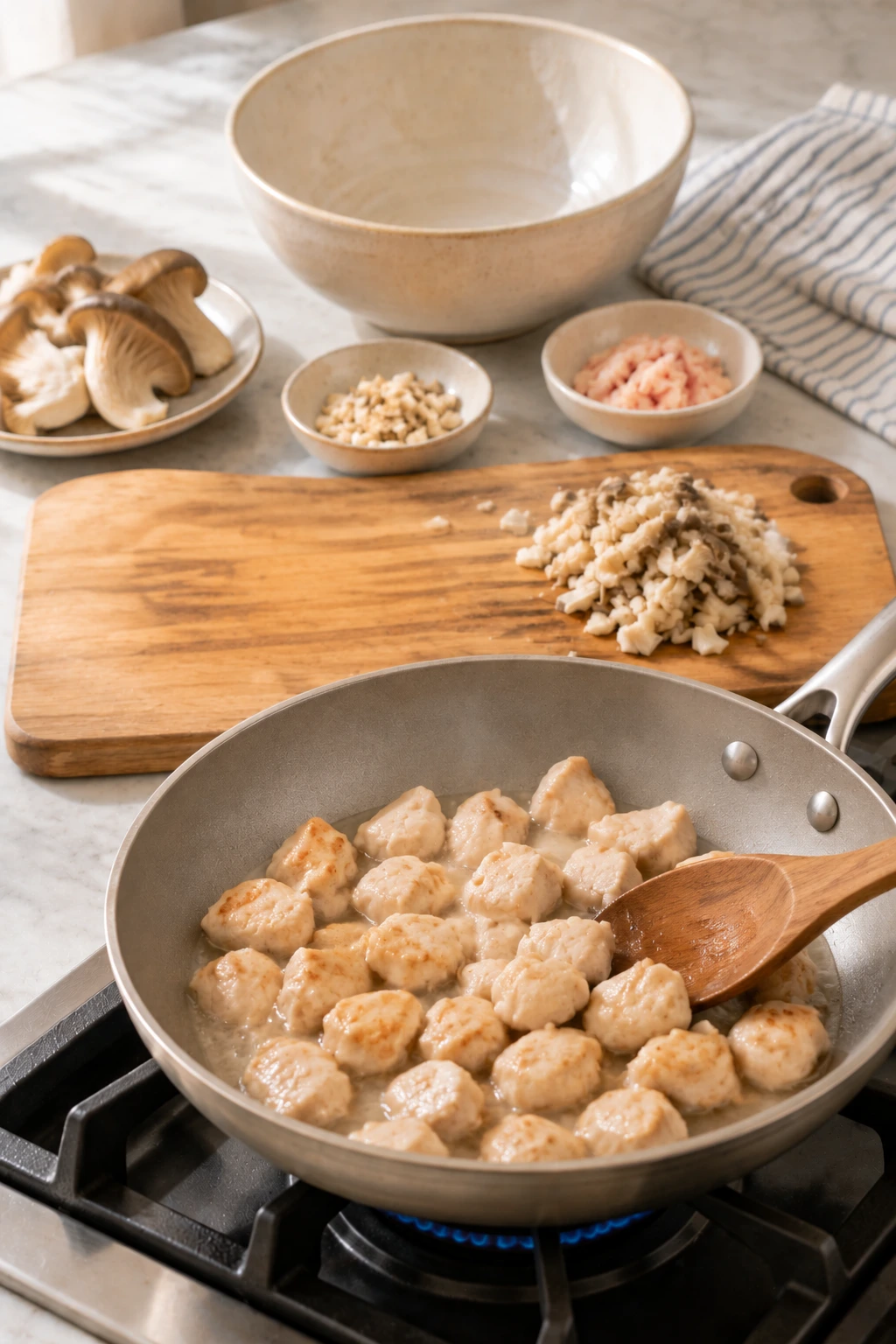
Cook the Chicken Thoroughly: Add the chicken pieces to the warm pan in a single layer and gently stir them with the wooden spoon. Cook for about 8 to 12 minutes, turning the pieces as they cook and adding another tablespoon or two of water if the pan starts to dry out. Cooking time will vary with the size of the pieces, so check the thickest one with a food thermometer and make sure it reaches an internal temperature of 74°C. The chicken must be cooked all the way through, with no raw centre. Do not add salt, garlic, onion, stock, or seasoning.
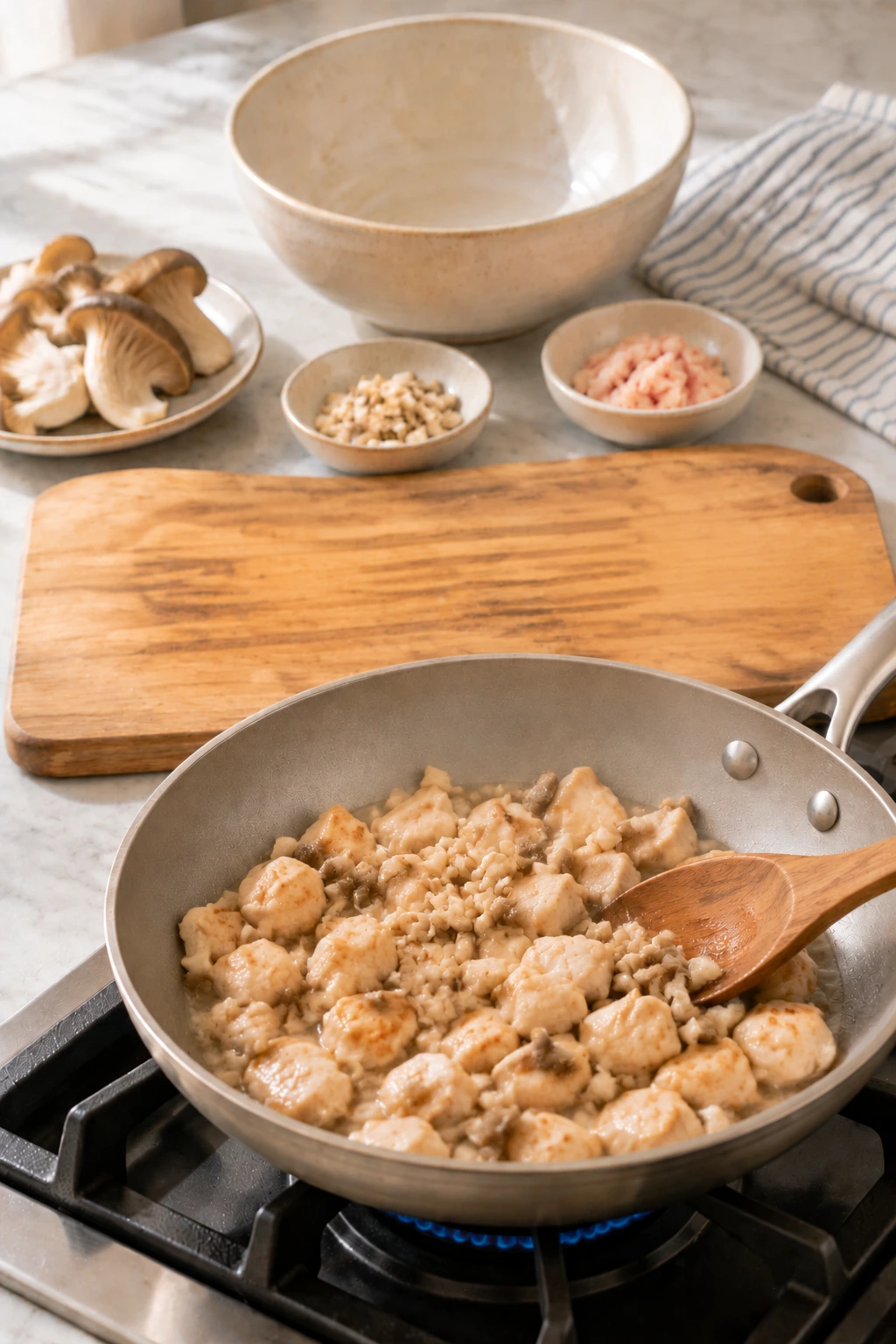
Add the Optional Mushroom: Once the chicken is fully cooked, reduce the heat and add the tiny measured amount of oyster mushroom, but only if your veterinarian has confirmed its identity and suitability. Stir and cook for another 3 to 5 minutes, adding a splash of water if needed, until the mushroom is soft and thoroughly cooked. If there is any doubt about the mushroom, leave it out and continue with the plain chicken. Keep the chicken as the main ingredient rather than adding more mushroom.
Cool, Chop, and Portion: Take the pan off the heat and transfer the cooked mixture to the same clean, shallow dish. Let it cool until it is no longer hot, then use a clean knife to finely chop the chicken and mushroom into small, manageable pieces. Check the texture and remove any tough pieces before serving. Start with a teaspoon-sized amount mixed into your cat's usual complete food, rather than using it to replace a balanced meal. Refrigerate any portions you plan to keep promptly, within two hours of cooking, in a clean, shallow, airtight container.
Made this recipe?
Tap the paw so other pet parents know it’s worth making.
Be the first to make it
Tips & serving
Allow the topper to cool completely to a comfortable room temperature and offer about one teaspoon mixed into your cat's familiar complete food for the first serving. Observe your cat's response and stop offering it if digestive upset or other unusual signs occur. Keep supplemental extras small, with treats and toppers generally contributing no more than 10 percent of daily calories while complete and balanced cat food provides the rest. Actual portions depend on body size, age, activity, and existing diet. Ask your veterinarian before offering the optional mushroom, and discuss major diet changes with a veterinarian.
- Plain chicken provides familiar animal-based protein in a simple supplemental preparation that is easy to portion.
- Finely chopping the cooked meat makes it easier to mix a small amount evenly through a cat's usual wet or dry food.
- The water-based cooking method avoids unnecessary oil, butter, salty sauces, and strong seasonings.
- Keeping the mushroom optional lets owners prepare the recipe without relying on an ingredient whose identity or suitability may be uncertain.
- Cut the raw chicken into similarly sized pieces so they cook evenly, and check the thickest piece with a food thermometer rather than relying on colour alone.
- Keep the mushroom quantity very small and never add it simply to make the recipe look more like a human saute.
Storage
Keep the container at 4°C or colder and use the chicken topper within 2 to 3 days. Discard any portion that smells unusual, has changed texture, or may have been contaminated by raw poultry utensils. For longer storage, freeze small individual portions in a clean freezer-safe container or covered ice-cube tray, then transfer the frozen portions to a labelled freezer bag. Use within 2 months for best quality, thaw in the refrigerator, and use promptly.
Substitutions
The safest and simplest substitution is to omit the oyster mushroom entirely and prepare the recipe with chicken and water only. There is no nutritional need to add mushrooms to a feline topper. If you do not have boneless skinless chicken thigh, plain boneless, skinless chicken breast can be used in a similar weight. It is leaner and may dry out more quickly, so cook gently with a little water and check that the thickest piece reaches 74°C. Do not replace the chicken with a large amount of mushroom, vegetables, or plant protein.
Cats recipe FAQ
Can I serve this topper every day?
Treat it as an occasional extra, not a meal plan. Allow the topper to cool completely to a comfortable room temperature and offer about one teaspoon mixed into your cat's familiar complete food for the first serving.
Can cats have boneless skinless chicken thigh?
This recipe uses boneless skinless chicken thigh in a small, cat-appropriate amount. Skip it if your cat has a known sensitivity, and read the foods-to-avoid note on this page before serving.
How do I store this topper?
Transfer leftovers to a clean, shallow airtight container and refrigerate promptly, within two hours of cooking. Keep the container at 4°C or colder and use the chicken topper within 2 to 3 days.
What's the safest way to try this with my cat?
Offer a small amount beside regular food, introduce one new recipe at a time, and watch appetite, stool, skin, and behavior for a day or two.
Can cats eat oyster mushrooms?
Do not assume a mushroom is safe based on its appearance or common name. Wild and unidentified mushrooms can be dangerous, and cooking does not remove every toxin. Use oyster mushroom only when a veterinarian has confirmed that the specific, positively identified variety is appropriate. Otherwise, prepare the topper with chicken alone.
Can I serve this chicken topper every day?
This recipe is intended as a small supplemental extra, not a daily meal replacement. Frequent additions can displace nutritionally complete food and alter calorie intake. Keep toppers within a modest portion of daily calories, and discuss regular use or major diet changes with your veterinarian, especially if your cat follows a prescribed diet.
Sources