
Duck makes a nice change from the chicken and turkey found in many homemade cat food ideas. Here, small pieces of boneless duck are gently cooked with water, then blended with a fully cooked quail egg until the mixture is smooth and spoonable. The result is a soft, savory custard that you can serve alongside your cat's usual meal. No salt, seasoning, butter, or added oil is needed, so the ingredients stay simple and easy to manage. This recipe is intended as a small occasional topper, not a complete meal, so keep portions modest and continue feeding your cat a nutritionally complete, balanced diet.
Safety first: Introduce new foods gradually and speak with your veterinarian before making major changes to your cat's diet.
Foods to avoid
Never use raw or undercooked duck or egg, bones, shell fragments, skin with excess fat, butter, oil, salt, stock cubes, garlic, onion, chives, or seasoning blends. Avoid leaving the mixture warm for long periods or feeding it as a replacement for a complete cat food. Duck and egg may not suit every cat, and a new ingredient can cause digestive upset. Stop offering it if your cat reacts poorly and ask your veterinarian for advice. Homemade meat-and-egg mixtures are not nutritionally complete for cats. Major diet changes should always be discussed with a veterinarian.
Ingredients
Instructions
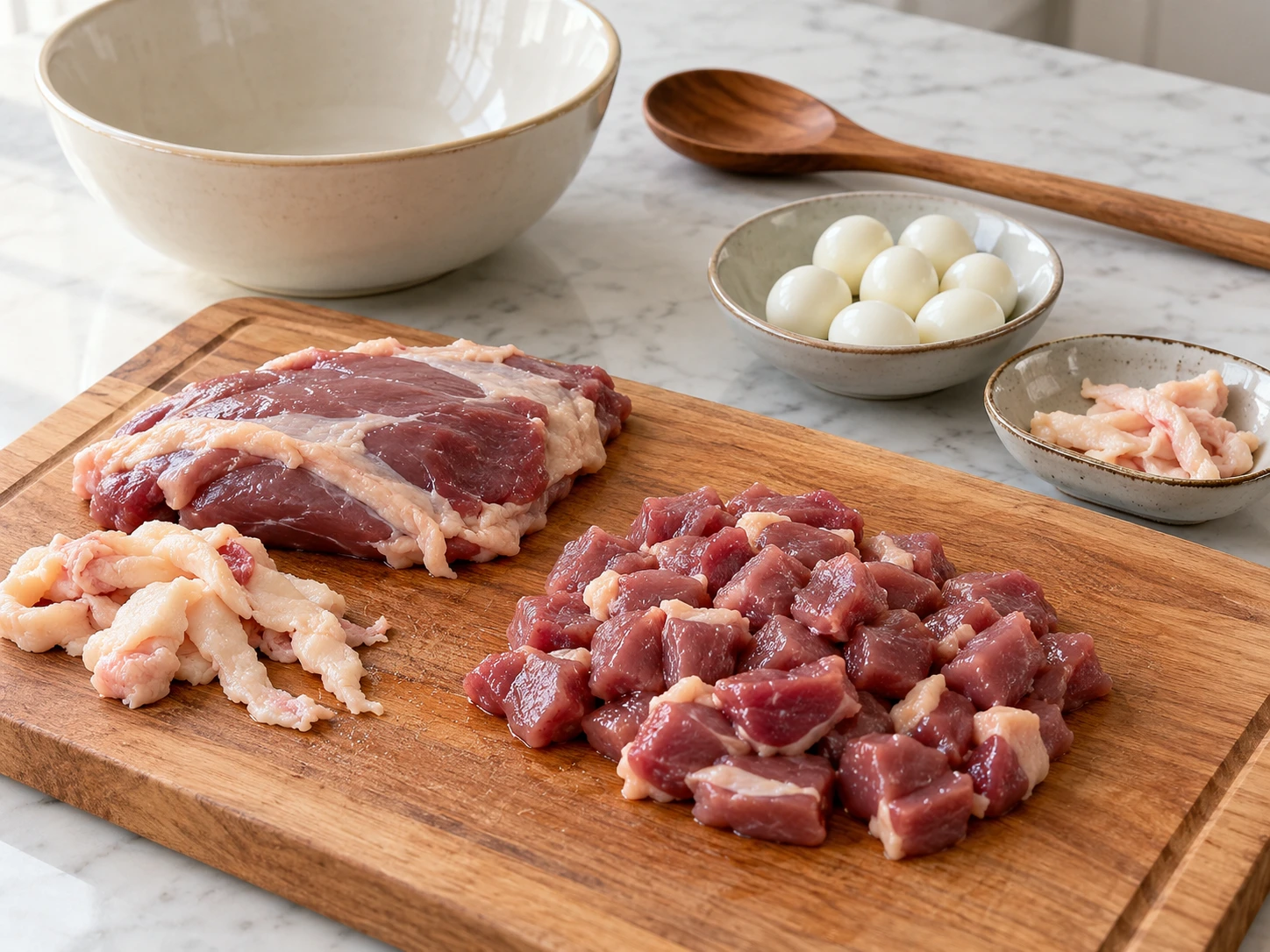
Prepare the duck: Trim away any visible fat, check for remaining bone or cartilage, and cut the duck into small, evenly sized pieces on a clean cutting board. Keep the raw meat separate from the cooked egg, and wash any surfaces or utensils that touch the raw duck before using them again. Leave out salt, garlic, onion, stock cubes, and all other seasoning.
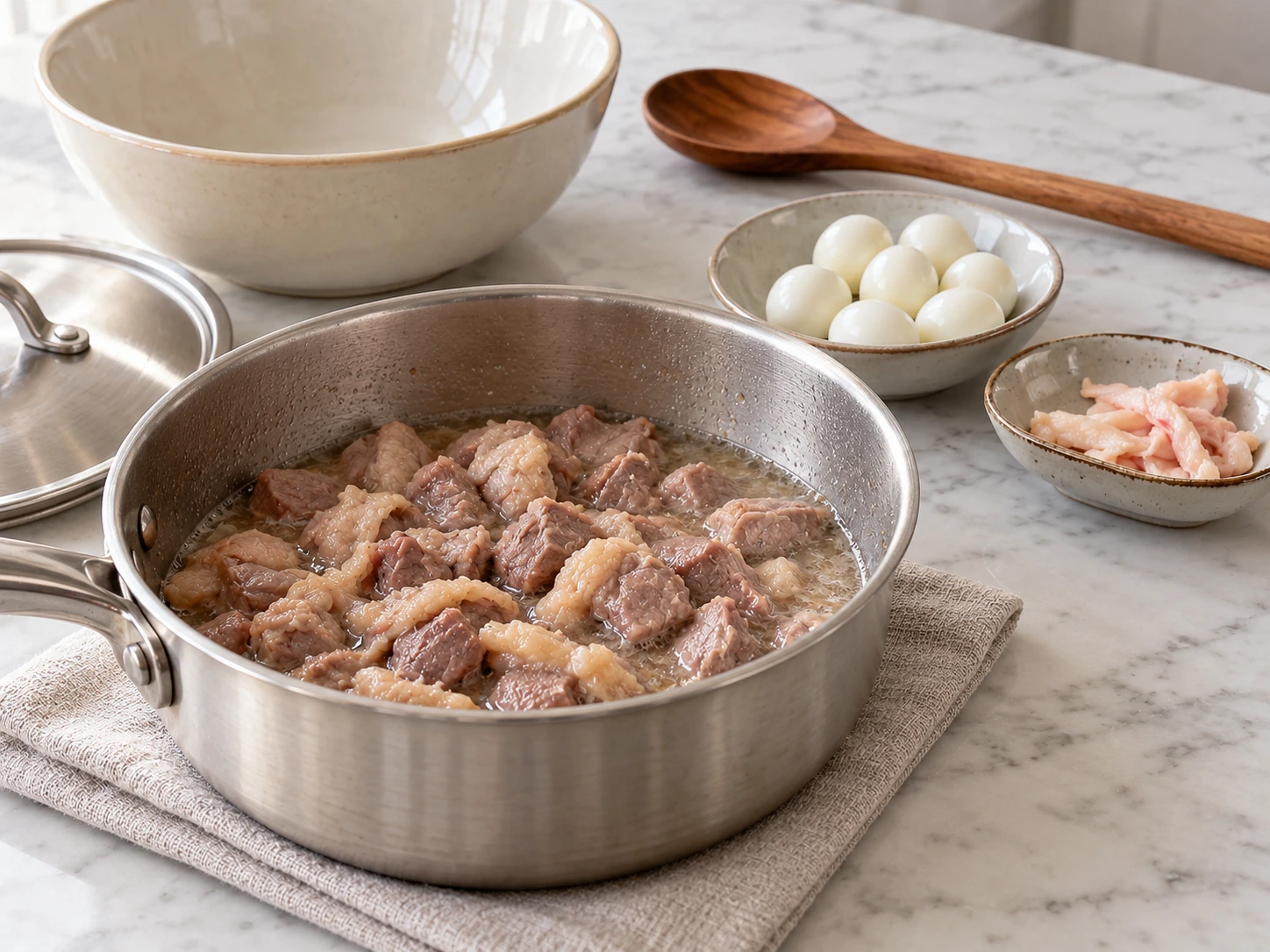
Cook the duck gently: Put the duck in a small saucepan with about 50 ml of the measured water. Cover and cook over low to medium-low heat, turning the pieces occasionally and adding a little of the remaining water if the pan starts to dry out. Check that the thickest pieces reach an internal temperature of 74°C and have no raw center, as undercooked poultry should never be served to your cat.
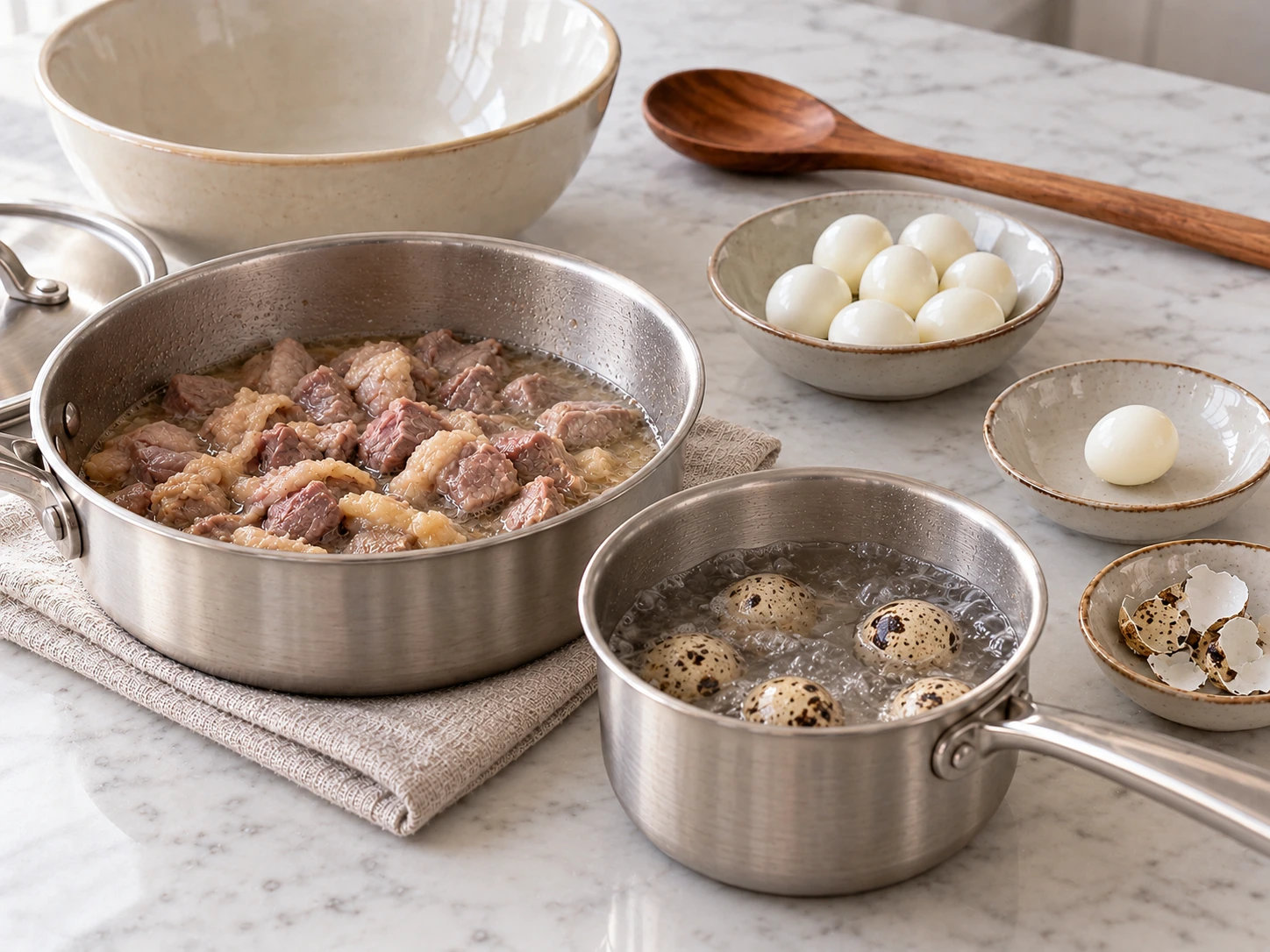
Cook and peel the quail egg: While the duck cooks, boil the quail egg in a separate small saucepan until both the white and yolk are completely firm. Cool it promptly under clean running water, peel off the shell, and check for any fragments that may remain. Use the egg only when fully cooked, keeping it away from anything that has touched the raw duck.
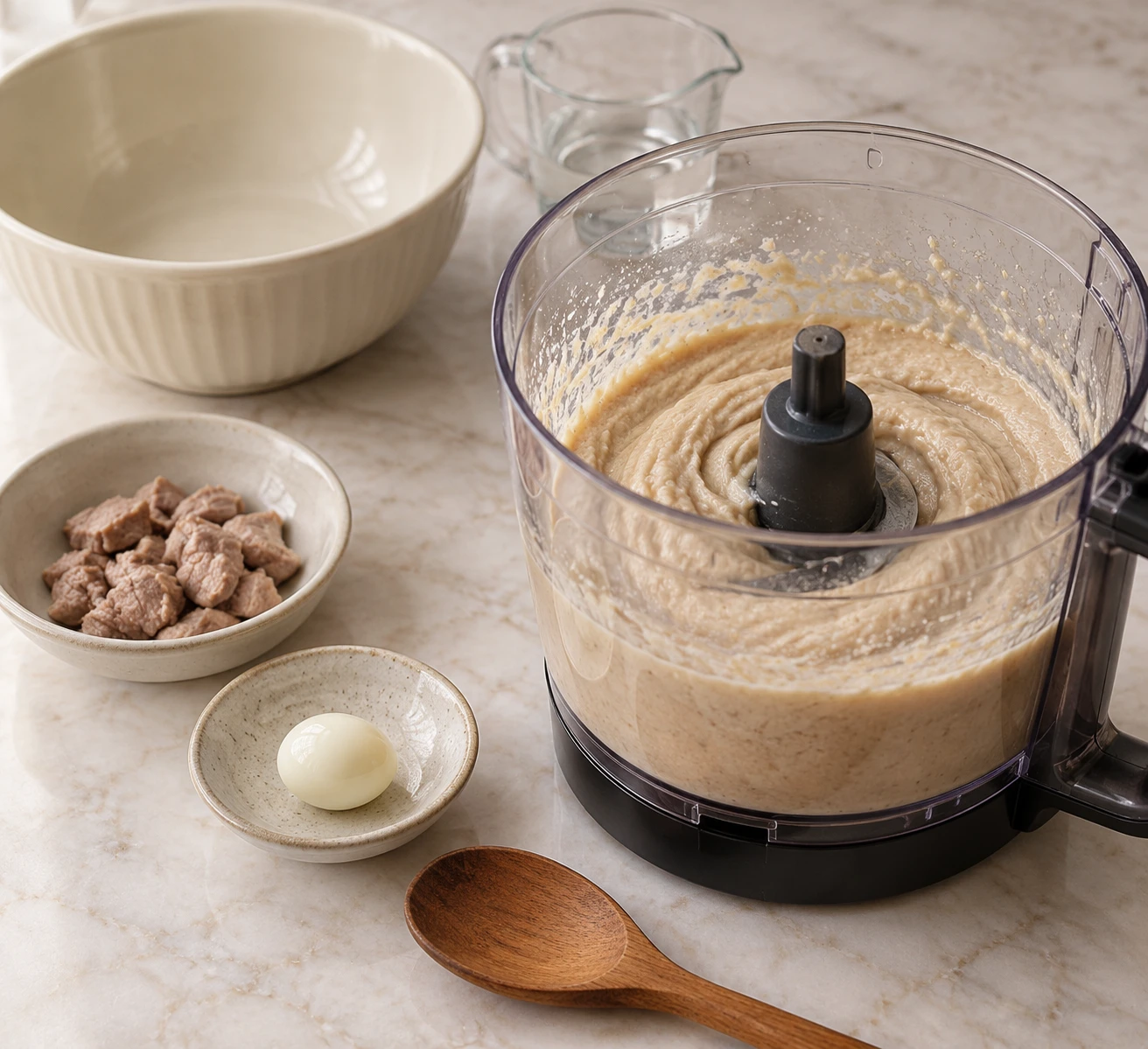
Blend into a smooth custard: Transfer the cooked duck and peeled quail egg to a clean blender or food processor. Add the remaining cooking water gradually, blending until smooth and uniform, and pause to scrape down the sides if needed. Add the teaspoon of warm water only if the mixture needs loosening, then check carefully for bone fragments, shell, firm lumps, or unevenly blended pieces.
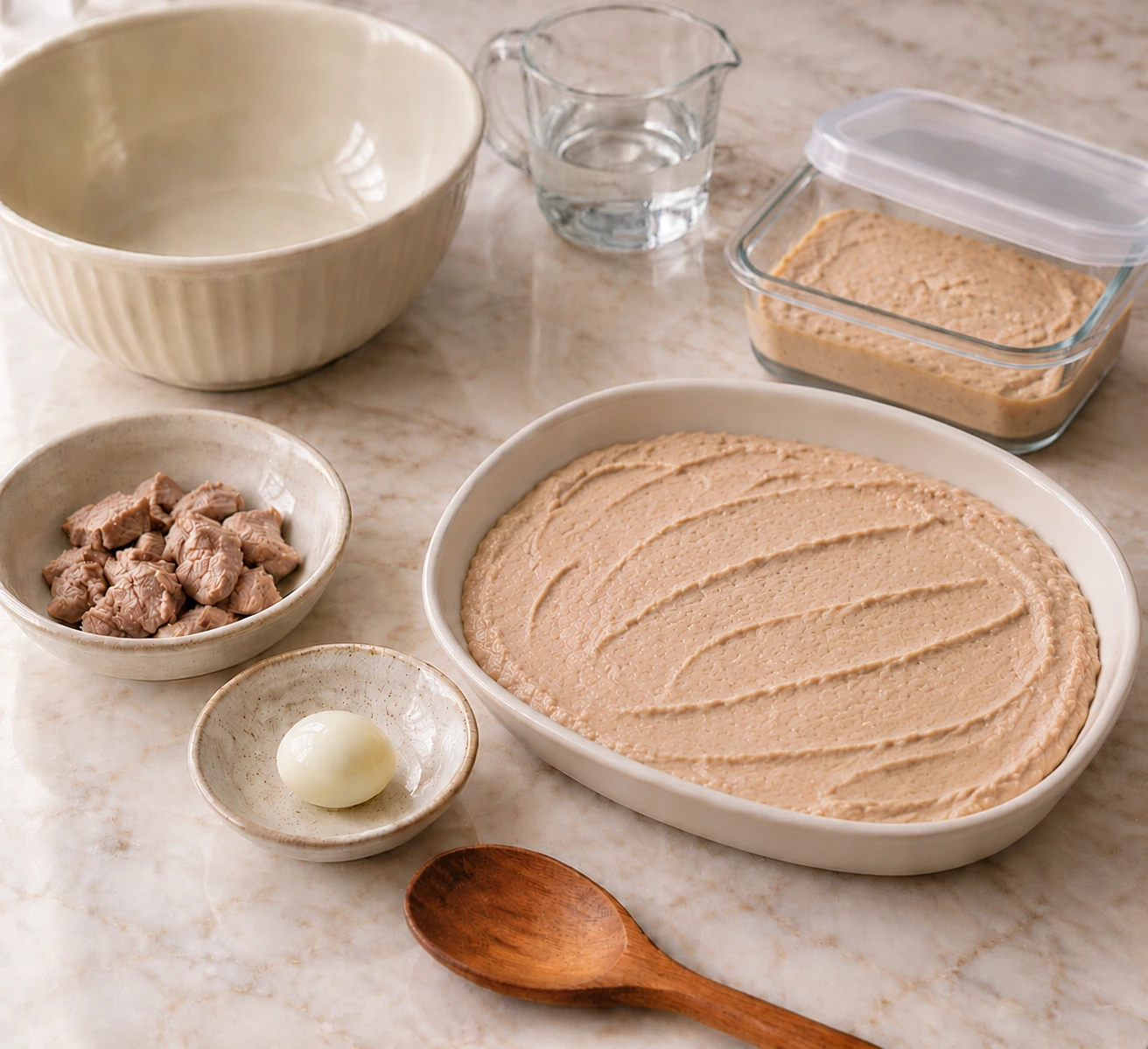
Cool and portion the custard: Spoon the smooth mixture into a clean, shallow heatproof dish and spread it into a thin layer to help it cool faster. Let it cool completely before serving, checking that the center is no longer warm. Divide the batch into small portions and offer just a little alongside your cat's regular meal, then refrigerate the remainder promptly in a covered container.
Made this recipe?
Tap the paw so other pet parents know it’s worth making.
Be the first to make it
Tips & serving
Allow the custard to cool completely before serving. Begin with a very small taste, such as a quarter teaspoon, alongside your cat's usual complete and balanced food, then observe whether it is accepted and tolerated. Keep homemade extras to a small share of daily calories, generally no more than 10 percent, with most calories coming from complete cat food. The appropriate amount depends on your cat's size, age, health, and total diet. Discuss major diet changes and any regular use of homemade toppers with your veterinarian.
- The smooth, spoonable texture provides a different presentation from ordinary chunks or shredded meat.
- Small portions make it easy to introduce a new homemade topper without replacing the cat's regular complete food.
- Using a short ingredient list makes it easier to identify exactly what goes into each serving.
- Gentle cooking and blending create a consistent texture that is simple to measure and mix with a regular meal.
- Cut the duck into evenly sized pieces so it cooks at a similar rate and is easier to check for doneness.
- Measure the water before cooking, but add it gradually during blending to avoid turning the custard into a thin soup.
Storage
Transfer cooled custard into a clean, airtight food container and refrigerate promptly at 4°C or below. For a conservative homemade pet-food approach, use it within 2 days and discard any portion with an unusual smell, appearance, or texture. Do not leave it sitting at room temperature for extended periods. For longer storage, freeze individual small portions in a covered freezer-safe container or a clean ice-cube tray, then transfer the frozen portions to a labeled airtight container.
Substitutions
If duck is unavailable, plain boneless, skinless chicken or turkey can be used in the same weight, provided it is fully cooked without seasoning. The flavor and final consistency may change slightly, so add water gradually while blending. A substitution does not make the recipe nutritionally complete. If quail eggs are unavailable, a small amount of fully cooked chicken egg can be used instead, but the amount should remain modest because the egg changes the recipe's fat, protein, and calorie content. Do not use raw egg, and do not add milk or cream to make the custard softer.
Cats recipe FAQ
Can Cats Duck and Quail Egg Savory Custard replace my cat's regular diet?
Treat it as an occasional extra, not a meal plan. Allow the custard to cool completely before serving. Begin with a very small taste, such as a quarter teaspoon, alongside your cat's usual complete and balanced food, then observe whether it is accepted and tolerated.
Is boneless duck meat okay for cats?
This recipe uses boneless duck meat in a small, cat-appropriate amount. Skip it if your cat has a known sensitivity, and read the foods-to-avoid note on this page before serving.
How do I store this topper?
Transfer cooled custard into a clean, airtight food container and refrigerate promptly at 4°C or below. For a conservative homemade pet-food approach, use it within 2 days and discard any portion with an unusual smell, appearance, or texture.
How should I introduce this topper?
Start with a taste-size portion next to your cat's usual food, and hold off on serving more until you have seen that it agrees with them.
Can I serve this duck custard as my cat's whole meal?
No. Duck and quail egg alone do not provide the complete balance of nutrients cats require, including the correct amounts of essential vitamins and minerals. Offer this recipe only as a small topper alongside complete cat food. Ask a veterinarian before making major diet changes or planning homemade meals.
Does the quail egg need to be fully cooked?
Yes. Cook the egg until both the white and yolk are completely firm before peeling and blending it with the duck. Cooking reduces the risks associated with raw eggs, while careful handling helps prevent contamination from raw poultry. Do not add the egg to the custard while it is raw.
Sources