
A cat's topper can be something a little different from pâté or crumbled meat. This duck and courgette soufflé uses finely minced cooked duck and a little plain egg white to create a soft, airy texture. A small amount of cooked courgette helps keep everything moist, without dairy, butter, salt, or seasoning. Rather than rising into a firm soufflé like one made for people, this version should stay tender and break apart easily with a fork. Serve it occasionally in a small amount alongside your cat's usual complete and balanced food. This topper is not a complete feline diet, and the egg white and courgette are there for texture, not as essential dietary ingredients. Remove all duck bones and skin, keep everything plain, and let the finished topper cool completely. Check with your veterinarian before major diet changes, particularly if your cat has dietary restrictions or an established feeding plan.
Safety first: Keep treats and extras under about 10% of your cat's daily food - the regular diet should do the heavy lifting.
Foods to avoid
Never use raw or undercooked duck or egg white, duck bones, seasoned leftovers, onion, garlic, chives, salt, stock cubes, sauces, butter, cream, or cheese. Remove skin and excess fat, and check the cooked duck carefully for small bones. Keep raw egg and meat separate from ready-to-eat food, wash hands and utensils thoroughly, and cook the centre until it reaches 71°C. This topper is not a complete feline diet. If your cat has a prescribed diet, known food sensitivities, or other dietary restrictions, check with your veterinarian before introducing it.
Ingredients
Instructions
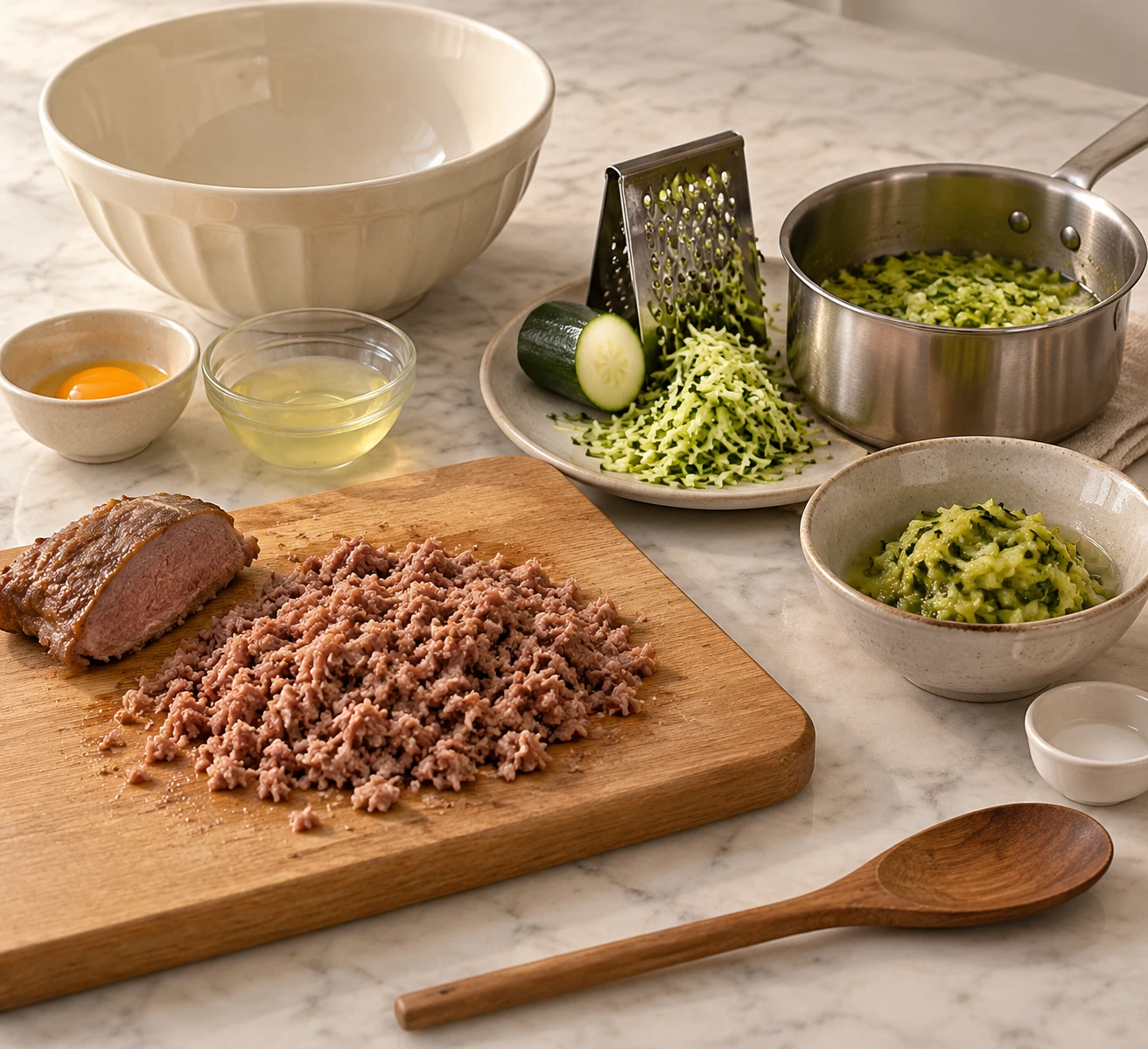
Prepare the duck and courgette: Preheat the oven to 160°C conventional or 140°C fan. On a clean cutting board, check the cooked duck carefully for bones, cartilage, skin, and any seasoned or fatty pieces, then mince the meat finely. Grate the courgette and cook it gently in a small saucepan with a splash of water until completely soft, then drain off excess liquid and let it cool briefly. Measure everything before mixing to help the small batch stay balanced and prevent a watery result.
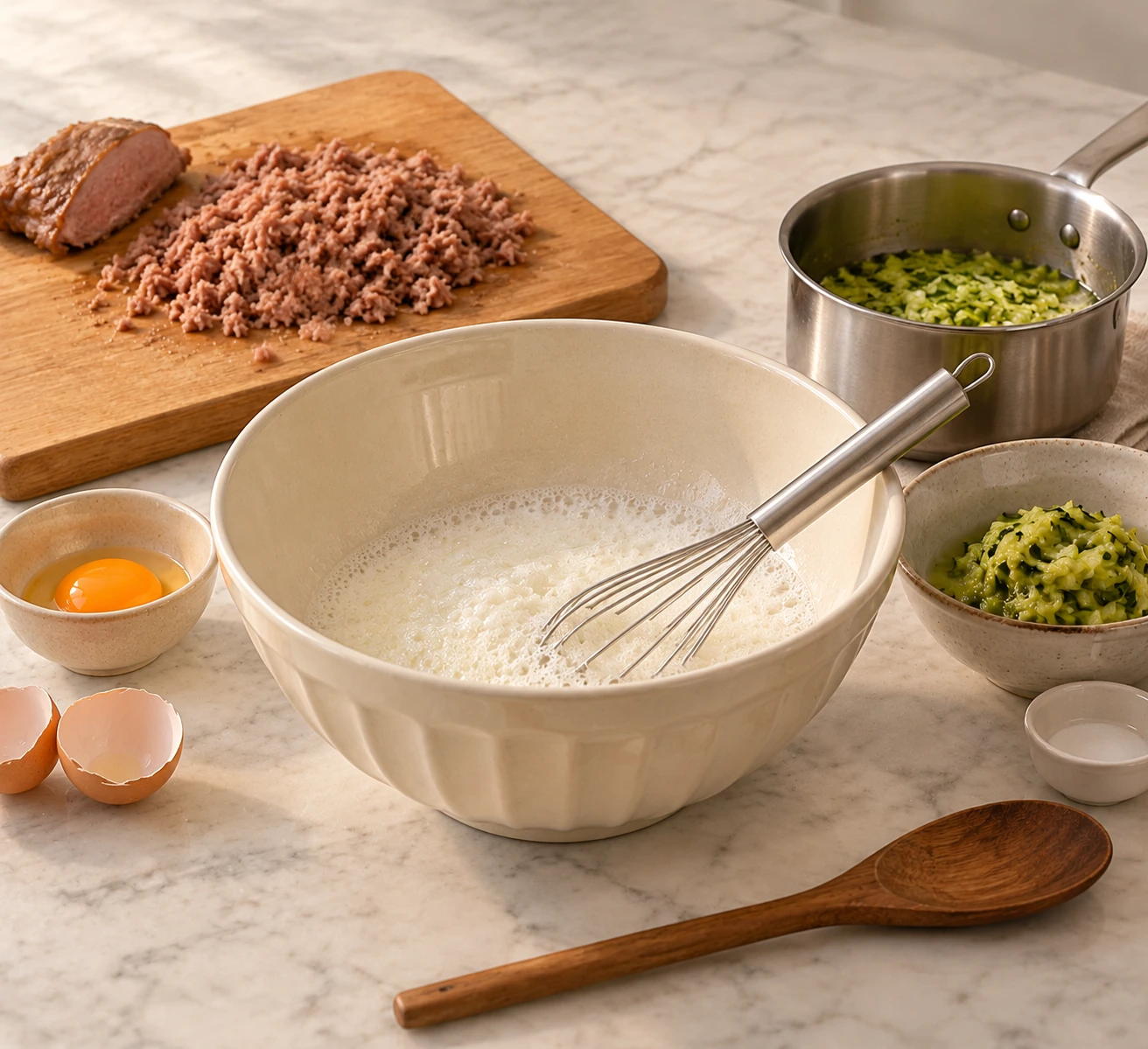
Separate and whisk the egg white: Separate one egg, taking care to keep the yolk out of the white. Put the egg white in a clean, dry mixing bowl and whisk it with a fork or small whisk until foamy, with soft bubbles and a little extra volume. You do not need stiff peaks. A clean bowl helps the white aerate, and leaving out the yolk keeps the texture closer to the intended low-fat result. Use a fresh egg, and handle it separately from the cooked duck and prepared courgette.
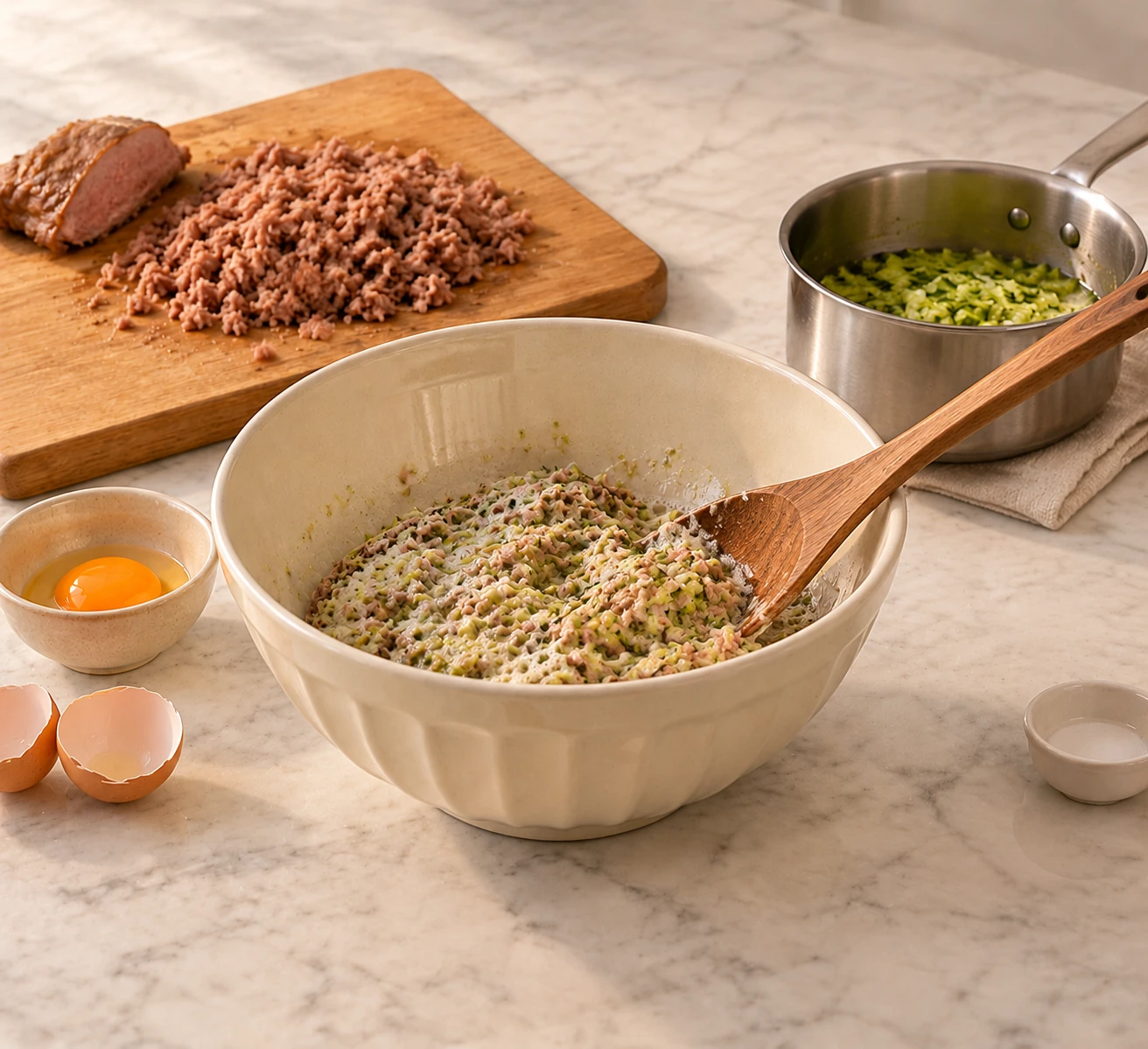
Fold in the duck and courgette: Add the cooled minced duck and soft courgette to the foamy egg white. Gently fold everything together with a spoon or flexible spatula, lifting from the bottom and turning the mixture over rather than stirring hard. It is fine if some of the air escapes. The mixture should hold together loosely, with the duck spread throughout and no water pooling at the bottom. If it seems unusually dry, add up to one teaspoon of plain water. Do not add milk, cream, cheese, butter, salt, garlic, onion, herbs, or seasoning.
Bake gently until fully set: Spoon the mixture into a small oven-safe ramekin, leaving a little room at the top, and smooth the surface without pressing it down firmly. Set the ramekin on an oven-safe tray and bake at 160°C conventional or 140°C fan for approximately 15 to 20 minutes, checking toward the end. The mixture must be cooked all the way through, with no raw or liquid egg white remaining. Use a food thermometer to confirm that the centre reaches 71°C. Baking time depends on the ramekin size and mixture thickness, so check doneness rather than relying on appearance alone.
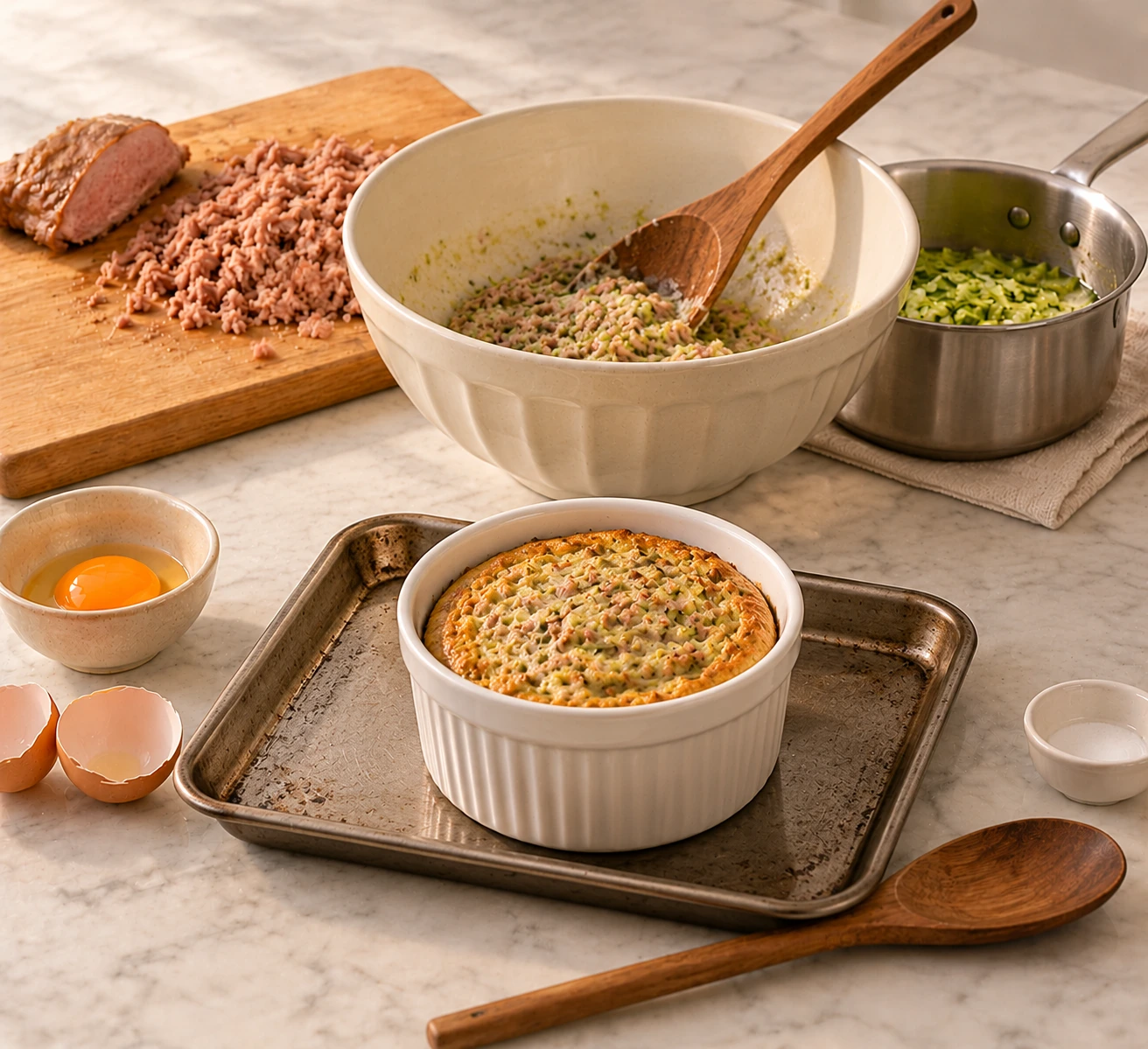
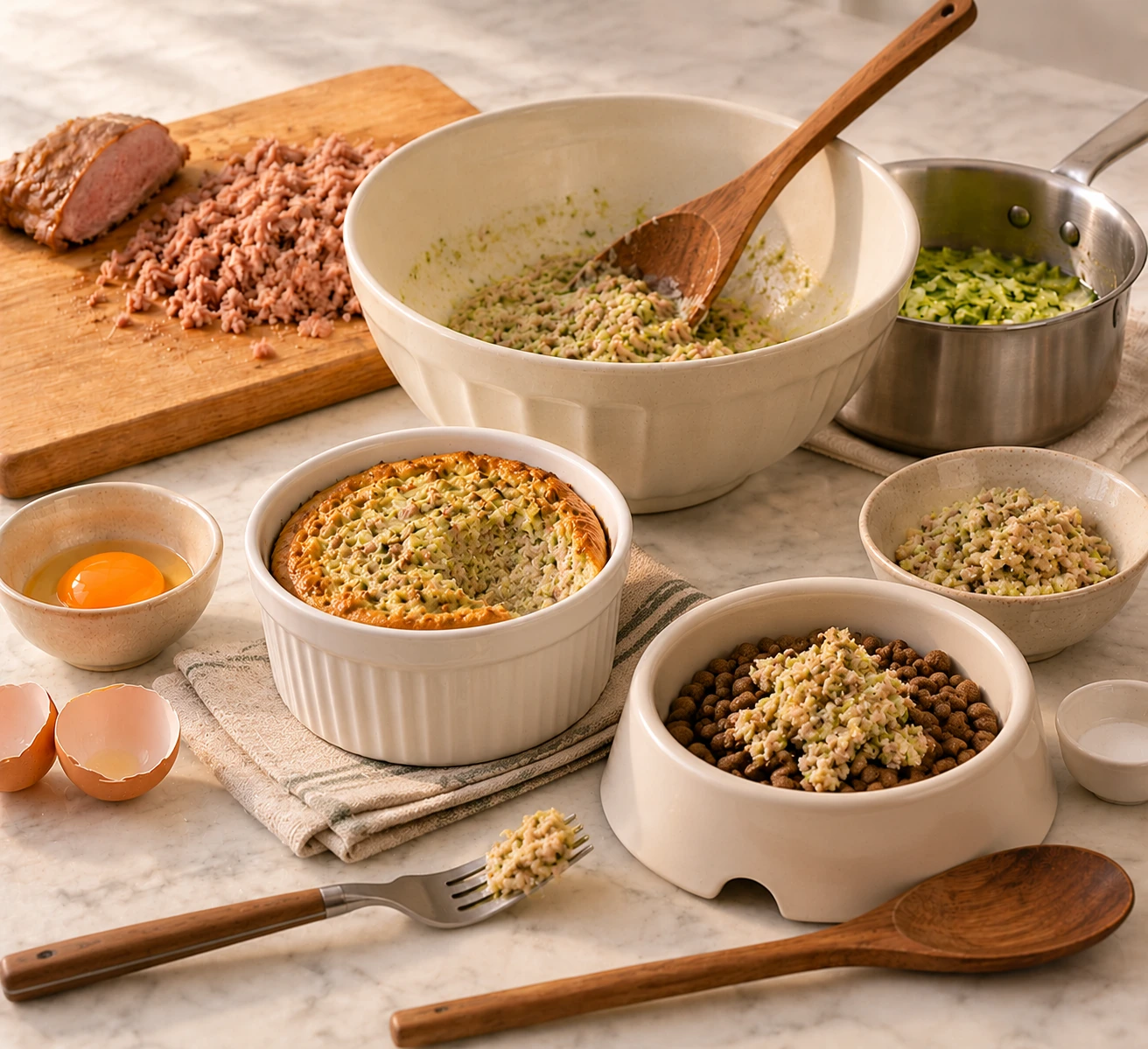
Cool, crumble, and serve a small portion: Carefully remove the ramekin from the oven and set it on a heat-safe surface. Let the soufflé cool completely before handling, as the centre can stay hot even after the surface has cooled. Break off a small amount with a clean fork and check that it is tender and fully set throughout. Crumble or mash it into small, soft pieces, then add a little to your cat's usual complete food. Never serve it in the hot ramekin, and do not leave the topper sitting out for an extended period. Refrigerate any leftovers promptly in a covered container.
Made this recipe?
Tap the paw so other pet parents know it’s worth making.
Be the first to make it
Tips & serving
Start with a teaspoon-sized portion crumbled over your cat's usual complete food, and offer less if your cat is small or has a sensitive appetite. Treat this as an occasional topper, not a replacement for a complete and balanced feline diet. Introduce unfamiliar ingredients cautiously and stop offering the recipe if your cat refuses it or develops an unexpected reaction. Individual dietary needs vary, so ask your veterinarian about appropriate portions and suitability. Major diet changes should always be discussed with a veterinarian.
- A soft, lightly aerated texture gives cats a different topper experience from dense pâtés and dry meat crumbles.
- Finely minced cooked duck distributes through each spoonful, making it easier to add a small amount evenly over familiar food.
- The short ingredient list makes it straightforward to prepare the batch without dairy, added salt, or seasoning.
- Preparing small portions helps owners offer a little variety while keeping the cat's complete and balanced food as the dietary foundation.
- Let the cooked duck and courgette cool before folding them into the egg white, because hot ingredients can deflate the foam and begin cooking the egg prematurely.
- Mince the duck into very small, even pieces so the mixture holds together and the finished soufflé can be broken into soft, manageable portions.
Storage
Keep the refrigerator at 4°C or colder and use the leftovers within 2 days. Mark the container with the preparation date if you are likely to forget when it was made. Thaw a portion in the refrigerator, use it promptly, and never refreeze a portion that has already been thawed. Serve only the amount your cat will eat at one sitting.
Substitutions
If courgette is unavailable, omit it rather than adding a large amount of another vegetable. A small amount of plain, fully cooked pumpkin with no additives may work for texture, but it is optional and should remain a minor ingredient. If duck is unavailable, plain boneless cooked chicken or turkey can be used in the same small quantity. This changes the protein and flavour, so introduce the substitute carefully and do not use it if your veterinarian has advised against that ingredient. Do not replace the egg white with milk, cream, cheese, or a commercial soufflé mix.
Cats recipe FAQ
Can Cats Duck and Courgette Savory Souffle replace my cat's regular diet?
Treat it as an occasional extra, not a meal plan. Start with a teaspoon-sized portion crumbled over your cat's usual complete food, and offer less if your cat is small or has a sensitive appetite.
Is boneless cooked duck meat okay for cats?
This recipe uses boneless cooked duck meat in a small, cat-appropriate amount. Skip it if your cat has a known sensitivity, and read the foods-to-avoid note on this page before serving.
How should I store leftovers?
Cool the soufflé promptly after baking and refrigerate it in a clean, covered, airtight container within two hours. Keep the refrigerator at 4°C or colder and use the leftovers within 2 days.
How should I introduce this topper?
Start with a taste-size portion next to your cat's usual food, and hold off on serving more until you have seen that it agrees with them.
Can cats eat cooked duck?
Many cats can have a small amount of plain, thoroughly cooked, boneless duck as an occasional topper. Remove skin and excess fat, and avoid meat prepared with salt, sauces, onion, garlic, or other seasonings. If your cat follows a prescribed diet, ask your veterinarian before offering it.
Why does this cat soufflé use egg white instead of milk or cream?
Whisked egg white helps create a light texture without adding dairy. Milk and cream are unnecessary for the recipe and may upset some cats' digestion. The egg white must be fully cooked before serving, and the finished topper should remain a small addition to a complete feline diet.
Sources