

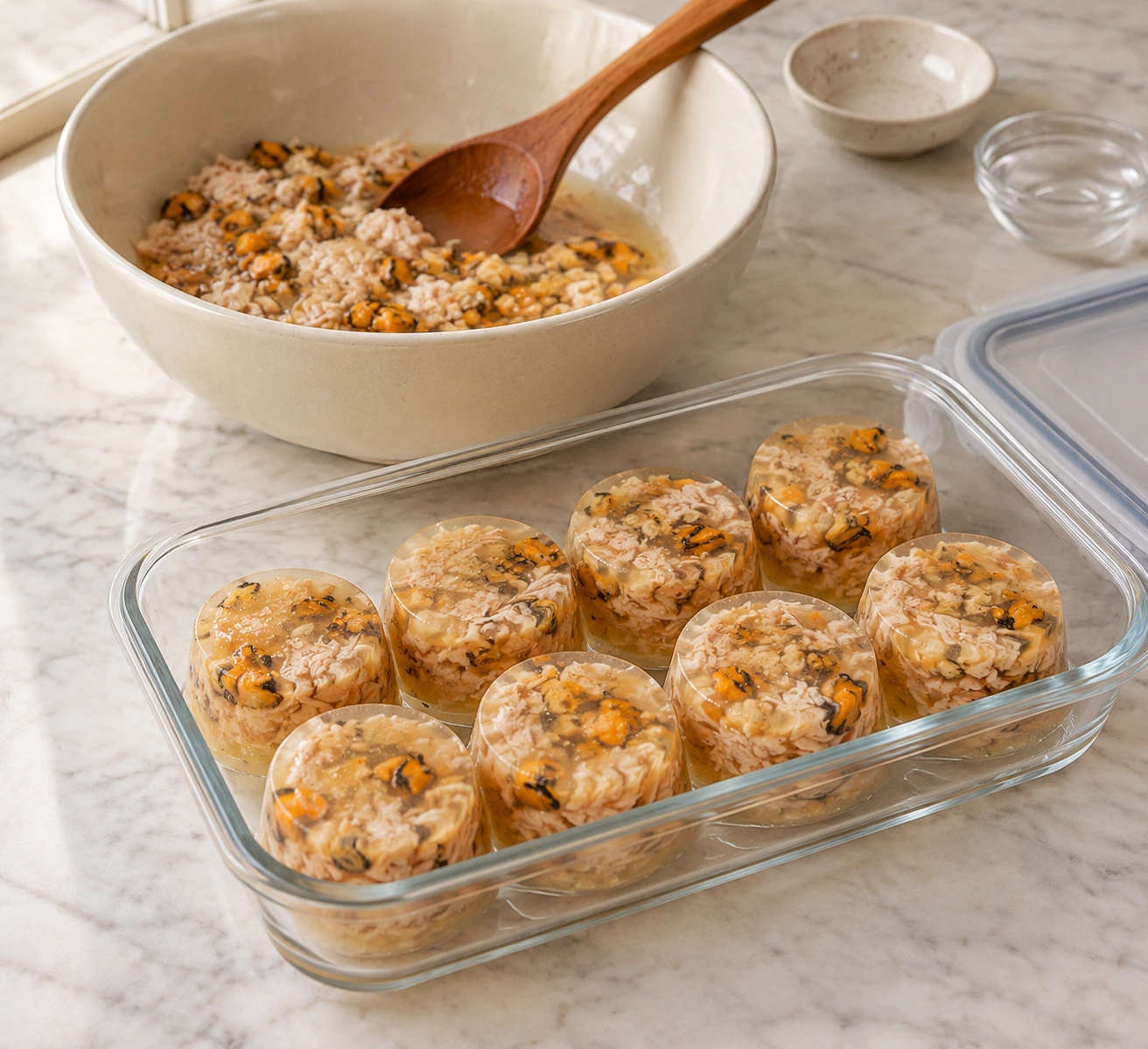
This chicken and mussel aspic is a simple way to give your cat a little variety at mealtime. Tender pieces of thoroughly cooked boneless chicken thigh and a small amount of plain cooked mussel sit in a gently set cooking liquid, with unflavored gelatin helping everything hold together. The texture should be soft enough to break apart easily with a spoon, never firm or rubbery. Serve this topper occasionally alongside your cat's usual complete and balanced food, not in place of a full meal. Chicken and mussel alone cannot meet all a cat's nutritional needs. Use fresh, plain ingredients, remove every bone and shell, and skip salt, onion, garlic, stock cubes, and seasonings. Check with your veterinarian before major diet changes, especially if your cat has a medical condition or eats a prescribed diet.
Safety first: Keep treats and extras under about 10% of your cat's daily food - the regular diet should do the heavy lifting.
Foods to avoid
Never use raw or undercooked chicken or mussels, and remove all bones and shell fragments before preparation. Avoid onion, garlic, chives, leeks, added salt, pepper, herbs, sauces, stock cubes, and any seasoning blends. Do not use mussels preserved in brine or flavored oil. Check gelatin and all other packaged ingredients for sweeteners, flavorings, and additives, and do not use products containing xylitol. Keep raw meat and its utensils separate from cooked ingredients, wash hands and preparation surfaces thoroughly, and refrigerate the finished topper promptly. This recipe is not complete and balanced cat food.
Ingredients
Instructions
Cook the chicken gently: Place the boneless chicken thigh in a small saucepan and add enough of the measured water to cover it. Bring to a gentle simmer, cover, and cook until the thickest part reaches at least 74°C, checking with a clean food thermometer rather than judging by color. Leave out salt, oil, onion, garlic, stock cubes, and herbs; once cooked through, remove the chicken, save the cooking liquid, and let the meat cool until comfortable to handle. If you spot any debris in the liquid, strain it through a fine-mesh strainer.
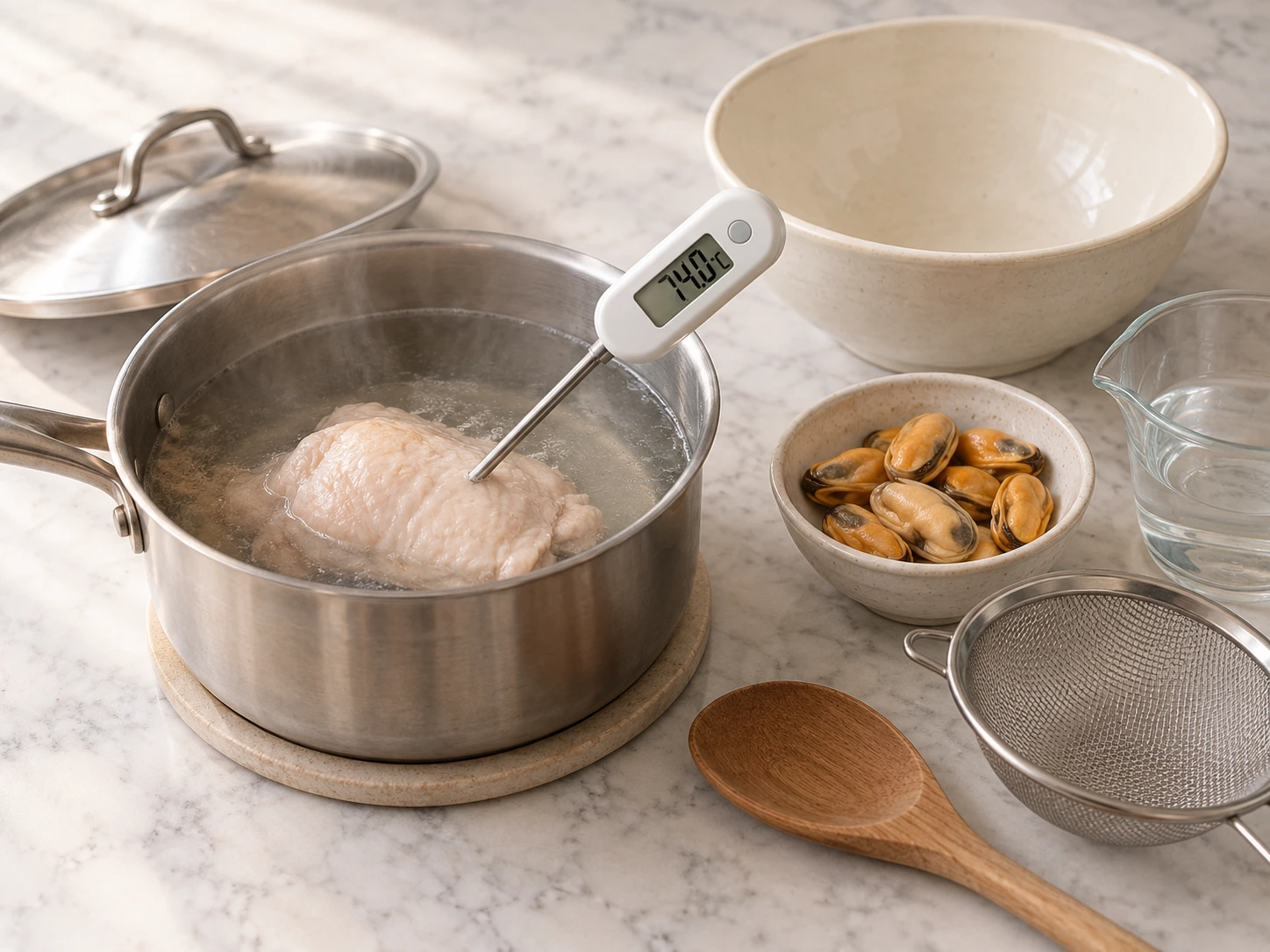
Prepare the mussel and chicken pieces: Check the cooked mussel meat carefully for any remaining shell fragments, using only plain mussel cooked without salt, sauces, garlic, or seasoning. Finely chop the mussel, then cut or shred the cooled chicken into small, soft pieces that fit comfortably on a cat's spoon or in a shallow mold. Keep the pieces similar in size so they spread evenly through the aspic instead of settling into one thick layer. If either ingredient has been sitting at room temperature for an extended period, discard it rather than using it.
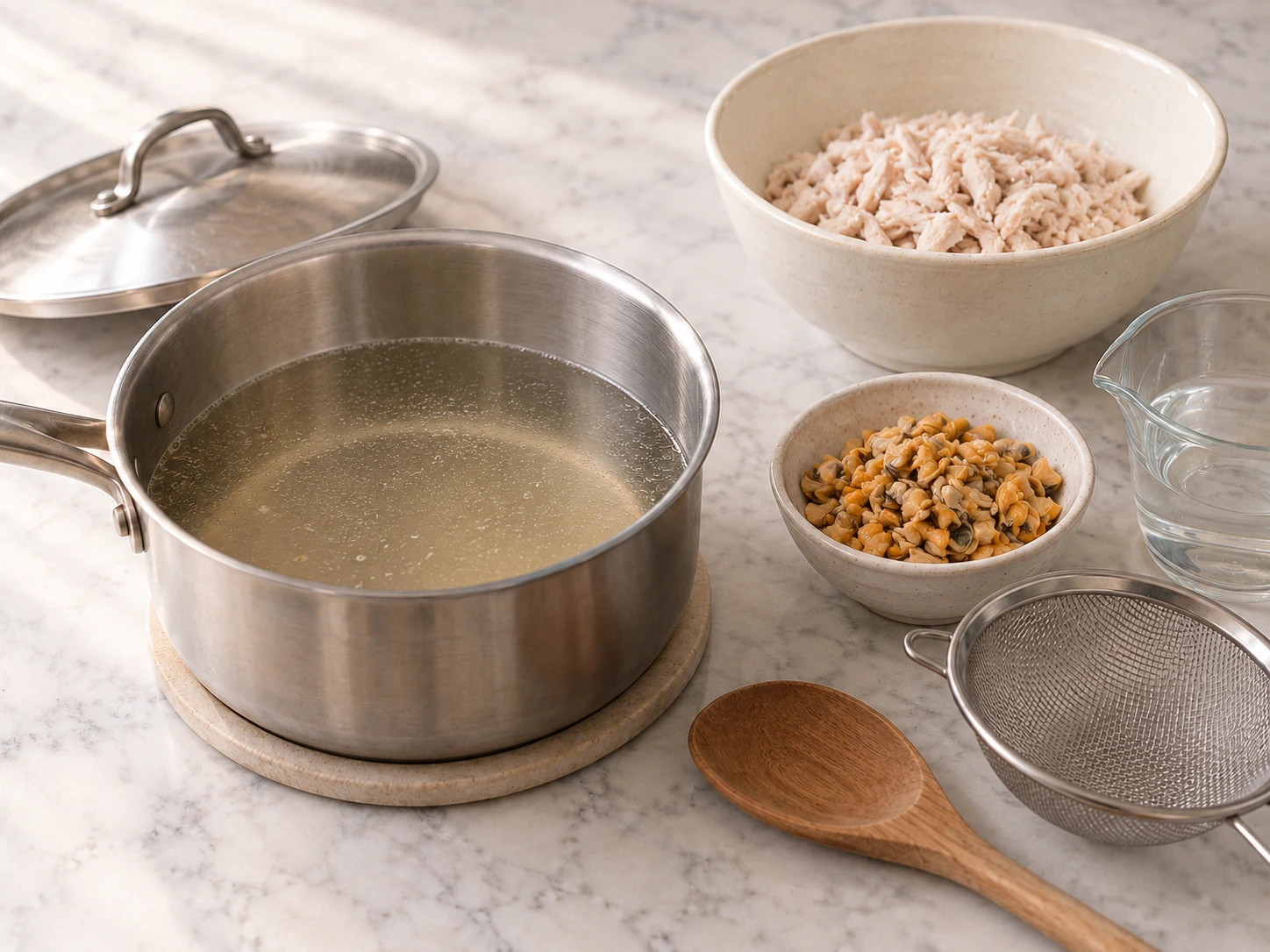
Dissolve the gelatin in plain cooking liquid: Measure about 120 ml of the reserved chicken cooking liquid, adding a little fresh water if needed to reach that amount. Let it cool until warm rather than vigorously boiling, then sprinkle the unflavored gelatin evenly over 2 tablespoons of cool liquid in a small heatproof bowl and leave it for about 5 minutes to absorb the water. Gently warm the remaining measured liquid and stir it into the bloomed gelatin until fully dissolved, without boiling the mixture. For a cleaner finish, strain the liquid first if it contains meat particles; it should remain fluid and lightly coat a spoon.
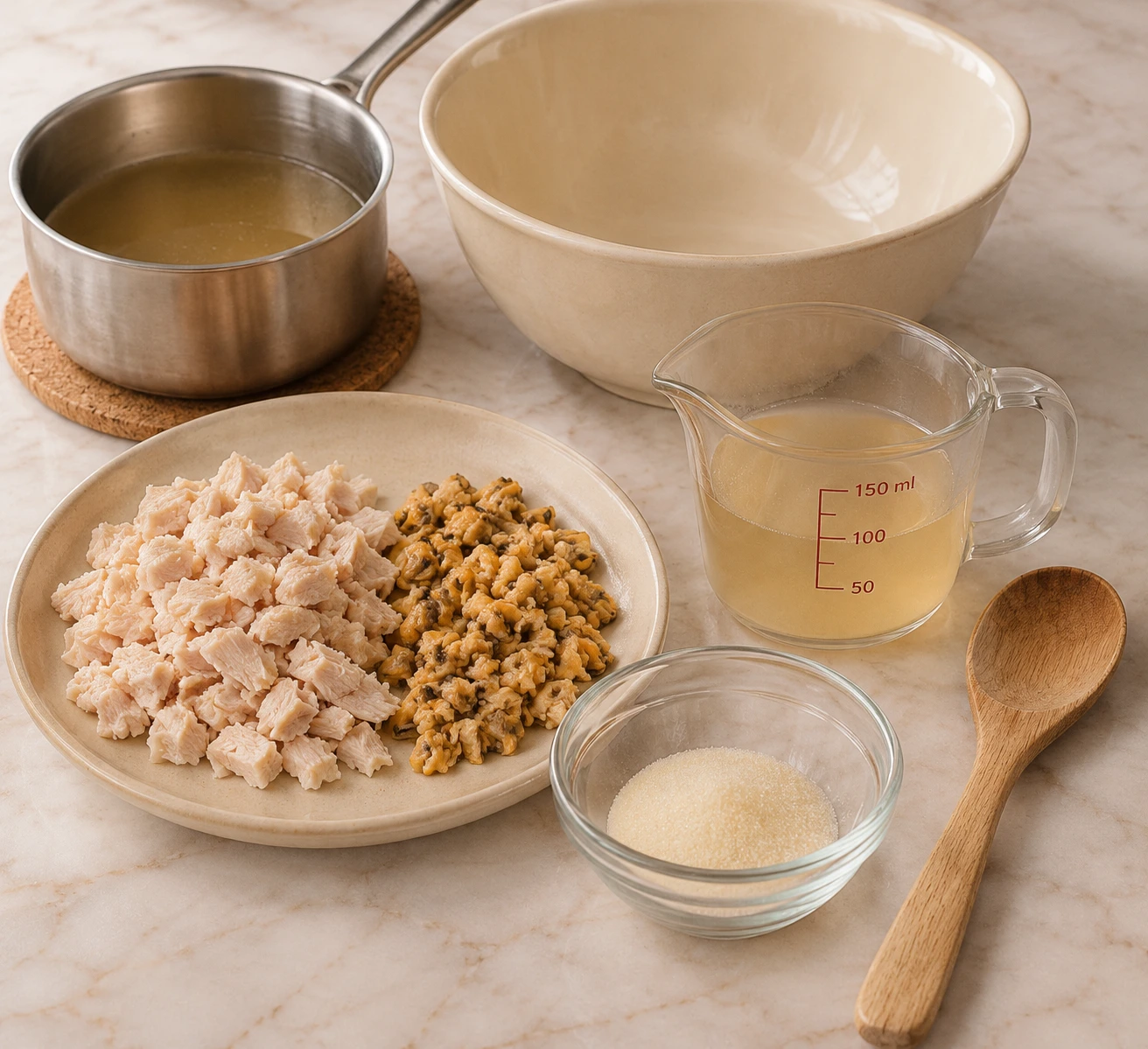
Combine and portion the mixture: Put the chopped chicken and finely chopped mussel in the same small bowl or a clean, shallow glass container. Pour the warm gelatin liquid over the meat and stir gently to distribute the pieces throughout, using just enough liquid to moisten and surround them without making the mixture too watery. Divide it into eight small portions using a shallow container or individual clean molds, then tap the container lightly against the counter to release large air pockets and check that every piece is covered by liquid. Let it cool briefly at room temperature, but keep total time out to no more than 2 hours, or 1 hour in very hot conditions.
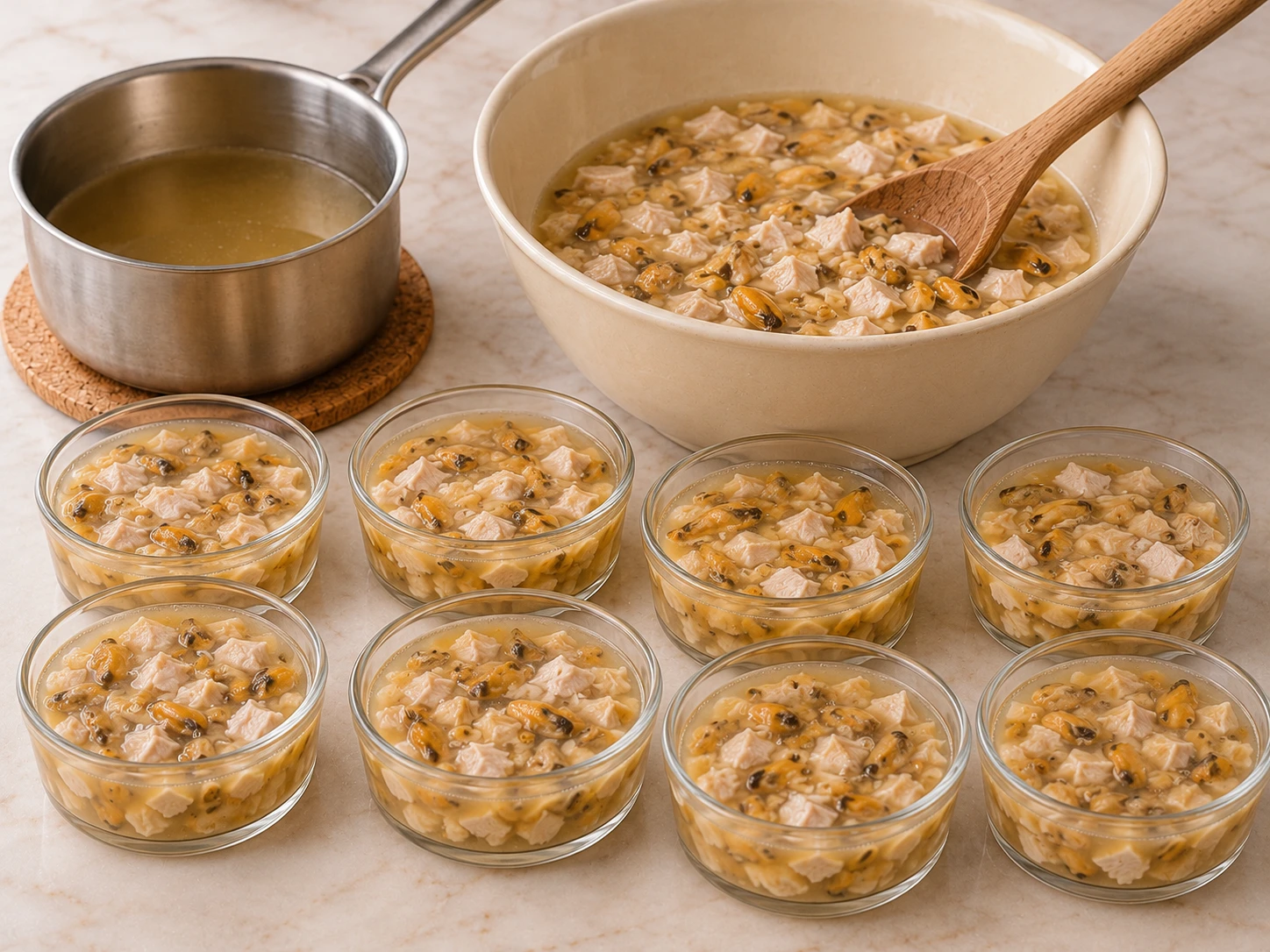
Chill until softly set: Cover the container and refrigerate for at least 3 hours, until the mixture is fully chilled and gently set. The aspic should hold its shape when spooned but give easily under the back of a spoon; if you're using individual molds, loosen each portion carefully with a clean spoon rather than forcing it out. Keep the finished topper refrigerated until serving, then offer a small piece over your cat's regular complete food, breaking it up further if needed. If it is still liquid after chilling, there may be too little gelatin or it may not have dissolved properly, so don't stir dry gelatin into the cold mixture; make a fresh batch with the corrected ratio instead.
Made this recipe?
Tap the paw so other pet parents know it’s worth making.
Be the first to make it
Tips & serving
Start with about 1 teaspoon of the chilled aspic crumbled over your cat's usual complete food, and observe whether your cat accepts it. If tolerated, a little more may be offered occasionally, but keep all treats and toppers combined to no more than about 10% of daily calories, with at least 90% coming from complete and balanced food. Individual calorie needs vary, so use this as a general limit rather than a feeding target. Serve it chilled but not frozen, and never use it to replace a full meal. Discuss major diet changes with your veterinarian, particularly for cats on prescribed diets or with existing health concerns.
- The softly set texture offers a different way to present familiar cooked animal proteins alongside a cat's regular food.
- Small, pre-portioned servings make it easier to offer a measured topper without replacing the cat's nutritionally complete everyday meal.
- The short ingredient list helps owners identify exactly what goes into each batch and avoid unnecessary salt, seasonings, and sauces.
- The translucent set makes the chicken pieces easy to see, creating a clear, appealing presentation without relying on decorative ingredients.
- Use a thermometer to confirm the chicken reaches 74°C at its thickest point, since a pale surface alone does not prove it is safely cooked.
- Bloom the gelatin in cool liquid before adding warm liquid, because sprinkling it directly into a hot pan can leave stubborn clumps.
Storage
Transfer the finished aspic promptly to a clean, covered, food-safe container and refrigerate at 4°C or colder. Use within 2 days for this small homemade batch, and discard any portion that has been left out too long or shows an unusual smell, discoloration, or texture. For convenient portioning, freeze individual portions in a covered freezer-safe mold and transfer them to a sealed container once firm. Do not refreeze a portion after it has thawed.
Substitutions
If mussels are unavailable, omit them and use a little extra thoroughly cooked boneless chicken instead. The result will have a simpler flavor and remain a chicken aspic. Do not substitute seasoned seafood, canned mussels in brine, or shellfish packed with garlic or sauces. Plain unflavored gelatin is used to create the soft set. Do not replace it with sweetened dessert jelly, flavored gelatin mixes, or a thickener containing sweeteners or seasonings.
Cats recipe FAQ
Is this topper a complete meal for my cat?
Treat it as an occasional extra, not a meal plan. Start with about 1 teaspoon of the chilled aspic crumbled over your cat's usual complete food, and observe whether your cat accepts it.
Is cooked boneless chicken thigh okay for cats?
This recipe uses cooked boneless chicken thigh in a small, cat-appropriate amount. Skip it if your cat has a known sensitivity, and read the foods-to-avoid note on this page before serving.
How long does Cats Chicken and Mussel Savory Aspic Topper keep?
Transfer the finished aspic promptly to a clean, covered, food-safe container and refrigerate at 4°C or colder. Use within 2 days for this small homemade batch, and discard any portion that has been left out too long or shows an unusual smell, discoloration,.
How should I introduce this topper?
Start with a taste-size portion next to your cat's usual food, and hold off on serving more until you have seen that it agrees with them.
Can cats eat chicken and mussel aspic?
Many cats can have small amounts of thoroughly cooked plain chicken and mussel if they tolerate both ingredients, but individual needs differ. This recipe is an occasional topper, not a complete diet. Introduce it cautiously, avoid seasoned or brined seafood, and ask your veterinarian before offering it to a cat on a prescribed diet.
Why did my chicken aspic fail to set?
The gelatin may not have been fully dissolved, the liquid-to-gelatin ratio may have been too high, or the mixture may not have chilled long enough. Refrigerate it for at least 3 hours before judging the texture. If it remains liquid, do not stir dry gelatin into the cold finished batch; make a fresh batch with the measured ratio.
Sources