A few fresh vegetables can make a lovely little snack for a pet parrot, especially when they're served in a way that invites picking and exploring. These bok choy fans pair tender steamed leaves with gently flattened green peas, offering two different textures without any salt, oil, or seasoning. Arranging the leaves loosely around the peas also makes each vegetable easy for your bird to recognize and grab. The key is to steam everything until just tender, then let it cool completely. Smaller parrots need finer pieces, while larger birds may manage wider leaf sections. Serve these little fans as an occasional fresh-food snack for birds already accustomed to suitable vegetables, alongside their usual balanced diet.
Safety first: Keep treats and extras under about 10% of your bird's daily food - the regular diet should do the heavy lifting.
Foods to avoid
Never season the vegetables with salt, soy sauce, garlic, onion, butter, cooking oil, commercial dressings, or spice blends. Do not use bok choy or peas from prepared meals because added ingredients may be unsuitable for birds. Avoid avocado and other foods known to be unsafe for parrots. Wash all fresh produce thoroughly and use clean preparation utensils. Do not serve hot or warm vegetables, tough oversized stems, hard peas, or pieces that are inappropriate for the bird's size and feeding ability. Do not assume this snack is suitable for every bird species, particularly birds with specialized diets.
Ingredients
Instructions
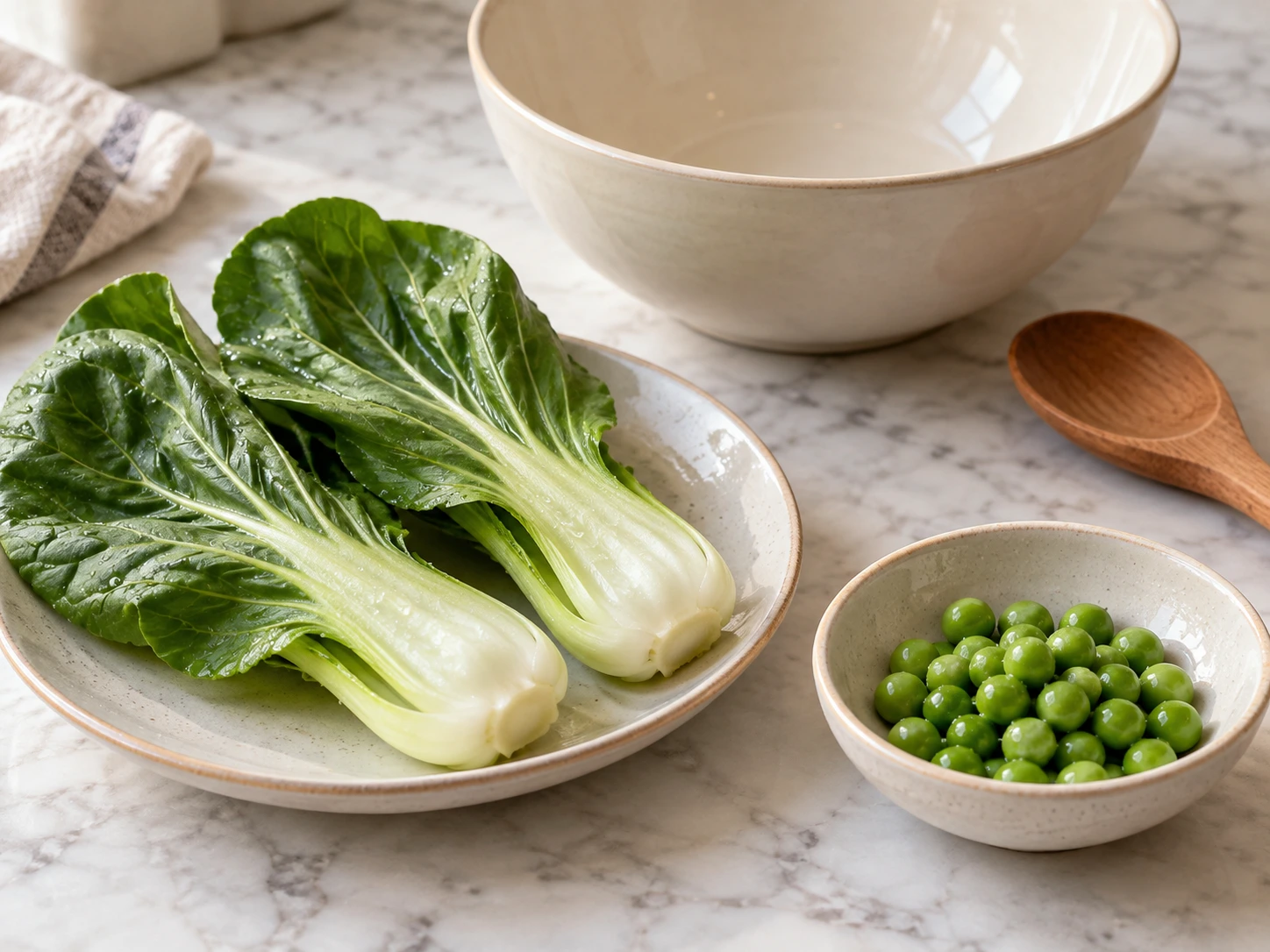
Wash and prepare the vegetables: Separate the 2 bok choy leaves and wash both sides thoroughly under cool running drinking water, getting into the folds near the thick white bases where grit tends to hide. Check for damaged areas, trim any particularly tough stem ends, and keep the tender green portions intact. Measure 2 tablespoons of plain green peas, making sure frozen peas have no added salt, butter, sauce, or seasoning; rinse fresh peas under cool running water or briefly rinse frozen ones to remove loose ice crystals, then place the leaves and peas in separate small clean dishes.
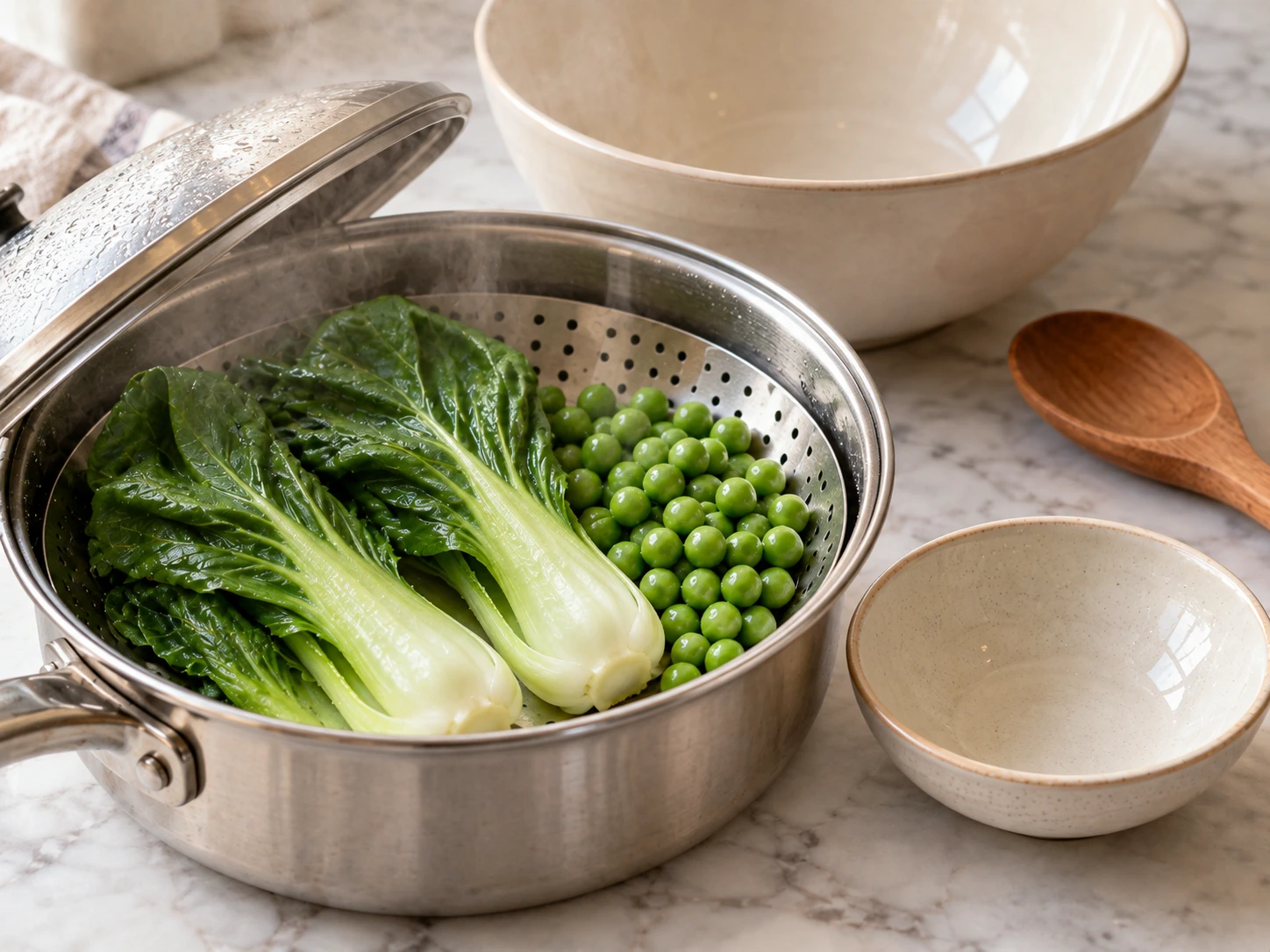
Steam the bok choy and peas: Pour 1 cup of clean drinking water into a small saucepan, set the steamer basket above the water, and bring it to a gentle simmer before adding the bok choy leaves and covering with the fitted lid. After approximately 2 minutes, add the green peas beside the leaves, cover again, and steam for another 2 to 4 minutes. The leaves should bend easily without turning mushy, and the peas should be heated through, soft enough to flatten, and no longer firm in the middle; adjust the cooking time slightly if needed to avoid waterlogged vegetables.
Cool completely and adjust the leaves: Using clean utensils, lift the vegetables out of the steamer and spread them in a single layer on a clean cream ceramic plate, keeping the leaves and peas separate. Let everything cool completely to room temperature, checking the thicker leaf bases and pea centers for lingering warmth, and blot excess moisture from wet leaves with clean kitchen paper. On a clean cutting board, slice the tender bok choy into small, soft strips for smaller parrots or slightly wider sections for larger birds that can manage them safely, trimming or finely chopping any remaining thick stems so no tough, oversized pieces remain.
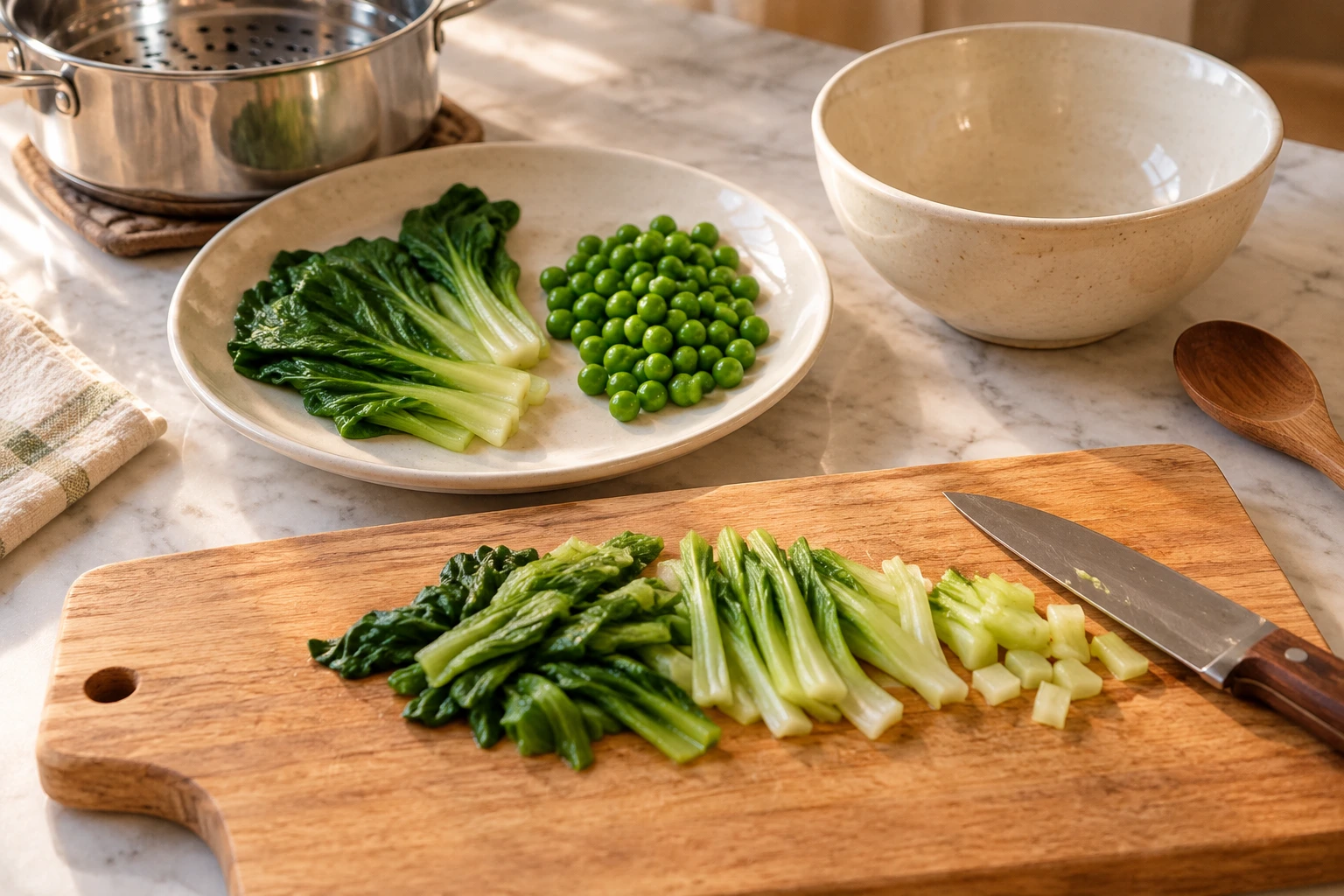
Flatten the peas and shape the fans: Place a few completely cooled peas on the clean cutting board and gently press each one with the back of a fork until it forms a soft, shallow disc instead of a round pea that can roll away. Break the flattened peas into smaller, manageable pieces for smaller parrots, or leave them broader for larger birds when appropriate, then arrange 3 to 5 tender bok choy sections on the clean cream ceramic plate with their narrow ends slightly overlapping to make a loose fan. Tuck a small cluster of flattened peas near the base of each fan, keeping the leaf tips visible and easy to grasp, and add only a few drops from the reserved tablespoon of drinking water if the
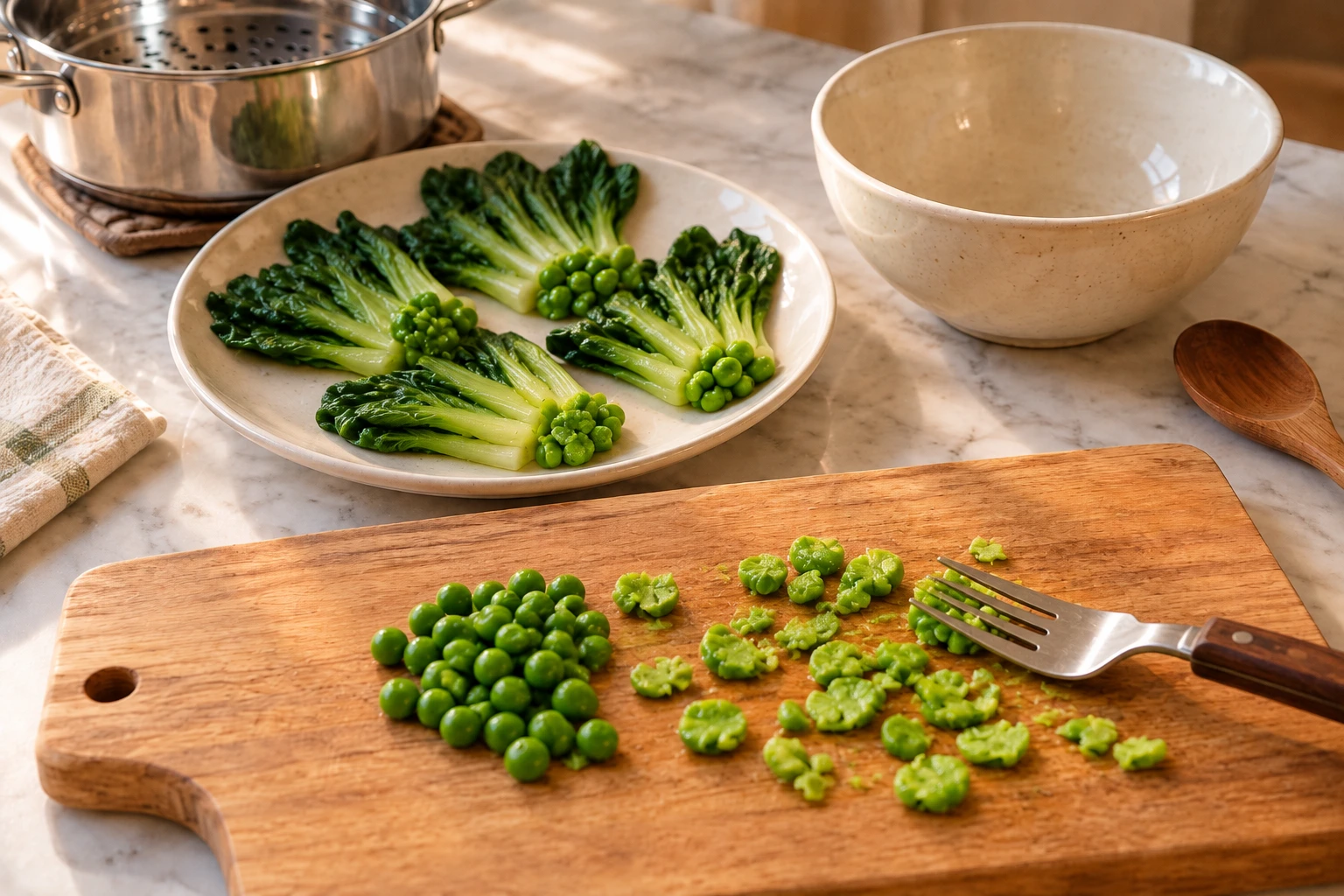
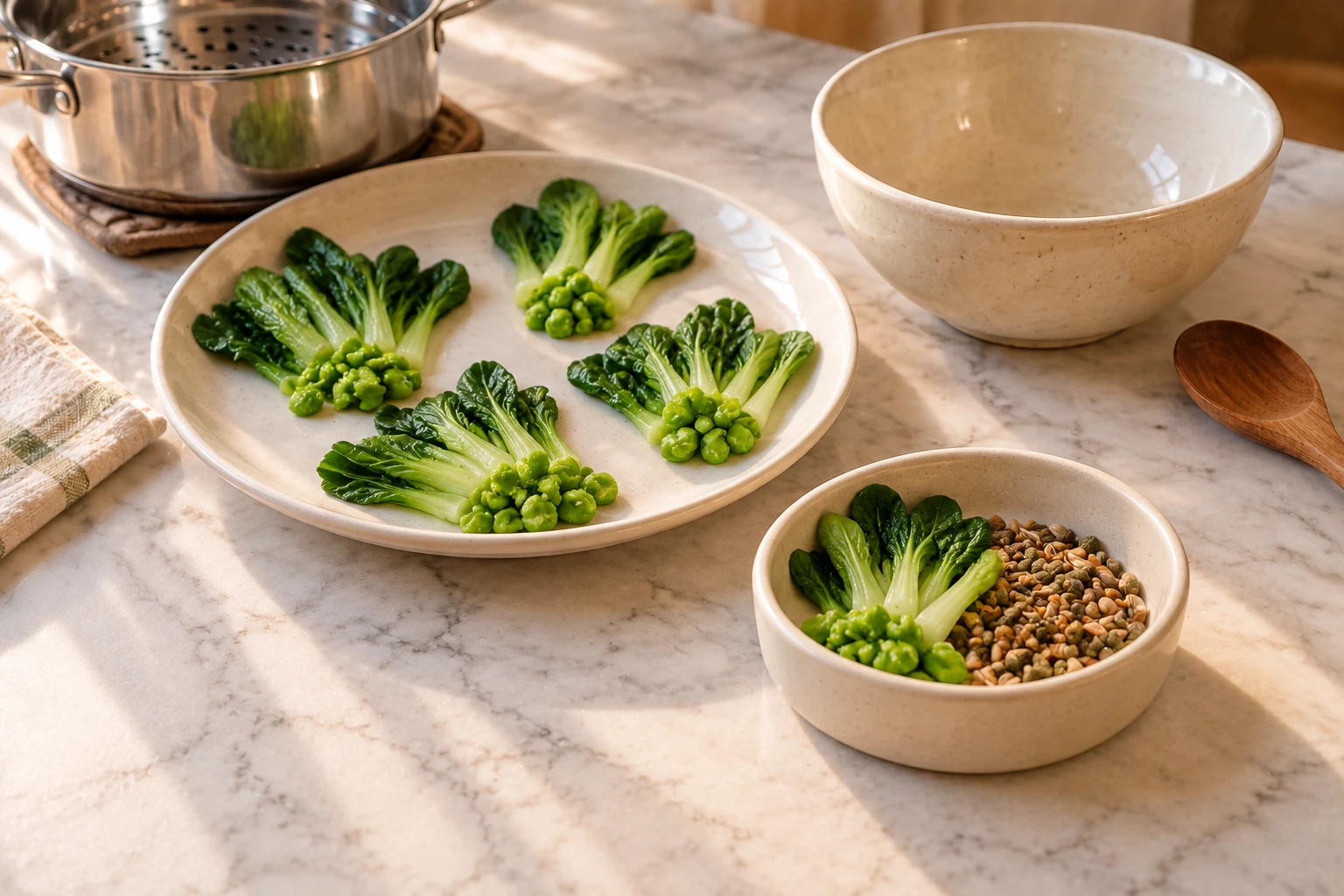
Serve a small fresh portion: Finish arranging the completely cooled bok choy around the lightly flattened peas, leaving each fan loose enough for your bird to pull apart, then transfer only a small, species-appropriate portion to a clean bird-safe feeding dish after checking that every piece is soft, manageable, and completely cool. Serve it alongside your bird's usual balanced diet without replacing pellets or other established foods, and watch how your bird handles the snack on its first offering, especially if these textures are new. Remove uneaten fresh vegetables promptly, within 1 to 2 hours or sooner in warm conditions, and discard anything that has been mouthed, scattered, or
Made this recipe?
Tap the paw so other pet parents know it’s worth making.
Be the first to make it
Tips & serving
Serve this recipe only to pet parrots for whom bok choy and plain cooked peas are appropriate parts of an established diet. Begin with a very small amount, such as one or two small leaf pieces and a little flattened pea, especially when introducing either ingredient. Larger parrots may manage broader leaves and several flattened peas, while smaller parrots need finely cut leaves and smaller pea fragments. There is no single serving size suitable for every species, age, or individual bird. This is an occasional fresh-food presentation, not a complete meal or substitute for appropriately formulated pellets and the rest of a balanced diet. Offer it in a clean dish without forcing the bird to
- Offers two distinct soft vegetable textures without adding unnecessary salt, oil, or sauces.
- Introduces recognizable green vegetables in small portions that are easy to adjust for different parrot sizes.
- Gives owners a simple way to observe which leaf and pea textures their bird prefers.
- Brief steaming softens tougher leaf sections and peas while keeping the vegetables easy to handle.
- The loose fan arrangement encourages birds to pick apart individual vegetable pieces at their own pace.
- Uses familiar, readily available produce without requiring specialized bird-food preparation equipment.
Storage
These vegetable fans are best assembled and served fresh after complete cooling. Refrigerate any untouched, promptly cooled steamed bok choy and peas in separate clean airtight food containers at 4°C or below. Do not store vegetables that have already been offered to a bird or left in its feeding dish. If preparing the ingredients ahead, store the cooled leaf sections and cooked peas separately, then flatten the peas and arrange the fans immediately before serving.
Substitutions
If young bok choy is unavailable, ordinary mature bok choy may be used after removing the tougher thick stem portions and selecting the tender green leaves. Steam the leaves until flexible, then cut them into portions appropriate for the bird's size. Avoid using spoiled, heavily wilted, or discolored leaves. Plain frozen green peas can replace fresh green peas without changing the preparation method. Check the ingredient label carefully and select peas with no added salt, butter, sugar, seasonings, or sauce. Steam them until tender and flatten them only after they have cooled completely.
Birds recipe FAQ
Can I serve this snack every day?
Treat it as an occasional extra, not a meal plan. Serve this recipe only to pet parrots for whom bok choy and plain cooked peas are appropriate parts of an established diet.
Is bok choy okay for birds?
This recipe uses bok choy in a small, bird-appropriate amount. Skip it if your bird has a known sensitivity, and read the foods-to-avoid note on this page before serving.
How do I store this snack?
These vegetable fans are best assembled and served fresh after complete cooling. Refrigerate any untouched, promptly cooled steamed bok choy and peas in separate clean airtight food containers at 4°C or below.
How should I introduce this snack?
Start with a taste-size portion next to your bird's usual food, and hold off on serving more until you have seen that it agrees with them.
Can budgies and other small parrots eat these bok choy and pea fans?
Some small parrots can enjoy appropriately prepared bok choy and plain cooked peas as part of a suitable diet. Cut the tender leaves into tiny manageable pieces and break flattened peas into smaller fragments. The full fan arrangement is more useful for larger birds, so adjust the presentation to the individual bird and consult an avian veterinarian about species-specific portions.
Why steam the bok choy instead of serving it raw?
Brief steaming softens the thicker parts of bok choy and makes the leaves easier to fold into small fans. It also allows the peas to become tender enough to flatten. Raw washed bok choy may be appropriate for some parrots, but this recipe focuses on a uniformly soft texture. Cool every component completely before offering it.
Sources