
Key takeaways
- Fresh foods should support, not replace, the foundation of the pet's regular diet.
- Leafy greens and herbs are often more useful than sugary snacks.
- Introduce one fresh food at a time so changes are easy to observe.
Rabbits and small pets often need a different recipe mindset than dogs or cats. A fresh snack plate can be beautiful and useful, but it should respect the animal's normal diet, chewing needs, and digestive sensitivity.
Focus on greens and herbs
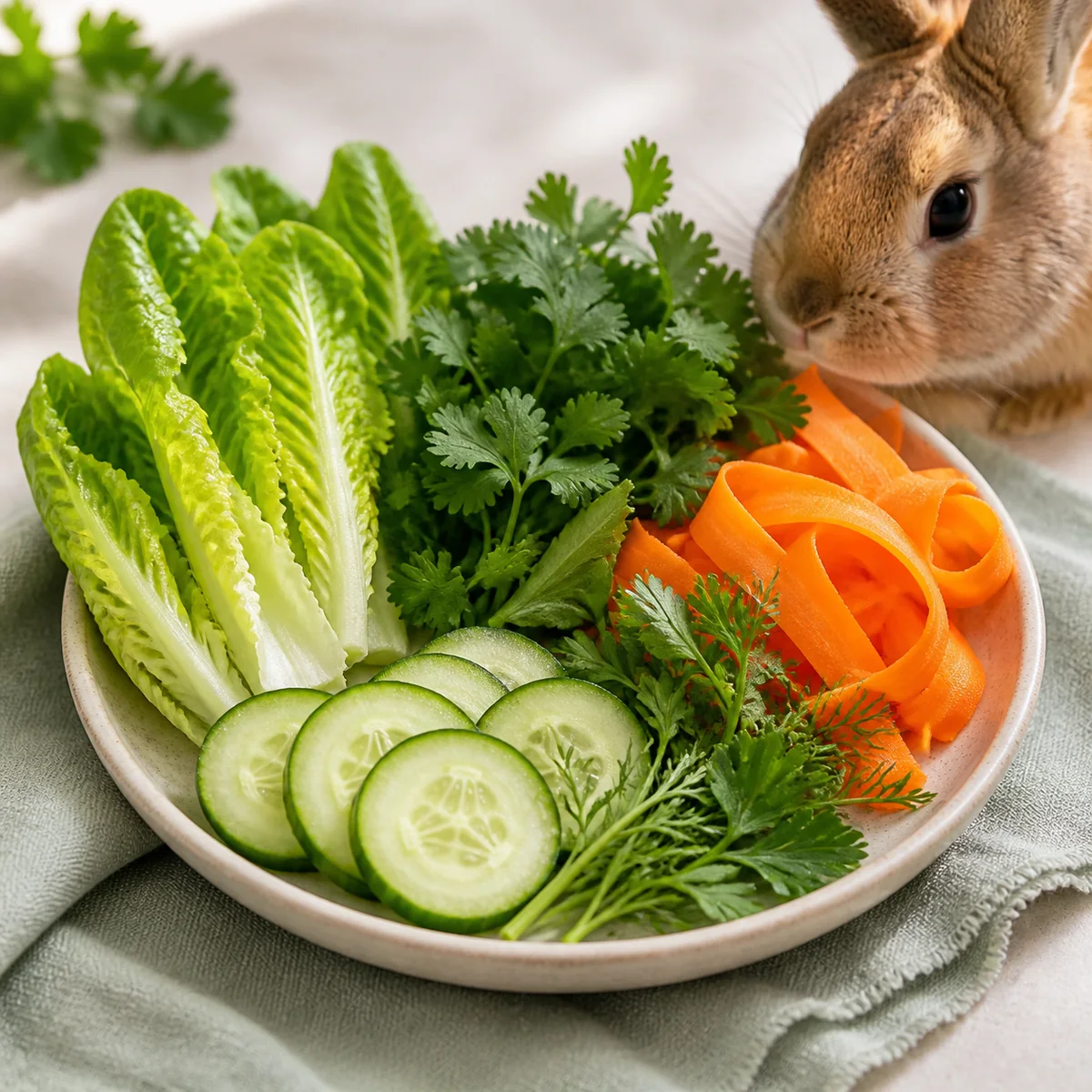
Leafy greens and fresh herbs are common starting points for rabbit-friendly snack ideas. Romaine, cilantro, parsley, and small amounts of other suitable greens can add variety. Wash produce well and serve pieces that are easy to nibble.
Use vegetables in small amounts
Carrot, cucumber, and bell pepper can appear in small pet snack ideas, but sweeter vegetables should stay modest. A snack plate should feel like a thoughtful accent, not a bowl of dessert.
Keep species differences visible
"Small pets" is a broad phrase. Rabbits, guinea pigs, hamsters, and other companions do not all eat the same way. Always check guidance for the specific animal before adding a new food.
Safety reminder
Ask your veterinarian or a qualified exotic pet professional before changing your small pet's regular diet, especially for young, senior, pregnant, or medically fragile animals.
Browse related recipes
Explore small pet recipes or read the foods-to-avoid guide before building a new snack plate.