

When you want to add a little variety to your cat's usual meal, this chicken and pumpkin risotto offers a soft, easy-to-mix option. Boneless chicken thigh provides the main ingredient, while a modest amount of plain pumpkin and thoroughly cooked rice brings the mixture together. The result should be moist and spoonable, not a bowl of rice with a little meat scattered through it. This is a supplemental topper, not a complete cat food or a balanced homemade diet. Cats need food formulated to meet their nutritional requirements, so keep the chicken mixture as a small occasional extra alongside your cat's usual complete food. Use plain ingredients throughout, with no onion, garlic, salt, butter, or seasoned stock. Let everything cool before serving, and discuss major diet changes with your veterinarian.
Safety first: Keep treats and extras under about 10% of your cat's daily food - the regular diet should do the heavy lifting.
Foods to avoid
Never add onion, garlic, leeks, chives, salt, bouillon, seasoned stock, gravy, butter, or spice blends. Onion and garlic can be toxic to cats, including when cooked or present in concentrated seasoning. Use plain water rather than commercial stock, which may contain unsafe ingredients or excessive sodium. Remove all bones and hard cartilage, cook the chicken thoroughly, and do not serve the mixture hot. Pumpkin must be plain pumpkin puree, not sweetened pumpkin pie filling. This recipe is not nutritionally complete and should not replace a complete cat food.
Ingredients
Instructions
Measure the ingredients: Measure the chicken, pumpkin puree, and uncooked rice before you start. Check that the pumpkin contains only pumpkin and that your rice, utensils, and cookware are free from salt, stock, sauces, onion, garlic, and other seasonings. If you like, rinse the rice in a fine sieve and drain it, then keep the raw chicken on a separate cutting board and wash your hands and any surfaces it touches before handling cooked ingredients.
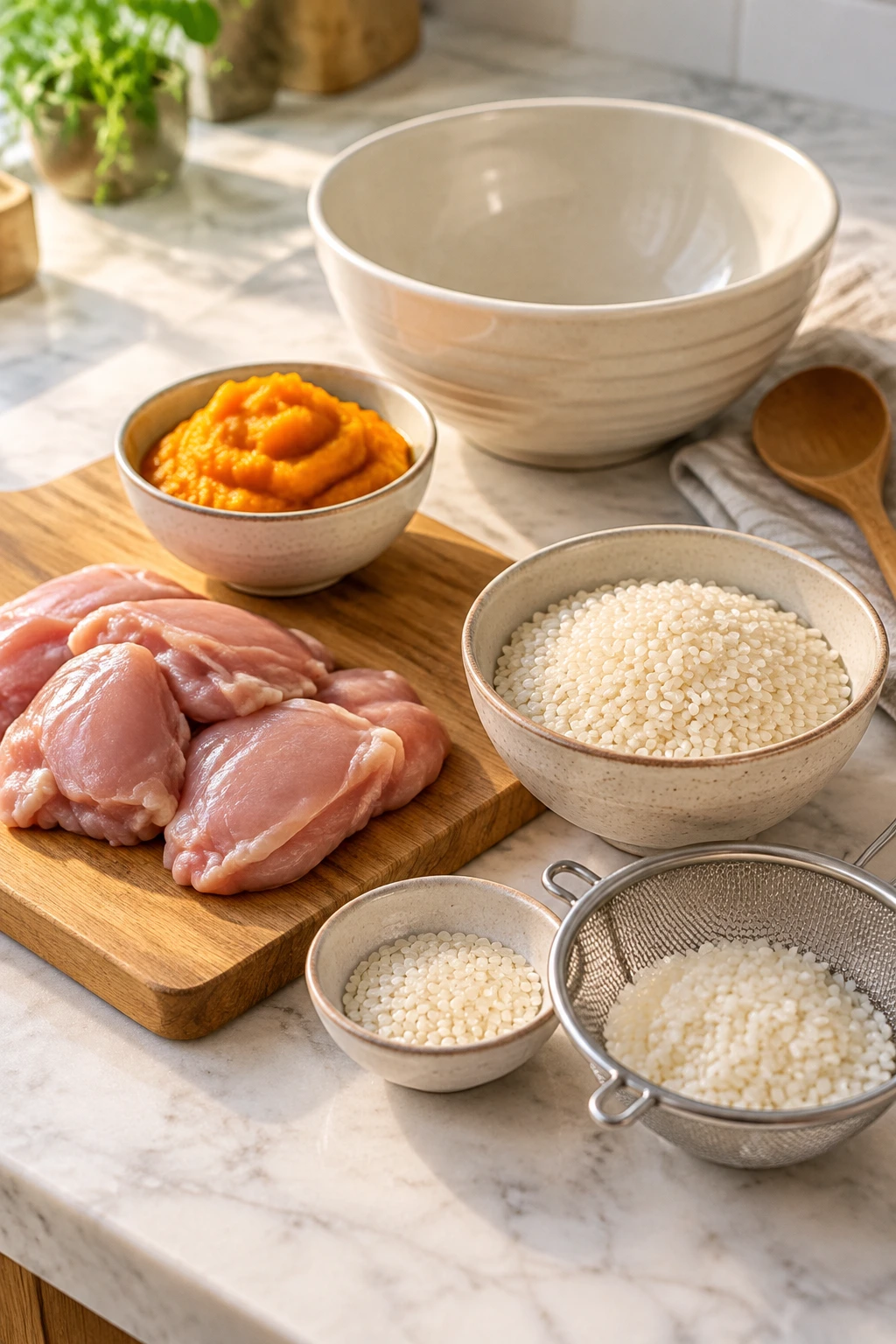
Cook the rice until very soft: Add the rinsed rice and 250 ml water to the small saucepan and bring to a gentle boil. Reduce the heat, cover, and simmer according to the rice package directions until the grains are completely tender and easy to mash, adding a little more plain water if needed. Aim for soft, slightly loose rice rather than dry, separate grains, then turn off the heat and leave the saucepan covered while you cook the chicken.
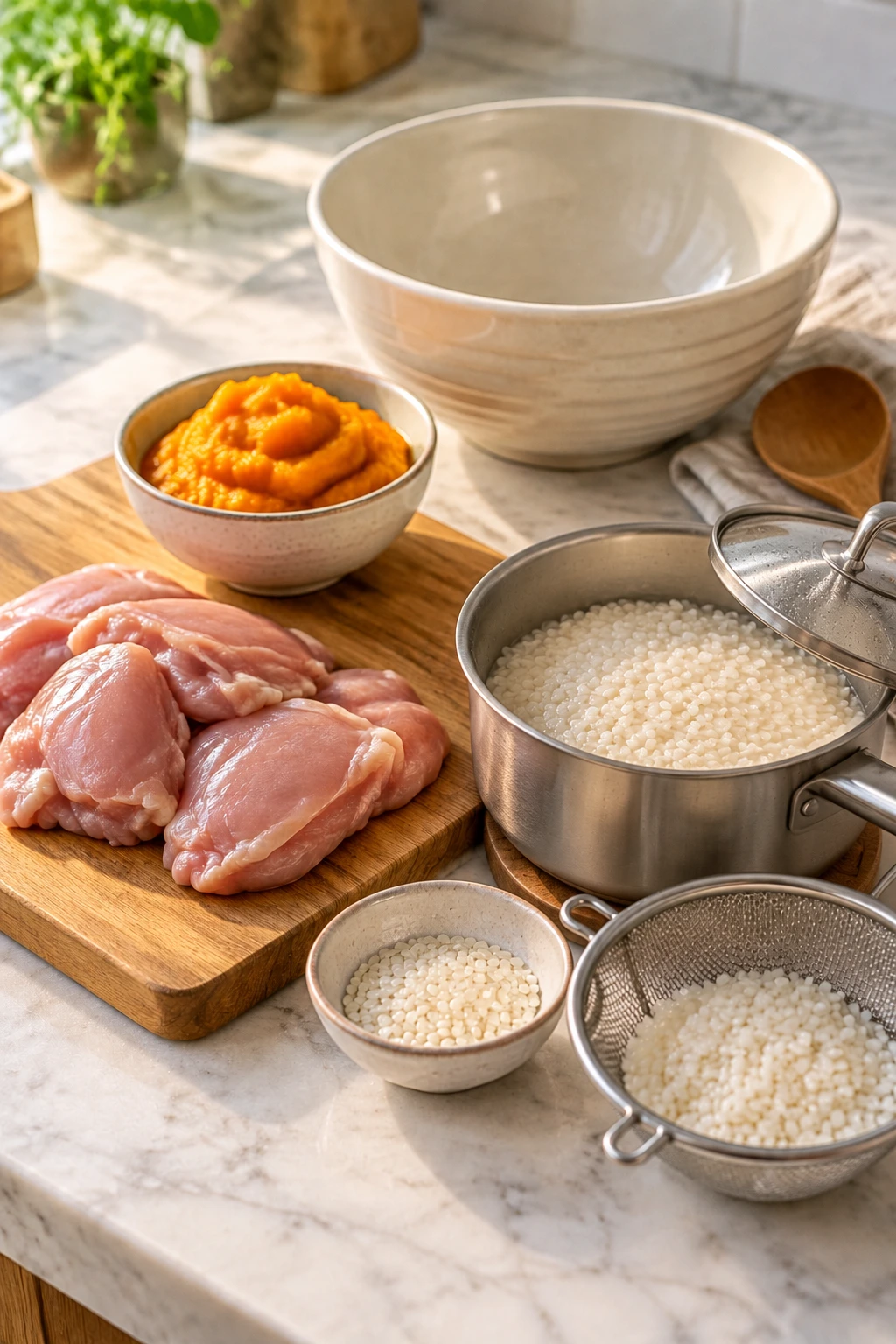
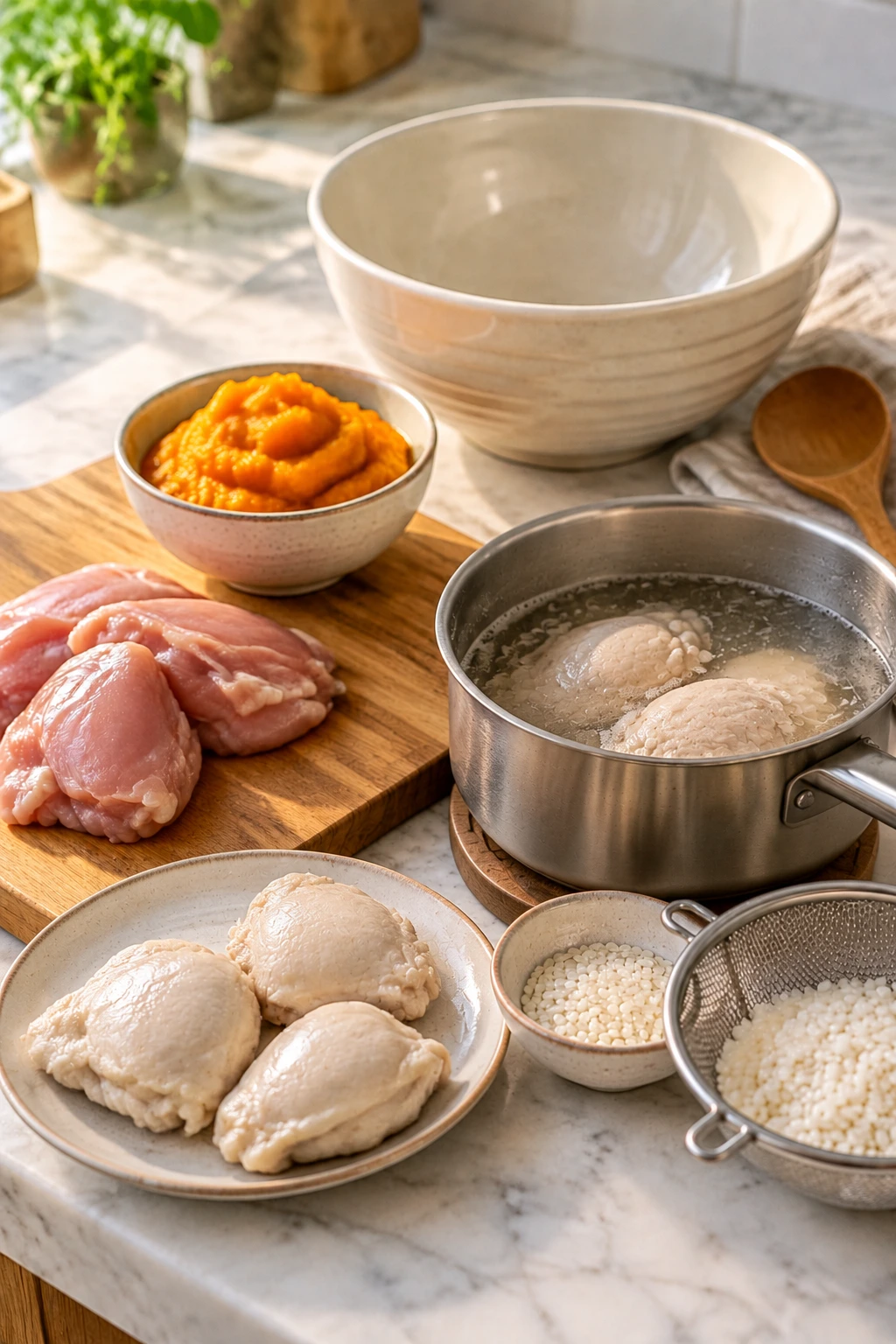
Cook the chicken thoroughly: Put the chicken thigh in the separate pot or deep skillet with enough plain water to cook it gently. Simmer until the thickest part reaches an internal temperature of 74°C, checking with a clean food thermometer, and do not add salt, stock, onion, garlic, oil, or seasoning. Transfer the chicken to a clean plate and let it rest briefly, taking care not to reuse any utensils or plates that touched raw poultry unless they have been thoroughly washed.
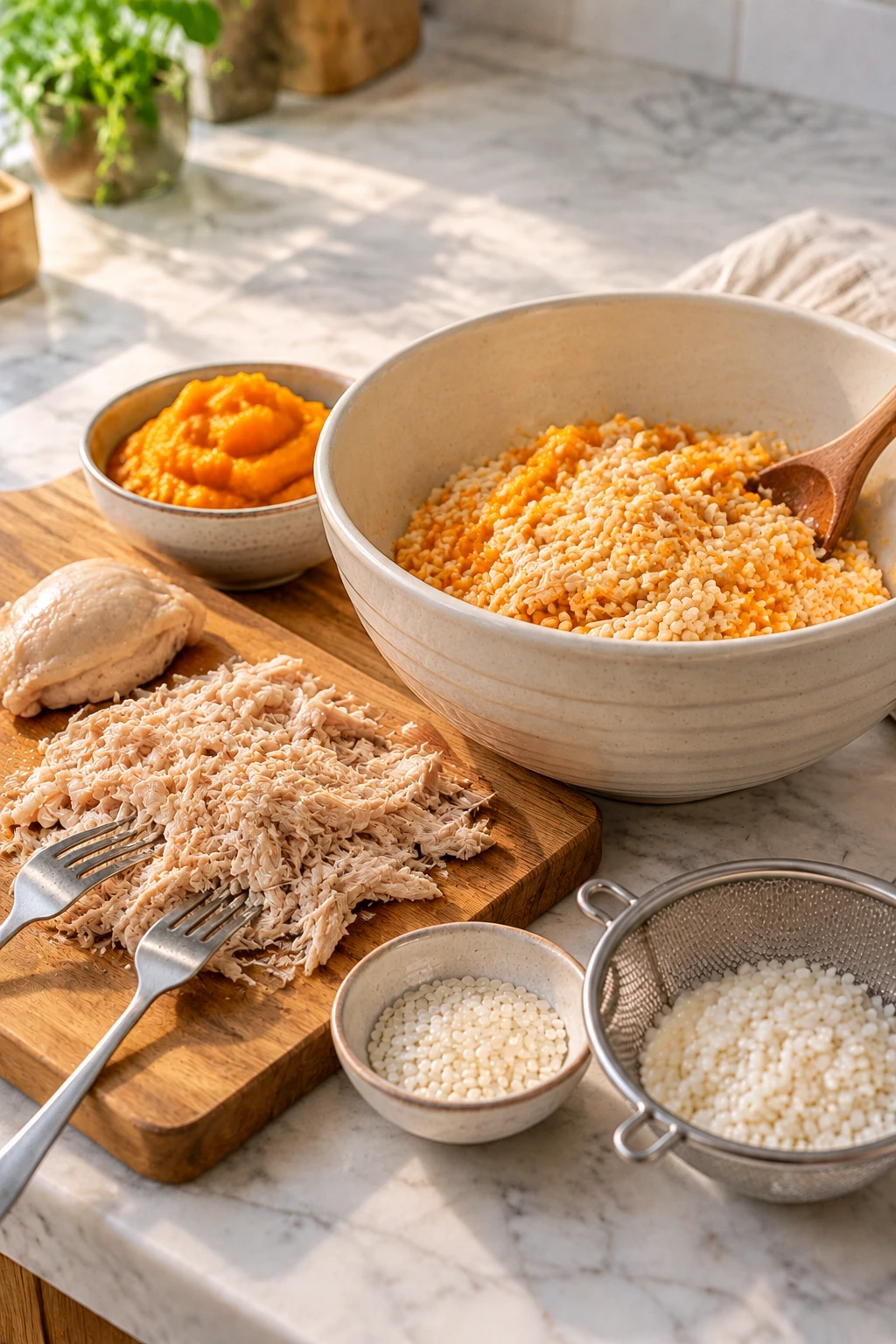
Shred the chicken and combine: Transfer the cooked chicken to a clean cutting board and shred it finely with two clean forks, removing any remaining tough connective tissue. Mash the pumpkin puree into the soft rice, then fold in the shredded chicken so it remains the main component of the mixture. If everything looks dry or sticky, stir in a small splash of plain water, and check carefully for any hard pieces of cartilage or bone, even though the chicken was purchased boneless.
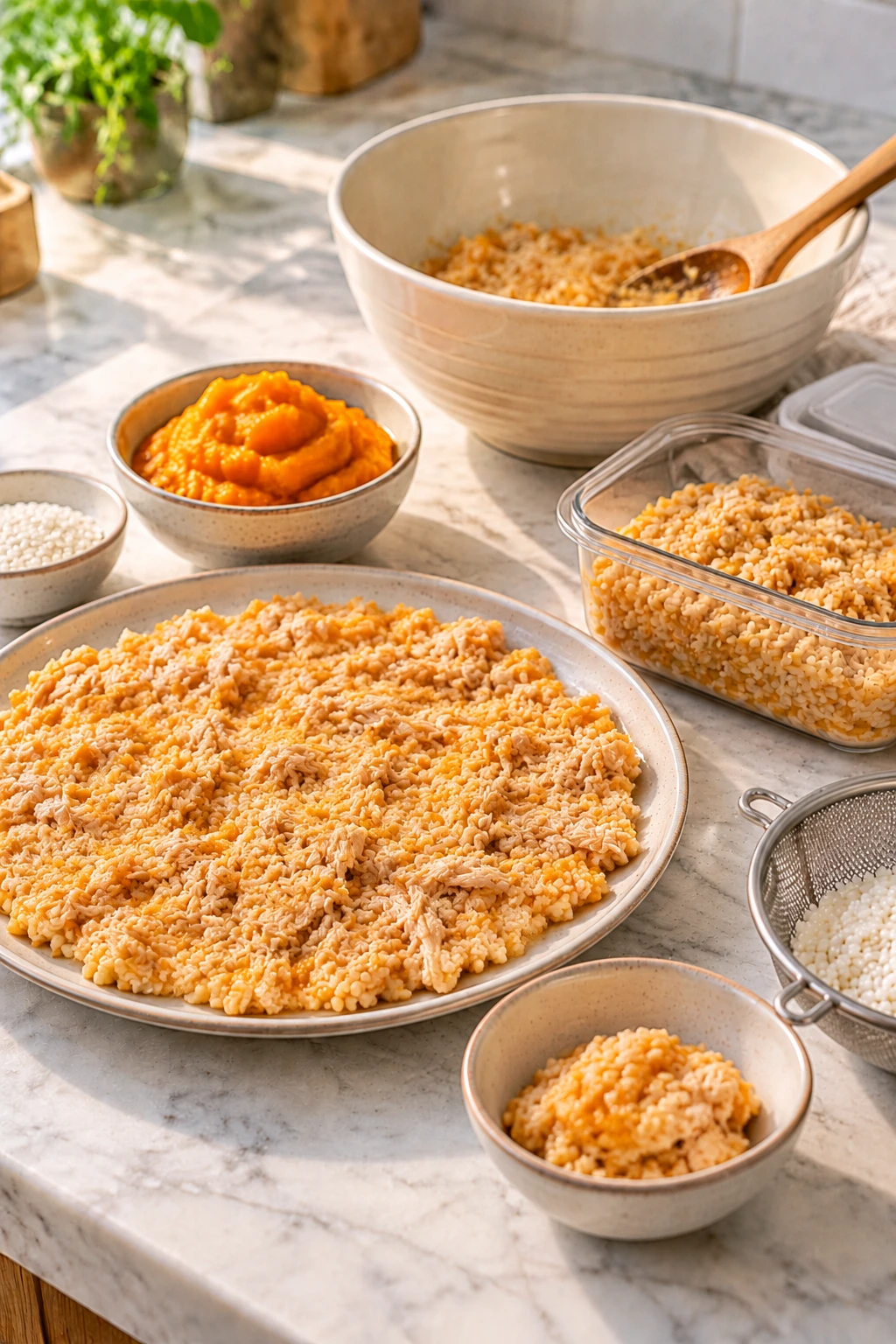
Cool and portion the topper: Spread the mixture in a shallow layer on a clean plate or tray to help it cool more quickly. Once it has cooled completely to room temperature, check that it is moist and soft enough to mix easily into your cat's regular food, adding a little plain water if needed. Serve only a small spoonful as an occasional topper, then promptly refrigerate the rest in a clean, covered container rather than leaving the cooked chicken out for an extended period.
Made this recipe?
Tap the paw so other pet parents know it’s worth making.
Be the first to make it
Tips & serving
Let the mixture cool completely before offering it. Start with about one teaspoon mixed into your cat's usual complete food, and offer less if your cat is small or unfamiliar with the ingredients. This recipe is an occasional topper, not a complete meal, and extras should generally remain a small part of daily calorie intake. Observe whether your cat accepts the texture, and do not force-feed it. Ask your veterinarian about appropriate portions if your cat has dietary restrictions or follows a prescribed diet. Major diet changes should always be discussed with a veterinarian.
- The soft, spoonable consistency makes the mixture easy to stir into a cat's usual wet food without creating large, dry clumps.
- Using a small measured batch gives owners practical control over portions and reduces the amount of leftover cooked chicken that needs storing.
- Keeping chicken as the main ingredient makes the recipe more appropriate for a meat-focused supplemental offering than a mixture dominated by rice or pumpkin.
- Plain, familiar ingredients make it easier to check the label and avoid unnecessary seasoning, sauces, and potentially unsafe additions.
- Cook the rice softer than you would for a human side dish, because firm or dry grains will not blend as evenly into a cat's food.
- Shred the chicken while it is still easy to handle, then inspect every piece for cartilage, hard tissue, or any overlooked bone fragment.
Storage
Transfer the cooled mixture to a clean, airtight container and refrigerate promptly at 4°C or colder. Use within 3 days for a cautious home-storage window, and discard it sooner if it has been left out too long, smells unusual, or shows any change in appearance. Do not rely on smell alone to determine safety. Freeze individual small portions in a covered freezer-safe container if you do not expect to use the batch within the refrigerated storage window.
Substitutions
Plain, fully cooked boneless chicken breast can replace chicken thigh if needed. It is leaner and may turn drier, so shred it finely and add a little plain water to keep the finished topper moist. Keep the meat as the largest component. Plain cooked butternut squash can replace the pumpkin puree in a similar small amount, provided it contains no seasoning, butter, or added sugar. Its texture and moisture can differ, so mash it smooth before mixing. If you do not want to use rice, you can omit it and prepare a smaller batch of finely shredded chicken with a little plain pumpkin and water.
Cats recipe FAQ
Can Cats Chicken and Pumpkin Savory Risotto replace my cat's regular diet?
Treat it as an occasional extra, not a meal plan. Let the mixture cool completely before offering it. Start with about one teaspoon mixed into your cat's usual complete food, and offer less if your cat is small or unfamiliar with the ingredients.
Is boneless cooked chicken thigh okay for cats?
This recipe uses boneless cooked chicken thigh in a small, cat-appropriate amount. Skip it if your cat has a known sensitivity, and read the foods-to-avoid note on this page before serving.
How long does Cats Chicken and Pumpkin Savory Risotto keep?
Transfer the cooled mixture to a clean, airtight container and refrigerate promptly at 4°C or colder. Use within 3 days for a cautious home-storage window, and discard it sooner if it has been left out too long, smells unusual, or shows any change in.
How should I introduce this topper?
Start with a taste-size portion next to your cat's usual food, and hold off on serving more until you have seen that it agrees with them.
Can cats eat chicken and pumpkin risotto?
Cats can generally have small amounts of plain, thoroughly cooked boneless chicken and plain pumpkin as occasional extras if those ingredients suit them. The rice is not essential to a cat's diet, so keep it modest. This homemade mixture is not complete or balanced and should never replace a nutritionally complete cat food.
Can I use canned pumpkin instead of homemade pumpkin puree?
Yes, provided the canned product is plain pumpkin with no added sugar, spices, salt, or other ingredients. Do not use pumpkin pie filling, which may contain sweeteners and seasonings. Check the ingredient label each time, then measure a small amount and mix it thoroughly into the chicken and soft rice.
Sources