

Key takeaways
- Choose plain, cooked, unseasoned ingredients for homemade pet recipes.
- Pet type matters: dogs, cats, birds, rabbits, and small pets have different needs.
- Use homemade recipes as inspiration unless your veterinarian gives diet-specific guidance.
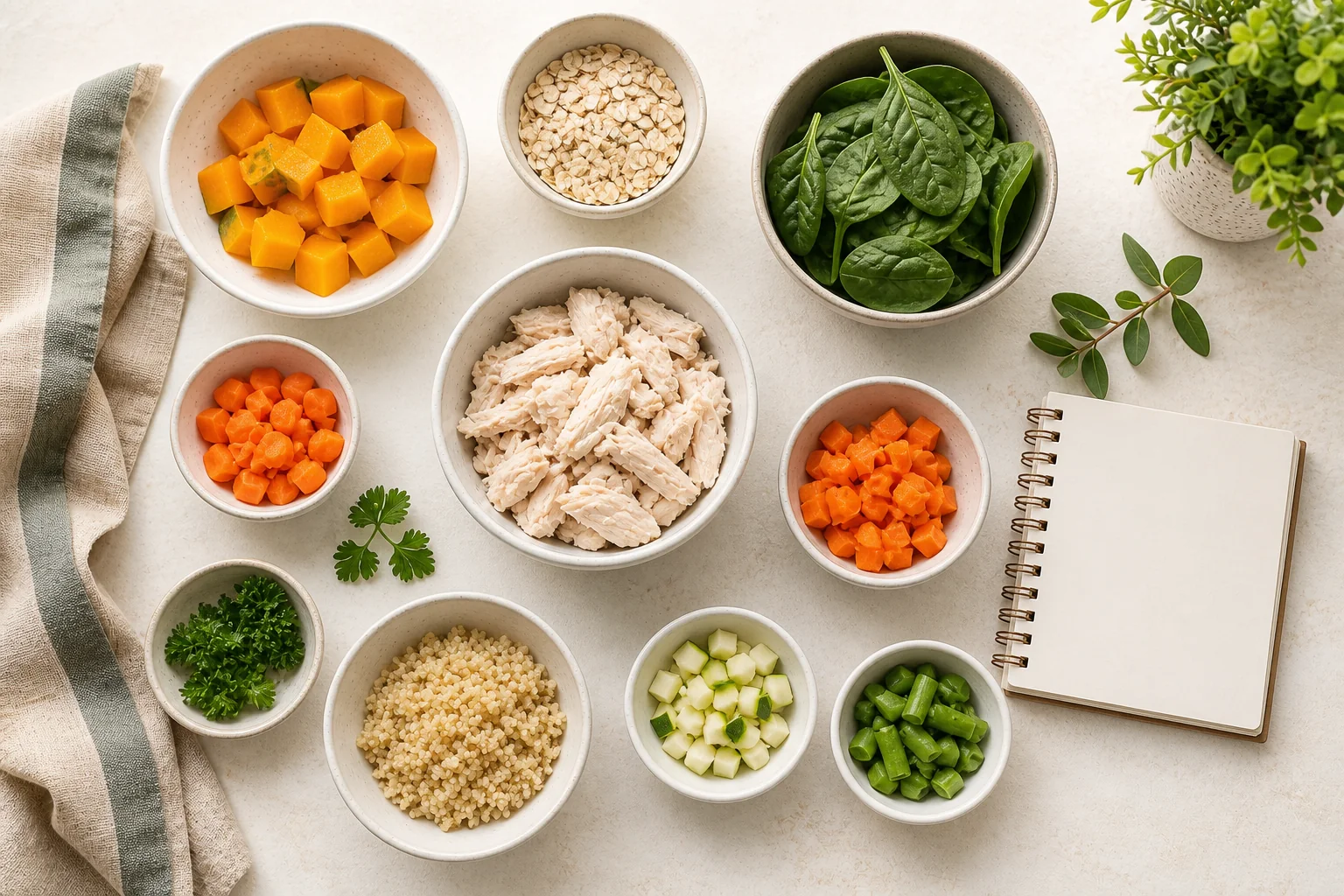
The best homemade pet recipe ingredients are usually simple. Plain cooked chicken, a small spoonful of pumpkin, cooked oats, chopped carrot, or fresh greens can be useful in the right context, but the right context depends on the animal in front of you.
Pawdishy recipes are written for discovery and safer inspiration, not as a replacement for a complete commercial diet or a veterinarian-created nutrition plan.
Start with plain proteins
For dogs and cats, plain cooked chicken, turkey, or fish can work in many homemade recipe ideas. Keep it unseasoned, remove bones and skin, and avoid sauces, butter, onion, garlic, and salty broths.
Cats are obligate carnivores, so plant-heavy recipes should not be treated as complete meals. For birds and small pets, protein use depends heavily on species and regular diet.
Use vegetables carefully
Pumpkin, carrot, cucumber, leafy greens, and bell pepper can appear in pet recipe ideas, but portion size and pet type matter. Rabbits and small pets often rely on hay and leafy greens as part of their daily routine, while dogs may only need a small spoonful of a vegetable-based topper.
Keep grains simple
Cooked oats, rice, and quinoa are common recipe ingredients because they are easy to prepare plainly. They are not automatically right for every pet, so use them as one recipe dimension rather than the center of every homemade meal.
Safety reminder
Introduce new foods gradually and ask your veterinarian before making major diet changes, especially for pets with allergies, medical needs, weight concerns, or a prescription diet.
Related Pawdishy recipes
Start with the Chicken & Pumpkin Bowl for Dogs or browse the full pet recipe library for dog recipes, cat toppers, bird snacks, and small pet ideas.