

Key takeaways
- Start with a very small amount of one new homemade food.
- Keep your pet's regular diet stable while you observe tolerance.
- Ask your veterinarian before major changes or if your pet has medical needs.
Homemade pet recipes are easiest to use responsibly when they start small. A spoonful of topper, a tiny training treat, or a modest fresh snack gives you more control than a sudden bowl-size change.
Step 1: Choose one simple recipe
Begin with a recipe that uses familiar, plain ingredients. Avoid complicated mixes until you know how your pet responds to each food.
Step 2: Serve a small amount
Add a small portion alongside the regular diet rather than replacing a full meal. Treats and toppers should stay proportionate to your pet's size, activity, and daily calories.
Step 3: Watch and adjust
Pay attention to appetite, stool, itching, vomiting, or behavior changes. If something seems off, stop the new food and contact your veterinarian for guidance.
Safety reminder
Homemade recipes can be enjoyable, but they are not automatically complete and balanced diets. Major feeding changes should be planned with professional veterinary input.
Try a beginner recipe
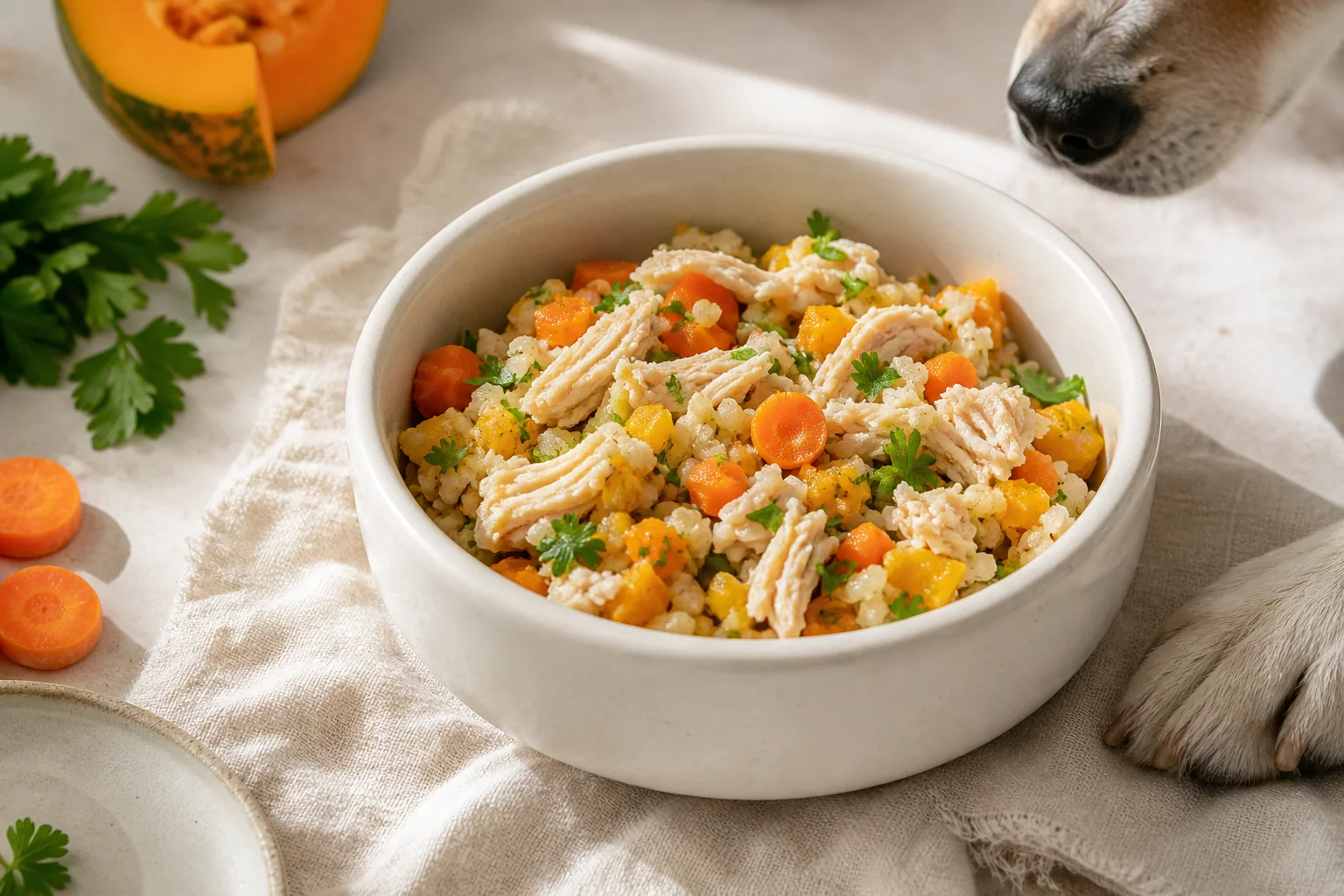
The Chicken & Pumpkin Bowl for Dogs is a good example of how Pawdishy pairs simple instructions with visible safety notes.