

Duck breast makes a useful occasional treat when you want to offer your cat a small piece of plain cooked meat. The important work happens before cooking: remove the skin, trim away visible fat, and keep the preparation free from salt, oil, and seasoning. This recipe uses a covered saucepan and a little water to cook the duck gently. You will check the thickest part with a food thermometer, cool the meat, and cut it into small medallions that are easy to divide into individual rewards. These medallions are treats, not meals. Duck breast alone cannot provide every nutrient a cat needs, so the regular diet should remain complete and balanced.
Safety first: Keep treats and extras under about 10% of your cat's daily food - the regular diet should do the heavy lifting.
Foods to avoid
Never serve raw or undercooked duck, duck bones, skin, large pieces of visible fat, or heavily seasoned duck preparations. Avoid onion, garlic, chives, leeks, salt, butter, cooking oils, sweetened glazes, and commercial marinades. Many ready-to-cook duck products are already seasoned, so check packaging carefully. Cook duck breast to a minimum internal temperature of 74°C or 165°F using a food thermometer. Do not offer hot meat, large chewy pieces, or any piece containing bone or cartilage. Raw poultry can contaminate hands, knives, countertops, and other foods, so clean equipment thoroughly after preparation.
Ingredients
Instructions
Trim the Duck Breast: Place the boneless duck breast on a clean cutting board. Check both sides carefully for remaining skin, thick white fat, tough connective tissue, or small pieces of bone or cartilage. Remove the skin completely if any remains, then trim away visible surface fat with a sharp knife. Keep the breast in one piece if its thickness allows even cooking. If one end is substantially thicker than the other, divide it into two similarly thick pieces. Do not rinse raw duck because splashing water can spread bacteria around the sink. Wash your hands after handling the meat, and keep raw poultry utensils away from ready-to-eat food. Discard the trimmings rather than adding them to
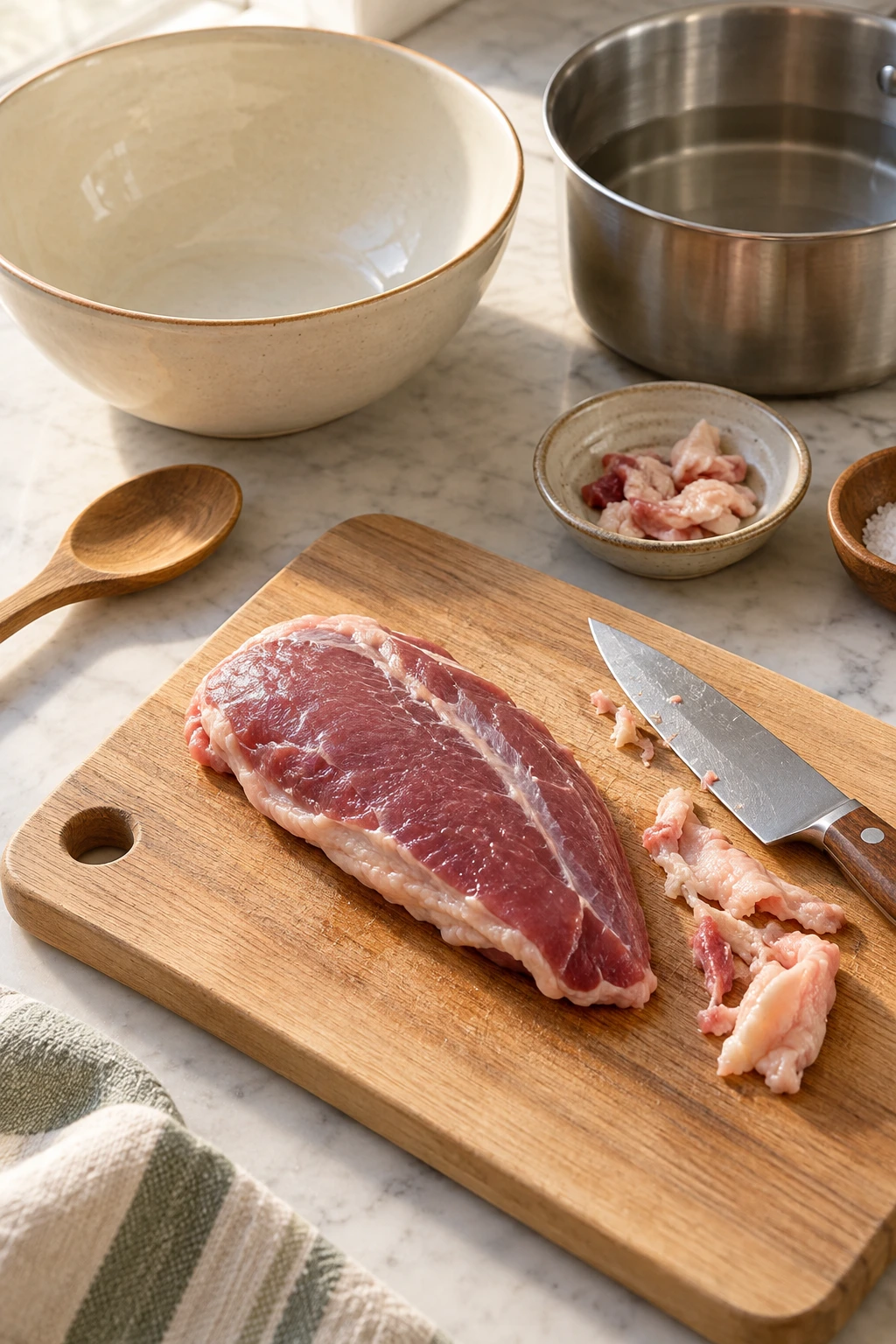
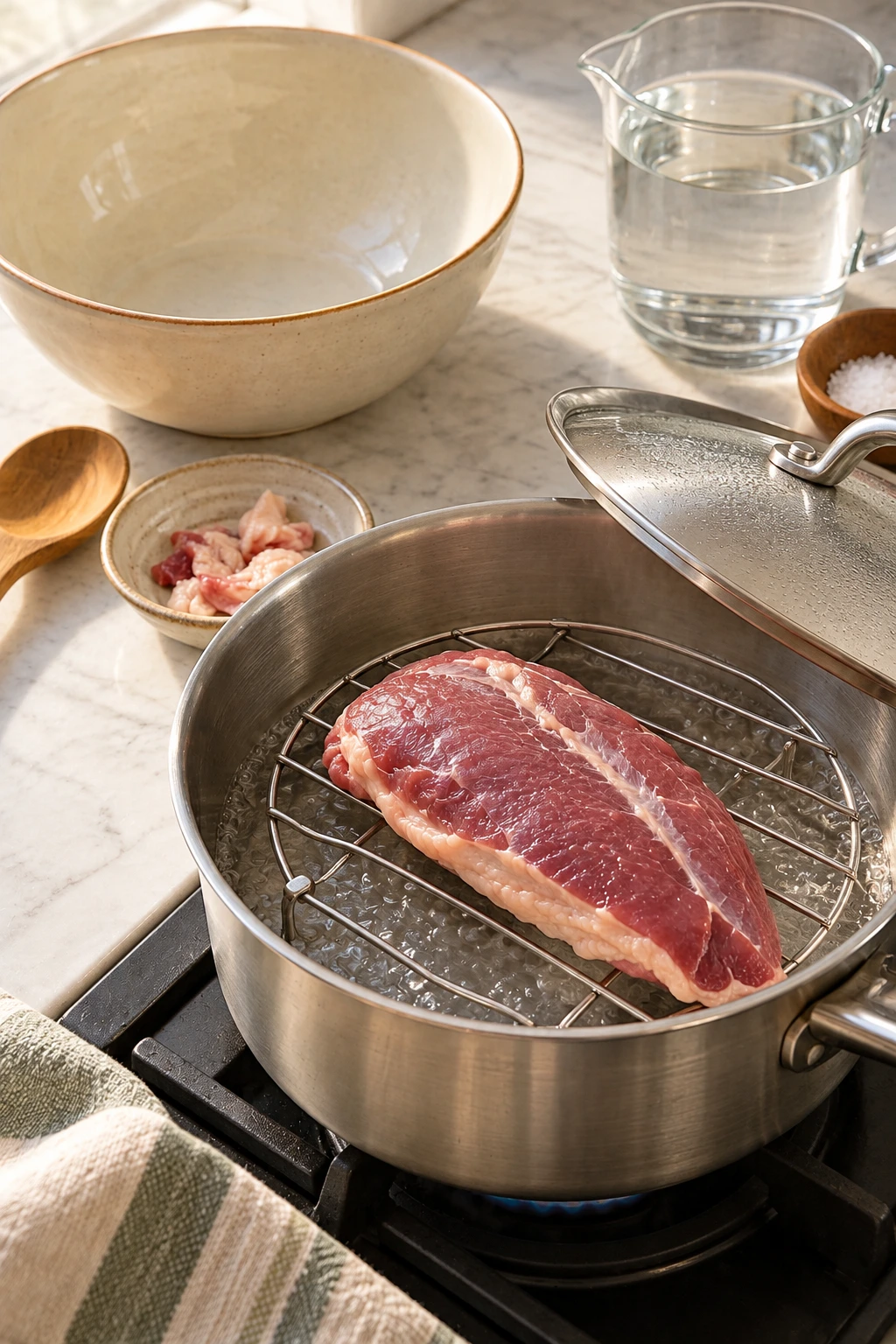
Prepare the Gentle Steam: Pour approximately 500 ml of plain water into the saucepan, adjusting the amount to suit its size. Position the steaming rack so the water sits just below the surface that will hold the duck. Bring the water to a gentle simmer over medium heat, then lower the heat slightly. Place the trimmed duck breast on the rack using clean tongs, leaving enough space for steam to circulate around the meat. Cover the pan with its lid. The breast should cook in moist steam rather than fry, and the water should bubble quietly instead of boiling violently. Keep the reserved plain water nearby in case the level falls during cooking.
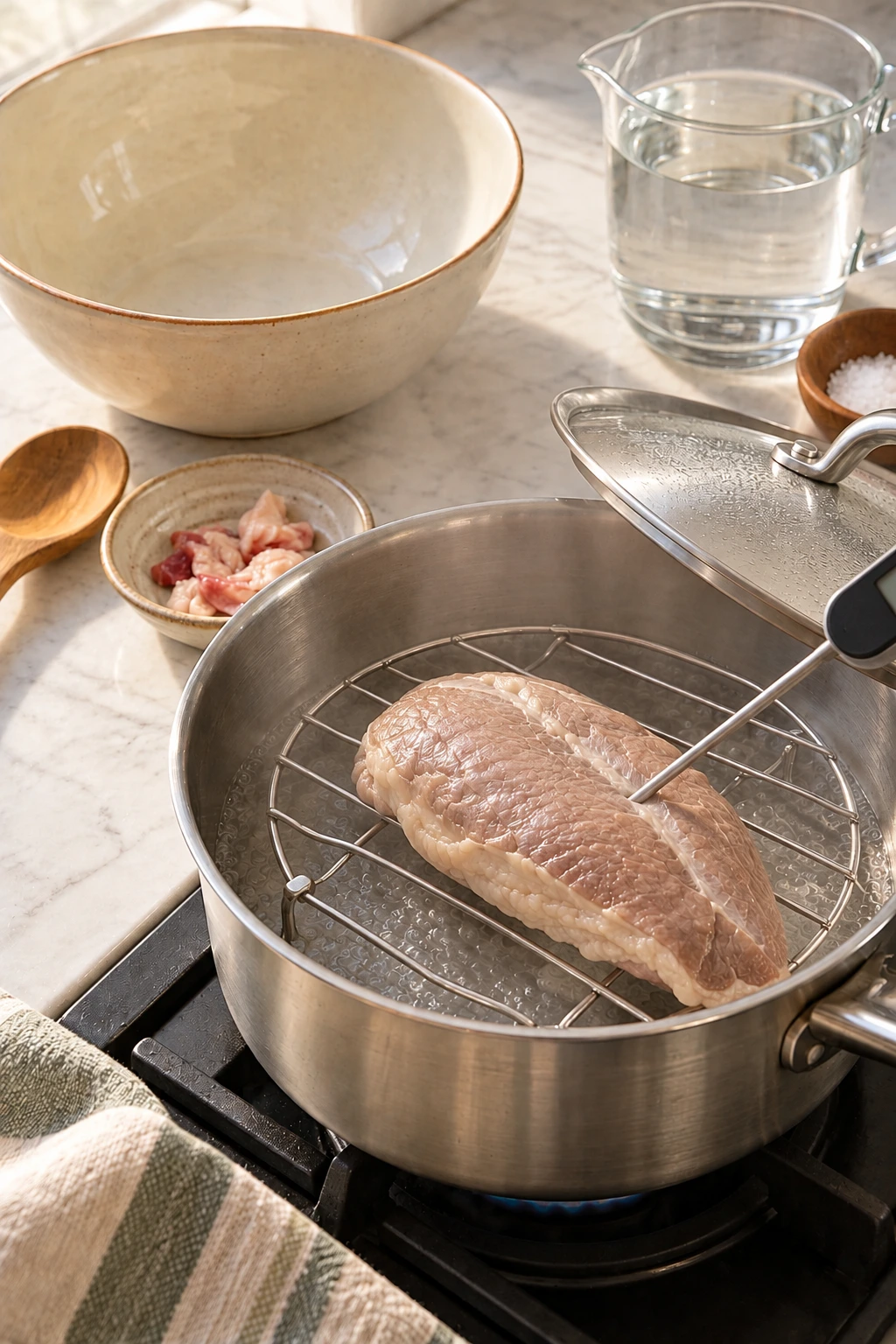
Steam-Poach Until Fully Cooked: Keep the saucepan covered over low to medium-low heat, maintaining steady gentle steam. Begin checking after approximately 12 to 15 minutes, although a thick duck breast may require 20 to 25 minutes or longer. If the water level becomes too low, carefully add some reserved plain water without letting the saucepan boil dry. Insert a clean digital thermometer into the center of the thickest portion of the breast. The duck must reach at least 74°C or 165°F before it is removed from the heat. If it has not reached that temperature, replace the lid and continue cooking, checking again after a few minutes. Do not judge safety by color alone because duck can retain
Cool Before Slicing: Transfer the cooked duck breast to a clean shallow plate using clean tongs. Let the steam escape and allow the meat to cool until it is comfortable to handle. For faster cooling, place the duck in a clean covered food-safe container and set that container in a bowl of cold water with ice, keeping the cooling water completely separate from the meat. Do not put cooked duck back onto the unwashed board or plate that held raw poultry. Once cooled, move it to a freshly cleaned cutting board. Use a clean sharp knife to slice across the muscle fibers into thin, tender rounds approximately 3 to 5 mm thick. The finished slices should be moist and pliable rather than dry,
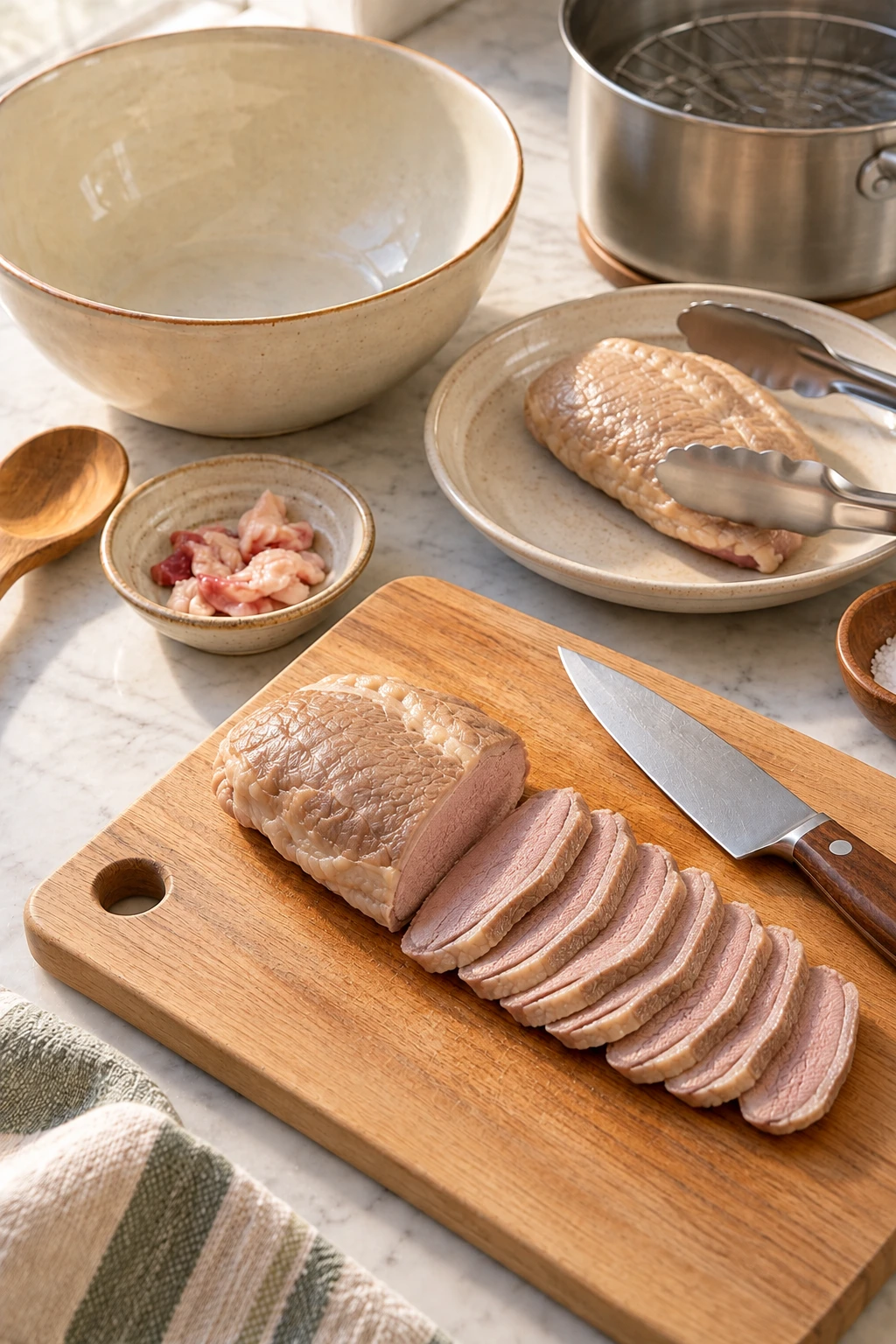
Cut and Portion the Medallions: Examine the sliced medallions and cut them again into pieces appropriate for your cat. Although the larger rounds make an attractive preparation, most cats should receive much smaller rewards. For an average adult cat, aim for soft pieces around 5 to 8 mm across, adjusting smaller for cats that tend to gulp food. Remove any tough edges or connective tissue. Place one or two tiny pieces on a clean shallow dish and make sure they have cooled to room temperature before offering them. Divide the remaining duck into small labeled airtight containers and refrigerate or freeze promptly. Never leave the entire batch out for repeated feeding throughout the day, and
Made this recipe?
Tap the paw so other pet parents know it’s worth making.
Be the first to make it
Tips & serving
Start with one very small piece, approximately 1 g, if your cat has not eaten plain cooked duck before. Observe how your cat responds before offering more on another occasion. For many adult cats, one or two tiny pieces totaling roughly 1 to 3 g are a sensible occasional starting portion, not a universal daily allowance. Calculate portions according to your cat's total calorie needs, current diet, body condition, and any other treats received. As a general rule, all treats combined should contribute no more than 10 percent of daily calories, with the remaining calories coming from complete and balanced cat food. For example, a cat eating 200 calories daily has a maximum treat allowance of
- Using duck as the only animal protein makes the ingredient list straightforward and easy for owners to understand.
- Removing skin and visible fat gives better control over what goes into each small reward.
- Gentle steam-poaching cooks the meat without added oil, salt, butter, sauces, or seasoning blends.
- Slicing against the grain helps create tender pieces that can be divided into manageable sizes.
- Preparing a batch at home makes it easier to portion small rewards instead of repeatedly offering large pieces.
- Checking the center with a food thermometer provides a reliable cooking endpoint rather than depending on meat color.
Storage
Use within three to four days, although preparing portions for one or two days at a time can make handling easier. Keep the container away from raw poultry and discard any meat with questionable storage history. Freezing: Divide the fully cooled medallions into single-serving portions before freezing. Use small freezer-safe containers or tightly sealed bags, removing excess air.
Substitutions
- Duck breast selection
If boneless skinless duck breast is unavailable, a bone-free skin-on duck breast can be used only after all skin and visible surface fat have been carefully removed before cooking. Keep the finished treat plain and verify that every piece reaches 74°C or 165°F. The recipe remains a single-protein duck preparation.
- Cooking equipment
A small covered saucepan fitted with a steaming rack works well, but a lidded steamer basket over simmering water is also suitable. Maintain steady moist heat and use the same internal temperature target.
Cats recipe FAQ
Can Cats Duck Breast Steam-Poached Medallions replace my cat's regular diet?
Treat it as an occasional extra, not a meal plan. Start with one very small piece, approximately 1 g, if your cat has not eaten plain cooked duck before. Observe how your cat responds before offering more on another occasion.
Is boneless skinless duck breast okay for cats?
This recipe uses boneless skinless duck breast in a small, cat-appropriate amount. Skip it if your cat has a known sensitivity, and read the foods-to-avoid note on this page before serving.
How should I store leftovers?
Refrigeration: Place cooled duck medallions in a clean airtight container and refrigerate at 4°C or below within two hours of cooking. Use within three to four days, although preparing portions for one or two days at a time can make handling easier.
How should I introduce this treat?
Start with a taste-size portion next to your cat's usual food, and hold off on serving more until you have seen that it agrees with them.
Can cats eat plain cooked duck breast?
Many cats can enjoy small amounts of boneless, thoroughly cooked duck breast as an occasional treat. Remove the skin and visible fat, avoid all seasoning, and cook the thickest part to at least 74°C or 165°F. Duck alone is not nutritionally complete, so it should never replace balanced cat food.
How many duck medallions can I give my cat?
Count the amount of meat rather than the number of slices because medallion sizes vary. Start with a tiny piece of about 1 g. One or two small pieces may be enough for an occasional reward. Keep all treats together below 10 percent of daily calories, and ask your veterinarian about individual portions.
Sources