

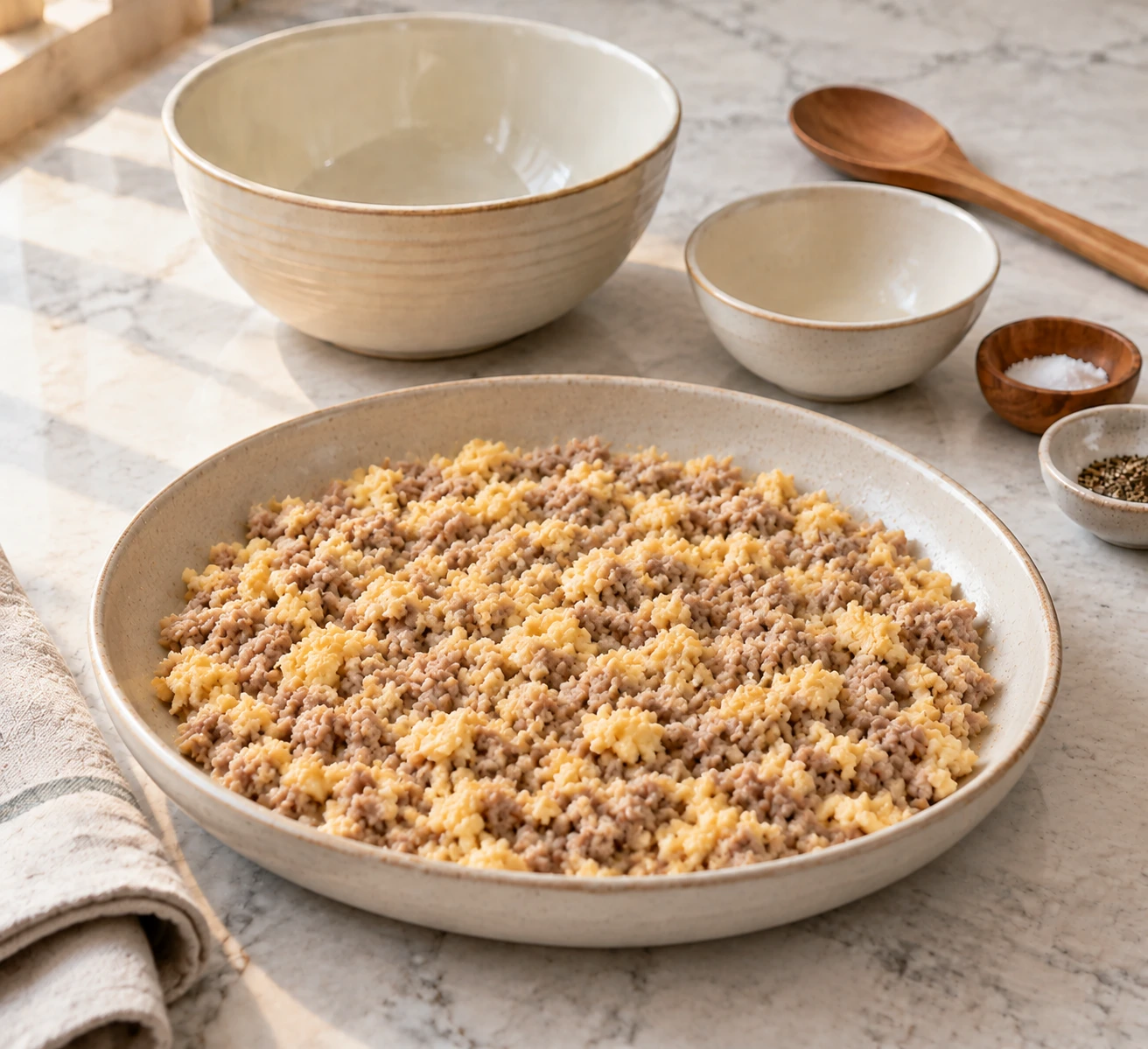
If your cat could use a little variety at mealtime, this pork and egg breakfast crumble is an easy homemade topper to try. Lean boneless pork is the main ingredient, and a plain egg helps bring the finely chopped pieces together into a soft, crumbly mixture. All you need is a skillet, a little water, and gentle heat. There's no need for oil, salt, stock, or seasoning. Once cooked, the crumble should be moist without being wet or greasy, with no large, chewy pieces. Let it cool completely before offering a small amount alongside your cat's usual complete food. This is a topper, not a balanced diet, so keep portions modest and check with your veterinarian before making major changes to your cat's diet.
Safety first: Offer a small taste the first time and watch your cat for any tummy upset before serving more.
Foods to avoid
Never use raw or undercooked pork or egg in this recipe. Avoid bacon, ham, sausages, cured pork, seasoned leftovers, gravies, stock cubes, onion, garlic, chives, salt, and sauces, as these may contain ingredients unsuitable or harmful for cats. Remove every bone and trim visible excess fat. Keep raw-meat utensils separate from clean serving equipment, wash your hands and surfaces thoroughly, and do not serve the crumble hot. This recipe is not complete and balanced cat food, and it should not replace a regular diet formulated for cats.
Ingredients
Instructions
Prepare the Pork: Trim away any visible fat from the lean boneless pork, then cut it into small, even pieces on a clean cutting board. Finely chop the pieces so they cook evenly and are easy to break into tiny crumbles later. After handling the raw pork, wash your hands and clean the board and knife thoroughly.
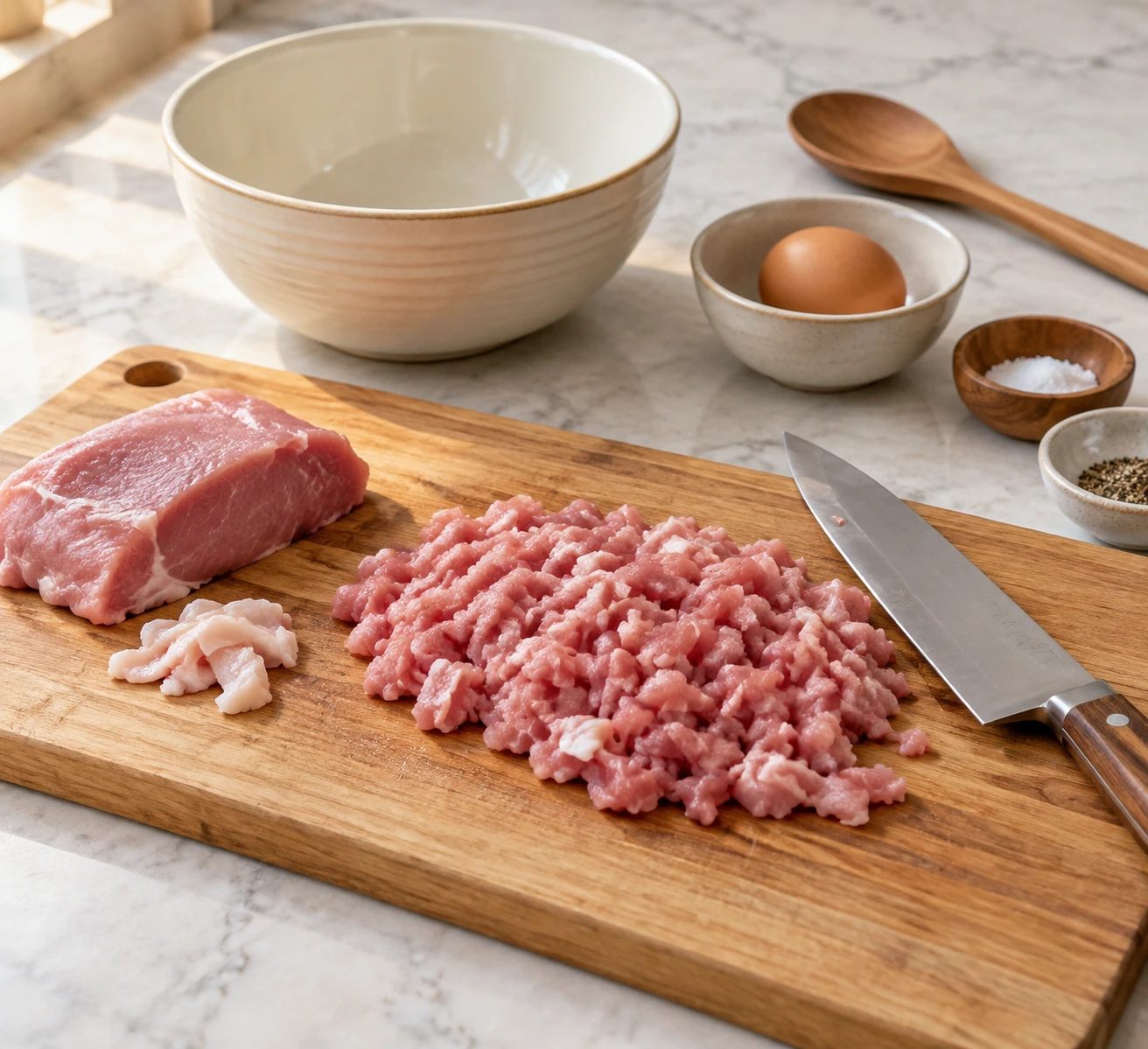
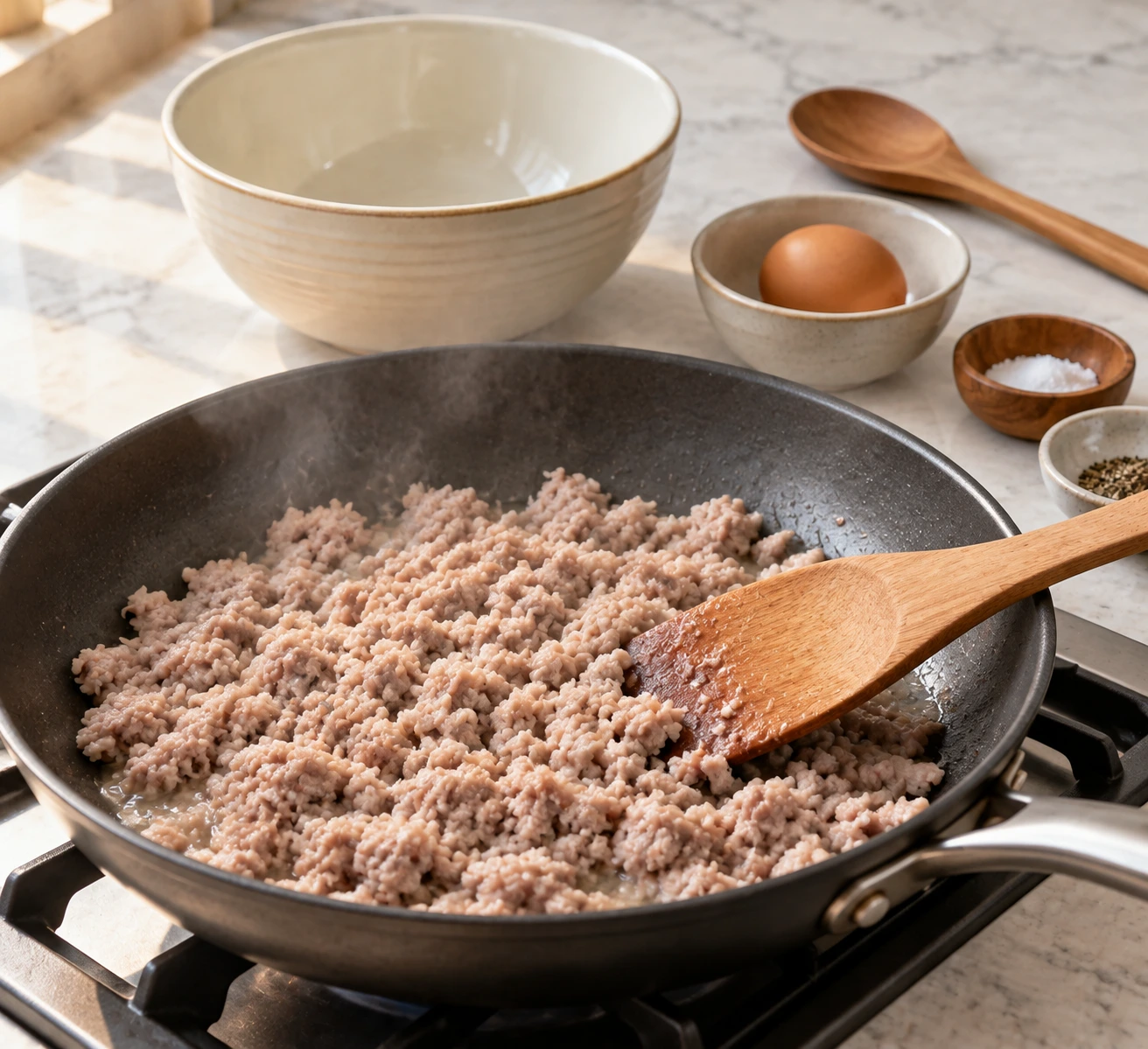
Cook the Pork Gently: Add the chopped pork and 2 tablespoons of water to the skillet, then cook over medium-low heat, stirring often to prevent sticking or heavy browning. Use the spatula to break the meat into smaller bits as it cooks, adding a small splash of water if the pan dries out before the pork is done. Cook until the pork is thoroughly cooked with no raw or pink-looking center, checking that the thickest pieces reach 71°C.
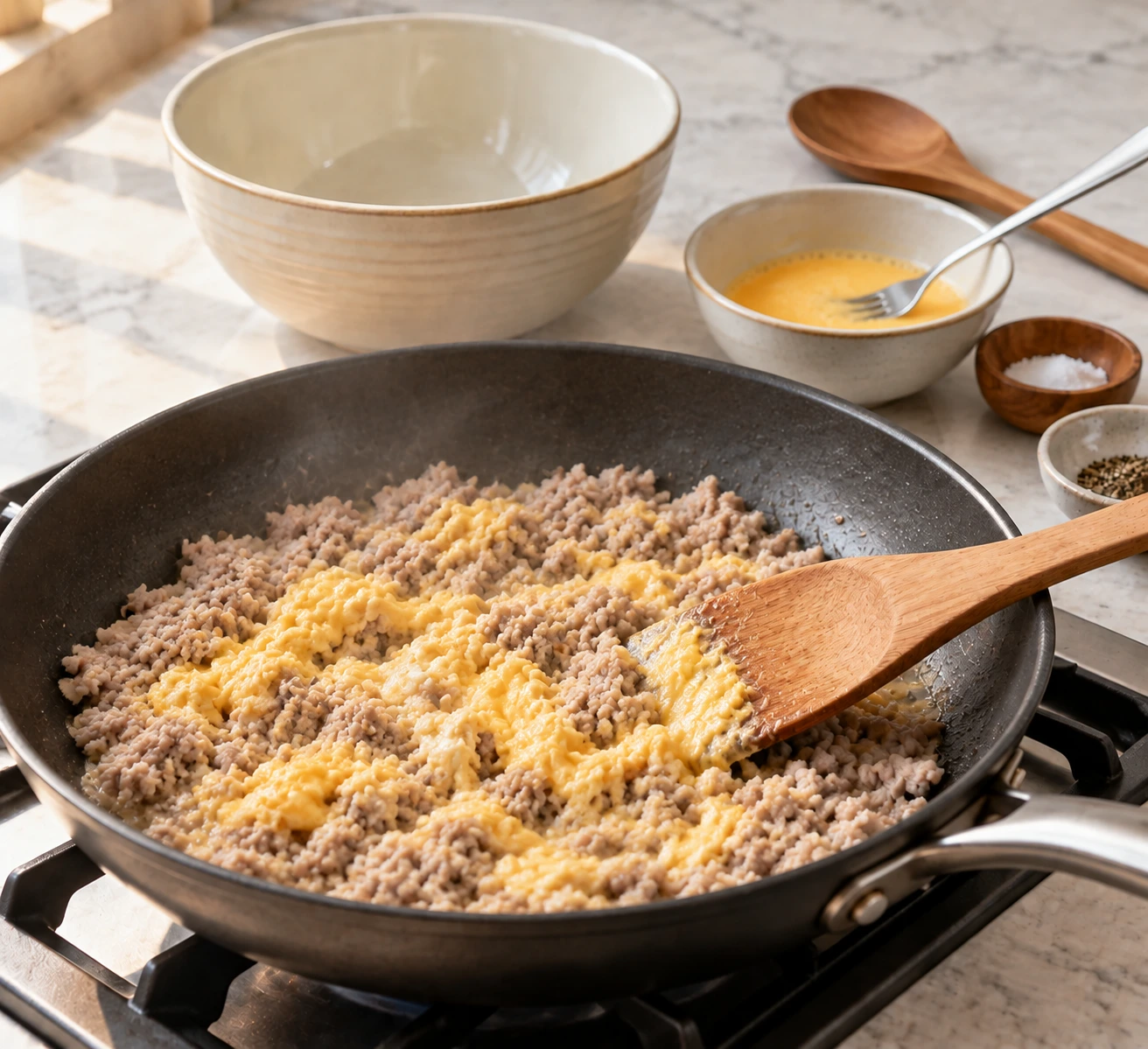
Beat the Egg: While the pork cooks, crack the egg into the small mixing bowl and beat it with a fork until the white and yolk are evenly mixed. Once you've checked that the pork is fully cooked, turn the heat down to low. Pour in the beaten egg and stir straight away so it starts setting in fine strands instead of forming one large piece.
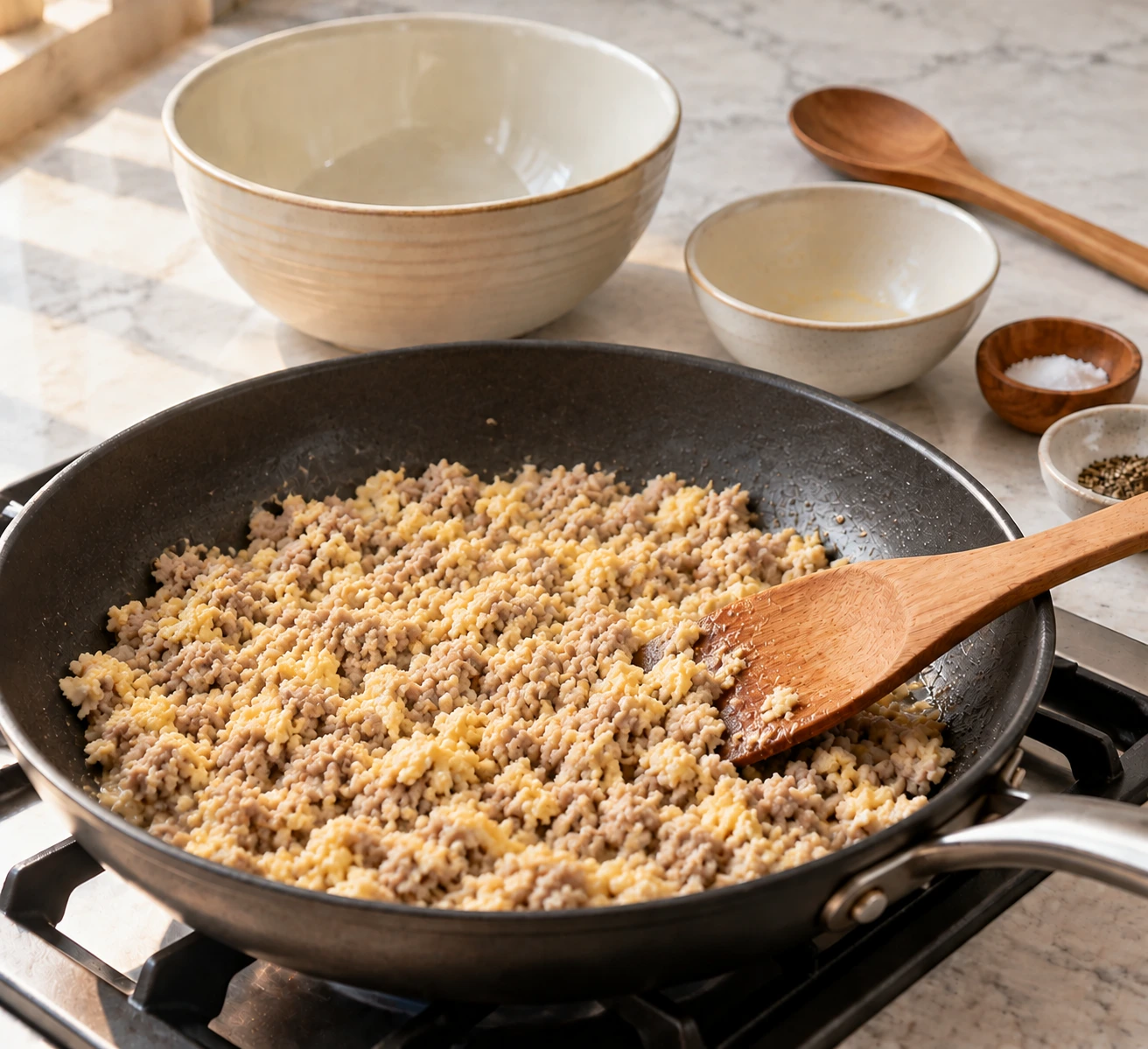
Stir Into Fine Crumbles: Keep the skillet over low heat, stirring continuously and scraping the bottom as you go. Break up any larger clumps with the spatula and cook until the egg is completely set and the mixture is hot throughout, with no glossy or runny egg left. Aim for small, soft pieces rather than crisp, browned chunks, and remove the skillet from the heat as soon as everything is cooked through.
Cool and Check the Texture: Spoon the crumble into a clean, shallow dish and spread it into a thin layer to help it cool faster. Let it reach room temperature before serving, then check that the pieces are small enough for your cat to eat comfortably and that the mixture is moist rather than greasy or watery. If it seems dry, stir in a teaspoon of plain water, serve only a small amount, and refrigerate the remaining batch promptly.
Made this recipe?
Tap the paw so other pet parents know it’s worth making.
Be the first to make it
Tips & serving
Let the crumble cool completely and offer only a small teaspoon-sized amount at first, mixed into your cat's usual complete and balanced food. The appropriate portion depends on your cat's size, activity, daily calorie needs, and other treats. Toppers and treats should generally account for no more than 10 percent of daily calories, with most calories coming from complete cat food. Remove uneaten food rather than leaving it out for extended periods. Ask your veterinarian before making major diet changes, especially if your cat has a prescribed diet or specific nutritional needs.
- The finely crumbled texture makes it easy to sprinkle a small amount over familiar wet or dry cat food without changing the entire meal.
- A short ingredient list and simple skillet method make small-batch preparation manageable without special cooking equipment or complicated preparation.
- Cooking the pork and egg together creates a soft mixture that can be portioned with a teaspoon instead of served as a large piece of meat.
- Preparing the topper at home lets you control the ingredients and leave out added salt, sauces, onion, garlic, and other unnecessary seasonings.
- Cut the pork into small, even pieces before cooking so the meat heats through consistently and is easier to break into fine crumbles.
- Use low heat once the egg goes into the skillet, stirring continuously to prevent large rubbery curds and keep the finished texture soft.
Storage
Transfer the cooled crumble to a clean, airtight container and refrigerate promptly at 4°C or below. Do not put food back into the storage container after it has touched your cat's bowl. For longer storage, freeze individual small portions in a clean freezer-safe container or ice-cube tray, then transfer the frozen portions to a sealed freezer bag. Label the container with the preparation date and use within 2 months for best quality.
Substitutions
If pork is unavailable, plain lean boneless chicken or turkey can be used in the same approximate quantity, provided it is fully cooked and contains no skin, bones, seasoning, or added fat. The flavor and texture will change, and the substitute should still be used only as an occasional topper rather than a nutritional replacement for complete cat food. If your cat does not tolerate egg or you prefer a single-protein preparation, leave the egg out and cook the finely chopped pork with water until fully done, then break it into small pieces.
Cats recipe FAQ
Can I serve this topper every day?
Treat it as an occasional extra, not a meal plan. Let the crumble cool completely and offer only a small teaspoon-sized amount at first, mixed into your cat's usual complete and balanced food.
Can cats have lean boneless pork?
This recipe uses lean boneless pork in a small, cat-appropriate amount. Skip it if your cat has a known sensitivity, and read the foods-to-avoid note on this page before serving.
How do I store this topper?
Transfer the cooled crumble to a clean, airtight container and refrigerate promptly at 4°C or below. Use within 3 days for best food-handling practice, and discard any portion that has been left out for too long, smells unusual, or shows a change in.
What's the safest way to try this with my cat?
Offer a small amount beside regular food, introduce one new recipe at a time, and watch appetite, stool, skin, and behavior for a day or two.
Can cats eat cooked pork and egg?
Many cats can have small amounts of plain, thoroughly cooked pork and egg as an occasional extra, provided the ingredients are unseasoned and served in modest portions. Individual dietary needs differ, so introduce unfamiliar foods gradually and ask your veterinarian if your cat has a medical condition or a prescribed diet.
How much pork and egg crumble should I give my cat?
Start with about one teaspoon mixed into your cat's usual meal and observe whether it is eaten comfortably. The right amount depends on body size, normal food intake, and other treats. Keep all treats and toppers within about 10 percent of daily calories, and keep complete cat food as the main diet.
Sources