
Chicken hearts are a nice change from the shredded breast meat often used in homemade cat toppers. Once cooked thoroughly, they soften enough to blend into a smooth, moist mixture that is easy to spoon over your cat's usual food. A little of the cooking liquid helps bring everything together, so there is no need for added gelatin or other ingredients to create a soft texture. Keep this recipe simple with plain chicken hearts and water. Skip the salt, seasonings, onion, and garlic, and remember that this topper is meant to complement your cat's regular complete food, not replace it.
Safety first: Start with a small portion beside your cat's usual food and confirm bigger diet changes with your veterinarian.
Foods to avoid
Never use raw or undercooked chicken hearts, and do not feed the mixture while it is hot. Avoid salt, onion, garlic, seasoning blends, gravy, stock cubes, and broths containing ingredients not intended for cats. Do not add bones, and do not treat the broth gel as a complete or balanced feline diet. Chicken hearts alone do not provide all the nutrients a cat needs in appropriate amounts, including the carefully balanced vitamins, minerals, fatty acids, and other nutrients supplied by a formulated complete food. Handle raw poultry hygienically, wash hands and equipment thoroughly, and keep raw meat separate from ready-to-eat foods.
Ingredients
Instructions
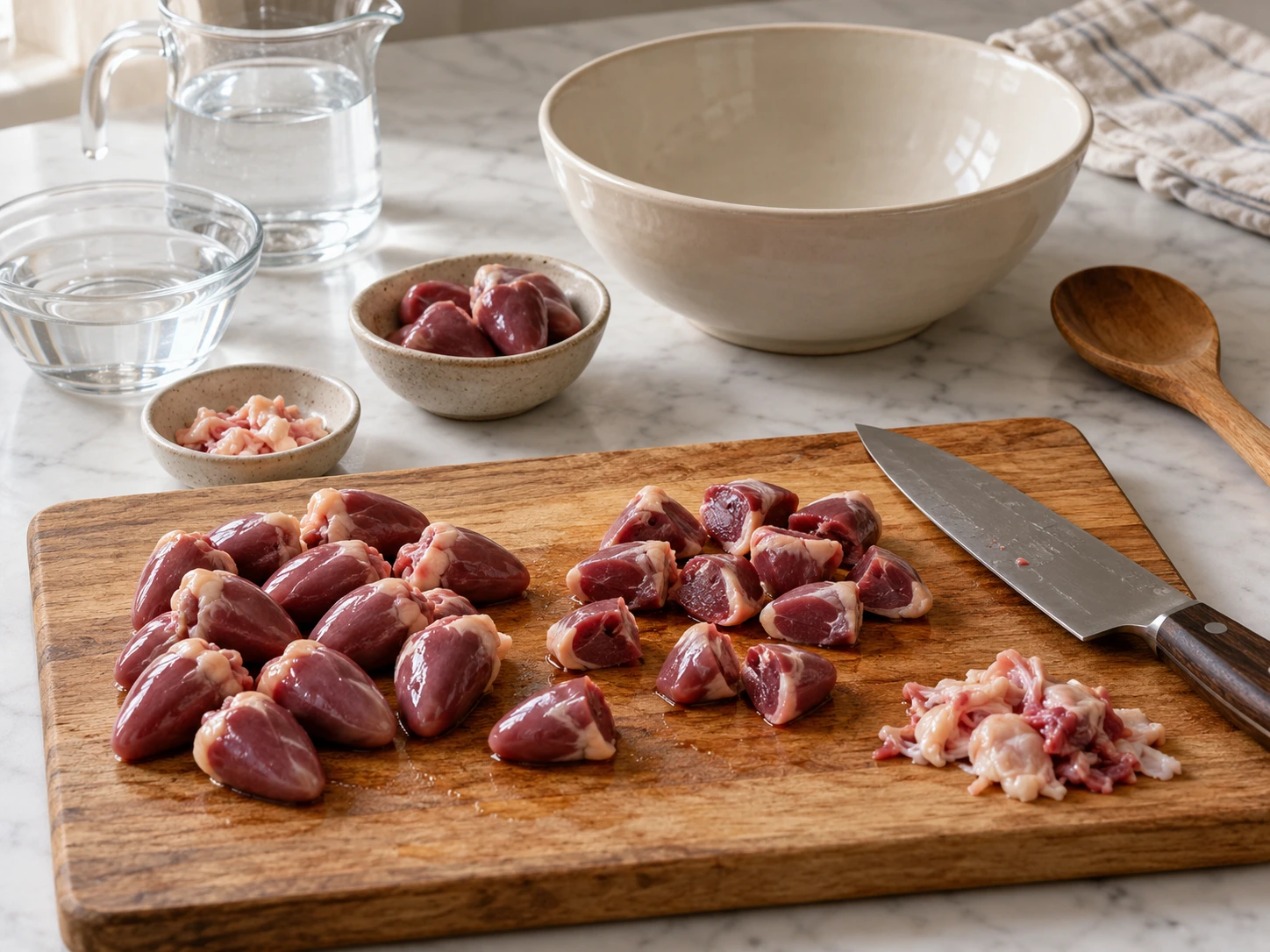
Prepare the chicken hearts: Weigh out 200 g of chicken hearts and inspect them on a clean cutting board. Trim away excess fat and any visible unwanted tissue, then cut larger hearts into similarly sized pieces so they cook evenly. Wash your hands with soap and water after handling the raw poultry, and clean the board, knife, and any surfaces that touched the meat, keeping the hearts separate from ready-to-eat foods.
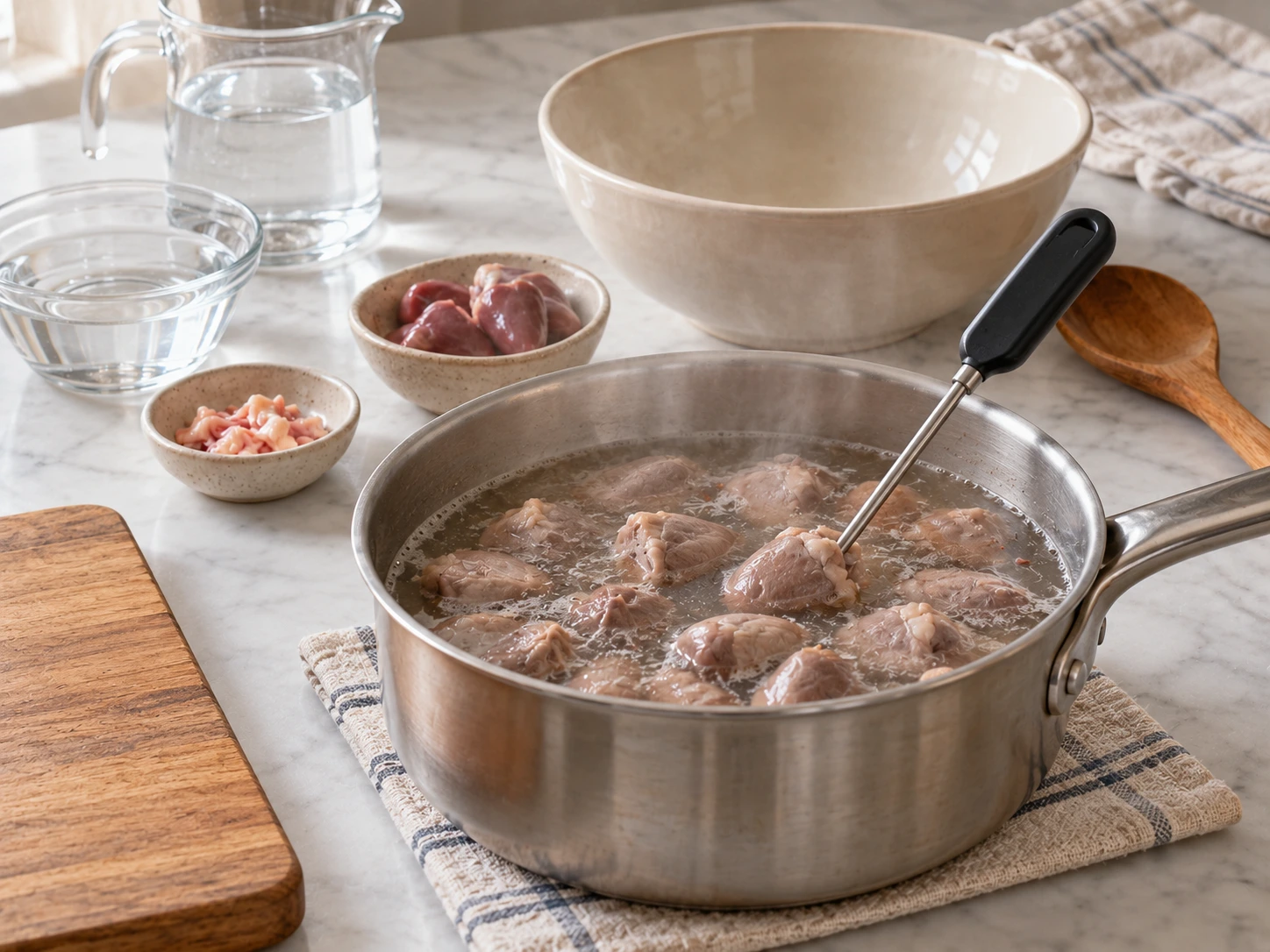
Simmer until thoroughly cooked: Place the prepared hearts in a small saucepan and pour in 300 ml of plain drinking water. Bring the water to a gentle boil, then reduce the heat and simmer for about 20 to 30 minutes, depending on the size of the pieces, until the largest ones are cooked through. Use a clean food thermometer to check the centre of the thickest pieces and make sure they reach 74°C (165°F), the recommended safe internal temperature for poultry; do not add salt, stock cubes, herbs, onion, or garlic.
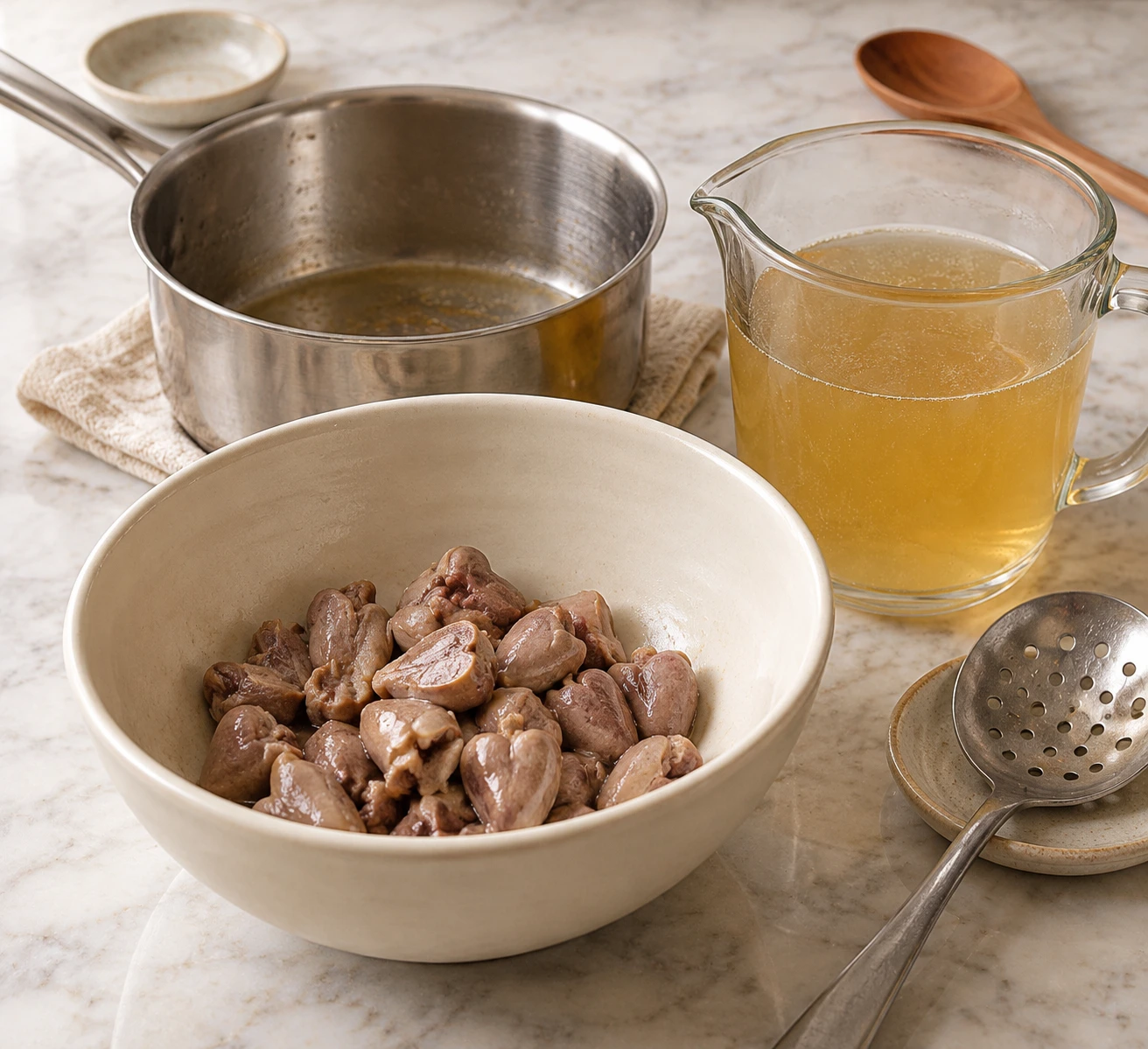
Reserve the cooking liquid: Once the hearts are thoroughly cooked, take the saucepan off the heat and remove the pieces with a clean slotted spoon. Place them in the same clean cream ceramic bowl, then pour the cooking liquid into a heat-safe measuring jug, taking care not to spill it. Let the hearts cool briefly until they are safe to handle, and set the liquid aside for blending; keep it plain and discard it if it has been contaminated by raw-meat utensils or unclean surfaces.
Blend into a soft mixture: Put the cooked hearts into the same food processor or blender and add 1 tablespoon of the reserved cooking liquid. Blend until the meat is finely processed, pausing to scrape down the sides with a clean spatula if needed. Add the remaining reserved liquid a little at a time until the mixture is moist, smooth, and easy to spoon, using a teaspoon of plain drinking water if it is unusually thick and avoiding so much liquid that it turns watery.
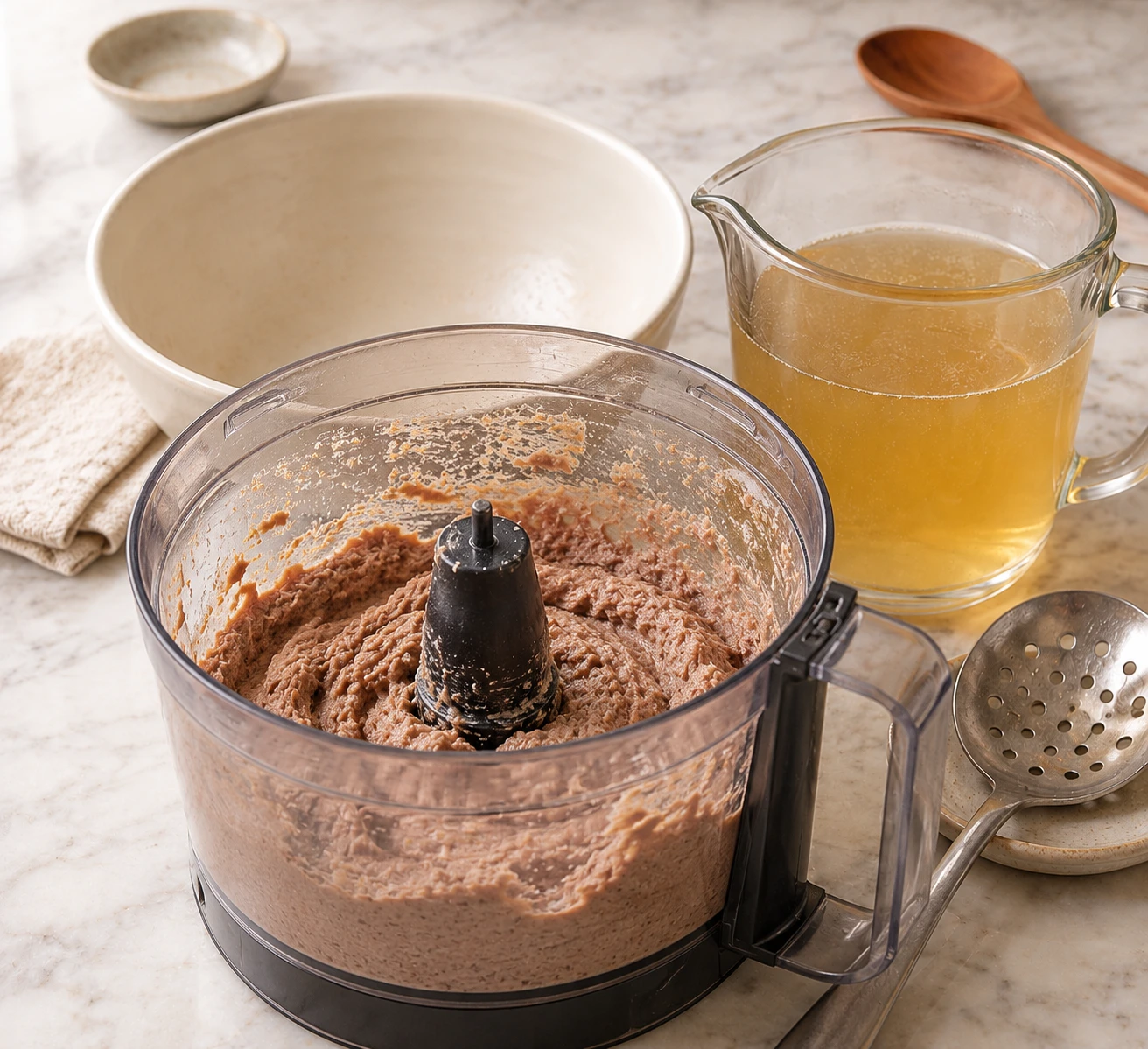
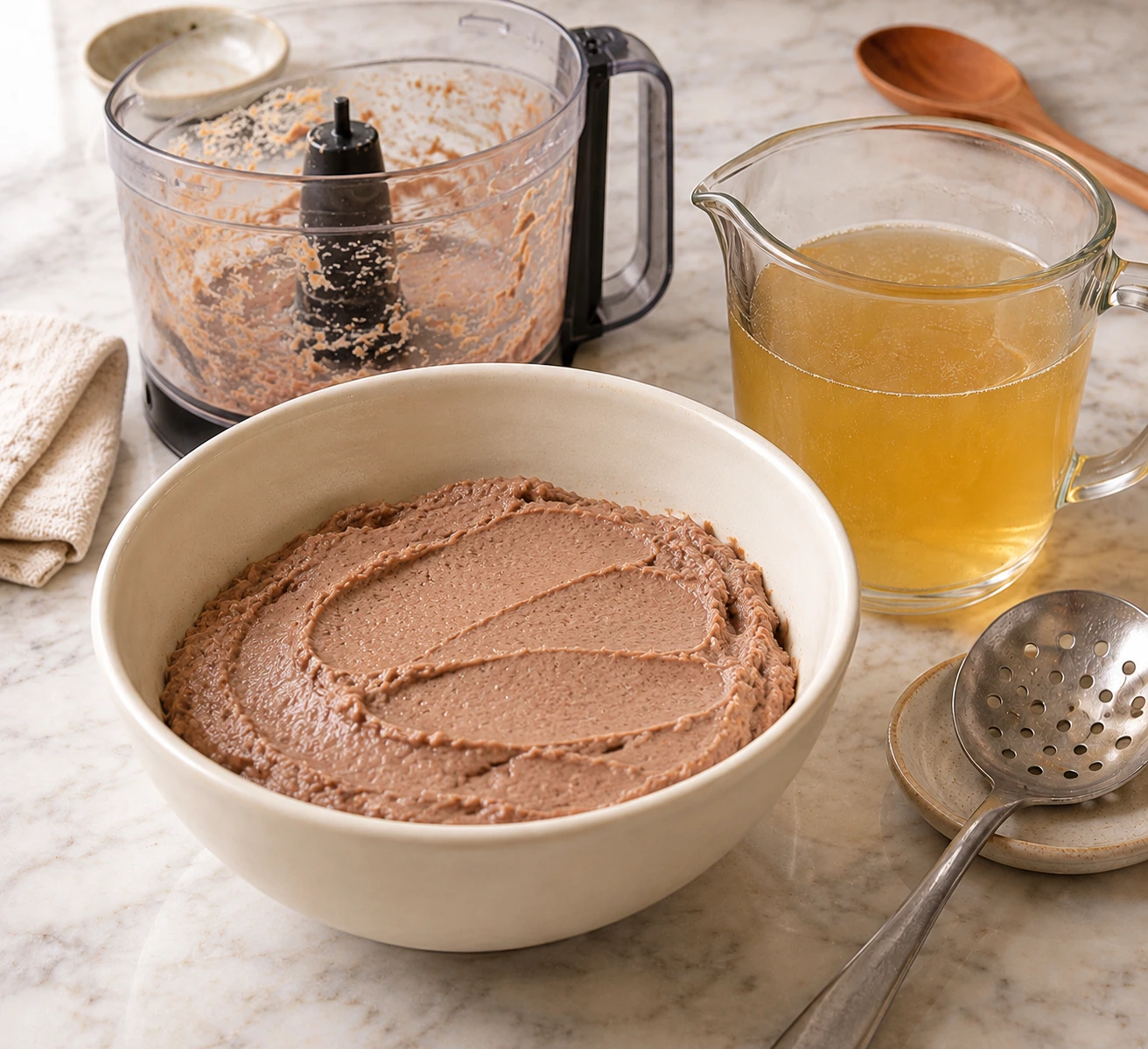
Cool and portion the broth gel: Spoon the blended mixture into the same clean cream ceramic bowl or a shallow food-storage container, then smooth the surface with the spatula. Let it cool promptly before covering and refrigerating it. The mixture may firm up as it chills, depending on how much liquid you used and how finely the hearts were blended, so stir it before serving and add a few drops of water if needed for a soft, spoonable texture; offer only a small portion alongside complete cat food, never as a replacement for it.
Made this recipe?
Tap the paw so other pet parents know it’s worth making.
Be the first to make it
Tips & serving
Start with about half a teaspoon mixed into your cat's usual complete and balanced food, then observe whether your cat accepts the texture and tolerates the addition. If appropriate, offer up to about 1 teaspoon on an occasional basis, adjusting for your cat's size, normal diet, and overall daily intake. Homemade toppers and treats should generally account for no more than 10% of daily calories, with the rest coming from complete and balanced food. Ask your veterinarian before introducing a major diet change, and seek individual advice if your cat has a medical condition or a prescribed diet.
- Offers a different texture from ordinary shredded chicken, giving owners another way to serve a small amount of animal protein.
- Uses plain cooking liquid to keep the blended mixture moist without adding salt, commercial stock, or unnecessary seasonings.
- Can be prepared in a small batch and divided into measured portions for occasional use with a cat's regular food.
- The simple ingredient list makes it easier to identify exactly what has gone into a homemade topper.
- Cut larger hearts into similarly sized pieces before cooking so the batch heats evenly and is easier to blend into a consistent texture.
- Reserve the cooking liquid before blending, then add it in small amounts because too much liquid can turn the mixture into a thin puree.
Storage
Transfer the mixture to a clean, shallow, airtight container and refrigerate it promptly after cooking and blending. If you cannot use it within that period, freeze small portions instead. For freezing, divide the completely cooled mixture into small, labelled, freezer-safe containers or portion moulds, then seal and freeze promptly.
Substitutions
If chicken hearts are unavailable, plain chicken gizzards may be used as an alternative organ-meat ingredient, but they are firmer and may require longer cooking before blending. Cook them thoroughly, check their internal temperature, and add reserved cooking liquid gradually to achieve a smooth texture. The nutritional profile will differ, so keep the finished food occasional and supplementary. Use plain drinking water rather than commercial chicken broth, stock, milk, or seasoned cooking liquid.
Cats recipe FAQ
Is this topper a complete meal for my cat?
Treat it as an occasional extra, not a meal plan. Start with about half a teaspoon mixed into your cat's usual complete and balanced food, then observe whether your cat accepts the texture and tolerates the addition.
Can cats have cooked chicken hearts?
This recipe uses cooked chicken hearts in a small, cat-appropriate amount. Skip it if your cat has a known sensitivity, and read the foods-to-avoid note on this page before serving.
How should I store leftovers?
Transfer the mixture to a clean, shallow, airtight container and refrigerate it promptly after cooking and blending. Keep the refrigerator at 4°C (40°F) or below, and use the mixture within 3 to 4 days as a conservative leftover-storage limit.
What's the safest way to try this with my cat?
Offer a small amount beside regular food, introduce one new recipe at a time, and watch appetite, stool, skin, and behavior for a day or two.
Does chicken heart broth gel set like gelatin?
Not necessarily. This preparation contains no added gelatin, so it may thicken and become more cohesive in the refrigerator without forming a firm, sliceable gel. The final consistency depends on how finely the hearts are blended and how much cooking liquid is added. Aim for a soft mixture that can be spooned over food.
Can I feed chicken heart broth gel to my cat every day?
It is best treated as an occasional topper rather than a daily nutritional staple. Chicken hearts do not provide every nutrient in the correct balance for cats, and homemade additions can displace complete food if portions become too large. Keep extras small, and ask your veterinarian for guidance if you want to offer homemade food regularly.
Sources