
Your cat hears the salmon packet open and suddenly appears beside your feet. Maybe you've just baked a fillet for dinner, or you're draining a tin of salmon and wondering if a little piece would make a nice treat. Cats are often drawn to the strong smell of fish, but that doesn't mean every kind of salmon belongs in their bowl. So, can cats eat salmon? Yes, most healthy adult cats can have a small amount of plain, thoroughly cooked salmon as an occasional treat. The trouble starts with how it's prepared. Raw salmon carries food safety risks, smoked salmon is usually too salty, and canned salmon can contain ingredients or bones you wouldn't want your cat swallowing. There are also questions about salmon skin, kittens and how often fish should appear on the menu. Let's sort out what you can share and what I'd leave on your own plate.
Is salmon safe for cats, and is it actually good for them?
Salmon contains animal protein and fat, including omega-3 fatty acids. Those nutrients are useful in a cat's diet, which is one reason salmon appears in plenty of commercial cat foods. But there's a difference between salmon used in a nutritionally complete recipe and a piece taken from your dinner. A cooked fillet on its own doesn't provide the full balance of vitamins, minerals and other nutrients a cat needs. Cats also have specific dietary requirements, including taurine, that are best met through a complete cat food.
Is salmon good for cats, then? It can be a pleasant extra for a healthy cat that tolerates fish, but it isn't necessary. Salmon is relatively rich in fat and calories, so generous servings can crowd out balanced meals or upset a sensitive stomach. Some cats also react poorly to particular fish proteins. If your cat already eats a complete diet, there's no nutritional reason to start adding salmon every day. I'd treat it like an occasional little bonus, not a health supplement. Ask your veterinarian before adding it to a diet prescribed for a medical condition.
Can cats eat cooked, baked or grilled salmon?
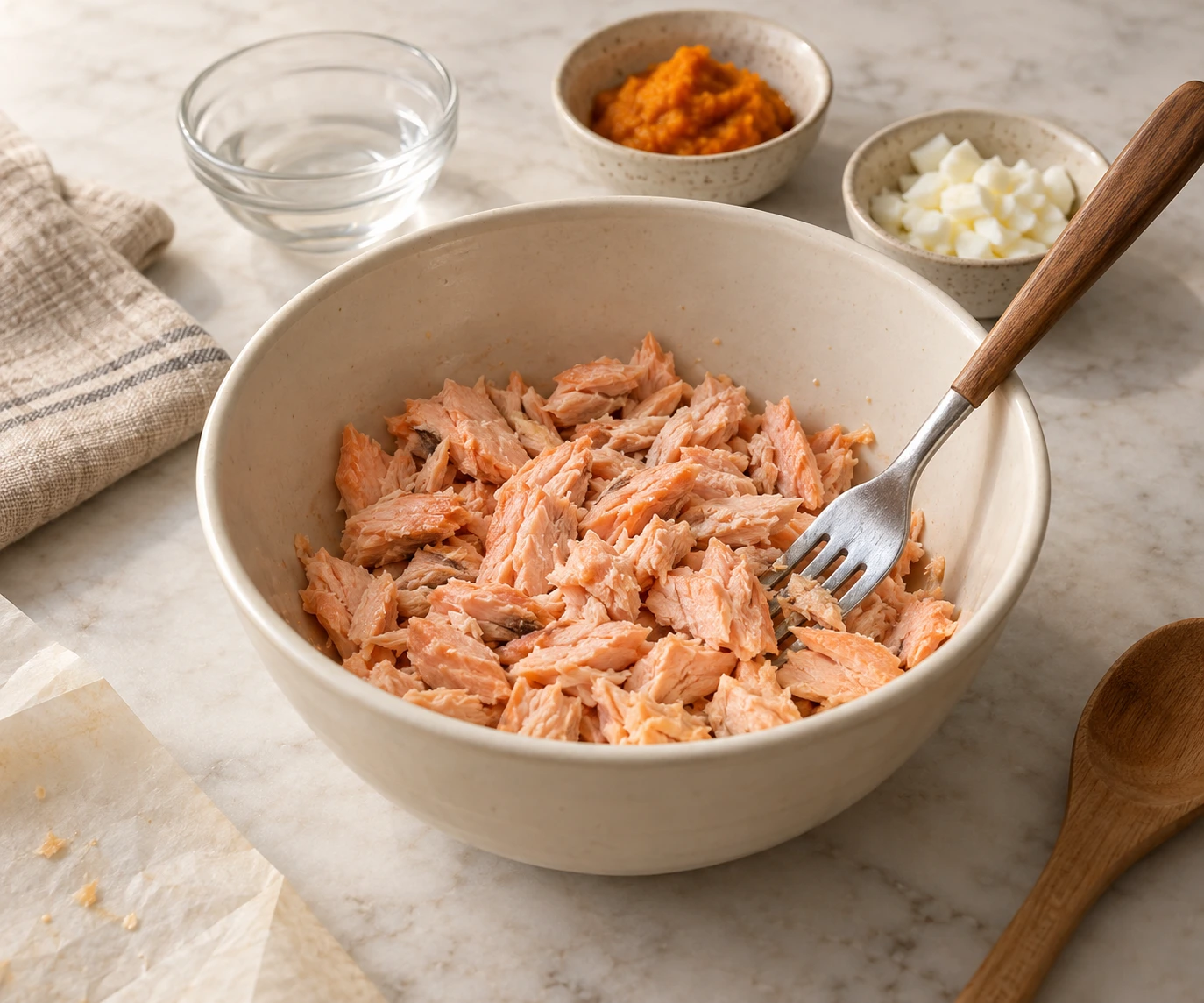
Plain cooked salmon is the version I'd choose. Baking, steaming or poaching works well because you can cook the fish thoroughly without adding anything your cat doesn't need. The flesh should be opaque and separate easily into flakes, with no translucent raw center. For food safety, the USDA recommends cooking fish to an internal temperature of 145°F (63°C). Let it cool before serving. Then use your fingers or a fork to separate a little flesh and check carefully for bones. Even a fillet sold as boneless deserves a second look.
Can cats eat baked salmon? Yes, provided it's fully cooked and unseasoned. Grilled salmon can also be suitable, but skip charred pieces and fish cooked with butter, garlic, onion, salty marinades or spice rubs. Garlic and onion are toxic to cats, including in powdered form. Look, the easiest option is to put aside a small plain portion before you season the rest of your dinner. That way, your cat gets the fish without the extras. Serve it in a clean dish rather than letting your cat lick your dinner plate.

Why raw salmon and smoked salmon are poor choices
Raw salmon is one of those foods I'd keep away from cats, even if your cat has stolen raw fish before without an obvious problem. Uncooked fish can carry harmful bacteria or parasites, and freezing doesn't reliably remove every food safety risk. Some raw fish also contains thiaminase, an enzyme that breaks down vitamin B1. Repeated exposure through an unbalanced raw fish diet can contribute to thiamine deficiency. Cooking reduces these concerns. If you're preparing sushi or cutting raw salmon for dinner, keep the scraps and cutting board out of your cat's reach.
Can cats eat smoked salmon? I'd skip that too. Cold-smoked salmon may not be fully cooked, while both cold-smoked and hot-smoked products are often heavily salted. A thin slice might look harmless, but a cat is much smaller than the person the product was prepared for. Some varieties also contain pepper, herbs or other flavorings. If your cat has already eaten raw or smoked salmon, tell your veterinarian what kind it was and approximately how much was eaten. Don't wait for symptoms before asking for advice if you're concerned about the amount or ingredients.

Can cats eat canned salmon, including salmon packed in water?
Canned salmon can be convenient, but you need to read the ingredients before offering any. Plain salmon packed in water with no added salt or seasonings is the option I'd consider. Most commercially canned salmon is heat processed, so it doesn't have the same raw fish concerns as fresh uncooked salmon. Still, products vary. Some contain added salt, broth, oil or flavorings that make them less suitable for cats. A label that says 'in water' doesn't automatically mean the fish is unsalted. Check the full ingredient list, not just the front of the tin.
Can cats eat salmon in water straight from the can? A little plain, boneless fish can be acceptable for a healthy adult cat, but check for skin and bones first. Canned salmon sometimes contains softened bones that people can eat, yet I wouldn't deliberately offer those to a cat. Remove any you find. Salmon packed in oil is less appealing because it adds fat your cat doesn't need. Plus, don't pour the packing liquid over your cat's regular food unless you've checked exactly what's in it. For a fish-loving cat, a few flakes of the drained salmon are enough.

What about salmon skin and salmon bones?
Salmon skin isn't automatically toxic to cats, but it's fatty and often carries whatever seasoning was used on the fish. Crispy skin from a restaurant dish may have been cooked in oil or butter, with salt added afterward. That's not something I'd share. A tiny piece of plain, thoroughly cooked skin may be tolerated by some healthy cats, but it doesn't offer a clear advantage over the flesh. If your cat has a sensitive stomach or needs a carefully controlled diet, it's better to leave the skin out altogether.
Bones are a firmer no. Small salmon bones can become lodged in a cat's mouth or throat, and sharp pieces may injure the digestive tract. Cooking doesn't make every bone safe. Some bones soften during canning, but there's no reason to take that chance with a treat. Got a fillet with pin bones? Run your fingers gently along the flesh and remove every one you find, then break the portion into small flakes for another check. If your cat swallows a bone, contact your veterinarian for advice rather than trying to remove or dislodge it yourself.
How much salmon can cats eat, and can they have it every day?
The amount depends on your cat's size, usual food, activity level and health. A practical starting point for a healthy adult cat is one or two small flakes of plain cooked salmon, just enough to taste. There's no need to serve a whole chunk. As a general feeding guideline, treats should make up no more than about 10% of a cat's daily calories, with the rest coming from a complete and balanced diet. Salmon is calorie dense compared with some other treats, so portions can add up quickly. Your veterinarian can help you work out a suitable allowance for your individual cat.
Can cats eat salmon every day? I wouldn't make a daily habit of adding ordinary salmon from the kitchen. Even a food your cat loves can displace balanced meals if it becomes a regular extra, and repeated fish treats can make some cats less interested in their usual food. A complete commercial cat food containing salmon is different because the whole recipe is formulated to meet nutritional requirements. For a healthy cat eating regular meals, occasional cooked salmon is the simpler choice. If you're using it to tempt a cat whose appetite has changed, speak to your veterinarian instead of relying on treats to solve the problem.
Can kittens eat salmon, and how should you introduce it?
Kittens need food designed for growth, and their small stomachs leave little room for extras. A kitten that's fully weaned and already eating a complete kitten diet may be able to try a tiny flake of plain, thoroughly cooked, boneless salmon, but I'd check with your veterinarian first. Younger kittens that are still nursing or being weaned shouldn't be given salmon as a substitute for their appropriate milk or kitten food. The goal during growth is consistent, balanced nutrition, not variety for its own sake.
For an adult cat trying salmon for the first time, offer a very small piece on its own rather than mixing a generous amount into dinner. That makes it easier to know what your cat actually ate. Fish doesn't agree with every cat, and some have food allergies or digestive sensitivities. If you notice an unusual reaction after introducing salmon, stop offering it and contact your veterinarian. The same goes for a cat with an existing medical condition or a prescribed diet. Honestly, if your cat ignores the salmon completely, that's fine too. There's no need to persuade a cat to eat fish.
Can Cats Eat Salmon Safely? Cooked, Raw, Smoked and Canned Salmon FAQ
Can cats eat salmon every day?
Plain cooked salmon is better kept as an occasional treat rather than a daily addition. It doesn't provide complete nutrition on its own, and frequent extras can displace balanced cat food. A complete commercial salmon-based cat food is different because the recipe is formulated for your cat's nutritional needs.
Can cats eat raw salmon from the supermarket?
No, raw supermarket salmon isn't a good choice for cats. It can contain bacteria or parasites, even when it looks fresh and smells normal. Freezing doesn't eliminate every risk. Thoroughly cooking the fish before serving is the safer option.
Can cats eat smoked salmon if it's only a small piece?
Smoked salmon is best avoided because it usually contains substantial salt, and cold-smoked varieties may not be fully cooked. If your cat steals a piece, check the ingredients and contact your veterinarian for advice based on the amount eaten and your cat's health.
Can cats eat canned salmon in water?
Yes, a little plain canned salmon in water can be suitable for many healthy adult cats if it has no added salt, seasoning or unsafe ingredients. Drain it, remove any bones and offer only a small portion as a treat.
Can cats eat salmon skin?
A small piece of plain, fully cooked salmon skin isn't inherently toxic, but the skin contains fat and may carry salt or seasonings. I would remove it and serve a little boneless flesh instead, especially for cats with sensitive digestion.
Can cats eat salmon bones if they're soft?
It's safer not to offer salmon bones, even when they've softened during canning. Bones can still create choking or injury risks, and salmon flesh is easy to serve without them. Check the fish carefully before putting it in your cat's dish.