

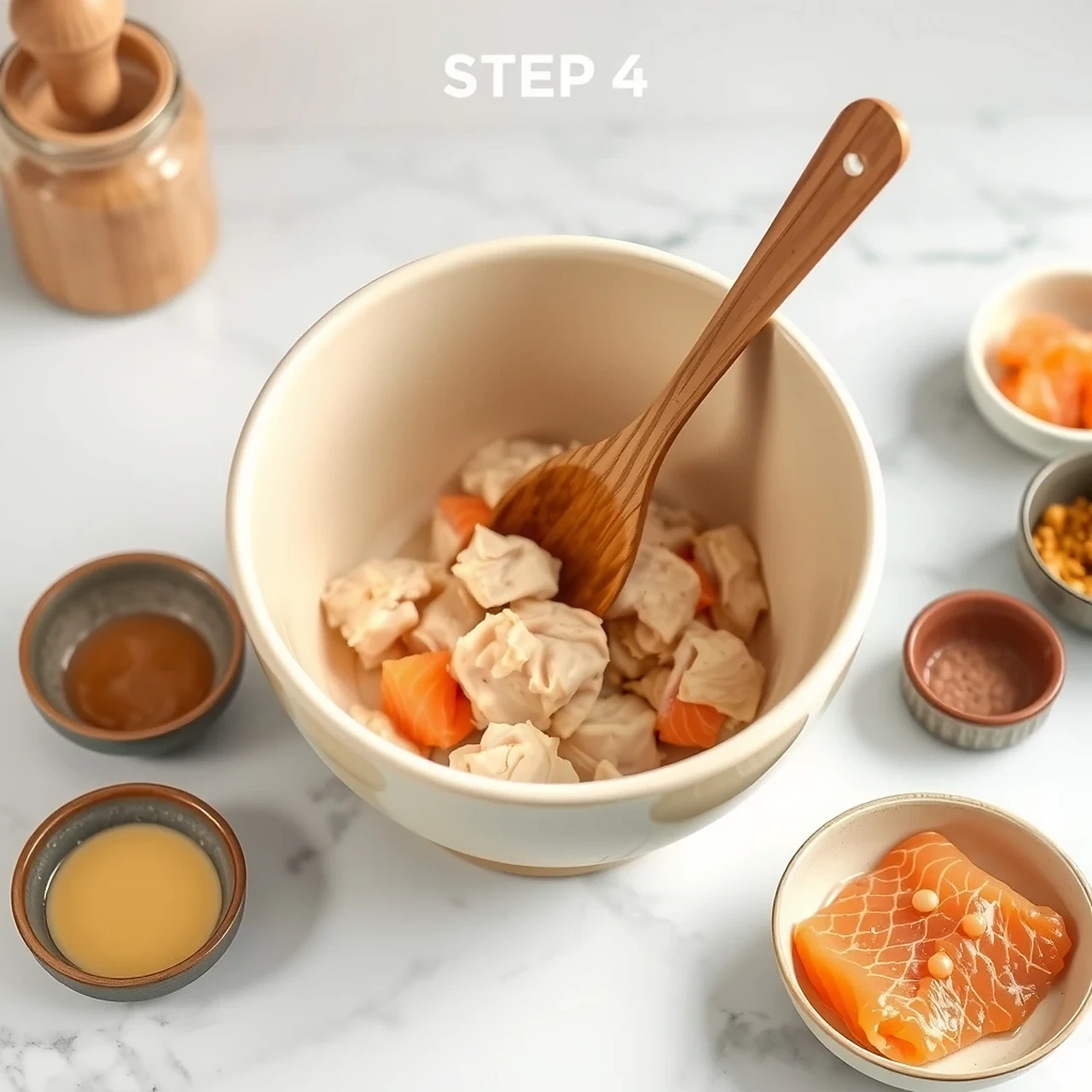
Lickable toppers are handy when you want to add a little extra aroma and a softer texture to your cat's regular meal without turning that addition into a full homemade diet. This version blends thoroughly cooked chicken and salmon with a small amount of their plain cooking liquid until everything is smooth, soft, and easy to spoon. The recipe stays intentionally simple, with no salt, seasoning, onion, garlic, butter, or rich broth. Check every piece of meat and fish carefully for skin and bones before blending. Serve it only as an occasional topper over complete cat food, and discuss major diet changes with your veterinarian.
Safety first: Skip this recipe if your cat has a known sensitivity to any ingredient, and introduce anything new slowly.
Foods to avoid
Do not add salt, onion, garlic, chives, seasoning blends, butter, oil, cream, milk, sauces, stock cubes, or seasoned commercial broth. Remove all chicken bones, fish bones, skin, and tough cartilage, and never blend cooked bones into the mousse. This topper is for intermittent supplemental feeding and is not formulated to replace a complete and balanced cat food.
Ingredients
Instructions
Prepare the proteins: Trim away visible fat, skin, cartilage, and any tough connective tissue from the chicken. Run clean fingertips carefully over the salmon to remove every pin bone you can feel, then cut both proteins into a few similarly sized pieces so they cook evenly. Keep the chicken and salmon separate at this stage.
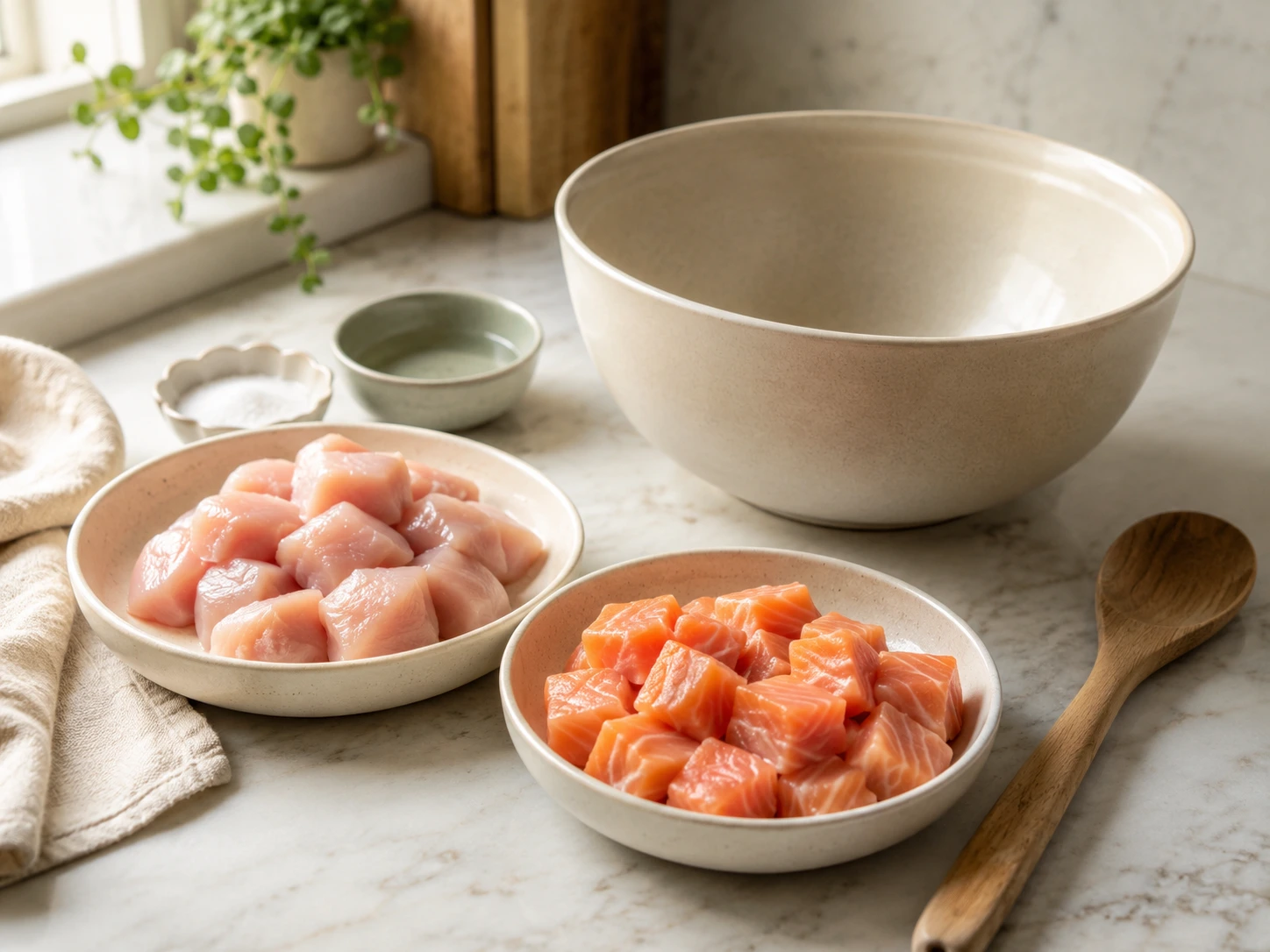
Cook the chicken: Place the chicken in the small saucepan with enough of the plain water to keep the bottom moist, then cover and cook gently until the chicken is thoroughly cooked through. Check the thickest piece and continue cooking until it reaches 165 F. Transfer the chicken to the cream bowl, leaving the plain cooking liquid in the pan.
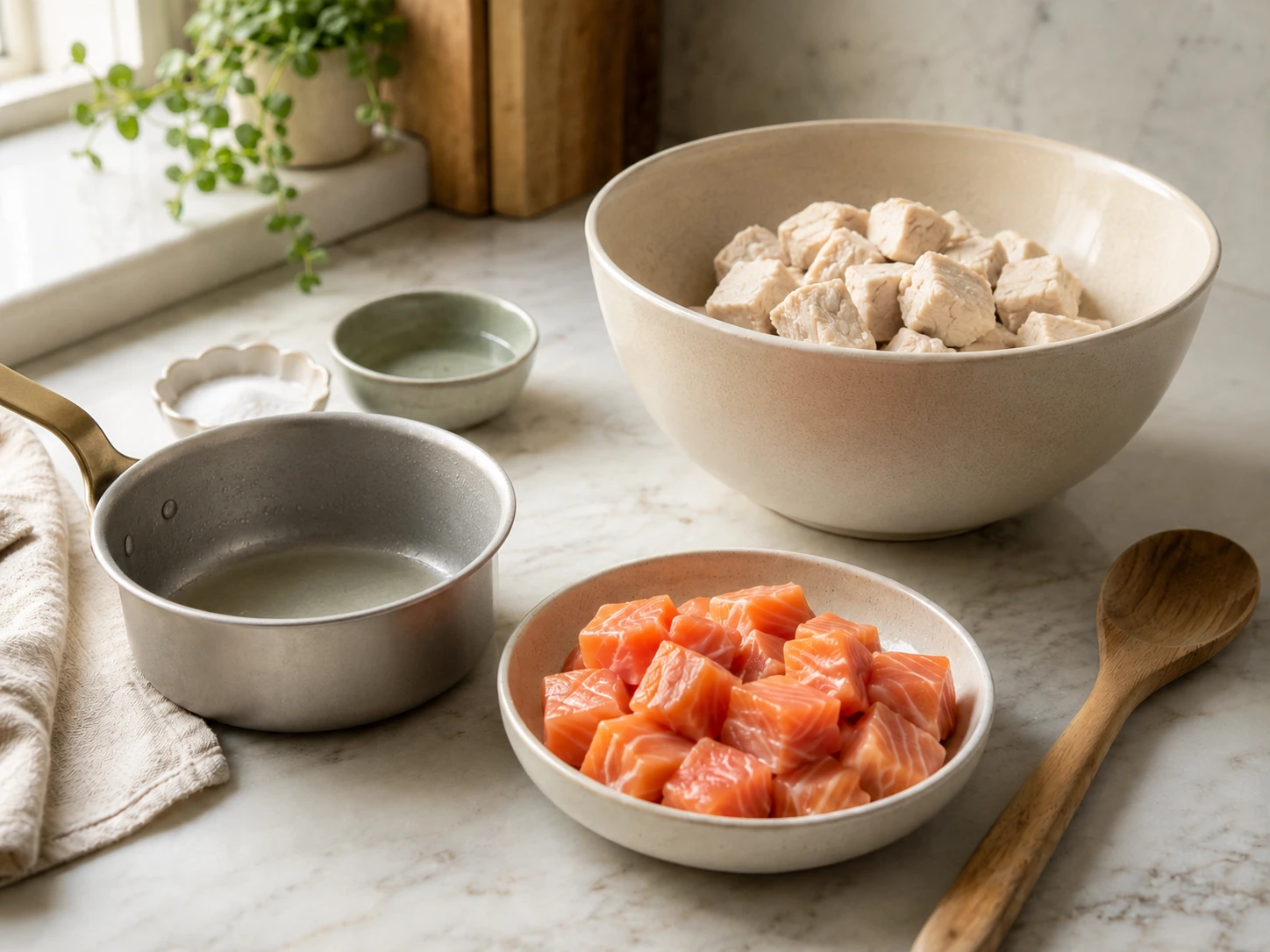
Cook the salmon: Add the salmon to the same saucepan and cook it gently in the remaining plain liquid until the center is fully opaque and the flesh separates easily with a fork. Let both proteins cool until safe to handle, then flake the salmon once more and carefully check for any bone that may have been missed before cooking.
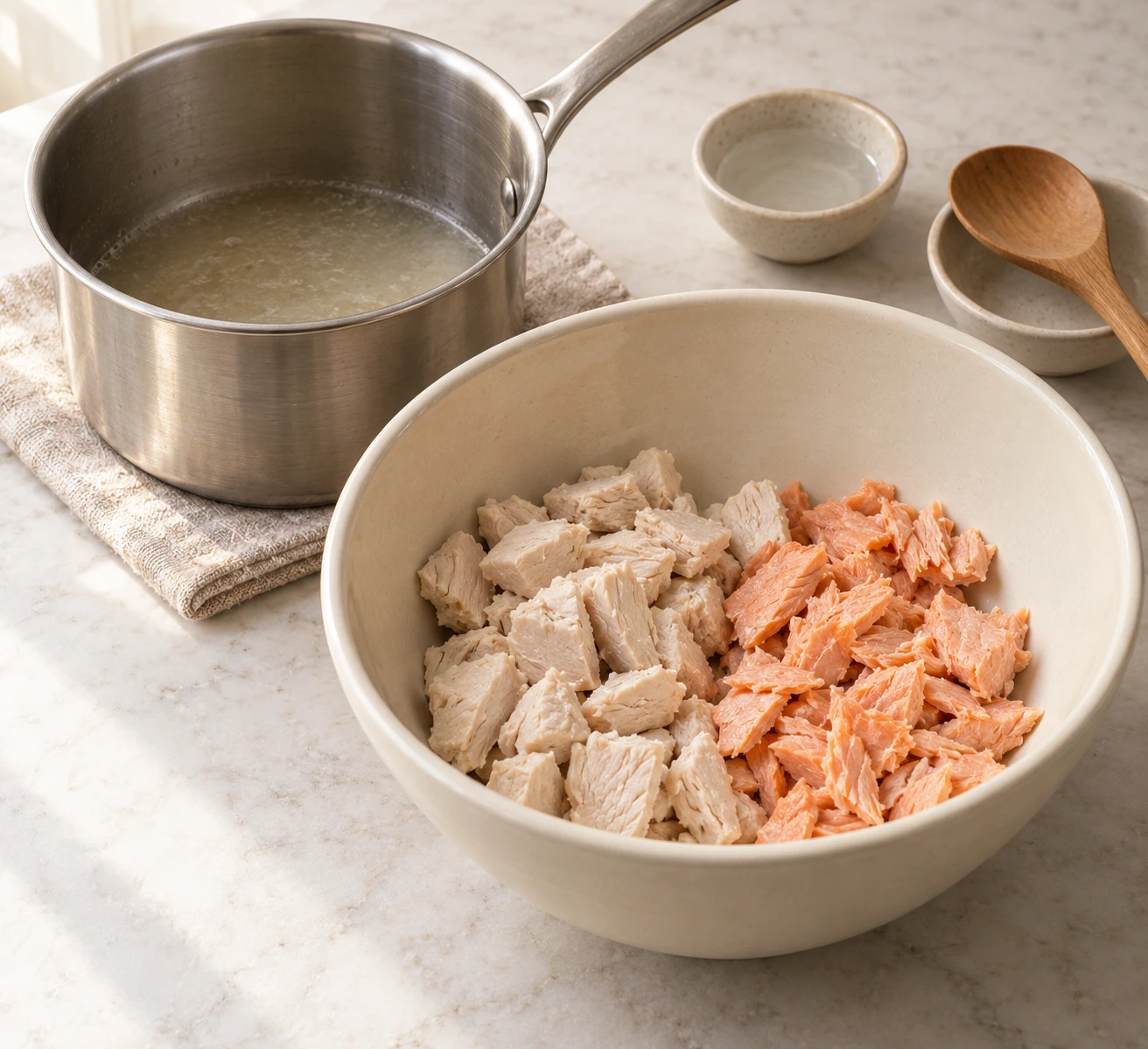
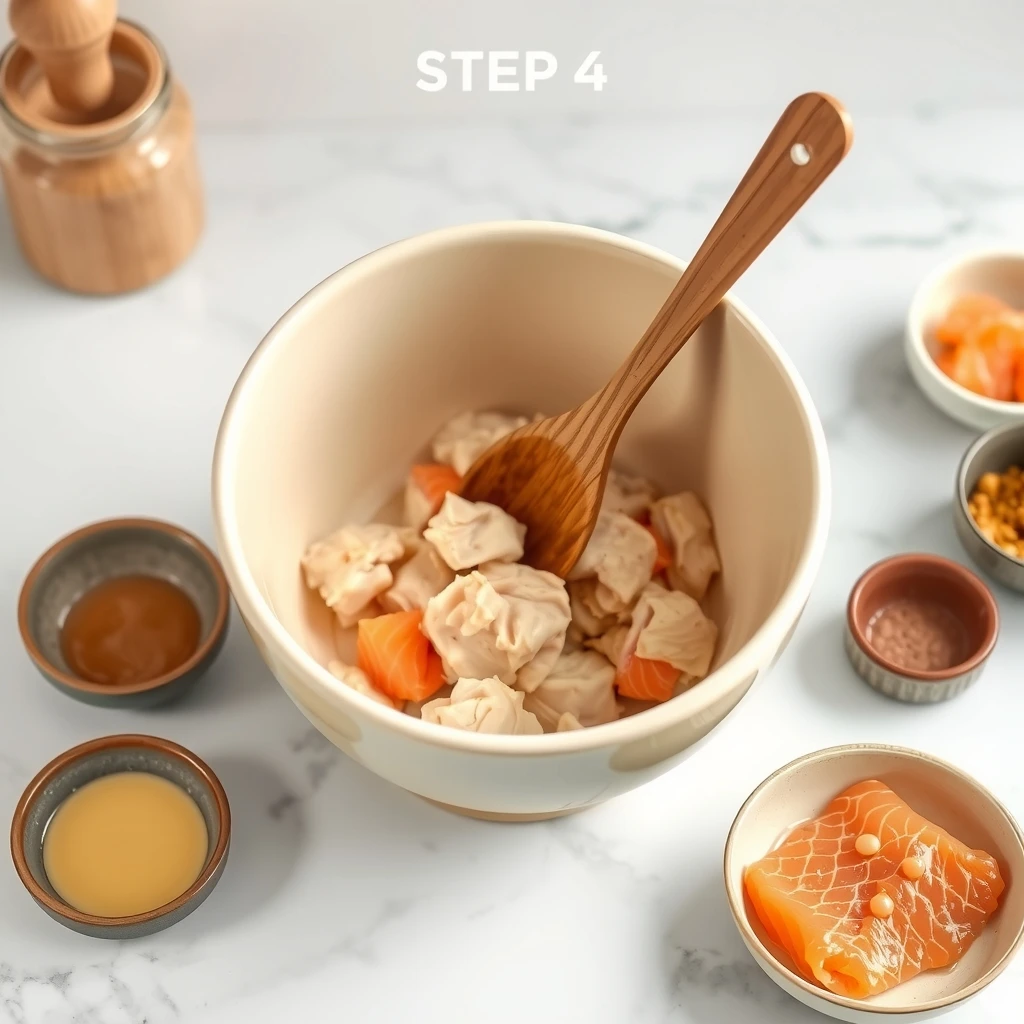
Blend until smooth: Place the cooled chicken and salmon in the mini blender with 2 tablespoons of cooled plain cooking liquid. Blend until finely broken down, stop to scrape the sides, then continue blending. Add more cooking liquid one teaspoon at a time only if needed, just until the mixture becomes smooth without turning soupy.
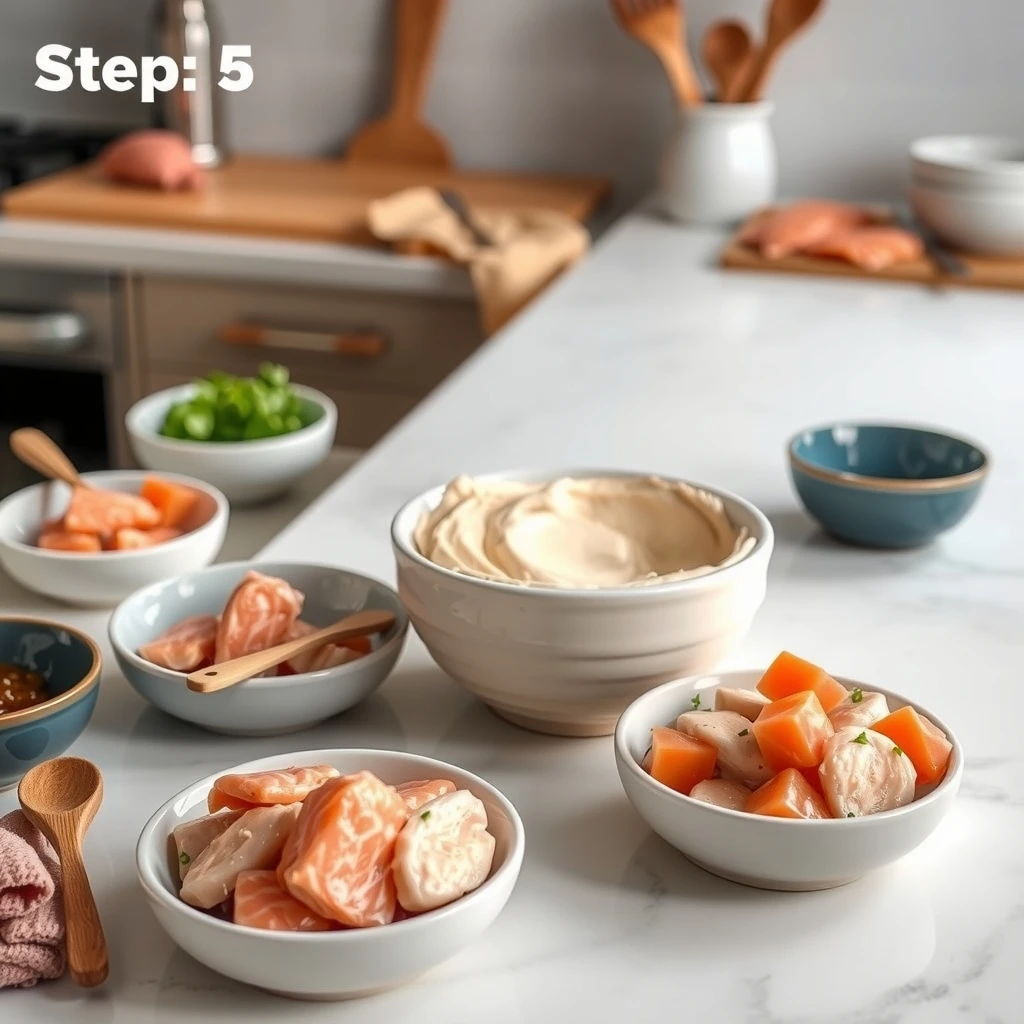
Whip and portion: Blend for several more short pulses until the mousse looks uniform, soft, and spoonable, with no obvious chunks remaining. Scrape it into the same clean cream ceramic bowl and let it cool completely before serving or refrigerating. Portion small amounts rather than placing the whole batch beside your cat's meal.
Made this recipe?
Tap the paw so other pet parents know it’s worth making.
Be the first to make it
Tips & serving
Start with about 1 teaspoon spooned over your cat's usual complete and balanced food, especially if chicken, salmon, or homemade toppers are new to them. Keep the mousse as a small occasional addition rather than a meal replacement, and discuss major diet changes or regular homemade feeding with your veterinarian.
- The smooth texture makes a small portion easy to spread through regular cat food.
- Using plain cooked proteins keeps the ingredient list short and easy to understand.
- Small spoonable portions make it easier to control how much topper is added.
- Cool the cooking liquid before blending so the mousse does not become unnecessarily hot or difficult to judge for thickness.
- Add extra liquid by the teaspoon because a small amount can quickly change the mixture from mousse-like to watery.
- Scrape the blender sides between pulses so larger chicken or salmon pieces cannot hide beneath an otherwise smooth surface.
Storage
Transfer the cooled mousse to a clean airtight container and refrigerate promptly. For longer storage, freeze small teaspoon-size portions in a covered freezer-safe tray, then transfer the frozen portions to a sealed container and thaw individual servings in the refrigerator before use.
Substitutions
Boneless skinless chicken breast can replace chicken thigh if that is what you have, although breast may need slightly more cooking liquid to reach the same soft mousse consistency. If salmon is unavailable, another plain boneless cooked fish that your cat already tolerates can provide a similar texture, but changing proteins should still be kept gradual and major diet changes discussed with a veterinarian.
Cats recipe FAQ
Can Whipped Chicken and Salmon Mousse Topper for Cats replace my cat's regular diet?
Treat it as an occasional extra, not a meal plan. Start with about 1 teaspoon spooned over your cat's usual complete and balanced food, especially if chicken, salmon, or homemade toppers are new to them.
Is chicken and salmon okay for cats?
This recipe uses chicken and salmon in a small, cat-appropriate amount. Skip it if your cat has a known sensitivity, and read the foods-to-avoid note on this page before serving.
How do I store this topper?
Transfer the cooled mousse to a clean airtight container and refrigerate promptly. Use refrigerated portions within two days because the recipe contains moist cooked meat and fish without preservatives.
How should I introduce this topper?
Start with a taste-size portion next to your cat's usual food, and hold off on serving more until you have seen that it agrees with them.
Can I serve this mousse on dry cat food?
Yes, in a small amount. This mousse is designed to sit on top of a nutritionally complete wet or dry cat food, not replace it. Start with a teaspoon so the added food stays modest and your cat can get used to the new texture.
How smooth should the chicken and salmon mousse be?
The mousse should be smooth enough to spread from a spoon without running like broth. If it looks dry or grainy, blend in cooled cooking liquid one teaspoon at a time. Too much liquid can make the topper watery and harder to portion consistently.
Sources