

This parchment-steamed salmon topper is a simple way to add a little whole-food texture without turning your cat's dinner into a second meal. Sealing the fish in parchment holds gentle steam around the salmon, helping it stay moist and tender so it separates into clean flakes instead of drying out. Keep everything plain and uncomplicated. Use boneless, skinless salmon, cook it thoroughly, and check the finished flakes again for pin bones. Skip salt, oil, butter, garlic, onion, and seasoning. This salmon is only a topper, not a complete diet, so serve a small amount over your cat's usual balanced food and discuss major diet changes with your veterinarian.
Safety first: Introduce new foods gradually and speak with your veterinarian before making major changes to your cat's diet.
Foods to avoid
Do not use raw, smoked, cured, seasoned, canned-in-brine, or oil-packed salmon for this recipe. Avoid salt, butter, cooking oil, sugar, garlic, onion, sauces, spice blends, and any fish with bones left in. Raw salmon carries food-safety risks, and even small fish bones can create choking or digestive hazards.
Ingredients
Instructions
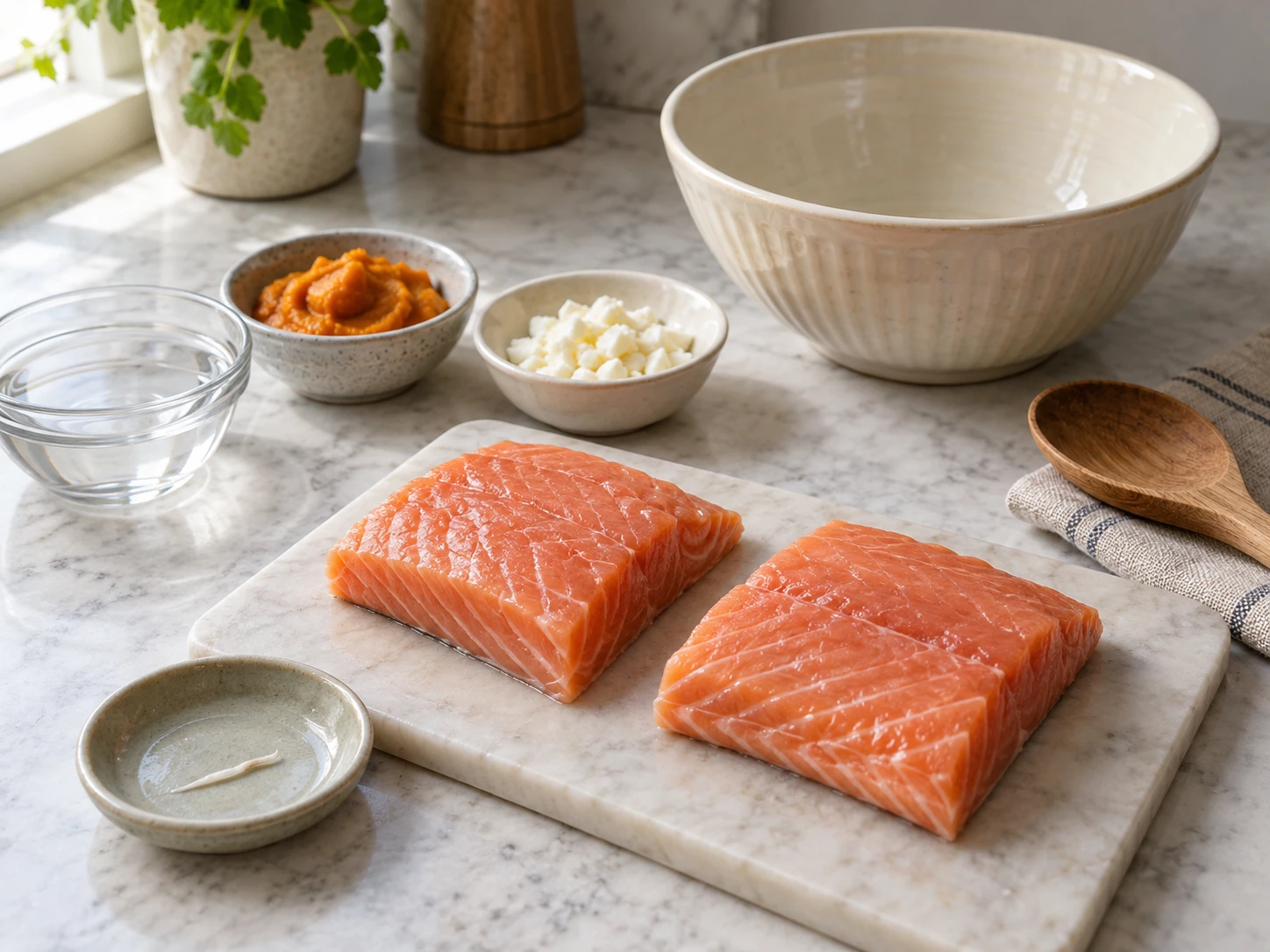
Prepare and inspect the salmon: Pat the salmon dry, then run clean fingertips slowly over every surface to check carefully for pin bones. Remove any bone you find and cut the fillet into two equal pieces so it steams evenly. Set the salmon beside the measured water, pumpkin puree, and cooked egg white while you prepare the parcel.
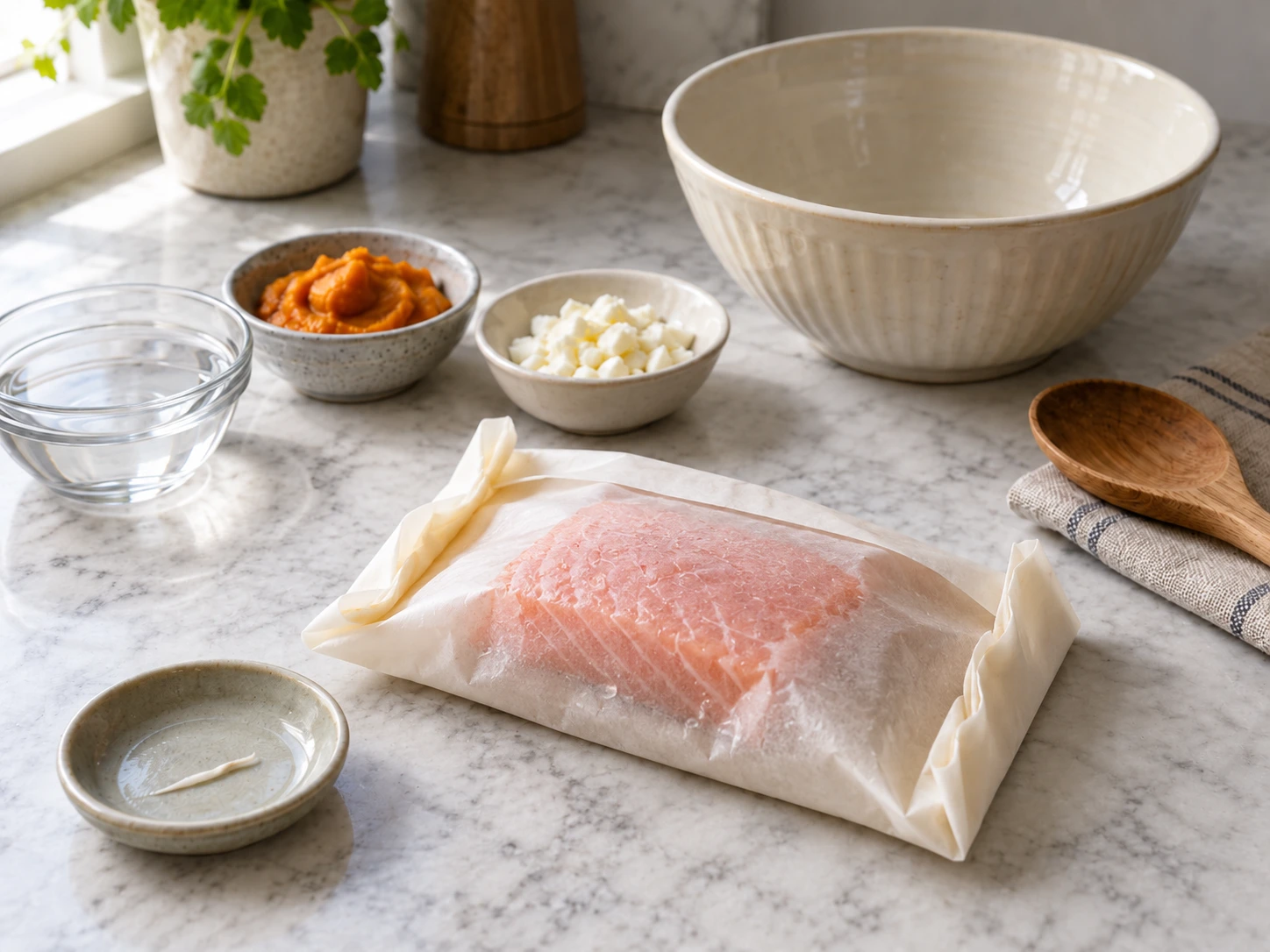
Build the parchment parcel: Place the salmon in the center of a sheet of parchment and spoon the tablespoon of water around it. Fold the parchment into a snug parcel with the seams turned upward to help keep the moisture inside. Keep the pumpkin puree and cooked egg white covered at the side for the finishing step.
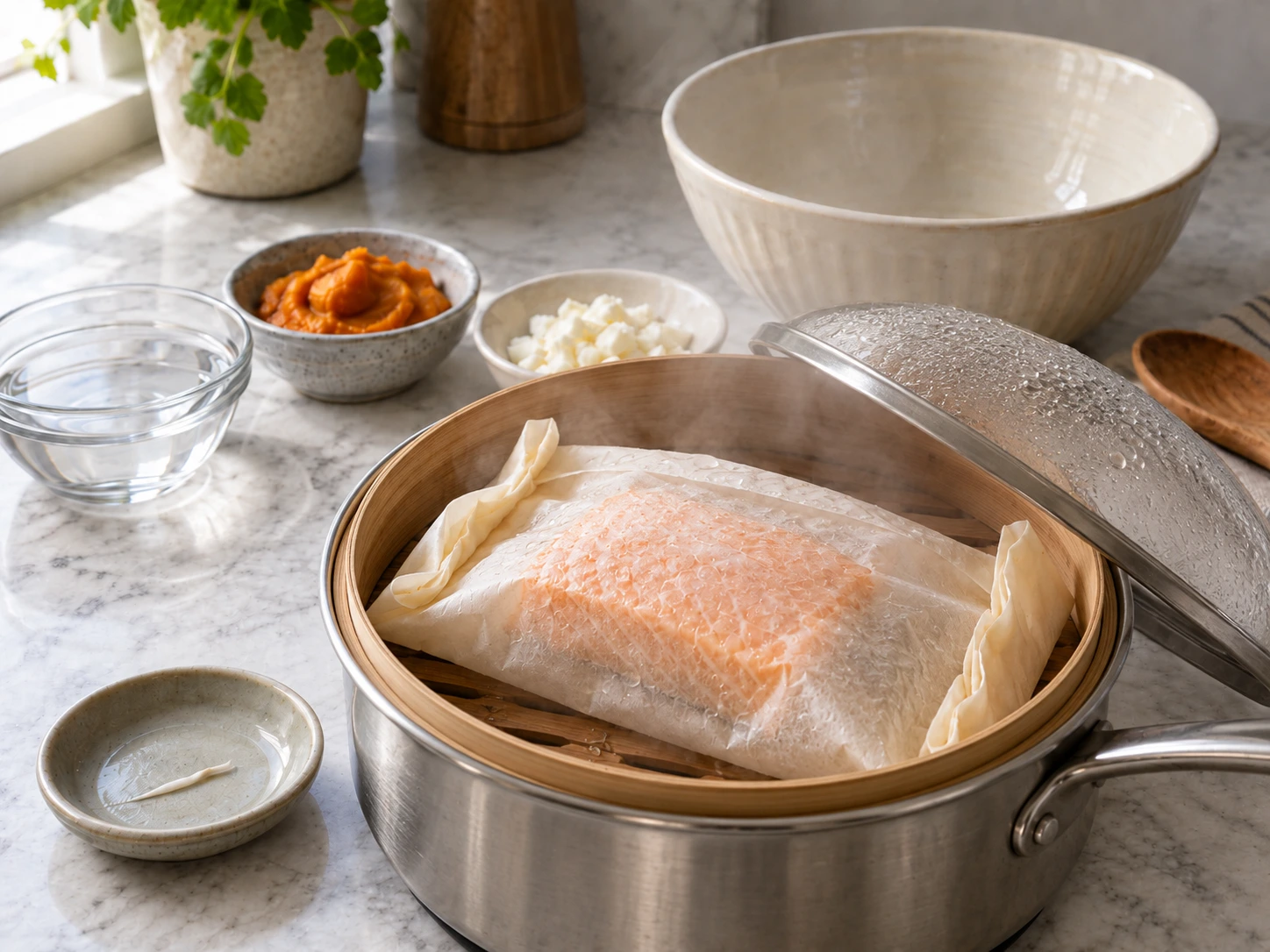
Steam until fully cooked: Bring a shallow layer of water in the saucepan to a gentle simmer, place the sealed parcel in the steamer basket, and cover. Steam for about 8 to 10 minutes, checking the thickest piece with a food thermometer. The salmon should reach 145°F in the center and look opaque enough to separate easily with a fork.
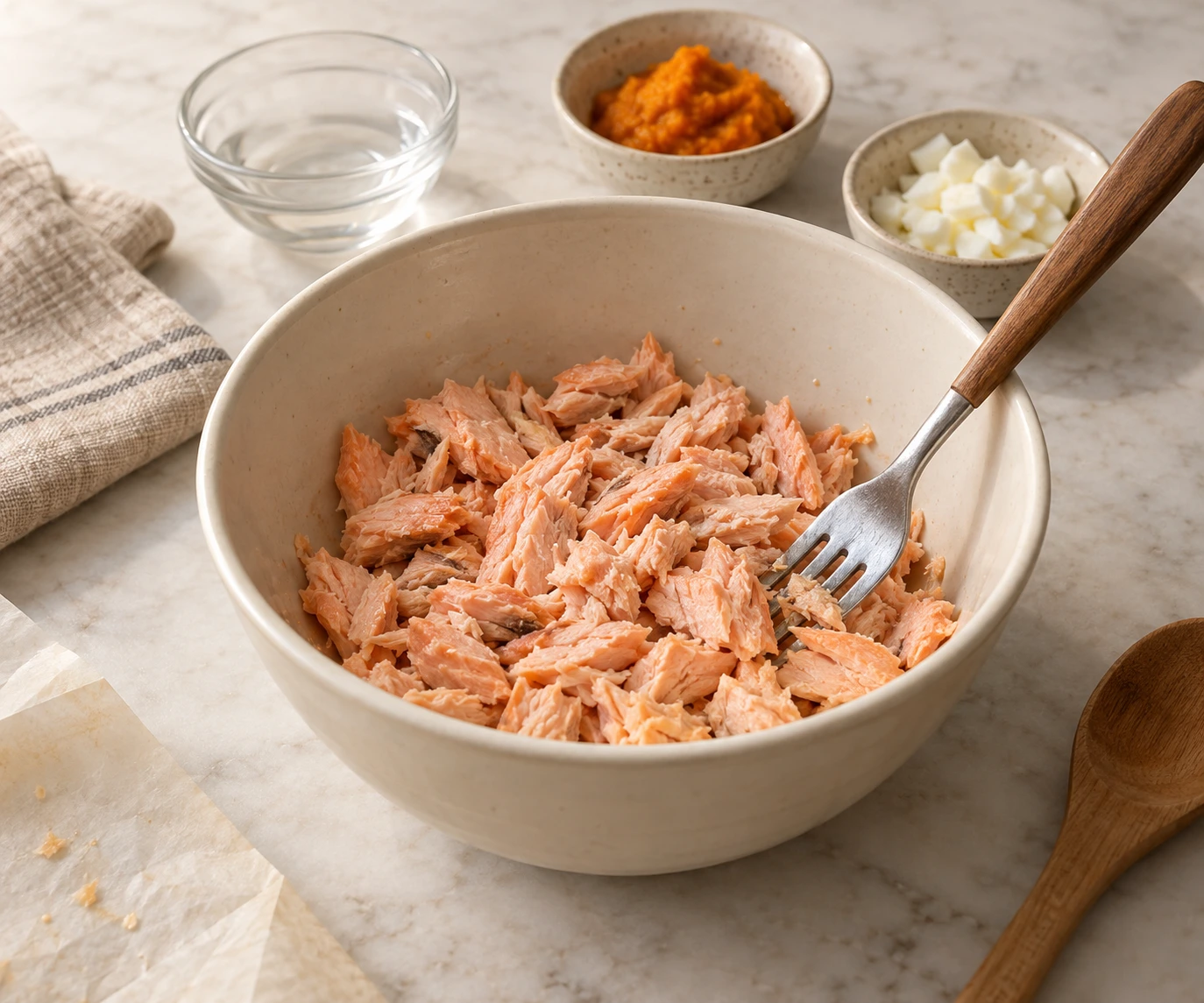
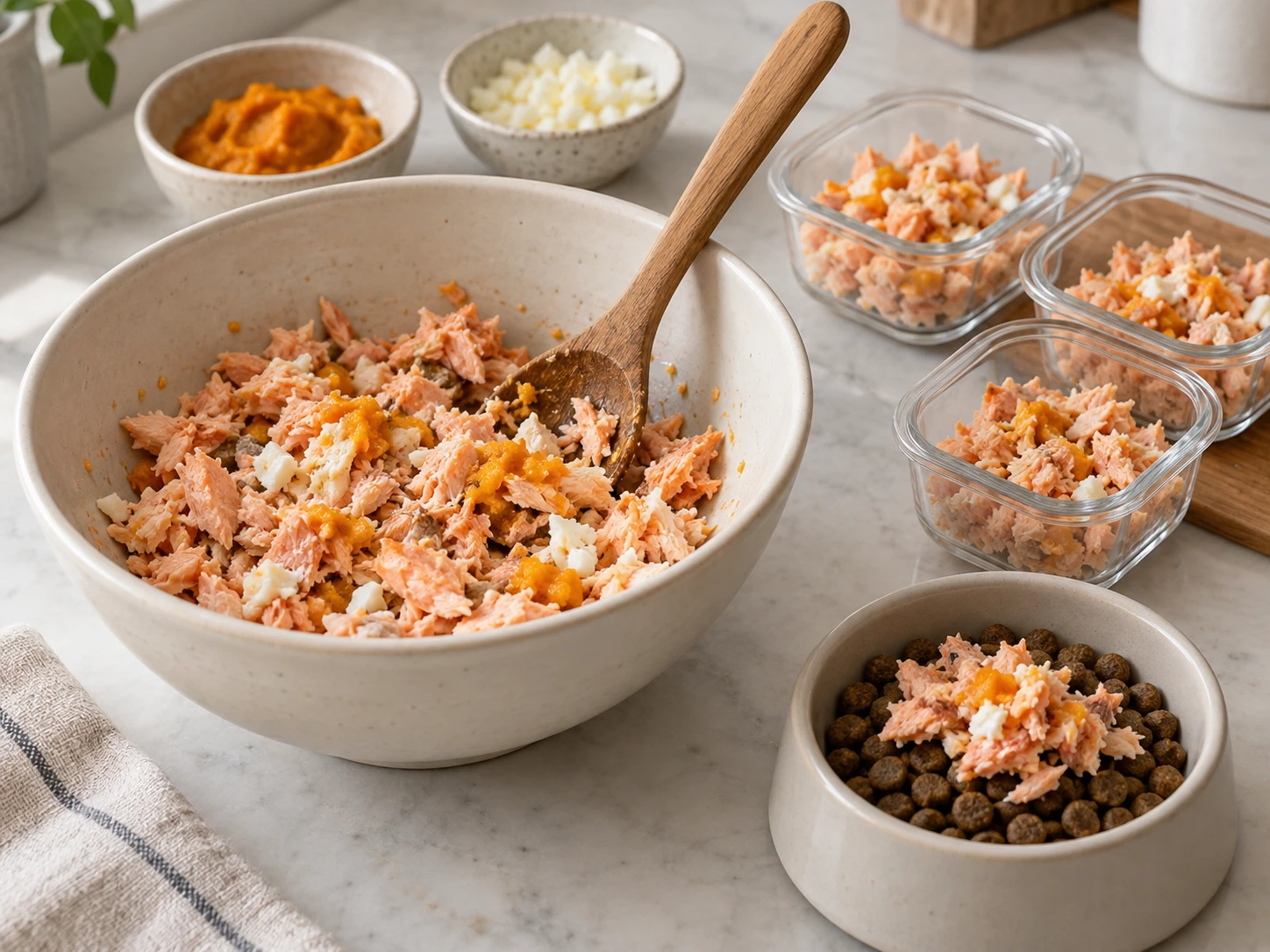
Cool, check, and flake: Transfer the cooked salmon to the cream ceramic bowl and let it cool until comfortable to handle. Check the fish a second time for any pin bones, then use the fork to pull it into moist, distinct flakes instead of mashing it. Discard any firm skin, connective pieces, or bones you notice.
Finish and portion the topper: Fold the teaspoon of pumpkin puree and the minced cooked egg white gently through the cooled salmon flakes, keeping the mixture loose rather than mashed. Divide it into small topper portions and refrigerate promptly. At serving time, spoon a small amount over your cat's usual complete food rather than offering the topper as a meal by itself.
Made this recipe?
Tap the paw so other pet parents know it’s worth making.
Be the first to make it
Tips & serving
Start with a very small spoonful mixed into or scattered over your cat's usual complete and balanced food, especially if salmon is new to them. Keep all toppers and treats within a small share of daily calories rather than replacing a balanced meal. Because salmon calorie content varies and individual needs differ, ask your veterinarian what amount fits your cat, and discuss any major diet change with your veterinarian before making it.
- Parchment steaming keeps the salmon moist enough to flake without added oil.
- The loose flaked texture makes a small topper easy to distribute across regular food.
- Choose a center-cut piece of salmon with even thickness so the two portions finish steaming at roughly the same time.
- Check for pin bones both before and after cooking because softened fish can reveal tiny bones that were easy to miss raw.
- Flake the salmon only after it has cooled slightly, which helps preserve distinct pieces instead of turning the fish into paste.
- Use a clean spoon for every serving so leftovers are not contaminated by saliva or food already in the cat's bowl.
Storage
Use refrigerated portions within two days for the best texture and food-safety margin, and discard any portion that develops an unusual odor, drying, or contamination from repeated serving utensils. Thaw a portion in the refrigerator, not on the counter, and do not repeatedly thaw and refreeze the same serving.
Substitutions
If plain salmon is unavailable, a boneless fillet of trout can be prepared with the same parchment-steaming method, provided it is fully cooked, carefully deboned, unseasoned, and already suitable for your cat's diet. If your cat does not normally eat pumpkin or egg, leave either one out rather than replacing it with a seasoned human-food ingredient. The topper can remain mostly salmon with a few drops of plain cooking moisture to keep the flakes soft.
Cats recipe FAQ
Can Parchment-Steamed Salmon Flake Topper for Cats replace my cat's regular diet?
Treat it as an occasional extra, not a meal plan. Start with a very small spoonful mixed into or scattered over your cat's usual complete and balanced food, especially if salmon is new to them.
Is salmon okay for cats?
This recipe uses salmon in a small, cat-appropriate amount. Skip it if your cat has a known sensitivity, and read the foods-to-avoid note on this page before serving.
How do I store this topper?
Cool the finished topper promptly, transfer it to a clean airtight container, and refrigerate it within two hours of cooking. Use refrigerated portions within two days for the best texture and food-safety margin, and discard any portion that develops an.
How should I introduce this topper?
Start with a taste-size portion next to your cat's usual food, and hold off on serving more until you have seen that it agrees with them.
Can I use canned salmon instead of fresh salmon?
Fresh or fully thawed plain salmon is the better fit for this recipe because you control the cooking and added ingredients. Many canned salmon products contain extra sodium, oil, or seasonings, so do not substitute one unless your veterinarian has specifically confirmed that product is appropriate.
Why does the salmon need to be fully cooked?
Cooking reduces the food-safety risks associated with raw fish. Steam the salmon until the center reaches 145°F and the flesh is opaque and separates easily. Let it cool before flaking, then inspect it again carefully for any bones before serving.
Sources