

If your cat enjoys a little variety, this lamb and egg yolk mash is a lovely way to change up their usual chicken or fish topper. Lean, boneless lamb is gently poached in plain water, then finely chopped and mixed with a little fully cooked egg yolk. The result is soft, moist and easy to spoon over their regular food, with no cream, oil or seasoning needed. The trick is to trim away visible fat, cook everything thoroughly and add just enough liquid to bring the mash together. It's meant as an occasional treat, not a replacement for nutritionally complete cat food. Make a modest batch, refrigerate leftovers promptly and start with a tiny serving to see how your cat likes it.
Safety first: Introduce new foods gradually and speak with your veterinarian before making major changes to your cat's diet.
Foods to avoid
Never use raw or undercooked lamb, raw egg yolk, bones, bone fragments, fatty lamb trimmings, bacon, butter, oil, cream, milk, onion, garlic, leeks, chives, seasoning blends or salted broth in this topper. Onion and garlic are toxic to cats, and bones can create choking or internal injury hazards. Choose lean meat and remove visible fat because rich, fatty additions can be poorly tolerated. Cook the egg until the yolk is fully firm, and check the lamb's internal temperature with a clean food thermometer rather than relying on appearance alone.
Ingredients
Instructions
Trim and Cut the Lamb: Start with the raw lamb on a clean cutting board, using a sharp knife to trim away any visible white fat, tough silver skin, gristle or remaining connective tissue, and make sure the meat is completely boneless. Cut it into even pieces about 2 cm across so they cook evenly, keeping them larger rather than chopping them into tiny raw bits because they'll be easier to lift from the water and check with a thermometer. Measure 250 ml of plain water into a small saucepan, keep the egg aside for its own pan, and wash your hands, knife and any surfaces that touched the raw lamb before handling cooked ingredients.
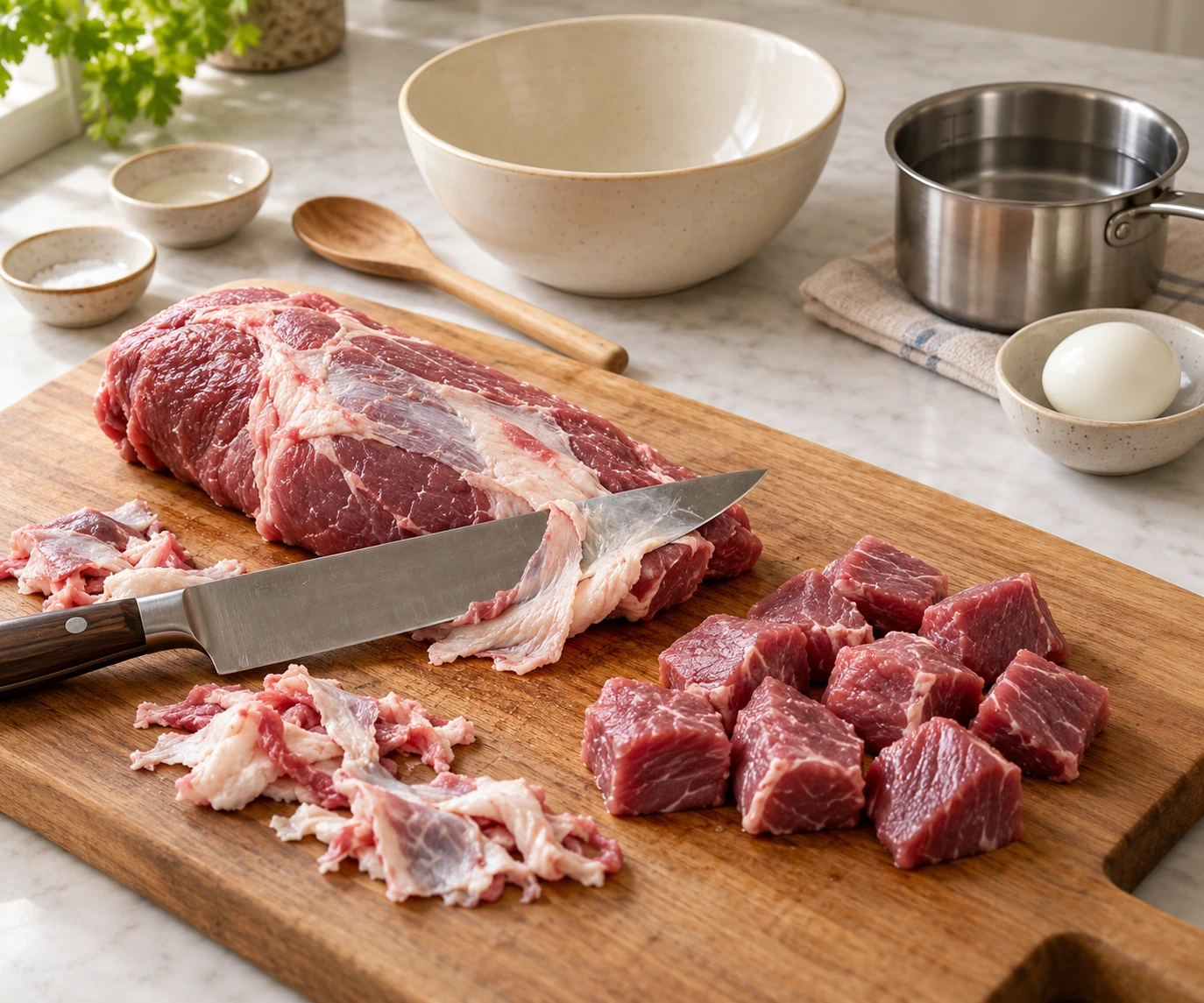
Gently Poach the Lamb: Add the trimmed lamb to the saucepan of plain water, topping up with a little extra water if needed to just cover the meat, then bring it to a gentle simmer over medium heat before lowering the heat to keep only small, occasional bubbles. Partially cover and cook for approximately 12 to 18 minutes, depending on thickness, turning the pieces once or twice and checking the thickest one with a clean food thermometer until the center reaches at least 74°C or 165°F, a conservative target for this topper, with no raw meat remaining. Don't add salt, broth powder, onion, garlic, herbs or oil; simply lift the cooked lamb out with a clean utensil, let it cool until safe to
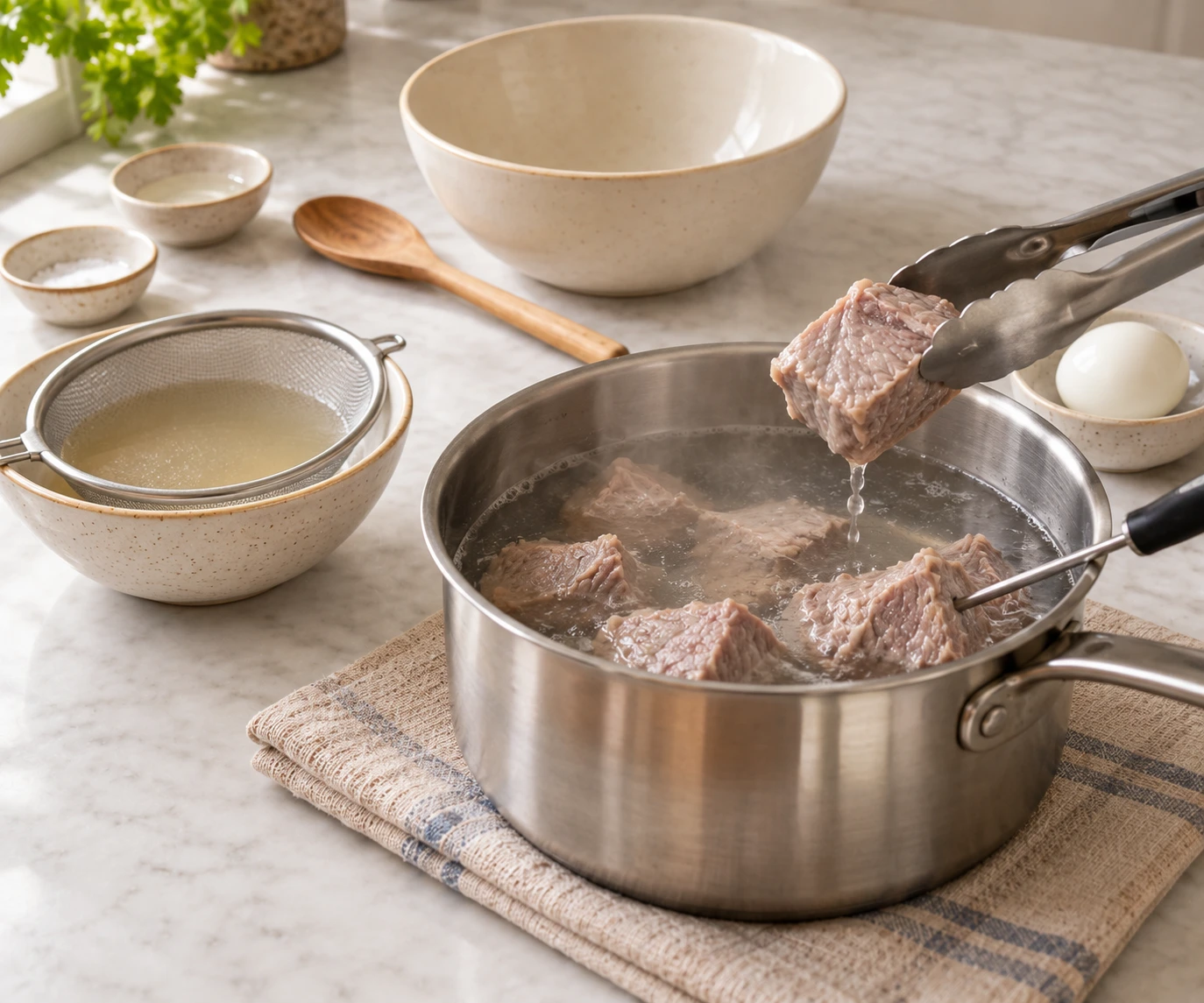
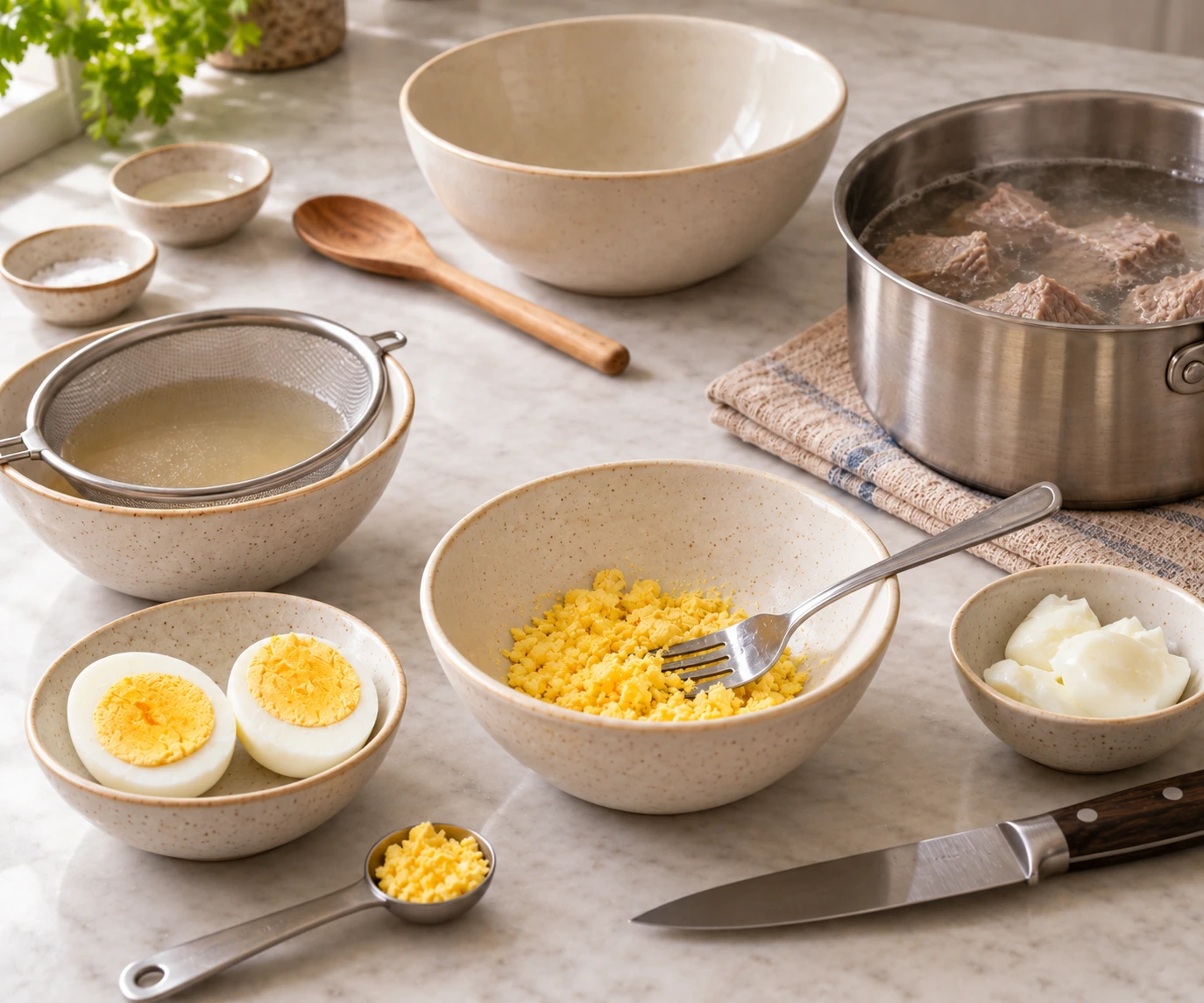
Cook and Separate the Egg Yolk: While the lamb is cooking, put the egg in a separate small saucepan, cover it with cold water, bring to a boil, then lower to a gentle simmer for approximately 11 to 12 minutes until the yolk is completely set, not soft or runny. Cool the egg briefly in cold water, peel it, cut it in half with a clean knife to check that the center is firm throughout, then scoop out the yolk and measure just 1 level teaspoon into a small white mixing bowl, setting the remaining cooked egg aside for another appropriate household use rather than adding it all. Crumble the measured yolk finely with a fork, and leave out raw egg, runny yolk, mayonnaise, butter, milk and seasoning.
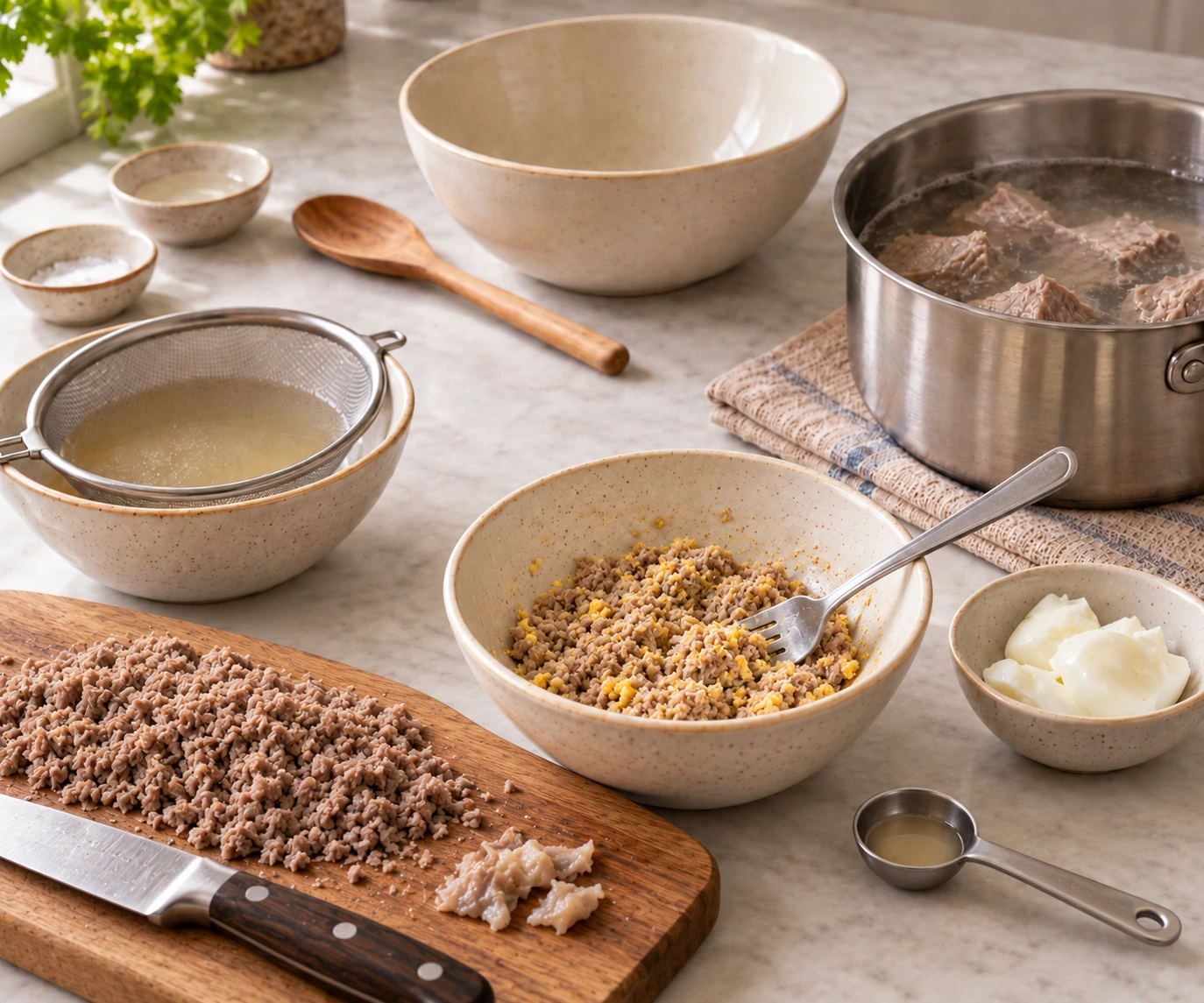
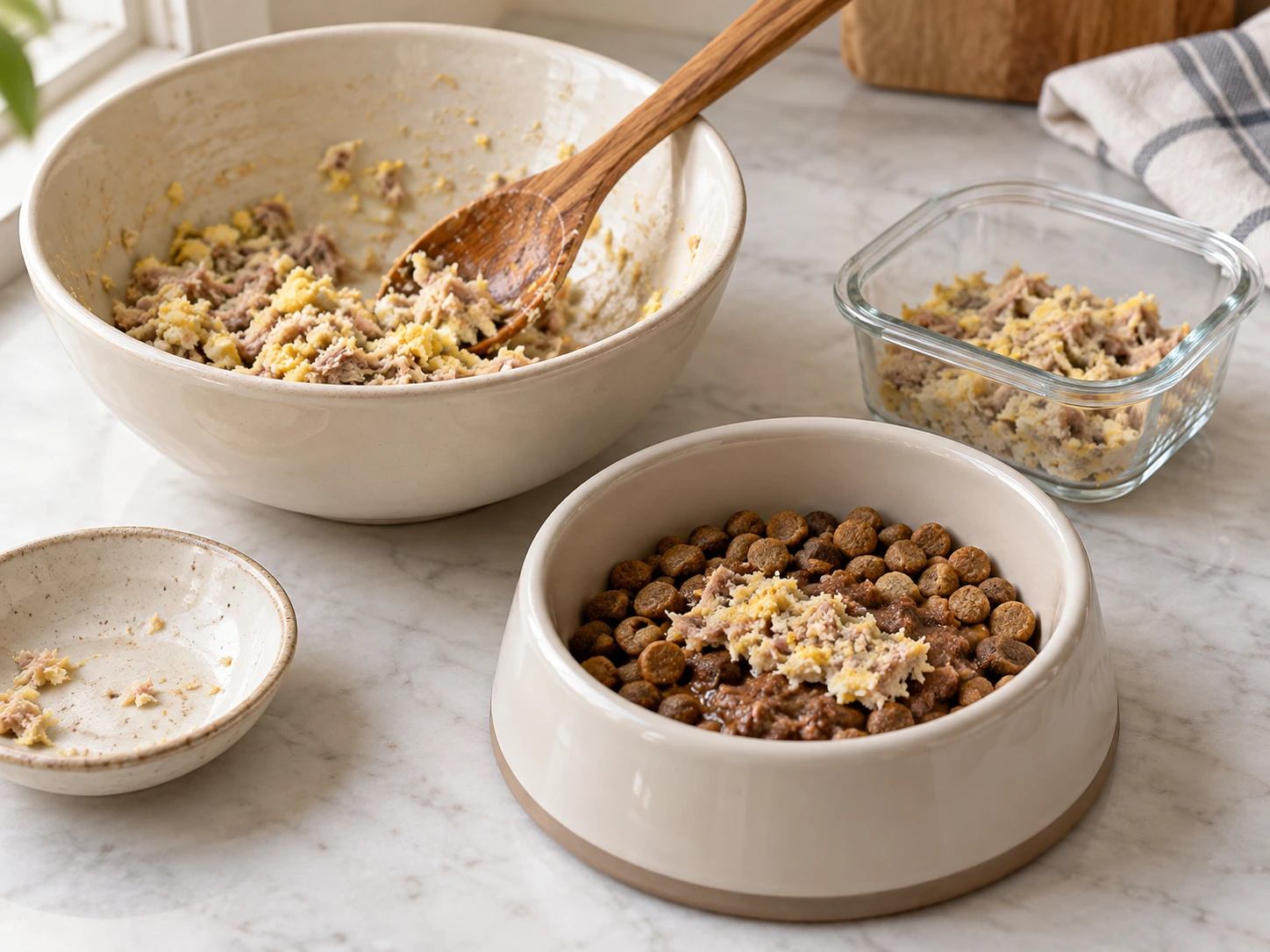
Finely Mince and Mash: Place the cooled, fully cooked lamb on a freshly cleaned cutting board and use a clean knife to chop it very finely, aiming for pieces around 2 to 3 mm or smaller, while removing any overlooked gristle or tough bits that resist the knife. Add the minced lamb to the bowl of measured cooked egg yolk and fold together with a fork, pressing some meat against the bowl to help it bind, then stir in 1 teaspoon of cooled plain water or defatted lamb cooking liquid and add more in small increments, up to approximately 3 teaspoons total, until the mixture sits together on a spoon without becoming runny. You're looking for a moist, finely minced mash with no large meat chunks or
Portion Over Complete Cat Food: Once the mash is no warmer than lukewarm, start with approximately 1/4 teaspoon for a healthy adult cat trying these ingredients for the first time, spreading it thinly over their usual nutritionally complete food rather than offering it as a separate meal. If your cat tolerates it well, a later occasional portion can be approximately 1/2 to 1 teaspoon depending on their size, calorie needs and veterinary guidance, but their regular balanced food should still make up most of the bowl. Spoon the unused mash into a clean, shallow container and refrigerate it promptly instead of leaving it at room temperature, serving only what your cat is likely to finish at
Made this recipe?
Tap the paw so other pet parents know it’s worth making.
Be the first to make it
Tips & serving
Serve this mash as an occasional topper over your cat's usual nutritionally complete and balanced food. For a healthy adult cat trying lamb and cooked egg yolk for the first time, begin with approximately 1/4 teaspoon and observe how the cat responds. A later occasional serving of 1/2 to 1 teaspoon may be reasonable for some cats, but the suitable amount depends on body size, activity, usual treats and individual calorie needs. Keep all treats and toppers combined to no more than about 10% of daily calorie intake, with at least 90% coming from complete and balanced food. This lamb mixture is calorie-dense and the quantity should remain small. Do not add it on top of an already excessive
- Gentle poaching cooks the lamb without added oil, butter or seasoning, making the ingredient list easier for pet parents to control.
- Finely mincing the lamb and folding in cooked egg yolk creates a soft texture that can be distributed across a regular meal.
- Using a measured spoonful encourages controlled treat portions rather than replacing a substantial amount of balanced cat food.
- Preparing the lamb separately from household meals avoids accidental exposure to onions, garlic, sauces and heavily seasoned cooking liquids.
- A small batch allows owners to prepare occasional portions without keeping a large quantity of cooked meat in the refrigerator.
- The simple preparation helps owners see exactly which ingredients are entering their cat's bowl.
Storage
Refrigerate the unused mash promptly after preparation. Keep the refrigerator at 4°C or 40°F or colder. For this moist meat-and-egg topper, use refrigerated portions within 24 to 48 hours as a conservative household practice. For longer storage, divide the freshly cooled mash into clean, individually measured small portions and freeze immediately in food-safe airtight containers.
Substitutions
If lean boneless lamb is unavailable, plain boneless skinless chicken breast or turkey breast can be gently poached and finely minced using the same general method. Cook poultry thoroughly to at least 74°C or 165°F. This changes the primary protein, so introduce the replacement in a small amount and check that it is suitable for your cat. Avoid processed deli meats or pre-seasoned poultry. If you prefer not to include egg yolk, omit it entirely and use a little additional plain water to moisten the finely minced cooked lamb.
Cats recipe FAQ
Can I serve this topper every day?
Treat it as an occasional extra, not a meal plan. Serve this mash as an occasional topper over your cat's usual nutritionally complete and balanced food. For a healthy adult cat trying lamb and cooked egg yolk for the first time, begin with approximately 1/4 teaspoon.
Is boneless lamb okay for cats?
This recipe uses boneless lamb in a small, cat-appropriate amount. Skip it if your cat has a known sensitivity, and read the foods-to-avoid note on this page before serving.
How should I store leftovers?
Refrigerate the unused mash promptly after preparation. Spread it into a shallow, clean container to speed cooling, cover it and place it in the refrigerator within 2 hours of cooking, or within 1 hour if the room is above 32°C or 90°F.
How should I introduce this topper?
Start with a taste-size portion next to your cat's usual food, and hold off on serving more until you have seen that it agrees with them.
Can cats eat cooked lamb and egg yolk together?
Plain, fully cooked lamb and fully cooked egg yolk can be offered together as a small occasional treat to many healthy adult cats. Trim the lamb carefully, remove all bones and avoid seasoning. Start with a tiny portion, as new foods may not agree with every cat. The mixture is not nutritionally complete.
Why use only a teaspoon of egg yolk in the entire batch?
Egg yolk is relatively rich in fat and calories, so a small amount is enough to help bind the minced lamb into a soft mash. Using more would increase the richness without making the topper a balanced food. Measuring the yolk also makes the recipe more consistent from batch to batch.
Sources