
If your dog has just stolen a green bean from the kitchen counter, there is usually no reason to panic. Plain green beans are generally safe for dogs, and their fibre and low calorie content make them a reasonable occasional addition to a balanced diet. The details matter, though. A fresh bean, a soft cooked bean and a can of salted green beans are not quite the same choice, especially if your dog has a sensitive stomach or a medical condition that affects what they can eat.,So, can dogs eat green beans raw, cooked or canned? Yes, in most cases, provided you prepare them sensibly and keep seasonings out of the picture. We will look at the safest ways to serve them, what to do with frozen beans, how much variety your dog's regular diet can accommodate, and which forms are better left off the menu. If your dog follows a prescribed diet, check with your veterinarian before making green beans a regular extra.
Are green beans safe for dogs?
Yes. Plain green beans are generally safe for healthy dogs when served in a suitable size and without added salt, butter, oil or seasoning. They contain fibre, water and small amounts of nutrients such as vitamin C, vitamin K and folate. Their relatively low calorie content can make them useful as an occasional snack for a dog that enjoys crunchy vegetables. Still, a green bean is a treat, not a complete meal. It does not provide the full balance of nutrients your dog needs, so it should not replace a nutritionally complete dog food.
The main concerns are usually preparation and portion size rather than the bean itself. A whole, firm bean can be awkward for a small dog to chew, and large pieces may pose a choking risk. Too many beans can also cause gas, loose stools or stomach discomfort, particularly if your dog rarely eats vegetables. Has your dog never tried them before? Start with a small piece and watch how they handle it. If your dog has a digestive disorder, food allergies or a veterinary diet, ask your veterinarian whether green beans fit their individual needs.

Can dogs eat raw green beans?
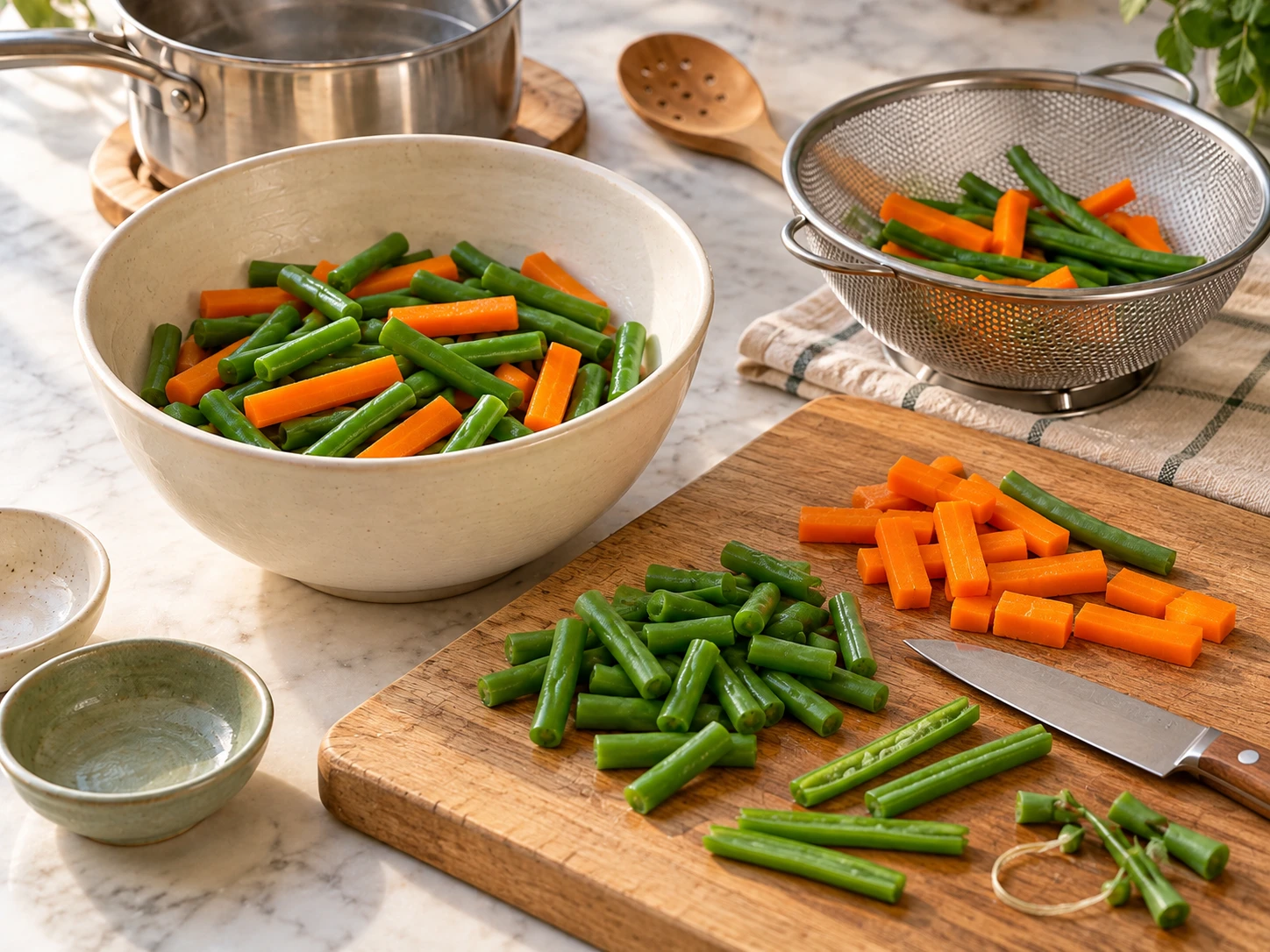
Dogs can generally eat raw green beans. Fresh beans have a firm crunch that some dogs enjoy, and washing them well under running water is usually all the preparation needed before serving. Remove the stem ends if they are tough, then cut the beans into short pieces suited to your dog's size. Smaller pieces are especially sensible for puppies and small breeds, which may gulp food instead of chewing it thoroughly. Supervise your dog while eating, even if they are usually careful with treats.
Raw green beans are firmer and harder to chew than cooked ones, so they may not suit every dog. If your dog tends to swallow food whole, has dental problems or struggles with hard textures, choose a softer preparation instead. Avoid beans that are spoiled, slimy or mouldy, and do not let your dog chew on discarded packaging or rubber bands from a bundle of vegetables. If raw beans cause digestive upset, stop offering them and speak with your veterinarian if the problem persists or your dog seems unwell.
Can dogs eat cooked green beans?
Plain cooked green beans are often the easiest option, particularly for dogs that find raw vegetables too firm. Steaming or boiling softens the beans without requiring oil or butter. Cook them until they are tender enough to bite through, then let them cool completely before serving. Cut them into pieces appropriate for your dog rather than handing over a long bean that could be swallowed awkwardly. There is no need to add salt to the cooking water or dress the finished vegetables with sauces.
Skip green beans cooked with garlic, onion, rich sauces or seasoning blends. Onion and garlic can damage a dog's red blood cells, and concentrated forms in powders can be especially easy to overlook in prepared foods. Butter and oil add unnecessary fat, which some dogs tolerate poorly. If you are making green beans for the family, set aside a plain portion before adding seasonings. That small step is easier than trying to pick flavourings off the finished dish, where traces can remain. Let the beans cool, cut them up and offer a little alongside your dog's normal food or as a separate treat.

Can dogs eat canned or frozen green beans?
Canned green beans can be suitable if you choose a plain variety without added salt, sauces or seasonings. Check the ingredient label rather than relying on the front of the can, since some products contain salt or flavourings that are unnecessary for dogs. Drain the beans and rinse them under running water to remove some of the surface brine. If you cannot find a suitable low-sodium or no-added-salt product, fresh or frozen plain green beans are usually the better choice. Avoid canned green beans prepared with onions, garlic or rich sauces.
Can dogs eat frozen green beans? Yes, if they are plain and handled safely. Frozen beans can be thawed in the refrigerator or cooked according to the package instructions, then cooled before serving. I would avoid giving a dog a hard, frozen bean straight from the freezer, particularly if the dog is small or tends to gulp food. A very hard piece may be difficult to chew, and a large piece can present a choking risk. Once thawed, cut the beans into manageable pieces. Discard any vegetables that have been left out too long or show signs of spoilage, and keep frozen foods properly stored until you need them.
How to serve green beans to your dog
Keep the first serving small, especially if green beans are new to your dog's diet. Wash fresh beans, remove tough ends and cut them into short pieces. For a softer texture, steam or boil them in plain water, then allow them to cool. Thawed frozen beans and drained, rinsed canned beans can work too, provided they have no unwanted ingredients. Offer the beans on their own or mix a few pieces into your dog's usual food. A new vegetable does not need to become a daily ritual; your dog can enjoy it occasionally without having it at every meal.
How many green beans are enough? There is no single portion that suits every dog. Size, age, usual diet, activity level and health all affect what is appropriate, so avoid treating a large bowl of vegetables as a meal replacement. Treats and extras should generally account for no more than 10 percent of a dog's daily calories, with the rest coming from a complete and balanced diet. If your dog develops gas, diarrhoea or vomiting after eating green beans, stop offering them. Contact your veterinarian if symptoms are severe, persistent or accompanied by other worrying changes. For a dog on a weight management plan or a prescribed diet, ask the veterinary team how to fit extras into the feeding plan.
When green beans are not the right choice
Even a food that is generally safe can be a poor fit for an individual dog. Green beans add fibre and bulk, and a sudden change in diet can upset digestion. Dogs with specific gastrointestinal conditions may need a carefully controlled diet, while dogs eating prescription food may need to avoid unplanned additions. If your veterinarian has asked you to keep your dog's diet consistent, do not add green beans without checking first. The same caution applies if your dog has a history of reacting badly to new foods.
Pay attention to what is served with the beans, too. Green bean casserole, seasoned restaurant vegetables and leftover beans cooked with onion or garlic are not equivalent to plain green beans. If your dog eats a dish containing onion or garlic, contact your veterinarian or a local animal poison service promptly for advice, even if your dog seems fine. If your dog chokes, struggles to breathe or collapses, seek emergency veterinary care immediately. For ordinary feeding, keep the ingredients simple and choose a preparation your dog can chew comfortably.
Can Dogs Eat Green Beans Safely? Raw, Cooked and Canned Green Beans FAQ
Can dogs eat green beans every day?
Some healthy dogs can have small amounts of plain green beans regularly, but they should remain an extra rather than replace balanced dog food. Ask your veterinarian if your dog has dietary restrictions or needs a specific feeding plan.
Are raw or cooked green beans better for dogs?
Both can be suitable when plain and cut into manageable pieces. Cooked green beans are softer and may be easier for small dogs or dogs with dental difficulties to chew. Choose the texture your dog handles comfortably.
Can dogs eat green beans from a can?
Yes, provided they are plain and free from added salt, onion, garlic and sauces. Choose a no-added-salt option when possible, drain the beans and rinse them before offering a small portion.
Can dogs eat frozen green beans without cooking them?
Plain frozen green beans are best thawed before serving, especially for small dogs or dogs that swallow food quickly. Hard frozen pieces may be difficult to chew. Cut thawed beans into appropriately sized pieces.
Can green beans help a dog lose weight?
Plain green beans are relatively low in calories, so a veterinarian may approve them as an occasional substitute for some higher-calorie treats. They should not replace complete dog food or become the basis of a weight loss plan.
What should I do if my dog eats seasoned green beans?
Check the ingredients and contact your veterinarian promptly if the beans contained onion, garlic or another potentially harmful ingredient. Seek emergency care for choking, breathing difficulty or collapse. Do not wait for symptoms after a suspected toxic exposure.