
When autumn squash and pears start showing up at the market, they make a lovely starting point for a simple homemade treat for your dog. This recipe brings together fully cooked lean ground beef, tender squash, and a little finely diced pear. The hollowed squash makes the serving look special, but the filling is what matters. Everything is cooked until soft, with no salt, spices, butter, oil, onion, or garlic added. This is an occasional addition to your dog's usual food, not a complete meal that meets all their nutritional needs. The squash shell is just for presentation, so remove the seeds and stringy material, scoop out a little soft flesh, and mash or chop it to suit your dog. Serve everything in a regular bowl if that feels easier or safer. Introduce new ingredients gradually, keep portions small, and check with your veterinarian before making major dietary changes.
Safety first: Introduce new foods gradually and speak with your veterinarian before making major changes to your dog's diet.
Foods to avoid
Never add onion, garlic, chives, salt, seasoning blends, butter, oil, gravy, or rich sauces. Do not use pear seeds, the core, squash seeds, hard stems, or tough fibrous pieces in the serving. Avoid raw or undercooked ground beef. The squash shell is for presentation and should not be given as a large, firm chunk that could be difficult to chew or swallow. Introduce new foods in small amounts and stop serving them if your dog appears unwell. Dogs with prescribed diets, food sensitivities, pancreatitis history, or other health concerns need individual veterinary guidance before trying this recipe.
Ingredients
Instructions
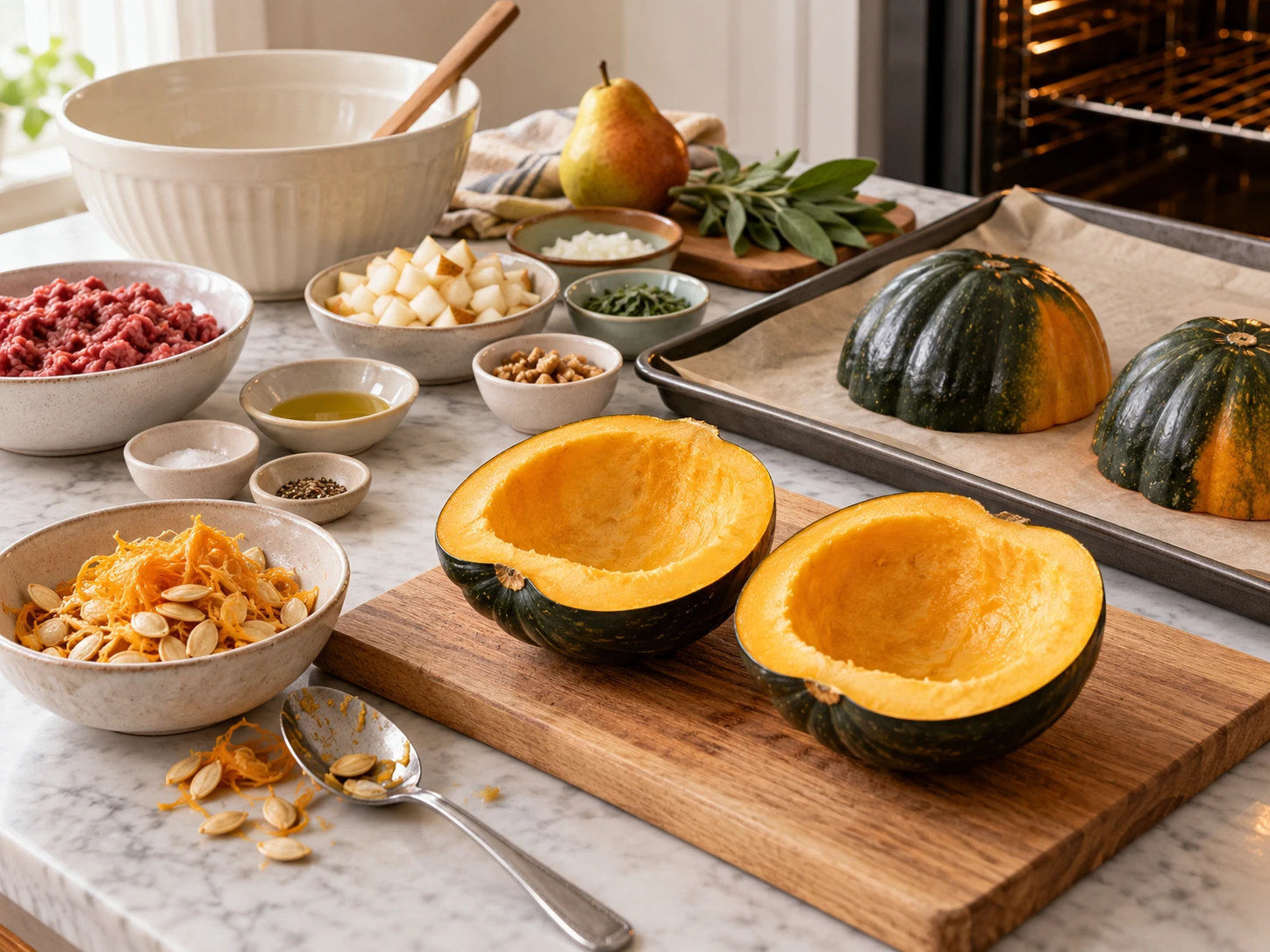
Prepare the squash: Preheat the oven to 190°C, then rinse and dry the acorn squash. Set it on a stable cutting board and carefully cut it in half from stem to base, using a sturdy spoon to remove all the seeds and stringy fibers. Leave enough flesh to keep the shell sturdy, then place both halves cut-side down on a baking-paper-lined tray. The shell is only for presentation, so make sure the halves sit securely and take care when handling the knife.
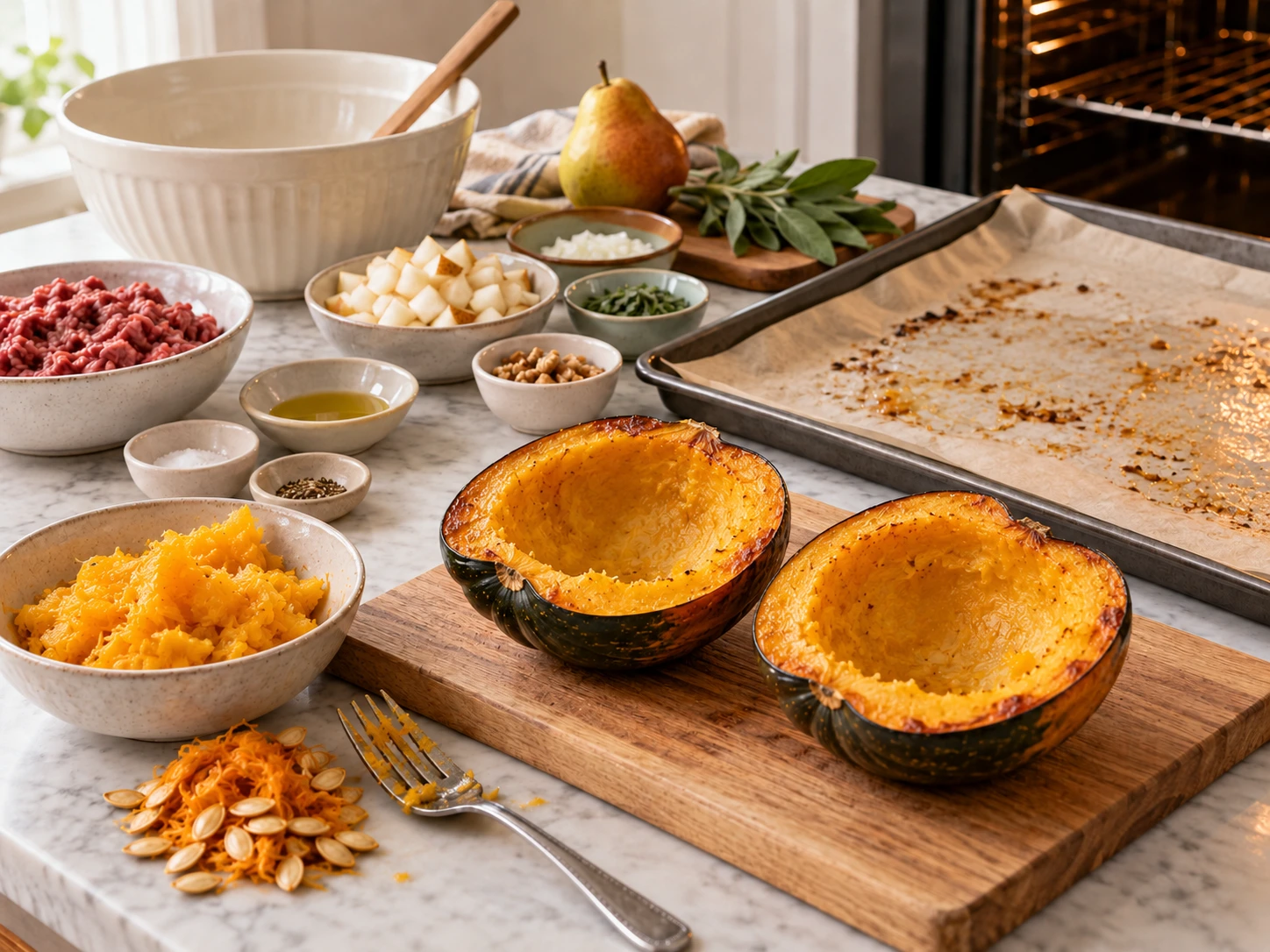
Roast until tender: Roast the squash halves cut-side down for approximately 25 to 35 minutes, depending on their size, and start checking after 25 minutes. The flesh should give easily when pierced with a fork, while the halves should still hold their shape. Carefully remove the tray and let the squash cool until safe to handle, then scoop a small amount of soft flesh from each half, leaving a thin layer attached to the skin. Discard the seeds and keep all hard or stringy parts out of the food.
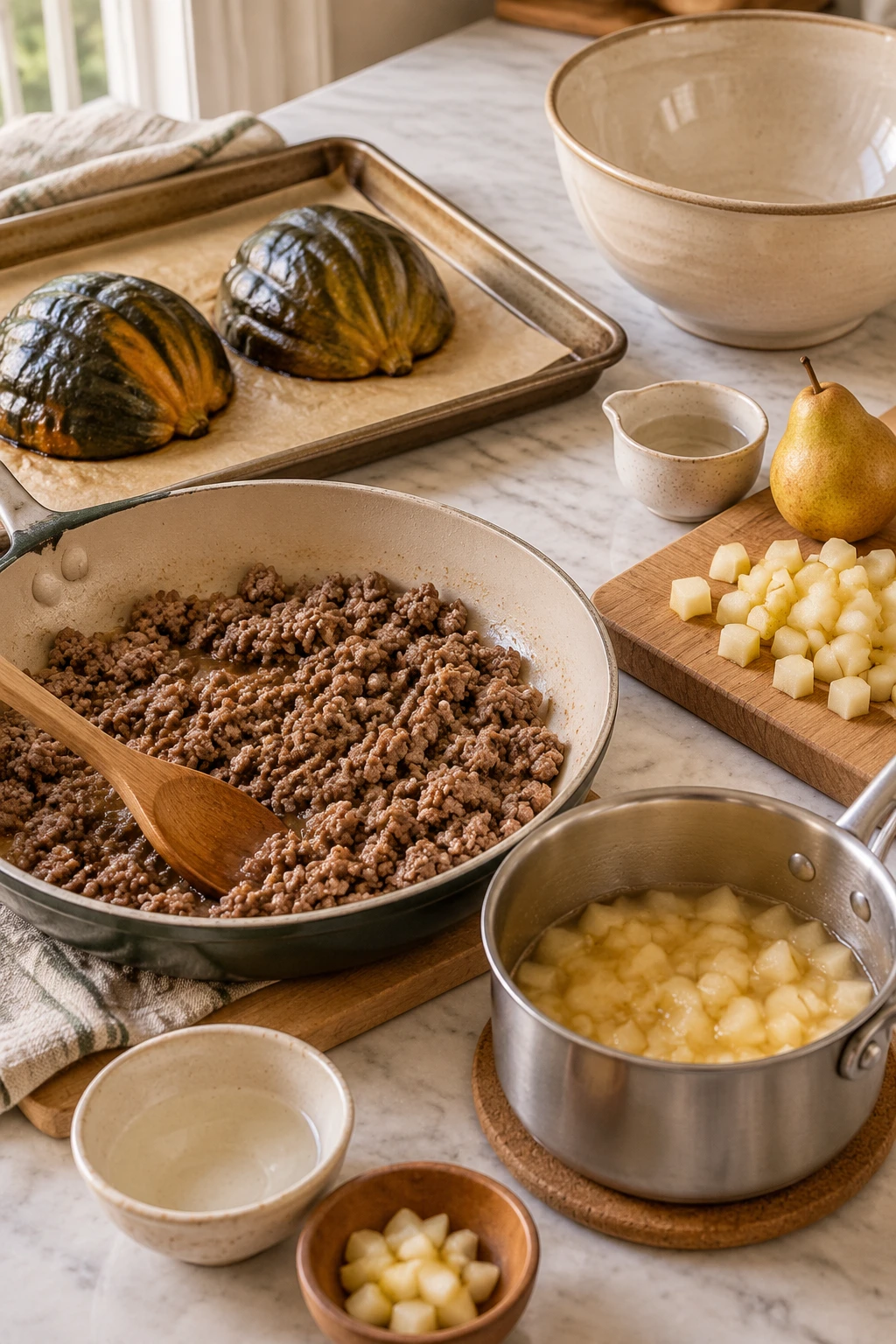
Cook the beef and pear: While the squash cools, put the lean ground beef in a clean skillet over medium-low heat. Break it into small pieces with a wooden spoon and cook until no pink remains and the center reaches 71°C, checking with a food thermometer. Drain off any excess rendered fat and let the beef cool slightly. If the pear skin seems tough, peel it, remove the core and seeds, and dice the flesh into pieces no larger than a pea. Put the pear in a small saucepan with the water, cover, and simmer gently for 3 to 5 minutes until soft, without adding sugar or seasoning.
Mix the soft filling: Transfer the cooked beef and softened pear to a clean bowl, then add approximately 60 to 90 g of the scooped, soft squash flesh, starting with the smaller amount. Gently mash everything with a fork until evenly combined, leaving a little texture. If the mixture looks dry, add water one teaspoon at a time. For dogs who need softer food, mash it more thoroughly or chop the beef into smaller pieces. Let the mixture cool to lukewarm or room temperature before serving, and remember that the squash shell is not a substitute for checking the filling's texture.
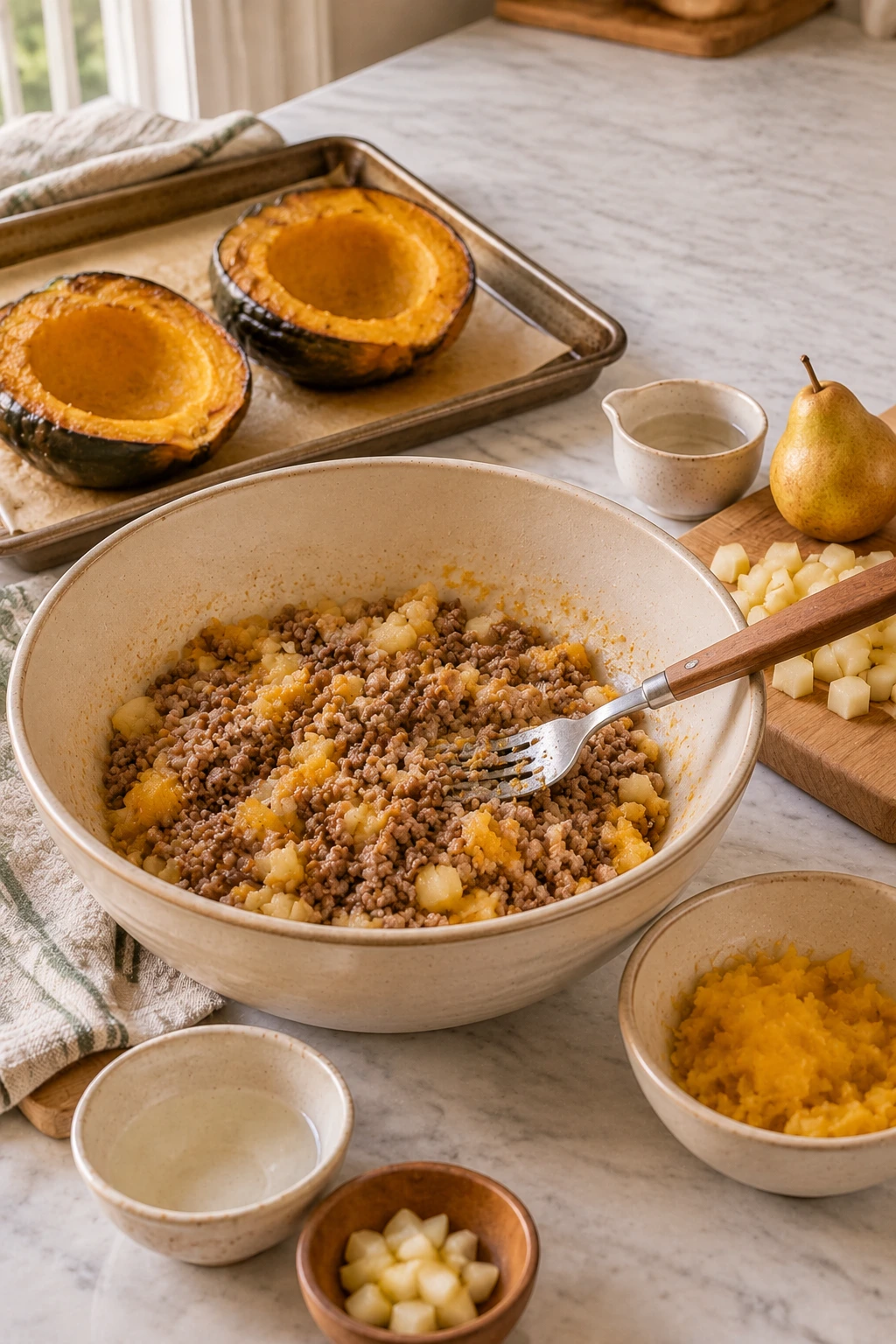
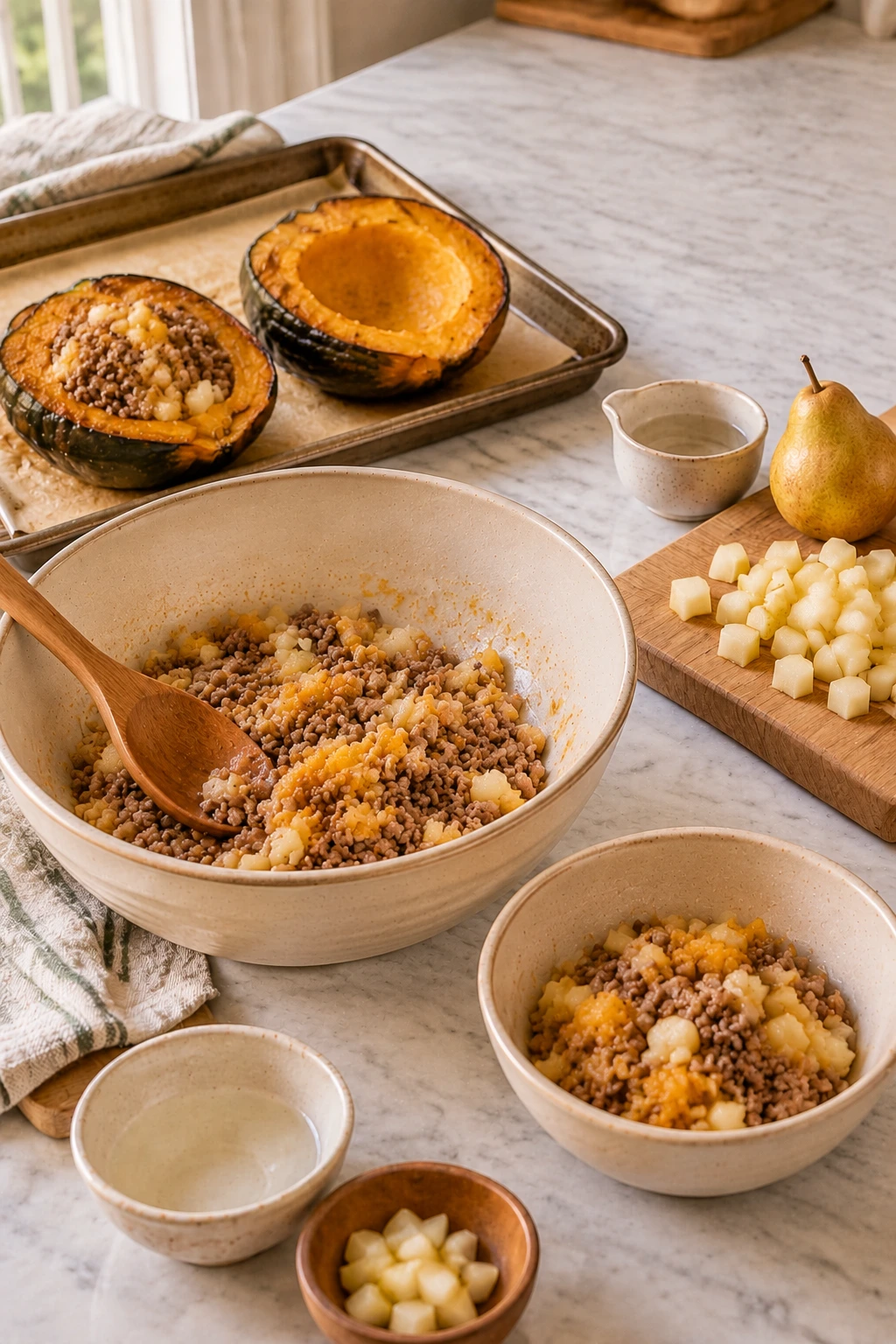
Fill, cool, and portion: Spoon a small amount of the cooled mixture into one roasted squash half for presentation, keeping the filling loose and easy to remove. Don't pack it tightly or serve the entire stuffed half as one portion. Scoop the filling and a small amount of soft squash flesh into your dog's usual bowl, then break it into manageable pieces suited to your dog's size and chewing ability. Leave out the hard skin, stem, and any firm or stringy pieces. Refrigerate leftovers promptly, within two hours of cooking, and wash all preparation surfaces and utensils.
Made this recipe?
Tap the paw so other pet parents know it’s worth making.
Be the first to make it
Tips & serving
Treat this recipe as an occasional topper or supplemental serving alongside your dog's usual complete and balanced food, not as a nutritionally complete standalone meal. Begin with a small spoonful appropriate to your dog's size, reduce the amount of regular food only according to your veterinarian's guidance, and watch how your dog tolerates the new ingredients. Remove the squash shell and offer only soft, manageable pieces. Always discuss major diet changes with a veterinarian, and consult a board-certified veterinary nutritionist if you want a homemade diet formulated to meet your dog's nutritional requirements.
- The soft cooked ingredients are easy to mash or chop into portions that suit different dog sizes and chewing abilities.
- The stuffed squash presentation gives pet parents a seasonal cooking project without requiring complicated equipment or specialist ingredients.
- Using lean beef and draining excess fat keeps the preparation simpler than recipes made with fatty or heavily seasoned meat.
- Cooking the pear until tender makes it easier to mix evenly with the beef and squash instead of leaving firm fruit chunks.
- Choose a small squash that sits securely on the tray, and roast it until the flesh yields easily to a fork without the shell collapsing.
- Use a food thermometer to confirm the ground beef reaches 71°C, and drain excess rendered fat before mixing the filling.
Storage
Keep the filling separate from the squash shell when practical, and use refrigerated leftovers within three days. Label the container with the contents and preparation date for household tracking, thaw portions in the refrigerator, and use them.
Substitutions
If acorn squash is unavailable, use plain butternut squash or pumpkin flesh that has been cooked until soft. Remove seeds, skin, and stringy material before mashing. Choose plain fresh squash rather than canned pie filling, which may contain sugar and spices. If pear is unavailable, a small amount of peeled, cored apple can provide a similar soft fruit texture after cooking. Remove all seeds and the core, dice the flesh finely, and introduce it gradually. Do not substitute grapes or raisins, which are unsafe for dogs.
Dogs recipe FAQ
Can I serve this meal every day?
Treat it as an occasional extra, not a meal plan. Treat this recipe as an occasional topper or supplemental serving alongside your dog's usual complete and balanced food, not as a nutritionally complete standalone meal.
Is lean cooked ground beef okay for dogs?
This recipe uses lean cooked ground beef in a small, dog-appropriate amount. Skip it if your dog has a known sensitivity, and read the foods-to-avoid note on this page before serving.
How do I store this meal?
Cool the cooked mixture promptly and refrigerate it in a clean, airtight container within two hours of cooking. Keep the filling separate from the squash shell when practical, and use refrigerated leftovers within three days.
How should I introduce this meal?
Start with a taste-size portion next to your dog's usual food, and hold off on serving more until you have seen that it agrees with them.
Can dogs eat cooked squash and pear together?
Many dogs can have small amounts of plain, cooked squash and pear when the ingredients are appropriate for them. Remove the seeds, core, stem, and tough fibers, and serve the flesh soft and finely chopped. Introduce both ingredients gradually, and ask your veterinarian about individual dietary restrictions.
Can I serve the stuffed squash as my dog's entire dinner?
This recipe is not formulated to provide every nutrient a dog needs in the correct proportions, so it should not replace a complete and balanced diet. Use a small portion as an occasional supplement instead. Ask your veterinarian or a board-certified veterinary nutritionist before feeding a homemade diet as the main food.
Sources