

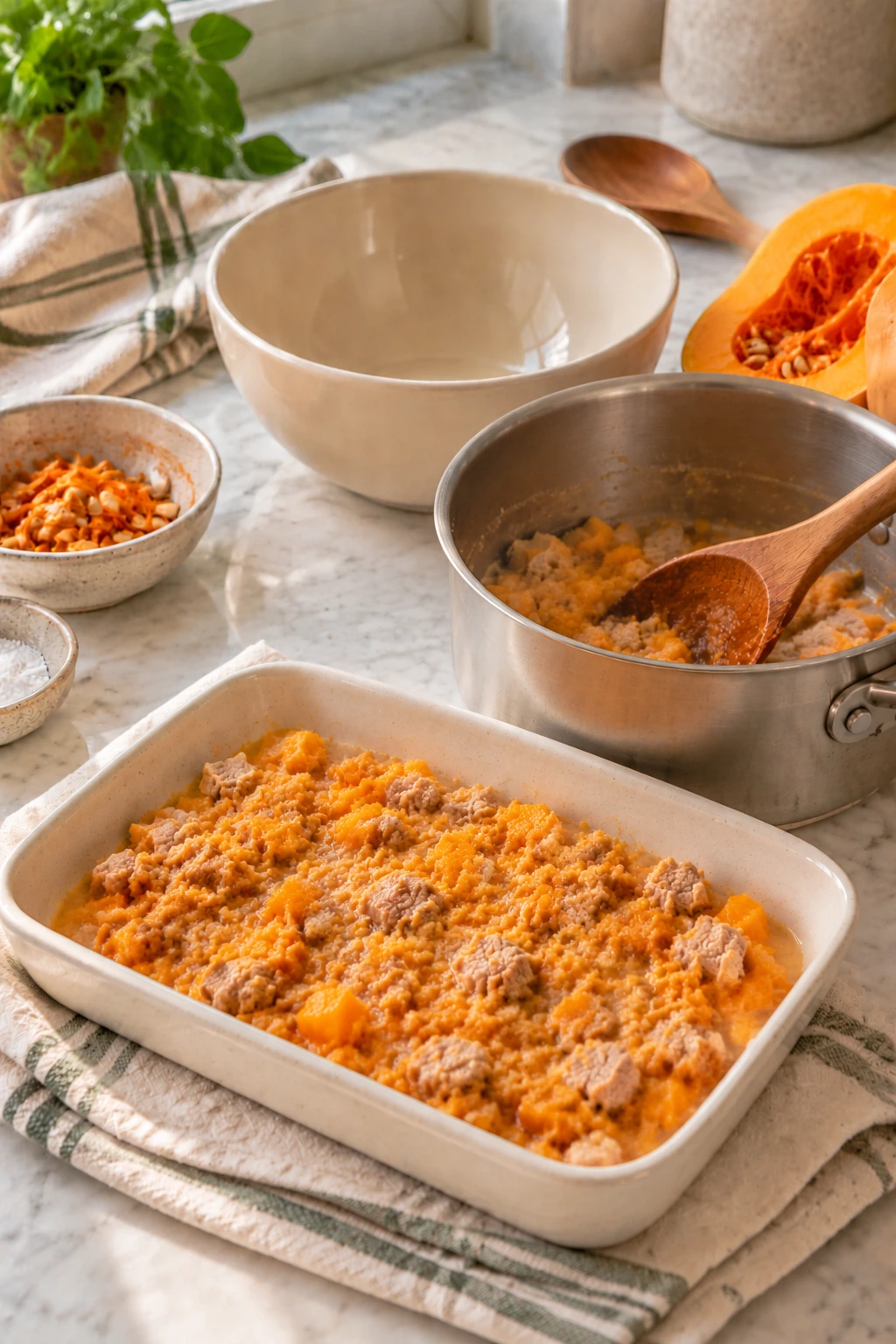
When autumn squash starts showing up in the kitchen, this pork and butternut squash stew is a simple way to make something a little special for your dog. Lean boneless pork simmers gently in plain water until thoroughly cooked, while small cubes of butternut squash soften into a tender, moist mixture that is easy to serve. You won't need much to bring it together, just the pork, squash and water. Skip the seasoning, stock cubes, oil, onion and garlic. Once everything is cooked and cooled, you can offer a small portion as an occasional extra alongside your dog's usual balanced food.
Safety first: Keep treats and extras under about 10% of your dog's daily food - the regular diet should do the heavy lifting.
Foods to avoid
Use only plain lean boneless pork and squash. Never add onion, garlic, leeks, chives, salt, pepper, seasoning mixes, gravy, or stock of uncertain ingredients. Remove visible pork fat and all bones before cooking. Do not serve raw or undercooked pork, hot stew, hard squash pieces, or oversized chunks that could be difficult to chew. This treat is not a complete and balanced diet. Introduce unfamiliar foods in small amounts, and stop offering the recipe if your dog appears unwell after eating it.
Ingredients
Instructions
Prepare the pork and squash: Wash your hands and start with a clean chopping board. Peel the butternut squash, remove the seeds and stringy center, then cut the flesh into small, even cubes. Trim any visible fat from the boneless pork and cut it into similarly sized pieces. Keep the raw pork separate from ready-to-eat foods, and wash your hands, knife and board thoroughly after handling it. Keeping the pieces small and uniform helps them cook evenly and makes the finished stew easier to portion.
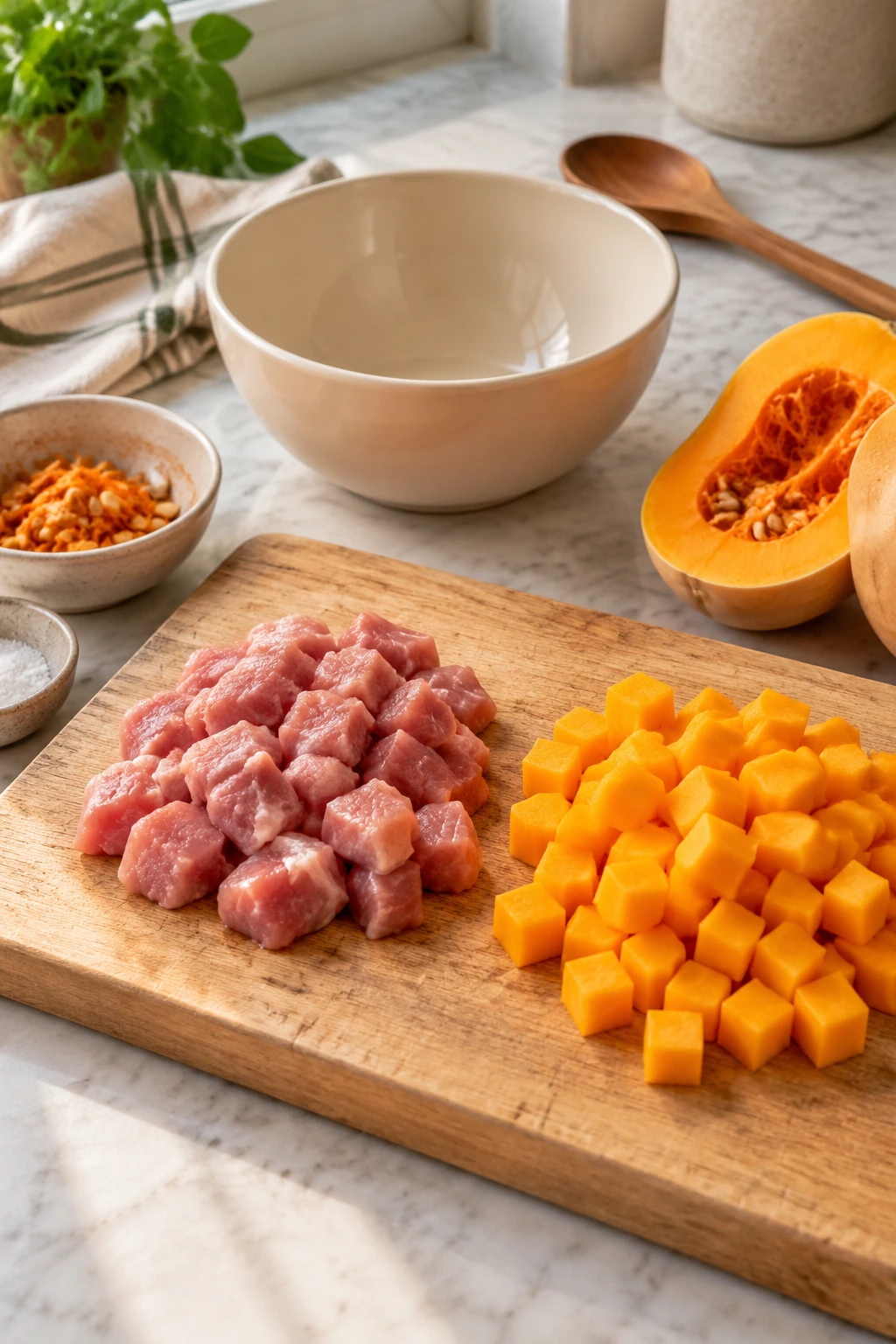
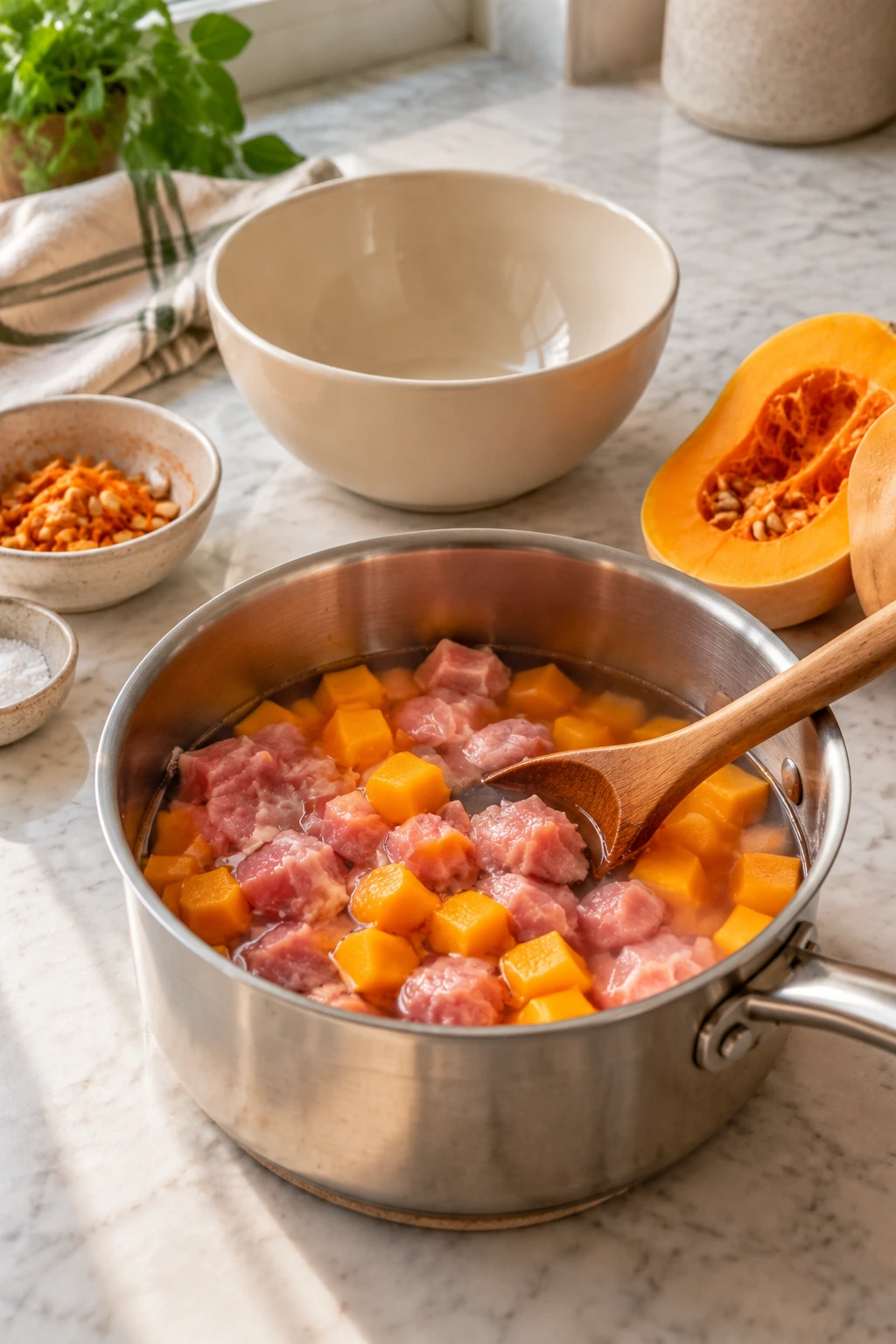
Add everything to the saucepan: Add the pork and squash to a small saucepan, then pour in the plain water. Use enough to partially surround the ingredients without filling a large pot with water. Leave out the salt, pepper, gravy, stock, butter, oil, onion, garlic and seasoning blends. Give everything a gentle stir to distribute the pieces, then set the pan over medium heat. Plain water keeps the recipe simple and avoids ingredients that may not be suitable for dogs.
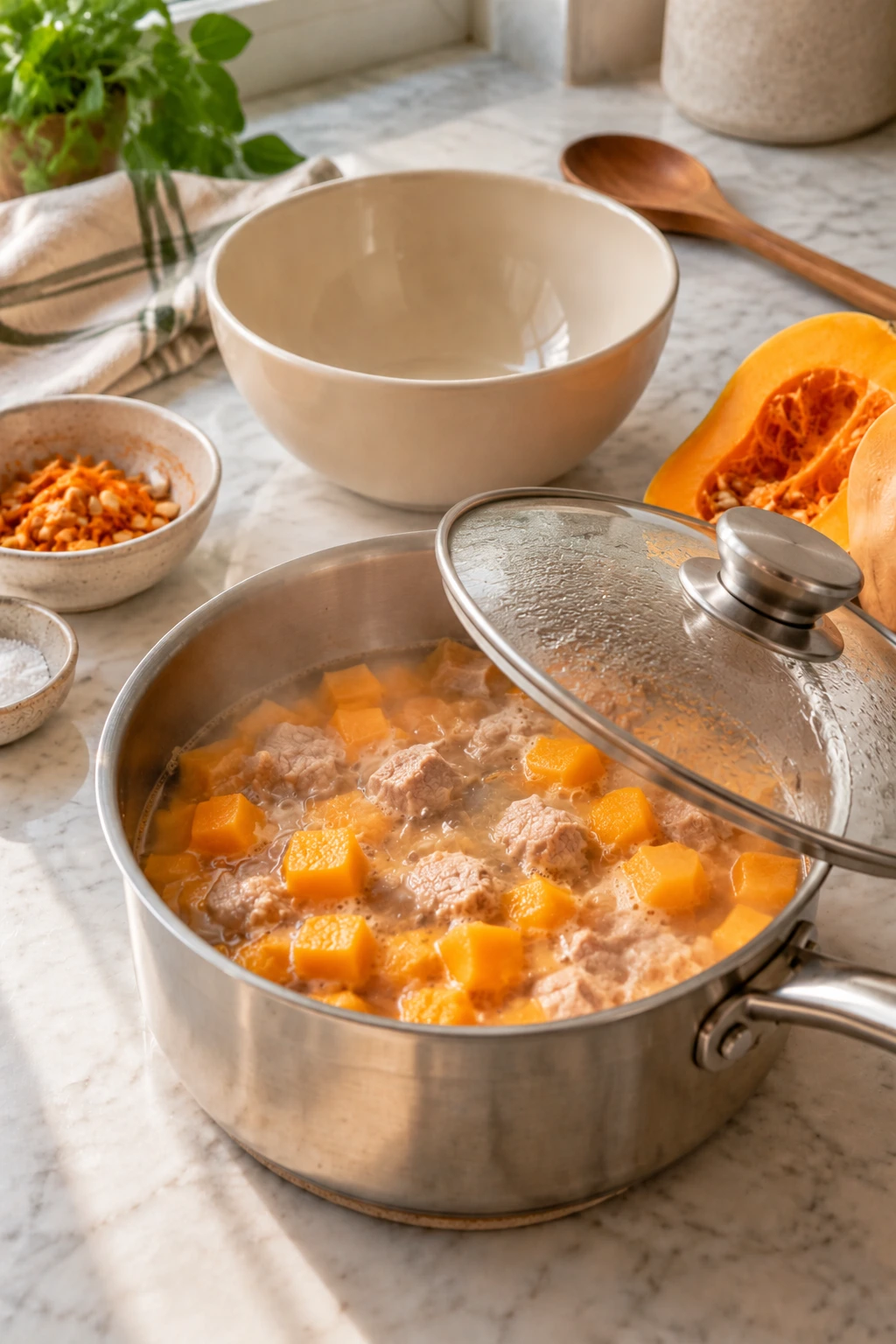
Bring the stew to a gentle simmer: Once the water begins to simmer, lower the heat so the liquid bubbles gently rather than boiling hard. Stir occasionally and partially cover the saucepan with its lid, leaving a little space for steam to escape. Let the stew simmer for about 20 to 30 minutes, checking the squash for tenderness as it cooks. If the pan starts looking too dry before the pork and squash are ready, add a small splash of water. The exact cooking time will depend on the size of the pieces and your stove's heat.
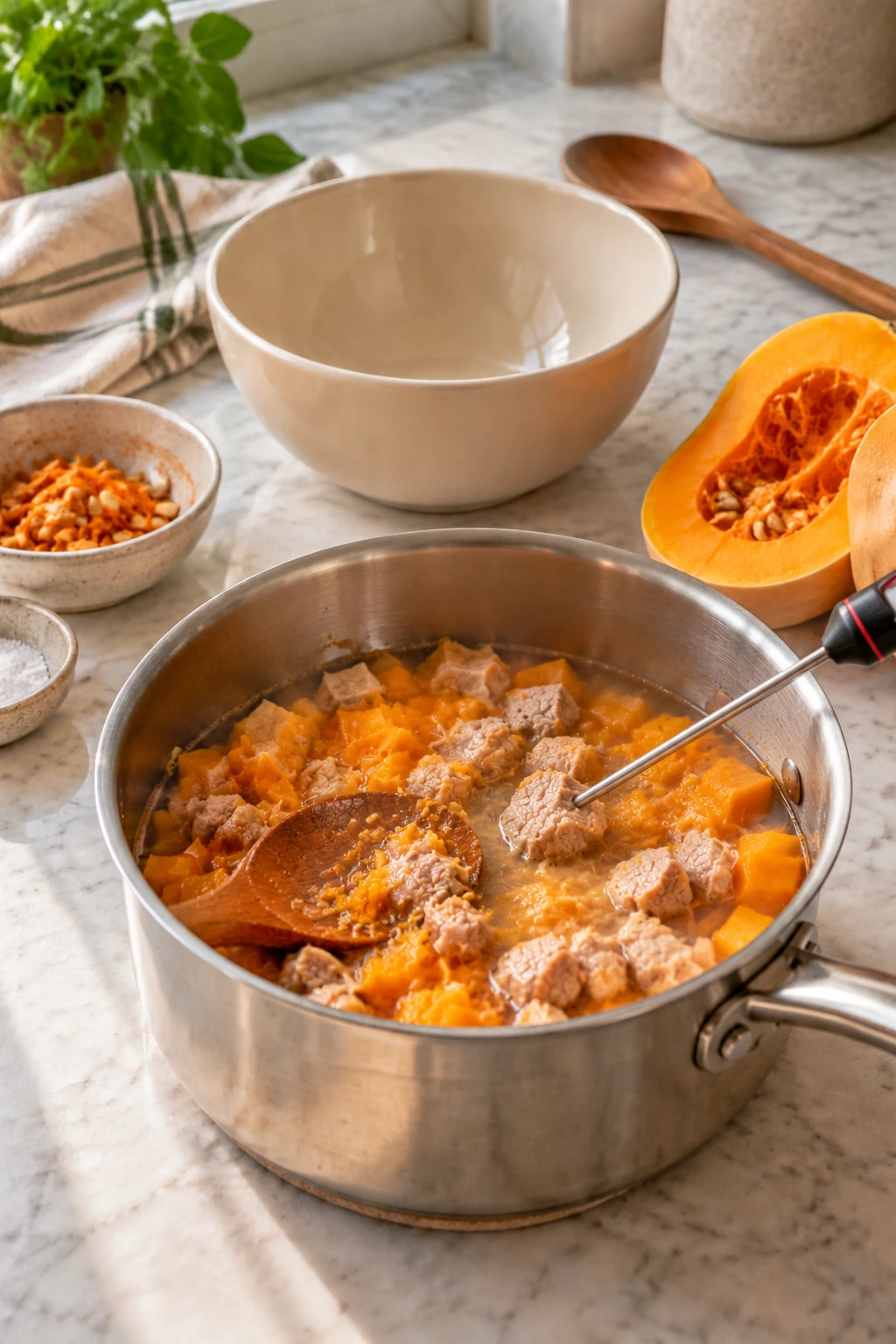
Check doneness and break up the mixture: Check the thickest pieces of pork with a food thermometer. Pork should reach an internal temperature of at least 63°C, followed by a three-minute rest; for this stew, continue cooking until the small pieces are thoroughly cooked and reach that temperature. Cut into the largest piece to make sure there are no raw sections, and check that the squash mashes easily against the back of a spoon. If the pork is not done or the squash is still firm, simmer for several more minutes. Use the spoon to break up the squash and any larger pieces of pork, making sure no hard or oversized chunks remain.
Cool completely before serving: Take the saucepan off the heat and let the stew cool briefly before transferring it to a clean, shallow container. Spread the mixture out to help the heat escape, then check that the center has reached room temperature before serving any to your dog. Give it a stir and check the texture, adding a teaspoon of plain water if it has become too thick. Offer only a small portion and refrigerate the rest promptly. Don't leave the whole batch sitting at room temperature while it cools.
Made this recipe?
Tap the paw so other pet parents know it’s worth making.
Be the first to make it
Tips & serving
Let the stew cool completely before serving, and begin with a very small amount to see how your dog tolerates this unfamiliar treat. Cut or mash the ingredients to suit your dog's size, chewing ability, and usual feeding routine. Treats and other extras should generally account for no more than 10 percent of daily calories, with the rest coming from a complete and balanced diet. Individual needs vary, so ask your veterinarian about an appropriate portion if your dog has dietary restrictions or an existing feeding plan. Discuss any major diet changes with a veterinarian.
- The moist, tender texture makes small portions easy to spoon out and divide according to your dog's size.
- Using lean boneless pork and plain squash keeps the ingredient list short and avoids complicated seasoning or rich sauces.
- A single saucepan makes preparation and cleanup manageable for a small batch of occasional homemade treats.
- Soft squash and small pork pieces create a texture that can be adjusted with a little plain water after cooking.
- Cut the pork and squash into similarly sized pieces so they cook at a similar pace and are easier to portion.
- Keep the simmer gentle and check the pan regularly; vigorous boiling can make the liquid evaporate before the squash softens.
Storage
Keep the refrigerator at 4°C or colder and use the stew within three days. Discard any portion that has been left out too long or shows an unusual smell, appearance, or texture. For longer storage, divide the cooled stew into small, single-serving portions in freezer-safe containers and freeze promptly. For best quality, use within two months.
Substitutions
If lean pork is unavailable, plain boneless, skinless chicken breast can be used in a similar amount, cooked thoroughly in the same water and checked for doneness. This changes the recipe's main protein, so introduce it cautiously if it is unfamiliar to your dog. Plain peeled pumpkin flesh can replace the butternut squash in a similar weight. Use fresh pumpkin or plain cooked pumpkin without added sugar, salt, spices, or other ingredients. Avoid canned pumpkin pie filling, which may contain added sweeteners or seasonings. Water is the preferred cooking liquid.
Dogs recipe FAQ
Can Dogs Pork and Butternut Squash Stew replace my dog's regular diet?
Treat it as an occasional extra, not a meal plan. Let the stew cool completely before serving, and begin with a very small amount to see how your dog tolerates this unfamiliar treat.
Is lean boneless pork okay for dogs?
This recipe uses lean boneless pork in a small, dog-appropriate amount. Skip it if your dog has a known sensitivity, and read the foods-to-avoid note on this page before serving.
How should I store leftovers?
Refrigerate the cooked stew in a clean, covered container within two hours of cooking, sooner in a hot room. Keep the refrigerator at 4°C or colder and use the stew within three days.
How should I introduce this treat?
Start with a taste-size portion next to your dog's usual food, and hold off on serving more until you have seen that it agrees with them.
Can dogs eat pork and butternut squash stew?
Many dogs can have a small amount of plain, thoroughly cooked lean pork and cooked butternut squash as an occasional treat. Keep the recipe free from bones, excess fat, onion, garlic, salt, and seasoning. If your dog has dietary restrictions or a medical condition, ask your veterinarian before introducing it.
How much pork and squash stew should I give my dog?
Start with a small spoonful appropriate to your dog's size, then observe how your dog tolerates the new food. The right amount depends on body size, daily calorie needs, and the rest of the diet. Treats should generally stay within 10 percent of daily calories, and your veterinarian can help set an individual limit.
Sources