Green beans make a lovely little snack for parrots that enjoy holding food in one foot while they nibble. Pair them with slender carrot sticks, and your bird gets two different textures to explore without seeds or packaged treats. A quick blanch softens the vegetables while leaving enough firmness for little feet to grip. The key is to cool everything completely before cutting the batons to suit your bird's size and eating style. This snack is for companion parrots already accustomed to suitable vegetables, and it shouldn't replace their balanced daily food. If green beans or carrots are new to your bird, offer just a little at first and see how they manage.
Safety first: Offer a small taste the first time and watch your bird for any tummy upset before serving more.
Foods to avoid
Never add salt, butter, oil, stock cubes, sauces, garlic, onion, sugar, or seasoning blends to the blanching water or finished vegetables. Avoid canned vegetables containing salt or other additives. Do not confuse fresh green bean pods with dried or mature raw beans, which require different preparation and are not substitutes in this recipe. Never serve vegetables while hot, offer tough stringy pieces, or leave damp leftovers sitting in the enclosure for extended periods. Avoid oversized pieces that the bird cannot safely manipulate. This snack is not appropriate for every bird species or individual feeding situation.
Ingredients
Instructions
Wash and Trim the Vegetables: Rinse the green beans under cool running water, gently rubbing away any dirt, then trim the tough stem ends and discard any damaged or discolored sections. Scrub the carrot thoroughly under running water or peel it with a clean vegetable peeler, then cut it into even sticks approximately 4 to 5 cm long and 4 to 5 mm thick. Leave the beans mostly whole for easier cooking, since you'll resize everything afterward, and keep the vegetables free from salt, oil, butter, garlic, onion, and seasonings.
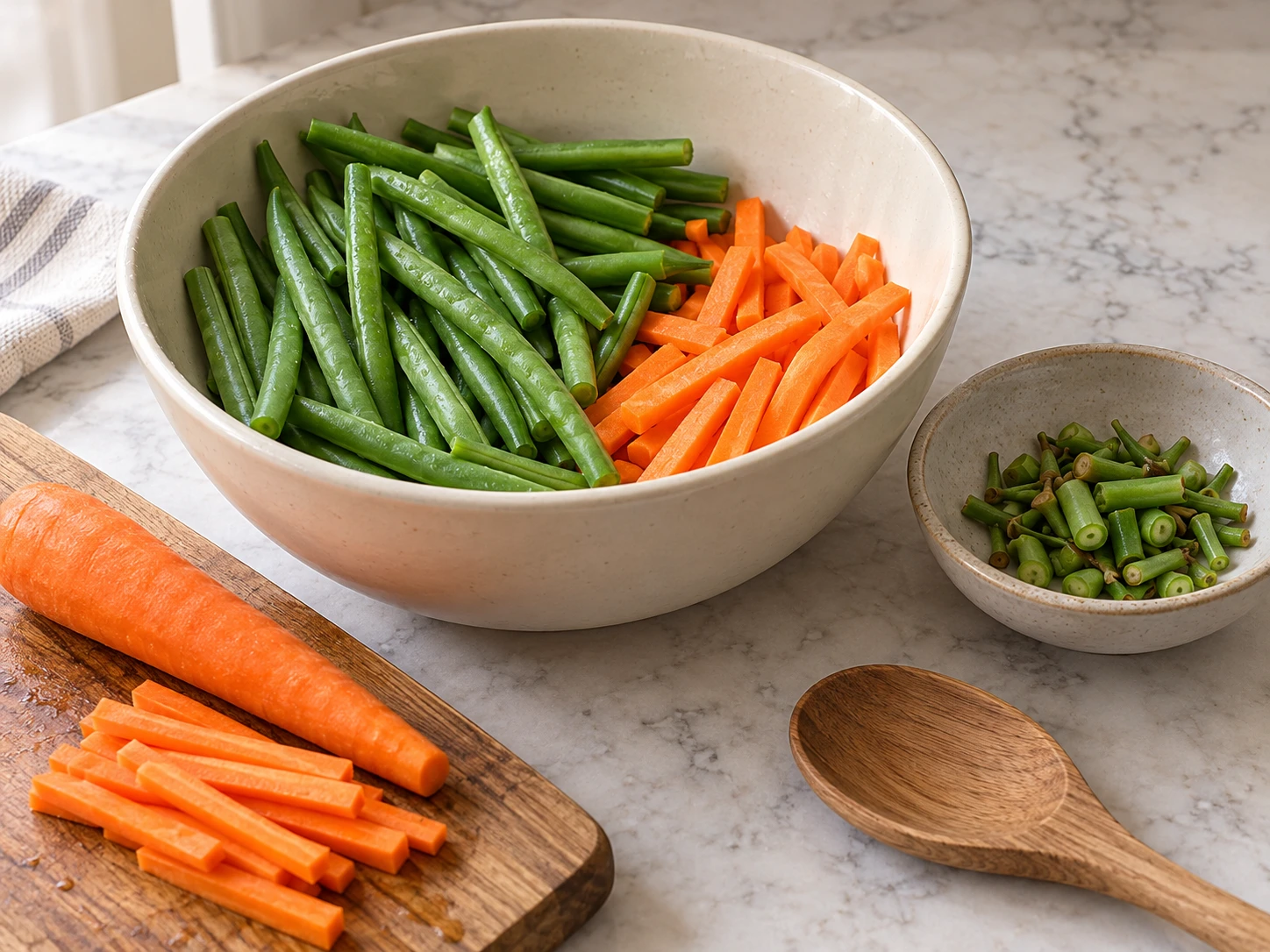
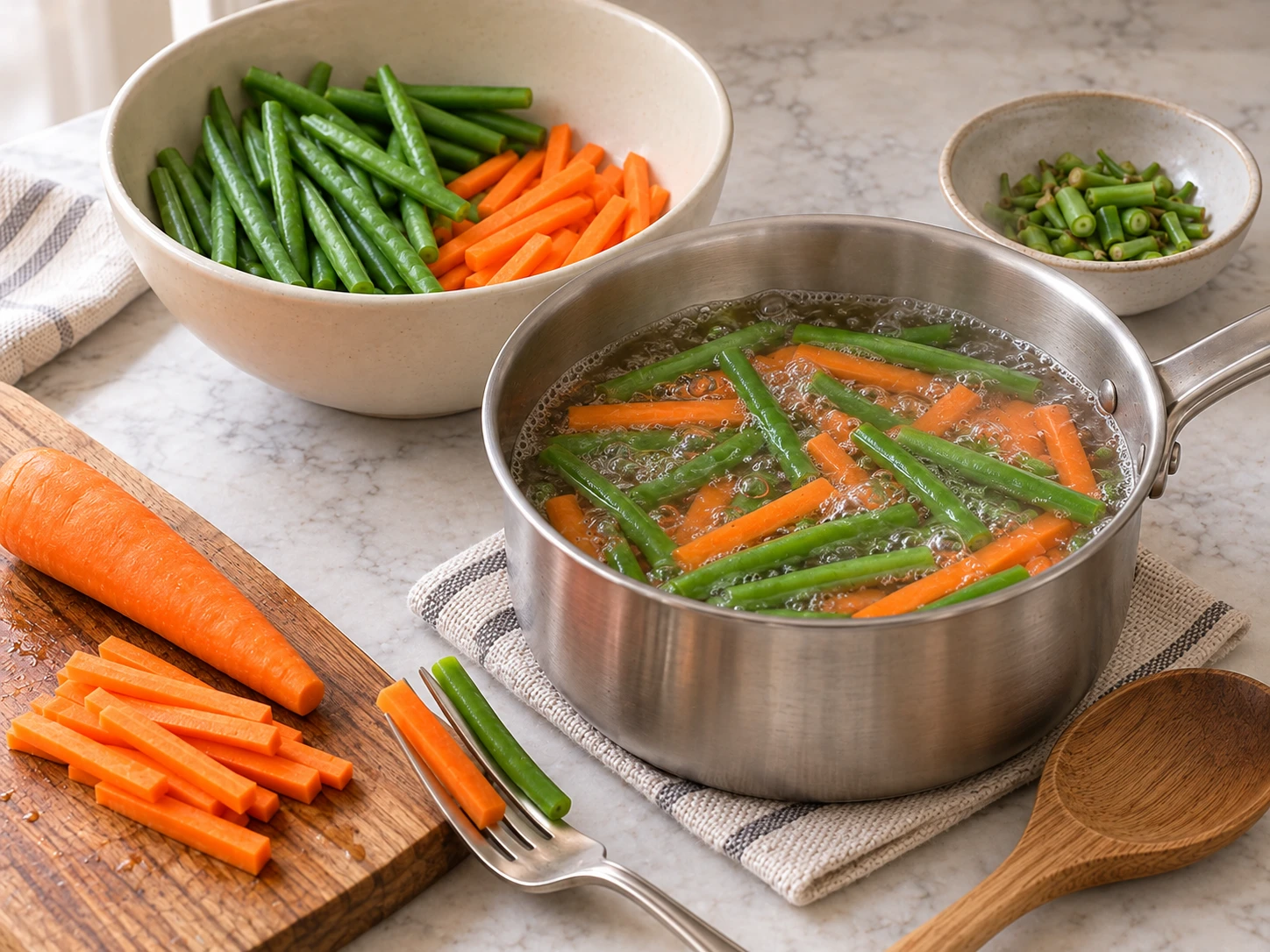
Blanch the Carrot and Green Beans: Bring 750 ml of plain drinking water to a gentle boil in the small saucepan, add the carrot sticks, and cook for approximately 1 minute before adding the green beans for another 2 minutes, giving the carrots approximately 3 minutes and the beans approximately 2 minutes in total. Check a thick carrot stick and a green bean with a clean fork; these times are only a guide, so cook a little longer and test again if needed, aiming for vegetables that are slightly tender but still hold their shape without becoming limp or mushy. Keep the cooking water plain, with no salt, oil, stock, herbs, or seasoning.
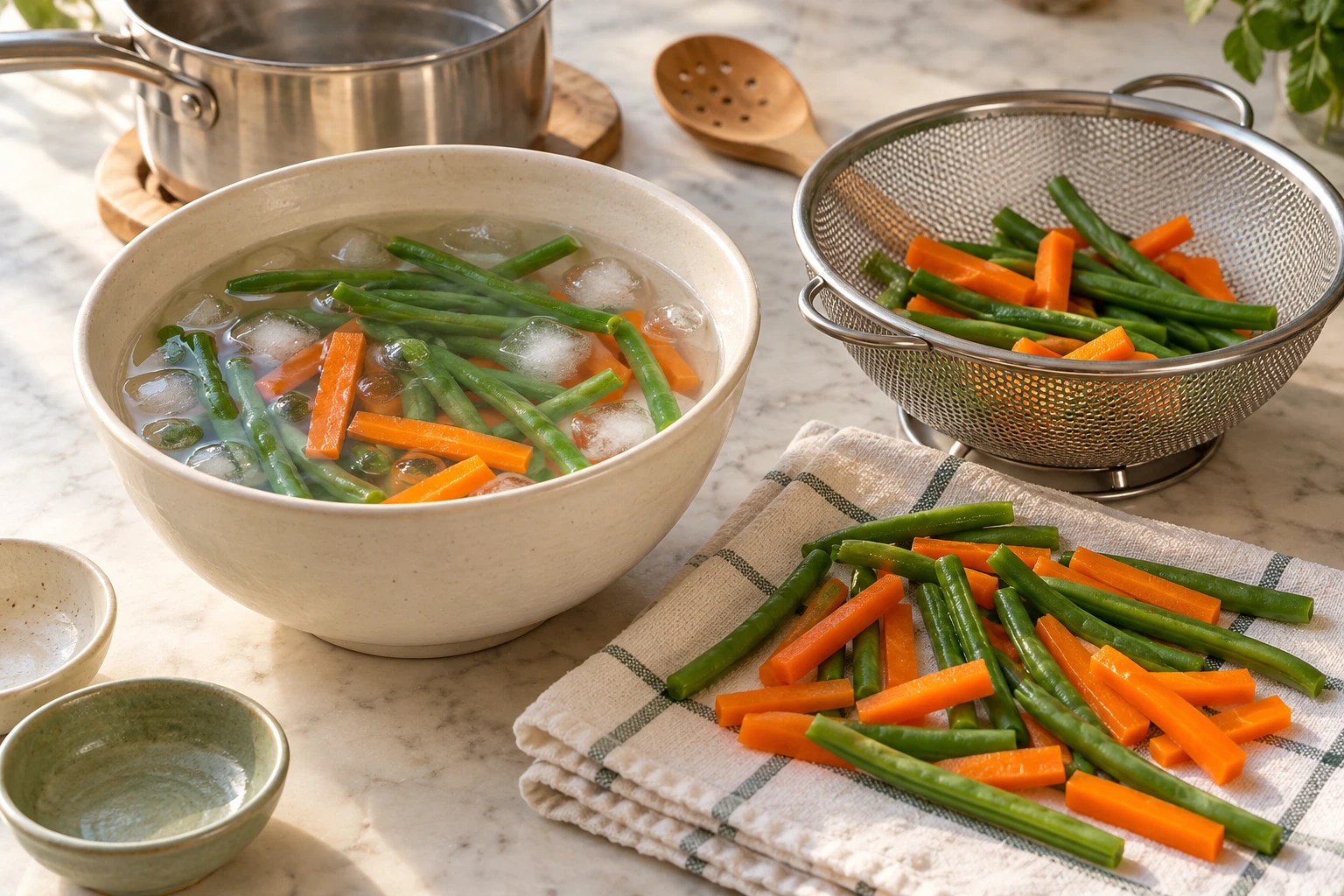
Cool the Vegetables Completely: While the vegetables cook, fill the cream ceramic bowl with 500 ml of cold plain drinking water, then use the slotted spoon to transfer the vegetables straight into it as soon as they're tender enough. Stir gently to release the heat, replacing the water with fresh cold drinking water if it warms up, and leave everything until completely cool throughout, usually around 5 minutes in properly cold water. Drain thoroughly in a clean colander, spread the vegetables on the folded clean kitchen towel, and gently pat away moisture without crushing them; this cooling step prevents mouth burns, stops further softening, and keeps the batons easy to grip.
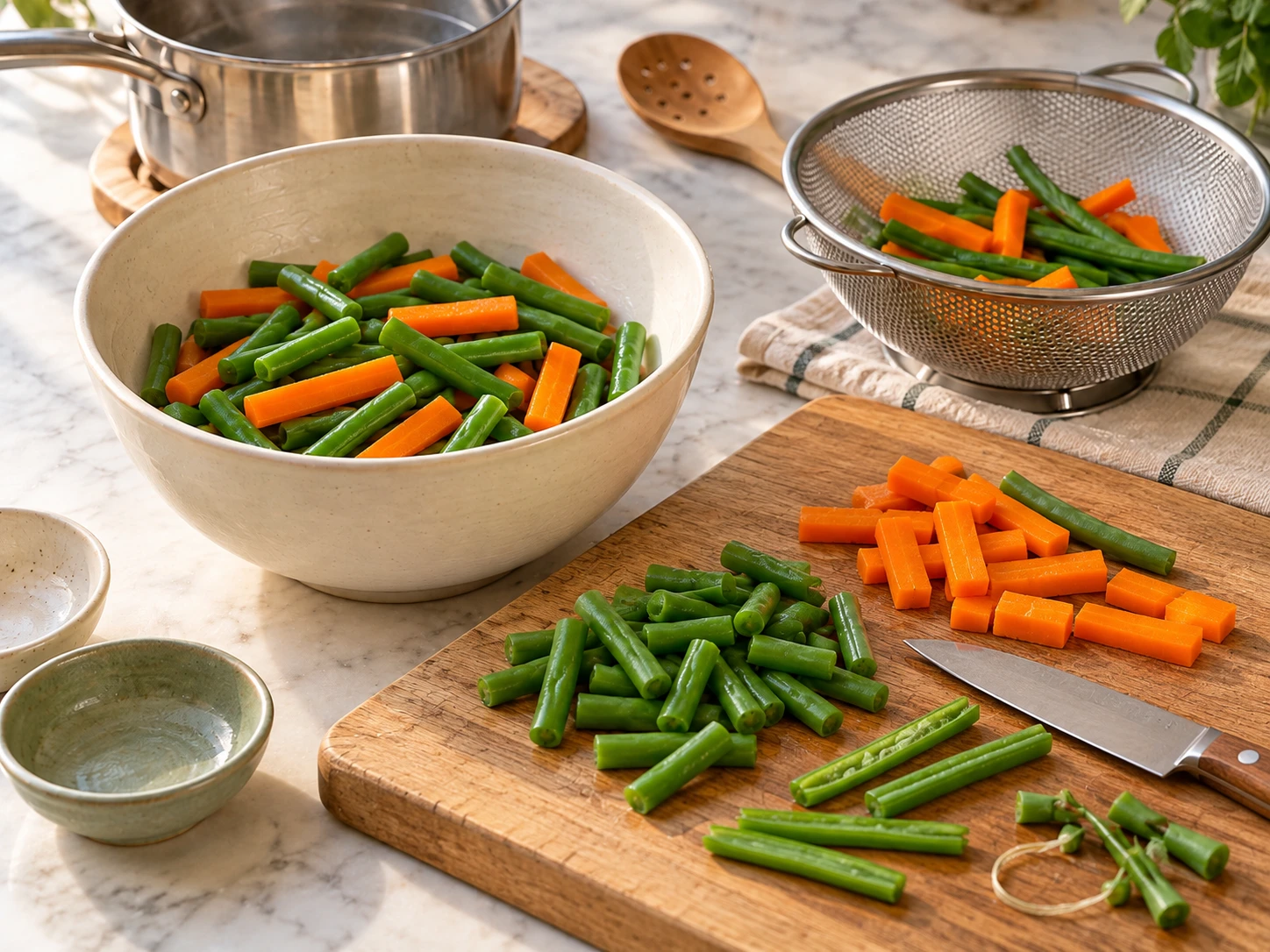
Cut Batons to Suit Your Bird: Place the completely cooled, drained vegetables on the clean cutting board, check the green beans for any remaining tough or stringy sections, and trim them away. Cut the beans and carrots to suit your bird's beak, feet, and eating habits, trying pieces around 2 to 4 cm long with slender, easy-to-bite carrots for a medium-sized parrot that comfortably holds food, or much shorter, smaller pieces for smaller parrots and birds that swallow quickly. Split thicker beans lengthwise if needed, and aim for pieces that are tender enough to bite but firm enough to pick up, avoiding long stringy strips, hard oversized chunks, or anything your bird struggles to handle.
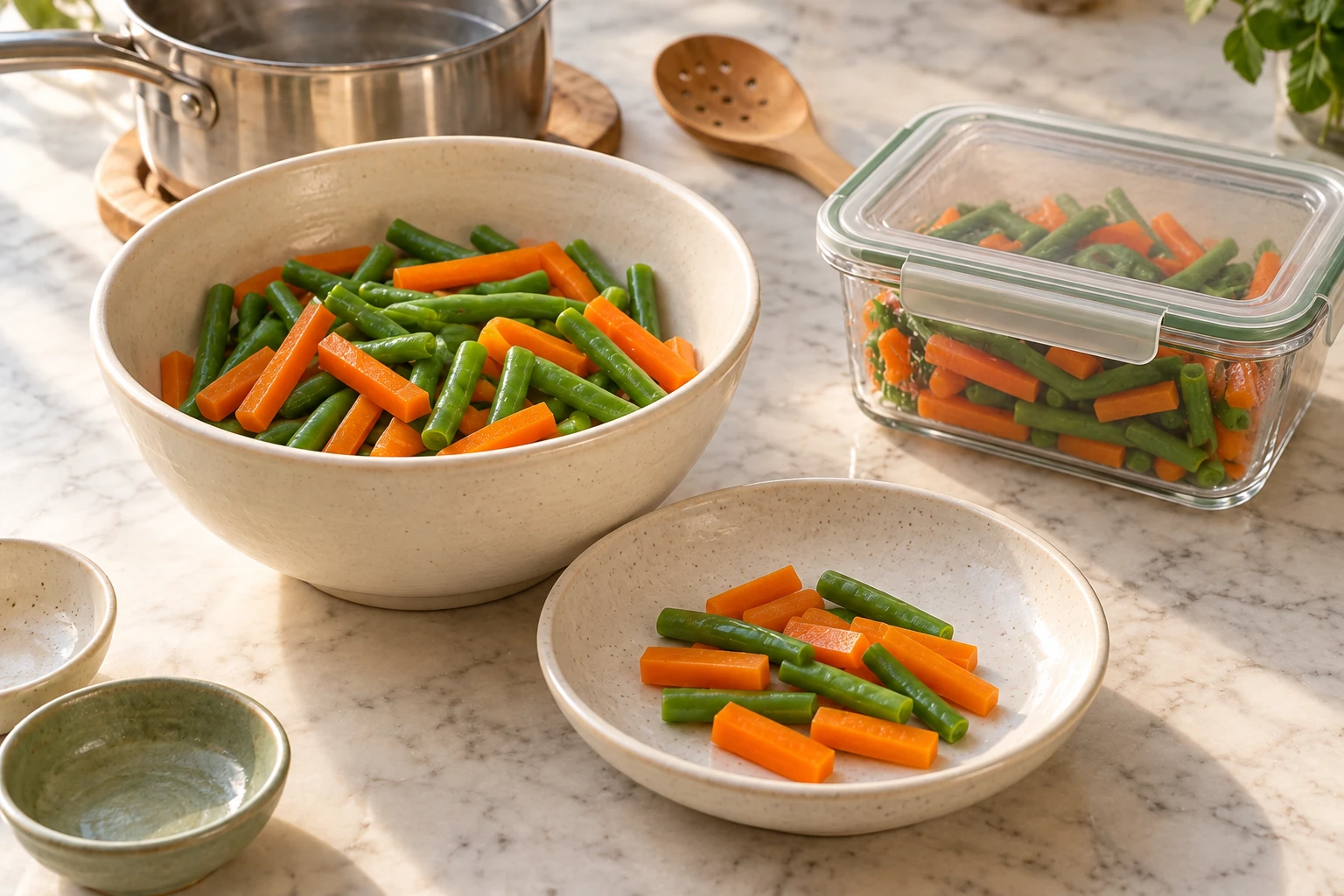
Portion and Offer the Batons: Arrange a small selection of the completely cooled, appropriately sized green bean and carrot batons on a clean, shallow bird-safe ceramic dish, starting with one or two pieces of each for a medium-sized parrot or less for a smaller bird, according to their usual vegetable allowance. Offer the dish in a familiar feeding spot and supervise how your bird grips, nibbles, and swallows the food, giving them time to investigate without pressure if they're unsure. Keep unused vegetables separate from the serving dish in a clean airtight container and refrigerate promptly, then remove uneaten batons from the enclosure within 1 to 2 hours, sooner in warm conditions,
Made this recipe?
Tap the paw so other pet parents know it’s worth making.
Be the first to make it
Tips & serving
Offer these batons as a small fresh vegetable snack, not as a complete meal or a substitute for the bird's regular balanced diet. For a medium-sized companion parrot already accustomed to vegetables, begin with one or two modest pieces of each vegetable. A smaller parrot may need only a few tiny pieces, while a large parrot may comfortably handle longer batons. There is no reliable universal portion that suits every species, so follow the individual's established feeding plan. Cut pieces smaller if the bird tends to gulp food or has difficulty gripping and biting. Introduce unfamiliar vegetables individually and gradually so you can observe acceptance and feeding behavior. Provide fresh
- Brief blanching gently softens firm vegetables while preserving enough structure for birds to grip individual pieces.
- Offering two recognizable vegetable shapes allows owners to observe which textures and sizes their birds handle most comfortably.
- Simple preparation with plain water avoids unnecessary salt, oil, butter, sauces, and seasonings found in human vegetable dishes.
- Hand-held vegetable batons provide an opportunity for suitable parrots to manipulate food with their feet and beaks during normal feeding.
- Preparing the vegetables separately makes it easier to introduce one unfamiliar ingredient at a time and notice food preferences.
- Adjustable portion sizes let owners offer small amounts alongside their bird's established, species-appropriate daily diet.
Storage
Refrigerate unused, completely cooled batons promptly in a clean, airtight container at 4°C or colder. Keep the container away from raw meat and other potential sources of contamination. Discard any portion that develops an unusual odor, sliminess, discoloration, or other signs of spoilage. Freeze extra completely cooled and well-drained batons in small, single-use portions if you cannot use them promptly.
Substitutions
If fresh green beans are unavailable, plain frozen green beans can be used after checking that the package contains only green beans, with no salt, butter, sauces, or seasoning. Blanch from frozen, checking frequently because thin beans may soften quickly. Cool completely, drain thoroughly, and resize the pieces for your bird before serving. If your bird already eats carrots comfortably, a little plain yellow squash or zucchini can replace the carrot component, provided it is appropriate for the species. Cut the substitute into firm, slender pieces and blanch only until slightly tender.
Birds recipe FAQ
Can I serve this snack every day?
Treat it as an occasional extra, not a meal plan. Offer these batons as a small fresh vegetable snack, not as a complete meal or a substitute for the bird's regular balanced diet.
Can birds have green beans?
This recipe uses green beans in a small, bird-appropriate amount. Skip it if your bird has a known sensitivity, and read the foods-to-avoid note on this page before serving.
How long does Birds Green Bean and Carrot Blanched Batons keep?
Refrigerate unused, completely cooled batons promptly in a clean, airtight container at 4°C or colder. For this small homemade batch, use refrigerated portions within 24 hours for a cautious freshness standard.
What's the safest way to try this with my bird?
Offer a small amount beside regular food, introduce one new recipe at a time, and watch appetite, stool, skin, and behavior for a day or two.
Can parrots eat green beans and carrots without blanching them first?
Many companion parrots can eat thoroughly washed, appropriately sized raw green beans and carrots as part of a suitable diet. Blanching is optional for those birds, but it offers a slightly softer texture that some individuals handle more comfortably. Always check species-specific feeding guidance and avoid offering hard or oversized pieces.
How do I introduce these vegetable batons to a bird that usually eats seeds?
Start with a very small piece of one vegetable beside the bird's familiar food, without removing or restricting its established diet. Some parrots need repeated calm opportunities before tasting something new. Observe actual eating rather than just shredding. Discuss any significant diet transition with an avian veterinarian, especially for birds accustomed to predominantly seed-based feeding.
Sources