

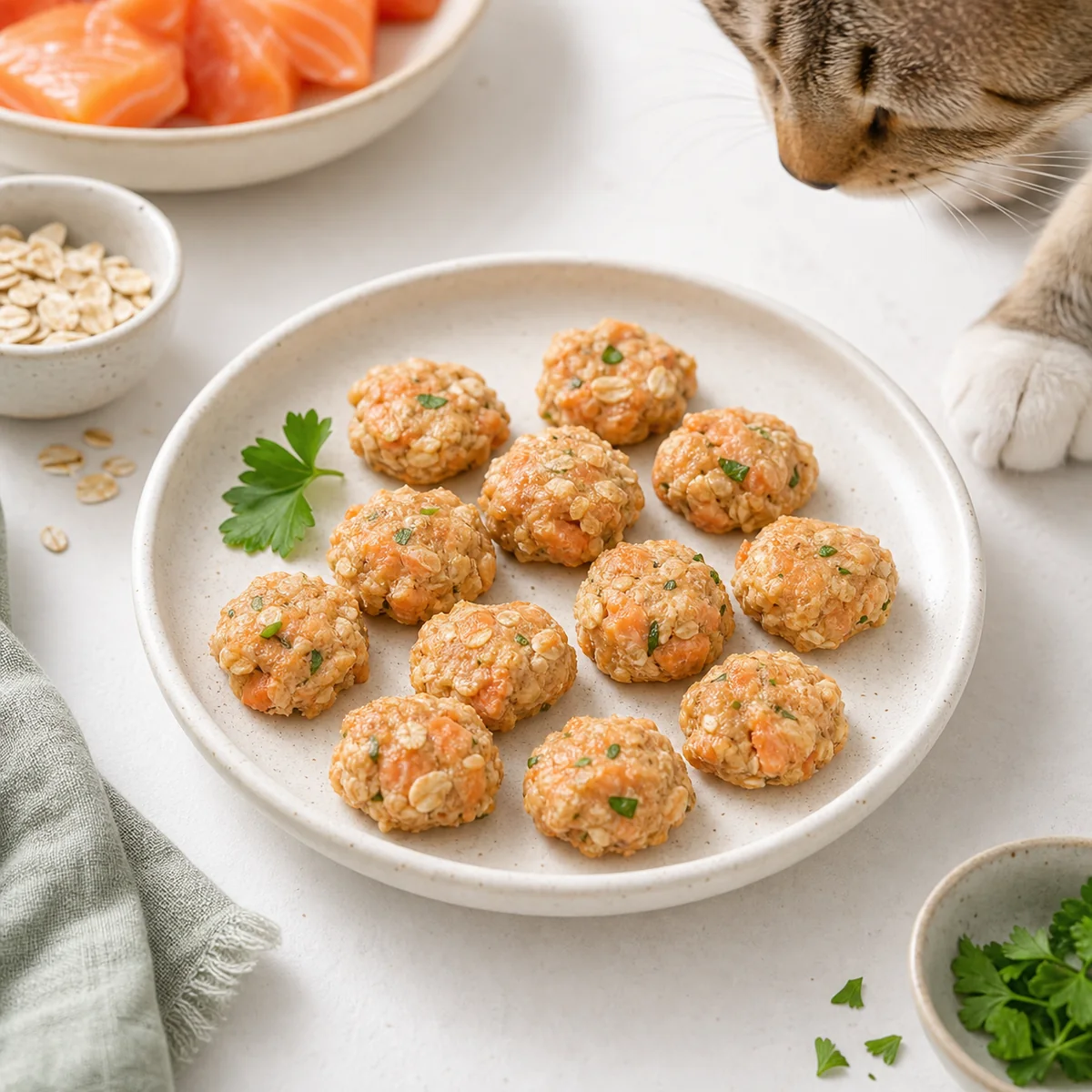
Small soft salmon treats for cats, made for occasional rewards with simple ingredients and cat-safe portion guidance.
Safety first: Every cat is different: age, allergies, and health conditions all matter, so check with your vet when in doubt.
Foods to avoid
Do not add onion, garlic, chives, grapes, raisins, chocolate, xylitol, alcohol, cooked bones, heavy salt, or dairy-based sauces.
Ingredients
Instructions
Check the salmon carefully and remove all bones, skin, and any seasoned edges.
Flake the salmon with a fork until the pieces are very small and soft.
Mash the cooked oats with pumpkin to make a light binder.
Fold the salmon into the binder and add water a few drops at a time if the mixture feels dry.
Shape tiny pea-size bites, keeping them small enough for your cat to chew comfortably.
Serve one small bite as an occasional treat and keep the rest chilled.
Stop serving if your cat shows vomiting, diarrhea, itching, or any unusual reaction.
Made this recipe?
Tap the paw so other pet parents know it’s worth making.
Be the first to make it
Tips & serving
Use these as occasional treats, not a meal replacement. Cats have specific nutritional needs, so keep complete cat food as the main diet.
Storage
Discard if the smell, color, or texture changes.
Substitutions
Plain cooked chicken can replace salmon for cats that do not tolerate fish. Avoid canned fish packed with salt, oil, garlic, onion, or spices.
Cats recipe FAQ
Is this treat a complete meal for my cat?
Treat it as an occasional extra, not a meal plan. Use these as occasional treats, not a meal replacement. Cats have specific nutritional needs, so keep complete cat food as the main diet.
Can cats have salmon?
This recipe uses salmon in a small, cat-appropriate amount. Skip it if your cat has a known sensitivity, and read the foods-to-avoid note on this page before serving.
How should I store leftovers?
Store in a covered container in the refrigerator for up to 2 days. Discard if the smell, color, or texture changes.
What's the safest way to try this with my cat?
Offer a small amount beside regular food, introduce one new recipe at a time, and watch appetite, stool, skin, and behavior for a day or two.