

Chicken hearts make a savory, protein-forward topper, but this recipe is not meant to replace a complete homemade cat diet. The hearts are gently poached in plain water, cooled, and minced very finely so a small spoonful can be scattered over nutritionally complete cat food without taking over the meal. Because poultry organs need careful handling, everything stays deliberately simple: no raw serving, bones, salt, oil, garlic, onion, or seasoning. Use a food thermometer rather than judging by color, since poultry giblets should reach 165°F or 74°C. Keep the portion modest, offer the mince only as an occasional extra, and talk with your veterinarian before making major changes to your cat's diet.
Safety first: Start with a small portion beside your cat's usual food and confirm bigger diet changes with your veterinarian.
Foods to avoid
Do not serve the chicken hearts raw or undercooked, and do not add bones, salt, oil, butter, garlic, onion, sauces, herbs, spice blends, or seasoned broth. Plain cooked meats can be offered to cats in small amounts, while garlic, onions, salty foods, and heavily seasoned preparations should be avoided. VCA Hospitals +1 This topper is not nutritionally complete by itself and should never replace a balanced cat food unless a veterinarian or qualified veterinary nutrition professional has formulated the entire diet for the individual cat.
Ingredients
Instructions
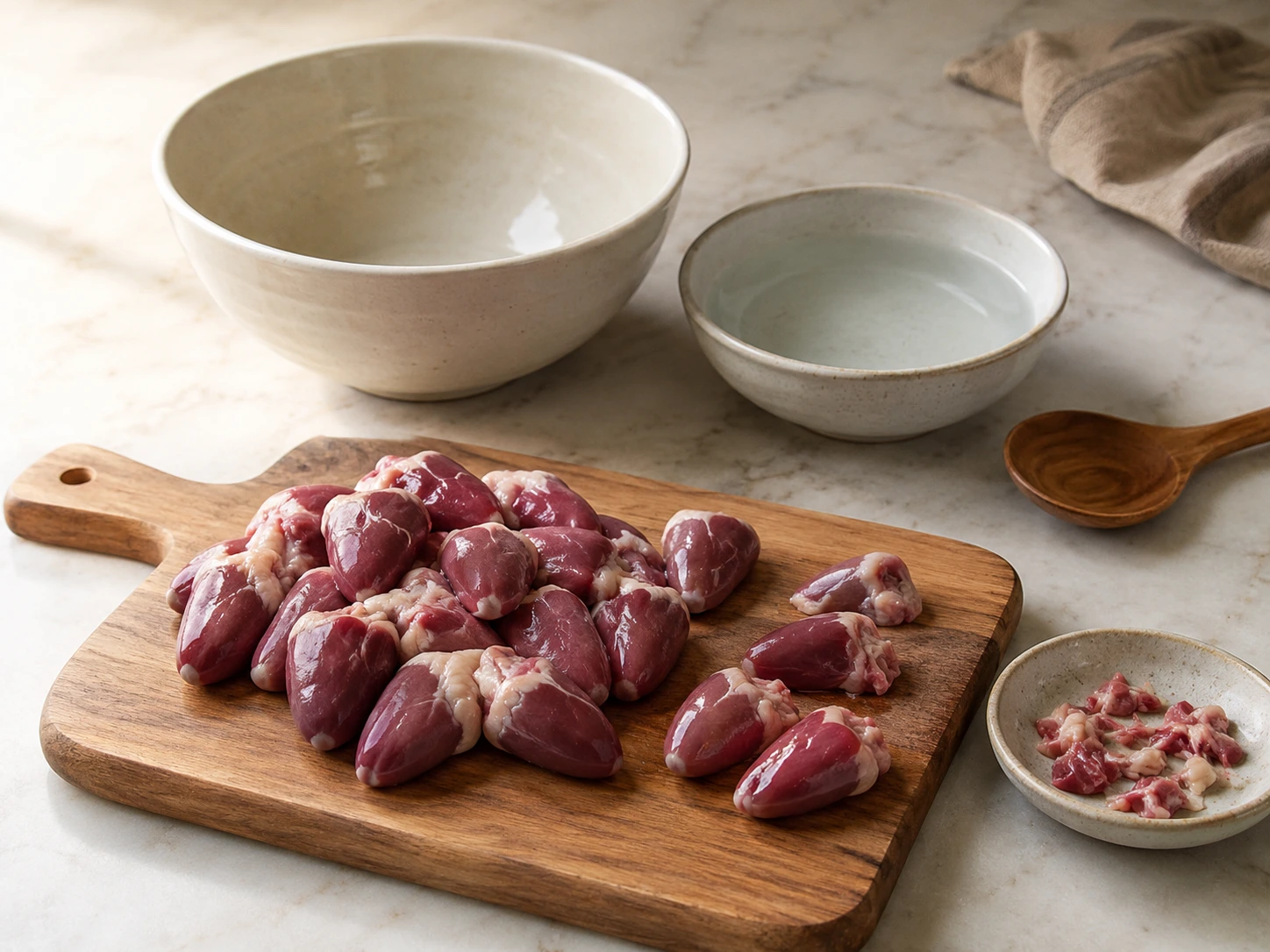
Prepare the hearts: Keep the chicken hearts chilled until you are ready to cook. On a clean poultry-safe cutting board, remove any obvious tough connective tissue or excessive surface fat, and do not rinse the hearts under the tap because splashing raw poultry juices can spread bacteria around the kitchen. Wash your hands and clean every surface or utensil that touches the raw hearts.
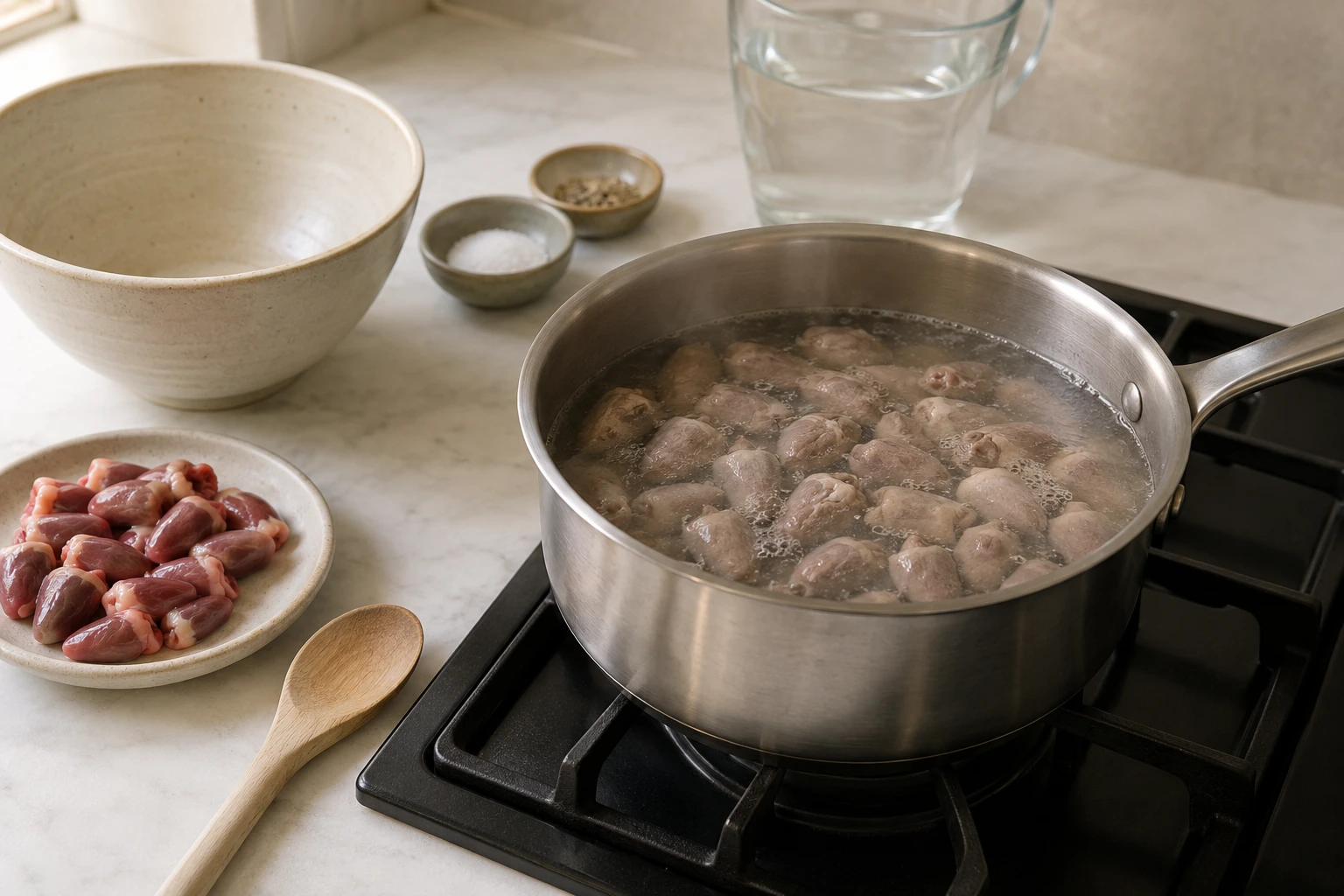
Gently poach: Pour the cool water into the saucepan and bring it to a gentle simmer rather than a hard boil. Carefully add the chicken hearts, reduce the heat to maintain a steady low simmer, and cook for about 10 to 12 minutes, turning them once or twice so they cook evenly.
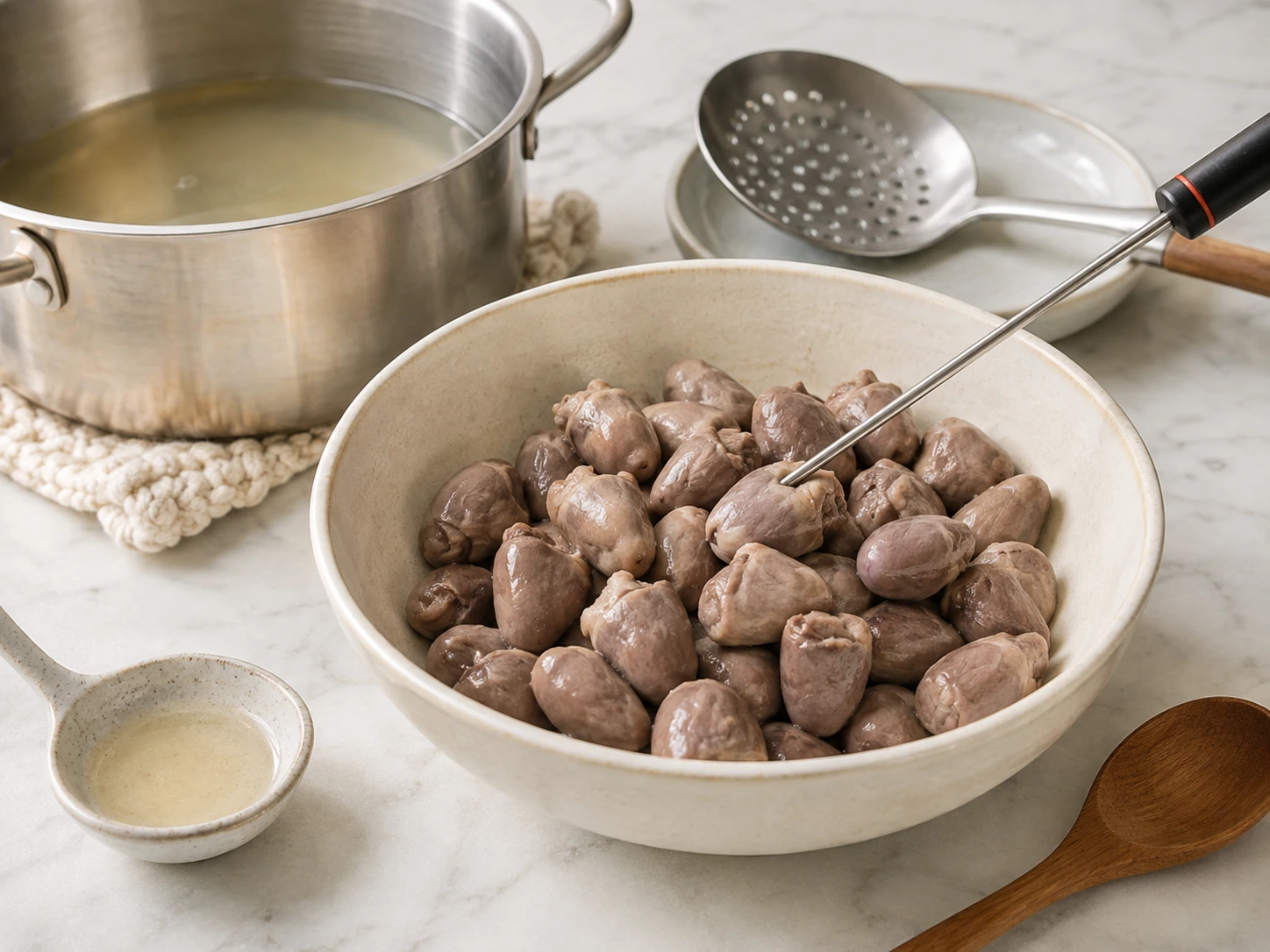
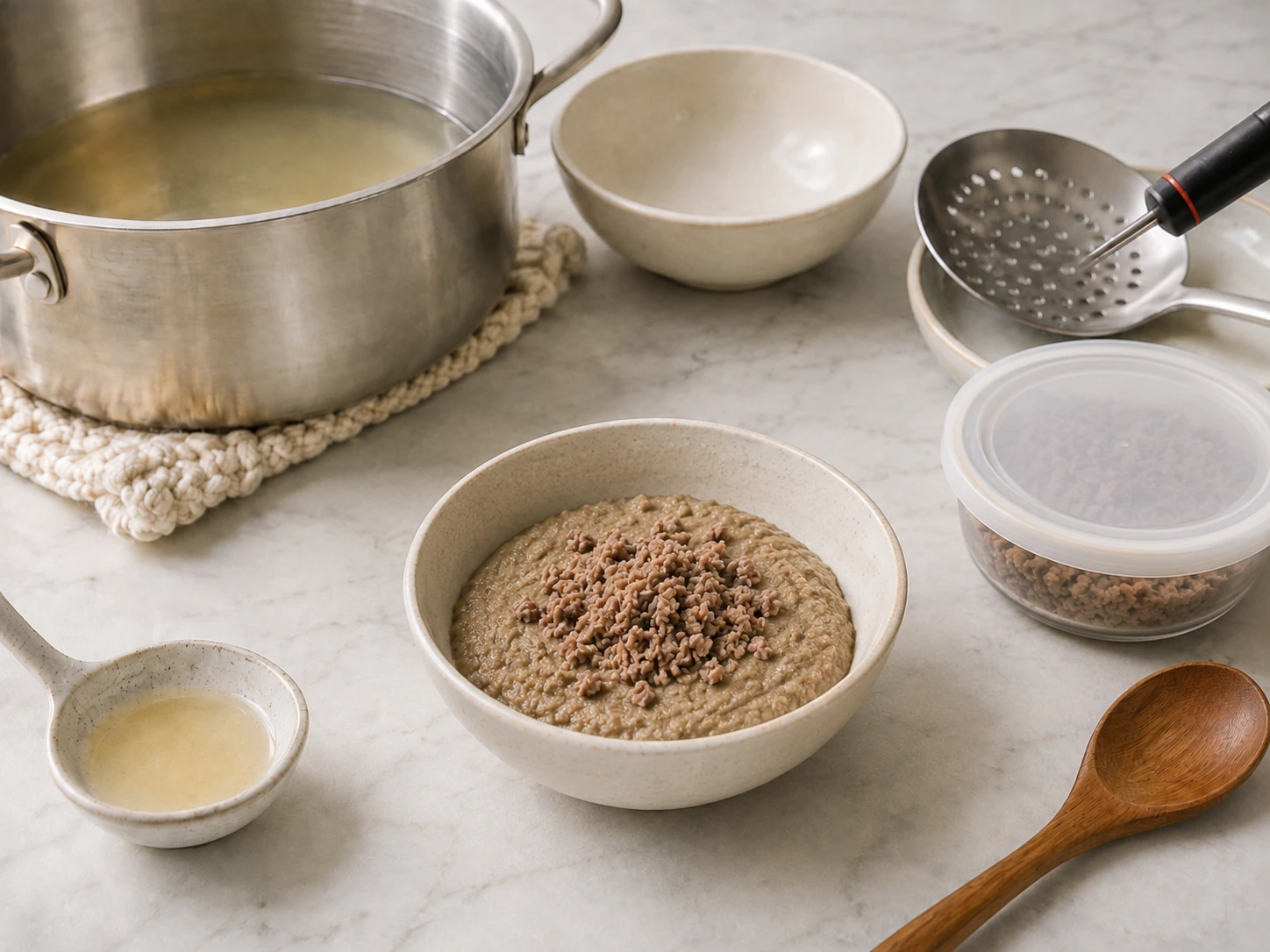
Check and cool: Check the thickest heart with a clean food thermometer, and continue cooking until it reaches at least 165°F or 74°C, the safe minimum temperature for poultry giblets. Lift the cooked hearts out with a clean slotted spoon, place them in the cream ceramic bowl, and let them cool until comfortable to handle. Reserve a tablespoon of the plain cooking liquid only if you want to loosen the mince later.
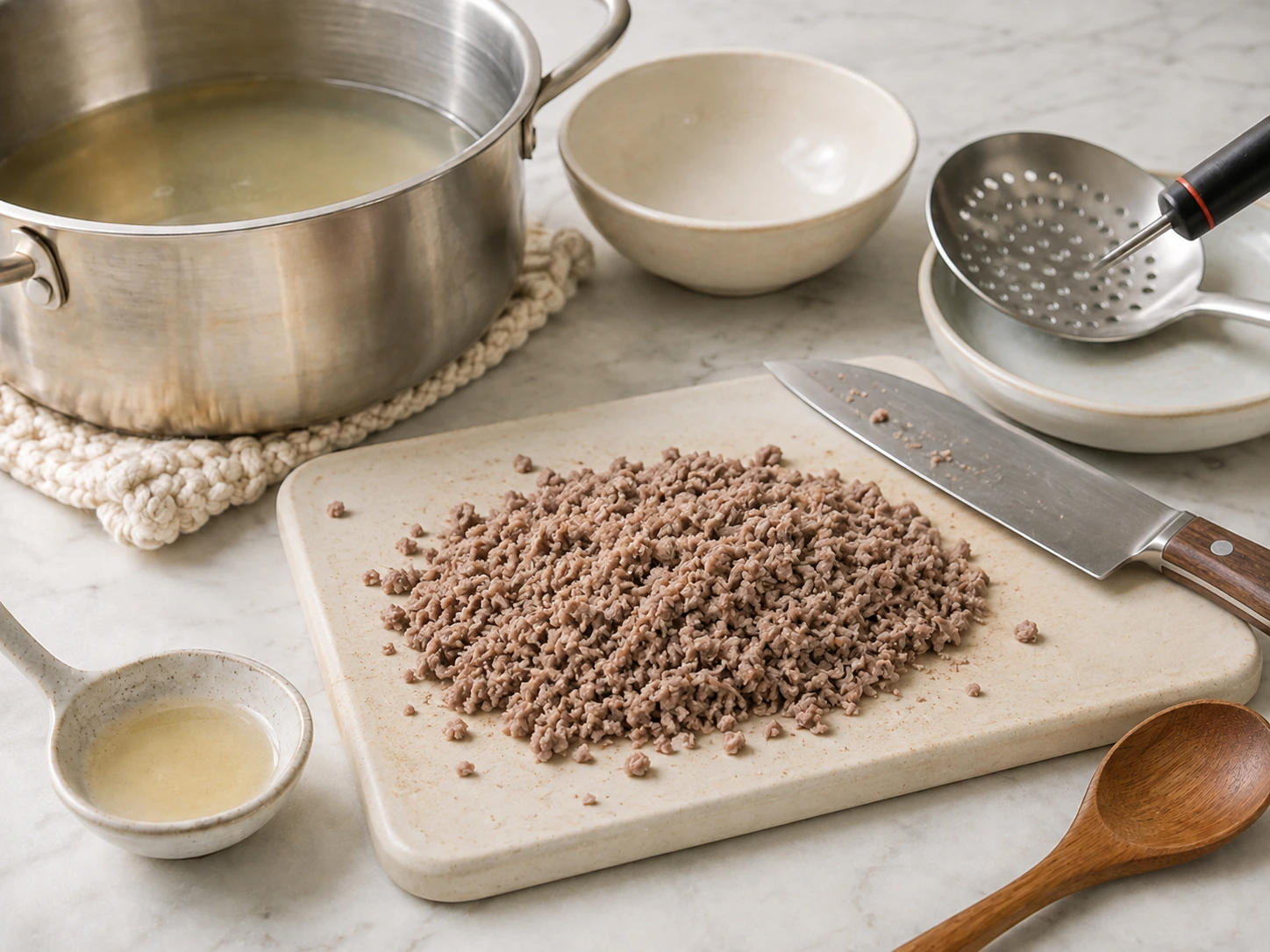
Mince finely: Once the hearts are cool enough to handle, move them to a freshly cleaned cutting board and mince them into very small, soft pieces. Aim for a fine, loose texture that will scatter easily through cat food rather than leaving larger chunks. If the mince seems dry or clumpy, fold in a few drops of the reserved plain poaching liquid instead of adding oil or broth.
Spoon over dinner: Place the cat's normal nutritionally complete food in the serving bowl and scatter only a small amount of the cooled chicken heart mince over the surface. Mix it through lightly if your cat prefers the aroma distributed throughout the meal. Transfer the remaining mince to covered storage promptly instead of leaving the batch at room temperature.
Made this recipe?
Tap the paw so other pet parents know it’s worth making.
Be the first to make it
Tips & serving
Use the chicken heart mince as a small topper rather than the main portion of the bowl. Treats and extras should generally stay within about 10 percent of a cat's daily calories so the nutritionally complete food continues to provide the bulk of the diet. PetMD +1 Individual calorie needs vary, so discuss major diet changes, frequent toppers, or additions for a cat on a therapeutic or restricted diet with your veterinarian.
- The fine mince adds a different aroma and texture without replacing the complete meal.
- Small portions are easy to measure, scatter, and mix through regular cat food.
- Gentle poaching creates soft pieces that can be minced more evenly than roasted hearts.
- Cut one of the larger hearts open after temperature checking if you want an extra visual check before mincing the batch.
- Keep the poaching water at a gentle simmer because vigorous boiling can make the small hearts firmer and less pleasant to mince.
- Mince the cooled hearts more finely than you would for human food so the topper distributes evenly instead of forming large mouthfuls.
Storage
Cooked chicken leftovers can generally be refrigerated for 3 to 4 days at 40°F or below. Ask USDA +1 For longer storage, freeze the mince in very small meal-sized portions so you can thaw only what you need. Defrost a portion in the refrigerator, keep it chilled until serving, and avoid repeatedly thawing and refreezing the same batch. Discard topper that has been mixed into a served meal and left uneaten rather than scraping it back into the main storage container.
Substitutions
If chicken hearts are unavailable, plain boneless skinless chicken thigh or breast can be gently poached and finely minced instead. Keep the serving equally small and use nutritionally complete cat food as the main meal. Do not substitute seasoned broth for the plain water. Many prepared broths contain salt, onion, garlic, flavorings, or other ingredients that are unnecessary or unsuitable for this simple cat topper. Do not treat liver as a direct ounce-for-ounce substitute for chicken hearts.
Cats recipe FAQ
Can I serve this topper every day?
Treat it as an occasional extra, not a meal plan. Use the chicken heart mince as a small topper rather than the main portion of the bowl. Treats and extras should generally stay within about 10 percent of a cat's daily calories so the nutritionally complete food.
Can cats have chicken hearts?
This recipe uses chicken hearts in a small, cat-appropriate amount. Skip it if your cat has a known sensitivity, and read the foods-to-avoid note on this page before serving.
How long does Poached Chicken Heart Mince Topper for Cats keep?
Transfer the cooled mince to a clean airtight container and refrigerate it promptly, within two hours of cooking. Cooked chicken leftovers can generally be refrigerated for 3 to 4 days at 40°F or below.
What's the safest way to try this with my cat?
Offer a small amount beside regular food, introduce one new recipe at a time, and watch appetite, stool, skin, and behavior for a day or two.
Can I feed the chicken heart mince as a full meal?
No. This recipe is intentionally a topper, not a complete homemade diet. Keep the nutritionally complete cat food as the main meal, and treat all toppers and treats as a small part of total daily calories. VCA Hospitals
Do I need to rinse chicken hearts before poaching them?
No. USDA guidance does not recommend washing raw poultry because splashing can spread bacteria around the sink and nearby surfaces. Keep the hearts cold, handle them with clean utensils, and rely on thorough cooking to 165°F or 74°C for safety. Food Safety and Inspection Service +1
Sources