
Welcoming wild birds to your garden or balcony is a lovely way to connect with nature, and offering wholesome food makes the experience even more rewarding. These Berry Seed Suet Cakes are a natural, energy-rich snack for a variety of feathered visitors, especially during colder months when natural food sources are harder to find. Packed with essential fats, beneficial seeds, and berries, they provide valuable energy for survival and migration. Making suet cakes at home gives you complete control over the ingredients, so you can avoid harmful additives, artificial flavors, and excessive salt. This recipe uses high-quality, bird-safe ingredients for maximum nutritional value, with rendered unsalted lard or beef tallow serving as both the main binder and fat source. A varied mix of seeds and unsweetened dried berries makes the finished cakes practical, nourishing, and appealing to wild birds. Safety should always come first when feeding wild birds. Use only unsalted fats, and choose dried fruit with no added sugar or sulfur dioxide, as these can be harmful; feeders should also be placed in shaded areas away from predators. These cakes are meant to supplement the birds' natural diet, so keep fresh water available, watch for signs of distress, and consult a local wildlife expert or ornithologist if you have concerns about birds in your area or their feeding habits.
Safety first: Keep treats and extras under about 10% of your bird's daily food - the regular diet should do the heavy lifting.
Foods to avoid
Never use salted fats, such as bacon grease, as high sodium levels are toxic to birds. Avoid any ingredients with added sugar, artificial sweeteners, chocolate, avocado, garlic, or onion. Do not use peanut butter as a binder, as its stickiness can pose a choking hazard for birds. Ensure all dried fruits are unsweetened and free from sulfur dioxide (a common preservative). Whole, large nuts can be a choking hazard for smaller birds, so chop them if included. Always inspect any commercial birdseed mixes for fillers or ingredients that could be harmful.
Ingredients
Instructions
Gently Melt the Fat: Gently melt the unsalted rendered lard or beef tallow in a large microwave-safe bowl, heating it in 30-second intervals and stirring between each one until fully melted and clear but not boiling. Alternatively, melt it slowly in a saucepan over very low heat on the stovetop. The fat must be unsalted because salted fats are harmful to birds, and gentle melting helps preserve its beneficial properties without scorching.
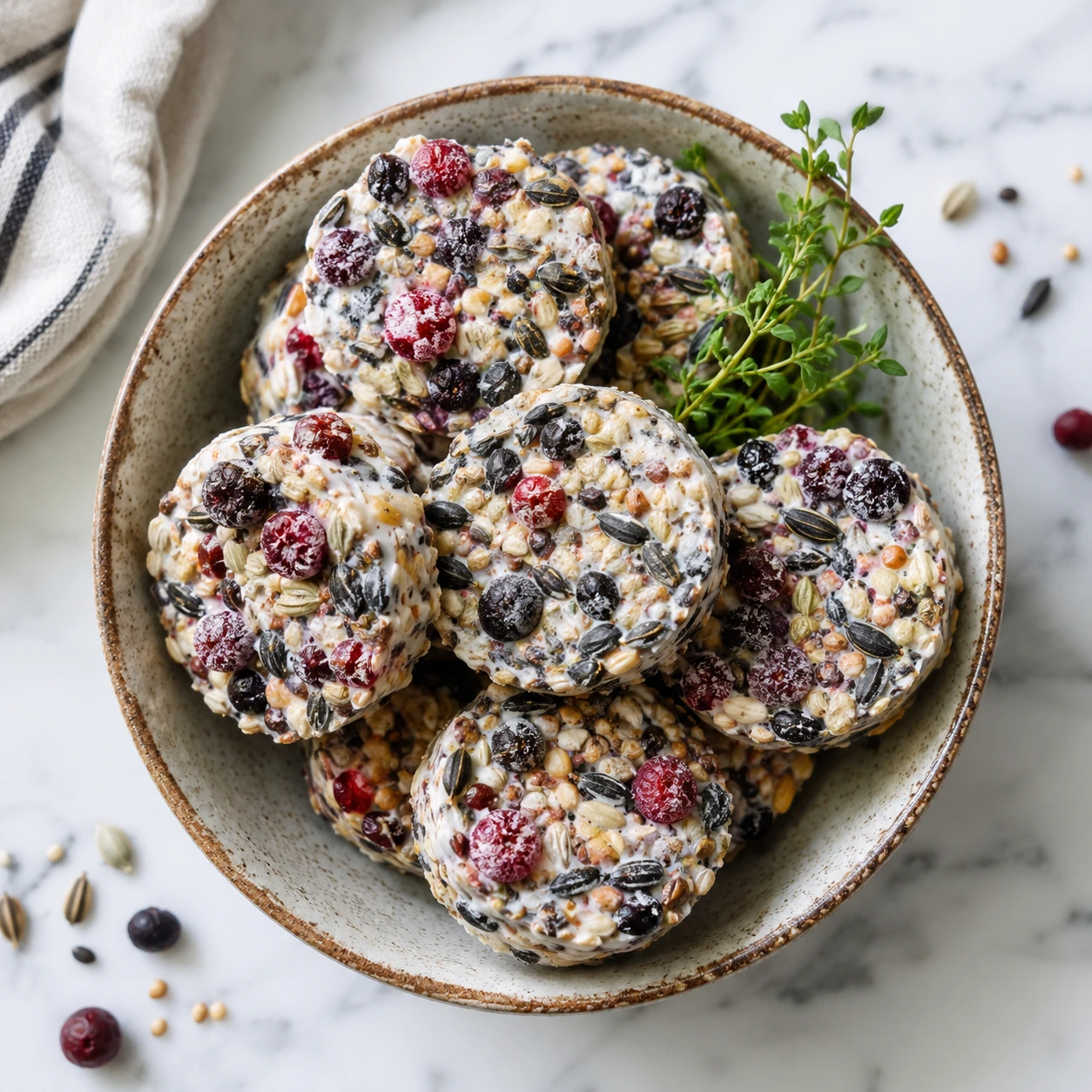
Combine Dry Ingredients: In a separate large mixing bowl, combine the high-quality birdseed mix, finely chopped unsweetened dried cranberries, and any optional shelled sunflower hearts or chopped unsalted roasted peanuts. Check that the cranberries are truly unsweetened and contain no sulfur dioxide, a common preservative that can be detrimental to birds. Stir the dry ingredients thoroughly so everything is evenly distributed.
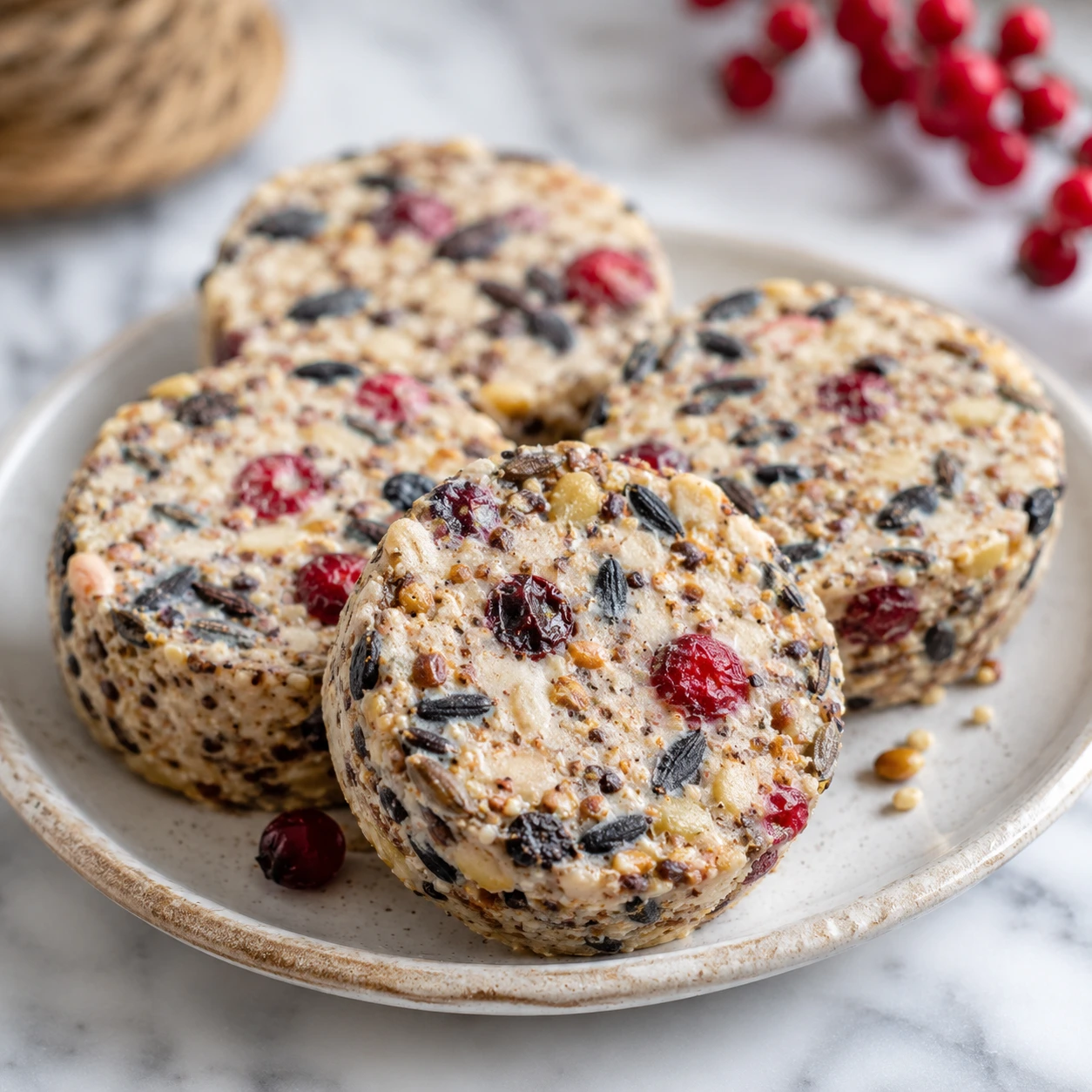
Mix Fat and Seeds: When the melted fat has cooled slightly but is still liquid, slowly pour it over the combined dry ingredients. Use a sturdy spatula or spoon to mix very thoroughly, making sure every seed and berry is coated. This coating binds the suet cake together and provides concentrated energy for the birds.
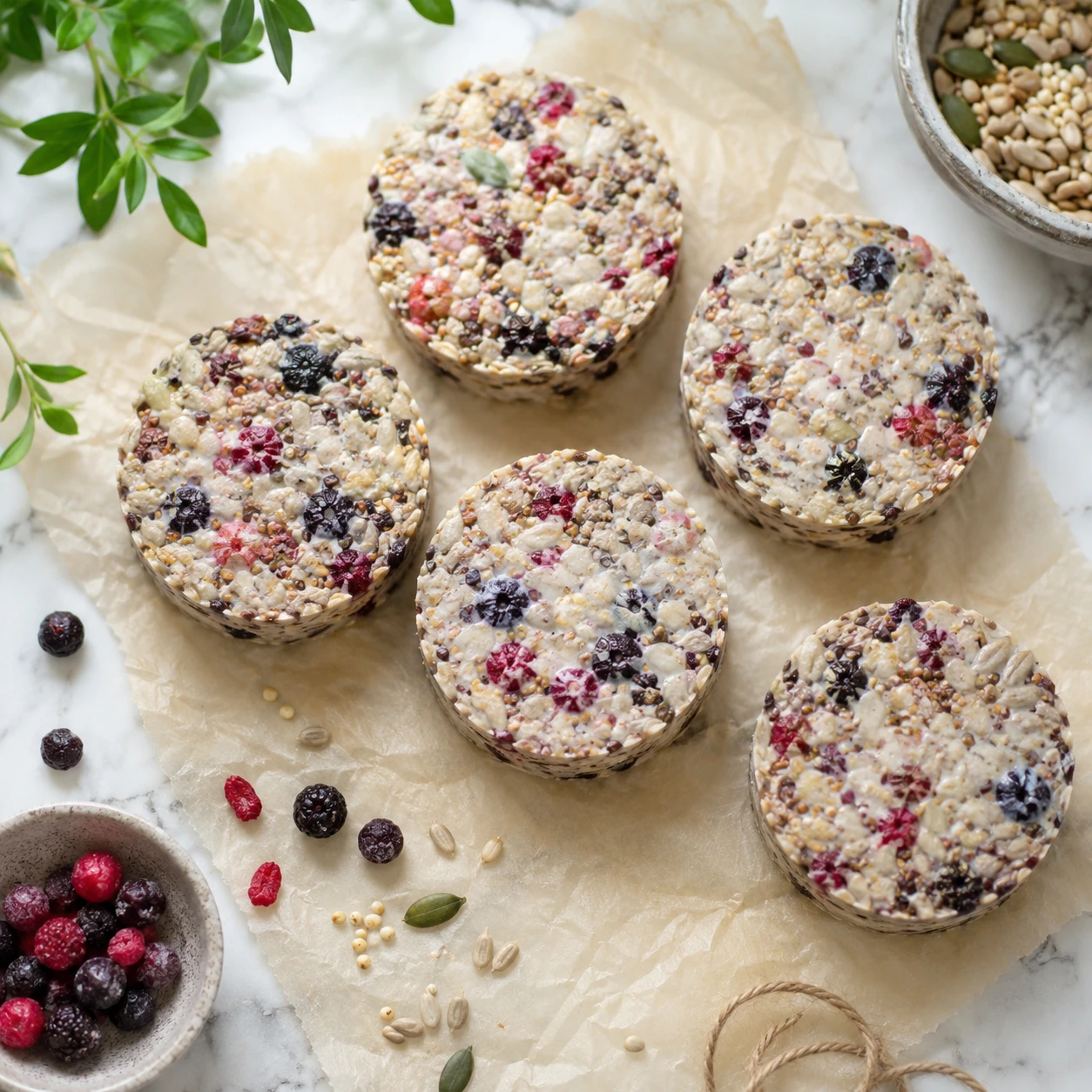
Fill the Molds: Prepare your suet molds, leaving silicone molds as they are or lining small loaf pans and other containers with parchment paper with an overhang for easier removal. Spoon the warm suet mixture into each mold, then press it down firmly with the back of a spoon or your hand. Compacting it well helps the cakes keep their shape after setting and prevents them from crumbling too easily in the feeder.
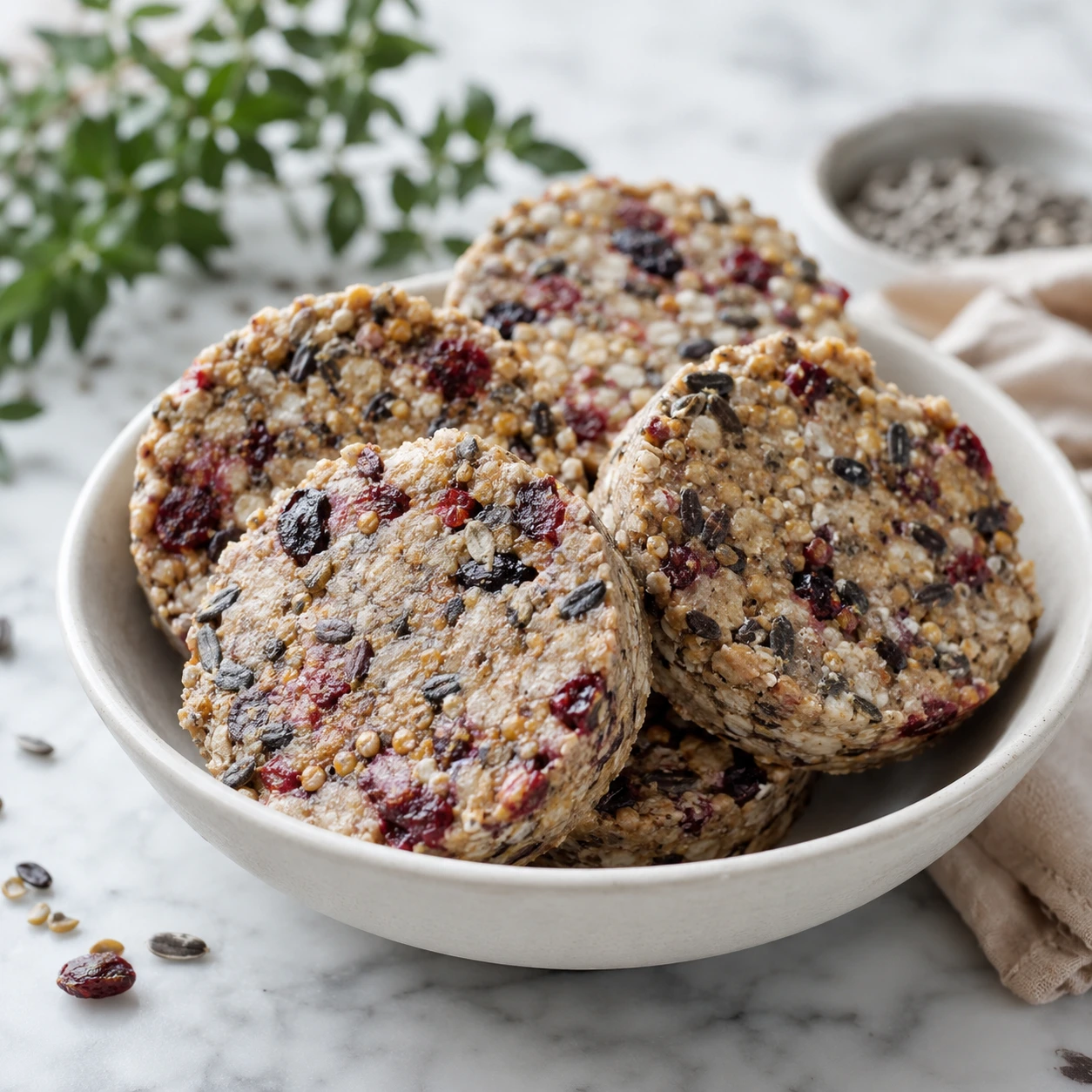
Chill to Set: Place the filled and compacted molds in the refrigerator. Chill them for at least 3-4 hours, or preferably overnight, until completely firm. This chilling time allows the fat to solidify and creates stable suet cakes that will hold up outdoors.
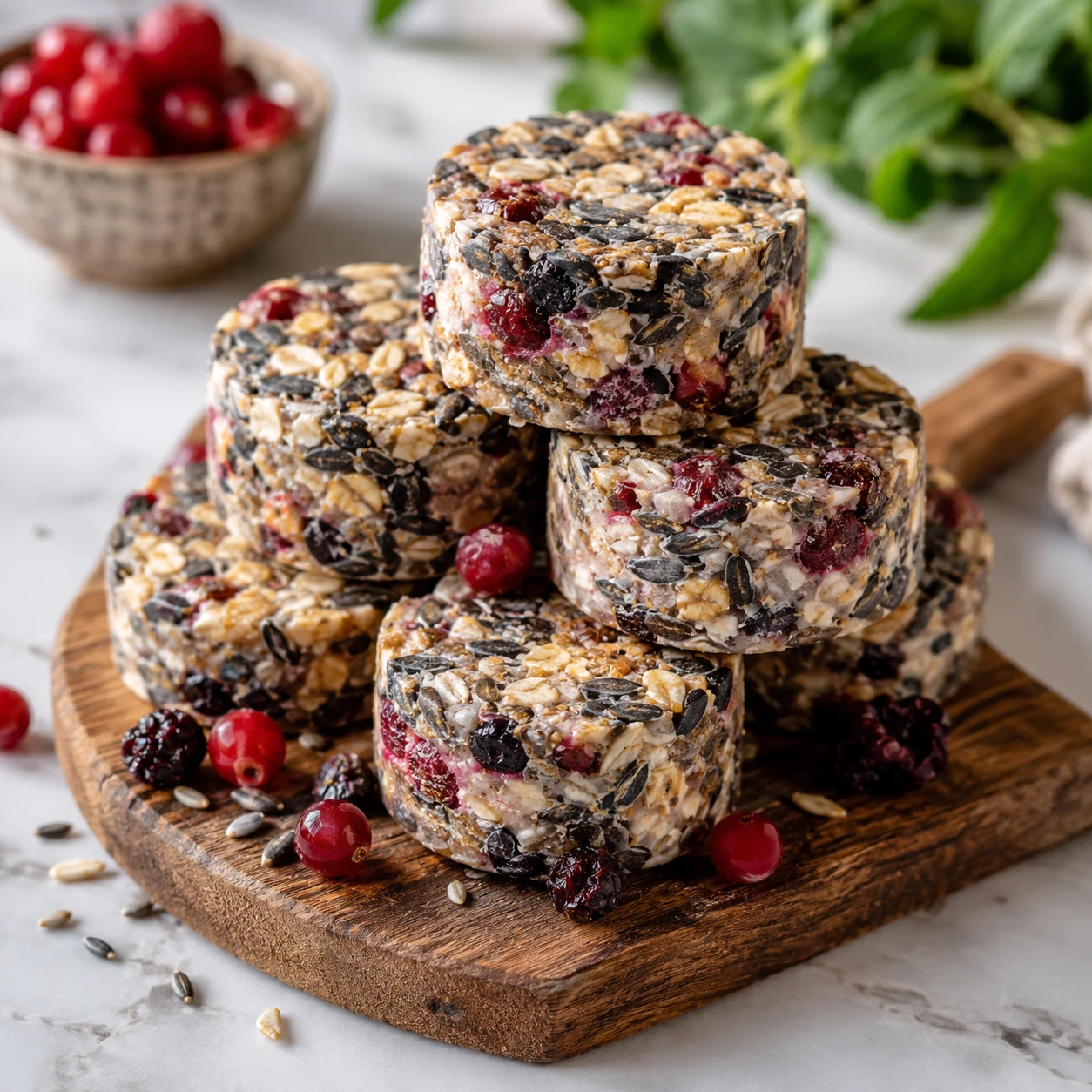
Unmold and Store: Once the cakes are fully firm, gently remove them from the molds; silicone molds release easily, while parchment-lined containers can be lifted out using the paper overhang. The Berry Seed Suet Cakes are now ready to offer to your feathered visitors or store for future use. They should feel firm but not brittle and hold together well.
Made this recipe?
Tap the paw so other pet parents know it’s worth making.
Be the first to make it
Tips & serving
Place the suet cakes in appropriate suet feeders, mesh bags, or even secure them to tree trunks in your garden. Position feeders in a safe location, away from predators like cats, and out of direct sunlight to prevent premature melting. Observe your birds regularly and replenish the suet as needed. If suet becomes soft, rancid, or moldy, remove it immediately and discard. Always ensure fresh, clean water is available for drinking and bathing alongside the suet.
- Provides essential high-energy fats and nutrients, crucial for birds during cold weather or breeding season.
- Attracts a diverse array of wild birds to your garden, enhancing local biodiversity.
- Offers a natural, preservative-free food source, free from harmful additives found in some commercial options.
- Supports bird health by supplementing their diet when natural foraging is difficult.
- Creates an engaging and rewarding backyard bird-feeding experience.
- Always use unsalted rendered fat. This is the most critical safety consideration.
Storage
Freeze: For longer storage, individually wrap each suet cake in parchment paper and then plastic wrap or place in a freezer-safe bag. Thaw in the refrigerator before placing outdoors.
Substitutions
- Fats
While lard or beef tallow are ideal, you could also render suet from a butcher for a similar effect. Avoid vegetable oils or margarines, as they do not provide the necessary fat composition and can be harmful.
- Birdseed
Feel free to customize your birdseed mix based on the birds you wish to attract. Black oil sunflower seeds are universally popular.
- Berries
Other bird-safe, unsweetened, sulfur-dioxide-free dried fruits like currants or finely chopped raisins can be used. Always double-check ingredient labels for additives.
Birds recipe FAQ
Can Homemade Berry Seed Suet Cakes replace my bird's regular diet?
Treat it as an occasional extra, not a meal plan. Place the suet cakes in appropriate suet feeders, mesh bags, or even secure them to tree trunks in your garden.
Is lard/tallow, birdseed, berries okay for birds?
This recipe uses lard/tallow, birdseed, berries in a small, bird-appropriate amount. Skip it if your bird has a known sensitivity, and read the foods-to-avoid note on this page before serving.
How should I store leftovers?
Refrigerate: Store uneaten suet cakes in an airtight container in the refrigerator for up to 2-3 weeks. Freeze: For longer storage, individually wrap each suet cake in parchment paper and then plastic wrap or place in a freezer-safe bag.
How should I introduce this snack?
Start with a taste-size portion next to your bird's usual food, and hold off on serving more until you have seen that it agrees with them.
Can I use vegetable shortening or oils instead of lard/tallow?
It is not recommended. Vegetable shortenings and oils have a different molecular structure and melting point. They can become greasy and smeary on feathers, which can interfere with a bird's natural waterproofing and insulation. Rendered animal fats are best for suet.
Why can't I use fresh berries?
Fresh berries contain a high water content, which can cause the suet cakes to spoil much faster and can also affect the structural integrity of the cake, making it less firm and prone to crumbling.