

These sweet potato polenta strips give birds a change of texture from the usual seed-based bakes and soft foods served by spoon. Plain cooked sweet potato brings a little natural moisture and a mild flavor, while the polenta helps everything hold together once baked. When done, the layer should be tender enough to break apart easily, never hard, dry, or chewy. Think of these strips as an occasional snack rather than a substitute for a balanced diet suited to your bird's species. Birds vary in their feeding habits, beak strength, and portion needs, so make sure both ingredients and texture are appropriate before serving. Keep everything unseasoned, let the strips cool completely, and remove any uneaten pieces promptly.
Safety first: Keep treats and extras under about 10% of your bird's daily food - the regular diet should do the heavy lifting.
Foods to avoid
Never include onion, garlic, salty stock, seasoning blends, sugar, honey, butter, or other unnecessary additions. Do not use uncooked or undercooked polenta in the finished snack, and never serve the bake while hot. A soft strip is not automatically safe for every bird: pieces that are too large, sticky, dry, hard, or difficult to break apart may be unsuitable. Check ingredient safety for the particular species, introduce any new food cautiously, and discard any piece that becomes contaminated or is left uneaten. If the bird has a prescribed diet or an existing feeding concern, consult an avian veterinarian before offering the recipe.
Ingredients
Instructions
Cook and mash the sweet potato: Peel the sweet potato and cut it into small, even pieces so they cook at the same rate. Simmer them in plain water until a fork slips through easily, then drain well and mash until smooth, with no firm lumps or tough bits of skin. Weigh out 100 g of cooked flesh, let it cool slightly, and keep it completely plain, with no butter, oil, salt, sugar, spices, or seasoning.
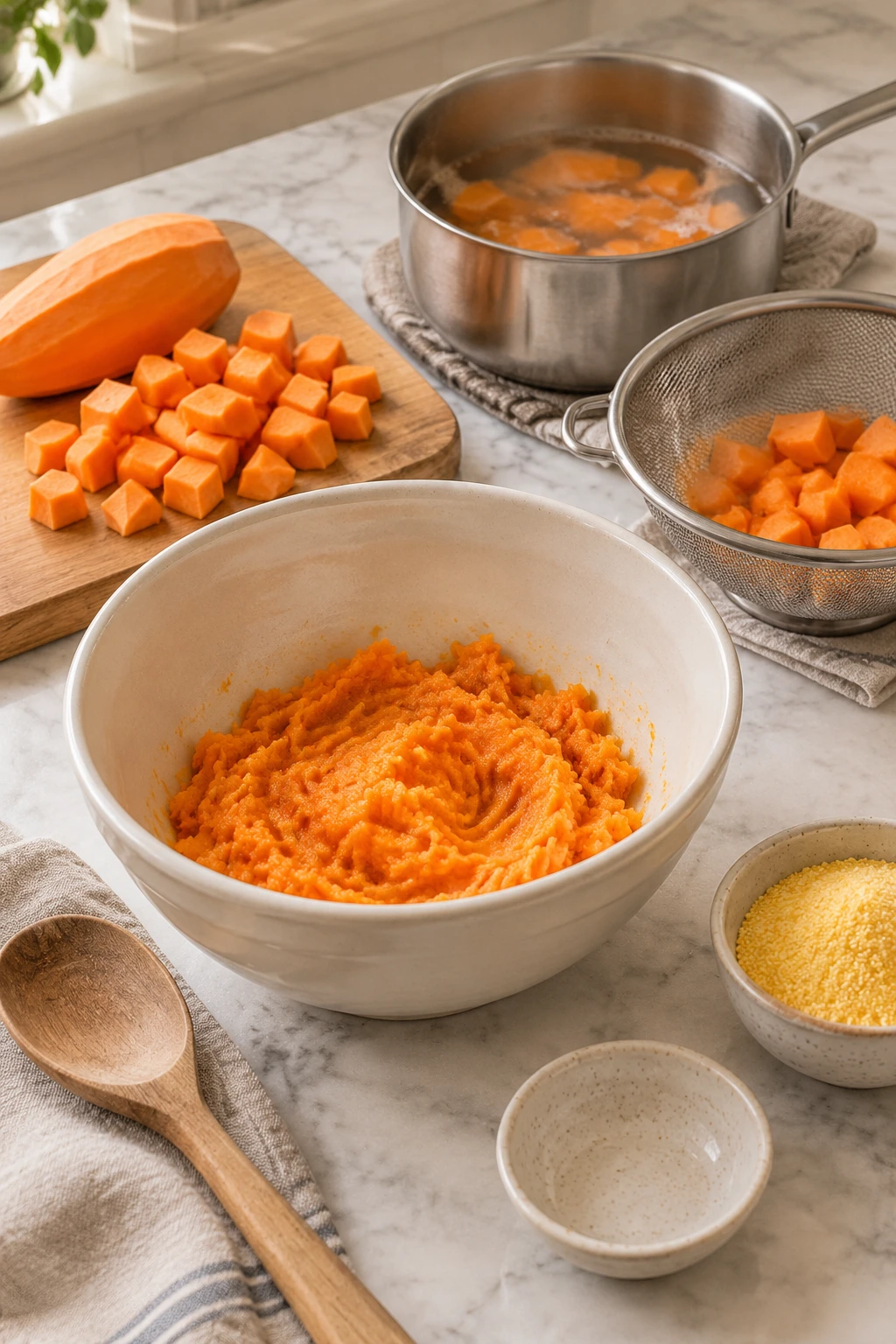
Cook the plain polenta: Bring 120 ml of water to a gentle simmer in a small saucepan, then gradually whisk in the dry polenta, following the package directions. Stir continuously at first to prevent lumps, then cook over low heat until the grains are fully hydrated and the mixture has thickened. Cooking times vary between polenta products, so use the time on the package and let the polenta cool briefly before mixing it with the sweet potato.
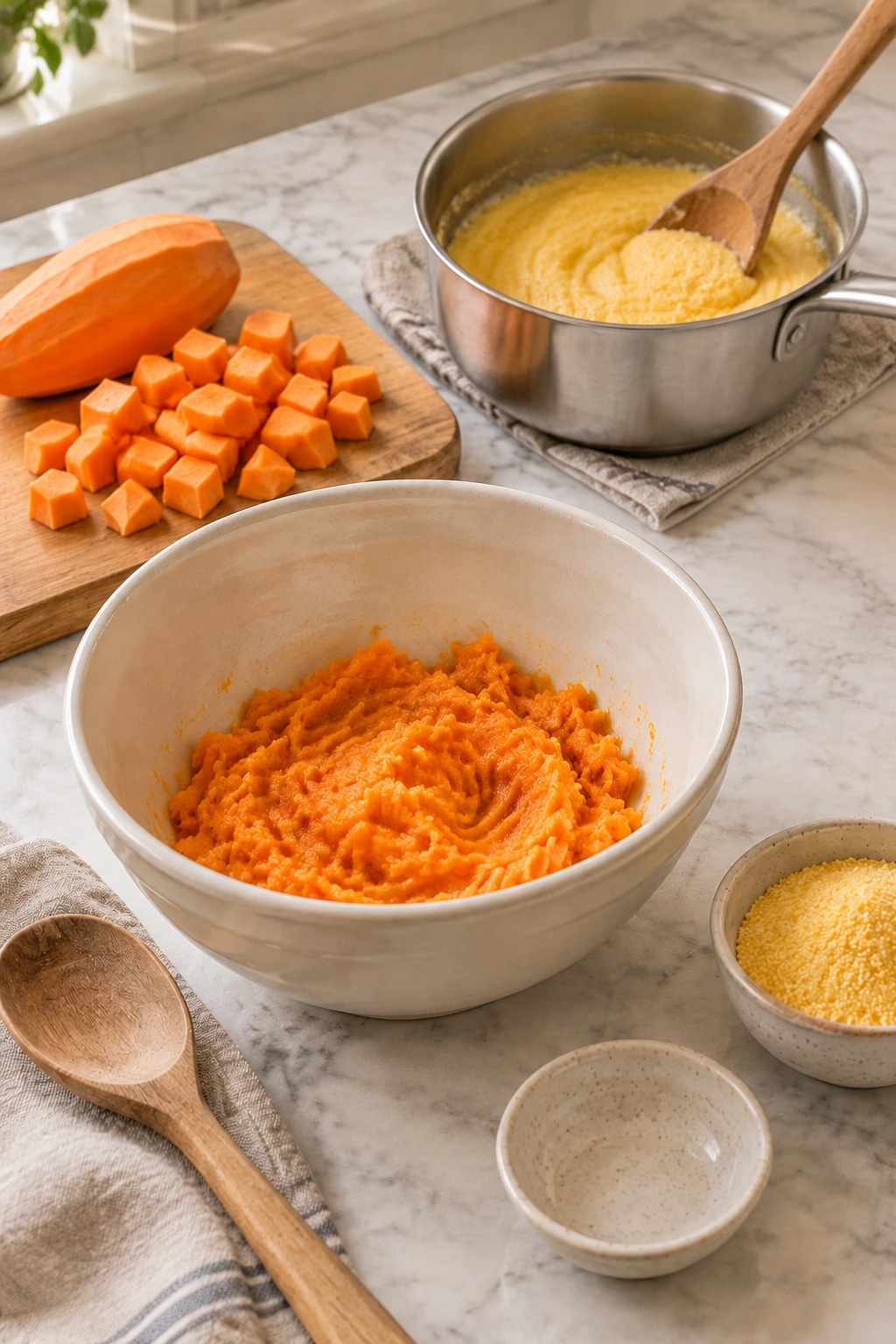
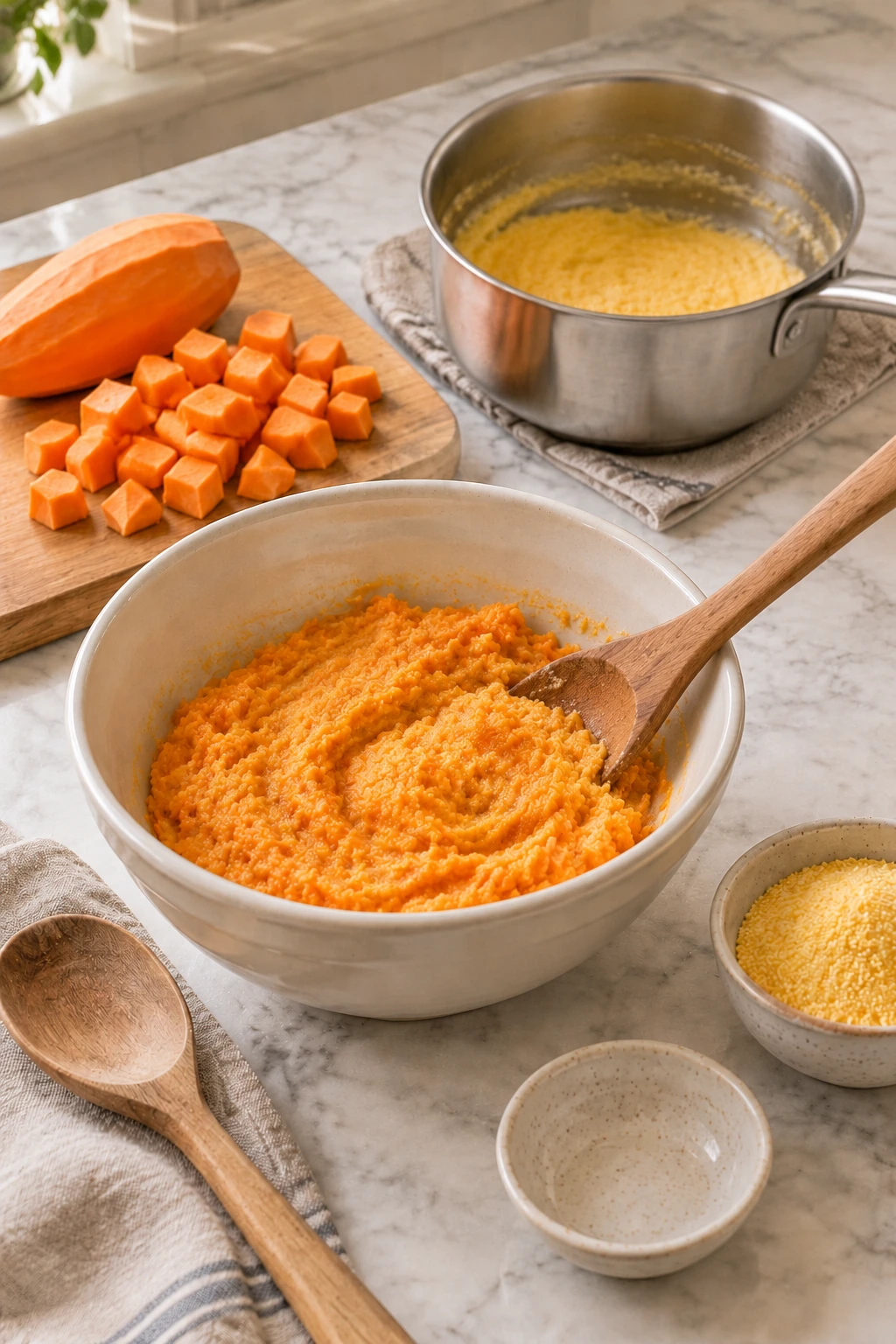
Mix until evenly combined: Add the cooked polenta to the bowl of mashed sweet potato and stir until the mixture has an even color and texture. It should be thick, moist, and easy to spread, rather than runny or crumbly. If it's too stiff to spread smoothly, mix in a teaspoon of water and check again, adding only enough to make a smooth layer, then let excess steam escape before transferring it to the tray.
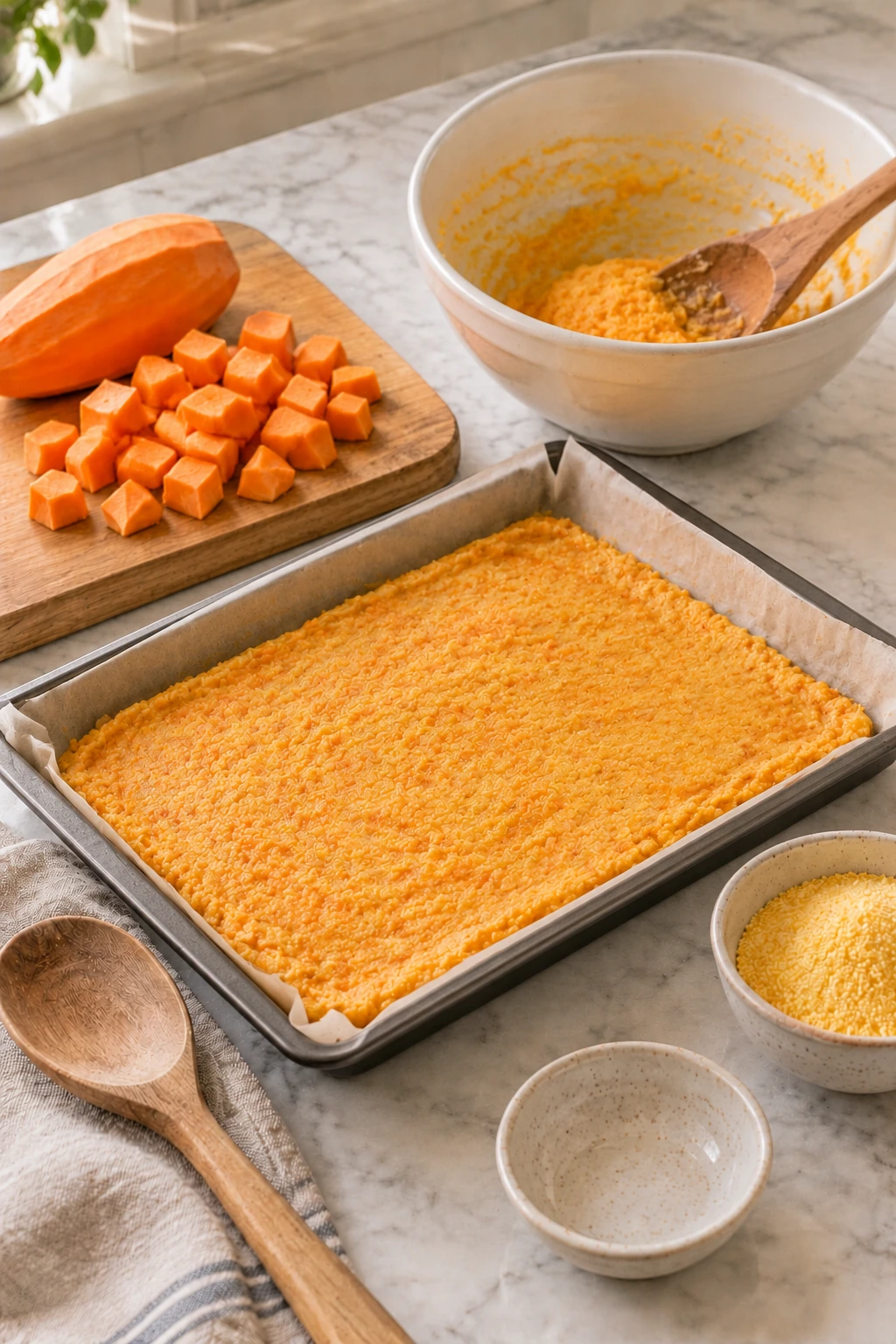
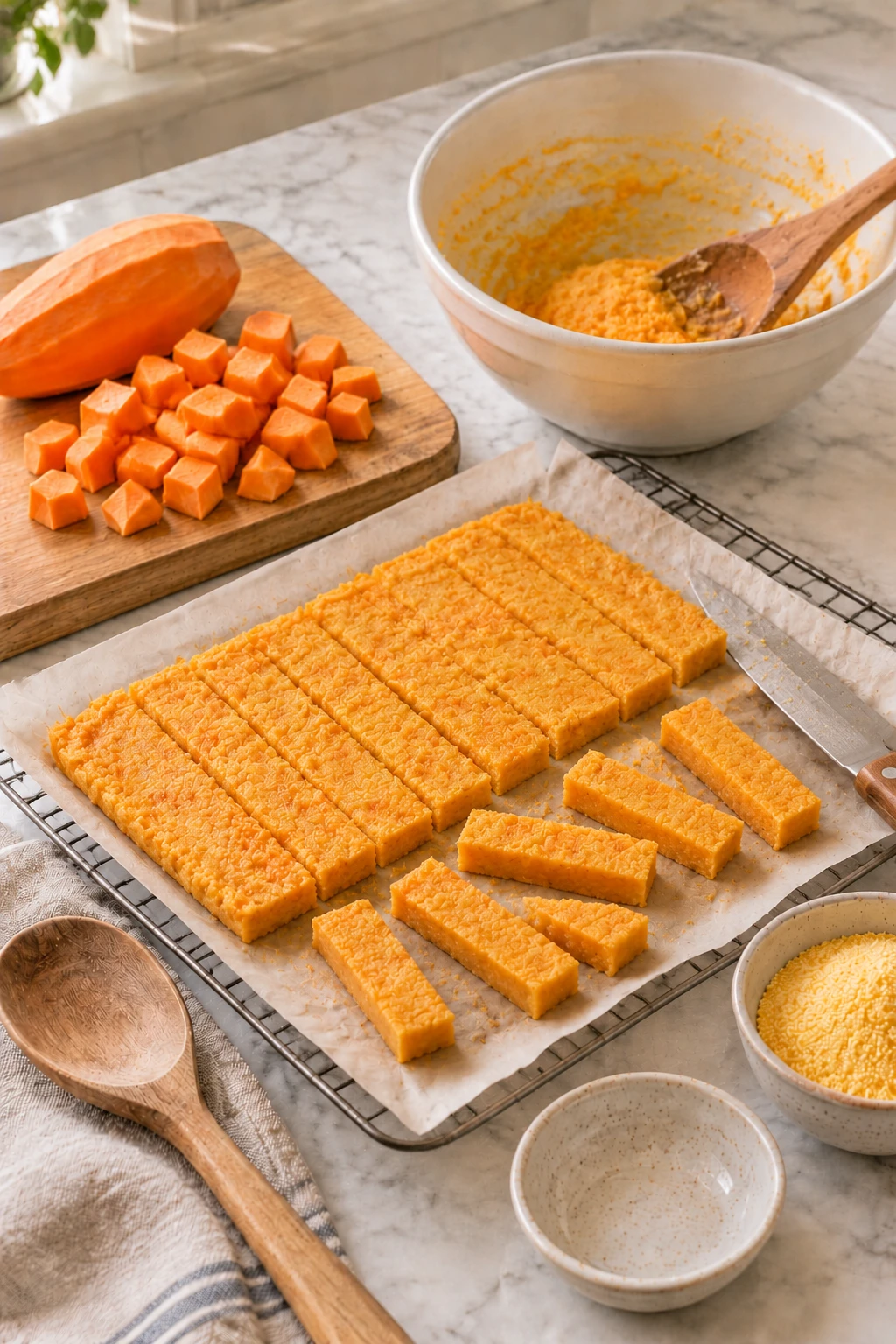
Spread and bake until set: Line a small baking tray with parchment and spread the mixture into an even layer about 5 to 7 mm thick. Smooth the top with a spatula, taking care not to leave the edges much thinner than the center. Bake in a preheated oven at 160°C conventional heat or 140°C fan for approximately 20 to 30 minutes, checking early if your oven runs hot; the layer should hold together when gently pressed but stay soft, not crisp or browned, so remove it sooner if the edges start to dry out or harden.
Cool completely and cut into strips: Take the tray out when the layer has set but is still tender, and leave it on a heatproof surface until the steam has dissipated. Transfer the parchment and baked layer to a wire rack and let it cool completely to room temperature before cutting it into short, narrow strips with a clean knife. Break or cut the strips further to suit your bird's size and usual eating habits, check each piece for hard edges, dry patches, or an overly firm center, and offer only a small piece if the recipe is suitable for your bird.
Made this recipe?
Tap the paw so other pet parents know it’s worth making.
Be the first to make it
Tips & serving
Offer only a tiny piece when both sweet potato and plain polenta are suitable for your bird's species and individual feeding needs. The finished strip must be fully cool, soft enough for the bird to manage, and cut to a safe size for its beak and eating behavior. Start with a very small amount and supervise the first offering. Do not treat the recipe yield as a daily serving recommendation. Keep the bird's established balanced diet as the priority, and discuss major diet changes or uncertainty about species-specific food suitability and portion size with an avian veterinarian.
- The soft, sliceable format provides a different texture from conventional seed bakes and spoonable bird snacks.
- Using plain cooked ingredients makes it easier to control added salt, sweeteners, oils, and seasonings.
- A thin layer cools more evenly than a thick bake, making it easier to check the finished texture before serving.
- Small strips can be divided into tiny trial portions, helping caregivers avoid offering a large snack at once.
- Drain the cooked sweet potato thoroughly before mashing, because excess water can leave the finished layer too soft to handle cleanly.
- Follow the cooking directions on the polenta package, as coarse and instant varieties can require different cooking times and liquid amounts.
Storage
Once completely cool, place unused strips in a clean, sealed food-safe container and refrigerate promptly. For longer storage, freeze individual strips in a single layer until firm, then transfer them to a labeled airtight freezer container.
Substitutions
If sweet potato is not suitable or available, do not assume another vegetable is automatically appropriate for every bird. Ask an avian veterinarian about a species-appropriate plain cooked vegetable, then use a similarly mashed consistency and adjust the water gradually. Different vegetables contain different amounts of moisture, so the finished mixture may need less or more liquid. Plain polenta may be replaced only with a suitable, fully cooked plain grain preparation confirmed as appropriate for the bird's species.
Birds recipe FAQ
Is this snack a complete meal for my bird?
Treat it as an occasional extra, not a meal plan. Offer only a tiny piece when both sweet potato and plain polenta are suitable for your bird's species and individual feeding needs.
Is plain cooked sweet potato okay for birds?
This recipe uses plain cooked sweet potato in a small, bird-appropriate amount. Skip it if your bird has a known sensitivity, and read the foods-to-avoid note on this page before serving.
How should I store leftovers?
Once completely cool, place unused strips in a clean, sealed food-safe container and refrigerate promptly. Because this is a moist homemade preparation without preservatives, use refrigerated portions within 2 days as a cautious household storage limit, and.
How should I introduce this snack?
Start with a taste-size portion next to your bird's usual food, and hold off on serving more until you have seen that it agrees with them.
Can all pet birds eat sweet potato polenta strips?
No single recipe is suitable for every bird species or individual. Sweet potato and plain cooked polenta may be acceptable for some birds, but diet requirements, feeding behavior, and tolerance vary. Check both ingredients with an avian veterinarian if you are uncertain, especially for a bird on a prescribed diet.
How soft should the finished strips be?
The baked layer should hold together when lifted but remain tender and easy to break apart, without a crisp crust or hard edges. Let it cool completely before judging the texture, since polenta firms as it cools. Cut the strips smaller if necessary and do not serve pieces your bird struggles to manage.
Sources