
A little variety can make mealtimes more interesting for companion birds, especially when a new texture gives them something different to explore. This quinoa and egg scramble is soft, simple, and easy to prepare with a handful of plain ingredients. There is no need for oil, butter, salt, or seasoning. When cooked properly, the mixture should be moist and crumbly, not wet, sticky, or heavily browned. Birds have different nutritional needs, so check with an avian veterinarian that both egg and quinoa are suitable for your bird's species and individual needs. Offer just a tiny portion, completely cooled, alongside its usual balanced diet. Treat this as an occasional enrichment snack, not a replacement for formulated food or other recommended daily nutrition. Keep preparation simple but careful: cook the egg thoroughly, rinse and cook the quinoa without additions, and wash your hands and equipment before you begin. Remove leftovers promptly, and consult your avian veterinarian before making substantial changes to your bird's feeding routine or if it has dietary restrictions.
Safety first: Skip this recipe if your bird has a known sensitivity to any ingredient, and introduce anything new slowly.
Foods to avoid
This recipe is for suitable companion birds only and is not intended for wild garden birds. Never serve raw or runny egg, uncooked quinoa, salted or seasoned ingredients, spoiled food, or a hot scramble. Do not assume that every bird species can safely eat the same foods. Some birds have individual dietary restrictions or special nutritional needs. Treat this recipe as an occasional snack, not a complete diet or a substitute for species-appropriate formulated food and other recommended nutrition. Major diet changes should always be discussed with a veterinarian, ideally one experienced in avian care.
Ingredients
Instructions
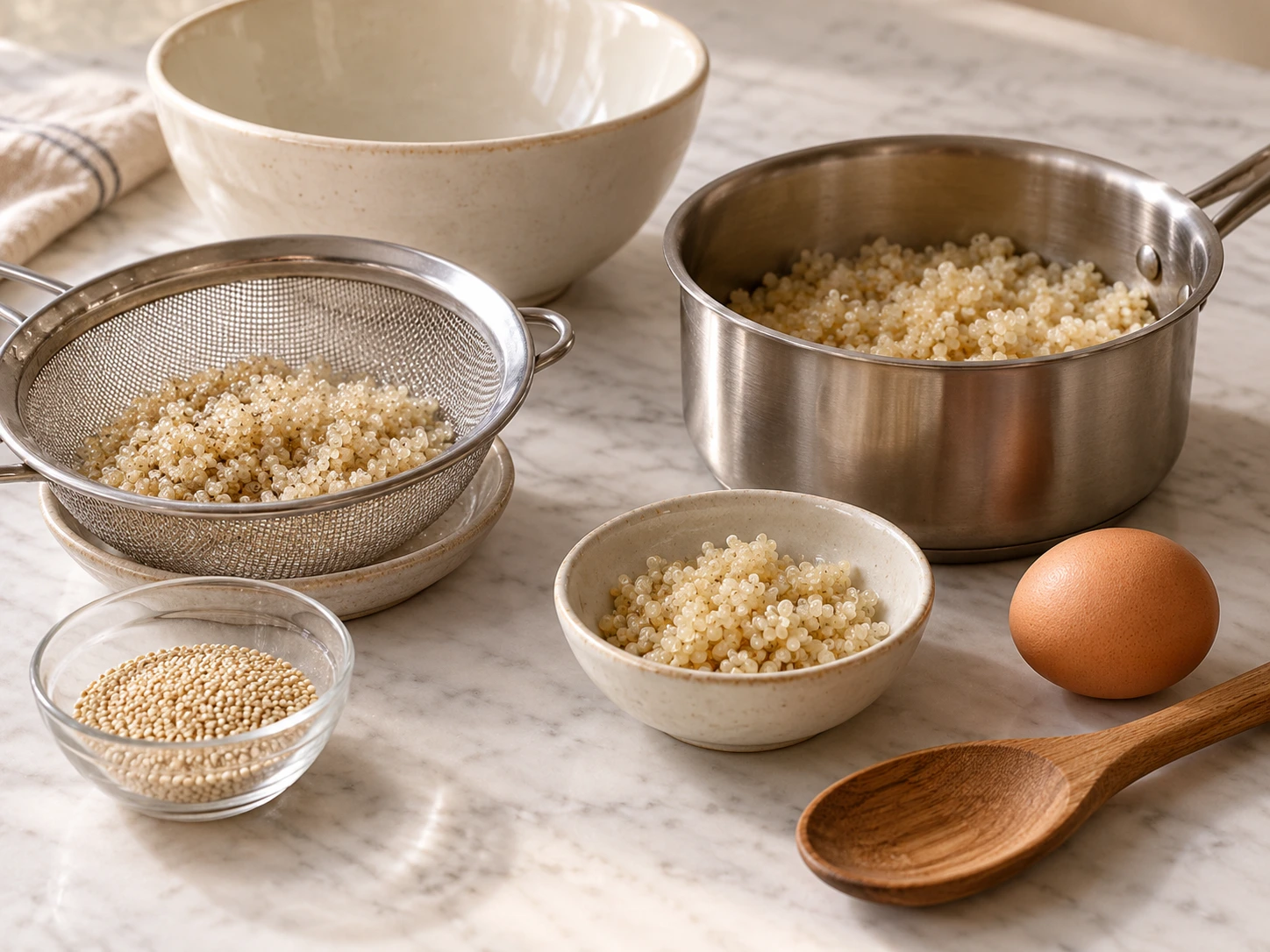
Rinse and cook the quinoa: Measure about 1 tablespoon of dry quinoa for this small recipe, keeping in mind that the final yield may vary slightly. Rinse the grains thoroughly in a fine-mesh sieve under clean running water, then transfer them to a small saucepan with water according to the package directions. Simmer until tender and the liquid has been absorbed, without adding salt, stock, oil, butter, herbs, or seasoning. Let the quinoa stand briefly, fluff it with a clean fork, and measure out 2 tablespoons of cooked quinoa for the scramble. Make sure the grains are tender rather than hard, dry, or undercooked.
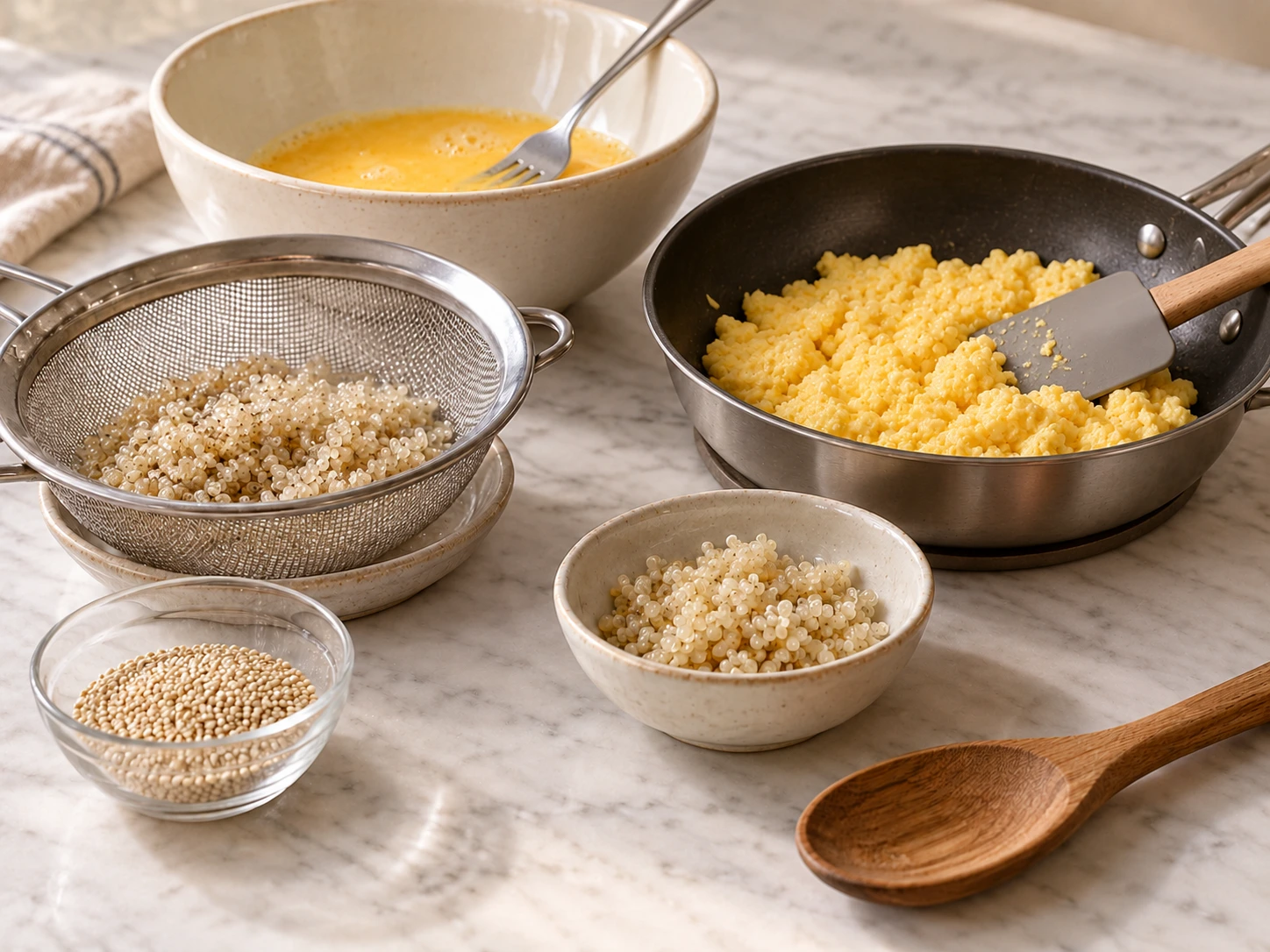
Prepare the fully cooked egg: Crack the egg into a clean mixing bowl and beat gently with a fork until the white and yolk are evenly mixed. Warm a small frying pan over low heat, adding a teaspoon of water if needed to prevent sticking instead of using oil or butter. Pour in the egg and stir slowly with a clean silicone spatula, breaking it into small, soft curds as it cooks. Continue until all the curds are fully set and no liquid egg or glossy, runny patches remain. Skip the milk, cheese, salt, and seasoning, and remove the pan from the heat once the egg is thoroughly cooked.
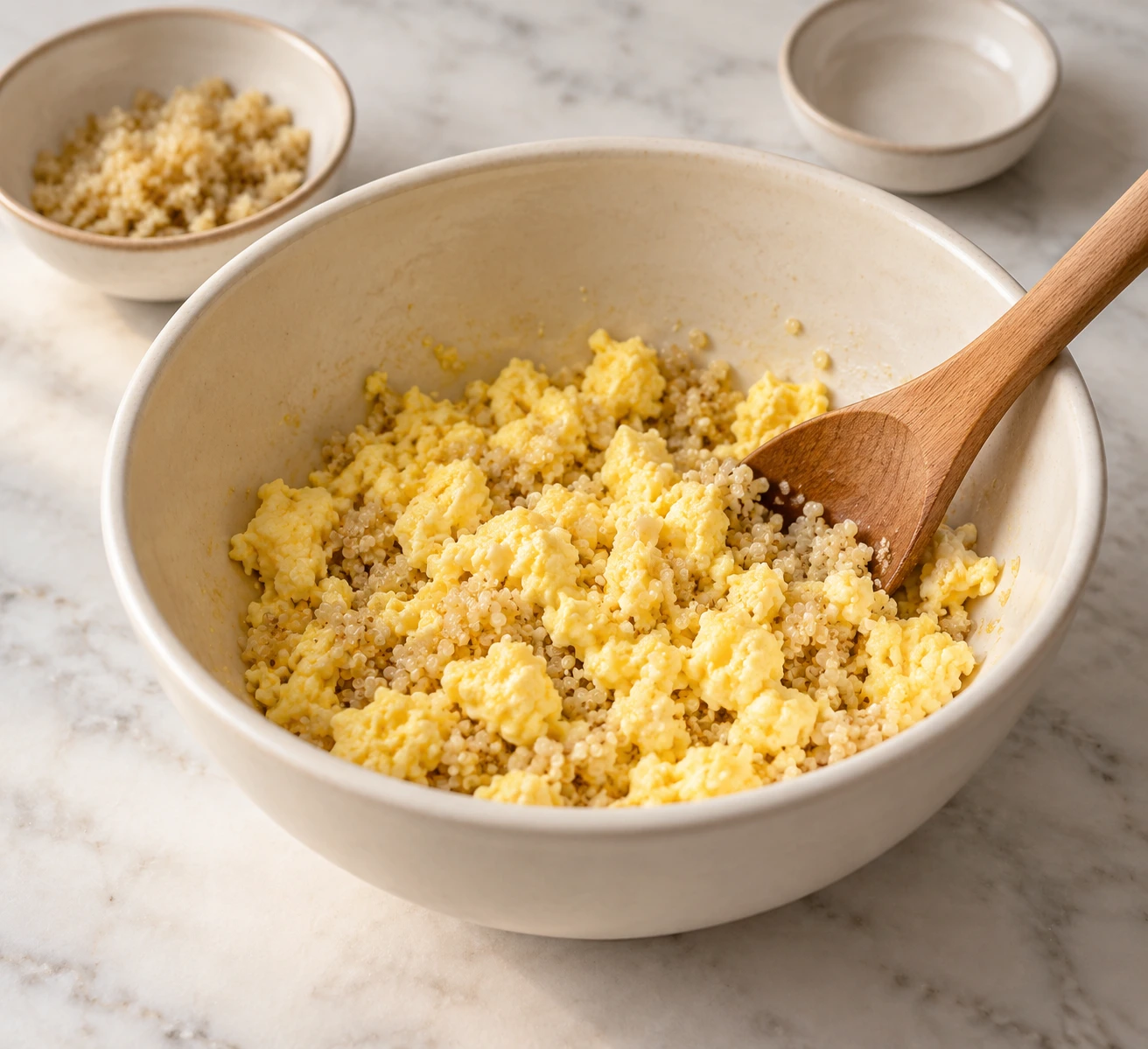
Combine the egg and quinoa: If the cooked egg is not already in a clean mixing bowl, transfer it there now. Add the measured 2 tablespoons of tender cooked quinoa and gently fold everything together with a clean fork or silicone spatula, breaking any large egg curds into small, manageable pieces. Aim for a soft, lightly crumbly mixture with the quinoa evenly distributed through the egg, rather than a dense mass. If it seems unusually dry, stir in a teaspoon of plain drinking water. Keep the scramble from becoming a wet paste, and do not add uncooked quinoa or any extra ingredients that have not been confirmed suitable for your bird.
Cool the scramble safely: Spread the scramble in a thin layer on a clean, shallow plate to help it cool quickly. Leave it away from direct sunlight, cooking steam, and household pets that could reach it, and stir once with a clean utensil to release trapped heat. Check the center as well as the surface before serving, making sure the entire mixture is completely cool to the touch, not just warm on top. Freshly cooked egg can remain hot in the middle and burn a bird's mouth. Keep cooling time brief, and promptly refrigerate any food intended for later use rather than leaving it at room temperature.
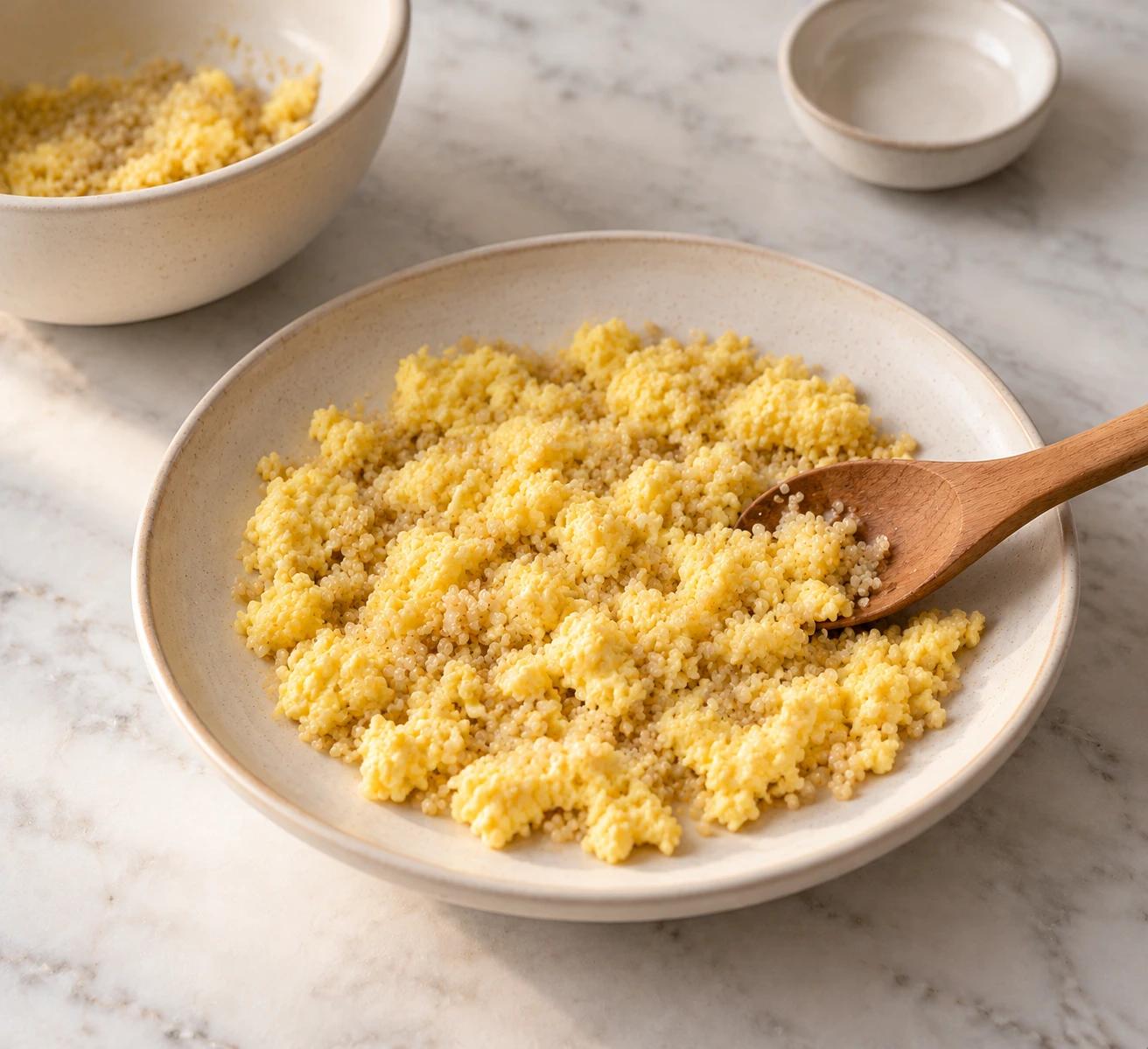
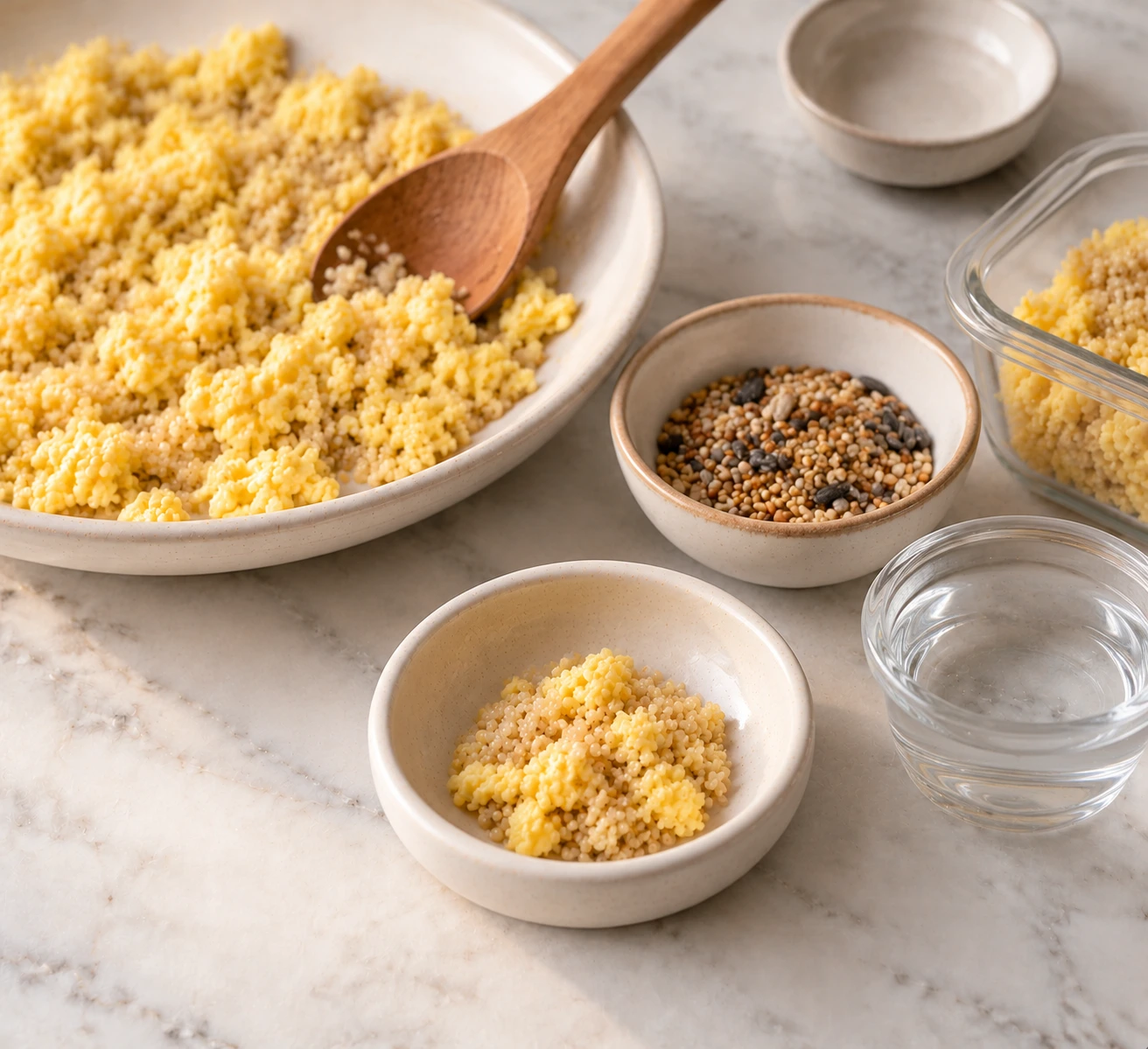
Serve a tiny cooled portion: Once the scramble is completely cool, place only a very small amount in a clean, bird-safe feeding dish. Start with a taste-sized portion suited to your bird's species and body size instead of filling the dish or serving the whole batch. Offer it alongside the bird's normal balanced food and fresh drinking water, and supervise the first serving to see whether your bird investigates and eats comfortably. Promptly remove the snack and any scattered food, especially in a warm room, and wash the feeding dish thoroughly after use. Refrigerate any unused portion promptly in a clean, sealed container, provided it has been handled hygienically.
Made this recipe?
Tap the paw so other pet parents know it’s worth making.
Be the first to make it
Tips & serving
Serve only after the scramble has cooled completely, beginning with a tiny taste-sized portion suited to your bird's species, body size, and established diet. Offer it in a clean dish beside normal balanced food, not as a replacement meal. Supervise the first serving and remove leftovers promptly. Confirm egg and quinoa suitability with an avian veterinarian, and discuss any major diet changes with a veterinarian before making them.
- Offers suitable companion birds a soft cooked texture that differs from their usual dry food without relying on another seed bake.
- Provides a simple food-enrichment opportunity by letting owners introduce a small, carefully prepared ingredient combination and observe their bird's interest.
- Uses a short ingredient list, making it easier to leave out salt, oils, butter, and other unnecessary additions.
- Encourages useful feeding habits, including tiny portions, supervised introduction of unfamiliar foods, and prompt removal of leftovers.
- Cook the quinoa separately and measure it after cooking, because dry quinoa expands and can make a small recipe much larger than intended.
- Use low heat when scrambling the egg so the curds remain soft instead of developing a dry, browned crust.
Storage
Freshly prepared scramble is best offered immediately after it has cooled. If a portion must be saved, place it in a clean, shallow, airtight container and refrigerate promptly at 4°C or colder. Do not leave cooked egg sitting on the counter for extended periods. Discard food with an unusual smell, visible contamination, or uncertain storage history. Reheating is not a substitute for safe storage.
Substitutions
If quinoa is unsuitable for your bird or is not part of its veterinarian-recommended feeding options, omit it rather than replacing it automatically. Ask an avian veterinarian about an appropriate plain cooked grain or other food for the particular species. If egg is not appropriate for your bird, do not substitute another protein simply because it is commonly eaten by people. Skip this recipe and obtain species-specific feeding advice before choosing an alternative. For a bird that prefers a firmer texture, use slightly less water and keep the cooked egg in small, soft curds.
Birds recipe FAQ
Can Birds Cooked Quinoa and Egg Breakfast Scramble replace my bird's regular diet?
Treat it as an occasional extra, not a meal plan. Serve only after the scramble has cooled completely, beginning with a tiny taste-sized portion suited to your bird's species, body size, and established diet.
Is fully cooked egg okay for birds?
This recipe uses fully cooked egg in a small, bird-appropriate amount. Skip it if your bird has a known sensitivity, and read the foods-to-avoid note on this page before serving.
How should I store leftovers?
Freshly prepared scramble is best offered immediately after it has cooled. If a portion must be saved, place it in a clean, shallow, airtight container and refrigerate promptly at 4°C or colder.
How should I introduce this snack?
Start with a taste-size portion next to your bird's usual food, and hold off on serving more until you have seen that it agrees with them.
Can all companion birds eat egg and quinoa?
No. Suitability depends on species, individual dietary needs, and any restrictions recommended by an avian veterinarian. Do not assume that a food suitable for one parrot or small companion bird is suitable for every bird. Confirm both ingredients before introducing this recipe.
How much cooked quinoa and egg should I serve?
Start with a tiny taste-sized amount adjusted to your bird's species and body size. The recipe makes several small tasting portions, not one full serving for every bird. Keep the usual balanced diet available and ask an avian veterinarian how occasional extras should fit your bird's feeding plan.
Sources