

These Brussels sprout leaf parcels make a small, fresh offering for your bird, not a substitute for its usual food. The idea is to wrap a little finely chopped vegetable filling in softened leaves, with the size and texture suited to the bird eating them. A budgie, for example, will need different pieces and portions than a large parrot, so adjust the parcels to suit your bird's needs. If your bird is new to any of these vegetables, introduce them gradually rather than serving everything at once. Before making major changes to your bird's regular feeding routine, talk with an avian veterinarian.
Safety first: Offer a small taste the first time and watch your bird for any tummy upset before serving more.
Foods to avoid
Never add salt, stock cubes, sauces, butter, oil, sugar, garlic, onion, chilli, or seasoning blends to these parcels. Avoid mouldy, wilted, spoiled, or pesticide-contaminated leaves, and wash all produce carefully. Remove thick stems that may be difficult to manage and cut the filling to a suitable size to reduce the chance of awkward swallowing. Do not assume that every vegetable, portion, or texture suits every companion bird. The listed vegetables are intended as small supplementary offerings, not a nutritionally complete meal.
Ingredients
Instructions
Wash and Prepare the Leaves: Choose firm, fresh Brussels sprout leaves and discard any with slimy patches, mould, or damaged spots. Rinse them well under cool running water, gently rubbing away any visible dirt. Using a clean knife, trim off the thick, tough central stem without splitting the softer leaf, then place the prepared leaves on a clean plate and discard any damaged pieces.
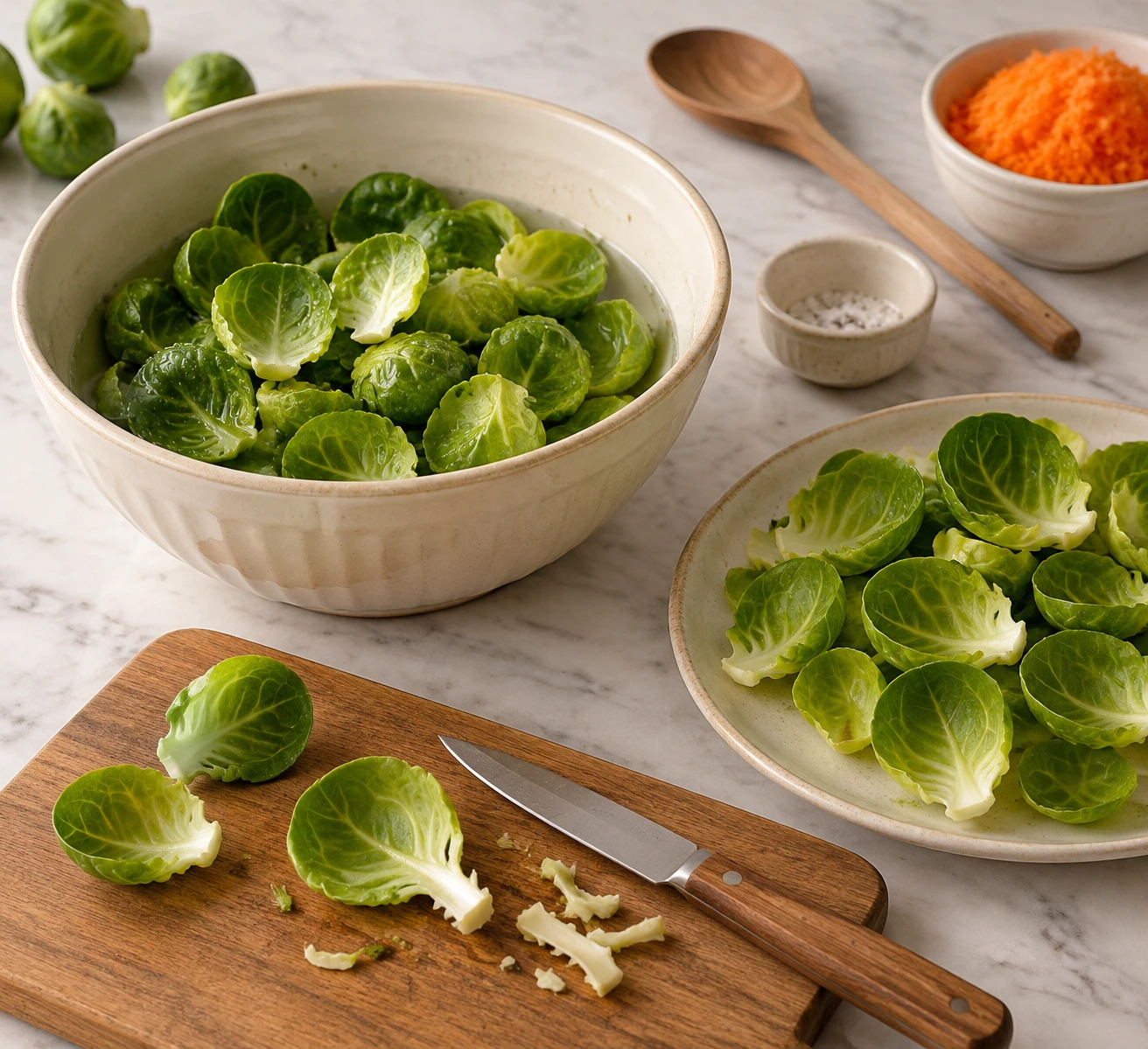
Chop the Vegetable Filling: Finely grate the carrot and chop the red bell pepper, courgette, and broccoli into very small pieces your bird can manage. Remove the pepper seeds and stem, and use only clean, fresh vegetables with no sauces or seasoning. Mix everything in a small bowl, keeping the filling loose rather than pressing it into a dense paste, and make sure the pieces suit your bird's size and eating habits.
Soften the Leaves Gently: Arrange the prepared leaves in a steaming basket over a small amount of gently simmering water, then cover the pan. Check after about 2 minutes and steam until the leaves are flexible enough to fold while still holding their shape. If they need more time, continue in short intervals for up to about 5 minutes, depending on thickness; add no salt, oil, stock, or seasoning, and let the leaves cool completely on the clean plate before assembling.
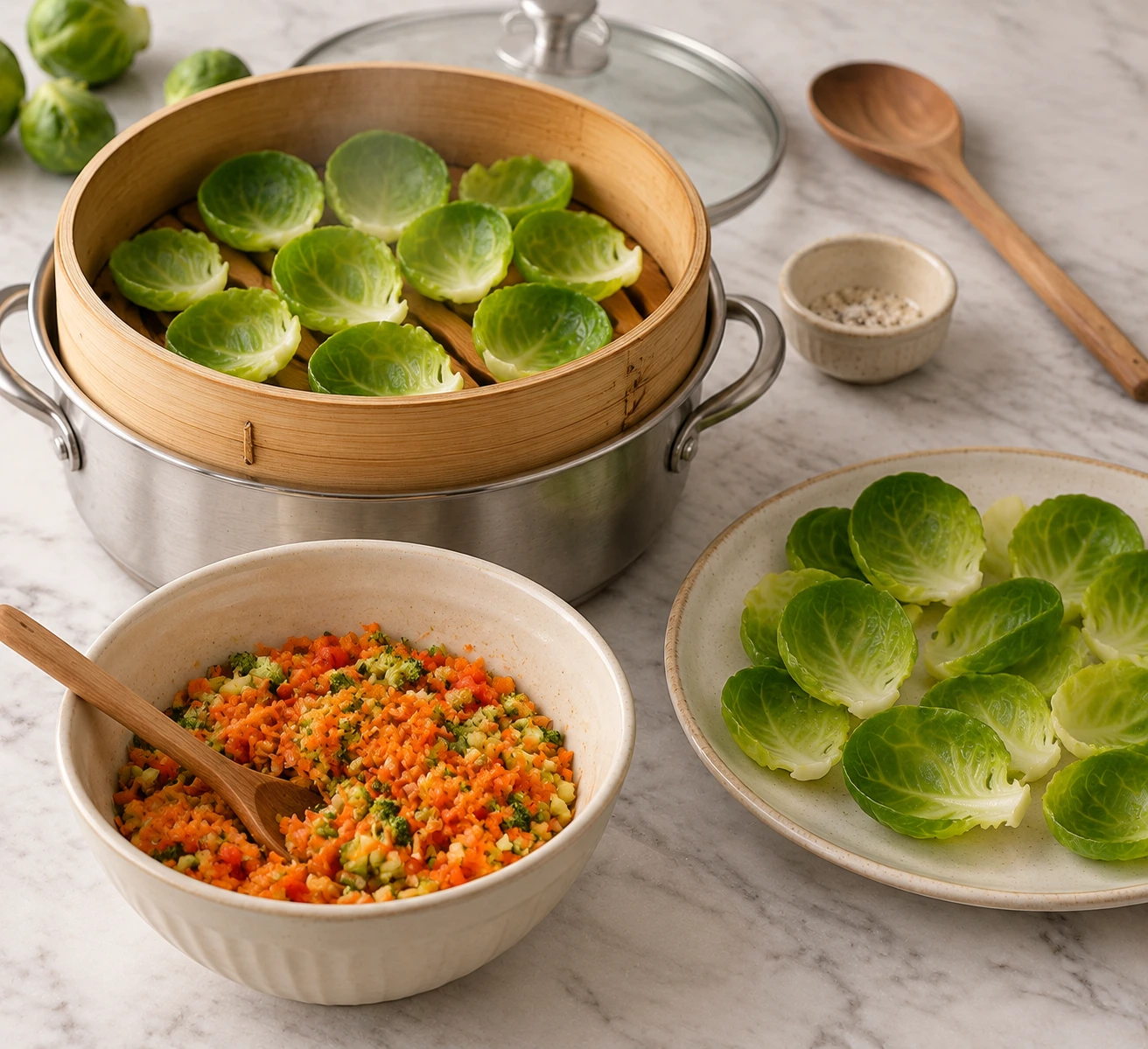
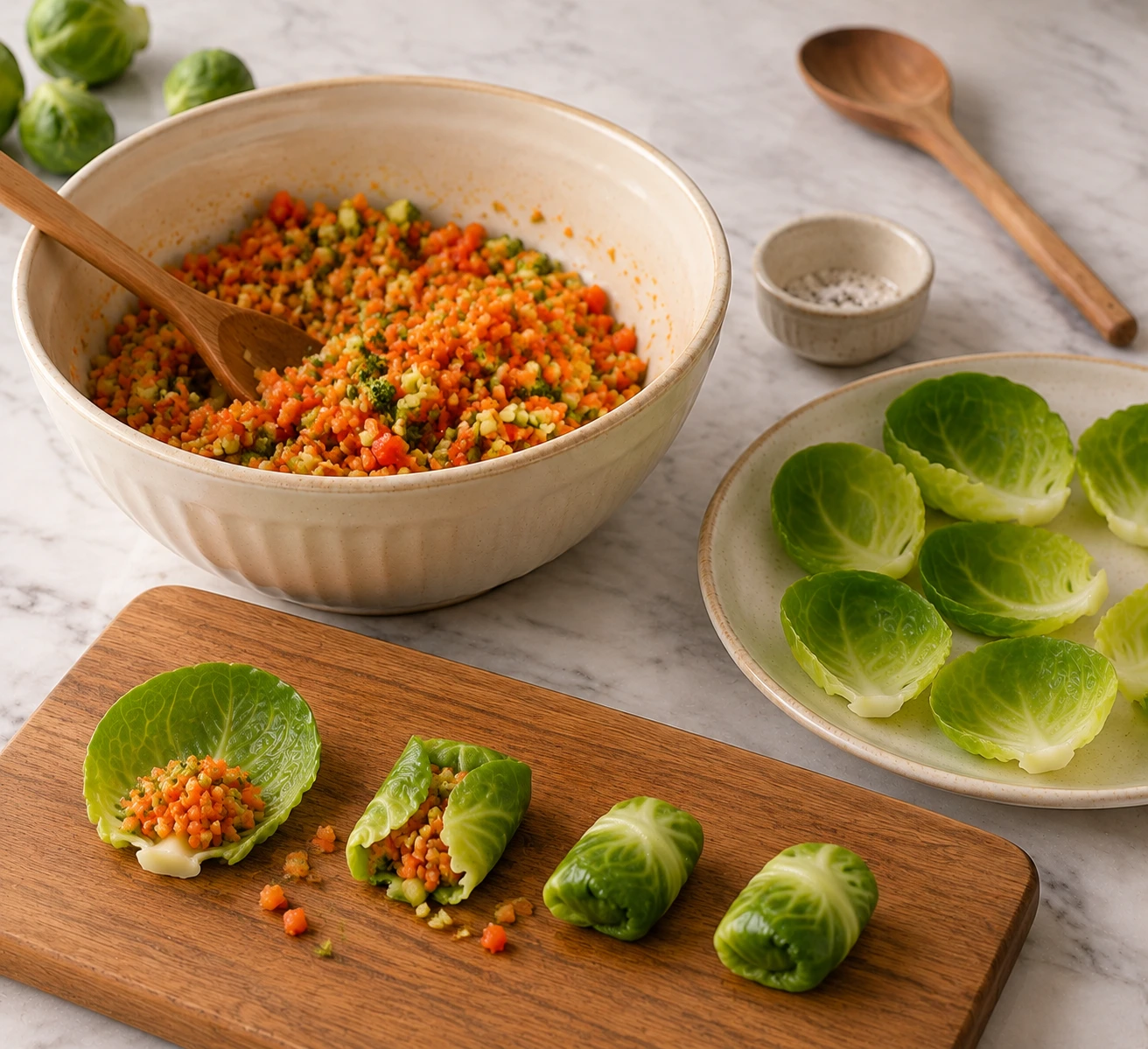
Fill and Fold the Parcels: Lay each cooled leaf flat with the trimmed stem end facing you. Add a very small pinch of the chopped vegetable mixture near the base, leaving enough room at the edges to fold the leaf without tearing it. Fold the sides inward and roll loosely toward the tip, stopping if the leaf starts to split; make just a few parcels and keep any extra filling separate rather than overstuffing them.
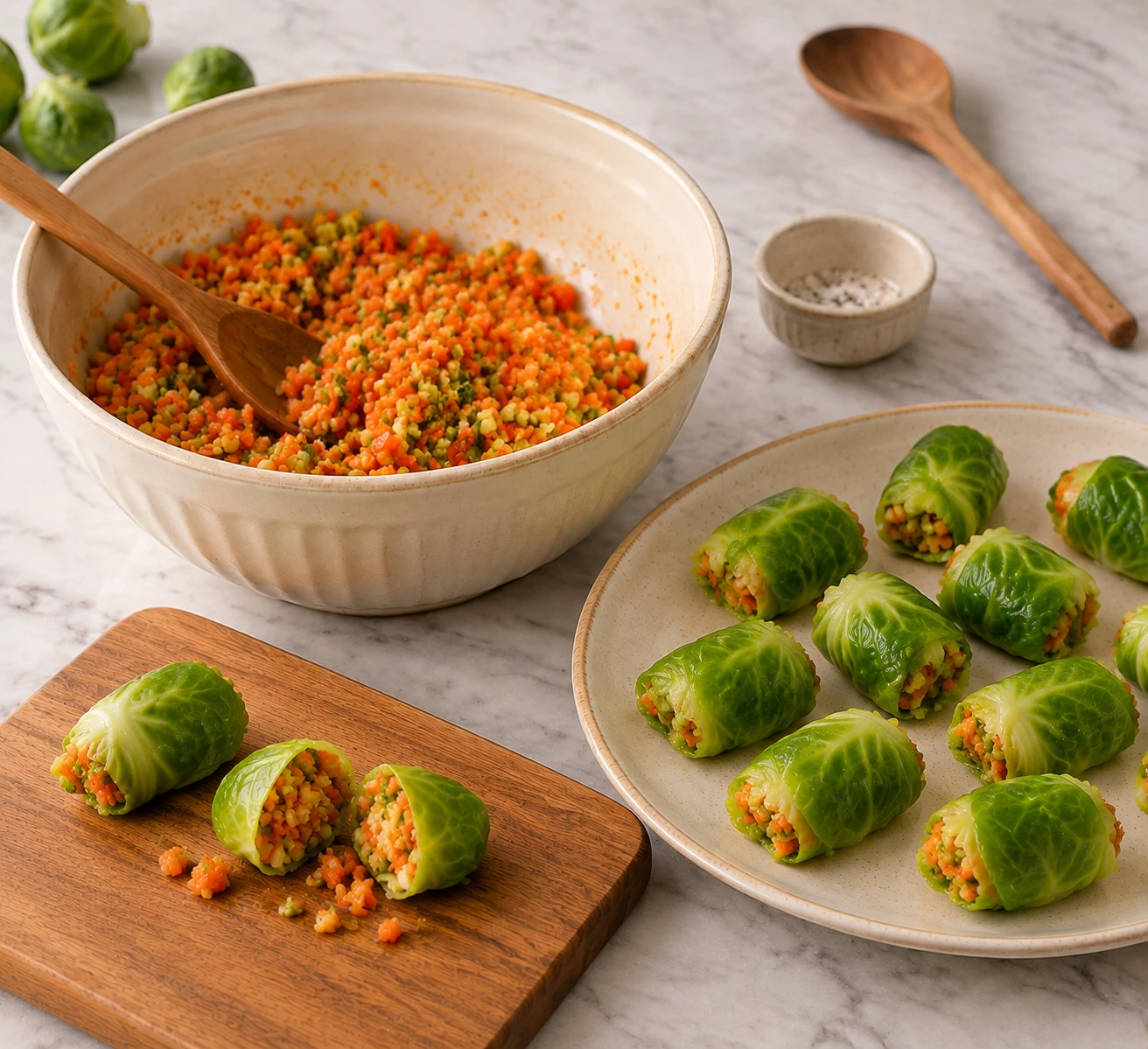
Cool and Serve a Small Portion: Arrange the finished parcels on the clean plate and make sure they are completely cool and easy to handle. If needed, tear or cut a parcel into smaller pieces to suit your bird's size and eating style, then offer a small amount alongside its usual appropriate food. Supervise the first offering to check that your bird can pick up and manage the pieces comfortably, and remove leftovers promptly instead of leaving fresh vegetables in the enclosure for an extended period.
Made this recipe?
Tap the paw so other pet parents know it’s worth making.
Be the first to make it
Tips & serving
Offer a small test portion appropriate to the bird's species, body size, normal diet, and ability to handle leafy pieces. A tiny companion bird may need the parcel torn into very small pieces, while a larger bird may manage a small leaf wrap. Introduce unfamiliar vegetables gradually and do not pressure the bird to eat them. These parcels are an occasional snack, not a complete diet or a substitute for species-appropriate formulated food. Discuss major diet changes with an avian veterinarian, especially if your bird has an established feeding plan or special dietary requirements.
- Using whole Brussels sprout leaves creates a different presentation that can make familiar vegetables easier to offer in small portions.
- Finely chopping the filling lets the owner adjust piece size and texture to the individual bird's eating habits.
- Preparing only a few parcels reduces waste when a bird is still learning to accept an unfamiliar vegetable.
- Keeping the ingredients plain makes it easier to avoid unnecessary salt, sauces, added fats, and seasoning.
- Choose smaller, flexible outer leaves when possible, because very large or thick leaves are harder to fold neatly around a modest filling.
- Keep the vegetable pieces consistently tiny so the filling stays inside the leaf instead of spilling out when you fold it.
Storage
For best texture and food hygiene, prepare only what you expect to offer during the current feeding period. Do not store parcels that have been in the bird's enclosure or touched by the bird's beak alongside untouched food. Discard pieces that have been left out for an extended period, become warm, wet, slimy, or contaminated, and never rely on smell alone to judge freshness. Do not freeze the finished parcels for routine use.
Substitutions
If Brussels sprout leaves are unavailable, a clean, fresh, bird-appropriate leafy vegetable that folds without tearing may be used instead. Check suitability for the specific species before substituting, since not every leafy vegetable is appropriate in every quantity. The filling can be adjusted using small amounts of other plain, bird-safe vegetables, such as finely chopped cauliflower or additional carrot. Replace ingredients individually, not with seasoned frozen mixes, pickled vegetables, canned vegetables containing salt, or prepared salad dressings.
Birds recipe FAQ
Can Birds Brussels Sprout Leaf Savory Parcels replace my bird's regular diet?
Treat it as an occasional extra, not a meal plan. Offer a small test portion appropriate to the bird's species, body size, normal diet, and ability to handle leafy pieces.
Can birds have brussels sprout leaves?
This recipe uses brussels sprout leaves in a small, bird-appropriate amount. Skip it if your bird has a known sensitivity, and read the foods-to-avoid note on this page before serving.
How should I store leftovers?
For best texture and food hygiene, prepare only what you expect to offer during the current feeding period. Place any unused, unserved parcels in a clean, covered container in the refrigerator promptly, and use them within 24 hours as a cautious.
What's the safest way to try this with my bird?
Offer a small amount beside regular food, introduce one new recipe at a time, and watch appetite, stool, skin, and behavior for a day or two.
Can birds eat Brussels sprout leaves?
Brussels sprouts are commonly used as a vegetable for companion birds, but suitability and quantity depend on the species and its overall diet. Offer thoroughly washed, plain leaves in a modest amount, and ask an avian veterinarian if you are unsure whether Brussels sprouts suit your particular bird.
Should I cook the Brussels sprout leaves before filling them?
Brief steaming can make thicker leaves more flexible and easier to fold, but they should not become mushy or fall apart. Let them cool completely before adding the filling. If your bird is more comfortable with raw vegetables and can manage the texture safely, ask your avian veterinarian whether raw leaves are appropriate for its diet.
Sources