

These Chicken Liver and Egg Sheet Crisps for Cats turn a small amount of rich liver into thin, breakable treats that are simple to portion. The liver is cooked through first, then blended with egg, oat flour, and water until smooth enough to spread into a paper-thin sheet. Baking until dry gives the treats a brittle snap instead of a soft, cakey texture. Keep these as occasional treats, not a meal or a substitute for complete and balanced cat food. They should stay completely plain, with no salt, onion, garlic, butter, or seasoning. Because undercooked chicken liver can carry harmful bacteria, make sure it reaches 165 F before blending, and always let the baked sheet cool fully before serving.
Safety first: Start with a small portion beside your cat's usual food and confirm bigger diet changes with your veterinarian.
Foods to avoid
Do not use raw or undercooked chicken liver, and do not judge poultry liver safety by color alone. Cook it to at least 165 F and prevent raw liver from contaminating utensils or surfaces used for the finished treats. Keep the recipe plain with no salt, onion, garlic, chives, butter, sauces, spice blends, or other seasoning. These crisps are treats only and should never replace a complete and balanced feline diet.
Ingredients
Instructions
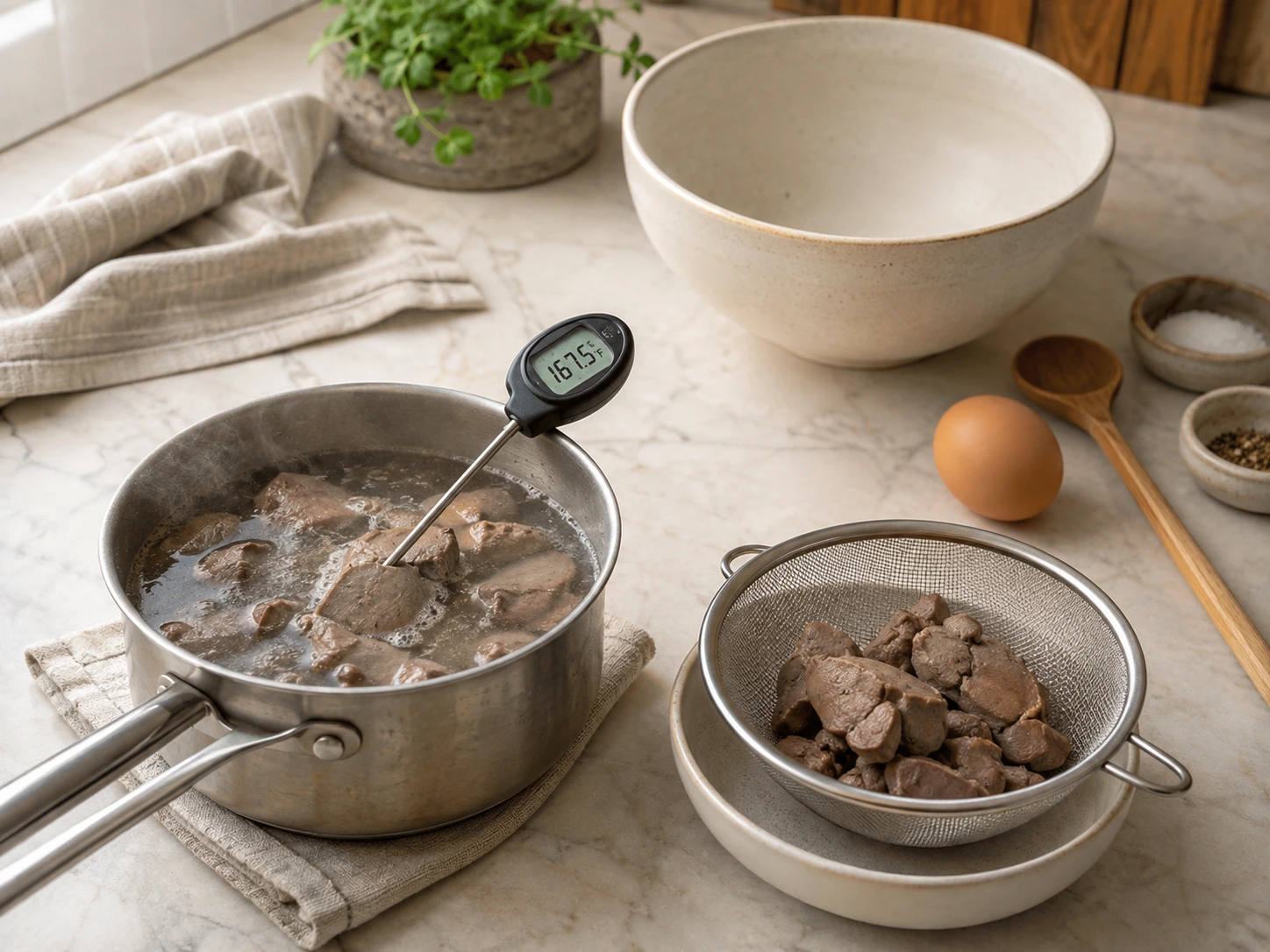
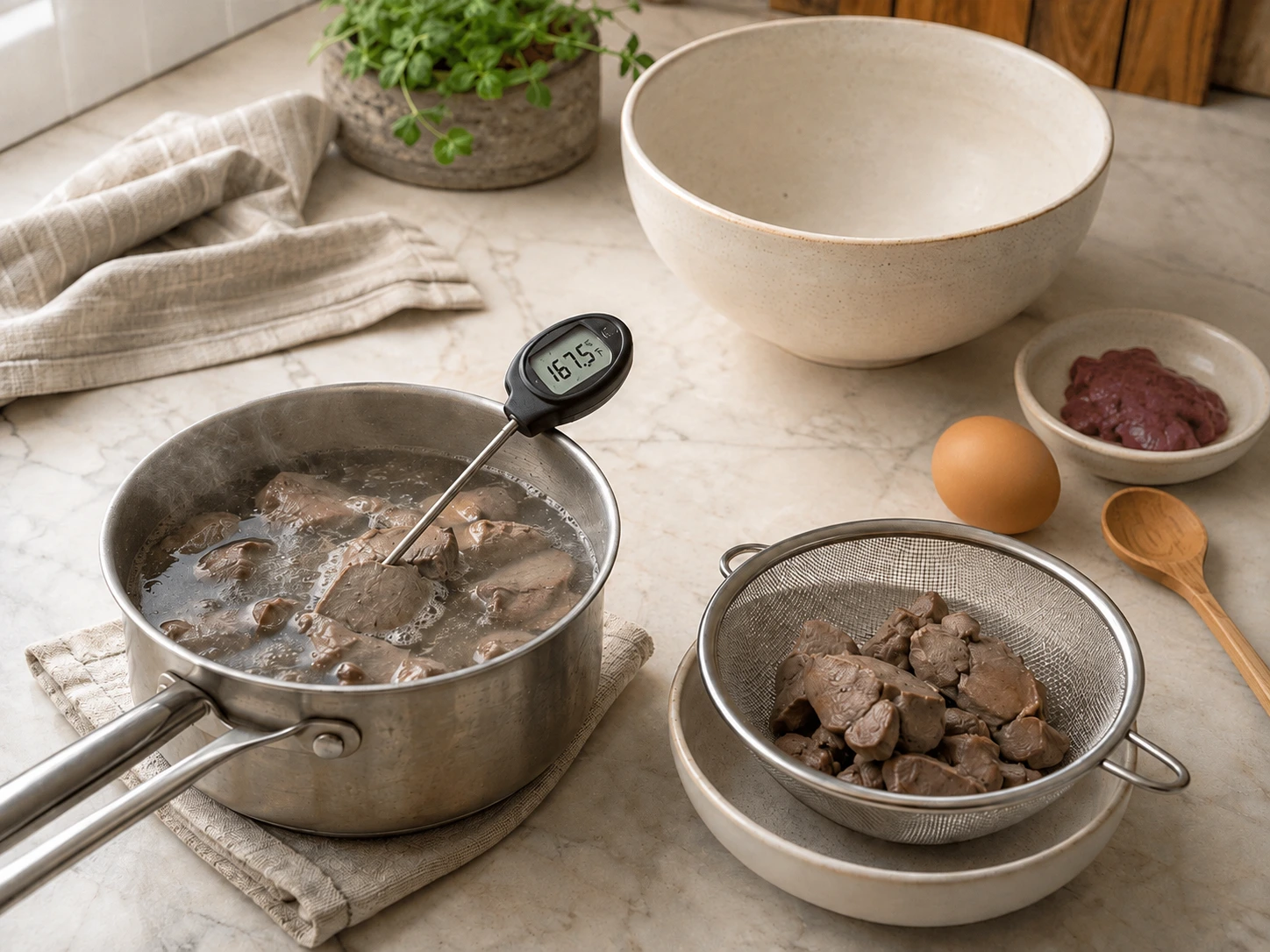
Cook the liver thoroughly: Place the trimmed chicken liver in a small saucepan and add enough water to cover it. Bring to a gentle simmer and cook until the thickest piece reaches at least 165 F on a food thermometer, usually about 8 to 10 minutes depending on size. Drain well and let the liver cool just enough to handle while you preheat the oven to 325 F.
Blend the crisp mixture: Transfer the drained cooked liver to the food processor. Add the egg, oat flour, and 2 tablespoons of water, then blend until smooth and evenly colored, with no large liver pieces remaining. Scrape down the sides once if necessary so the batter has a uniform, spreadable consistency.
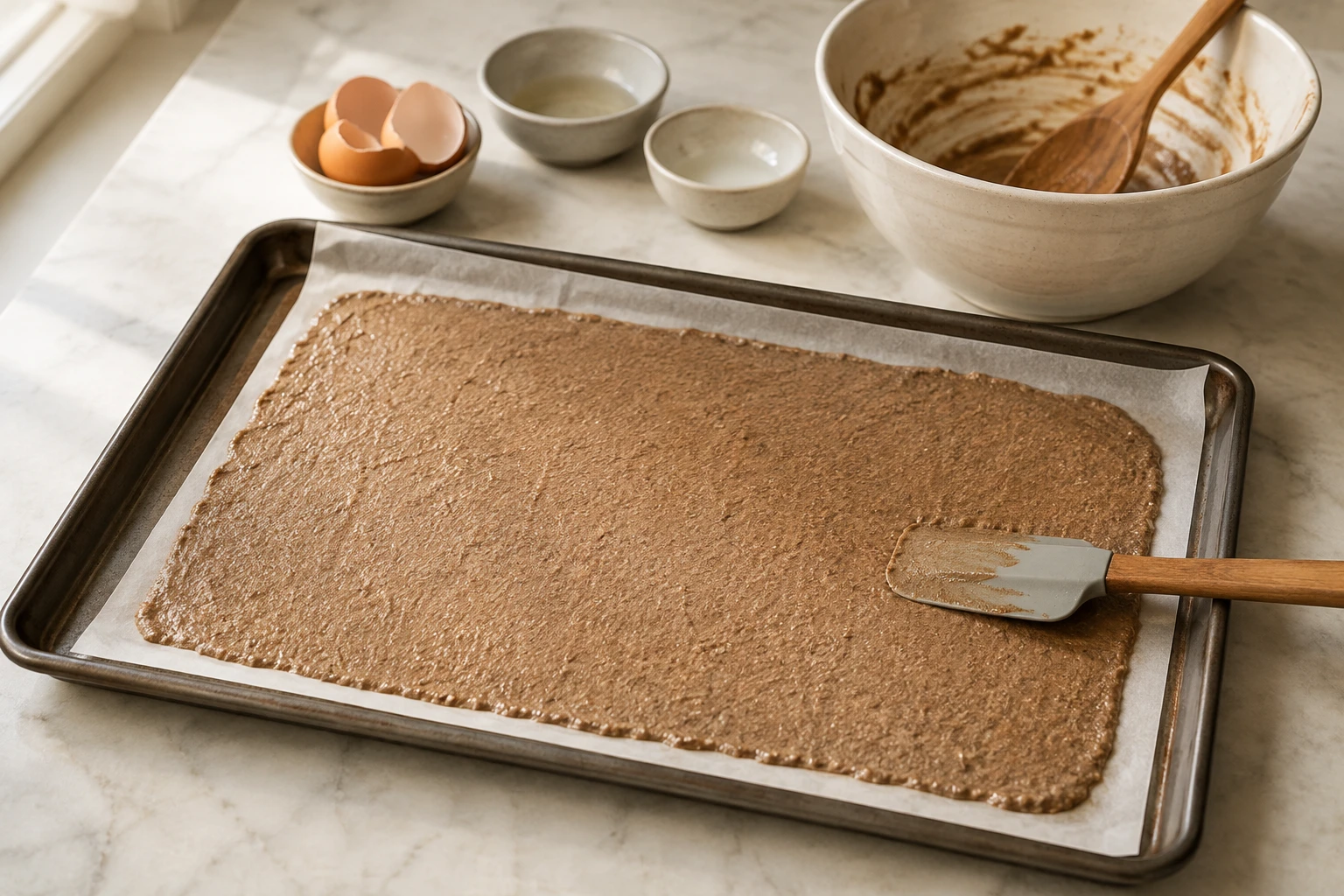
Spread a very thin sheet: Scrape the liver mixture onto the parchment-lined baking sheet. Use the spatula to spread it into a very thin, even rectangle, aiming for roughly 1/8 inch thick or slightly thinner without leaving bare patches. Take extra care with the center, since thicker areas will stay softer after the edges have dried.
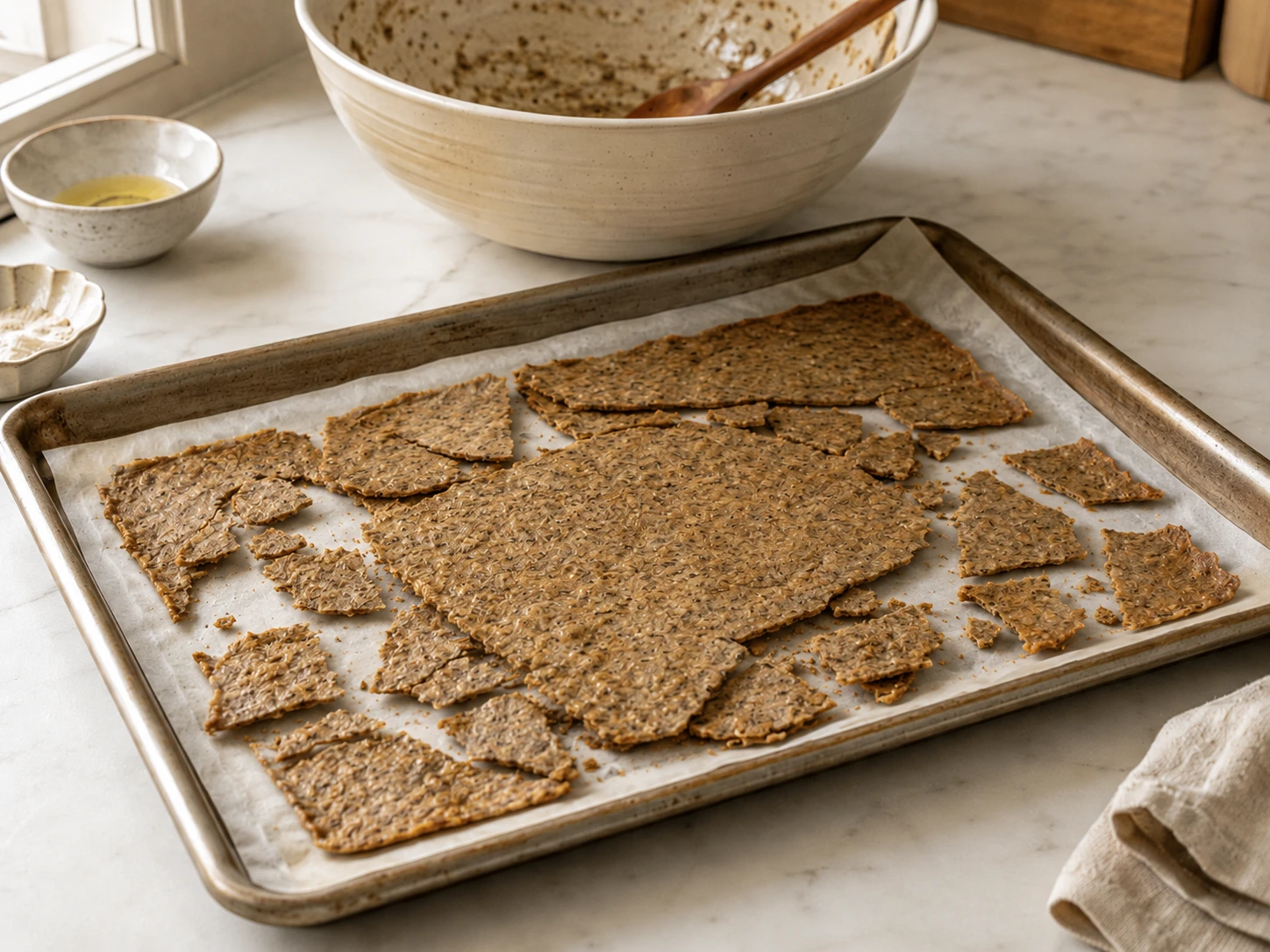
Bake until dry: Bake the thin sheet at 325 F for about 24 to 28 minutes, rotating the pan halfway through for more even drying. It is ready when the surface looks dry, the edges are lightly browned, and the center feels firm rather than wet or spongy. Keep an eye on the thin edges so they do not become deeply browned or burned.
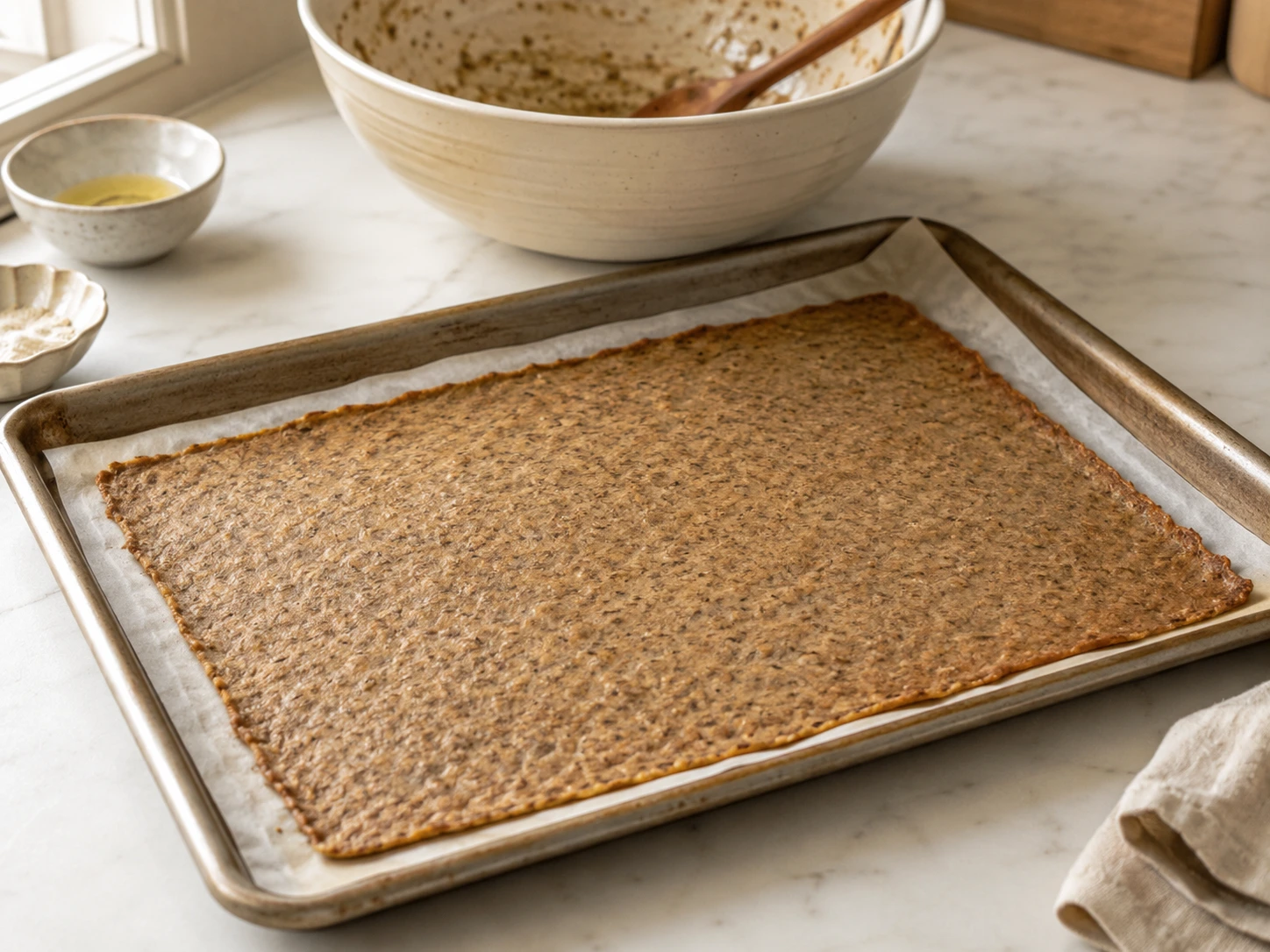
Cool and break into crisps: Let the baked sheet cool completely on the pan before checking the texture. Once cool, gently peel it from the parchment and break it into very small irregular crisps suitable for treating a cat. The pieces should snap rather than bend; if the center is still flexible, return it to a low oven briefly until dry, then cool again before storing.
Made this recipe?
Tap the paw so other pet parents know it’s worth making.
Be the first to make it
Tips & serving
Break the cooled sheet into crumb-sized or very small crisp pieces and offer only a small amount at a time. Liver is a rich organ meat, so these crisps are best kept as occasional treats rather than a daily food. Keep all treats combined to about 10 percent or less of your cat's daily calories, with complete and balanced cat food providing the main diet. Major diet changes, frequent homemade feeding, or questions about treats for a cat with individual dietary needs should be discussed with a veterinarian.
- Thin sheet breaks into very small pieces for easier portion control during treating or training.
- Dry crisp texture adds variety for cats that enjoy brittle treats instead of soft homemade bites.
- Blending the liver and egg creates an even texture without large organ meat chunks.
- Spread the mixture as evenly as possible because thick patches stay chewy while thin edges can brown too quickly.
- Use a food thermometer in the thickest liver piece before blending, since color alone cannot confirm safe doneness.
- Cool the baked sheet completely before breaking it, because residual warmth can make the center seem softer than it will be.
Storage
Place a small piece of parchment between layers if they are very brittle, and discard the batch if it develops an unusual odor, visible moisture, or mold. Thaw only the amount you plan to use in the refrigerator, then serve once completely thawed and dry.
Substitutions
If oat flour is unavailable, pulse plain rolled oats into a very fine flour and measure 1/4 cup after grinding. Do not use flavored oatmeal, baking mixes, seasoned crumbs, or flour blends containing added salt or sweeteners. The egg is important for binding this thin sheet. If your cat should avoid egg for any reason, choose a different tested treat recipe rather than guessing at an egg-free replacement.
Cats recipe FAQ
Can I serve this treat every day?
Treat it as an occasional extra, not a meal plan. Break the cooled sheet into crumb-sized or very small crisp pieces and offer only a small amount at a time. Liver is a rich organ meat, so these crisps are best kept as occasional treats rather than a daily food.
Can cats have chicken liver?
This recipe uses chicken liver in a small, cat-appropriate amount. Skip it if your cat has a known sensitivity, and read the foods-to-avoid note on this page before serving.
How do I store this treat?
Refrigerate fully cooled crisps in an airtight container for up to 4 days. Place a small piece of parchment between layers if they are very brittle, and discard the batch if it develops an unusual odor, visible moisture, or mold.
What's the safest way to try this with my cat?
Offer a small amount beside regular food, introduce one new recipe at a time, and watch appetite, stool, skin, and behavior for a day or two.
Can cats have chicken liver crisps every day?
Chicken liver is nutrient dense, so this recipe is better treated as an occasional extra rather than an everyday snack. Keep the pieces tiny, count them within your cat's total treat allowance, and let complete and balanced cat food provide the great majority of daily nutrition.
How do I know when the sheet is crisp enough?
The cooled sheet should feel dry, firm, and brittle enough to snap cleanly rather than fold. A slightly darker edge is fine, but avoid burning. If the center remains flexible after cooling, give it a little more low, gentle oven time before storing.
Sources