

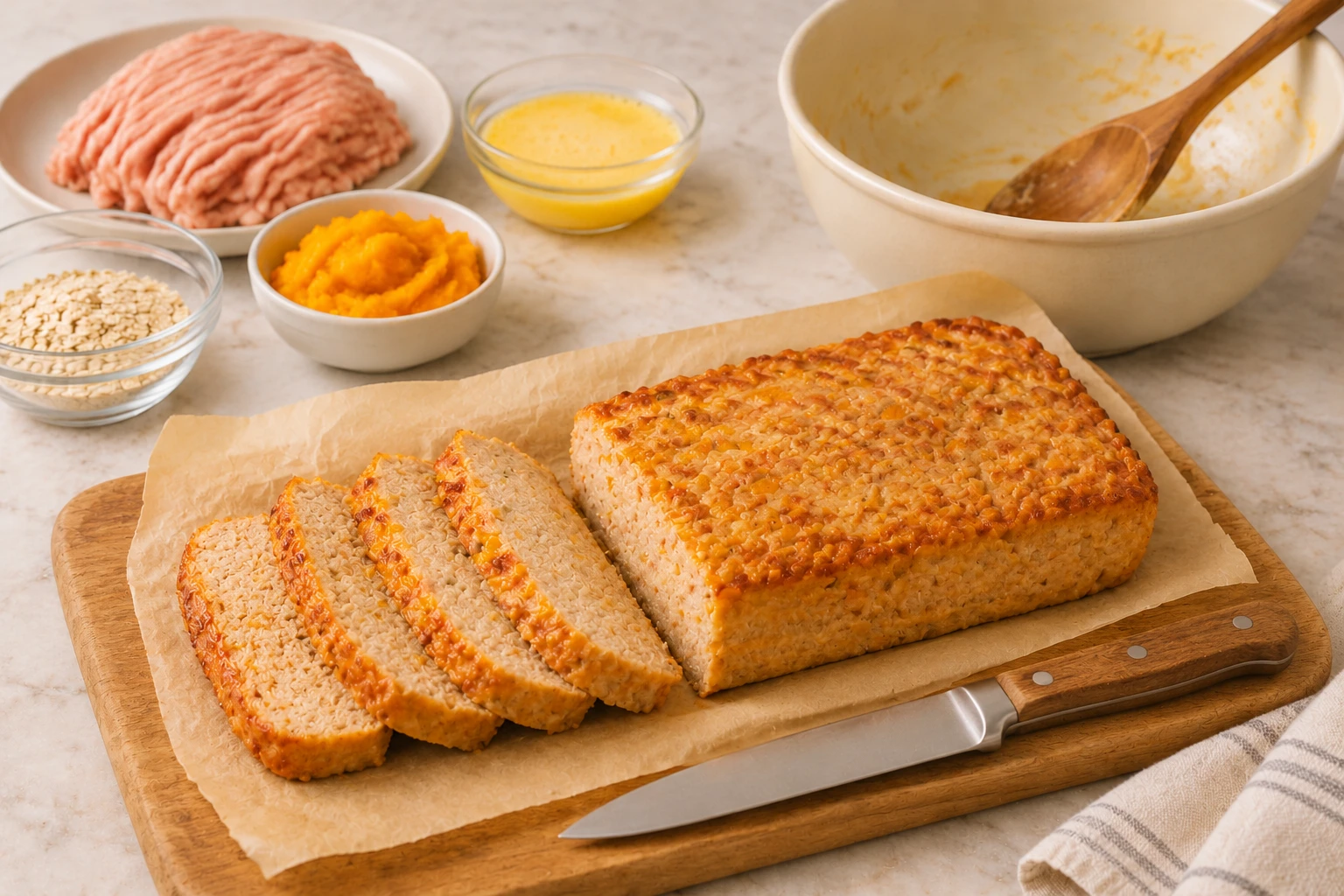
Ground turkey makes a practical starting point for this simple homemade cat topper. It has a mild flavor and a naturally soft texture when cooked gently. A small amount of cooked butternut squash adds moisture to the mixture without taking attention away from the meat. A little egg helps hold everything together, giving the finished loaf enough structure to cut into small portions. The important part is keeping this recipe simple and cooking the turkey thoroughly. Use boneless, unseasoned ground turkey, check the center with a food thermometer, and allow the loaf to cool before slicing. This is a complementary topper rather than a complete cat food, so it should accompany a nutritionally balanced regular diet.
Safety first: Offer a small taste the first time and watch your cat for any tummy upset before serving more.
Foods to avoid
Use only plain, boneless ground turkey. Never add cooked or raw poultry bones, skin with heavy seasoning, onion, garlic, chives, leeks, salt, pepper, stock cubes, gravy, butter, cooking sauces or artificial sweeteners. Do not use raw turkey or serve an undercooked center. Avoid squash peel, seeds and stringy material in this recipe. Check the ingredient labels of any packaged products, particularly ground turkey and oats, to make sure they contain no added seasoning.
Ingredients
Instructions
Prepare the Butternut Squash: Peel the butternut squash and remove all seeds and stringy material. Cut approximately 40 g of flesh into small, evenly sized cubes. Place them in a small saucepan with enough water to cover the bottom and simmer gently until completely tender, usually 10 to 15 minutes. Drain thoroughly and mash with a fork until smooth. Allow the squash to cool before adding it to the turkey. Do not add salt, butter, oil, garlic, onion or seasoning. Measure the cooked squash rather than relying on its raw weight, so the amount of moisture in the mixture stays consistent.
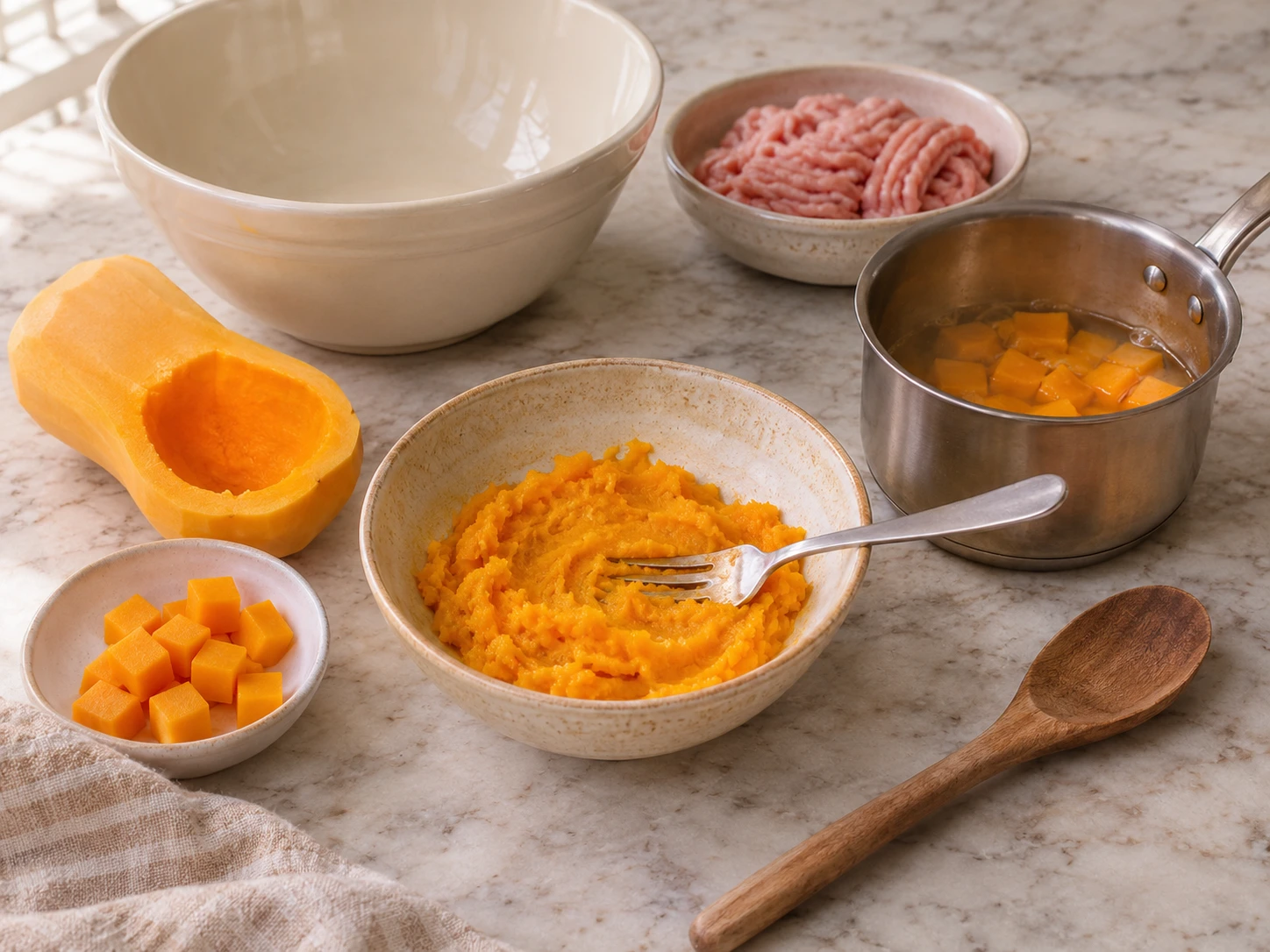
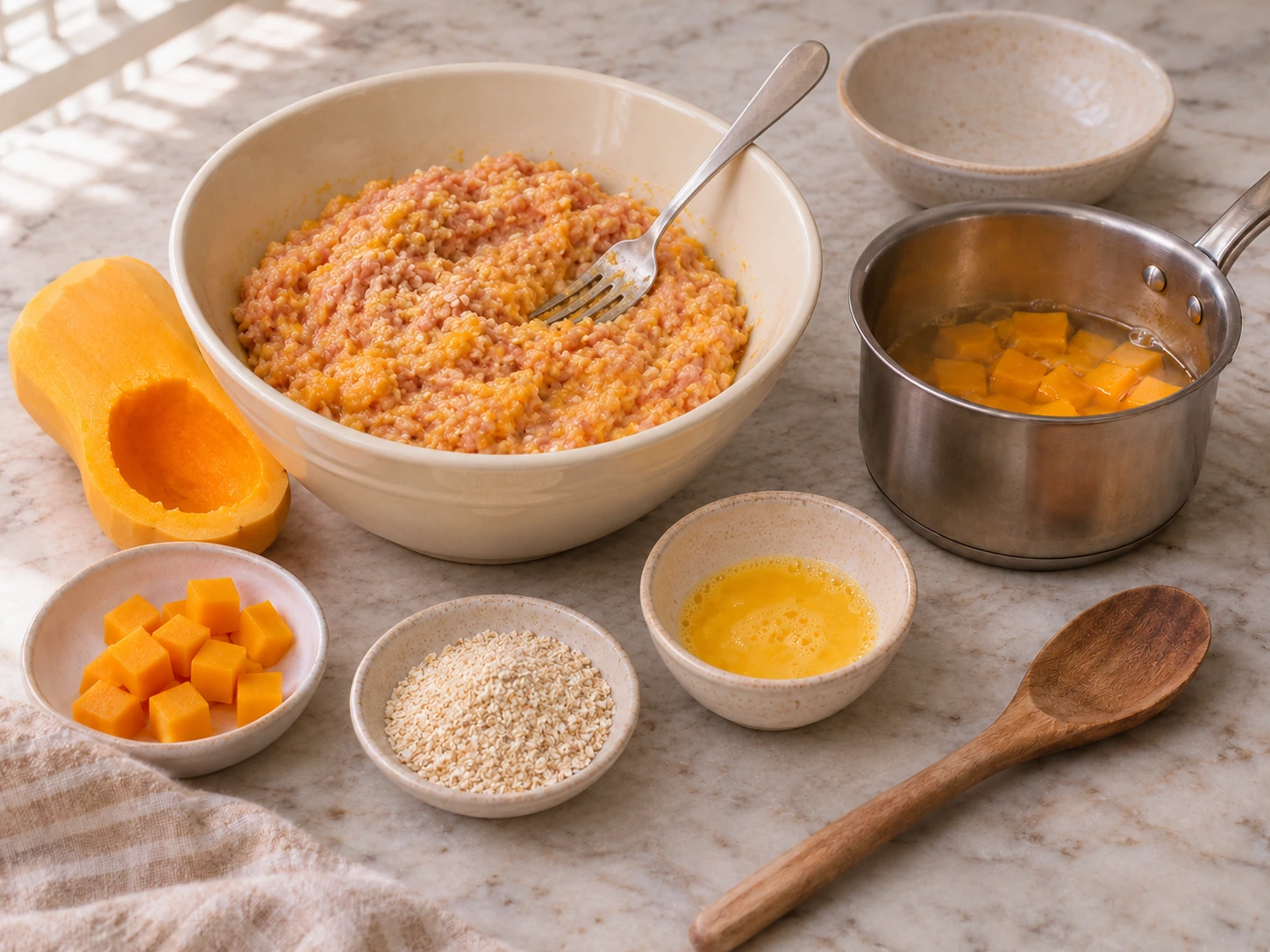
Mix the Turkey and Binding Ingredients: Place the boneless ground turkey in a clean medium mixing bowl. Add the cooled mashed butternut squash, beaten egg and finely ground plain oats. Gently combine everything with a fork or clean hands until the ingredients are evenly distributed. Avoid vigorous mixing or compacting the meat, which can make the finished loaf unnecessarily dense. The mixture should be moist but should hold together when pressed lightly. If it feels unusually dry, add a teaspoon of water and mix again. Keep the raw mixture refrigerated if you are not ready to fill the tin immediately, and wash hands and utensils thoroughly after handling raw poultry.
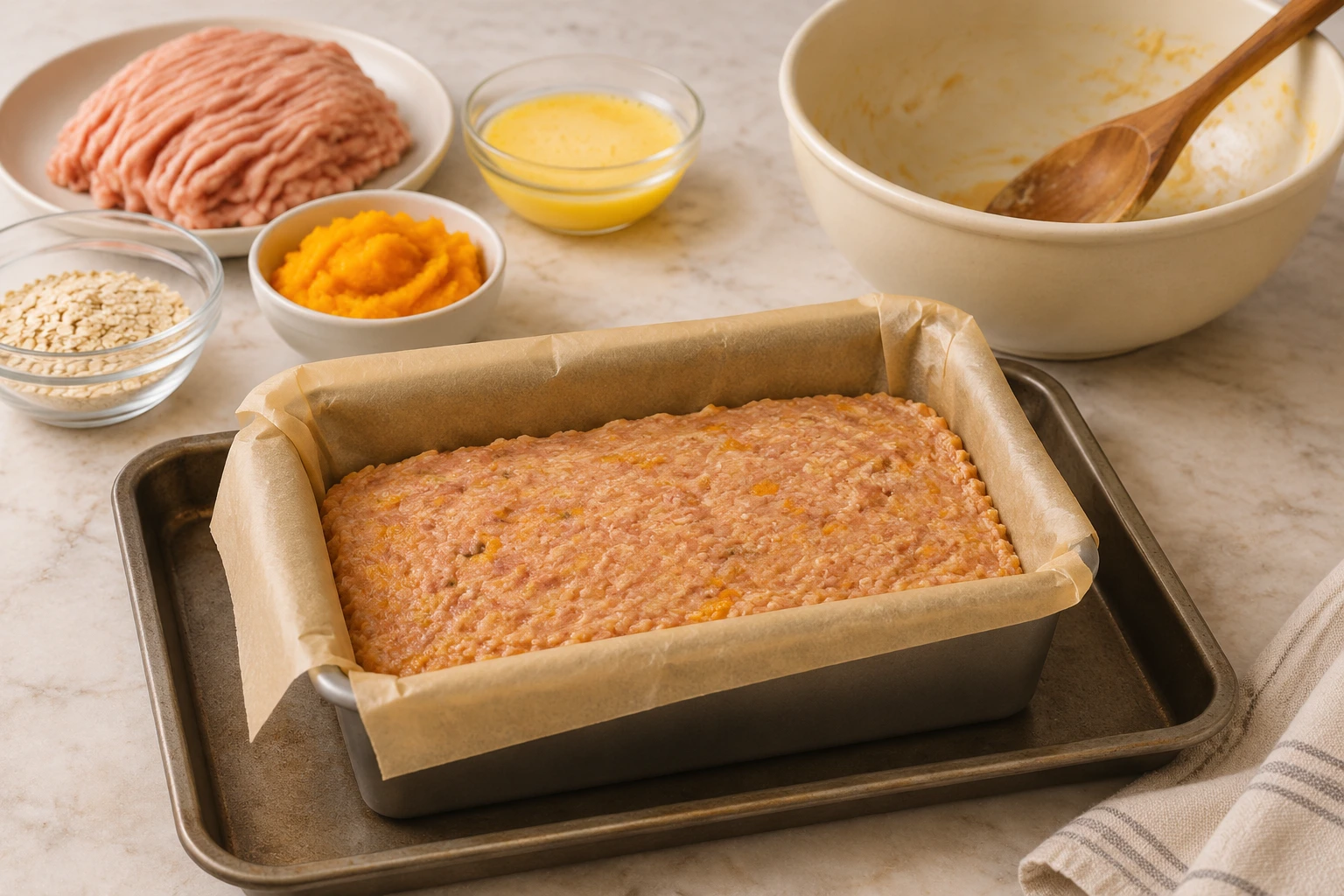
Shape the Meatloaf in the Tin: Preheat the oven to 175°C (350°F). Line the small loaf tin with baking parchment, leaving enough paper over the sides to help lift the cooked loaf out later. Transfer the turkey mixture into the tin. Press it gently into the corners and smooth the surface so the mixture has an even depth of approximately 4 to 5 cm. Avoid packing it too tightly. An even thickness helps the center cook at the same rate as the edges. Place the tin on a baking tray to make handling easier and to catch any moisture that escapes during cooking.
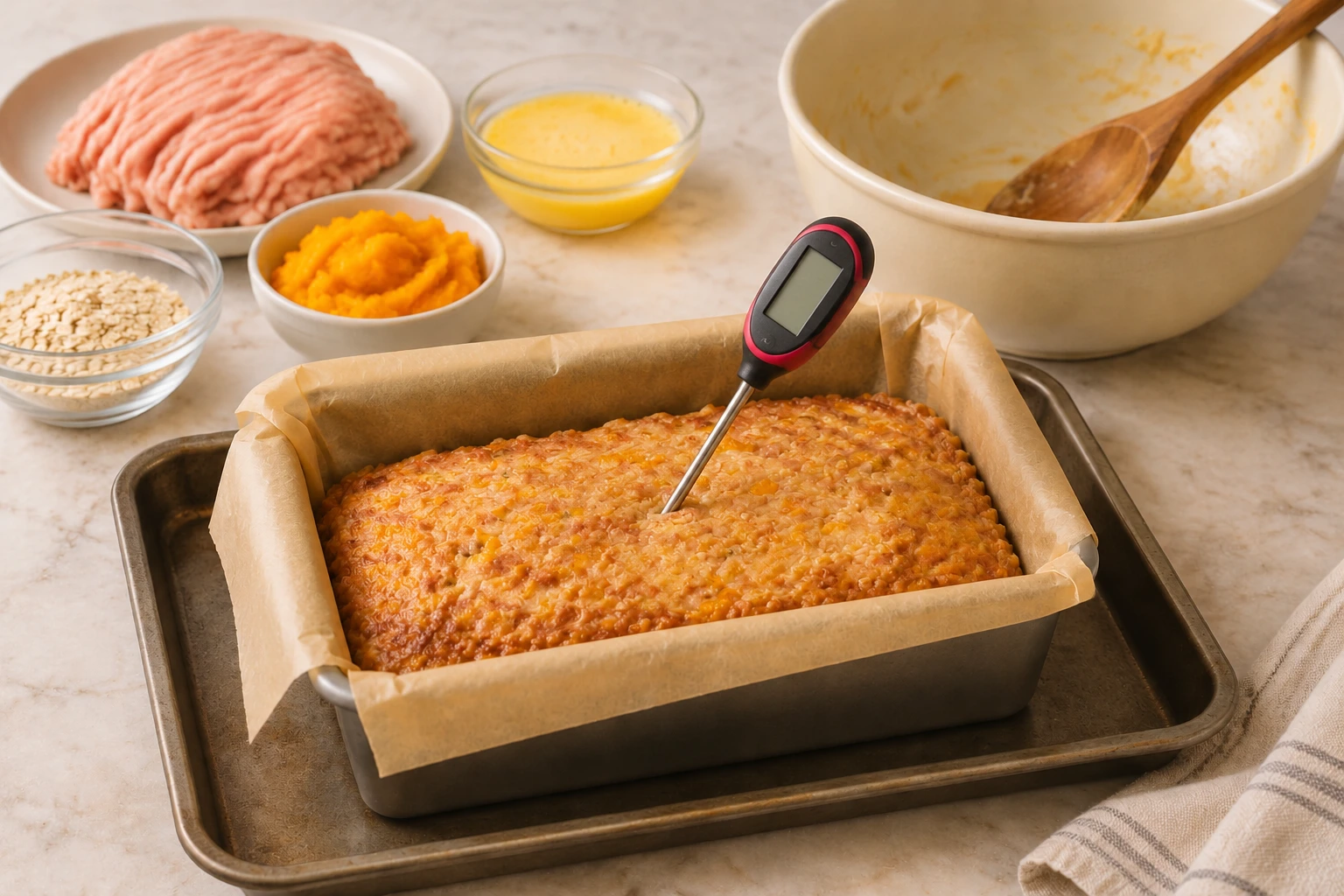
Bake Until the Center Is Safe: Place the loaf tin in the preheated oven and bake for approximately 35 to 45 minutes. Cooking time will depend on the thickness of the loaf and the oven, so do not use the clock as the only test of doneness. Insert a clean food thermometer into the thickest central section without touching the bottom of the tin. The turkey must reach an internal temperature of at least 74°C (165°F). If the center has not reached this temperature, return the loaf to the oven and check again after a few minutes. Ground poultry must be thoroughly cooked because harmful bacteria may be present even when the outside looks done. Remove the loaf once the correct temperature is
Cool and Slice Into Small Portions: Remove the loaf from the oven and let it rest in the tin briefly. Lift it out using the parchment and transfer it to a clean plate or cutting board. Allow it to cool completely before cutting. Once cool, use a sharp clean knife to make small, neat slices approximately 5 to 8 mm thick. The loaf should hold its shape while remaining soft enough to break apart easily with a fork. If the center seems too soft to slice cleanly, refrigerate the cooled loaf for 30 to 60 minutes before cutting. Divide the portions into small airtight containers and refrigerate or freeze promptly. Never serve the meatloaf while it is hot.
Made this recipe?
Tap the paw so other pet parents know it’s worth making.
Be the first to make it
Tips & serving
Let each slice reach room temperature before serving, then crumble a small piece over your cat's usual complete and balanced wet or dry food. Start with approximately one teaspoon and observe whether your cat enjoys the texture. Keep all treats and complementary foods together within roughly 10% of daily calories, unless your veterinarian recommends otherwise. This meatloaf is not nutritionally complete and should never replace regular balanced cat food. Discuss major diet changes with a veterinarian before introducing them, particularly if your cat follows a prescribed diet or has specific nutritional requirements.
- The turkey-based mixture gives owners a straightforward way to prepare a meat-focused addition using a familiar, readily available protein.
- The firm but tender loaf can be sliced into consistent portions, making it easier to control how much homemade food accompanies regular cat meals.
- A small quantity of cooked butternut squash contributes moisture and a soft texture without making vegetables the main ingredient.
- The recipe uses a short list of recognizable ingredients, so owners can check exactly what goes into each prepared portion.
- Choose plain ground turkey without added broth, flavorings, preservatives or seasoning whenever possible.
- Cook and cool the squash completely before mixing so it does not warm the raw poultry mixture.
Storage
Refrigerate completely cooled meatloaf in a clean airtight container at 4°C (40°F) or below. Divide it into small portions before storing so you only need to open the amount required for each serving. For longer storage, arrange individual slices in a single layer in a freezer-safe container, separating them with small pieces of baking parchment.
Substitutions
Plain boneless ground chicken can replace the ground turkey in the same quantity. It should also reach an internal temperature of 74°C (165°F), checked in the center. Expect a slightly different texture depending on the fat content. Cooked pumpkin can replace the butternut squash in an equal measured quantity. Use plain fresh pumpkin or plain cooked pumpkin without seasoning, sugar or other additions. Drain excess moisture before mashing. If you prefer not to use oats, omit them and increase the egg slightly only if necessary to help the mixture hold together.
Cats recipe FAQ
Can I serve this topper every day?
Treat it as an occasional extra, not a meal plan. Let each slice reach room temperature before serving, then crumble a small piece over your cat's usual complete and balanced wet or dry food.
Can cats have boneless ground turkey?
This recipe uses boneless ground turkey in a small, cat-appropriate amount. Skip it if your cat has a known sensitivity, and read the foods-to-avoid note on this page before serving.
How long does Cats Turkey and Butternut Savory Meatloaf keep?
Refrigerate completely cooled meatloaf in a clean airtight container at 4°C (40°F) or below. Divide it into small portions before storing so you only need to open the amount required for each serving.
What's the safest way to try this with my cat?
Offer a small amount beside regular food, introduce one new recipe at a time, and watch appetite, stool, skin, and behavior for a day or two.
Can cats eat turkey and butternut squash meatloaf?
Cats can have small amounts of plain, thoroughly cooked turkey and plain cooked butternut squash when these ingredients suit their individual dietary needs. This recipe also contains egg and a little oats. Serve it as an occasional complementary topper, not as a replacement for nutritionally complete cat food.
How do I know when the turkey meatloaf is fully cooked?
Use a food thermometer inserted into the thickest central part of the loaf. The internal temperature must reach at least 74°C (165°F). The outside becoming firm or browned does not guarantee that the center is safe. Return it to the oven if the temperature is too low.
Sources