

Salmon is easy to prepare at home, and baking it gently in the oven keeps the fish tender without the need for oil, butter or seasoning. This topper keeps salmon as the main ingredient, with just a little finely chopped fennel for a mild change in flavour. The vegetable adds something different without taking attention away from the fish. Take your time with the safety checks. Look carefully for pin bones before cooking, make sure the salmon is cooked all the way through and inspect it again when flaking. Serve this as an occasional addition to your cat's usual complete food, not as a balanced homemade diet. Speak with your veterinarian before making major changes to your cat's diet.
Safety first: Offer a small taste the first time and watch your cat for any tummy upset before serving more.
Foods to avoid
Never serve raw or undercooked salmon, smoked salmon, cured fish or salmon prepared with salt, sauces, marinades or seasonings. Avoid garlic, onion, chives, butter and cooking oils. Check carefully for pin bones before and after cooking, since small bones can remain hidden in the flesh. Do not use spoiled fish or leave cooked salmon sitting at room temperature. Fennel should remain a very small ingredient rather than a substantial part of the mixture. This topper is not nutritionally complete and must not replace a complete and balanced cat food.
Ingredients
Instructions
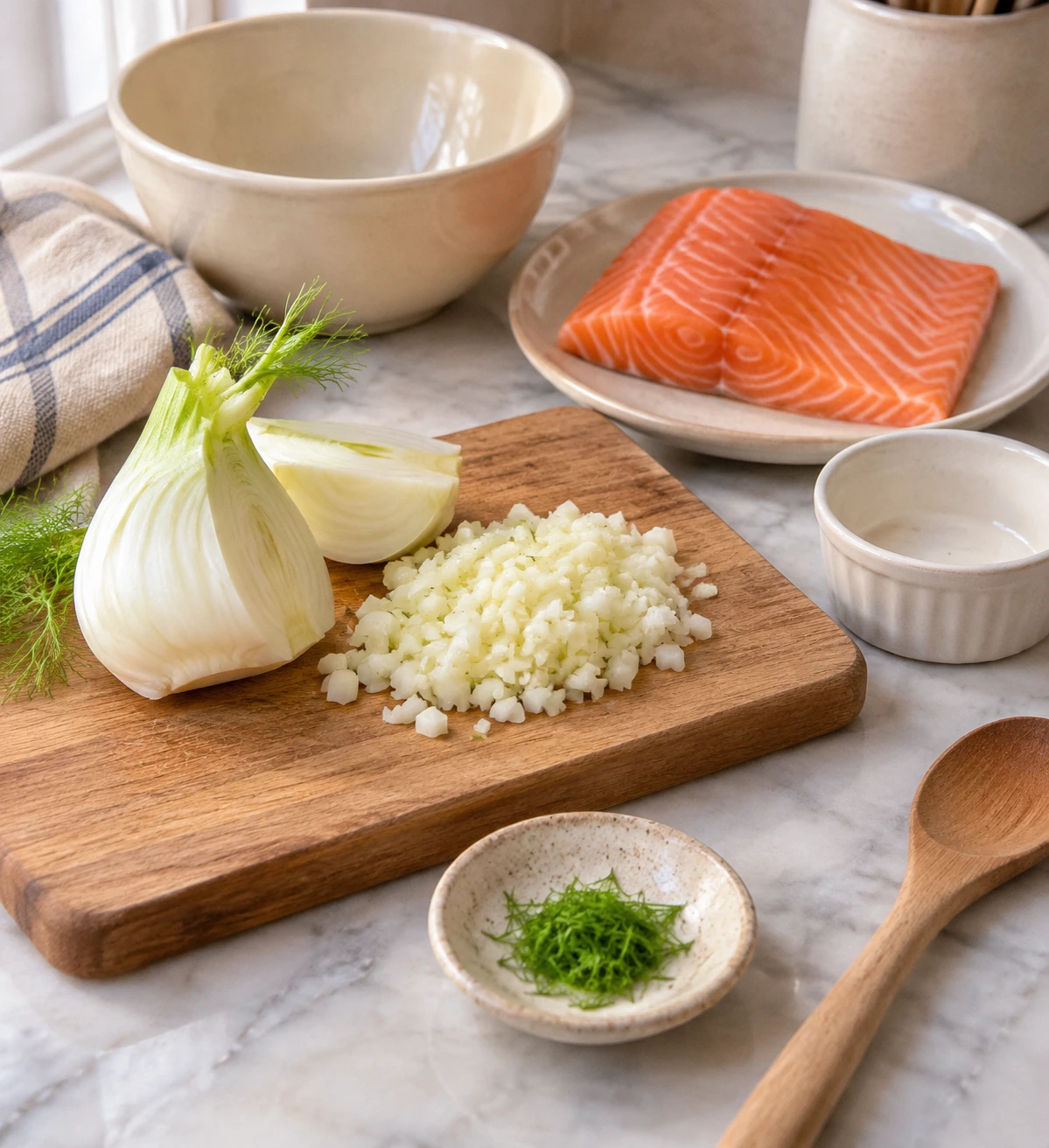
Prepare the Fennel: Preheat the oven to 150°C. Wash the fennel bulb, remove any tough outer layers and finely chop a small 10 g portion. If you're using fennel fronds, chop the teaspoon separately, keeping the overall amount modest so salmon remains the main ingredient.
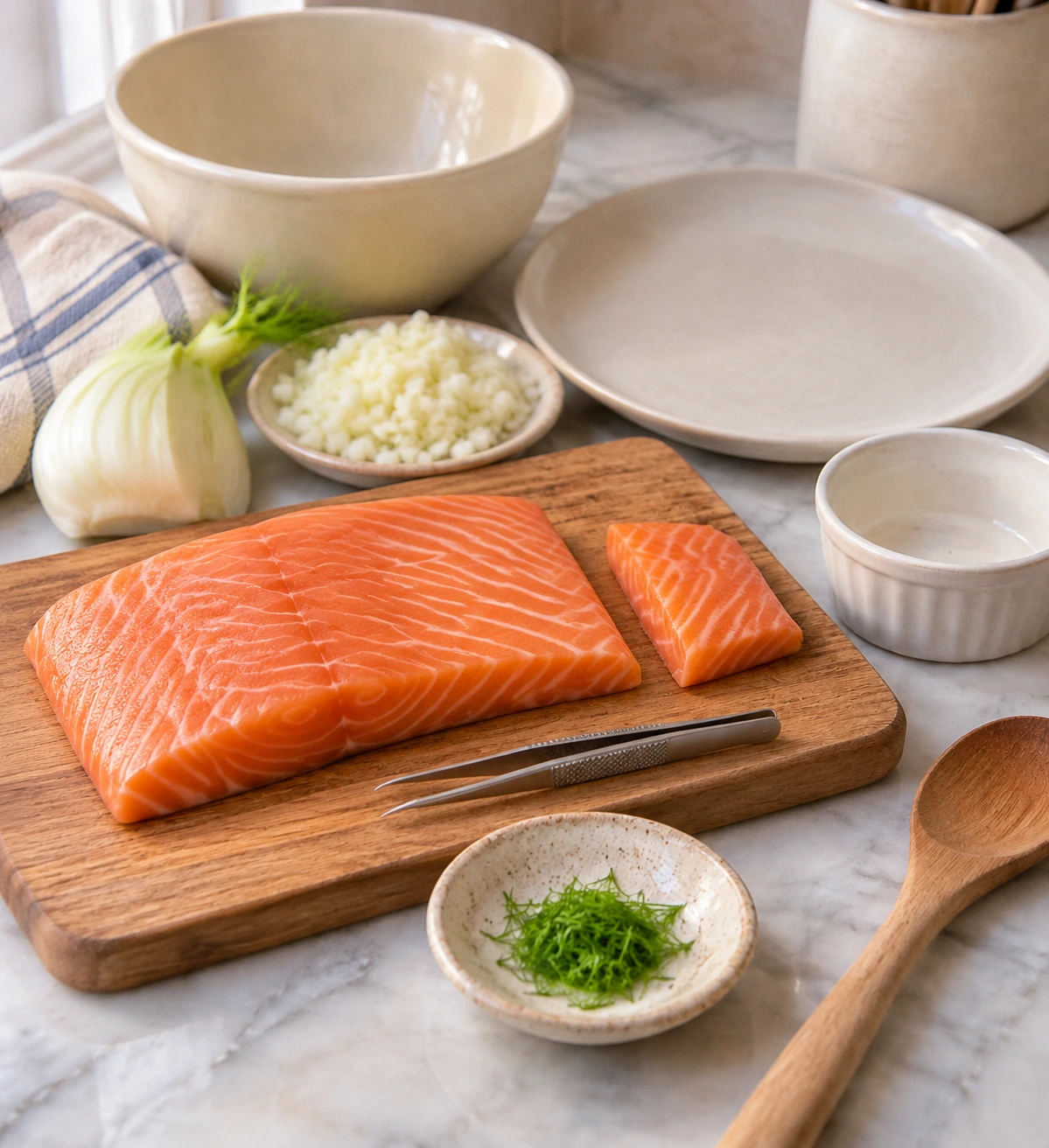
Check and Prepare the Salmon: Place the salmon on a clean chopping board and gently run your fingertips along the flesh to feel for any remaining pin bones. Remove every bone with clean kitchen tweezers, then check both the surface and underside again. Cut the fillet to fit comfortably in your prepared baking dish, removing any remaining skin or tough, unwanted pieces.
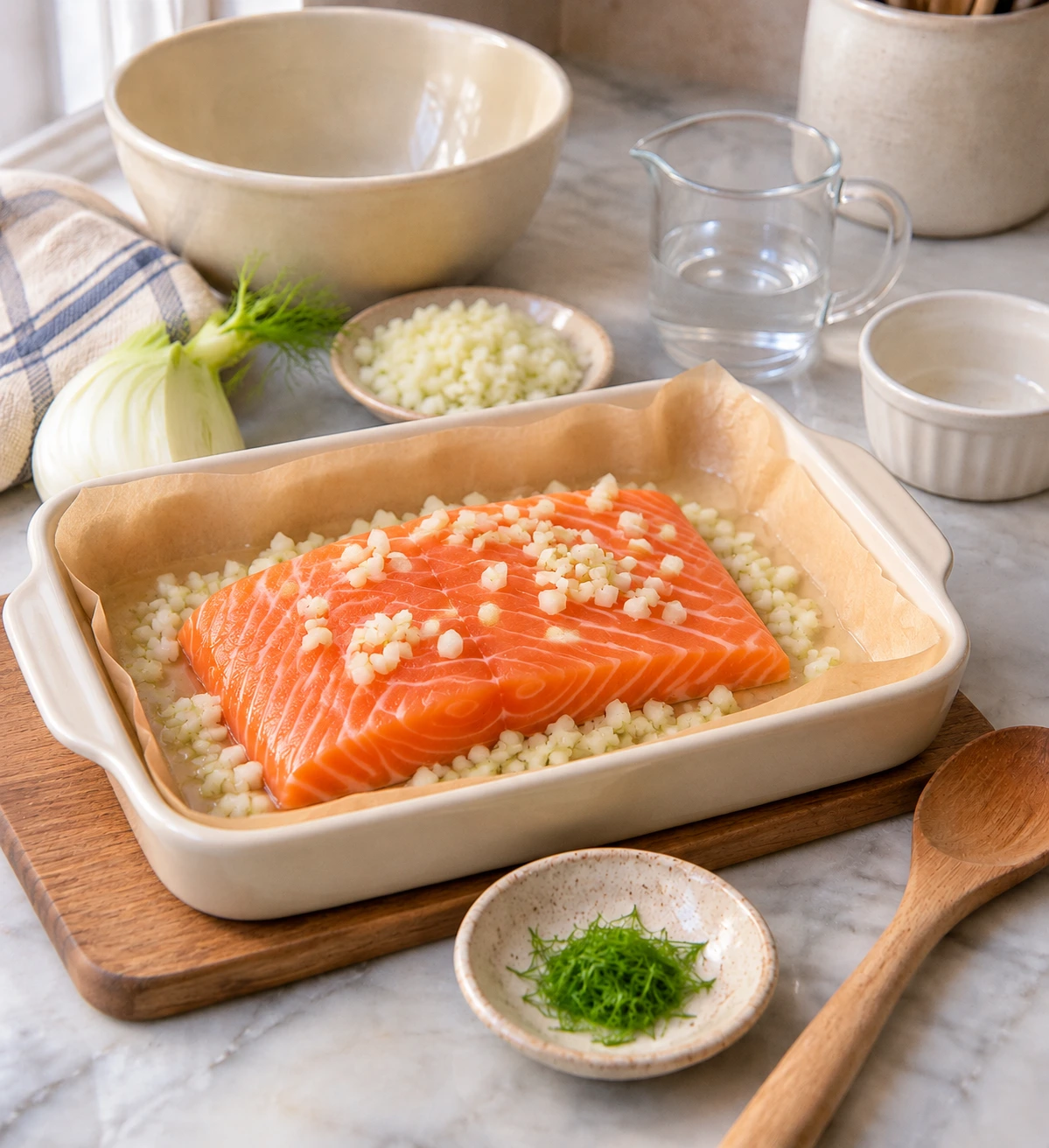
Arrange the Baking Dish: Set the prepared salmon in the parchment-lined ceramic dish and scatter the finely chopped fennel lightly over and around the fish. Add 1 to 2 tablespoons of plain water to help keep the fennel moist during baking. Leave out salt, oil, butter, garlic, onion and all other seasonings.
Bake Until Thoroughly Cooked: Bake in the preheated oven for approximately 15 to 20 minutes, depending on the thickness of the fillet. Check the thickest part with a food thermometer and make sure it reaches 63°C. The salmon should be opaque throughout and flake easily with a fork. If the centre needs longer, return it to the oven and check again rather than judging doneness by colour alone.
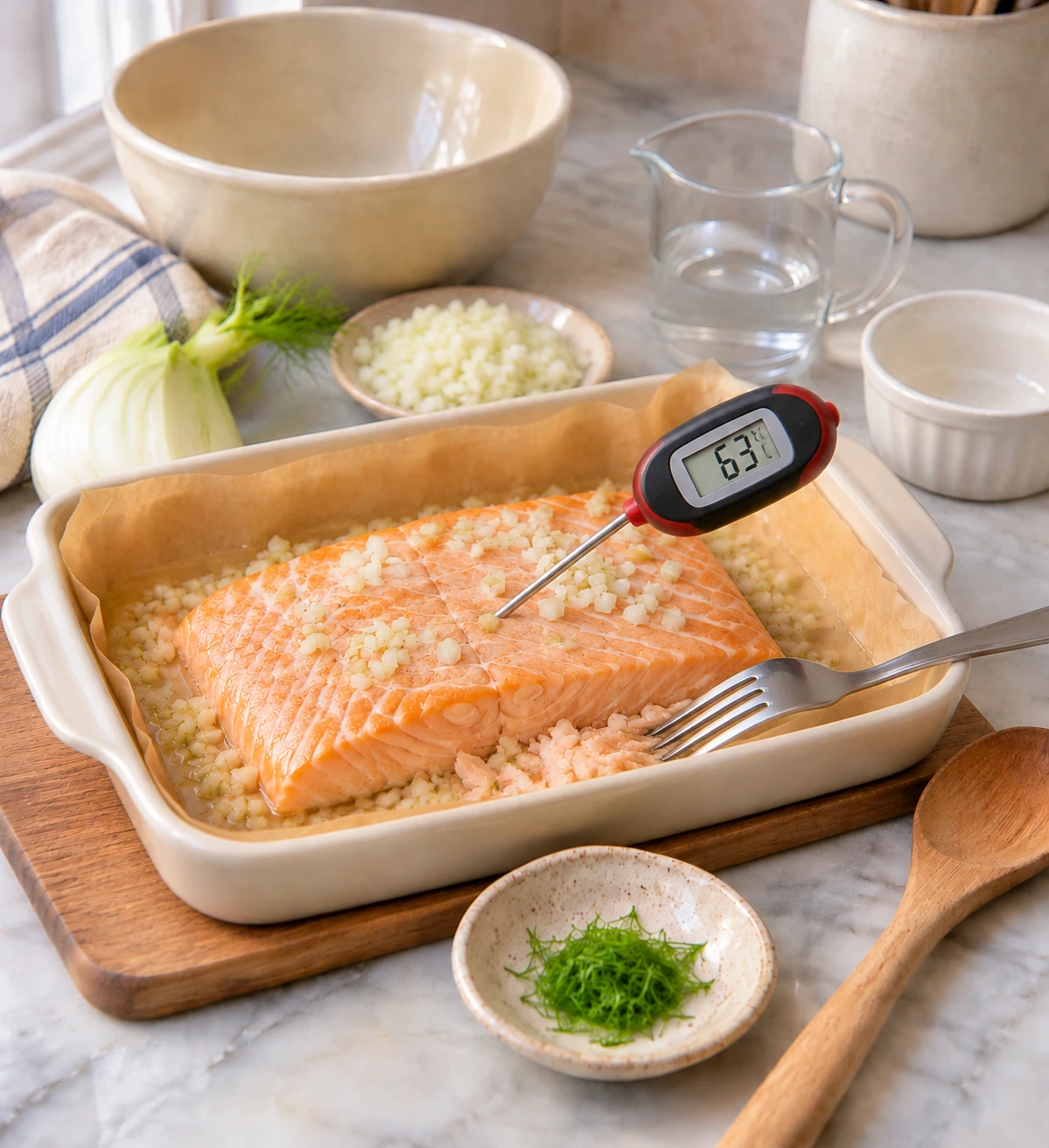
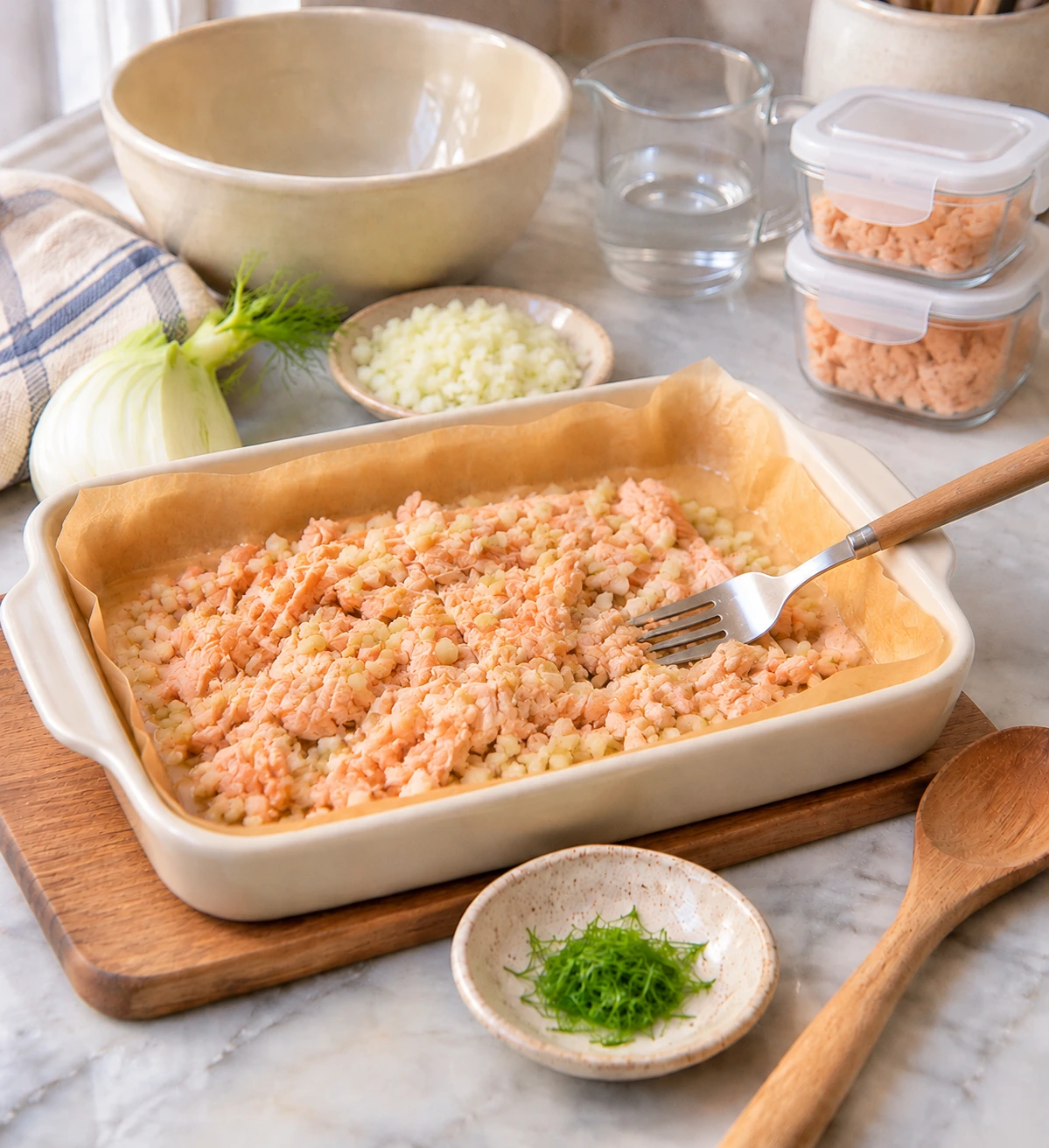
Cool, Flake and Portion: Remove the dish from the oven and allow the salmon to cool completely before handling. Use a clean fork to break the fish into small, delicate flakes, gently mixing in the softened fennel. Check the entire mixture once more for bones or firm pieces, then divide it into small portions. Refrigerate what you'll use within two days and promptly freeze the remaining portions in airtight containers.
Made this recipe?
Tap the paw so other pet parents know it’s worth making.
Be the first to make it
Tips & serving
Allow the salmon to cool completely before serving. Start with approximately half a teaspoon mixed into your cat's usual complete food, then adjust only if appropriate for your cat's size, appetite and overall daily intake. Keep this recipe as an occasional topper rather than a meal replacement. Treats and extras should generally account for no more than 10% of daily calories, with complete food providing the rest. Discuss major diet changes with your veterinarian, especially if your cat has dietary restrictions or an existing health concern.
- Provides a straightforward way to introduce a different cooked fish texture into an occasional topper rotation.
- The delicate salmon flakes are easy to divide into small portions and mix through a cat's regular wet or dry food.
- Using a small amount of fennel keeps the recipe simple while introducing a different ingredient and aroma.
- Batch preparation makes it easier to keep individual servings ready without repeatedly cooking fresh fish.
- Choose a centre-cut salmon fillet with even thickness so it cooks more consistently and is easier to check at the thickest point.
- Run your fingers along the flesh in both directions when checking for pin bones, then repeat the inspection after the fish has cooked.
Storage
Refrigerate completely cooled portions in clean, airtight containers at 4°C or below. Freeze individual portions promptly in small airtight, freezer-safe containers or sealed portions. Label them with the preparation date and use within one month for best quality. Thaw frozen portions overnight in the refrigerator.
Substitutions
If fresh fennel bulb is unavailable, simply leave it out and prepare the salmon on its own. Keeping the fish plain is preferable to adding a different vegetable just to fill the ingredient list. Fresh fennel fronds can be omitted without changing the cooking method. They are optional and should never replace the small measured amount of fennel bulb. Do not substitute smoked, cured, salted or seasoned salmon. Use plain fresh or properly thawed frozen salmon without added ingredients, and follow the same thorough cooking and bone-checking process.
Cats recipe FAQ
Can Cats Salmon and Fennel Savory Baked Flakes replace my cat's regular diet?
Treat it as an occasional extra, not a meal plan. Allow the salmon to cool completely before serving. Start with approximately half a teaspoon mixed into your cat's usual complete food, then adjust only if appropriate for your cat's size, appetite and overall daily.
Can cats have boneless salmon fillet?
This recipe uses boneless salmon fillet in a small, cat-appropriate amount. Skip it if your cat has a known sensitivity, and read the foods-to-avoid note on this page before serving.
How long does Cats Salmon and Fennel Savory Baked Flakes keep?
Refrigerate completely cooled portions in clean, airtight containers at 4°C or below. Use within two days, and discard anything left out at room temperature for more than two hours.
What's the safest way to try this with my cat?
Offer a small amount beside regular food, introduce one new recipe at a time, and watch appetite, stool, skin, and behavior for a day or two.
Can cats eat cooked salmon?
Cats can have small amounts of plain, thoroughly cooked salmon as an occasional food extra. Remove all bones, avoid seasoning and make sure the fish is fully cooked. Salmon prepared this way is still a topper, not a nutritionally complete replacement for regular cat food.
Is fennel safe to include in a cat food topper?
A very small amount of plain, finely prepared fennel can be included as an occasional ingredient. Keep it thoroughly washed, finely chopped and cooked until soft. The salmon should remain the main ingredient, and there is no need to increase the fennel quantity.
Sources