
A little warm chicken jus is an easy way to add something special to your cat's usual meal without reaching for a long list of ingredients. This simple recipe uses plain, boneless chicken breast, gently simmered in water until thoroughly cooked. The chicken is finely shredded into soft, tender pieces, while the leftover cooking liquid is reduced separately into a light, savoury jus that can be spooned over the meat.
Safety first: Start with a small portion beside your cat's usual food and confirm bigger diet changes with your veterinarian.
Foods to avoid
Never add onion, garlic, chives, leeks, salt, pepper, seasoning blends, bouillon cubes, commercial stock, butter, cooking oil or gravy. These additions are unnecessary and some can be harmful to cats. Do not use raw or partially cooked poultry. Chicken must reach 74°C internally. Remove all bones and cartilage, check the finished meat carefully, and serve only after the jus has cooled. Cats with prescribed diets, food sensitivities, kidney conditions or other health concerns should have new toppers discussed with their veterinarian before introduction.
Ingredients
Instructions
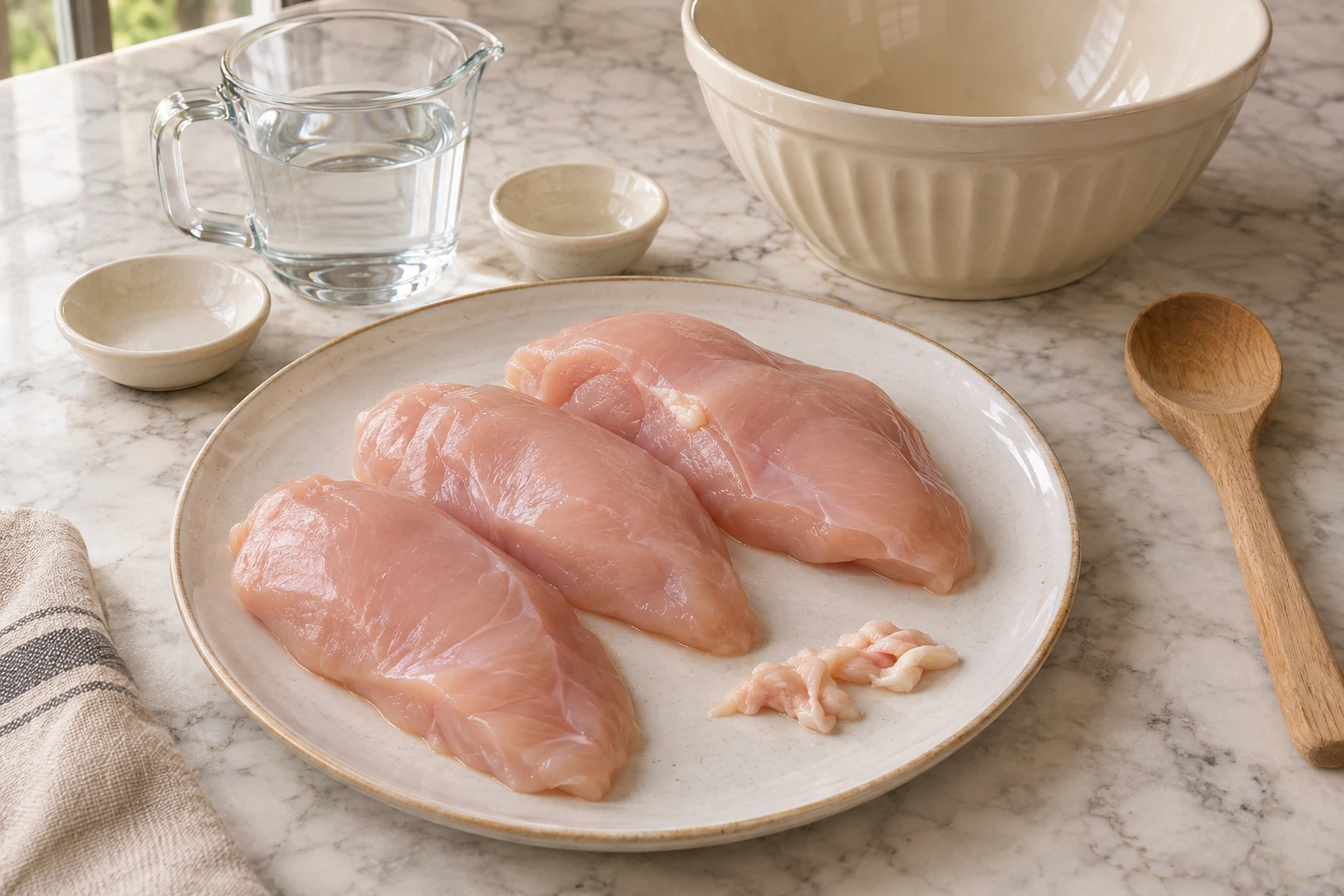
Prepare the Chicken: Remove the chicken breast from its packaging and check carefully for any remaining bone, cartilage or tough connective tissue. Trim away visible fat, then cut the breast into two or three evenly sized pieces to help them cook at a consistent rate. Keep raw chicken and its utensils away from cooked food, and wash your hands and preparation surfaces thoroughly afterwards. Do not add oil, butter, salt, stock or seasoning.
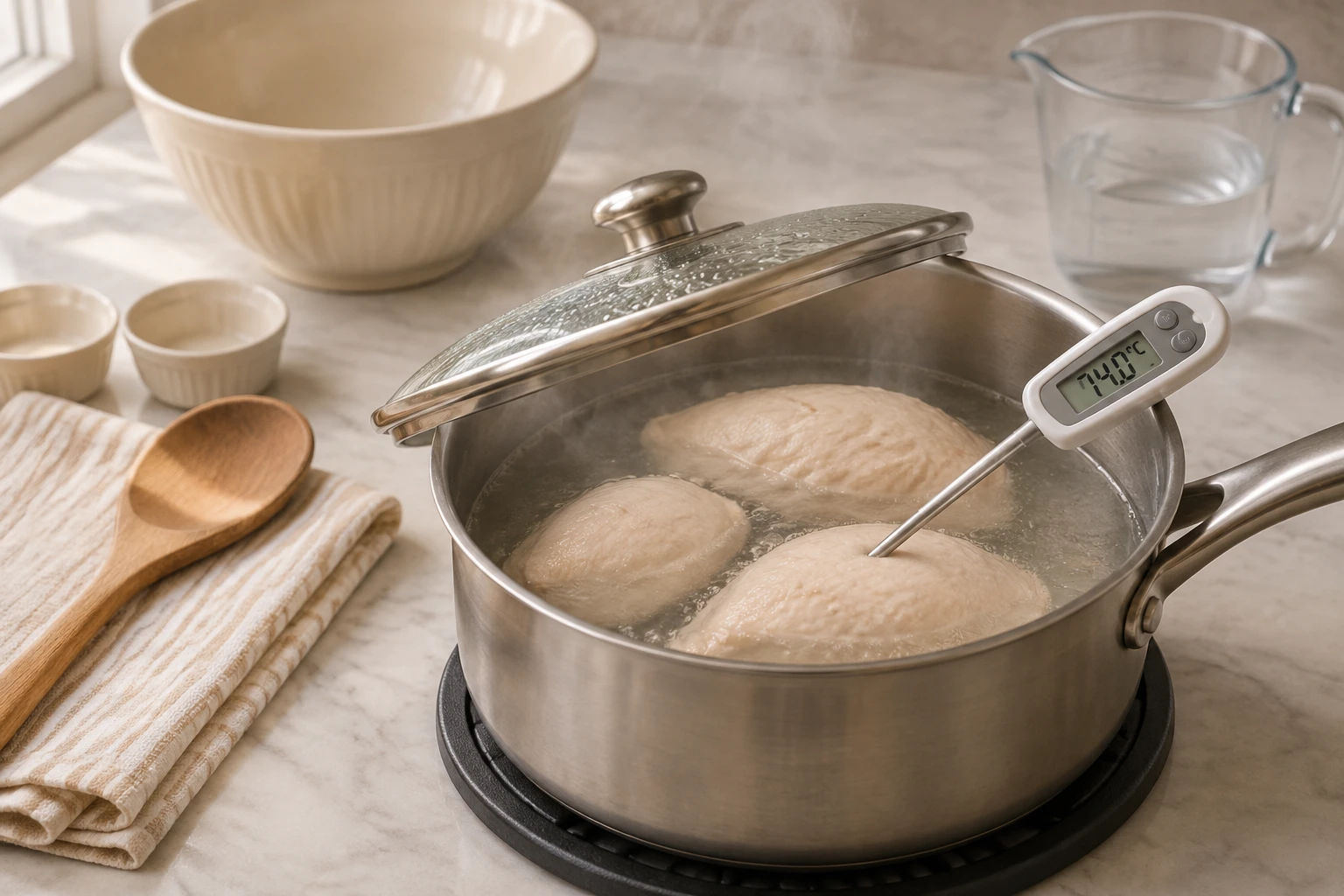
Gently Cook Until Thoroughly Done: Place the chicken pieces in a small saucepan and pour in 350 ml of plain water. Bring to a gentle simmer, reduce the heat and partially cover the pan. Cook for approximately 15 to 20 minutes, turning the pieces once if needed, until the thickest part reaches an internal temperature of 74°C. Use a food thermometer to check rather than judging by appearance alone, as the chicken must be completely cooked before serving.
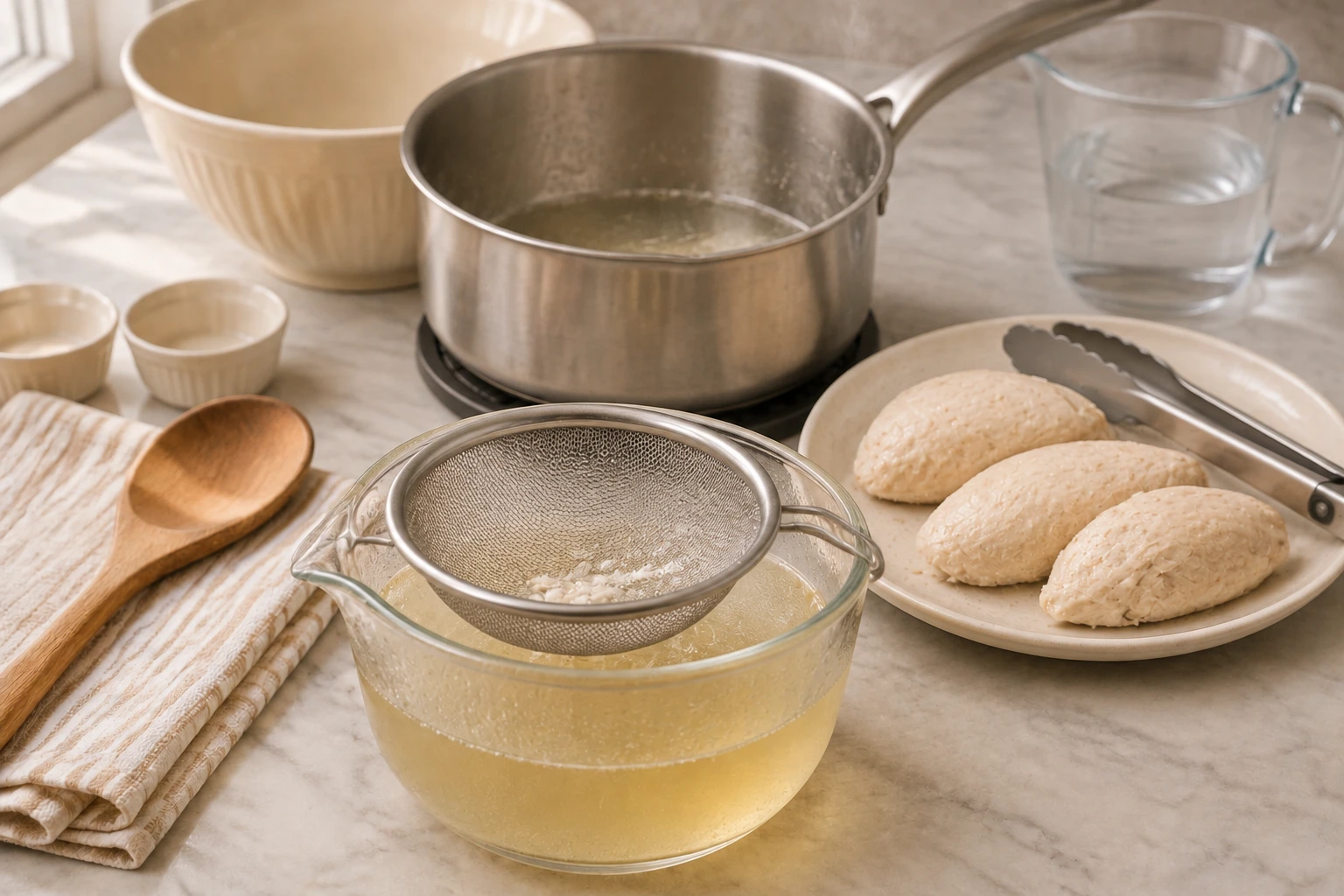
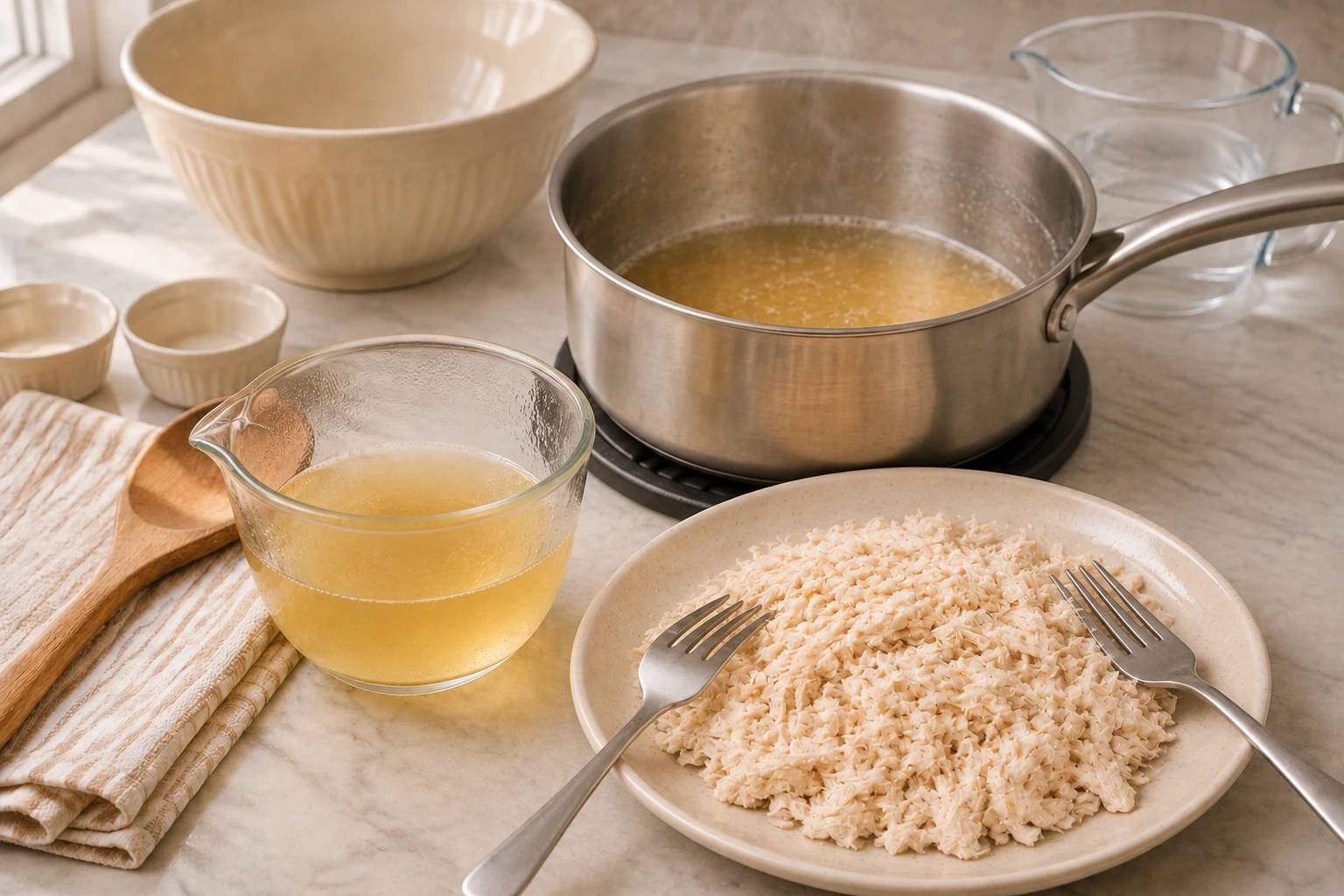
Separate the Chicken and Cooking Liquid: Once the chicken has reached 74°C throughout, take the saucepan off the heat. Using clean tongs or a slotted spoon, transfer the cooked pieces to a clean plate and let them rest briefly. Strain the remaining cooking liquid through a fine-mesh sieve into a clean heatproof bowl, removing any loose particles. Set the liquid aside, as it holds the natural flavour released by the chicken. Never reuse liquid that has come into contact with raw chicken utensils or surfaces.
Shred the Chicken and Reduce the Jus: Use two clean forks to pull the cooked chicken into very fine, short shreds. Remove any firm or chewy pieces and check carefully for bone fragments. Pour the strained cooking liquid back into the clean saucepan and bring it to a gentle simmer, leaving the pan uncovered. Reduce for approximately 5 to 8 minutes, checking regularly, until the liquid is slightly more concentrated but still thin enough to pour easily. If it becomes too reduced, stir in a little of the additional plain water. Do not add flour, thickener, seasoning or stock.
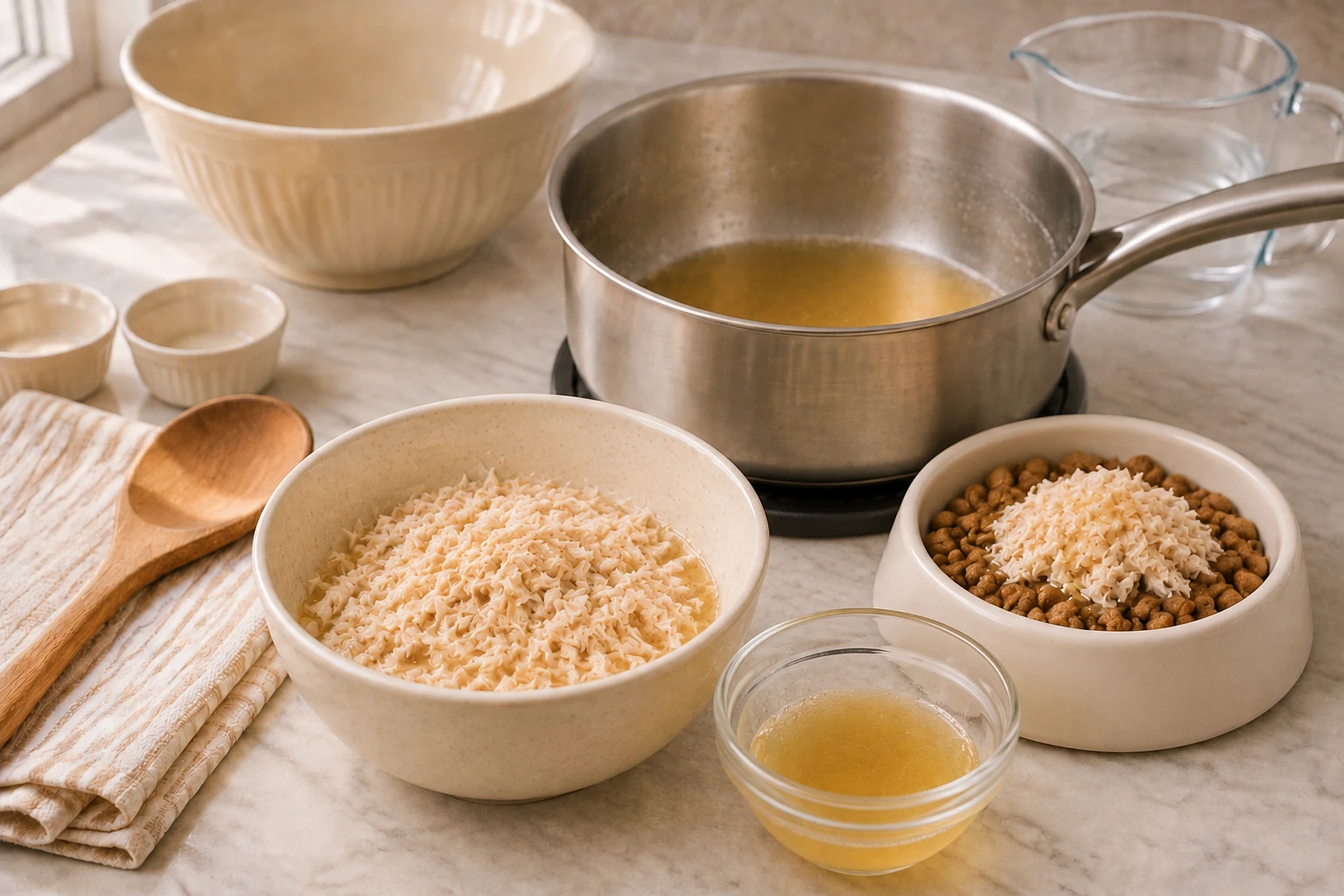
Cool, Combine and Portion: Remove the reduced jus from the heat and leave it to cool. Transfer the finely shredded chicken to a clean small bowl and spoon over just enough jus to moisten the meat, keeping some liquid separate for serving. Make sure both components have cooled to room temperature or are only slightly warmer before offering them to your cat. Measure a small amount of shredded chicken and 1 to 2 teaspoons of jus over your cat's usual complete food. Refrigerate or freeze any remaining portions promptly rather than leaving them at room temperature.
Made this recipe?
Tap the paw so other pet parents know it’s worth making.
Be the first to make it
Tips & serving
Start with approximately one teaspoon of finely shredded chicken and one teaspoon of cooled jus mixed into your cat's usual complete food. Adjust only if the small addition is well tolerated and remains appropriate for your cat's overall diet. Serve at room temperature or slightly warm, never hot. This is an occasional complementary topper, not a complete meal, and treats or extras should generally remain within 10% of daily calories. Ask your veterinarian about suitable portions for your individual cat, and discuss major diet changes with a veterinarian.
- The combination of fine chicken shreds and light cooking liquid provides two familiar textures in one small topper.
- A little unsalted jus can add moisture to the surface of ordinary complete cat food without requiring a separate prepared sauce.
- The recipe uses one main protein and a straightforward stovetop method, making ingredient quantities and preparation easy to control.
- The chicken can be portioned separately from the liquid, allowing owners to adjust the consistency and serving size of each addition.
- Cut the chicken breast into similarly sized pieces before cooking so the smaller pieces do not become dry while thicker sections finish.
- Keep the cooking liquid at a gentle simmer rather than a rolling boil, which can make reduction harder to control.
Storage
Cool the chicken and jus promptly after cooking. Divide them into clean, shallow, airtight containers and refrigerate at 4°C or colder. Store the shredded chicken and reduced jus separately when possible. This makes it easier to measure small portions and prevents the meat from becoming overly saturated during storage. For longer storage, freeze individual small portions in covered freezer-safe containers or a clean silicone portion tray.
Substitutions
Boneless, skinless turkey breast can replace chicken breast if your cat already tolerates turkey. Use the same plain-water cooking method and verify that the thickest portion reaches 74°C. If chicken breast is unavailable, boneless, skinless chicken thigh can be used after trimming visible fat. It may produce a slightly richer cooking liquid, so keep the final serving particularly small. Plain drinking water is the only liquid needed for this recipe.
Cats recipe FAQ
Can I serve this topper every day?
Treat it as an occasional extra, not a meal plan. Start with approximately one teaspoon of finely shredded chicken and one teaspoon of cooled jus mixed into your cat's usual complete food.
Can cats have boneless, skinless chicken breast?
This recipe uses boneless, skinless chicken breast in a small, cat-appropriate amount. Skip it if your cat has a known sensitivity, and read the foods-to-avoid note on this page before serving.
How long does Cats Chicken Pan Jus Topper keep?
Cool the chicken and jus promptly after cooking. Divide them into clean, shallow, airtight containers and refrigerate at 4°C or colder. Use refrigerated portions within 2 days for a cautious homemade preparation window.
What's the safest way to try this with my cat?
Offer a small amount beside regular food, introduce one new recipe at a time, and watch appetite, stool, skin, and behavior for a day or two.
Can cats eat homemade chicken jus?
A small amount of plain chicken cooking liquid can be offered as an occasional topper when it contains only suitable ingredients and has been handled safely. Keep it free from salt, onion, garlic, stock cubes and seasoning. It should accompany complete cat food rather than replace a balanced meal.
How thick should the chicken jus be?
The finished jus should be slightly more concentrated than the original cooking water but remain thin enough to run easily from a spoon. It does not need to become a thick gravy. A light consistency makes it easier to measure small amounts and distribute moisture over the cat's usual food.
Sources