

Beef heart is a lovely starting point for homemade cat treats. Its naturally firm texture and rich meat flavour make it easy to cut into small, even pieces that hold their shape in the oven. Cooking the slices thoroughly before slowly drying them gives these little chips a firm finish without the need for flour, oil or added seasoning. Kale is entirely optional and should play only a tiny supporting role. Cats don't need vegetables in their treats, so beef heart remains the main ingredient. Even slicing, careful trimming and thorough cooking are more important than getting an extra-crispy result. These chips are occasional treats, not a substitute for complete and balanced cat food.
Safety first: Skip this recipe if your cat has a known sensitivity to any ingredient, and introduce anything new slowly.
Foods to avoid
Never use seasoned, salted, smoked, cured or marinated beef heart. Avoid garlic, onion, chives, leeks, butter, cooking oils, stock cubes and commercial broths containing added salt or flavourings. Remove tough connective tissue and large vessels before slicing. Do not serve raw or partially cooked heart, and do not assume that a dry-looking surface means the meat is thoroughly cooked. Kale is optional and should only be used in the tiny quantity specified. Do not offer large, hard pieces that could be difficult for your cat to chew. These treats are not nutritionally complete and must not replace a balanced feline diet.
Ingredients
Instructions
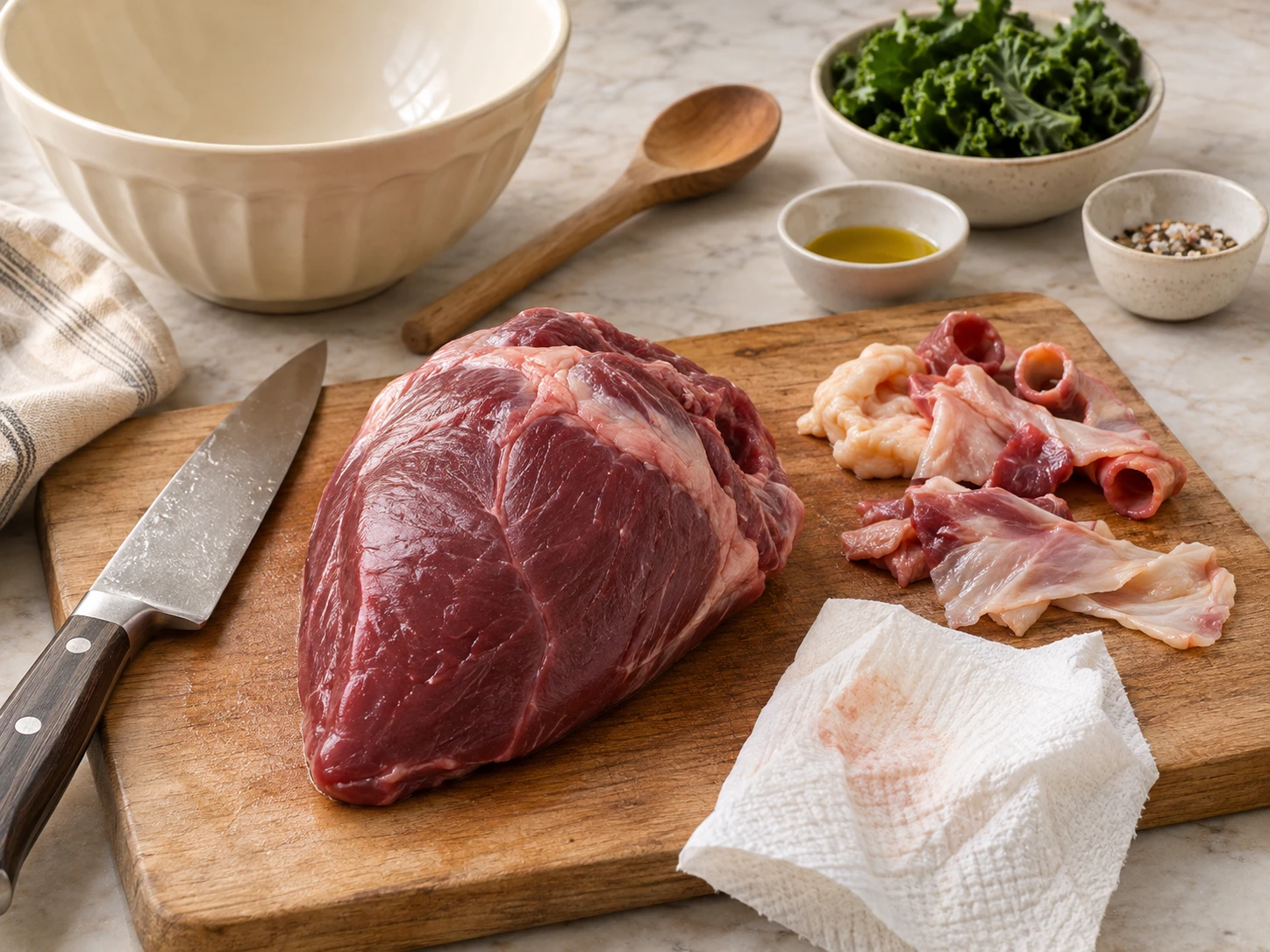
Trim and Clean the Beef Heart: Set the fresh beef heart on a clean cutting board, rinse it briefly under cold running water and pat the outside dry with kitchen paper. Using a sharp knife, remove the tough outer membrane, visible tubes, large blood vessels and particularly firm connective tissue, then trim away excess fat for a more consistent texture. If the heart is too soft to slice neatly, chill it briefly in the refrigerator until slightly firmer; keep the raw meat away from the prepared kale and thoroughly clean all surfaces and utensils after handling.
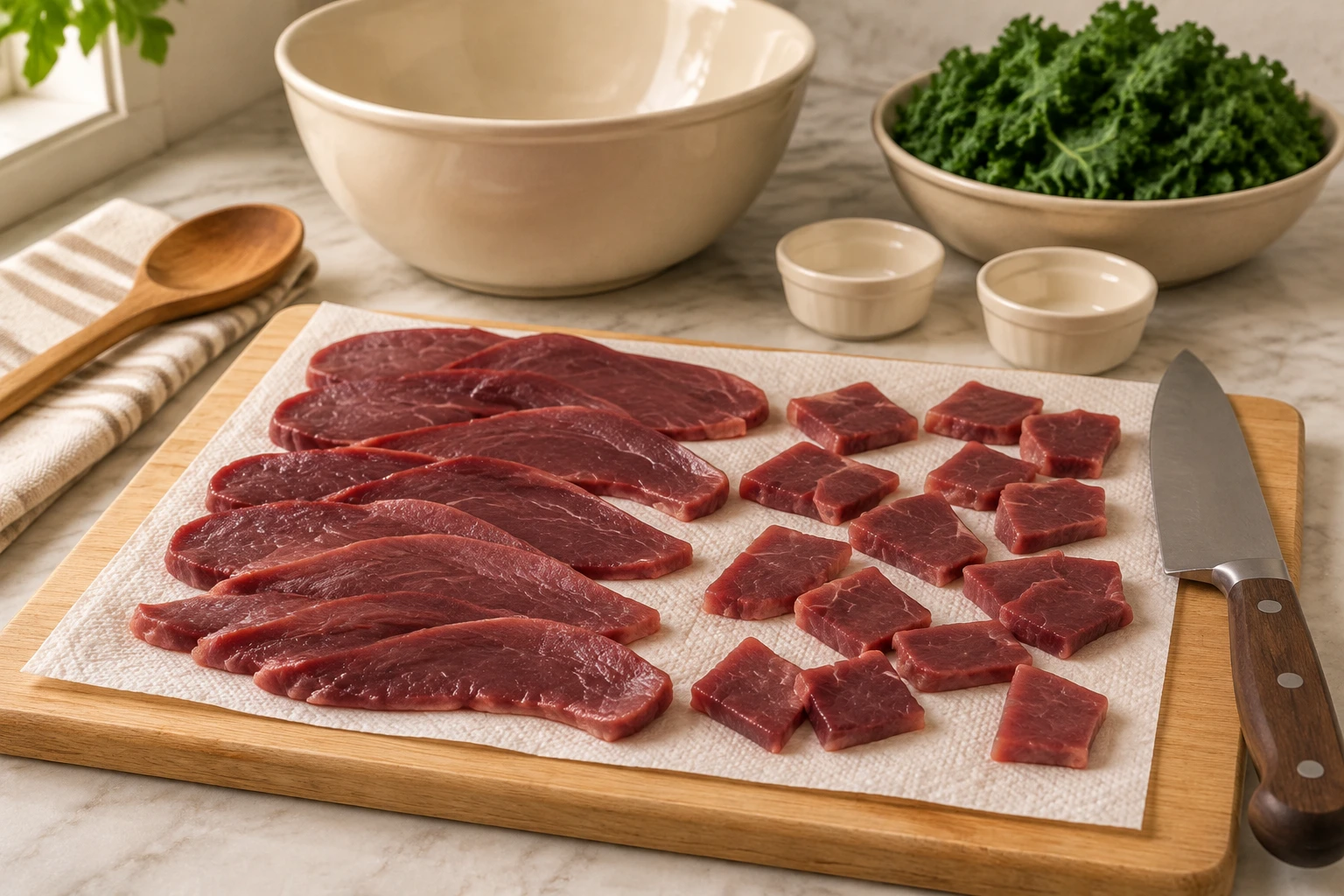
Slice the Meat Evenly: Slice the trimmed beef heart into even pieces approximately 3 to 4 mm thick so they cook and dry at roughly the same rate. Remove any remaining unusually thick or tough sections, then cut larger slices into small, cat-sized pieces approximately 2 to 3 cm across. Avoid cutting them too small, as they will shrink during cooking, and pat each piece dry with kitchen paper before keeping everything in a single layer while you prepare the tray.
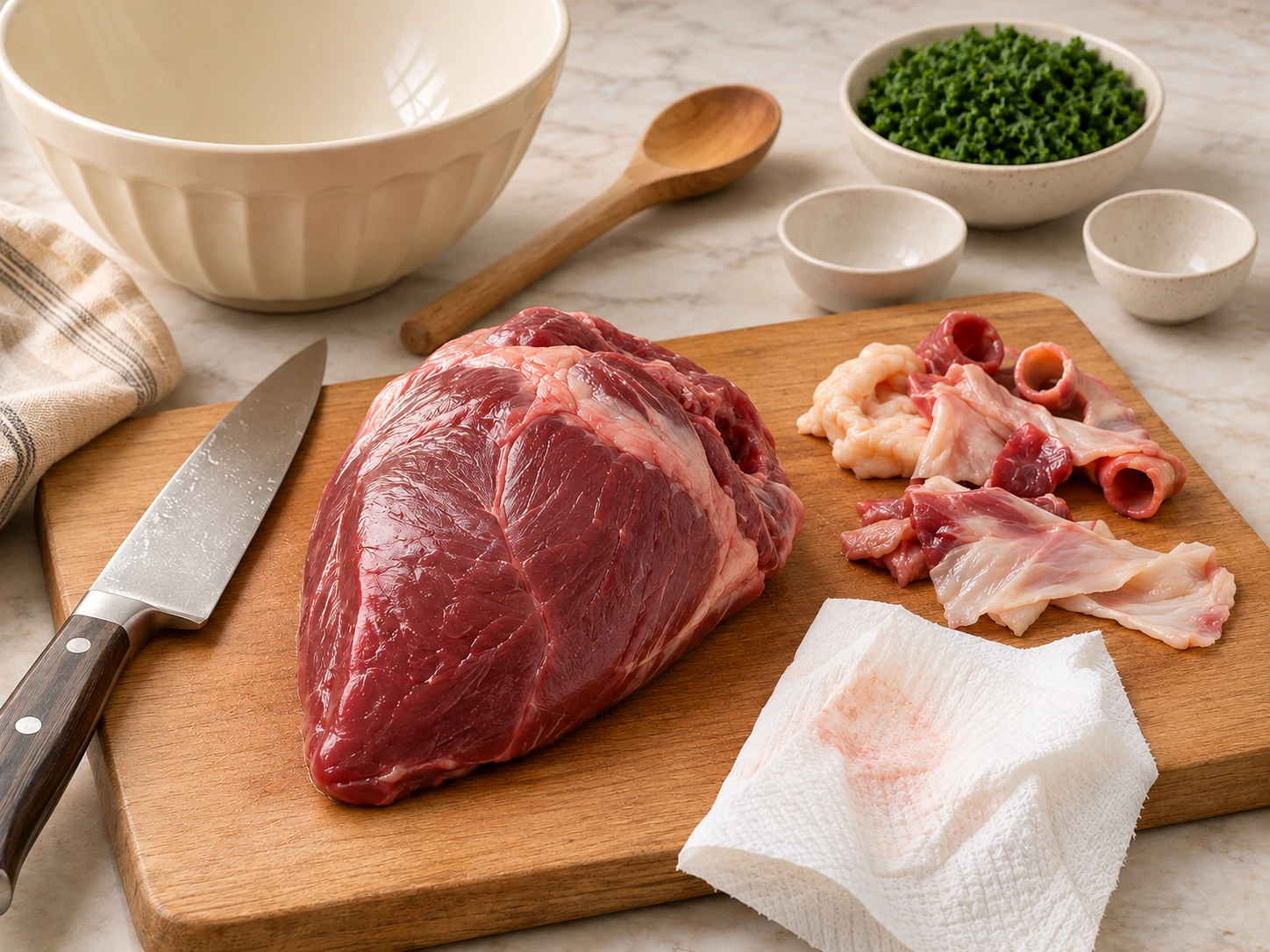
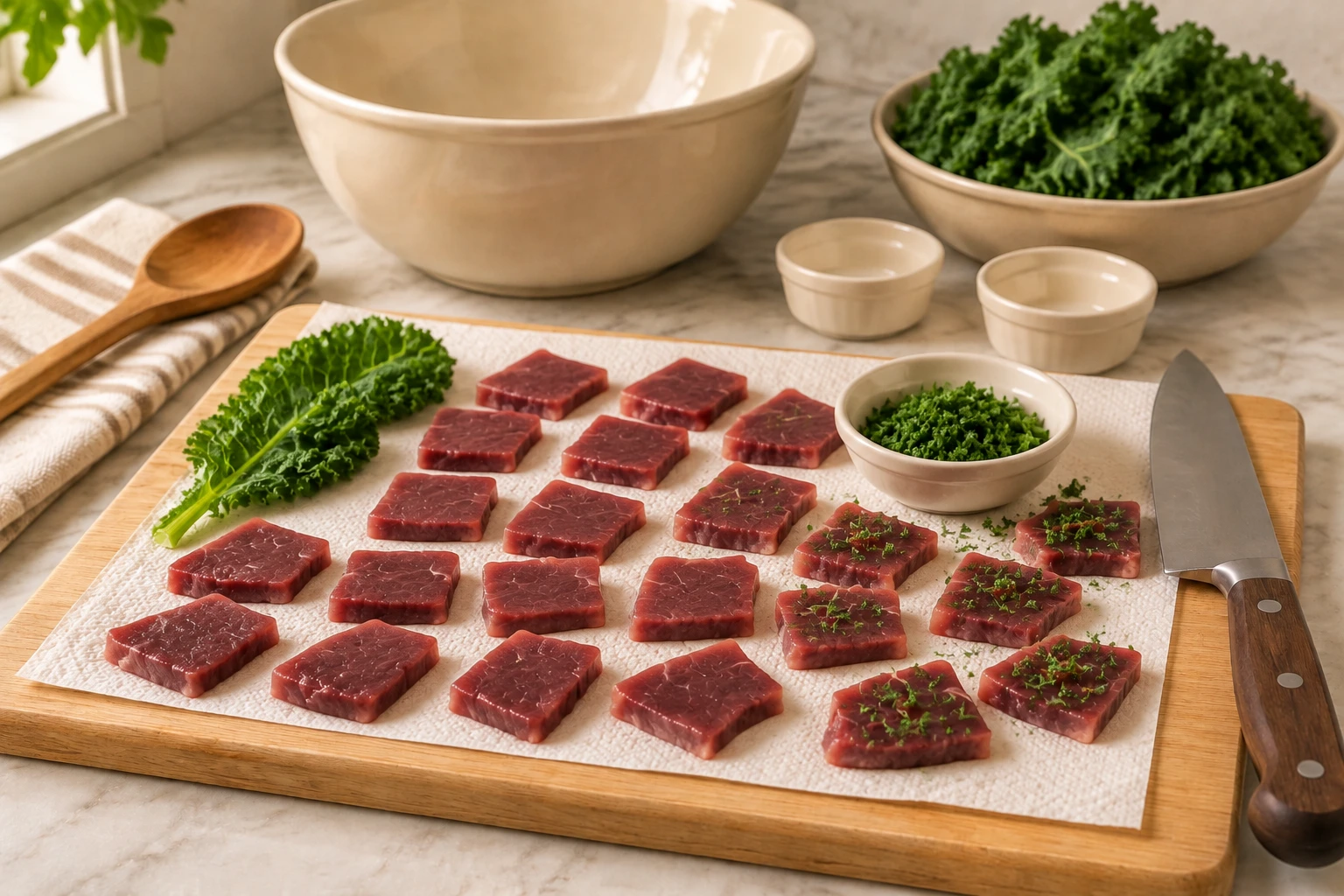
Prepare the Optional Kale: Wash the kale thoroughly under running water and dry it completely with kitchen paper. Remove the thick central stem and finely chop just one teaspoon of the tender leaves. Keep the kale as a very small optional addition rather than a coating or substantial filling, gently mixing it with a few beef heart pieces to distribute tiny flecks across a small portion of the batch while leaving the rest plain; this also makes it easy to offer the meat-only version if your cat isn't keen on the vegetable accompaniment. Do not add salt, garlic, onion, oil or seasoning.
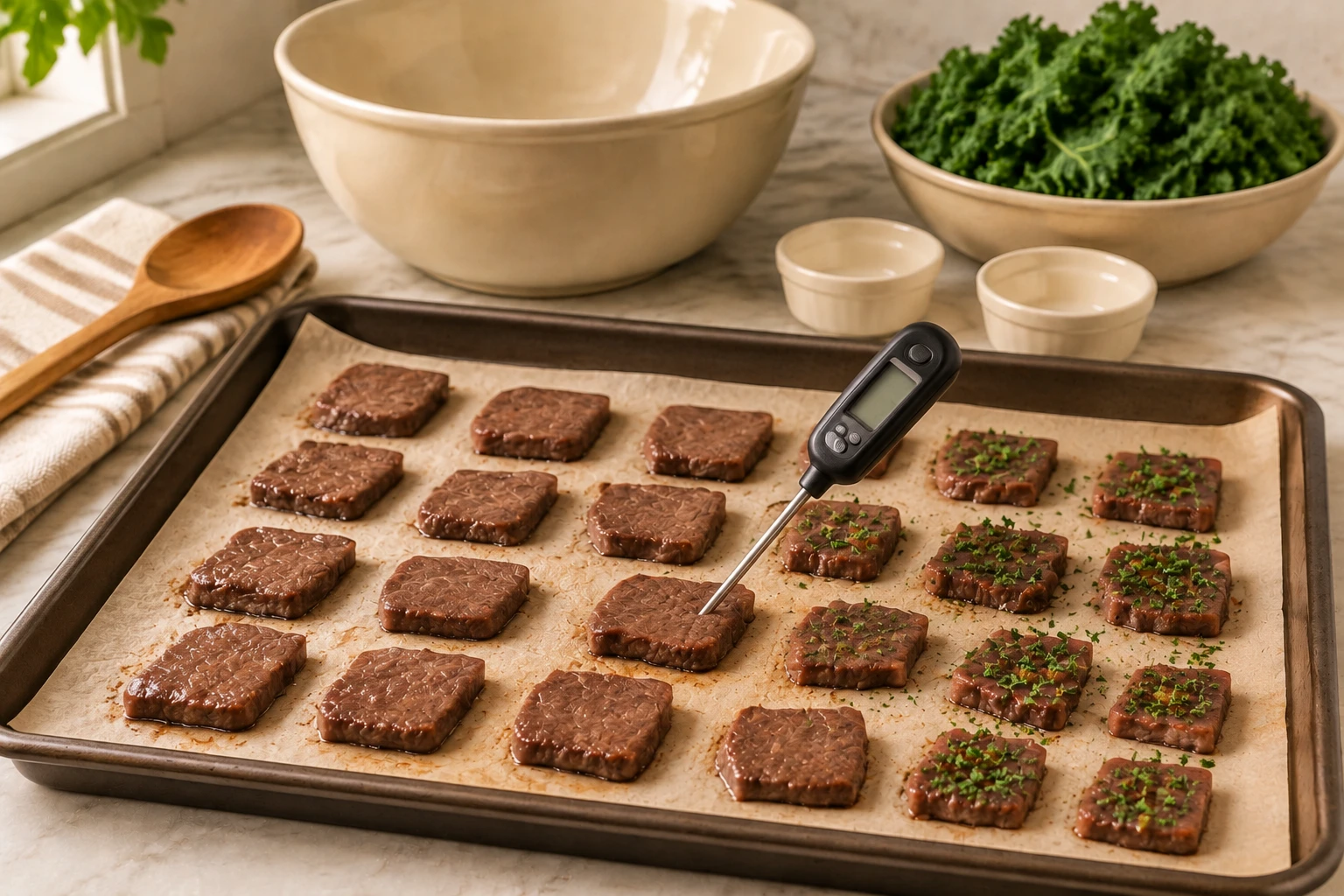
Bake the Beef Heart Thoroughly: Preheat the oven to 160°C, line a rimmed baking tray with parchment paper and arrange the beef heart slices in a single layer with a little space between them. Place the kale-accompanied pieces together in a separate section of the tray, then bake until thoroughly cooked, checking the thickest pieces with a food thermometer to make sure they reach at least 71°C internally; this initial stage may take approximately 15 to 25 minutes, depending on the oven and slice thickness. Don't judge doneness by colour alone: remove any pieces browning too quickly and continue cooking the thicker ones until they reach the safe temperature.
Slow-Dry, Cool and Store: Once the beef heart reaches the required internal temperature, reduce the oven to approximately 90°C and return the tray to continue drying the slices for approximately 60 to 120 minutes, turning them halfway through. Check them regularly, as thinner pieces may dry sooner than thicker ones; they should feel dry and firm, with no wet or soft centre, but shouldn't be blackened, excessively browned or brittle with burnt edges. Remove the tray, transfer the chips to a clean wire rack and let them cool completely before storing in an airtight container in the refrigerator.
Made this recipe?
Tap the paw so other pet parents know it’s worth making.
Be the first to make it
Tips & serving
Allow the chips to cool completely before offering one small piece as an occasional treat. Break larger pieces into smaller, manageable portions appropriate for your cat's size and eating habits. Introduce unfamiliar ingredients gradually and supervise your cat while eating. Treats should remain a small part of daily food intake, generally no more than 10% of daily calories, with complete and balanced cat food providing the main nutrition. Discuss major diet changes or regular additions of homemade foods with your veterinarian.
- Uses recognizable fresh beef heart as the main ingredient, making the meat component easy for pet parents to identify.
- Creates a different firm meat-based treat texture without relying on flour, biscuits or conventional baked snacks.
- Allows the optional kale to be kept separate, making it straightforward to prepare a completely meat-only portion.
- A small homemade batch makes portion sizes easier to control and individual treats convenient to serve.
- Chill the beef heart briefly before cutting if necessary; slightly firmer meat is easier to slice into consistent pieces.
- Use a ruler or visual thickness guide when slicing because uneven pieces can dry at noticeably different speeds.
Storage
Refrigerator: Store completely cooled chips in a clean, airtight container and refrigerate promptly. Use within 3 days. Homemade oven-dried meat does not have the validated moisture and shelf-stability controls of commercial dehydrated treats, so do not leave it at room temperature for extended storage. Separate portions with parchment paper to make individual servings easier to remove.
Substitutions
Kale can be omitted completely. The recipe works as a straightforward beef heart treat without any vegetable accompaniment, and this is the simplest option for cats that prefer plain meat. If fresh beef heart is unavailable, another fresh, unseasoned beef heart from a reliable butcher can be used. Keep the same trimming and temperature checks, adjusting drying time for the thickness of the slices. Do not replace the beef heart with ground beef or a different organ meat without changing the preparation method.
Cats recipe FAQ
Can Cats Beef Heart and Kale Oven Chips replace my cat's regular diet?
Treat it as an occasional extra, not a meal plan. Allow the chips to cool completely before offering one small piece as an occasional treat. Break larger pieces into smaller, manageable portions appropriate for your cat's size and eating habits.
Is fresh beef heart okay for cats?
This recipe uses fresh beef heart in a small, cat-appropriate amount. Skip it if your cat has a known sensitivity, and read the foods-to-avoid note on this page before serving.
How do I store this treat?
Refrigerator: Store completely cooled chips in a clean, airtight container and refrigerate promptly. Use within 3 days. Homemade oven-dried meat does not have the validated moisture and shelf-stability controls of commercial dehydrated treats, so do not leave.
How should I introduce this treat?
Start with a taste-size portion next to your cat's usual food, and hold off on serving more until you have seen that it agrees with them.
Can cats eat beef heart as an occasional treat?
Plain, thoroughly cooked beef heart can be offered in small amounts as an occasional treat for many cats. It should not replace complete cat food or become a major part of the diet. Introduce it cautiously, observe your cat's response and ask your veterinarian about regular additions.
Does kale need to be included in these beef heart chips?
No. Kale is entirely optional, and the recipe works without it. Cats are obligate carnivores, so there is no need to make vegetables a substantial part of this treat. If you include kale, use only the small amount specified and keep the meat as the main ingredient.
Sources