
Rice paper is optional for these little squash rolls, and the filling works just as well on its own. Some commercial wrappers contain ingredients or additives that may not be suitable for every bird, so check the full ingredient list and confirm with an avian veterinarian before using one. If you cannot verify that a wrapper is safe, skip it and let your bird explore the squash and rice instead. These rolls are an occasional snack, not a balanced diet. Keep portions small, offer them alongside your bird's usual appropriate food, and talk with your veterinarian before making any major changes to its diet.
Safety first: Skip this recipe if your bird has a known sensitivity to any ingredient, and introduce anything new slowly.
Foods to avoid
Never use seasoned, salted, flavored, sweetened, or sauce-coated ingredients. Do not add butter, oil, sugar, honey, garlic, onion, or spices. Rice paper is not automatically bird-safe because it is edible by people; check every ingredient and seek advice from an avian veterinarian if its suitability is uncertain. Avoid large, tightly rolled, gummy, or sticky pieces that could be difficult for the bird to handle. Remove the wrapper immediately if it becomes tacky or clings to the beak. Never force-feed a bird or leave it unattended with an unfamiliar food.
Ingredients
Instructions
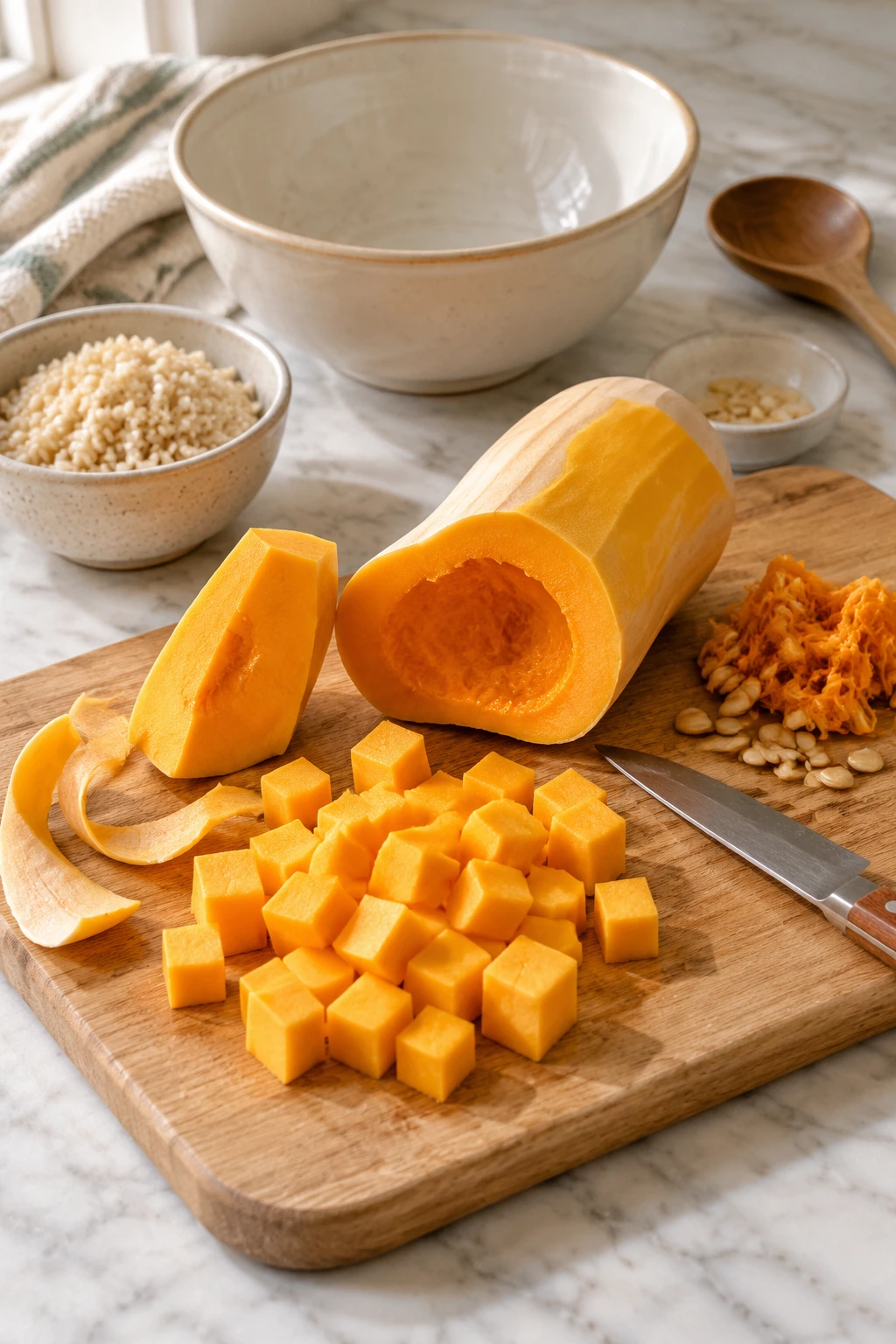
Prepare the squash: Wash the outside of the butternut squash, then peel a small section and remove all the seeds and stringy pulp. Cut 60 g of squash flesh into small, evenly sized cubes so they cook at about the same rate. Use a clean cutting board, and keep the squash plain with no oil, salt, butter, or seasoning.
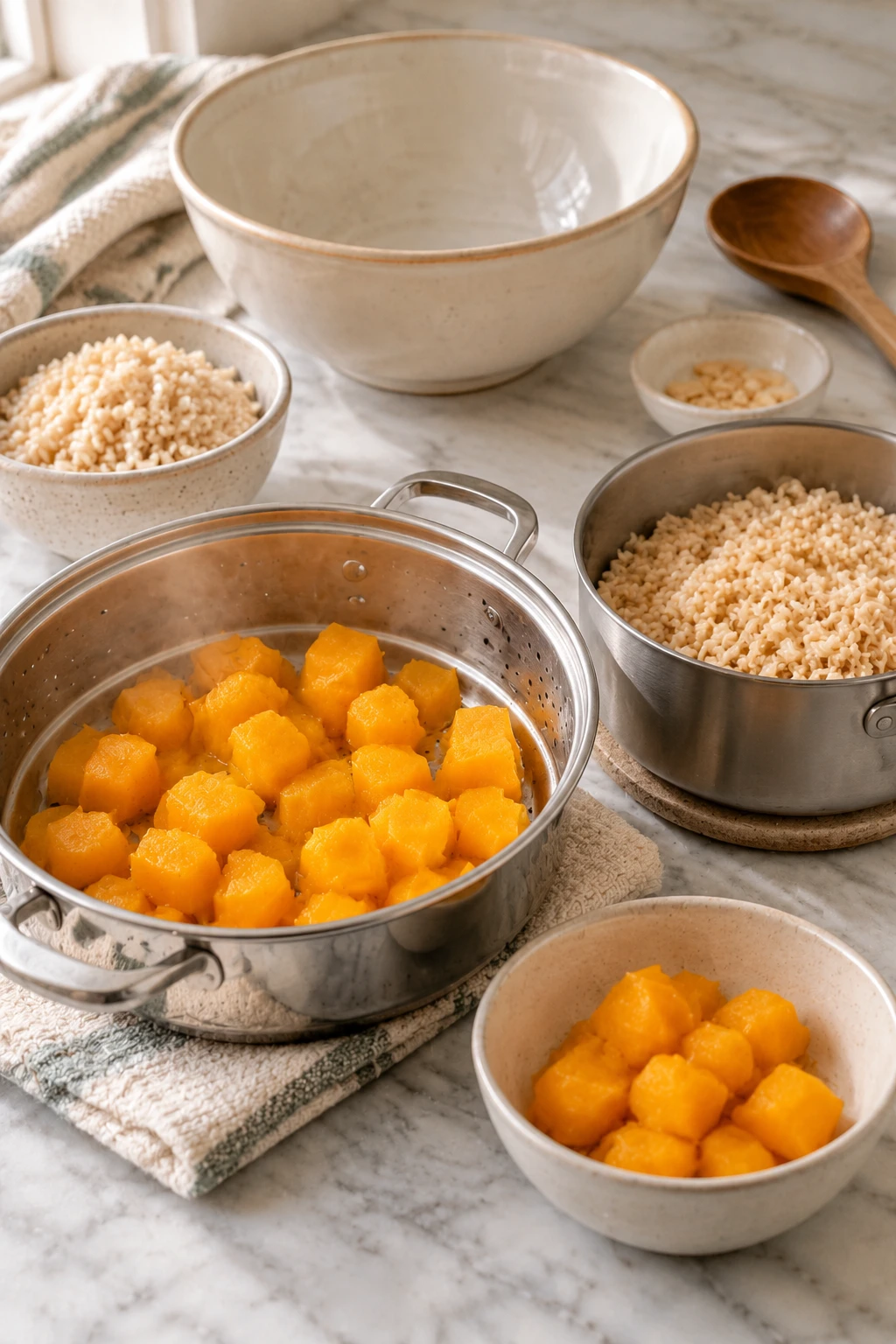
Cook until tender: Steam the squash or simmer it in a little water for 10 to 15 minutes, depending on the size of the cubes, until a fork slides through easily. Drain well and set the squash aside until it is no longer warm. In a separate pan, cook the brown rice in plain water until completely tender, then drain any excess water and let it cool.
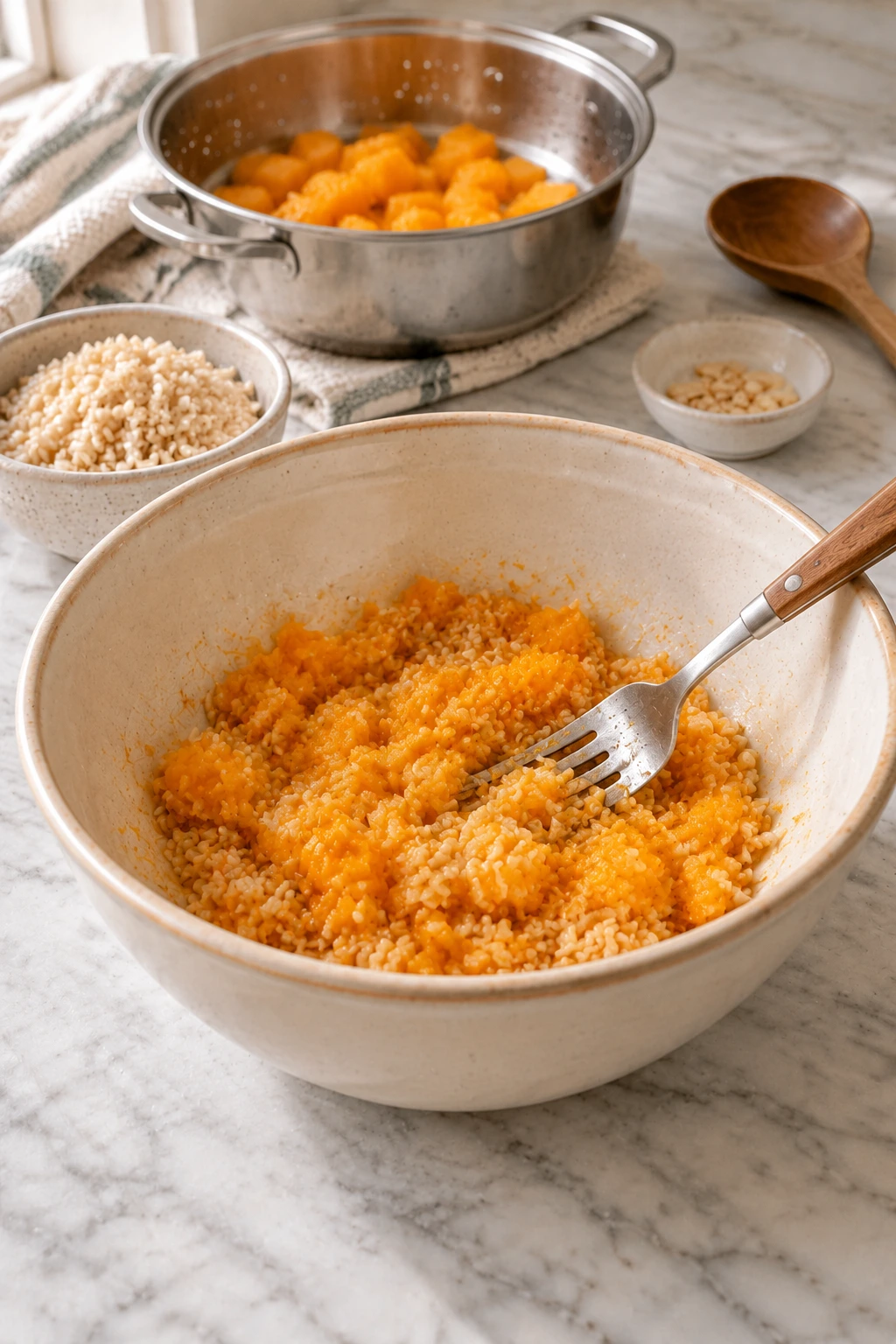
Mash and mix the filling: Put the cooled squash in the cream ceramic bowl and mash it with a fork until soft, leaving only tiny, manageable pieces. Stir in 1 tablespoon of cooked brown rice, adding water a few drops at a time if the mixture seems dry or crumbly. The filling should hold together loosely without turning sticky, gummy, or paste-like, and it must cool completely before you serve or shape it.
Shape tiny rolls if suitable: To make the rolls without a wrapper, use clean fingers to shape a very small amount of filling into a loose, short piece, or simply leave the mixture in the bowl for your bird to explore. If you plan to use rice paper, first confirm that the specific product is suitable for your bird, then soften a tiny piece in plain water according to the package directions. Add a little filling to the center and fold it loosely, without glue, sauce, or a tight, sticky bundle; if the wrapper turns tacky or is difficult to separate, discard it and serve the filling alone.
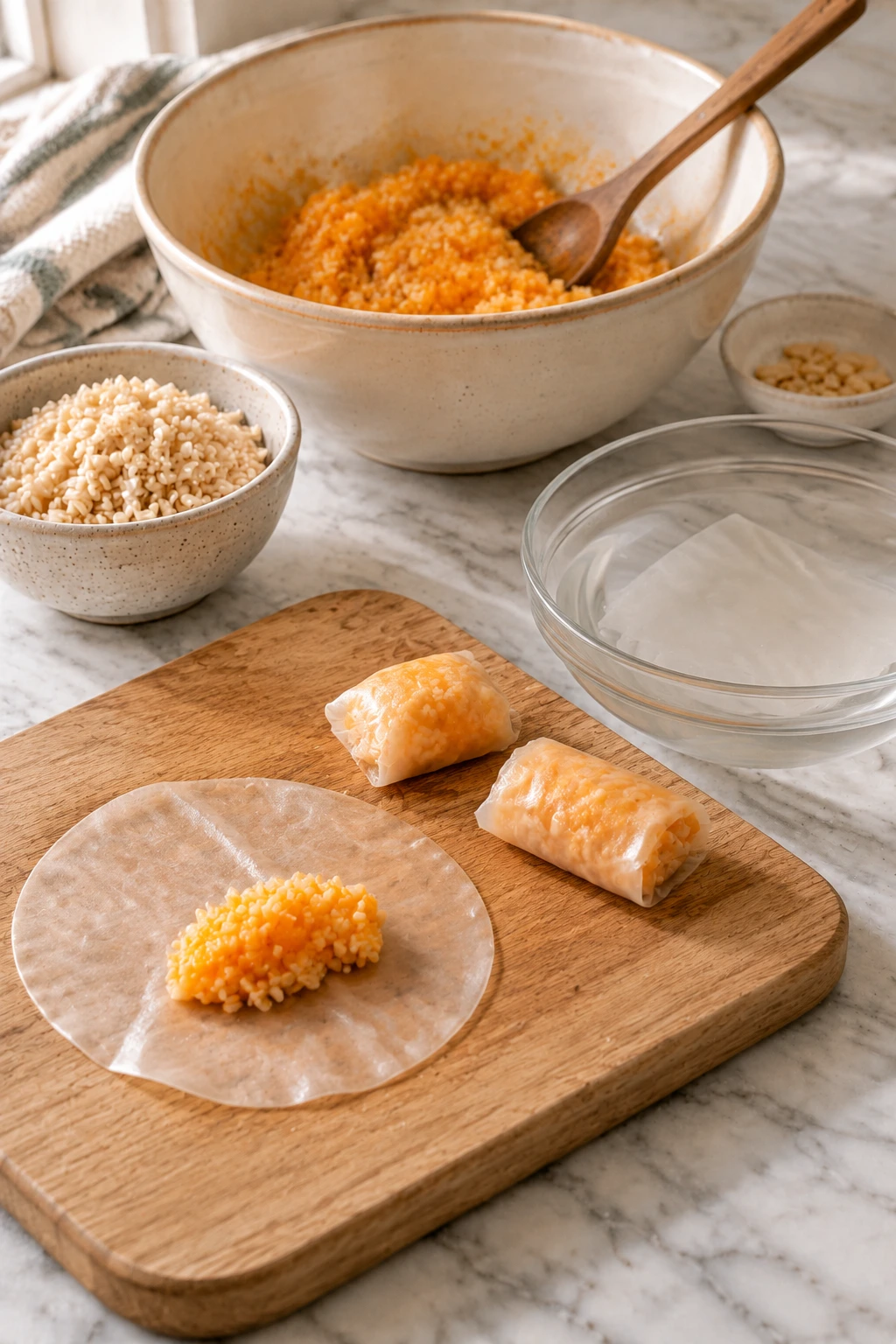
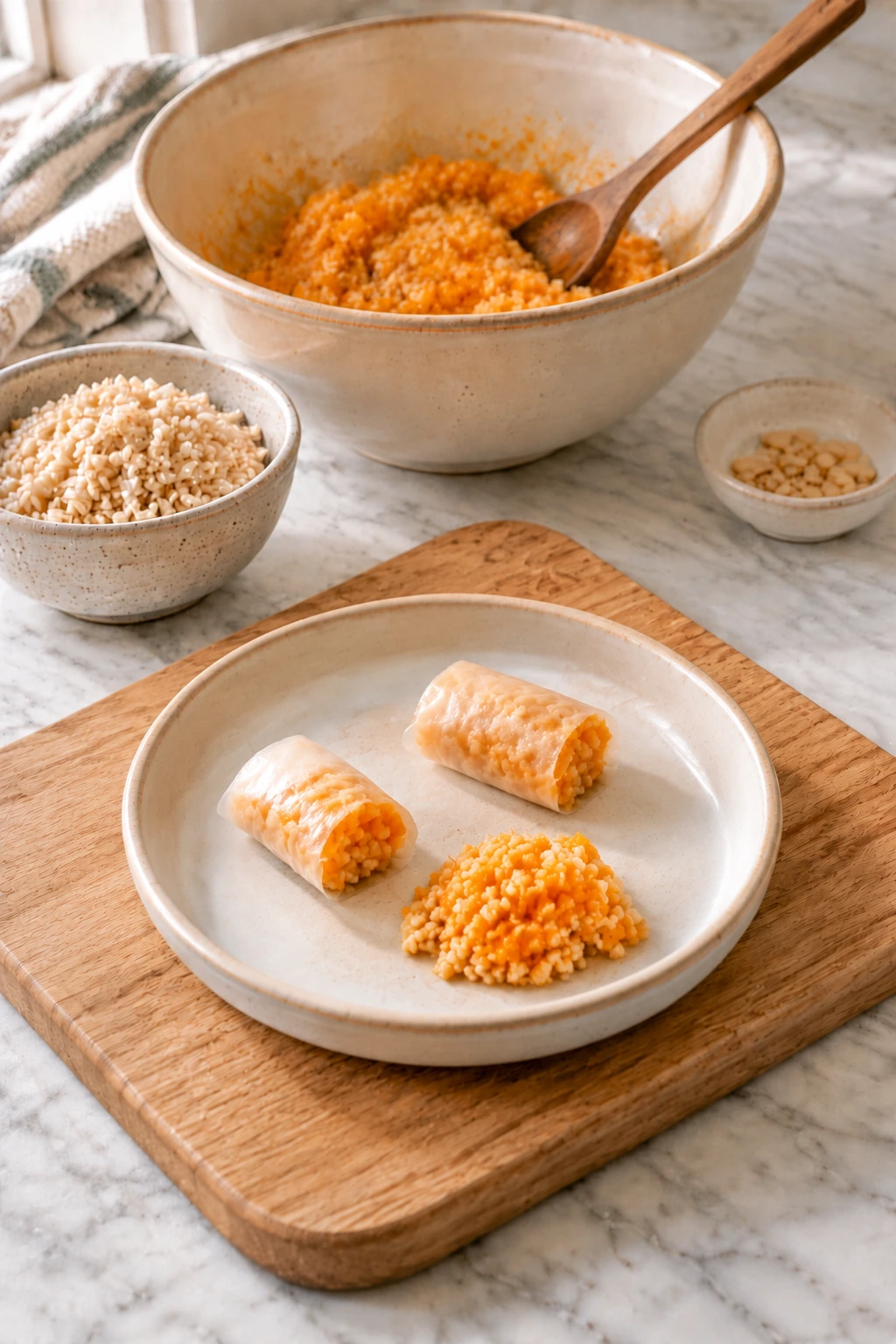
Cool, portion, and serve: Make sure every portion is completely cool and small enough for your individual bird to handle safely. Place one tiny piece or a little loose filling in a clean, shallow dish, supervise your bird throughout, and remove anything that becomes sticky, stringy, or difficult to manage. Start with just a small taste, and promptly remove leftovers rather than leaving moist food in the enclosure.
Made this recipe?
Tap the paw so other pet parents know it’s worth making.
Be the first to make it
Tips & serving
Offer a tiny taste appropriate to the bird's species, body size, and usual diet, rather than treating the recipe yield as a single serving. Introduce unfamiliar foods gradually and supervise the entire activity, especially if a wrapper is used. Remove uneaten moist food promptly. These rolls are occasional enrichment food and must not displace a balanced species-appropriate diet. Ask an avian veterinarian about individual dietary needs, and discuss any major diet changes with a veterinarian before making them.
- Soft cooked squash offers a different texture and flavor for birds exploring suitable vegetable foods alongside their usual meals.
- Preparing tiny portions makes it easier for owners to supervise exploration and avoid offering more snack food than intended.
- The filling can be served without a wrapper, giving owners a simpler option when a suitable rice paper product cannot be verified.
- A shallow dish and small food pieces allow the owner to observe how the bird approaches and handles a new snack.
- Cut the squash into similarly sized cubes so they soften evenly and can be mashed without leaving firm pieces.
- Let both the squash and rice cool completely before shaping, since warm filling can soften a wrapper unpredictably and may burn a bird's mouth.
Storage
Discard it sooner if it has been contaminated by utensils, hands, or contact with the bird. Do not store assembled rolls at room temperature or leave moist filling in the enclosure. Discard any food that has been in the bird's dish during the feeding session, particularly if it has been pecked, soiled, or exposed to a warm environment. For best texture and easier portion control, prepare only a small batch.
Substitutions
If you cannot verify that a rice paper wrapper is appropriate for your bird, omit it completely and serve a tiny amount of the squash and rice mixture loose in a clean dish. The wrapper is optional and is not needed for the recipe to work. Plain cooked quinoa may be considered instead of brown rice only if it is already suitable for the bird's diet and served fully cooked without salt, oil, or seasoning. Keep the quantity small and consult an avian veterinarian if you are uncertain about a new ingredient.
Birds recipe FAQ
Can I serve this snack every day?
Treat it as an occasional extra, not a meal plan. Offer a tiny taste appropriate to the bird's species, body size, and usual diet, rather than treating the recipe yield as a single serving.
Is plain cooked butternut squash okay for birds?
This recipe uses plain cooked butternut squash in a small, bird-appropriate amount. Skip it if your bird has a known sensitivity, and read the foods-to-avoid note on this page before serving.
How should I store leftovers?
Store unused cooked filling in a clean, covered food-safe container in the refrigerator at 4°C or colder, and use it within 24 hours as a cautious home-preparation guideline.
How should I introduce this snack?
Start with a taste-size portion next to your bird's usual food, and hold off on serving more until you have seen that it agrees with them.
Can birds eat butternut squash?
Plain butternut squash can be suitable for many companion birds when prepared appropriately, but species and individual dietary needs differ. Wash it, remove the seeds and stringy pulp, cook the flesh until soft, and serve it without salt, oil, or seasoning. Check with an avian veterinarian if you are unsure whether it suits your bird.
Are rice paper wrappers safe for pet birds?
Do not assume that every rice paper wrapper is suitable for birds. Products may contain different ingredients, and a wrapper can become tacky or difficult to manage when wet. Check the complete label and ask an avian veterinarian about the specific product. When in doubt, omit the wrapper and serve a tiny portion of the filling by itself.
Sources