
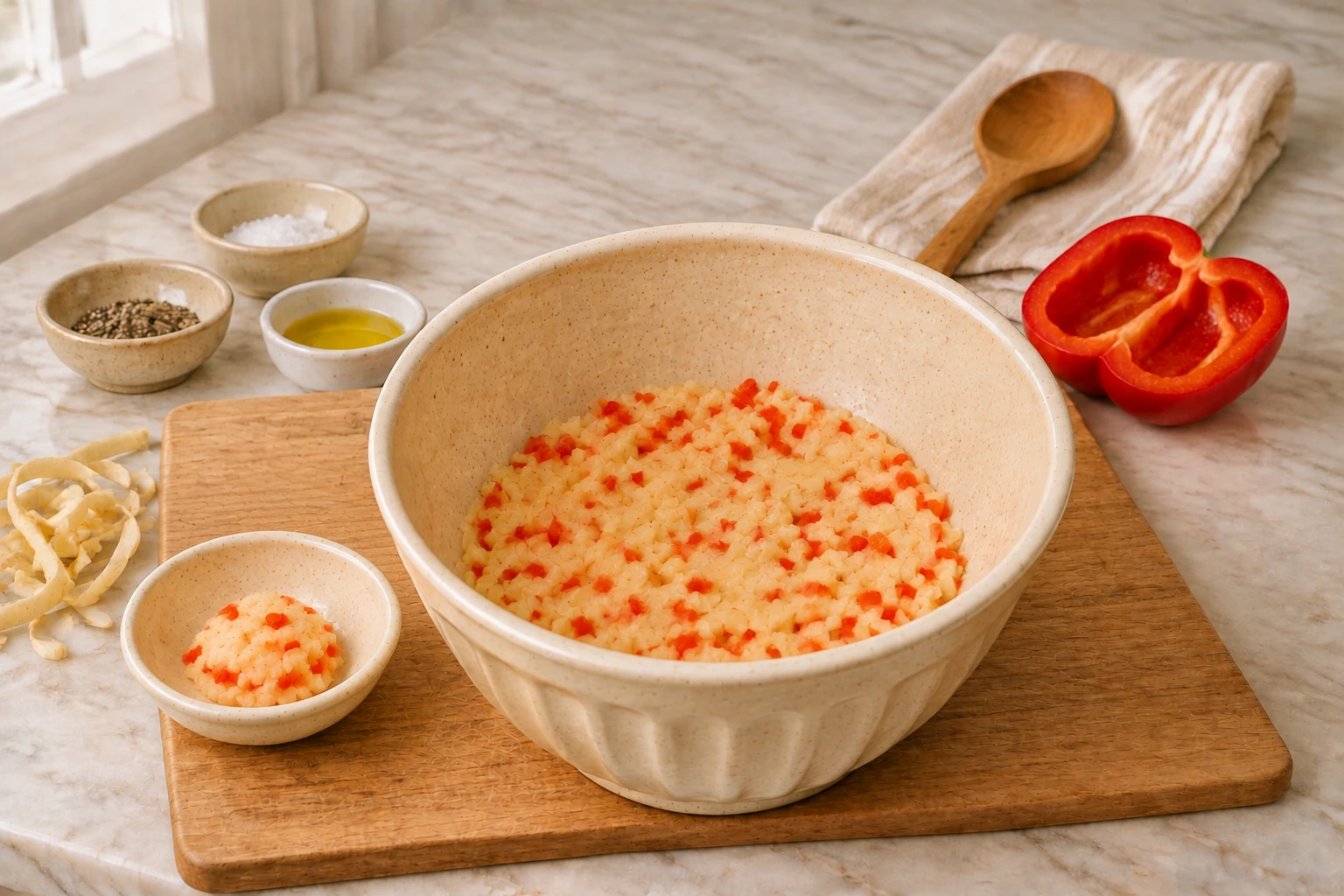
Cooked parsnip is a lovely base for this simple bird snack, with a mild, naturally sweet flavour and a soft texture once it's boiled until tender. A good mashing with a fork makes it easy to prepare and divide into tiny portions. Finely chopped red bell pepper adds a splash of colour and a little texture, giving the mash some variety without making extra work in the kitchen. This is an occasional snack, not a substitute for your bird's formulated food. Keep the preparation completely plain, with no salt, butter, oil or seasoning. Let the mash cool fully before serving, and introduce it gradually to see how your bird responds to the new texture.
Safety first: Introduce new foods gradually and speak with your veterinarian before making major changes to your bird's diet.
Foods to avoid
Never add salt, sugar, butter, cooking oil, stock cubes, sauces, onion, garlic or seasoning blends. Avoid mouldy, spoiled or unwashed produce, and do not serve the mash while warm. Remove all parsnip pieces that remain firm after cooking. Avocado, chocolate, caffeine and alcohol must never be included in bird snacks. Do not assume that a food is suitable for every bird species simply because another companion bird eats it. Check unfamiliar ingredients with an avian veterinarian before offering them.
Ingredients
Instructions
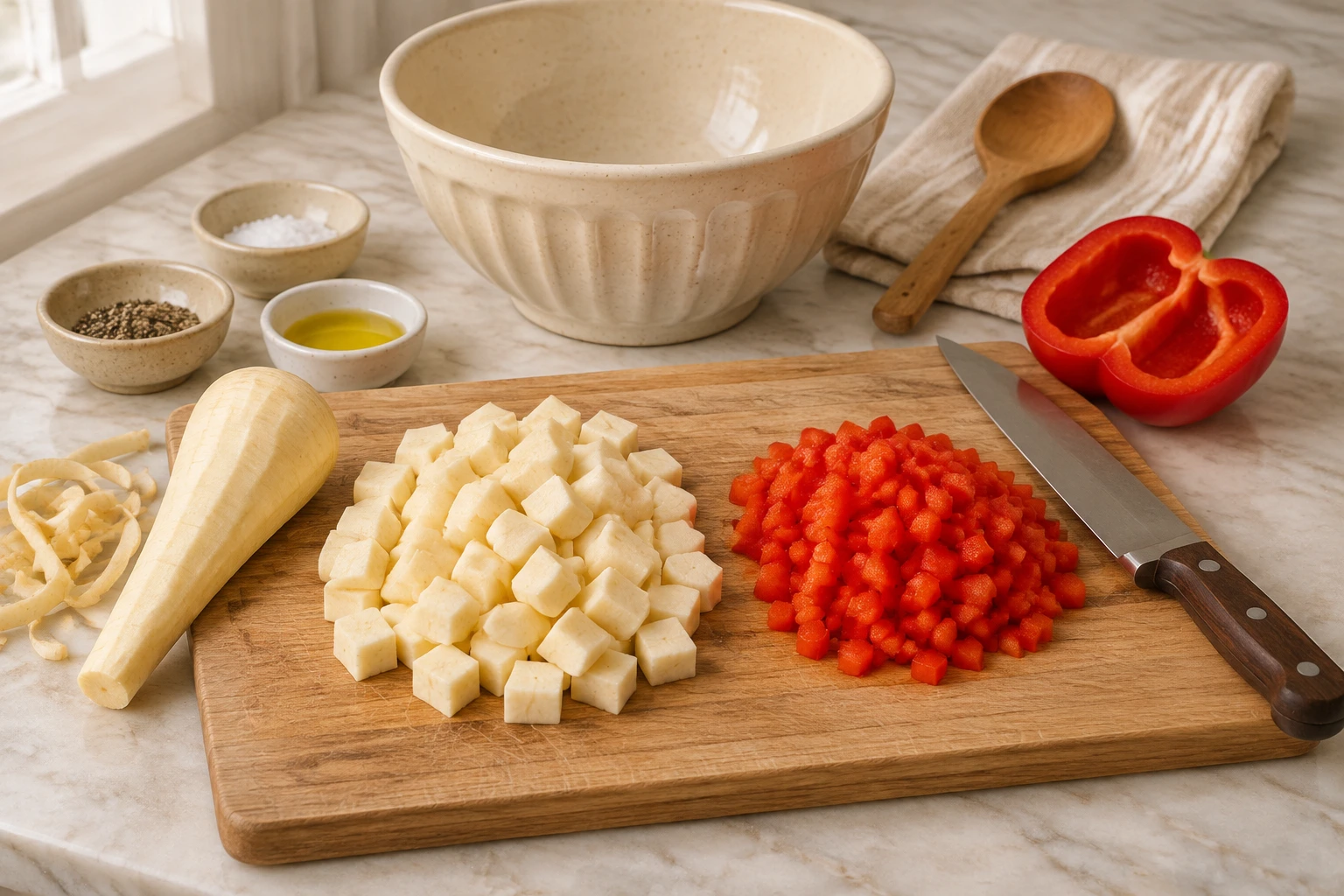
Prepare the vegetables: Peel the parsnip and cut it into small, evenly sized cubes so they cook at roughly the same rate. Wash the red bell pepper, remove the stem, seeds and white inner ribs, then finely chop the flesh. Set the two vegetables aside separately, using a clean chopping board and knife.
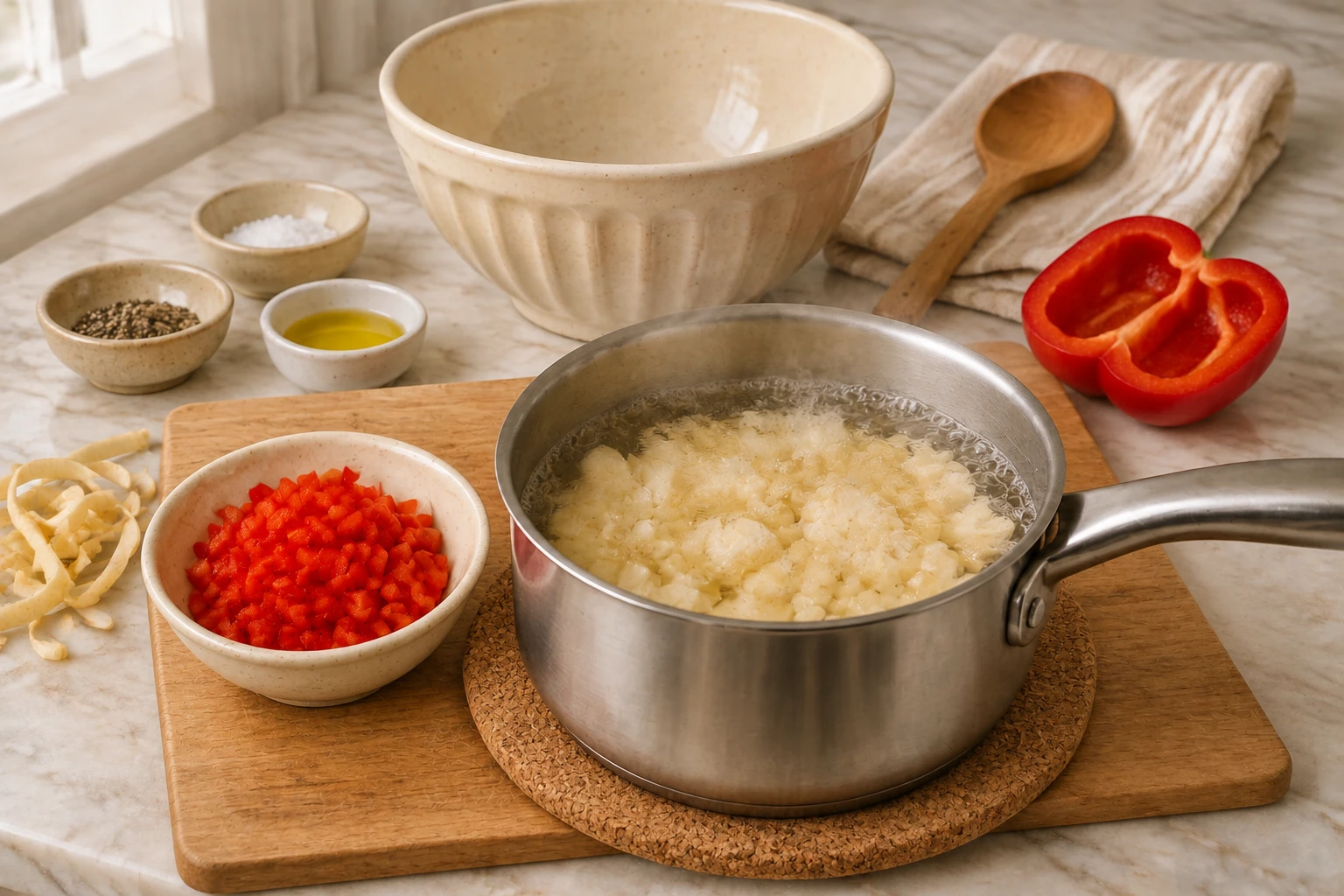
Boil the parsnip until tender: Put the parsnip cubes in a small saucepan and cover with plain water. Bring to a gentle boil and cook for approximately 12 to 15 minutes, testing with a fork towards the end. The cubes should be completely tender and easy to crush, with no firm centre left. Don't add salt, stock or seasoning.
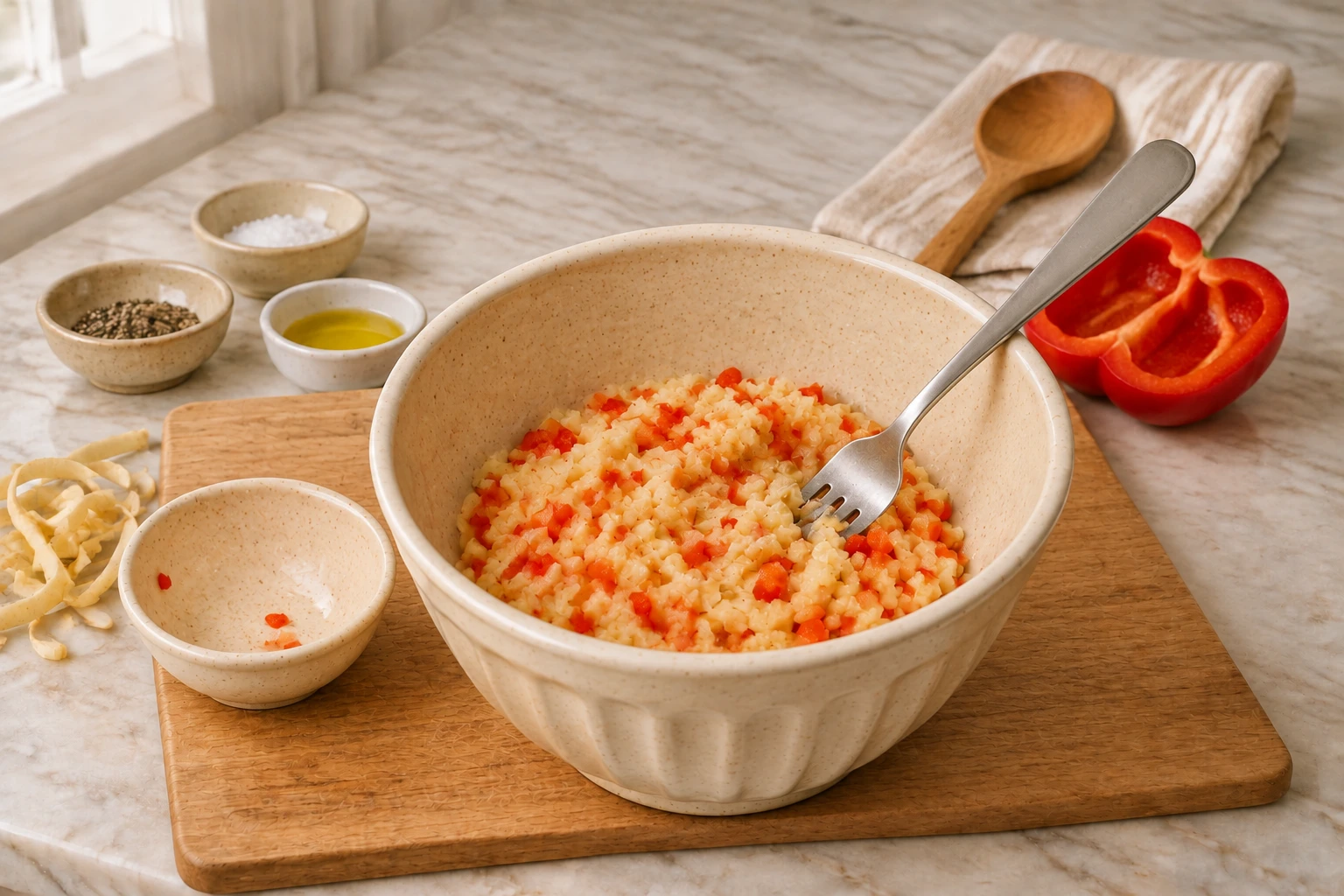
Drain and mash the parsnip: Drain the cooked parsnip carefully through a fine-mesh strainer, letting the excess water run off. Transfer the hot cubes to the same small mixing bowl and mash thoroughly with a fork until soft, breaking up any firm pieces. If the mash seems particularly dry, add just a little clean water to loosen it, then leave it to cool.
Fold in the red pepper: Wait until the mashed parsnip has stopped steaming and is no longer hot before adding the finely chopped red bell pepper. Use a clean fork to fold the pepper through until the small red pieces are evenly distributed. Keep the pieces tiny so the finished snack doesn't contain large, awkward chunks.
Cool completely and portion: Spread the mash into a shallow layer in the mixing bowl and leave it to cool completely to room temperature. Check carefully for any remaining warm spots before spooning a tiny amount into a clean serving dish. Put the rest in the refrigerator promptly rather than leaving the entire batch out while your bird eats.
Made this recipe?
Tap the paw so other pet parents know it’s worth making.
Be the first to make it
Tips & serving
Offer only a tiny taste at first, using a clean dish and observing whether your bird is comfortable with the texture. The appropriate amount depends on species, body size and the bird's established diet. Keep the mash as an occasional addition, not a substantial part of daily food intake. Fresh vegetables and snacks should never displace a nutritionally complete formulated diet. Remove uneaten mash promptly. Discuss major diet changes with an avian veterinarian, particularly if your bird has specific nutritional requirements.
- The soft consistency provides a different food texture from ordinary dry seed-based snacks.
- Combining two vegetables introduces colour and variety into occasional food enrichment.
- The small-batch method makes it easier to prepare only what is needed for a short serving.
- Simple ingredients allow owners to identify exactly what their bird is being offered.
- Cut the parsnip into similarly sized cubes so they soften evenly without leaving hard centres.
- Drain the parsnip thoroughly before mashing to prevent a watery mixture that separates in the serving dish.
Storage
Transfer unused mash to a clean, airtight food container and refrigerate promptly at 4°C or below. Because this is a moist vegetable preparation, do not leave it sitting at room temperature for extended periods. Divide the batch into small portions before refrigeration if that makes serving easier. Always use a clean utensil to remove each portion, and discard anything that has been served to your bird or contaminated by contact with the feeding dish. Do not rely on freezing to extend the serving life of this small batch.
Substitutions
If parsnip is unavailable, plain cooked carrot can provide a similar soft base. Cook it until completely tender and mash it thoroughly before combining it with the finely chopped red bell pepper. Introduce the alternative gradually and keep the same small-serving approach. Yellow or orange bell pepper can replace red bell pepper if needed. Wash it, remove the seeds and inner ribs, and chop the flesh very finely. Use plain fresh pepper rather than pickled, seasoned or preserved products.
Birds recipe FAQ
Can Birds Parsnip and Pepper Savory Mash replace my bird's regular diet?
Treat it as an occasional extra, not a meal plan. Offer only a tiny taste at first, using a clean dish and observing whether your bird is comfortable with the texture. The appropriate amount depends on species, body size and the bird's established diet.
Is plain cooked parsnip okay for birds?
This recipe uses plain cooked parsnip in a small, bird-appropriate amount. Skip it if your bird has a known sensitivity, and read the foods-to-avoid note on this page before serving.
How should I store leftovers?
Transfer unused mash to a clean, airtight food container and refrigerate promptly at 4°C or below. For the best freshness, use within 24 hours. Because this is a moist vegetable preparation, do not leave it sitting at room temperature for extended periods.
How should I introduce this snack?
Start with a taste-size portion next to your bird's usual food, and hold off on serving more until you have seen that it agrees with them.
Can birds eat cooked parsnip?
Plain parsnip can be offered as part of vegetable variety for many companion birds. Peel it, cook it until completely tender and serve it without salt, butter or seasoning. Introduce it in a small amount, and check species-specific dietary advice with an avian veterinarian.
Can I give my bird raw red bell pepper?
Plain, thoroughly washed red bell pepper flesh is commonly included among vegetables offered to companion birds. Remove the stem and seeds, then chop the flesh into small pieces. This recipe uses finely chopped pepper mixed into cooled cooked parsnip for a softer overall texture.
Sources