
A few juicy pomegranate arils tucked into a crisp bell pepper cup can turn a simple serving of vegetables into something fun for a curious bird to explore. The pepper makes a handy little scoop, while finely chopped carrot and broccoli offer different textures to nibble and pick through. Best of all, there's no cooking, seasoning, or special equipment needed. Keep the portions small and let the vegetables do most of the work, with pomegranate adding just a little sweetness. Size each pepper cup for your bird, and offer it as an occasional, supervised snack alongside their regular species-appropriate balanced diet. Wash everything thoroughly, serve it fresh, and remove leftovers promptly so food doesn't linger in the cage.
Safety first: Offer a small taste the first time and watch your bird for any tummy upset before serving more.
Foods to avoid
Never add salt, sugar, honey, oils, dressings, sauces, spice blends, onion, garlic, chocolate, avocado, or other unsuitable ingredients. Do not use pickled peppers, jarred peppers packed in seasoned liquid, sweetened dried pomegranate, pomegranate syrup, or commercially prepared fruit toppings. Remove the pepper stem, loose seeds, and tough inner membranes for this preparation, and remove all pomegranate peel and bitter white membrane. Natural pomegranate arils contain seeds, so portion size and suitability must be considered for the individual bird. Do not offer whole large arils to a bird that cannot comfortably manage them.
Ingredients
Instructions
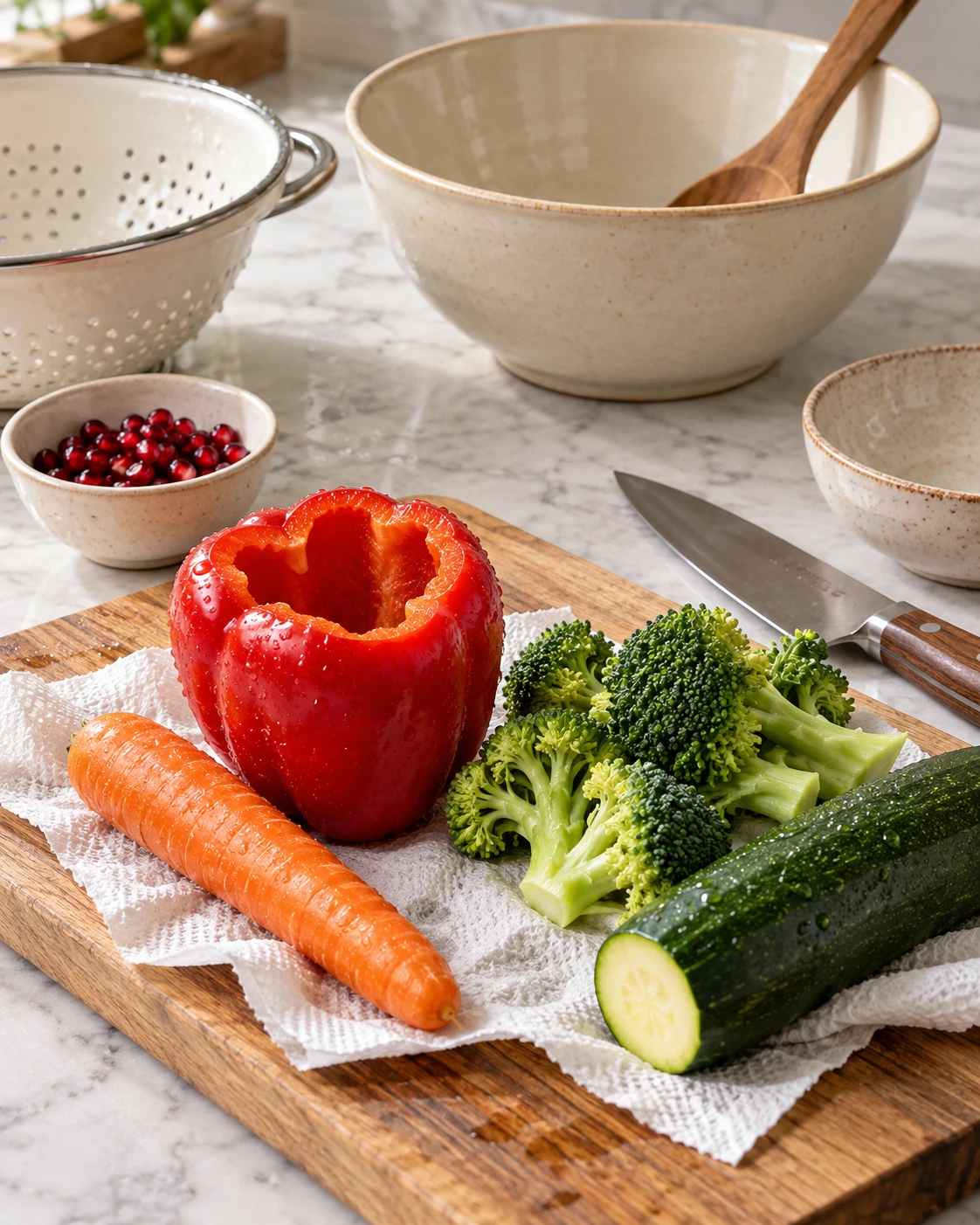
Wash and Sort the Produce: Wash your hands with soap and water, then clean your cutting board, knife, preparation bowls, and serving dish. Rinse the whole bell pepper, carrot, broccoli, and zucchini thoroughly under cool running water, rubbing the pepper skin and letting water run between the broccoli florets. Drain well, measure 2 teaspoons of pomegranate arils into a small clean bowl, remove any bitter white membrane, and pat the vegetables dry with clean kitchen paper so the cups won't collect excess water.
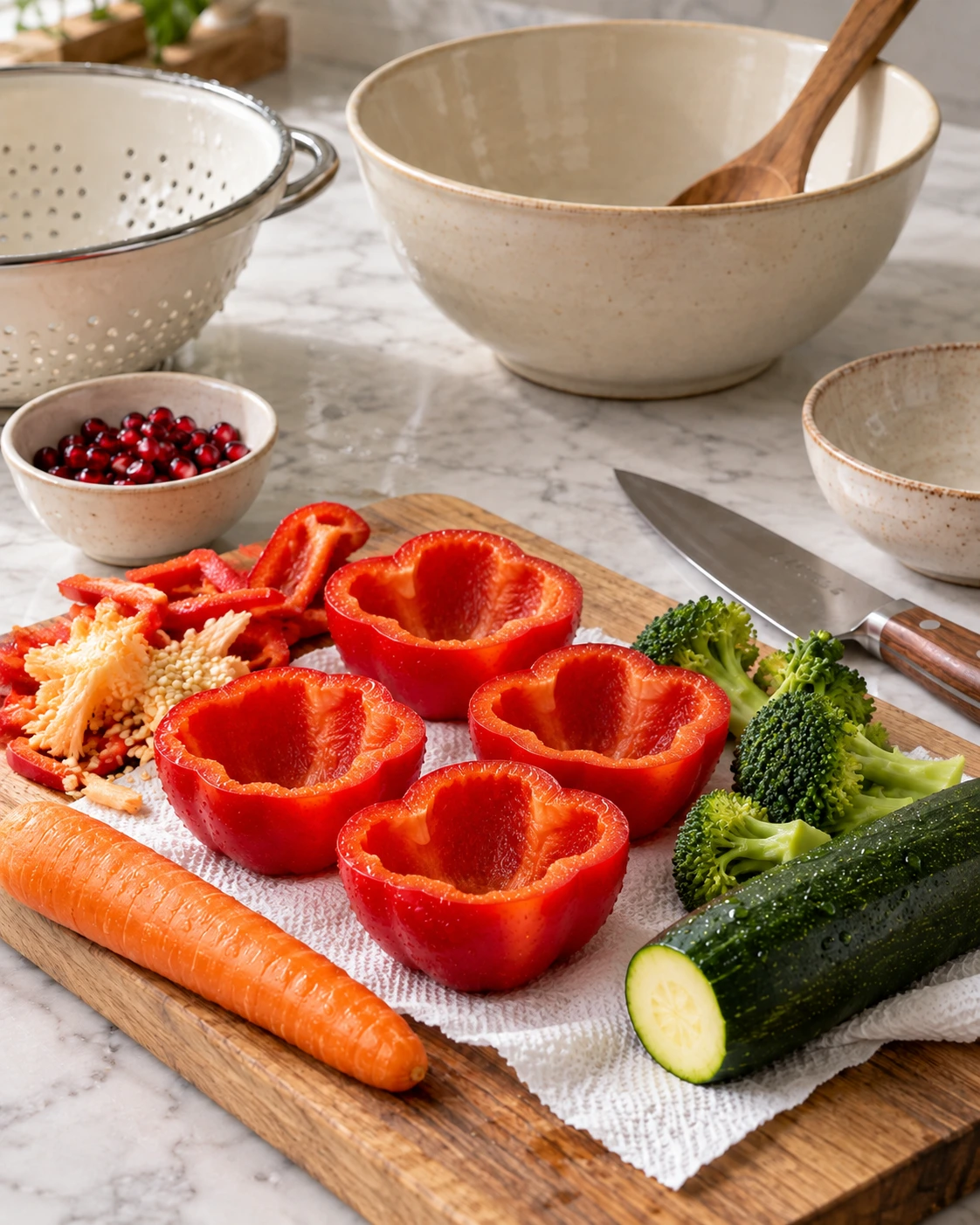
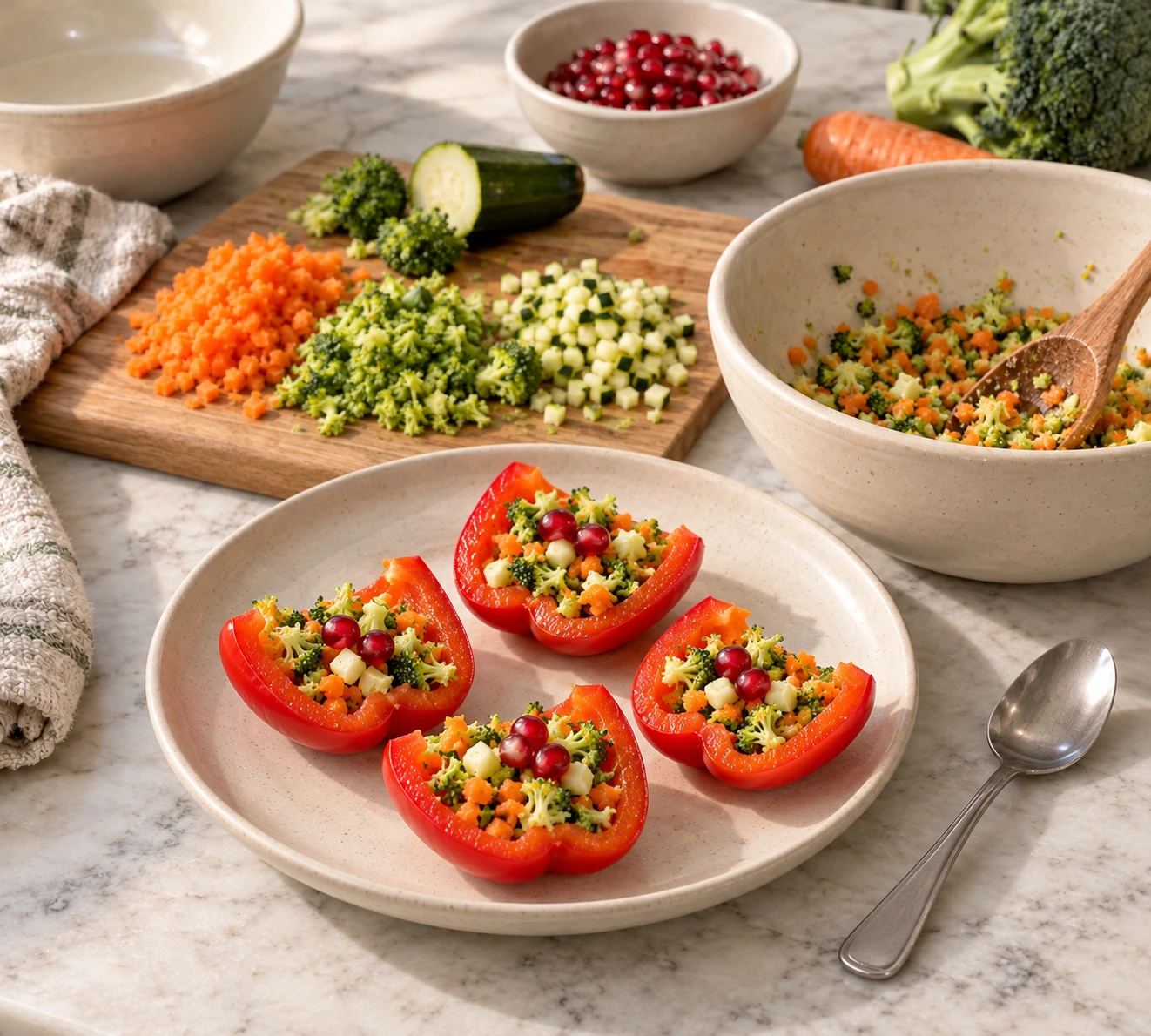
Cut the Bell Pepper into Small Cups: Place the clean bell pepper on your cutting board and remove the stem, central seed cluster, loose seeds, and pale inner membranes. Cut four shallow, curved scoops from the firm pepper walls, about 3 to 4 cm across for a medium or large parrot, trimming the edges smooth so each scoop sits securely in a serving dish without rolling. Keep the scoops open and shallow rather than deep, and for smaller birds, make much smaller pieces or serve finely chopped pepper in a shallow dish instead, avoiding narrow rings, pointed pieces, or loose decorations that could catch a beak or be difficult to handle.
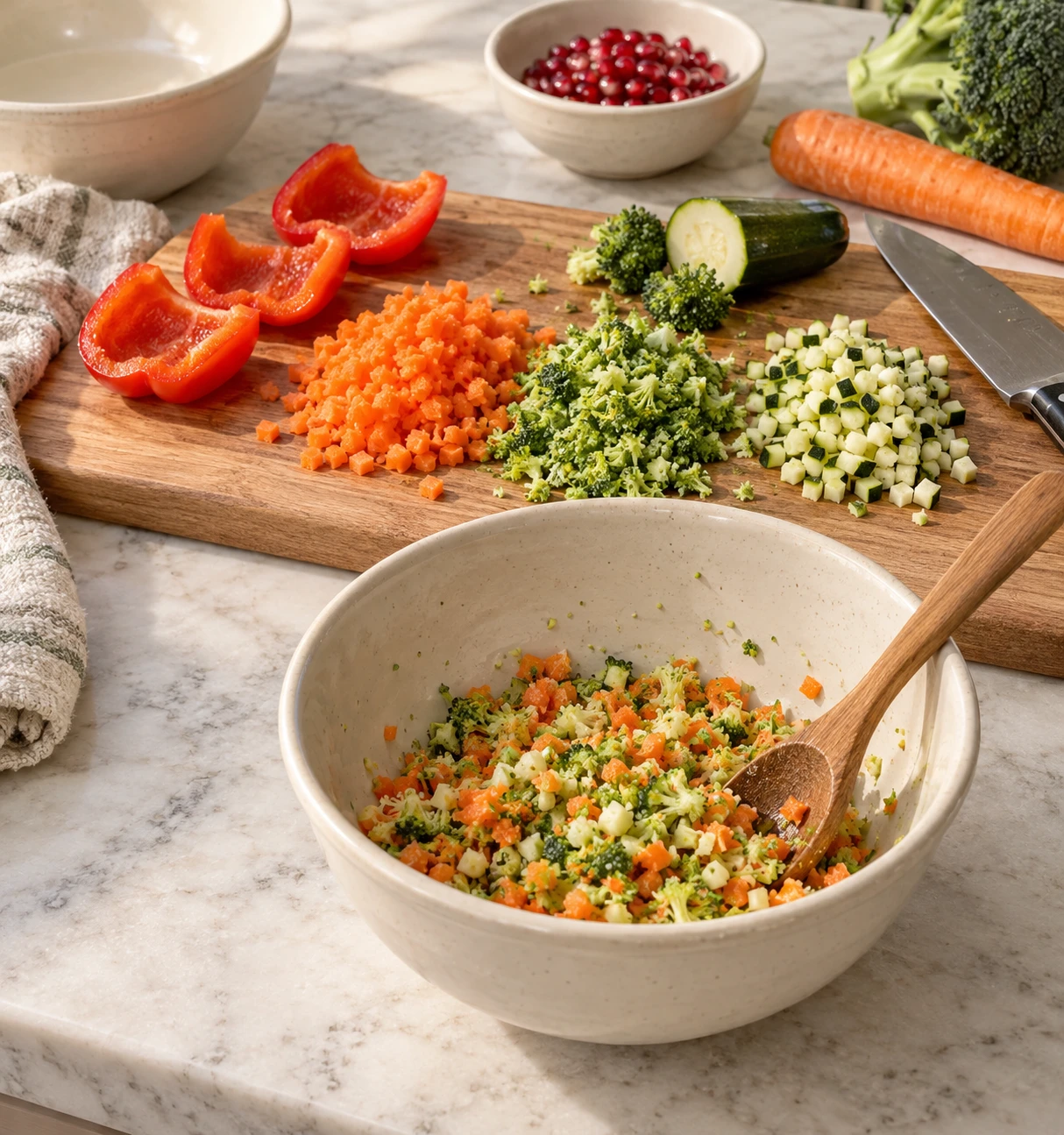
Finely Chop the Vegetables: Finely chop the carrot and tender broccoli florets into pieces your bird can comfortably pick up, aiming for roughly 2 to 3 mm for a medium-sized parrot. Chop the optional zucchini just as finely, keeping it separate while you check for tough stems or oversized chunks, then gently mix 1 tablespoon carrot, 1 tablespoon broccoli, and 1 teaspoon zucchini in a clean preparation bowl. For very small birds, mince everything more finely and offer just a tiny amount without the larger pepper cup, making sure the pieces are easy to handle rather than hard cubes that take effort to break apart.
Fill with Vegetables and Pomegranate: Arrange the four pepper scoops open-side up on a clean plate, then share the chopped vegetable mixture between them, adding just enough to loosely cover each shallow base. Place 2 to 3 pomegranate arils in each cup, using no more than the measured 2 teaspoons for the whole batch, and gently settle everything with a clean teaspoon without packing it down so your bird can easily see and reach each ingredient. Make only as many cups as your bird can reasonably enjoy during one supervised serving, storing any remaining washed ingredients separately if needed.
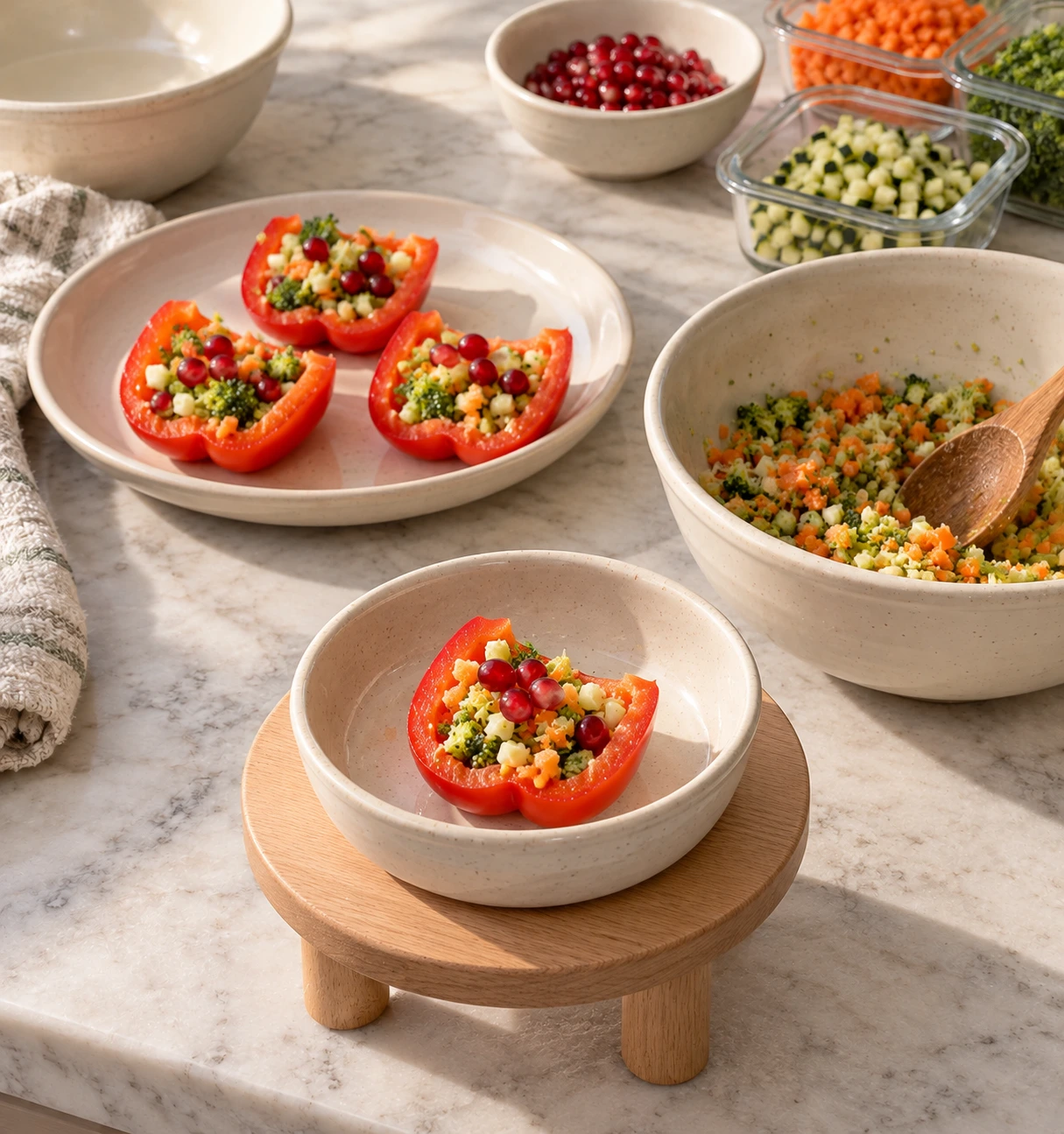
Serve One Small Cup and Clear Away Leftovers: Choose a portion that suits your bird and place the pepper cup in a clean, stable ceramic or stainless steel feeding dish at a comfortable height, safely away from droppings. Stay nearby while your bird explores, checking that it can easily pick up or bite the ingredients without trying to carry or swallow an oversized pepper piece. Remove the cup if it gets soiled, discard uneaten fresh food within 1 to 2 hours or sooner in warm conditions, wash the dish and all food-contact surfaces thoroughly, and promptly refrigerate any untouched, unserved ingredients in clean, covered containers.
Made this recipe?
Tap the paw so other pet parents know it’s worth making.
Be the first to make it
Tips & serving
These cups are intended mainly for companion parrots and other birds whose species-specific diet permits the listed produce, not as a universal recipe for every pet bird. For a healthy medium-sized parrot already accustomed to these ingredients, begin with one small pepper cup holding approximately 1 teaspoon of chopped vegetables and 1 to 2 pomegranate arils. For larger parrots, a slightly larger serving with around 2 to 3 arils may be reasonable, depending on the bird's usual fresh-food allowance. For budgies, finches, canaries, and similarly small birds, offer only a tiny pinch of finely minced vegetables with a small cut piece of one aril if appropriate for the species, rather than a
- The shallow edible pepper cups give curious birds an opportunity to inspect, pick apart, and handle different food textures during supervised feeding.
- Combining crisp bell pepper, finely chopped vegetables, and a few juicy pomegranate arils creates visual and textural variety without adding seasonings.
- Preparing individual cups makes it easier to control the amount of fruit offered and avoid placing an unnecessarily large serving in the cage.
- The no-cook preparation is quick to assemble, and the ingredients can be portioned with ordinary kitchen equipment.
- The colorful presentation lets owners observe which fresh foods their birds explore, ignore, or prefer without replacing their established balanced diet.
- Choose a bell pepper with thick, firm walls because thin or wrinkled sections tend to collapse once the vegetables are added.
Storage
These cups are best assembled just before feeding because cut pepper gradually loses its firmness and the moist vegetable filling can collect liquid in the bottom. Refrigerate any untouched, unserved prepared components promptly in clean, covered food-safe containers at 4°C or colder, keeping chopped vegetables and pomegranate arils separate from the pepper sections. Do not refrigerate or reuse a cup that has already been placed in the bird's feeding area or handled by the bird.
Substitutions
If orange bell pepper is unavailable, use a thoroughly washed red or yellow sweet bell pepper with similarly firm walls. Green bell pepper is also an option for birds that already accept its slightly more bitter flavor. Remove the stem, seeds, and internal membranes before cutting manageable pieces. Replace the finely chopped broccoli with an equal quantity of washed, tender bok choy leaves or finely chopped zucchini if either is already familiar and appropriate for your bird. Keep the vegetable portions small and do not increase the fruit amount simply because one vegetable has been omitted.
Birds recipe FAQ
Can I serve this snack every day?
Treat it as an occasional extra, not a meal plan. These cups are intended mainly for companion parrots and other birds whose species-specific diet permits the listed produce, not as a universal recipe for every pet bird.
Can birds have pomegranate arils?
This recipe uses pomegranate arils in a small, bird-appropriate amount. Skip it if your bird has a known sensitivity, and read the foods-to-avoid note on this page before serving.
How should I store leftovers?
These cups are best assembled just before feeding because cut pepper gradually loses its firmness and the moist vegetable filling can collect liquid in the bottom.
What's the safest way to try this with my bird?
Offer a small amount beside regular food, introduce one new recipe at a time, and watch appetite, stool, skin, and behavior for a day or two.
Can birds eat pomegranate arils with the seeds inside?
Many companion parrots can eat fresh pomegranate arils, including their natural seeds, when offered in suitably small portions. However, the size and firmness of a whole aril may be unsuitable for smaller birds. Cut or crush a tiny portion when appropriate, supervise feeding, and ask an avian veterinarian about your particular species.
How much pomegranate should I put in each pepper cup?
For a medium-sized parrot familiar with pomegranate, one or two arils are a sensible small starting amount, with the rest of the cup filled mostly with vegetables. Larger birds may handle slightly more, while tiny birds need much less. Adjust the portion to the species, usual diet, and veterinary guidance rather than treating every cup as one serving.
Sources