
If your dog has just stolen a few peas from your plate, there is usually no reason to panic. Plain green peas are generally safe for dogs to eat as an occasional food, provided they are served without ingredients that can be harmful or upsetting to dogs. The pea itself is the simple part. The preparation is where things can change quickly. This guide looks at fresh peas, frozen peas and canned peas, plus pea pods, portions and the place peas should have in a dog's diet. If your dog has a medical condition, follows a prescribed diet or has reacted badly to foods before, your veterinarian can help you decide what fits that individual dog.
Plain green peas are generally safe for dogs
Yes, most healthy dogs can eat plain green peas. Green peas contain fiber, carbohydrates and plant protein, along with nutrients such as vitamin C, vitamin K and several B vitamins. They are also fairly easy to add to a meal as a small extra. For a dog that enjoys vegetables, a few plain peas can be a pleasant change from the usual food. You do not need to add butter, salt or seasoning to make them suitable. In fact, those additions are where a harmless vegetable side dish can become a poor choice for a dog.
Got a dog who grabs food from the floor? A few plain peas are very different from a casserole containing peas. Onion, garlic, rich sauces, heavy amounts of fat and salty seasoning can all create separate problems. So when I think about peas for dogs, I focus on the whole preparation rather than the vegetable alone. If the peas are plain and your dog is otherwise healthy, they can fit as an occasional extra. If your dog has a restricted diet, check with your veterinarian before adding them.

Fresh peas for dogs are a simple choice
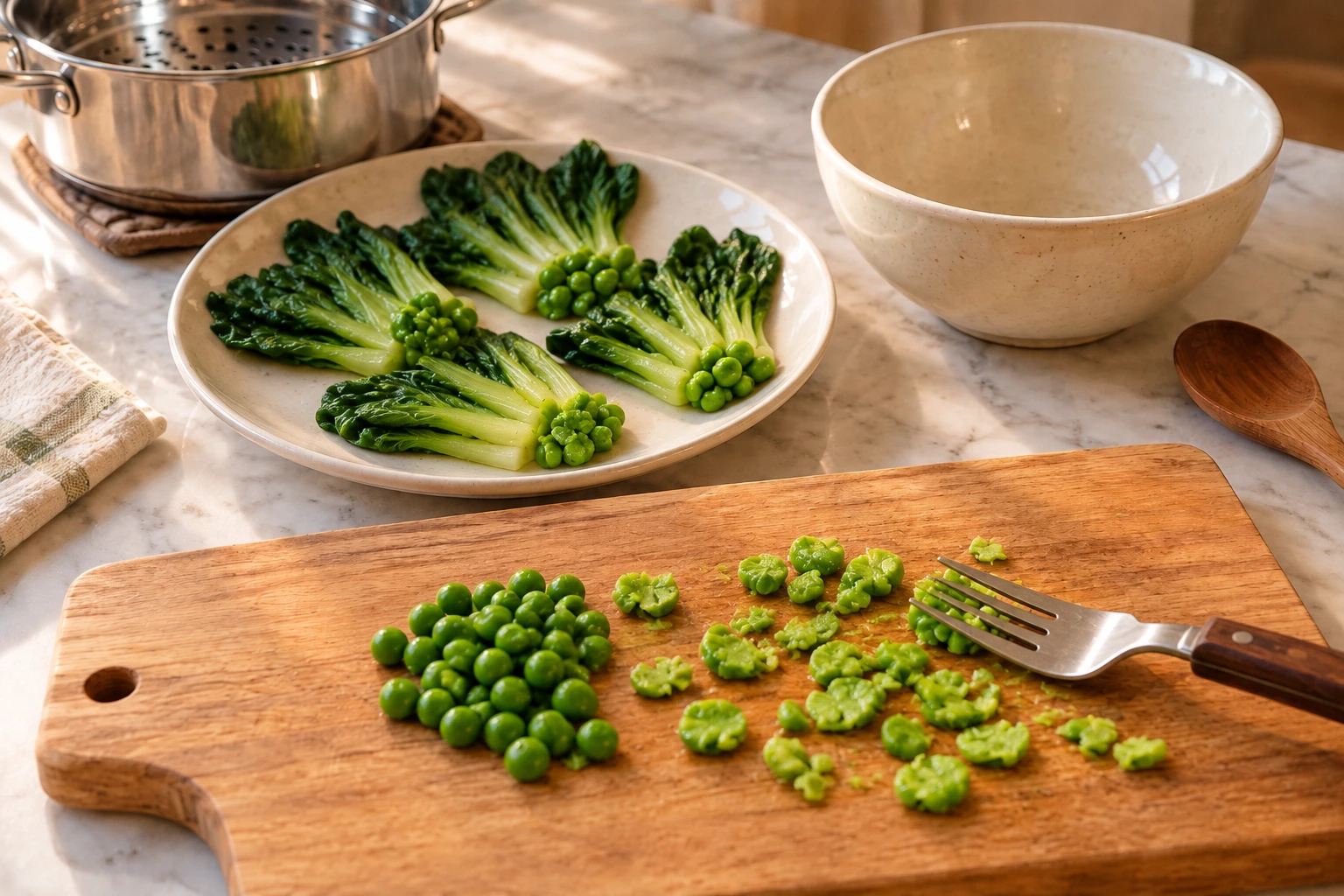
Fresh peas can be offered to dogs when they are removed from their pods and served plain. You can give them raw or lightly cooked, depending on what your dog tolerates and prefers. Wash fresh produce before serving it, particularly if it has been handled by several people or stored with other foods. Smaller peas are usually easy for dogs to chew, while very large portions of any firm food can be harder for a dog to manage.
The pod needs a little more thought. Some edible pea pods are suitable as food, but the texture can be tougher and less predictable than the peas inside. A dog that gulps food may have trouble with a whole pod. I would usually skip the pod and give the peas themselves, especially for a dog that tends to swallow food quickly. Never confuse edible garden peas with ornamental sweet pea plants, which are a different group of plants and should not be treated as dog food.

Frozen peas for dogs can work too
Frozen peas are usually fine for dogs when they are plain and have no added sauce or seasoning. Check the ingredient label if you are buying a packaged product. A bag containing only peas is the straightforward choice. You can thaw them before serving, or offer a small amount once they are at a comfortable texture for your dog. Very cold, hard food can be unpleasant for some dogs, particularly if they have sensitive teeth.
Look at the way your dog eats, too. A dog that chews carefully may handle individual peas without trouble. A dog that vacuums up every bite may be better off with peas thawed and mixed into its regular food. The point is not that frozen peas are dangerous. It is that serving size, texture and eating habits all affect how comfortably a particular dog handles an extra food. If your dog has dental problems or another condition affecting eating, ask your veterinarian what texture is appropriate.

Canned peas are the option I would usually skip
Canned peas are not automatically poisonous to dogs, but they often contain more sodium than you would want in a simple dog treat. Some canned products also contain seasonings or other ingredients, so the label matters. A small accidental taste of canned peas is not the same thing as deliberately making salty canned vegetables part of a dog's diet. If you have a choice, plain fresh or frozen peas are easier options because you have more control over what your dog is eating.
What about canned peas labeled low sodium? Those may contain less sodium than standard canned peas, but they still need an ingredient check. Rinsing canned vegetables can remove some surface sodium, but it does not turn every canned product into an ideal dog food. If your dog needs a sodium-restricted diet for a medical reason, do not make that decision yourself based on a food label. Ask your veterinarian which foods and treats fit the diet prescribed for your dog.
How much peas should a dog have?
Peas should stay a small part of a dog's overall diet. They are an extra food, not a replacement for a complete and balanced dog food. Giving a large amount at once can add more fiber and calories than your dog is used to, which may lead to digestive upset. A sensible approach is to introduce a small amount and see how your dog responds before offering them again. This is especially useful if your dog rarely eats vegetables or has a sensitive stomach.
There is no single pea portion that suits every dog. A Chihuahua, a Labrador and a giant breed do not have the same nutritional needs, and a dog's regular diet, age, activity and health also matter. Peas should be counted among other extras rather than treated as unlimited food simply because they are vegetables. If your dog already gets several treats or toppers during the day, adding another food can push the overall diet away from what your veterinarian or nutrition plan intended.
Keep peas as an extra, not the main food
You may have heard concerns about peas and other legumes appearing in some grain-free dog foods. The issue is more complicated than saying peas are bad for dogs. The FDA has investigated reports of canine dilated cardiomyopathy associated with certain diets, many of which had high proportions of peas, lentils, other pulses or potatoes among their main ingredients. That investigation did not establish that peas given as an occasional food cause the condition. It is a reason to think about the entire diet rather than blaming one ingredient in isolation.
For most owners, the practical point is simple: do not replace your dog's balanced food with a homemade bowl built mainly from peas and other vegetables. If you are choosing a commercial dog food, look at the whole formulation and discuss diet changes with your veterinarian, particularly if your dog has a medical history that affects nutrition. Peas served occasionally on top of an appropriate diet are a different question from a diet in which peas or other legumes make up a substantial part of the formula.
Watch your dog after trying peas for the first time
Most dogs that tolerate peas can eat them without trouble, but any new food can disagree with an individual dog. After introducing peas, pay attention to how your dog is acting and eating. If you notice a concerning change, stop offering the new food and contact your veterinarian for advice. Dogs with known food sensitivities or digestive problems may need a more careful approach than healthy dogs eating a varied diet.
Do not assume that every reaction after peas has the same cause. A dog might have eaten several foods at once, or the peas may have come with butter, seasoning, sauce or another ingredient. Keep the preparation simple when testing a new food. That gives you a much clearer idea of what your dog actually ate. If your dog has a significant or persistent reaction, veterinary advice is the right next step rather than trying to manage the problem with more food changes at home.
Can Dogs Eat Peas Safely? Fresh, Frozen and Canned Peas Explained FAQ
Can dogs eat green peas?
Yes. Plain green peas are generally safe for most healthy dogs when offered as an occasional extra. Serve them without salt, sauces, butter, onion, garlic or other seasonings.
Can dogs eat fresh peas?
Yes, fresh peas can be suitable for dogs when washed and served plain. Removing the peas from their pods can make them easier to eat, especially for dogs that swallow food quickly.
Can dogs eat frozen peas?
Yes, plain frozen peas can be offered to dogs. Thawing them first can make them more comfortable to chew, particularly for dogs with sensitive teeth or a habit of gulping food.
Can dogs eat canned peas?
Canned peas are best limited because many contain added sodium, and some include seasonings or other ingredients. Plain fresh or frozen peas give you better control over what your dog eats.
Are peas safe for dogs with sensitive stomachs?
Peas may not suit every dog, even though they are generally safe. Introduce any new food cautiously and stop offering it if your dog reacts poorly. Ask your veterinarian about diet changes if your dog has ongoing digestive problems.
Can dogs eat pea pods?
Some edible pea pods are food-safe, but their tougher texture may be harder for some dogs to chew or swallow. For simplicity, many owners choose to remove the peas from the pod before offering them.