

A tray of gently roasted turkey can make a useful batch of homemade dog treats without turning the kitchen into a biscuit-making project. These soft strips start with boneless turkey breast, a small amount of steamed parsnip, and enough water to keep the meat moist while it cooks. The finished turkey should be tender enough to pull apart with your fingers, rather than dry and chewy like jerky. The important part is cooking the turkey completely, checking its internal temperature, and cutting the finished meat into pieces your dog can manage comfortably. Prepare a few small portions for the refrigerator and freeze the rest. These are occasional rewards alongside a complete and balanced diet, not a replacement for regular meals.
Safety first: Introduce new foods gradually and speak with your veterinarian before making major changes to your dog's diet.
Foods to avoid
Use only fresh, plain, boneless, skinless turkey breast and dog-appropriate vegetables. Never include cooked or raw poultry bones, skin, onion, garlic, leeks, chives, seasoning mixes, salty stock, gravy, butter, or added salt. Keep raw poultry separate from ready-to-eat foods and clean all utensils and surfaces after handling. Turkey must reach a minimum internal temperature of 74°C or 165°F before serving. Do not mistake gentle roasting for dehydration: these soft, moist strips are perishable and require refrigeration or freezing.
Ingredients
Instructions
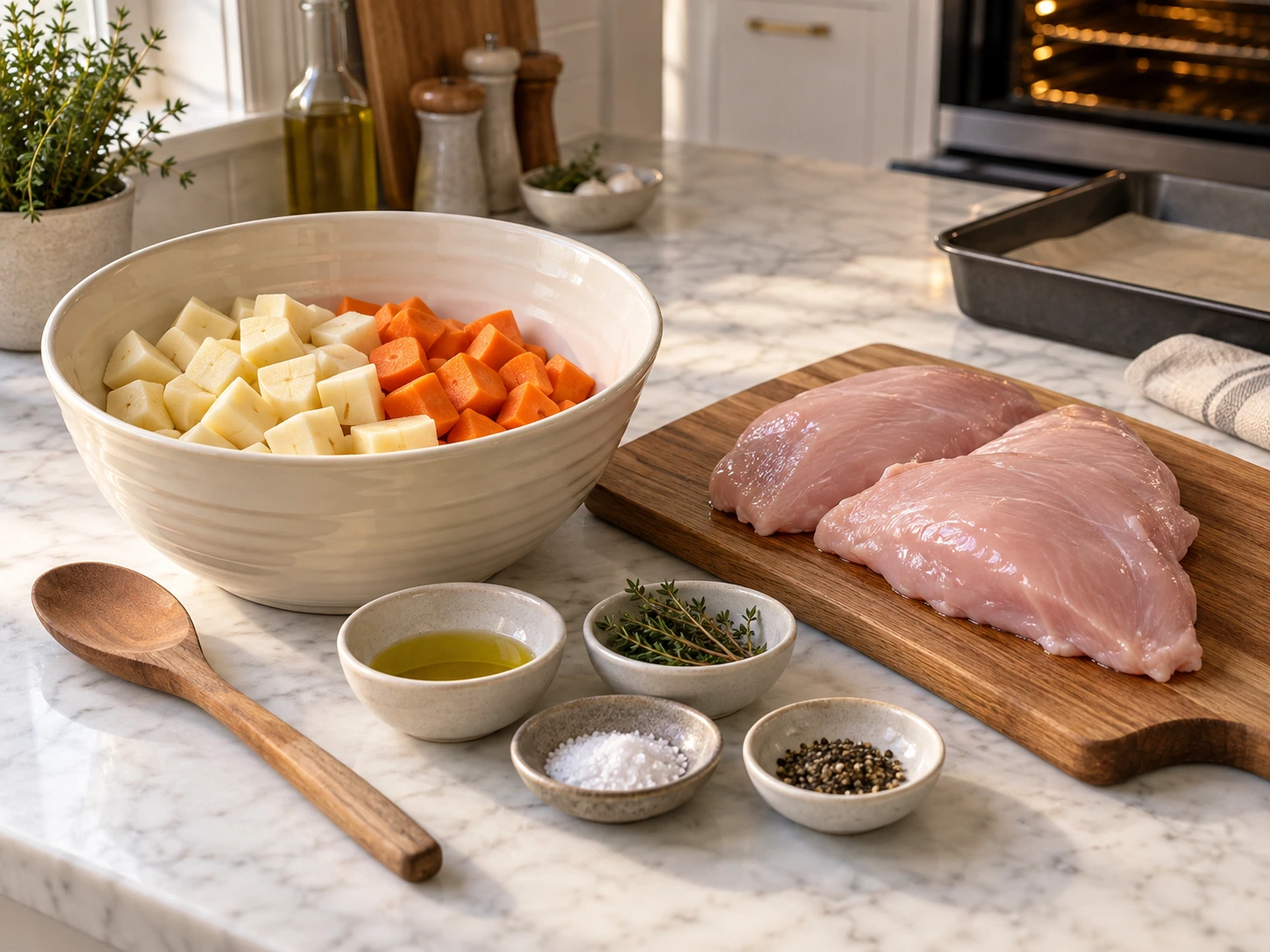
Prepare the Turkey and Vegetables: Preheat the oven to 150°C conventional or 130°C fan. Wash your hands and prepare a clean working area. Trim the turkey breast, removing visible fat, cartilage, and any tough connective tissue. Check carefully that there are no bones. If the breast is unusually thick, divide it lengthwise into two similarly sized pieces so it cooks more evenly. Keep the turkey in broad pieces rather than cutting it into individual strips at this stage. Peel the parsnip and carrot, then cut them into small, evenly sized pieces. Use a separate board for the raw poultry and wash utensils and surfaces thoroughly after handling it. Do not rinse raw turkey under running water, as
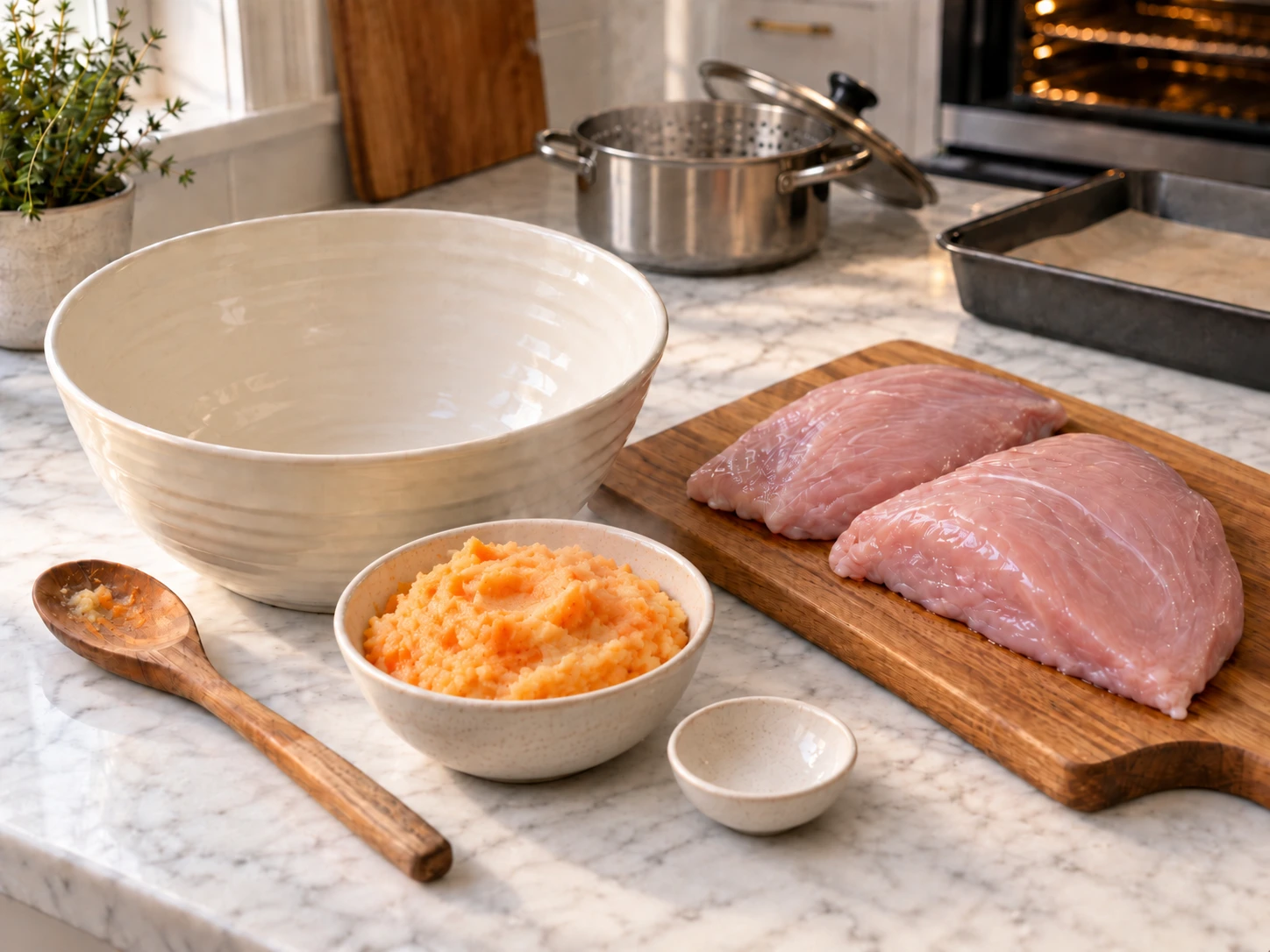
Steam and Mash the Vegetables: Put the parsnip and carrot into a steaming basket above gently simmering water. Cover and steam for approximately 10 to 12 minutes, until both vegetables are completely tender and can be crushed easily with a fork. Transfer them to a small bowl and mash thoroughly with 15 ml of the measured water. Aim for a soft, slightly textured mash without firm vegetable chunks. Let any escaping steam settle before handling. Steaming helps soften the vegetables without introducing cooking oil, salt, stock, or seasoning. The small amount of mash will be used as a moist topping for the turkey rather than a thick coating.
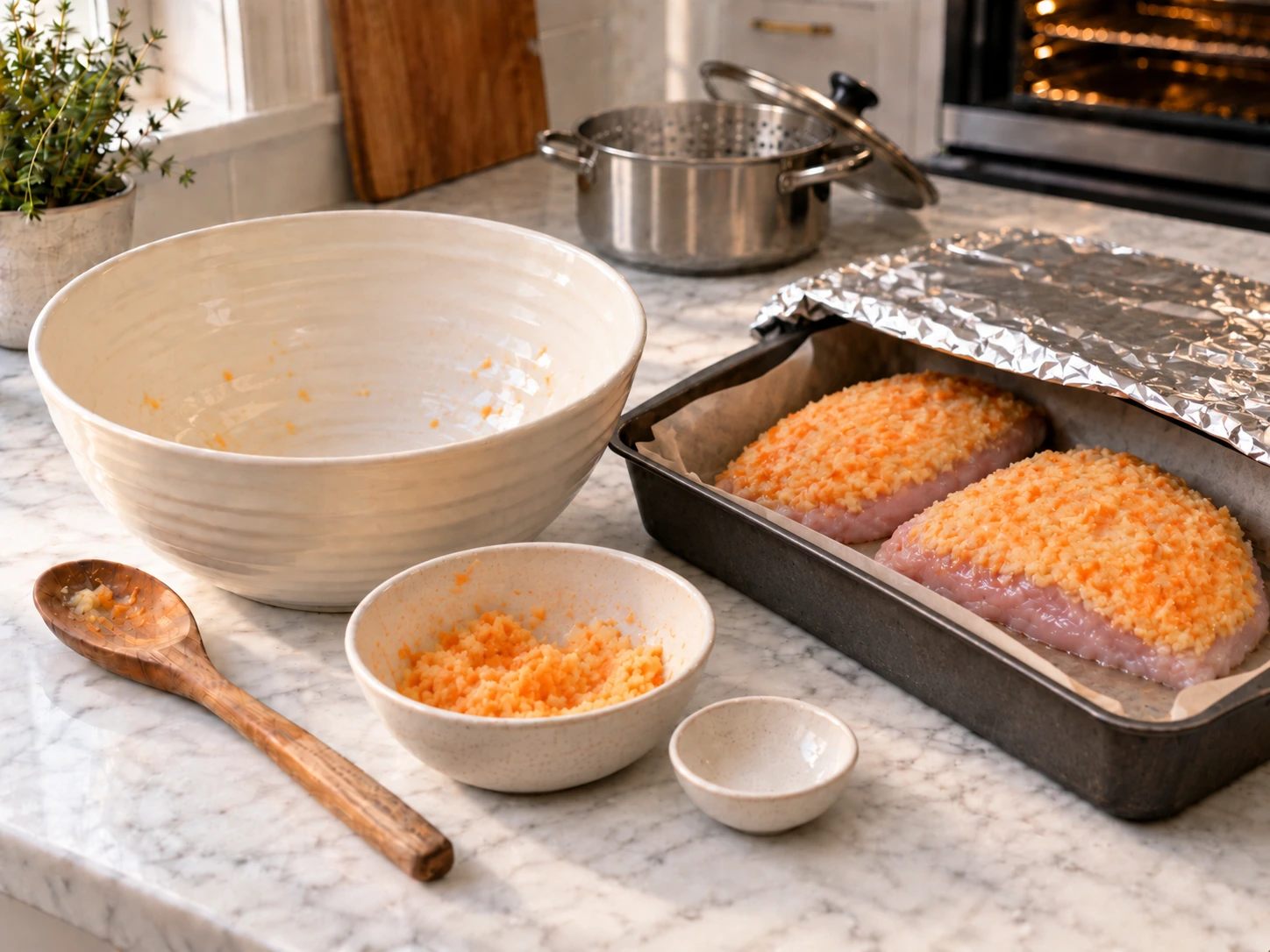
Arrange and Cover the Turkey: Line the baking dish with a piece of baking parchment. Arrange the turkey pieces in a single layer, leaving a little space between them where possible. Spread the soft vegetable mash lightly over the upper surfaces of the meat, distributing it evenly rather than piling it in one place. Pour the remaining 45 ml of plain water into the bottom of the dish, around the turkey. Cover the dish securely with foil or an ovenproof lid to retain moisture. The water and covered cooking environment help prevent the outside of the lean turkey from becoming excessively dry before the centre is fully cooked. Do not add butter, oil, gravy, commercial stock, salt, onion, garlic,
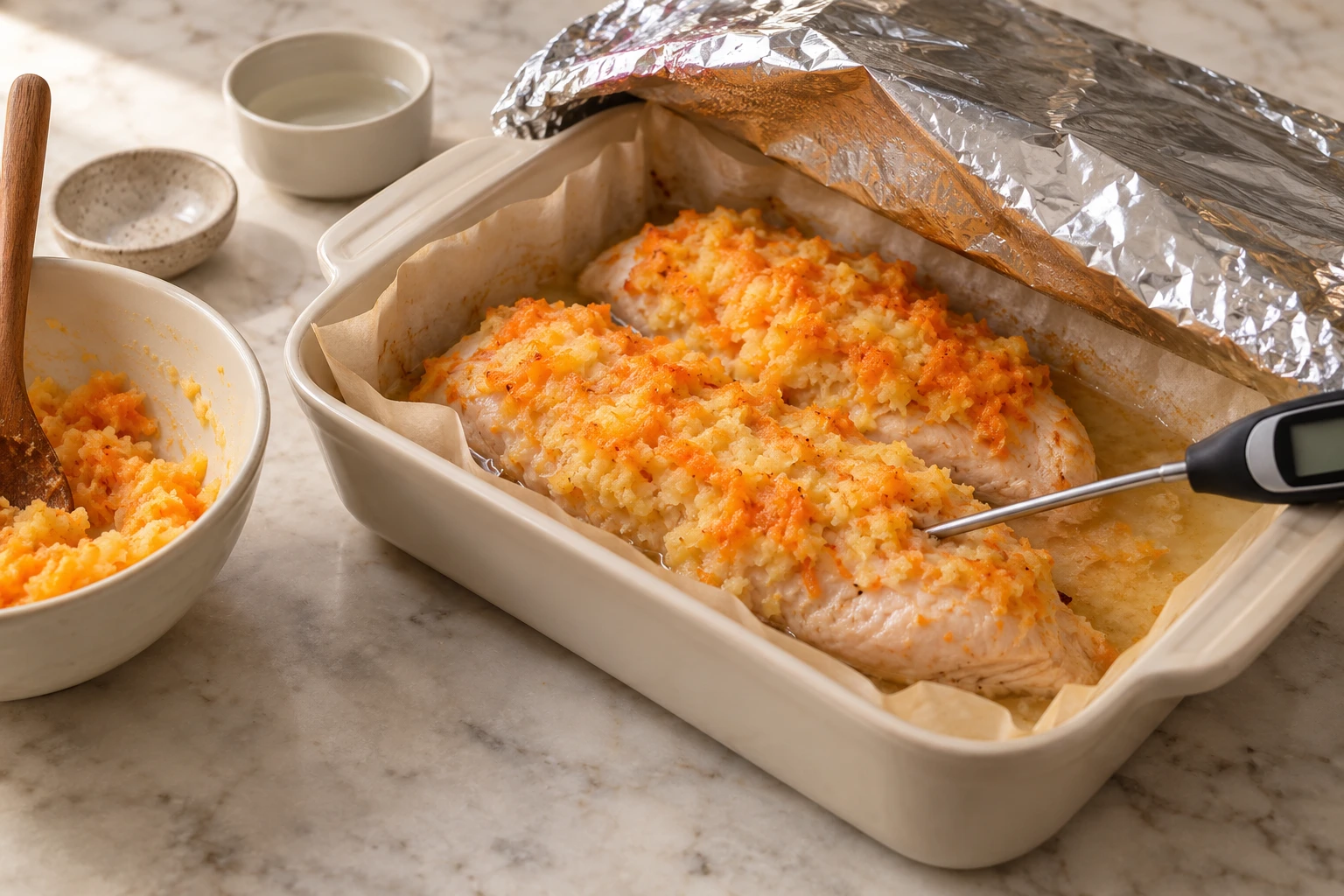
Roast Gently Until Fully Cooked: Place the covered dish in the preheated oven and roast for approximately 35 to 45 minutes initially. Carefully lift the foil away from your face to avoid escaping steam. Insert a digital food thermometer into the thickest section of the turkey, avoiding contact with the baking dish. Continue cooking as needed until every piece reaches an internal temperature of at least 74°C or 165°F. Depending on the thickness of the breast, total cooking may take approximately 45 to 60 minutes. Temperature is the safety check, not appearance or cooking time alone. The meat should be fully cooked but still moist, with a small amount of clear cooking liquid remaining in the
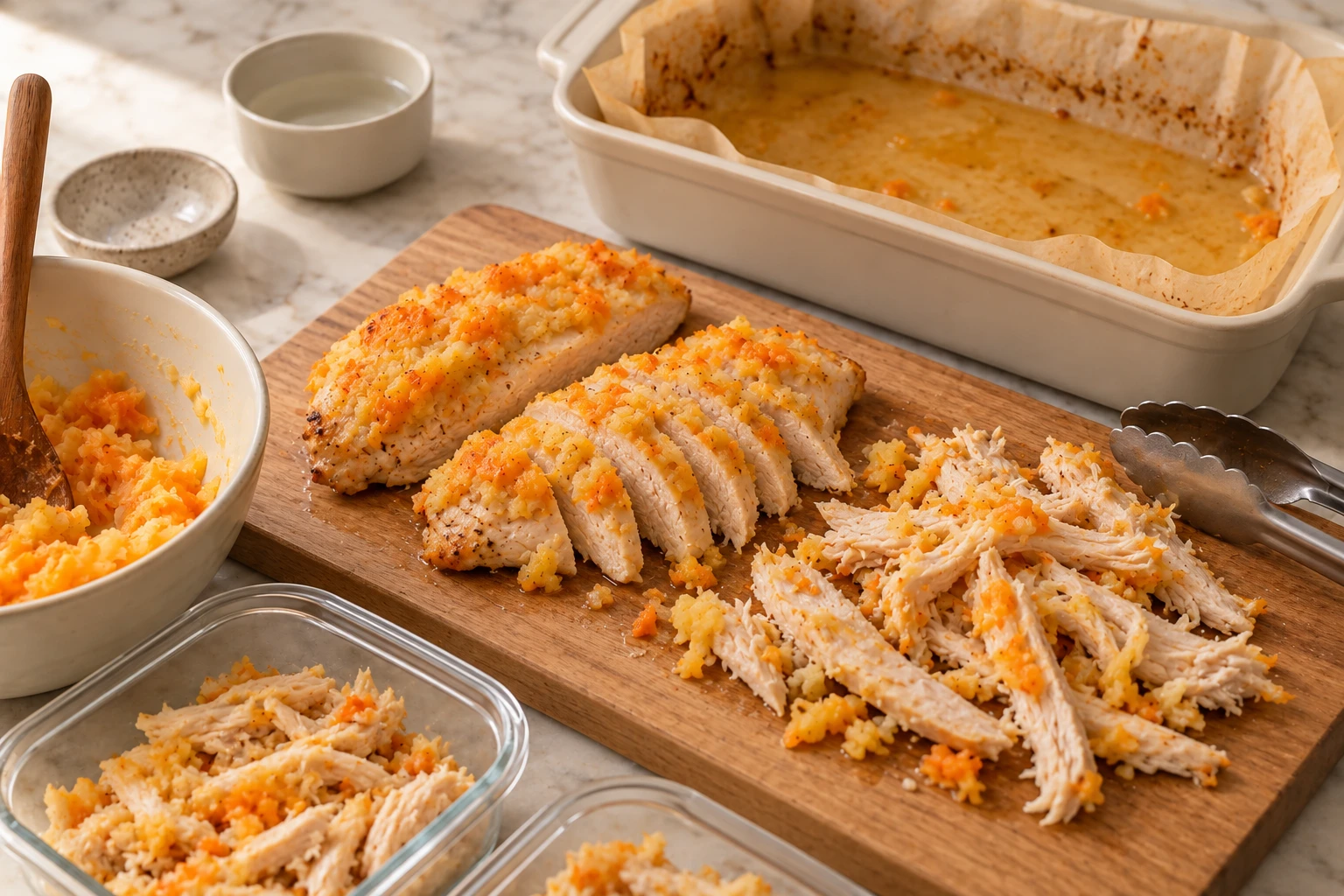
Cool, Slice, and Pull Apart: Remove the dish from the oven and transfer the fully cooked turkey to a clean board using kitchen tongs. Allow it to cool sufficiently for comfortable handling, keeping total time at room temperature within safe food-handling limits. Slice the turkey across the direction of its muscle fibres into short, manageable strips. Pull each strip gently apart with clean fingers or two forks. Incorporate any vegetable coating that remains attached to the meat, breaking up larger vegetable pieces if necessary. The finished texture should be tender and easy to separate, never stringy enough to form long strands that are difficult to swallow. Cut or tear the strips into
Made this recipe?
Tap the paw so other pet parents know it’s worth making.
Be the first to make it
Tips & serving
Serve these turkey strips completely cooled, in small pieces appropriate for your dog's size, chewing habits, and individual needs. For a small dog, start with a tiny piece and observe how comfortably it can be chewed and swallowed. Larger dogs may manage slightly bigger pieces, but training rewards should remain small enough to consume quickly. Supervise feeding and avoid offering long, dangling strips that may be gulped without proper chewing. The finished batch contains approximately 280 to 330 g, but that total is not an appropriate daily serving amount. Treats, including homemade treats and other extras, should generally account for no more than 10% of a dog's daily calorie intake,
- The soft pull-apart texture makes it easy to prepare appropriately sized rewards for different dogs.
- A single oven session produces several small portions that can be refrigerated or frozen for later use.
- Using plain ingredients gives owners direct control over added salt, seasonings, and unnecessary flavourings.
- The gentle covered roasting method helps retain moisture without requiring added oils, butter, or gravy.
- Cutting the finished meat across the grain creates shorter fibres that are easier to portion into small training pieces.
- A measured batch makes it simpler to set aside a daily treat allowance instead of repeatedly offering extra pieces.
Storage
Refrigeration: Divide the cooked turkey into small portions and transfer them to clean, shallow, airtight containers. Use refrigerated portions within three to four days. Do not store this recipe at room temperature like commercially dried jerky, as the finished strips intentionally retain moisture. Freezing: Arrange completely cooled strips in small portions inside freezer-safe bags or airtight containers. Remove excess air, label each package with its preparation date, and freeze at -18°C or below.
Substitutions
Parsnip alternative: Replace the 60 g of peeled parsnip with 60 g of peeled plain carrot if parsnip is unavailable. Steam the replacement vegetable until completely tender and mash it with water as directed. The finished coating will be slightly more orange and may have a different moisture content. Simpler turkey-only preparation: If you prefer to omit the vegetables, roast the plain boneless turkey breast with a little water in the covered dish. Check the internal temperature carefully and add moisture as needed.
Dogs recipe FAQ
Can I serve this treat every day?
Treat it as an occasional extra, not a meal plan. Serve these turkey strips completely cooled, in small pieces appropriate for your dog's size, chewing habits, and individual needs.
Is boneless, skinless turkey breast okay for dogs?
This recipe uses boneless, skinless turkey breast in a small, dog-appropriate amount. Skip it if your dog has a known sensitivity, and read the foods-to-avoid note on this page before serving.
How should I store leftovers?
Refrigeration: Divide the cooked turkey into small portions and transfer them to clean, shallow, airtight containers. Refrigerate promptly at 4°C or below, within two hours of cooking. Use refrigerated portions within three to four days.
How should I introduce this treat?
Start with a taste-size portion next to your dog's usual food, and hold off on serving more until you have seen that it agrees with them.
How do I keep the turkey strips tender without leaving the meat undercooked?
Roast the turkey in a covered dish with a small amount of water and avoid cutting it into thin strips before cooking. Check the thickest section with a digital food thermometer and continue roasting until it reaches at least 74°C or 165°F. Allow the meat to cool sufficiently before slicing across the grain.
Can I prepare a large batch and freeze the strips for training?
Yes. Divide the fully cooked and promptly cooled turkey into small, practical portions, then seal them in freezer-safe containers or bags. Freeze promptly and aim to use them within two to three months for good quality. Thaw individual portions in the refrigerator and keep them chilled until needed. These moist strips are not shelf-stable.
Sources