
You are preparing dinner, shelling a handful of peas or opening a bag of frozen vegetables when your dog appears beside you, watching every move. Can dogs eat green peas, or should you keep them out of the bowl? The good news is that plain green peas are generally safe for healthy dogs when served in moderation. They contain fiber, plant protein and several vitamins and minerals, so a few can be a reasonable occasional addition to your dog's usual food. The details matter, though. Fresh peas, frozen peas and canned peas do not always offer the same level of convenience or suitability. Seasonings, added salt, tough pods and the size of the peas can all affect how you serve them. Your dog's existing diet and health also matter, particularly if a veterinarian has recommended a specific food plan. Let's look at which peas are suitable, how to prepare them and when it is better to leave them off the menu.
Are peas safe for dogs to eat?
Yes, most healthy dogs can eat plain green peas in small amounts. Garden peas, also called English peas, are a familiar vegetable that contains fiber, plant protein, vitamin C, vitamin K and some B vitamins. They also provide minerals such as potassium. These nutrients can contribute to a varied diet, but your dog should already receive the nutrition they need from a complete and balanced dog food. Peas are an optional extra, not a replacement for meat-based protein sources or a properly formulated meal.
The fiber in peas can affect digestion, particularly if your dog eats a large helping after rarely eating vegetables. A little may be tolerated well, while a generous scoop can lead to gas, softer stools or an upset stomach. Dogs also differ in their food sensitivities, so a vegetable that suits one dog may not suit another. If your dog has a medical condition or follows a prescription diet, ask your veterinarian before adding peas. For a healthy dog, start with a small amount of plain peas and see how they respond.

Fresh peas for dogs: how to prepare them
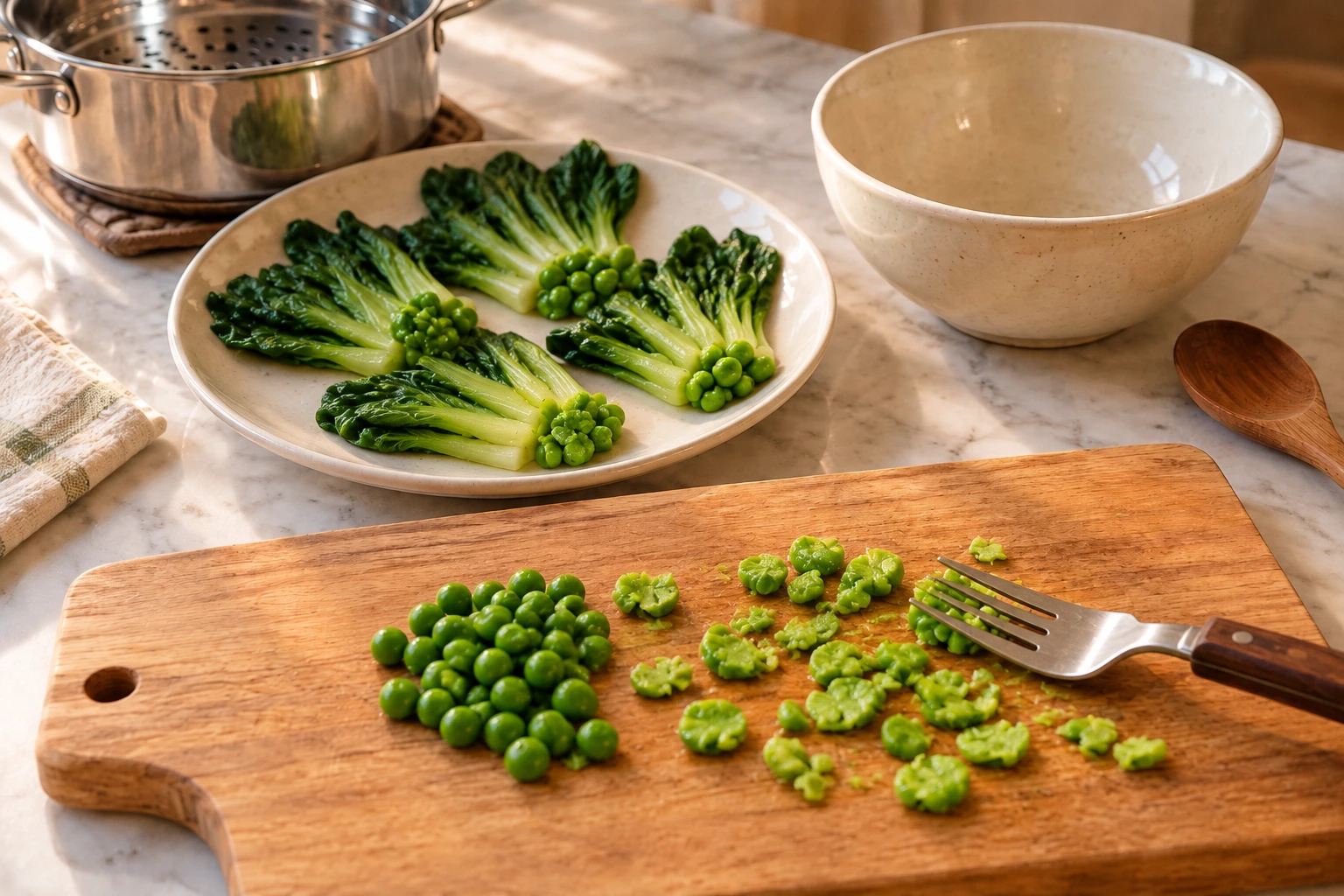
Fresh peas are a good option when you have them in the kitchen. Choose firm, green peas that smell fresh, remove them from their pods and rinse them under running water. You can serve the peas raw if they are soft enough for your dog to chew comfortably, but lightly cooking them until tender is another sensible choice. Steaming or boiling without salt, butter, oil or seasoning keeps the preparation simple. Let cooked peas cool completely before offering them.
What about the pods? I would remove them rather than hand your dog a whole pod to chew. English pea pods can be fibrous and tough, and pieces may be difficult for some dogs to chew or swallow safely. Small dogs and dogs that tend to gulp food need particular care with any whole vegetable. For those dogs, gently mash the cooked peas or press them into smaller pieces. Do not add peas cooked with onion, garlic, salty stock or rich sauces. If the peas are part of your own dinner, set aside a plain portion before adding anything to the pan.

Can dogs eat frozen peas?
Yes, plain frozen green peas are generally suitable for dogs. Most bags contain peas that were processed and frozen without added seasoning, but check the ingredient list rather than assuming every frozen vegetable product is plain. A bag listing only green peas is a straightforward choice. Frozen peas are convenient because you can take out a small portion and keep the rest stored according to the package instructions.
Should you give them straight from the freezer? I would thaw them first, particularly for a small dog, a puppy or a dog that tends to swallow food whole. Frozen peas are small and firm, and hard pieces may be uncomfortable to chew. Put a few in the refrigerator to thaw or briefly rinse them under cool water, then check that they are soft enough to eat comfortably. You can also steam or boil them without seasonings and let them cool. Avoid serving a large frozen handful as a treat, and do not use a mixed vegetable blend until you have checked every ingredient.

Can dogs eat canned peas?
Canned peas can be suitable, but they need a closer look at the label. Some varieties contain added salt, while others include broth, sugar or seasonings. Choose a product with no added salt and a short ingredient list whenever possible. If plain no-salt-added canned peas are unavailable, fresh or plain frozen peas are usually easier options for controlling what goes into your dog's bowl.
If you use canned peas, drain them and rinse them under running water to remove some of the liquid and surface salt. Rinsing does not guarantee that all added sodium has been removed, so it is not a substitute for choosing a low-sodium product. Never feed your dog canned peas mixed with onion, garlic or a seasoned sauce. Onion and garlic can be toxic to dogs, and heavily salted foods are not appropriate treats. If your dog needs a restricted-sodium diet or has a condition that affects what they can eat, check with your veterinarian before offering canned vegetables.

How to serve peas to dogs safely
Keep the portion small and treat peas as an occasional addition to your dog's regular food. There is no single serving size that suits every dog because body size, daily calorie needs, age and health all affect what is appropriate. A few peas are a sensible starting point for many dogs. If your dog eats a complete commercial diet, there is no need to add vegetables to make the meal nutritionally complete. Treats and extras together should generally account for no more than 10 percent of daily calories, with the rest coming from complete and balanced food.
You can offer a few peas by hand, mash them lightly and mix them into your dog's usual meal, or use them as a small reward. Avoid turning a vegetable snack into a large bowl of extras, even if your dog seems delighted. Introduce peas when you can keep an eye on your dog afterward, and watch for changes such as gas, loose stools or vomiting. If an unusual reaction occurs, stop offering peas and contact your veterinarian for advice. Dogs that eat quickly may do better with mashed peas than with whole ones.

When peas may not be the right choice
A healthy dog may enjoy peas without any trouble, but some dogs need more care with food additions. If your dog has a history of digestive sensitivity, a prescribed diet or a condition that requires specific nutritional management, check with your veterinarian first. Peas contain fiber and plant protein, and their suitability depends on the overall diet as well as the individual dog. Your veterinarian can help you decide whether a small serving fits your dog's needs.
You may also have heard concerns about peas in grain-free dog foods and reports of diet-associated dilated cardiomyopathy, often shortened to DCM. The US Food and Drug Administration has investigated reports involving some diets, including certain grain-free products containing peas and other pulses among prominent ingredients. The evidence has not established that a small serving of plain green peas causes DCM in dogs. These reports concern the formulation of certain complete diets, not an occasional pea given as a treat. If you are concerned about your dog's main food, discuss its full nutritional profile with your veterinarian instead of changing the diet or adding ingredients based on a headline.
If your dog accidentally eats peas prepared with onion or garlic, or develops repeated vomiting, marked weakness or difficulty breathing after eating, seek veterinary guidance promptly. Trouble breathing or collapse requires emergency veterinary care. Do not try to manage a serious reaction at home. If your dog has eaten an unfamiliar seasoned product, keep the packaging available so the veterinary team can check the ingredients.
Can Dogs Eat Green Peas Safely? Fresh, Frozen and Canned Peas Explained FAQ
Can dogs eat green peas every day?
Plain green peas are generally safe for healthy dogs in small amounts, but they do not need to eat them daily. Keep extras limited so they do not displace complete and balanced dog food. Ask your veterinarian if your dog has special dietary needs.
Are raw peas safe for dogs?
Fresh, shelled green peas can be offered raw if your dog can chew them comfortably. Rinse them first and remove the pods. For dogs that gulp food or struggle with firm pieces, lightly cooked and cooled peas may be easier to eat.
Can dogs eat frozen peas straight from the bag?
Plain frozen peas are generally suitable, but thawing them first is a safer choice for dogs that swallow food quickly or have difficulty chewing firm pieces. Check the package for added salt, sauces or other ingredients before serving.
Can dogs eat canned peas with salt?
It is better to choose no-salt-added canned peas. Draining and rinsing can remove some surface salt, but they do not eliminate all added sodium. Plain fresh or frozen peas are useful alternatives if you cannot find a suitable canned option.
Can puppies eat green peas?
Puppies can generally have a few plain, soft peas if they can chew and swallow them safely, but their growing bodies need carefully balanced nutrition. Keep treats limited and ask your veterinarian before adding extras if your puppy has digestive or dietary concerns.
Can peas upset a dog's stomach?
Yes. A large serving may cause gas, loose stools or other digestive discomfort, particularly in a dog that is not used to eating peas. Stop offering them if your dog reacts poorly and contact your veterinarian if symptoms persist or seem severe.