
Slow-cooked rabbit makes a lovely homemade topper for cats, especially when you want something with a soft, naturally shredded texture. With a little water and gentle cooking, plain boneless rabbit becomes tender enough to pull into delicate strands and scatter over your cat's regular meal. There's no need for seasoning, stock cubes or complicated preparation. Just give the meat time to soften without letting it dry out. This is an occasional extra, not a replacement for your cat's nutritionally complete food. Rabbit muscle meat alone cannot provide every nutrient cats need. Taking care to cook it thoroughly, check for hidden bones and refrigerate it promptly matters just as much as getting those lovely, tender shreds.
Safety first: Keep treats and extras under about 10% of your cat's daily food - the regular diet should do the heavy lifting.
Foods to avoid
Never use rabbit containing bones, particularly cooked bones, which can splinter and cause serious injury. Inspect the meat both before cooking and during shredding, and discard any portion if you cannot confidently remove every bone fragment. Do not add onion, garlic, chives, leeks, salt, spice blends, butter, gravy, commercial stock cubes or seasoned cooking sauces. Avoid raw or undercooked rabbit because of foodborne pathogen risks, and verify safe cooking with a food thermometer rather than judging by colour alone. Rabbit muscle meat is not a complete feline diet.
Ingredients
Instructions
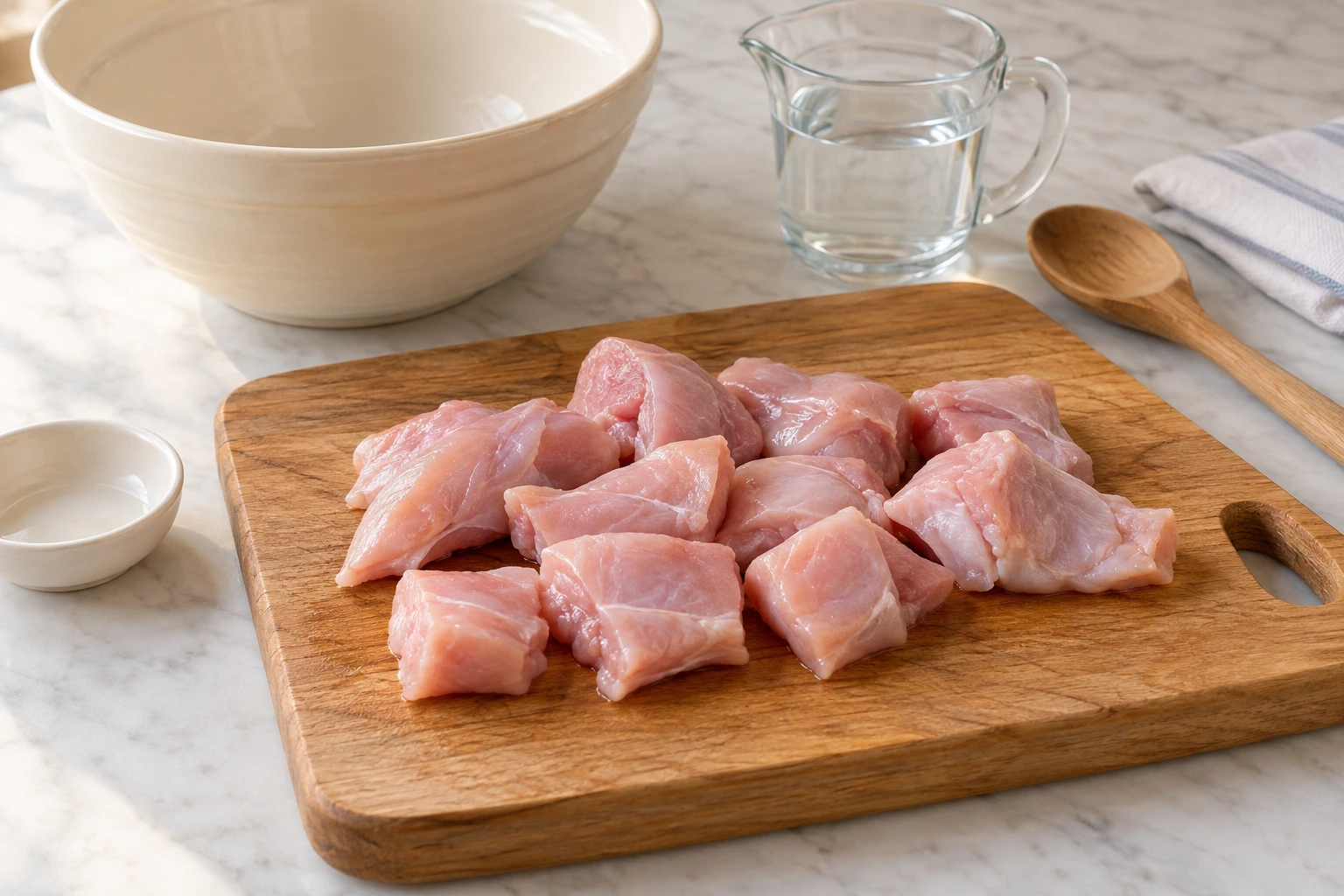
Prepare the boneless rabbit: Place the rabbit on a clean cutting board and carefully check every piece for bones, hard cartilage, skin and tough connective tissue, even if it was sold as boneless, paying particular attention to areas where the meat was separated from the skeleton. Remove anything unsuitable, then cut the meat into roughly equal pieces, about 4 to 5 cm across, keeping them large enough to preserve their natural fibres while helping them cook evenly. Keep the rabbit refrigerated until cooking, avoid rinsing it because splashing water can spread contamination around the sink, and thoroughly wash your hands, knife and cutting board after handling the raw meat.
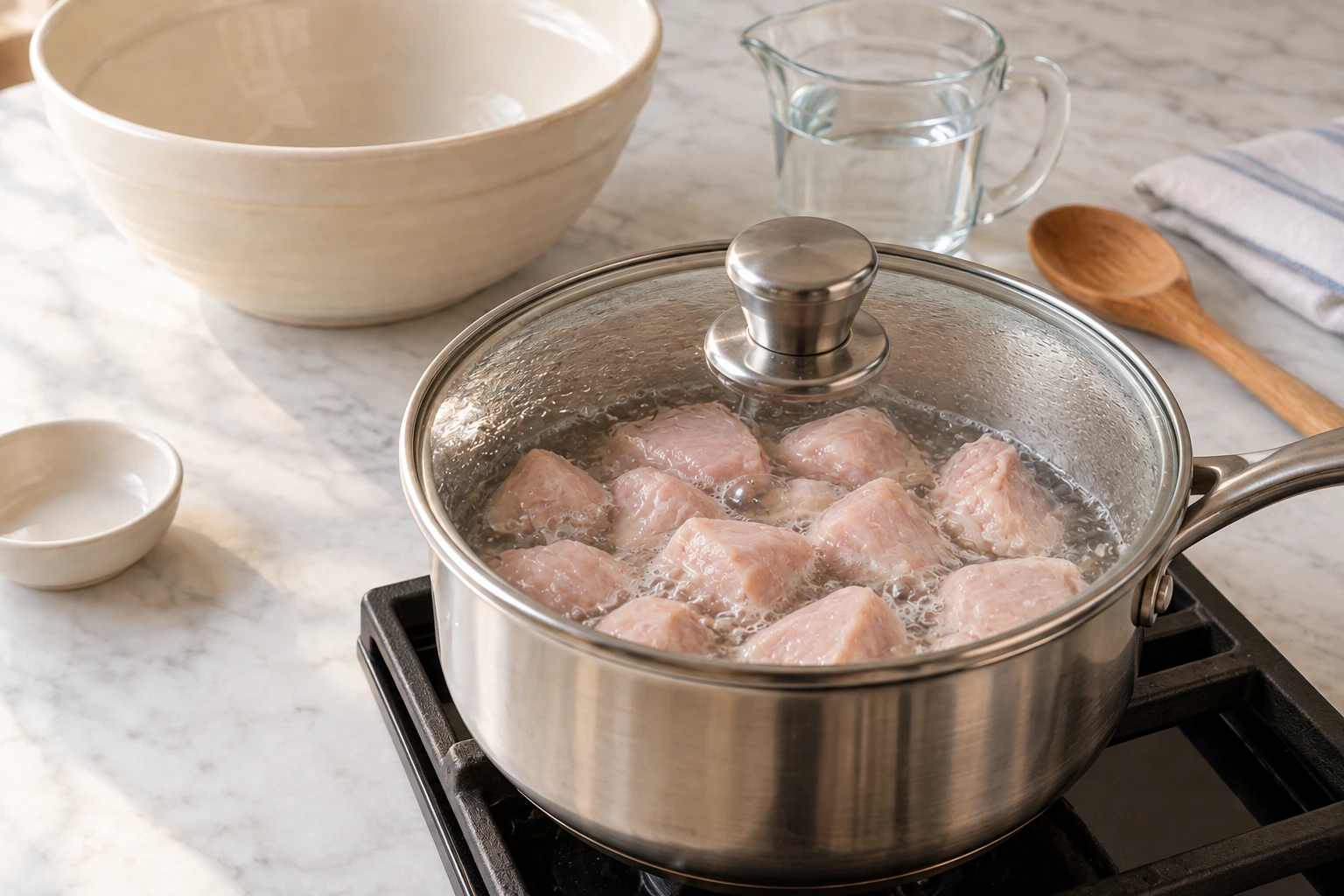
Begin a gentle covered simmer: Put the prepared rabbit pieces into the small saucepan and add 180 ml of fresh water, enough to cover the bottom and surround the meat without necessarily submerging it. Cover with the lid, bring to a gentle simmer over medium-low heat, then immediately reduce to low and cook with occasional small bubbles rather than a vigorous boil, checking periodically and adding a tablespoon or two of plain water if the bottom starts drying out. The water simply helps transfer heat and keeps the rabbit tender, so leave out salt, garlic, onion, herbs, butter, oil and commercial stock.
Cook until safely tender: Keep the rabbit at a low, covered simmer for approximately 1 hour 30 minutes to 2 hours, depending on the thickness and cut, turning the pieces occasionally with clean utensils and adding small amounts of water when needed. Use a digital food thermometer to check that the thickest piece reaches at least 71°C or 160°F, then continue cooking gently if needed until a fork separates the meat easily, rather than relying on colour or texture alone to judge safe cooking. Remove the pan from the heat, transfer the rabbit to the clean cream ceramic bowl and reserve the cooking liquid separately, making sure no cooked meat touches a dish or utensil that held raw rabbit
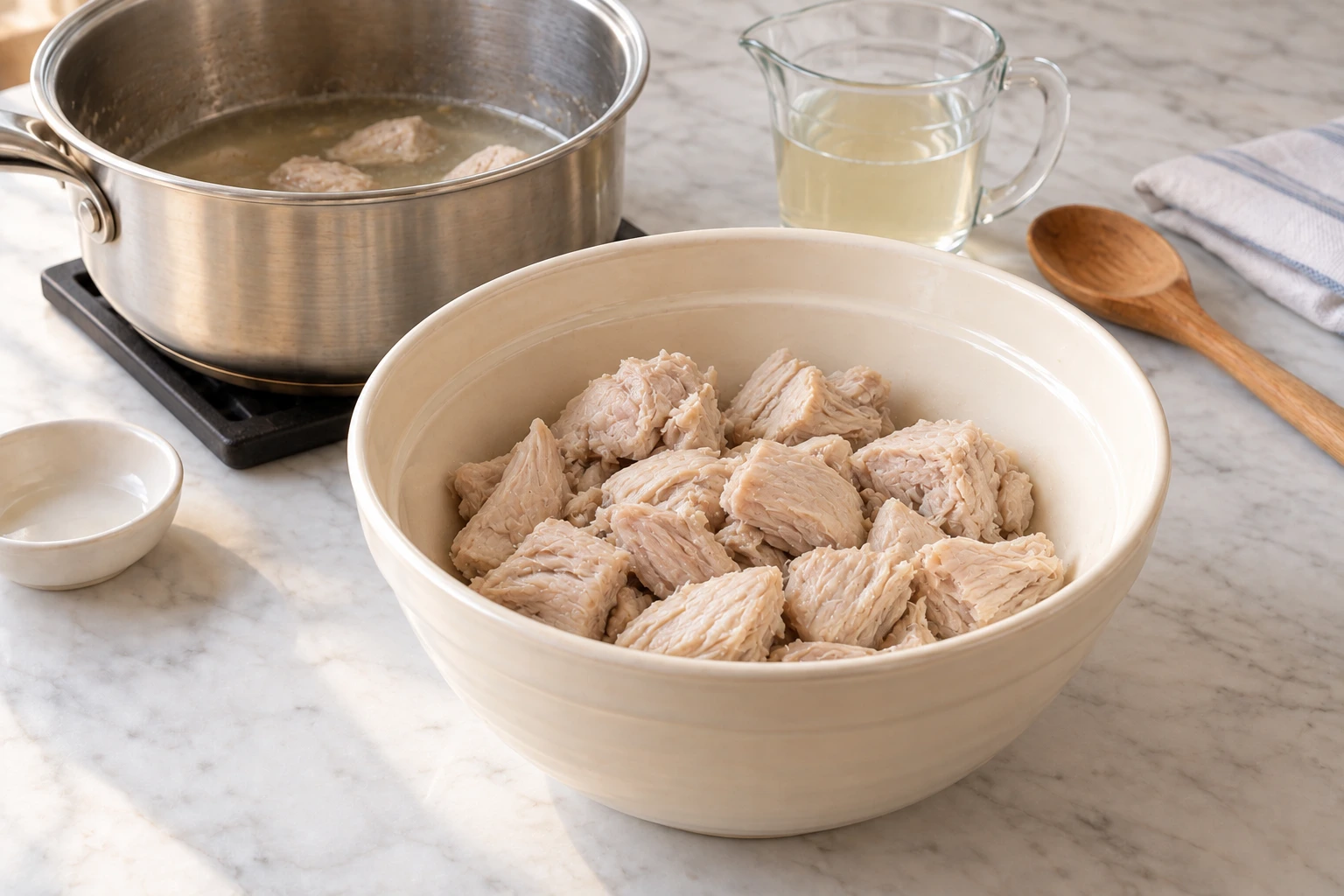
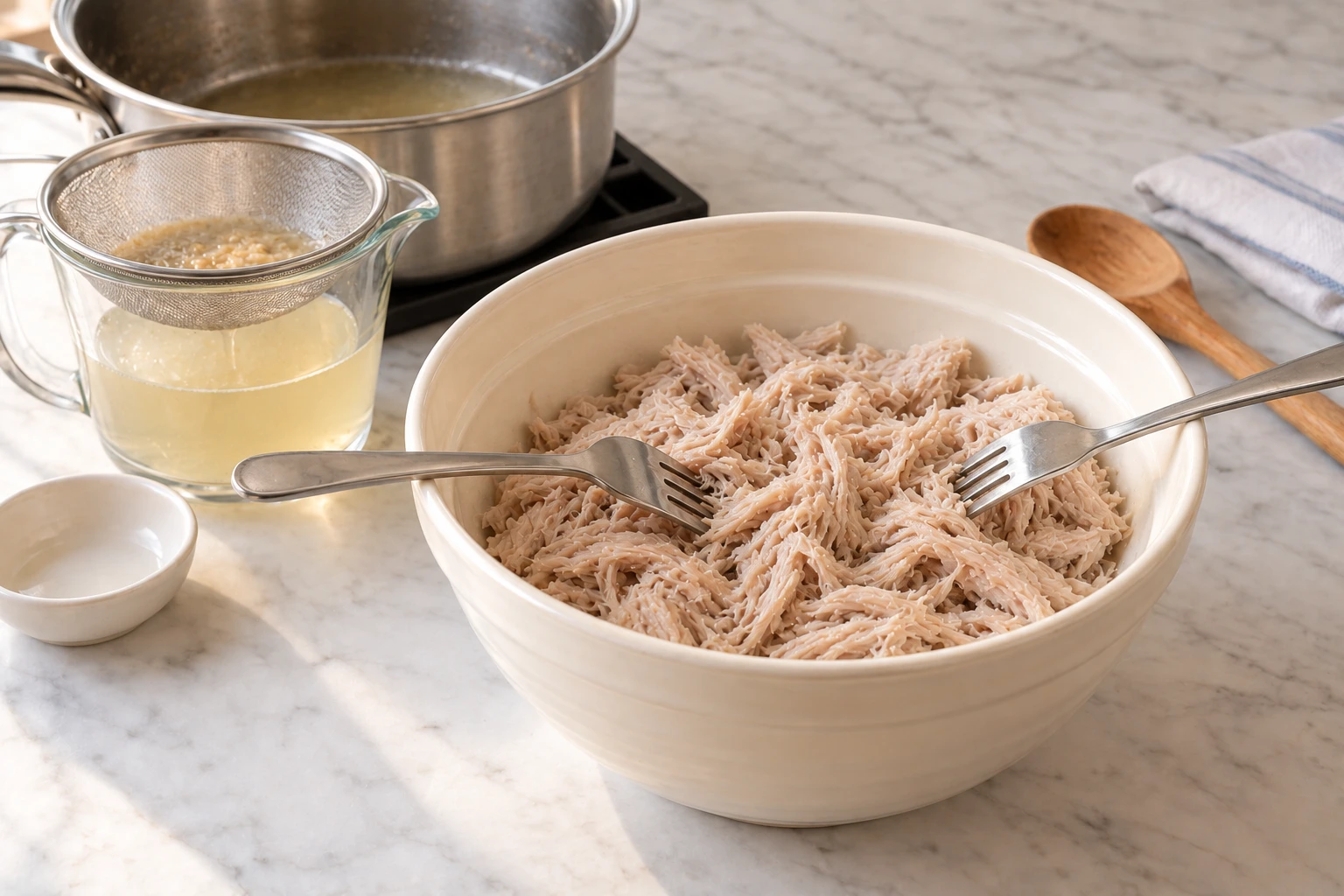
Pull into delicate shreds: Let the rabbit cool just enough to handle safely, then use two clean forks to pull it along its natural grain into short, delicate strands, rather than leaving large chunks or making a finely blended paste. As you shred, check carefully for overlooked bone fragments, cartilage and unusually tough pieces, discarding anything hard or sharp, then pass the reserved cooking liquid through a fine-mesh strainer and skim away visible excess fat. If the meat seems dry, fold in 1 to 2 tablespoons of the strained liquid without making it soupy, keeping the finished rabbit soft and recognizably fibrous, easy to separate with a fork, and cutting any longer strands into shorter
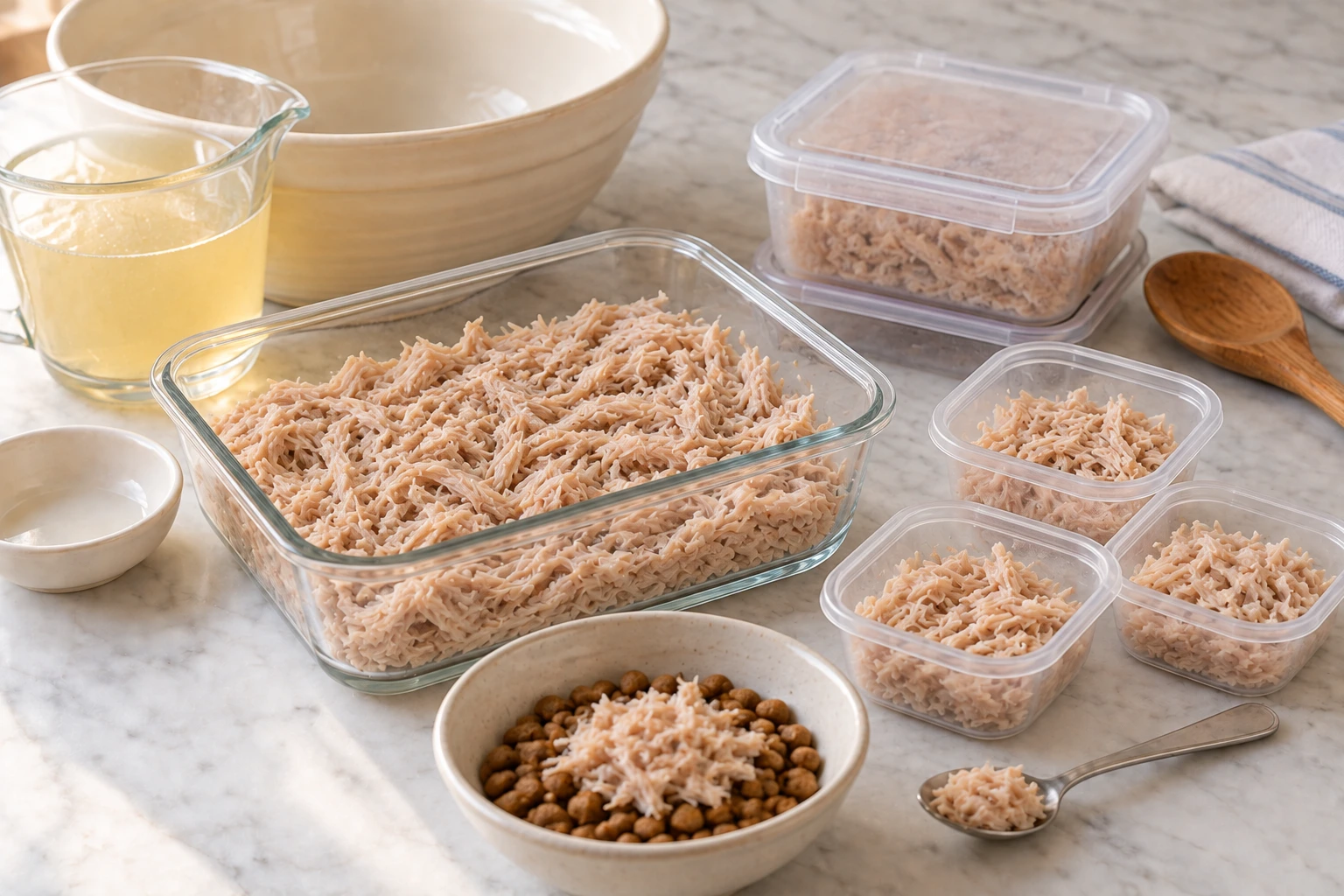
Cool, portion and serve: Spread the shredded rabbit in a shallow food-safe container to help it lose heat quickly, then refrigerate promptly, never leaving cooked meat at room temperature for more than two hours, or more than one hour in very hot conditions. Once chilled, use clean utensils to divide it into small individual portions, starting with approximately one level teaspoon, or around 5 g, mixed into or scattered over your cat's usual nutritionally complete and balanced food, and always check that the shreds are short, soft, completely bone-free and never served hot. Refrigerate the portions you'll need soon and promptly freeze the remainder; if your cat prefers less-chilled food,
Made this recipe?
Tap the paw so other pet parents know it’s worth making.
Be the first to make it
Tips & serving
Serve these rabbit shreds as an occasional topper, not as a standalone meal. Start with approximately one level teaspoon, around 5 g, for an average adult cat, adjusting the amount to your cat's size, usual intake and individual dietary needs. Homemade extras and treats should generally remain within 10% of daily calorie intake, with at least 90% coming from a nutritionally complete and balanced diet. This is a calorie guideline, not a recommendation to allocate 10% of the food bowl by weight to rabbit. Plain rabbit muscle meat alone does not contain the complete balance of calcium, essential fatty acids, vitamins and other nutrients required for long-term feline nutrition. Avoid adding
- Uses one clearly identifiable animal protein with no unnecessary seasoning or added flavouring.
- The slow cooking method produces soft meat fibres that can be separated into manageable pieces.
- Small portions can be prepared ahead and kept ready for occasional meal toppings.
- The distinctive shredded texture offers variety without replacing your cat's familiar complete food.
- Reserved plain cooking liquid can help maintain a gently moist texture without using commercial sauces.
- Making the topper at home allows you to inspect the rabbit carefully and control exactly what goes into the saucepan.
Storage
Refrigeration: Transfer the cooked rabbit into shallow, clean, airtight containers and refrigerate promptly at 4°C or below. Aim to cool it quickly rather than leaving a covered, hot saucepan on the counter. Freezing: Divide fully cooled rabbit into small, individually measured portions and place them in freezer-safe containers or a covered portion tray. Label each container with its preparation date.
Substitutions
If fresh boneless rabbit is unavailable, plain frozen boneless rabbit is suitable after complete thawing in the refrigerator. Check the packaging carefully to ensure the meat is unseasoned, with no marinade, brine, flavourings or added broth containing onion or garlic. Cooking from a fully thawed state helps achieve more predictable results. If the rabbit needs additional moisture during shredding, use a little fresh drinking water instead of its reserved cooking liquid. This keeps the preparation simple without introducing another animal protein or unnecessary ingredients.
Cats recipe FAQ
Can Slow-Cooked Rabbit Shreds for Cats replace my cat's regular diet?
Treat it as an occasional extra, not a meal plan. Serve these rabbit shreds as an occasional topper, not as a standalone meal. Start with approximately one level teaspoon, around 5 g, for an average adult cat, adjusting the amount to your cat's size, usual intake and.
Is boneless rabbit meat okay for cats?
This recipe uses boneless rabbit meat in a small, cat-appropriate amount. Skip it if your cat has a known sensitivity, and read the foods-to-avoid note on this page before serving.
How should I store leftovers?
Refrigeration: Transfer the cooked rabbit into shallow, clean, airtight containers and refrigerate promptly at 4°C or below. Aim to cool it quickly rather than leaving a covered, hot saucepan on the counter.
How should I introduce this topper?
Start with a taste-size portion next to your cat's usual food, and hold off on serving more until you have seen that it agrees with them.
Can I feed these rabbit shreds as my cat's main meal?
No. Although rabbit provides animal protein, plain muscle meat does not supply all the nutrients cats need in the correct proportions. This recipe is intended for small occasional portions alongside complete and balanced cat food. Discuss any plan to replace your cat's regular diet with your veterinarian.
Can I prepare the rabbit in a slow cooker instead of a saucepan?
Yes, provided the appliance heats the meat safely and you verify that the thickest piece reaches at least 71°C or 160°F. Use plain water without seasoning and follow your appliance's instructions for the meat quantity. Cooking times vary, so check tenderness and temperature rather than relying on the clock alone.
Sources