
Some cats prefer the feel of real pieces of meat over another smooth puree. This simple turkey and pumpkin topper combines finely shredded turkey breast with just enough soft pumpkin to lightly coat the strands. It is a nice change from the usual mousse or custard-style recipes, especially for cats who enjoy a little more texture in their food. The preparation is simple, but a few details are important. Cook the turkey thoroughly, remove every bone fragment and avoid salt, garlic, onion or seasoning. Use plain pumpkin puree, not sweetened pie filling. This recipe is an occasional extra, not a complete cat food, so your cat's regular nutritionally complete meals should always remain the foundation of their diet.
Safety first: Offer a small taste the first time and watch your cat for any tummy upset before serving more.
Foods to avoid
Never add onion, garlic, chives, leeks, shallots, salt, pepper, seasoning blends, gravy, stock cubes or cooking sauces. These ingredients are unnecessary and some are unsafe for cats. Do not use pumpkin pie filling, sweetened pumpkin products or pumpkin preparations containing spices. Remove every bone fragment and piece of skin or tough connective tissue. Never serve raw or partially cooked turkey. Cooked bones must never be included because they can splinter and cause injury. Keep raw poultry separate from cooked food, wash hands and utensils after handling raw meat, and clean preparation surfaces thoroughly.
Ingredients
Instructions
Prepare the Plain Turkey: Start by checking the turkey breast carefully, removing any visible fat, skin, connective tissue and remaining bone fragments. Cut the meat into two or three manageable pieces so it cooks evenly, then place them in a small saucepan with the fresh water. Keep everything completely plain, with no salt, stock cubes, butter, oil, garlic, onion, herbs or seasoning. Using fresh turkey and clean utensils also helps keep preparation simple and reduces unnecessary food safety risks.
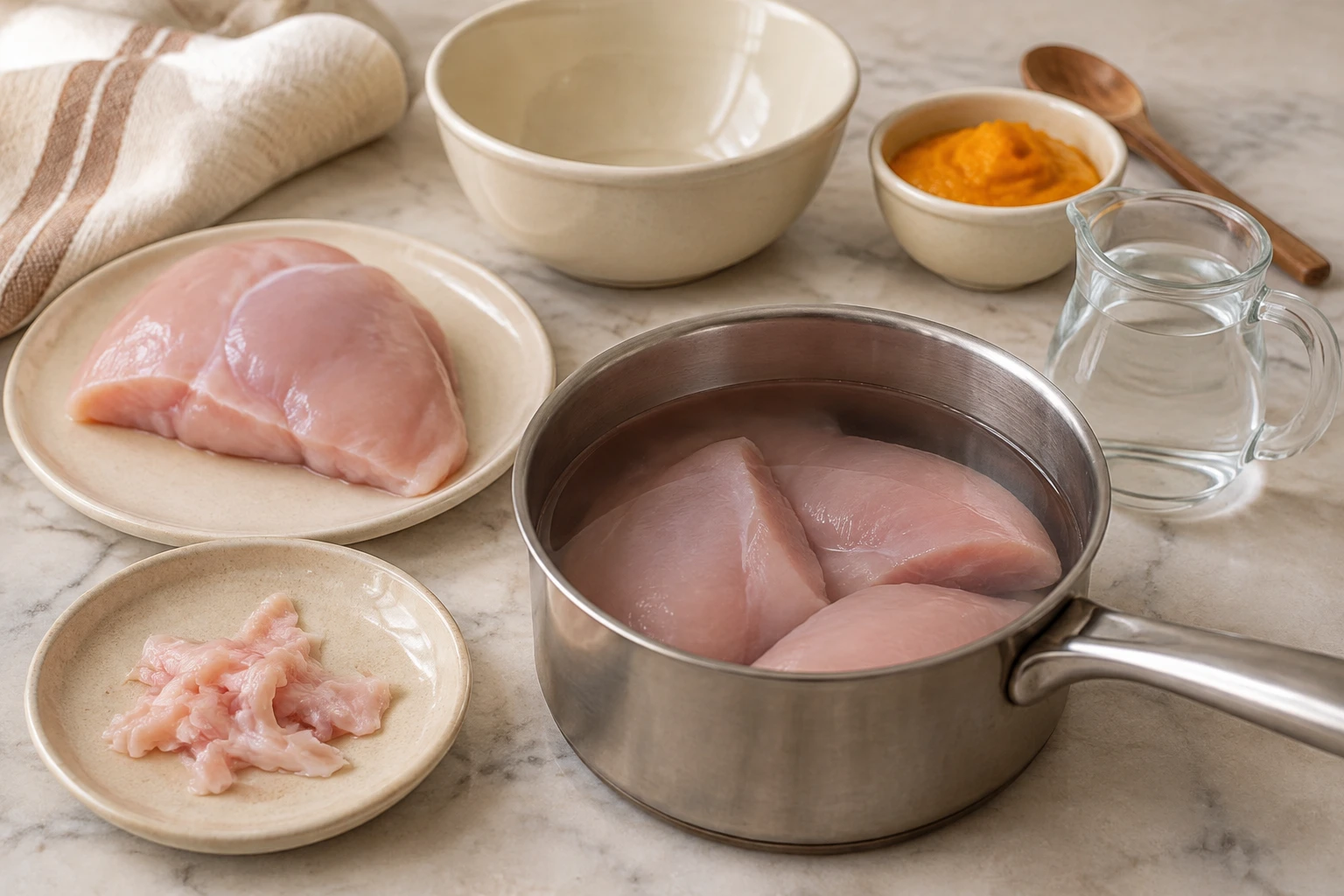
Cook the Turkey Thoroughly: Set the saucepan over medium heat and bring the water to a gentle simmer, then lower the heat and cook the turkey until the thickest part reaches an internal temperature of 74°C (165°F), checking with a clean kitchen thermometer. Cooking time will depend on the thickness of the pieces, so rely on the temperature rather than appearance alone to check that the meat is done. Avoid a vigorous boil, which can leave the breast tough and dry. Once fully cooked, remove the turkey and set aside one teaspoon of the plain cooking liquid.
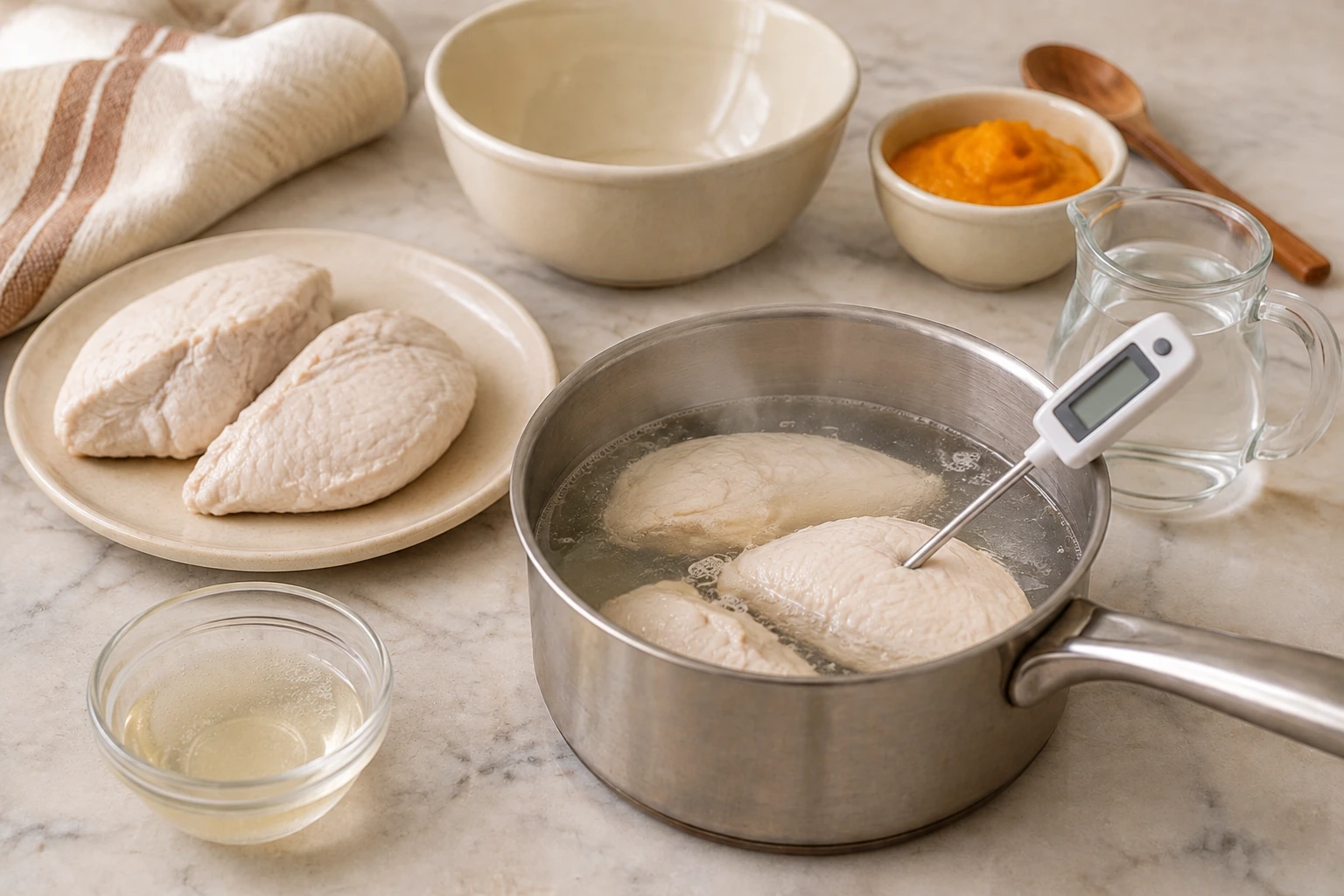
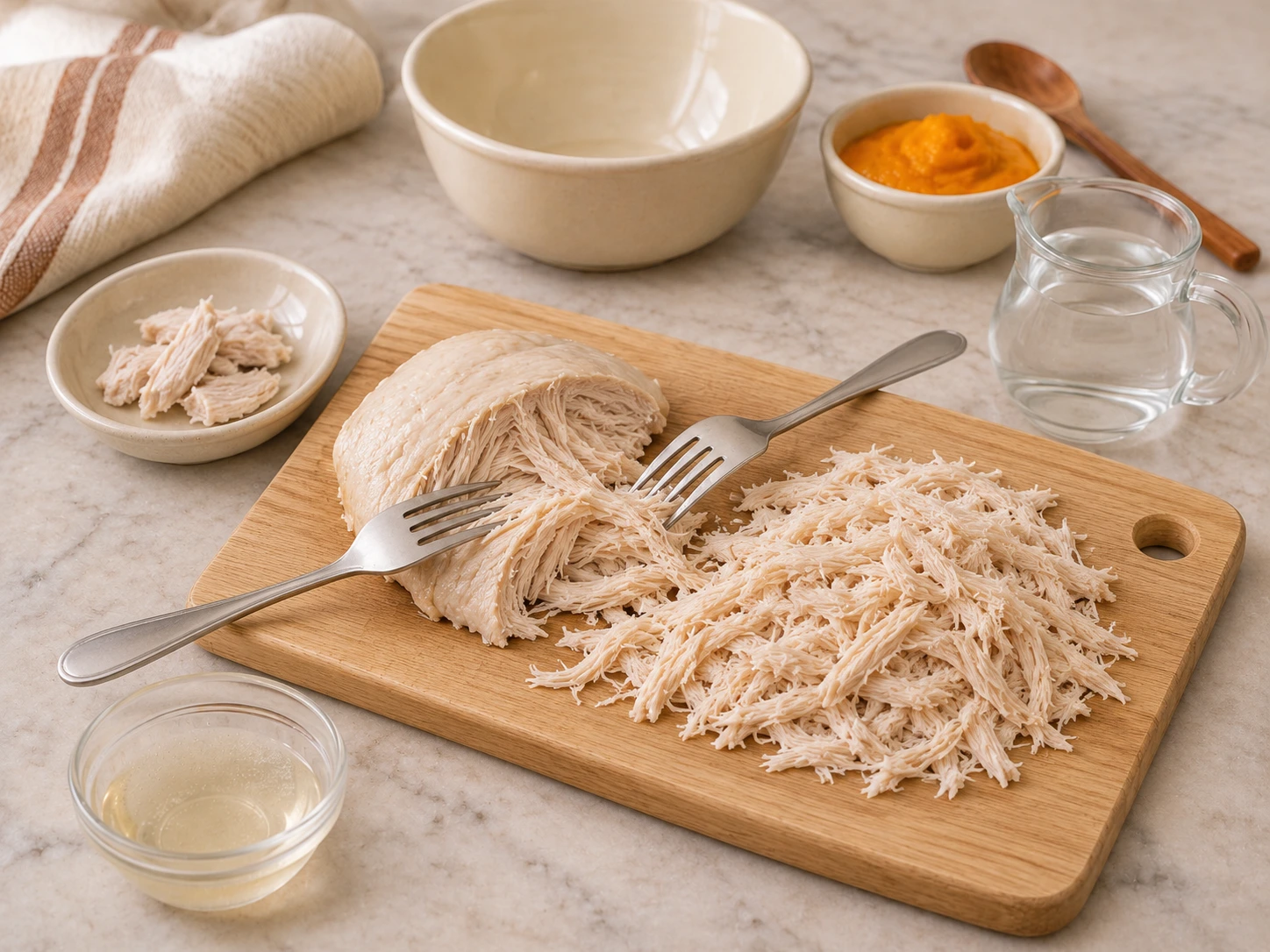
Cool and Pull the Turkey: Move the cooked turkey to the clean chopping board and let it cool completely before handling and serving. Use two forks to pull the meat apart along its natural grain, aiming for short, very fine strands that are still recognizable as meat but soft and easy to manage. If your cat prefers smaller pieces, finely chop the strands with a knife instead. Shredding follows the natural fibres, while mincing cuts across them into smaller, more uniform pieces. Remove any tough or unusually large pieces.
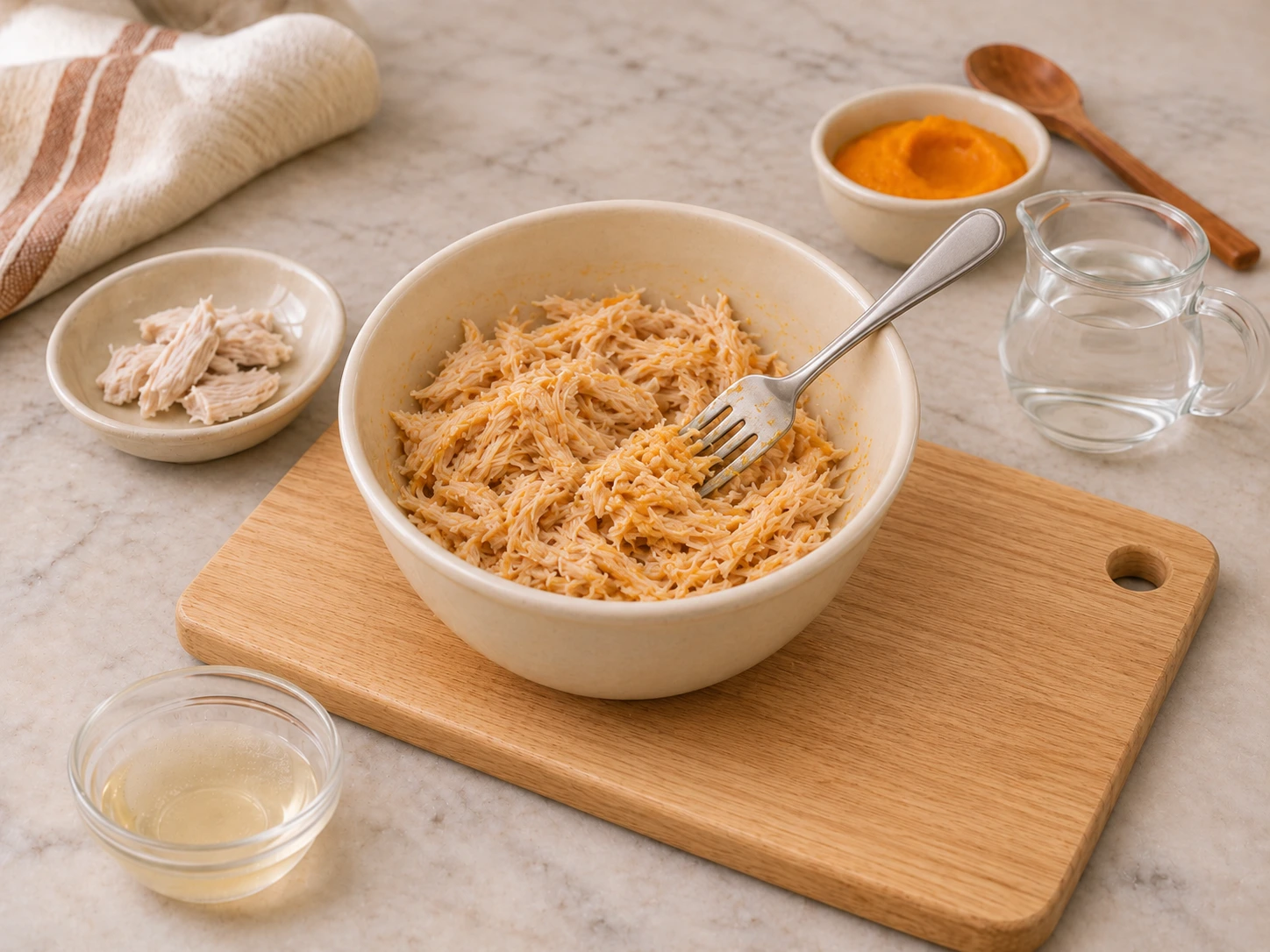
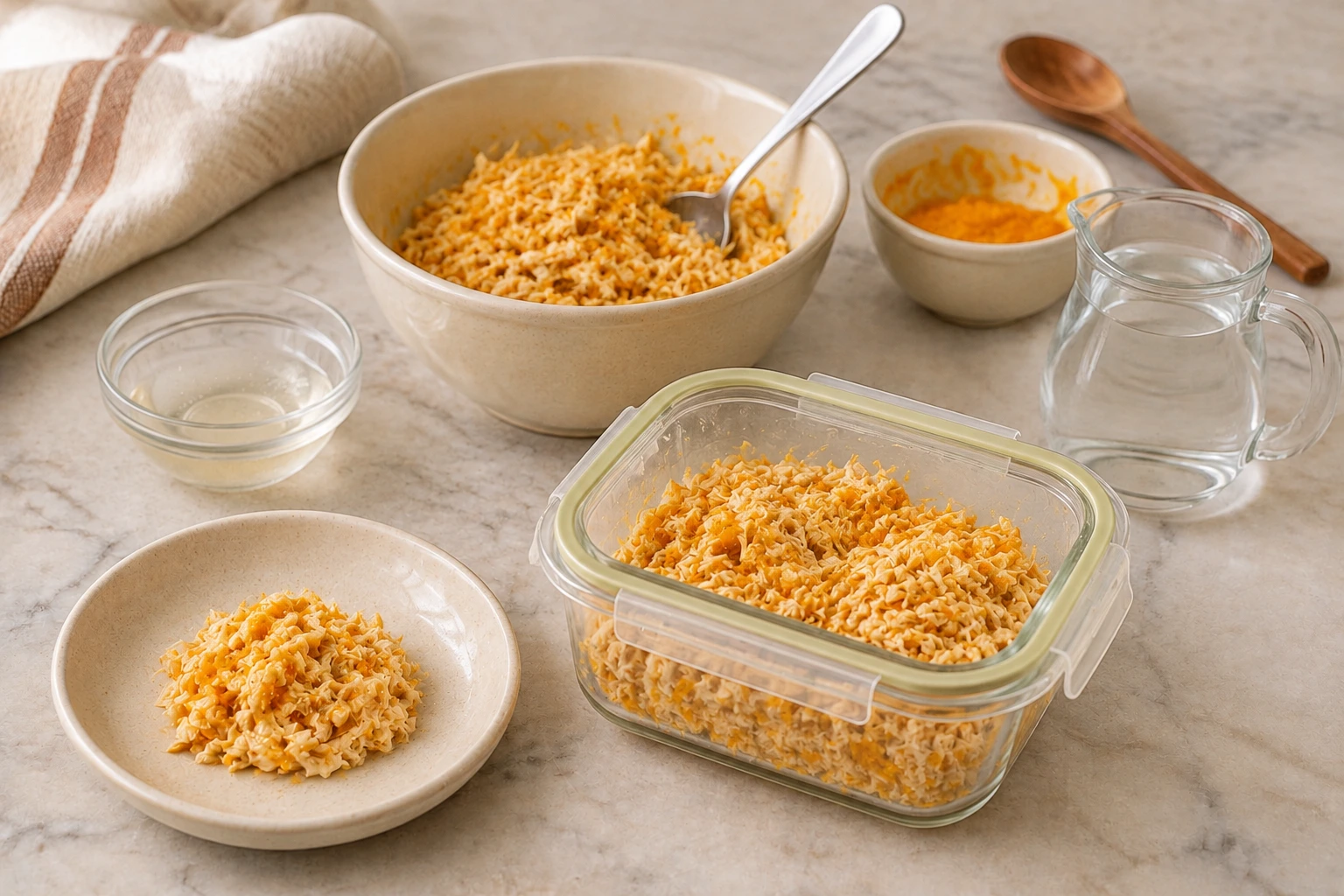
Mix in the Pumpkin: Put the finely shredded turkey into the same small mixing bowl, then add the plain pumpkin puree and one teaspoon of reserved unsalted turkey cooking liquid. Gently fold everything together with a fork until the pumpkin lightly coats the meat without turning it into a smooth paste. You should still be able to see the individual strands, and the mixture should look moist without large clumps of puree. If it seems dry, add a few drops of fresh water. Avoid adding extra pumpkin just to increase the volume, as the meat should remain the main ingredient.
Cool, Portion and Store: Once the mixture is completely cool, use a clean teaspoon to divide it into small portions. Keep servings modest, as this topper is an extra rather than a meal replacement, and offer a little alongside your cat's usual complete food rather than instead of it. Transfer any unused portions promptly to a clean airtight container and refrigerate. Do not leave the mixture at room temperature for extended periods. Discard any leftovers that develop an unusual smell, appearance or texture.
Made this recipe?
Tap the paw so other pet parents know it’s worth making.
Be the first to make it
Tips & serving
Start with approximately half a teaspoon of the cooled mixture alongside your cat's usual complete and balanced food. If your cat accepts it comfortably, a small teaspoon may be offered occasionally, provided it fits their individual calorie allowance. Treats and toppers combined should remain below 10% of daily calorie intake, with the regular complete diet providing the rest. The appropriate amount depends on your cat's weight, activity, age and overall diet. Always consult your veterinarian about suitable portions, particularly if your cat has dietary restrictions or eats a prescribed food. Major diet changes should always be discussed with a veterinarian.
- Finely pulled turkey provides a recognizable meat texture instead of another completely smooth homemade cat treat.
- A small amount of pumpkin puree adds moisture and helps the turkey strands hold together without requiring sauces or added fats.
- The straightforward preparation makes it easier to control exactly which ingredients go into each occasional serving.
- Small portions are convenient to prepare ahead, helping owners avoid making unnecessarily large quantities of homemade extras.
- Pull the turkey along its natural grain using two forks rather than chopping immediately, which creates the distinctive shredded texture.
- Keep the strands short and fine, especially for cats that struggle with larger pieces or prefer softer food textures.
Storage
Refrigerate unused mixture promptly in a clean, airtight container. Keep it at 4°C or colder and use within 2 to 3 days. Write the preparation date on the container so there is no confusion about freshness. For longer storage, freeze individual portions in a covered ice cube tray or small freezer-safe containers. Once frozen, transfer portions into a sealed freezer bag. Never leave the mixture sitting out for extended periods, particularly in a warm kitchen.
Substitutions
Plain cooked chicken breast can replace turkey if you want to keep the same shredded-meat texture. Use boneless, skinless meat and cook it thoroughly without seasoning. Fresh pumpkin can be used instead of prepared puree. Remove the skin and seeds, cook the flesh until soft, and mash it thoroughly without butter, salt or other additions. If your cat dislikes pumpkin, leave it out and use a small amount of fresh water or reserved unsalted turkey cooking liquid to moisten the shredded meat. Do not introduce several new ingredients at once.
Cats recipe FAQ
Can Cats Turkey and Pumpkin Savory Shredded Topper replace my cat's regular diet?
Treat it as an occasional extra, not a meal plan. Start with approximately half a teaspoon of the cooled mixture alongside your cat's usual complete and balanced food.
Can cats have boneless, skinless cooked turkey breast?
This recipe uses boneless, skinless cooked turkey breast in a small, cat-appropriate amount. Skip it if your cat has a known sensitivity, and read the foods-to-avoid note on this page before serving.
How do I store this topper?
Refrigerate unused mixture promptly in a clean, airtight container. Keep it at 4°C or colder and use within 2 to 3 days. Write the preparation date on the container so there is no confusion about freshness.
What's the safest way to try this with my cat?
Offer a small amount beside regular food, introduce one new recipe at a time, and watch appetite, stool, skin, and behavior for a day or two.
Can cats eat shredded turkey with pumpkin?
Many cats can enjoy small amounts of plain, thoroughly cooked, boneless turkey and plain pumpkin as an occasional extra. The turkey should contain no seasoning, skin or bones, and the pumpkin should have no added ingredients. Individual dietary needs differ, so check with your veterinarian if you are unsure.
Should I shred or mince the turkey for my cat?
Shredding separates the cooked meat along its natural fibres, creating soft, recognizable strands. Mincing cuts the meat into smaller, more uniform pieces. This recipe uses fine shredding for a different eating texture, but you can chop the strands further if your cat finds them difficult to manage.
Sources