

A familiar bowl of cat food can feel a little more special with just a tiny sprinkle of something different. This roasted shrimp finishing dust turns plain, peeled shrimp into crisp, finely ground flakes that are easy to scatter over your cat's usual meal. You only need a small pinch to add variety without changing the food your cat relies on. Careful preparation matters here. The shrimp must be fully cooked, with every shell and tail removed, and prepared without salt, oil, garlic, onion, or other seasonings. Since homemade seafood powder has no commercial preservatives, make small batches and refrigerate them promptly. Keep this flavorful little extra as an occasional treat, never a substitute for complete cat food.
Safety first: Offer a small taste the first time and watch your cat for any tummy upset before serving more.
Foods to avoid
Never use raw or undercooked shrimp, shrimp heads, shells, tails, digestive tracts, or pieces containing hard fragments. Avoid salted, smoked, marinated, battered, heavily seasoned, or sauce-coated shrimp. Do not add garlic, onion, chives, butter, cooking oil, spice blends, stock cubes, or human seafood seasonings. Keep raw seafood separate from ready-to-eat foods, wash hands and equipment thoroughly, and never reuse a surface contaminated by raw shrimp without cleaning and sanitizing it. Do not leave the finished powder at room temperature as though it were a commercially preserved product.
Ingredients
Instructions
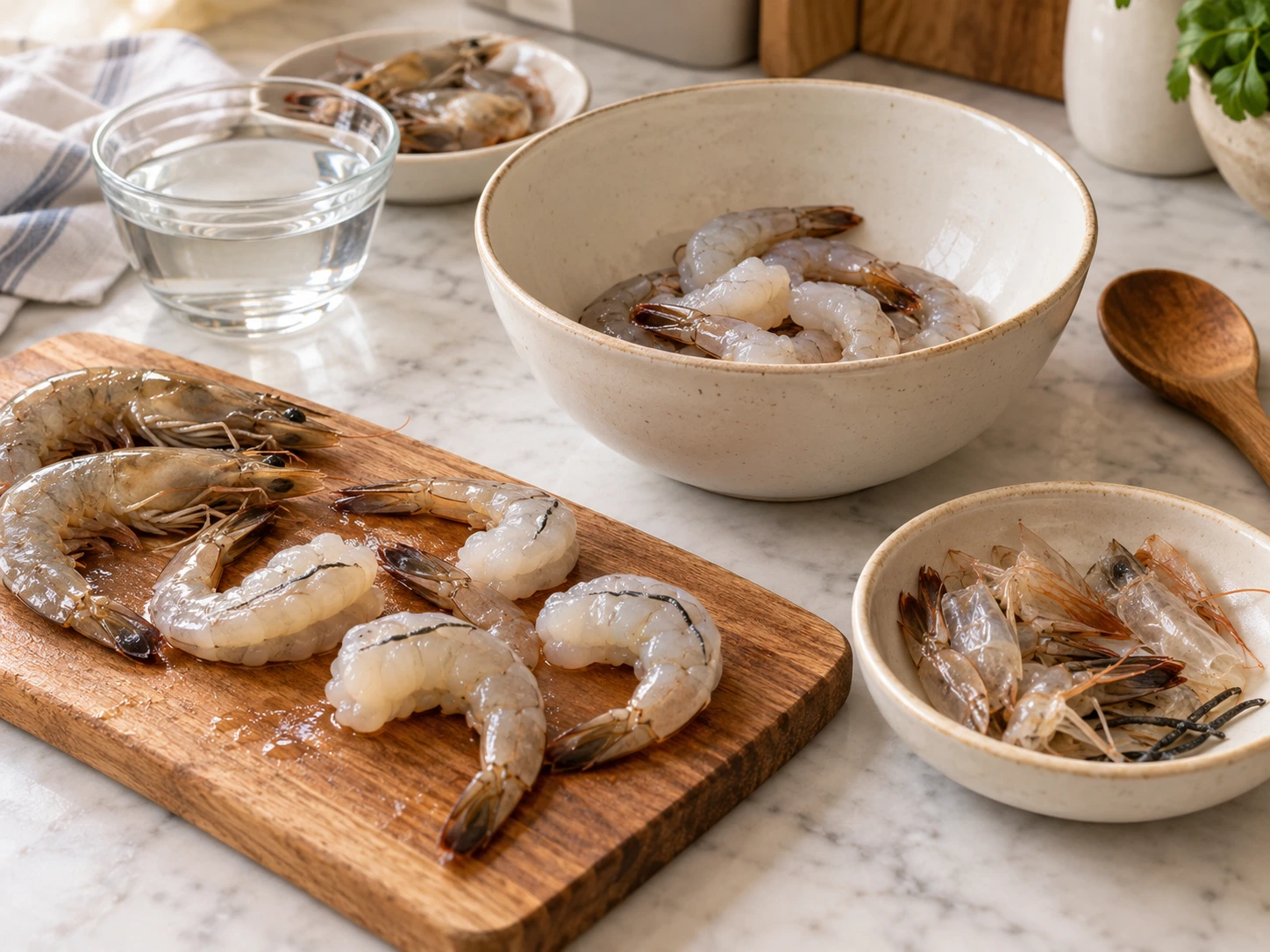
Inspect and clean the shrimp: Wash your hands and prepare a clean work surface, thawing frozen shrimp in the refrigerator rather than on the countertop. Check each shrimp individually, removing the head, shell, tail, legs, and any hard fragments; make a shallow cut along the back to lift out the dark digestive tract if present, check underneath for any additional visible tract, and discard everything removed. Keep raw shrimp and its juices away from ready-to-eat food, your cat's bowl, and other ingredients, then thoroughly wash your hands, knife, cutting board, and sink area; if using purchased, fully cooked shrimp, choose completely plain shrimp and skip the raw-seafood cooking stage, but
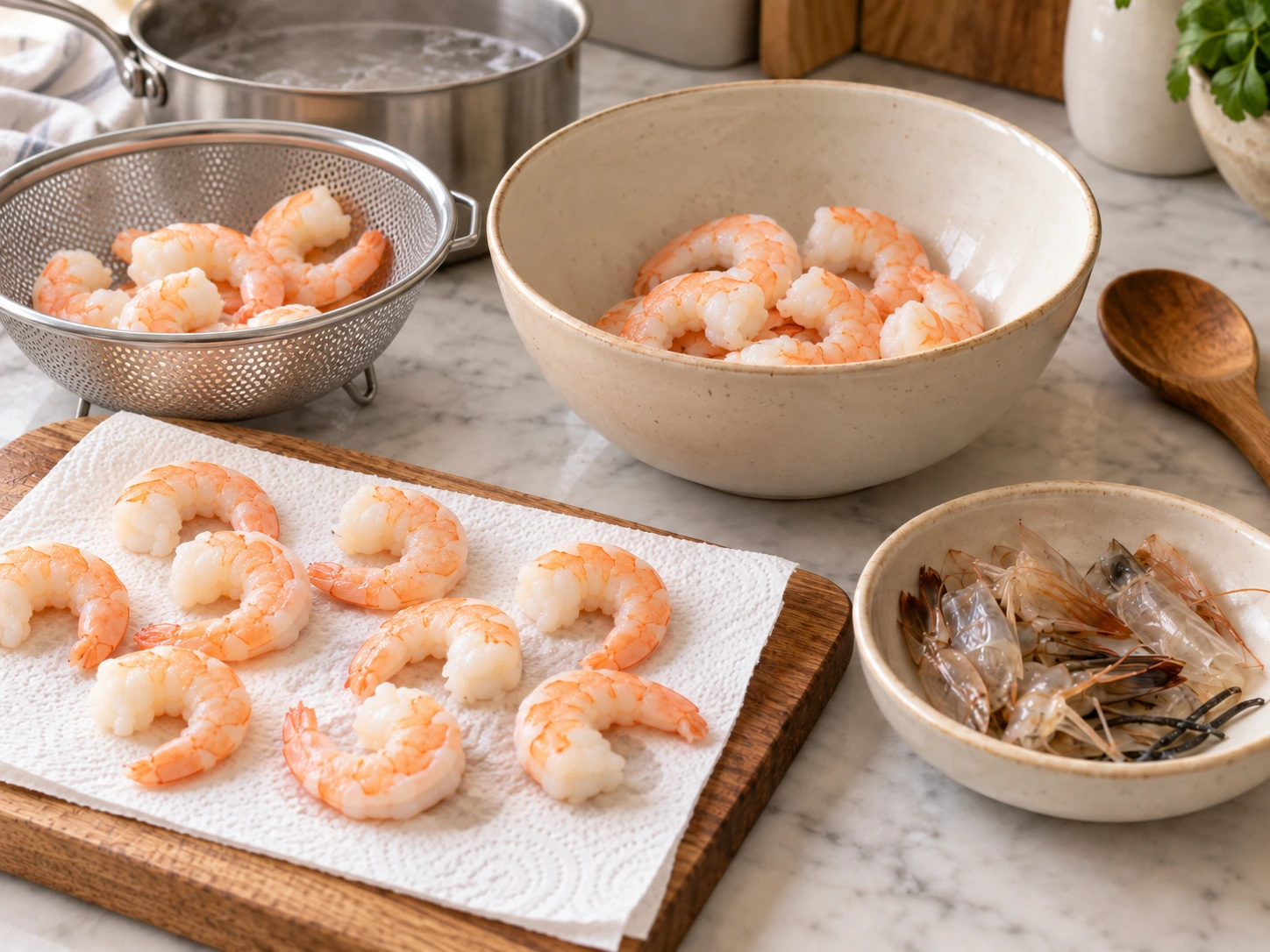
Cook the shrimp thoroughly: Bring the plain drinking water to a gentle simmer in a saucepan, add the cleaned shrimp, and cook until the flesh is opaque and firm, making sure the thickest pieces reach an internal temperature of 63°C or 145°F. Small shrimp cook quickly, so check them regularly rather than relying on color or a fixed cooking time, and never add salt, butter, oil, stock cubes, garlic, onion, lemon seasoning, or sauces. Drain in a clean colander, transfer to a clean surface, and pat dry with fresh paper towels to remove excess moisture; if using commercially cooked shrimp, confirm they are plain and fully cooked before proceeding directly to drying.
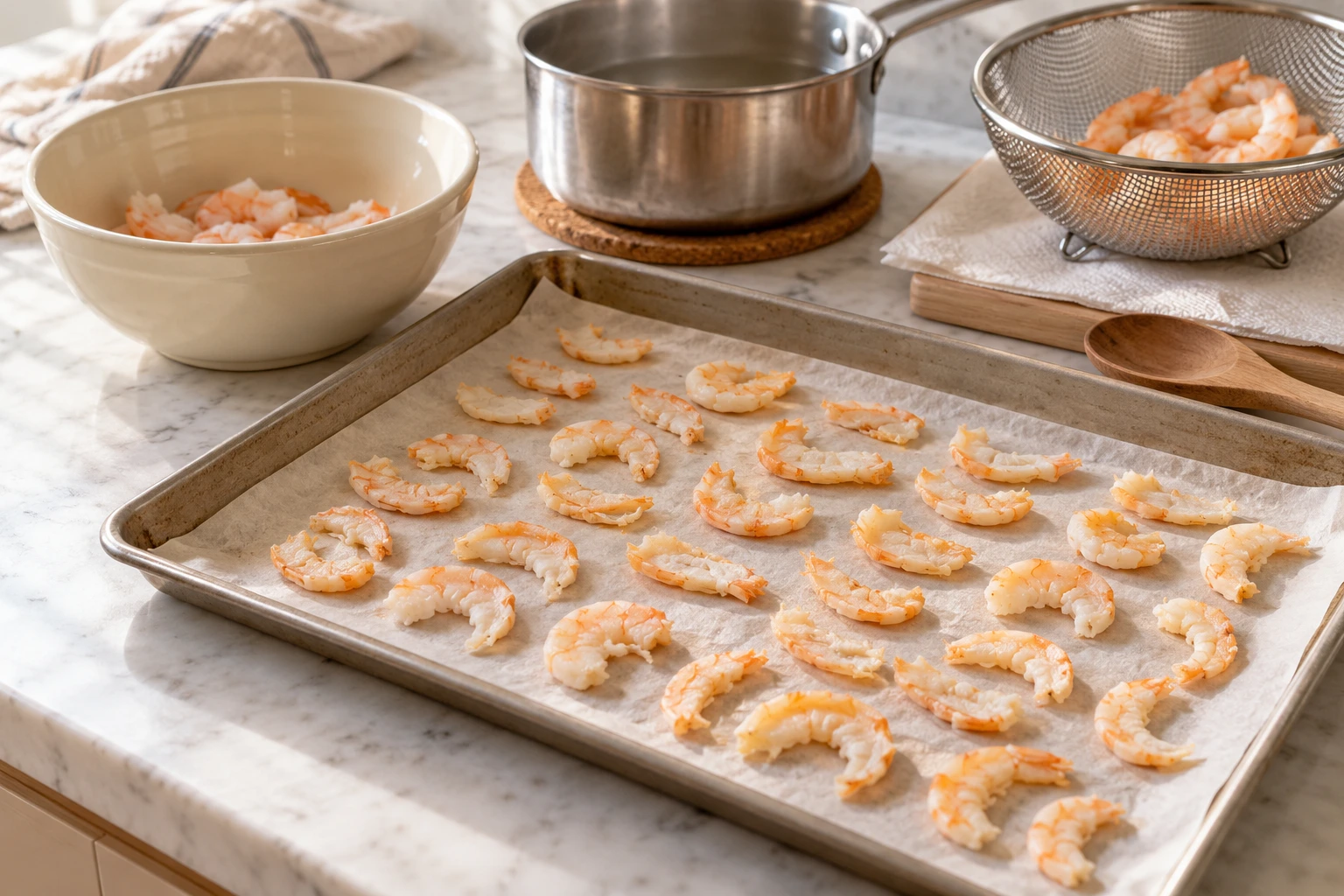
Dry the shrimp until brittle: Preheat the oven to 95°C or 200°F, line a baking tray with parchment paper, and slice the cooked, drained shrimp lengthwise into thin pieces approximately 3 to 5 mm thick. Spread them in a single layer with a little space between pieces and no overlap, then dry for approximately 90 minutes to 2 hours, turning halfway through and checking regularly near the end, since thickness, shrimp size, and oven performance all affect drying time. Once cooled, the pieces should be hard and brittle with no flexible, rubbery, or damp centers; continue drying in short intervals if needed, avoiding dark browning, scorching, or burnt edges, since the goal is gentle moisture
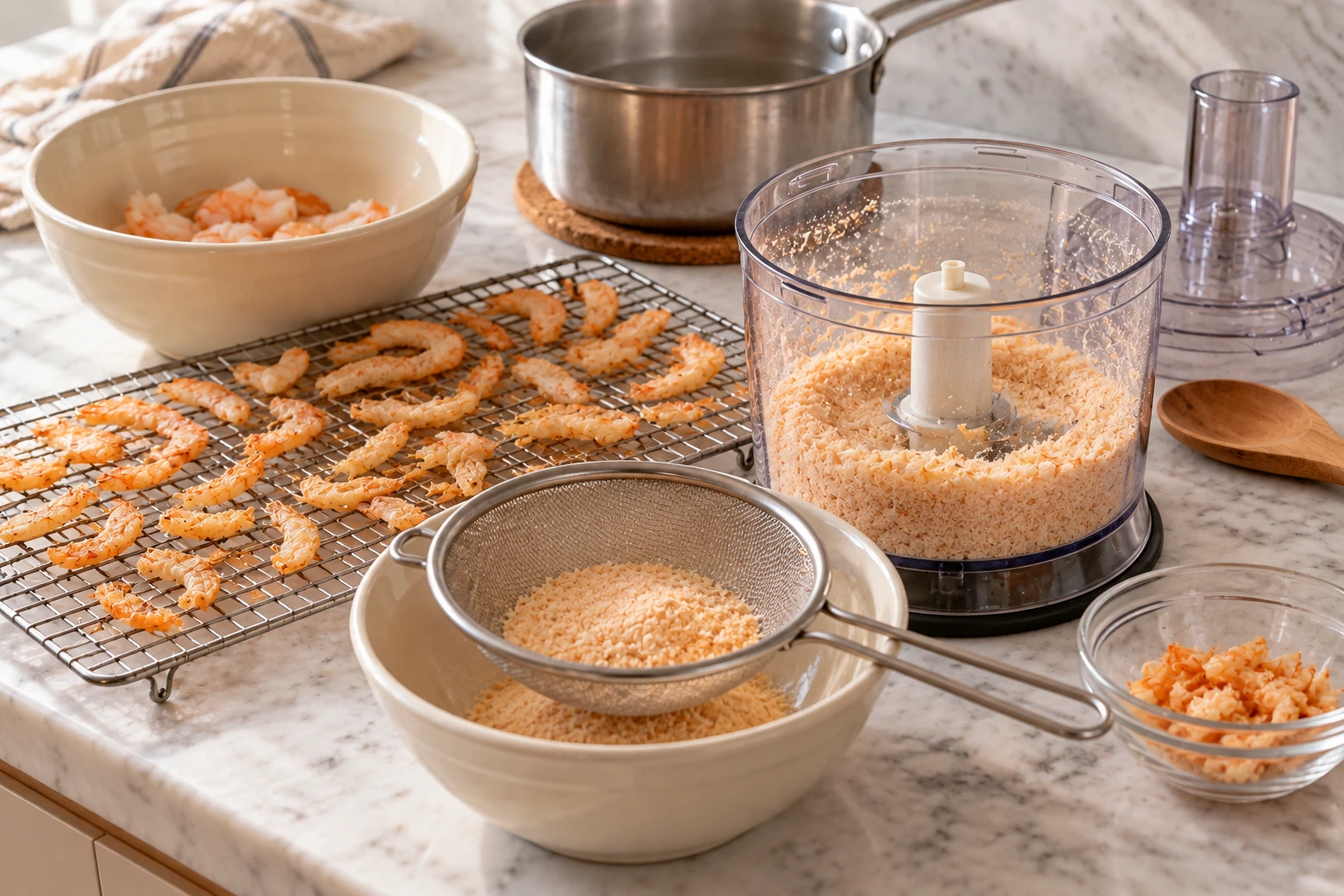
Cool completely and grind finely: Transfer the dried shrimp from the oven to a clean wire rack and let them cool completely, since leftover warmth can cause condensation inside a closed grinder or storage jar. Break a thicker piece in half to check that its center is dry and brittle, with no soft or moist middle; return any flexible or damp pieces to the oven for additional drying, then cool them again. Pulse the fully cooled shrimp in a clean, completely dry food processor or spice grinder until finely and evenly ground, pass the powder through a fine-mesh sieve, regrind any larger fragments, and avoid adding water or oil to help it blend.
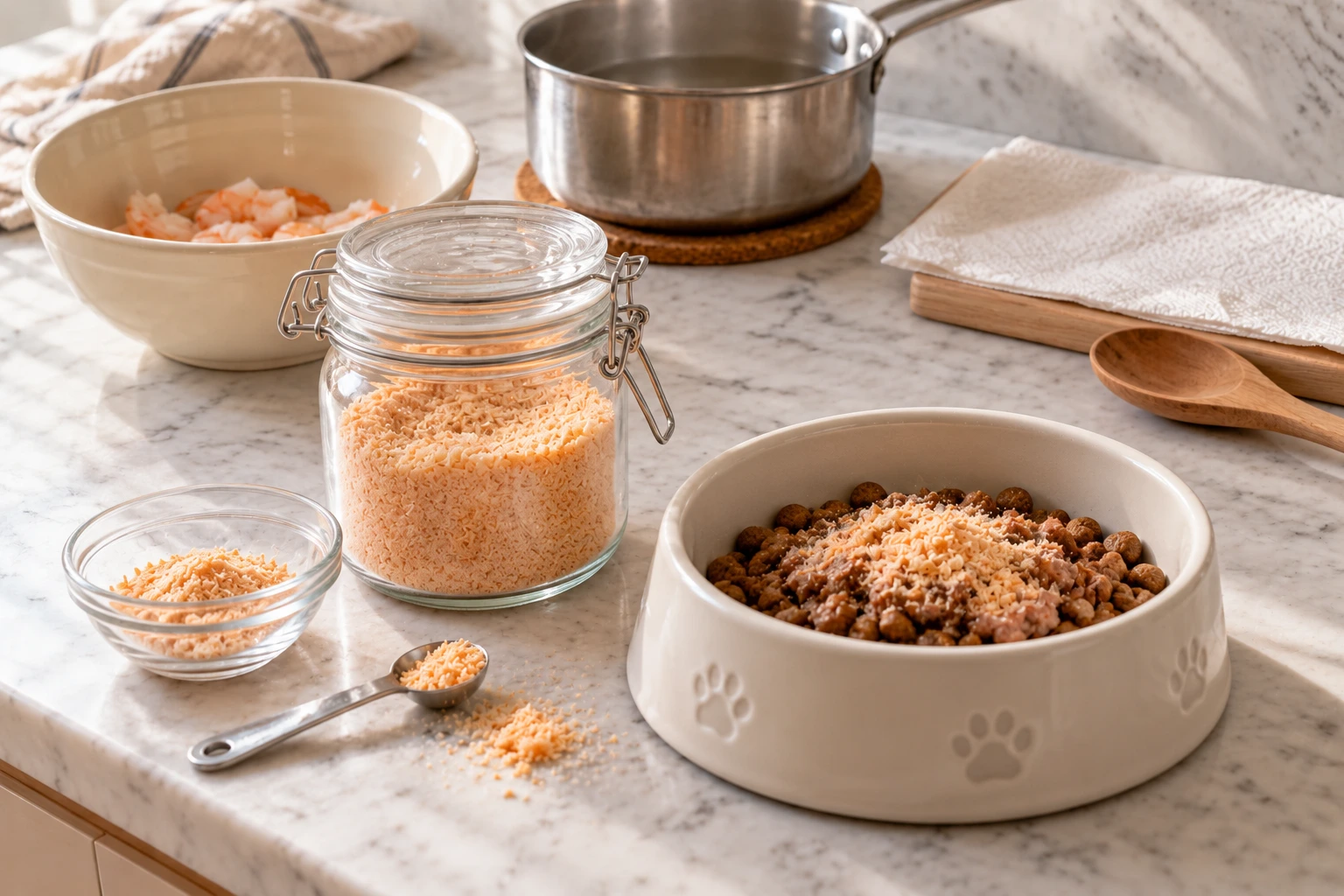
Portion, serve, and refrigerate: Using a dry spoon, transfer the finished powder to a clean, thoroughly dry glass jar, close the lid tightly, and refrigerate promptly. To serve, measure your cat's normal portion of complete wet or dry food and sprinkle on a very light dusting, starting with less than 1/16 teaspoon for a cat already cleared to try shrimp; scatter it across the surface rather than covering the entire meal, serve immediately, and return the remaining powder to the refrigerator. Always use a fresh, dry measuring spoon to keep food moisture out of the jar, discard powder that becomes damp, smells unusual, changes appearance, or exceeds the recommended storage period, and
Made this recipe?
Tap the paw so other pet parents know it’s worth making.
Be the first to make it
Tips & serving
Introduce this topper only after confirming with your veterinarian that shrimp is appropriate for your individual cat. For a cat already accustomed to shrimp, begin with a tiny dusting of less than 1/16 teaspoon over its usual complete food. This is a cautious introductory amount, not a universal nutritional serving recommendation. Dried shrimp is concentrated, so measure carefully and avoid generous spoonfuls. Consider the calories from this powder alongside all other treats, keeping treats and extras below 10% of your cat's daily calorie intake unless your veterinarian advises otherwise. Offer occasionally rather than automatically adding it to every meal. Watch how your cat responds to
- Adds an occasional seafood flavor to familiar complete cat food without requiring a substantial change to the usual feeding routine.
- The fine powder disperses easily over wet food, allowing a tiny serving to be spread across the surface rather than concentrated in one large piece.
- A homemade single-ingredient powder allows owners to avoid the added salt, sauces, oils, and seasonings found in some prepared seafood products.
- Small-batch preparation makes it easier to control serving amounts, inspect the ingredients, and maintain a short, practical refrigerated storage period.
- The dry finishing texture provides a different way to serve an occasional treat without preparing an additional broth, gravy, or separate meal.
- Choose smaller shrimp when possible, as their thinner flesh is easier to slice into pieces that dry consistently.
Storage
Transfer the fully cooled powder into a clean, completely dry, airtight food-safe jar. Although the shrimp has been oven-dried, this recipe has not undergone laboratory moisture or shelf-stability testing, so it must not be treated as a shelf-stable commercial dried seafood product. For convenient portioning, divide the freshly prepared powder among several small, food-safe airtight containers before freezing.
Substitutions
Plain, fully cooked, peeled, and deveined shrimp can replace raw shrimp if its ingredient list confirms there is no added salt, seasoning, sauce, butter, garlic, onion, or marinade. Inspect each piece for shell and tail fragments before drying. Because it is already fully cooked, skip the saucepan stage, pat the shrimp dry, and proceed with the low-temperature oven drying process. Fresh shrimp can be replaced with commercially frozen, plain raw shrimp. Thaw it safely in the refrigerator, discard the thawing liquid, and cook it completely before drying.
Cats recipe FAQ
Is this topper a complete meal for my cat?
Treat it as an occasional extra, not a meal plan. Introduce this topper only after confirming with your veterinarian that shrimp is appropriate for your individual cat.
Can cats have plain peeled shrimp?
This recipe uses plain peeled shrimp in a small, cat-appropriate amount. Skip it if your cat has a known sensitivity, and read the foods-to-avoid note on this page before serving.
How do I store this topper?
Transfer the fully cooled powder into a clean, completely dry, airtight food-safe jar. Refrigerate promptly at 4°C or colder and use within 48 hours as a conservative homemade-storage guideline.
What's the safest way to try this with my cat?
Offer a small amount beside regular food, introduce one new recipe at a time, and watch appetite, stool, skin, and behavior for a day or two.
Can I make this shrimp powder using frozen shrimp?
Yes. Choose plain frozen shrimp without seasoning, marinades, or added salt. Thaw it in the refrigerator, remove all shells and tails, and check that it has been deveined. If it is raw, cook it thoroughly before drying. Frozen shrimp that was already fully cooked can go straight to the drying stage after inspection and thorough patting.
Why does the shrimp need to be completely dry before grinding?
Residual moisture makes shrimp difficult to grind into a consistent fine powder and can cause the finished mixture to clump. Slice the shrimp thinly, dry it gently, and let it cool before checking the thickest pieces. The center should break cleanly rather than bend. Even thoroughly dried homemade powder still requires refrigerated or frozen storage.
Sources