

A little freshly cooked fish can make your cat's usual food more interesting without the work of preparing a whole homemade meal. This simple medley starts with a plain, boneless cod fillet, gently poached until tender and separated into soft, manageable flakes. A small amount of fully cooked egg adds another lovely texture while letting the fish remain the main ingredient. There's no seasoning, oil, butter, or rich sauce here. The most important job is checking every bit of cod for hidden bones before mixing everything together. Serve the cooled medley in modest amounts over your cat's regular complete food. It's an occasional topper, not a balanced meal or a substitute for proper feline nutrition.
Safety first: Keep treats and extras under about 10% of your cat's daily food - the regular diet should do the heavy lifting.
Foods to avoid
Never use raw or undercooked cod, raw egg, fish bones, fish skin that has not been removed, salted cod, smoked fish, seasoned fillets, or fish packed in flavoured sauces. Avoid onion, garlic, chives, butter, added oil, salt, pepper, stock cubes, commercial seasonings, and ingredients containing these additions. Raw fish and raw egg introduce unnecessary food-safety risks. Even carefully marketed boneless fish can contain small pin bones, so inspect the fully cooked fillet thoroughly before serving. Do not use the cooking liquid as a substitute for proper bone inspection. Never offer this mixture as a complete homemade cat diet.
Ingredients
Instructions
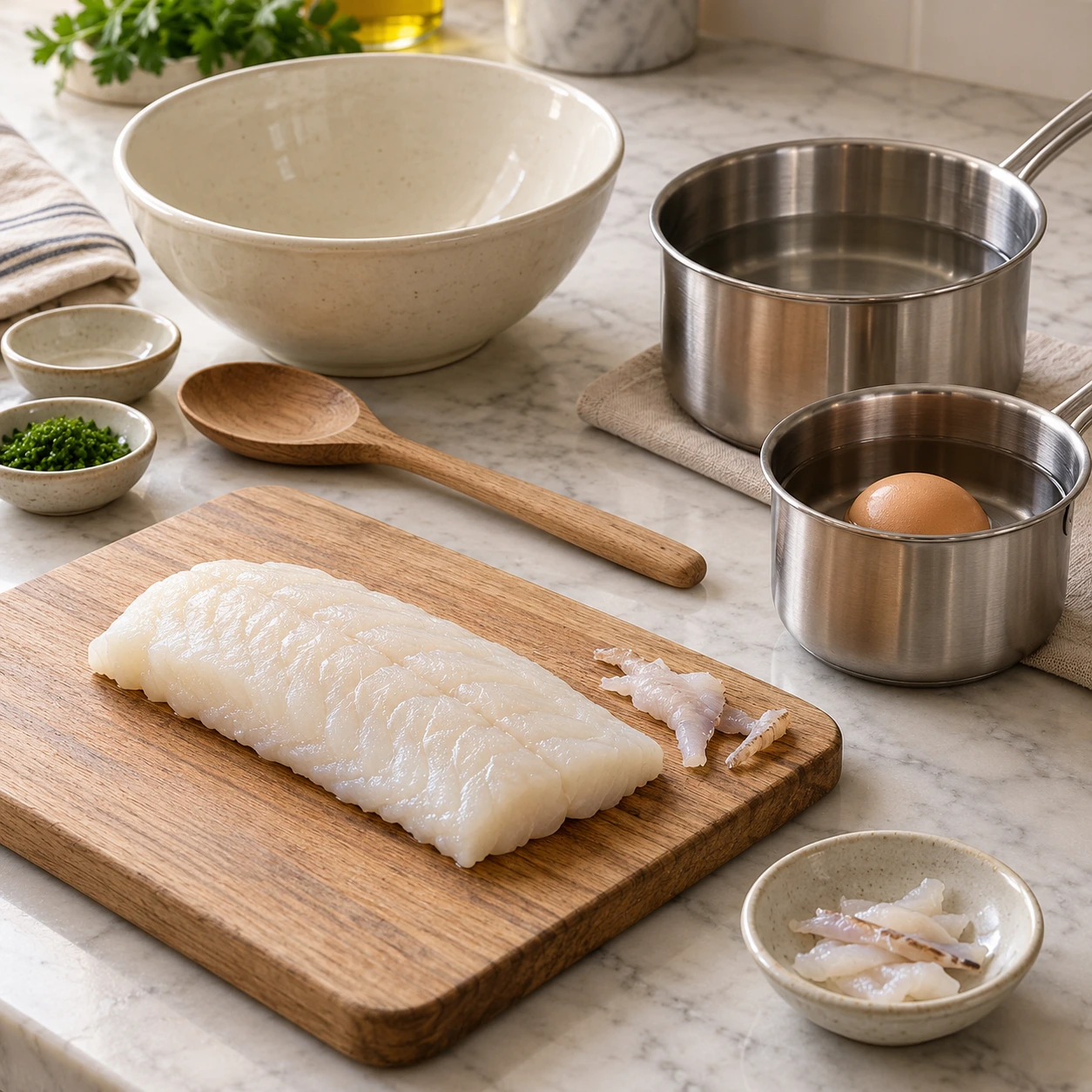
Prepare the Cod and Egg: Wash your hands, clean your work surface, and set out separate utensils for raw fish and cooked ingredients. Make sure the cod is completely thawed, remove any visible skin or remaining connective tissue, and check for obvious bones, confirming that the fish contains no added brine, salt, seasoning, or marinade. Measure 300 ml of fresh water into a small saucepan and place the egg in a separate saucepan ready for cooking, keeping the raw cod away from finished food and avoiding rinsing it under running water, as splashes can spread contamination.
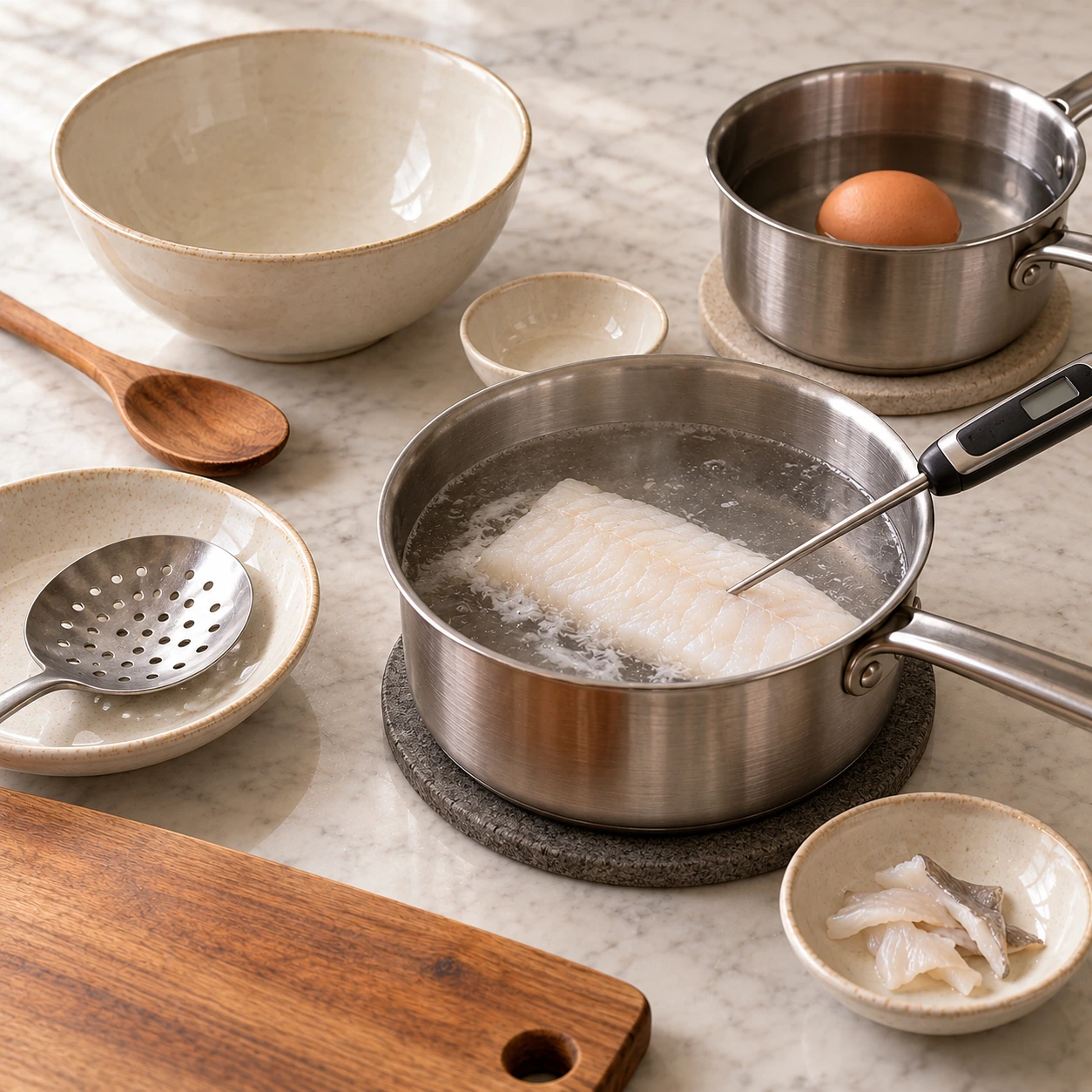
Gently Poach the Cod: Place the cod in the small stainless steel saucepan, add the measured water, using enough to cover the fish, and heat gently until you see only occasional small bubbles rather than a vigorous boil. Cover loosely and cook for approximately 6 to 10 minutes, depending on the fillet's thickness, until a clean food thermometer inserted into the thickest part reads 63°C or 145°F and the fish is opaque throughout and flakes easily. Lift it into the shallow ceramic dish with a clean slotted spoon, avoiding vigorous boiling or repeated stirring that could break the fish into tiny pieces before you've checked it.
Cook and Cool the Egg: While the cod cooks, cover the egg with fresh water in the second saucepan, bring to a boil, then reduce the heat and cook at a gentle boil for approximately 10 to 12 minutes, until both the yolk and white are completely firm. Transfer it to cool water, peel once comfortable to handle, and cut it open to check for any translucent white or liquid yolk; set aside approximately 15 g, including a little white and yolk, and finely chop with a clean knife or crumble with a fork. Reserve the remaining cooked egg for another appropriate use rather than adding it all to the topper, and allow the prepared egg and cod to cool promptly in separate shallow dishes.
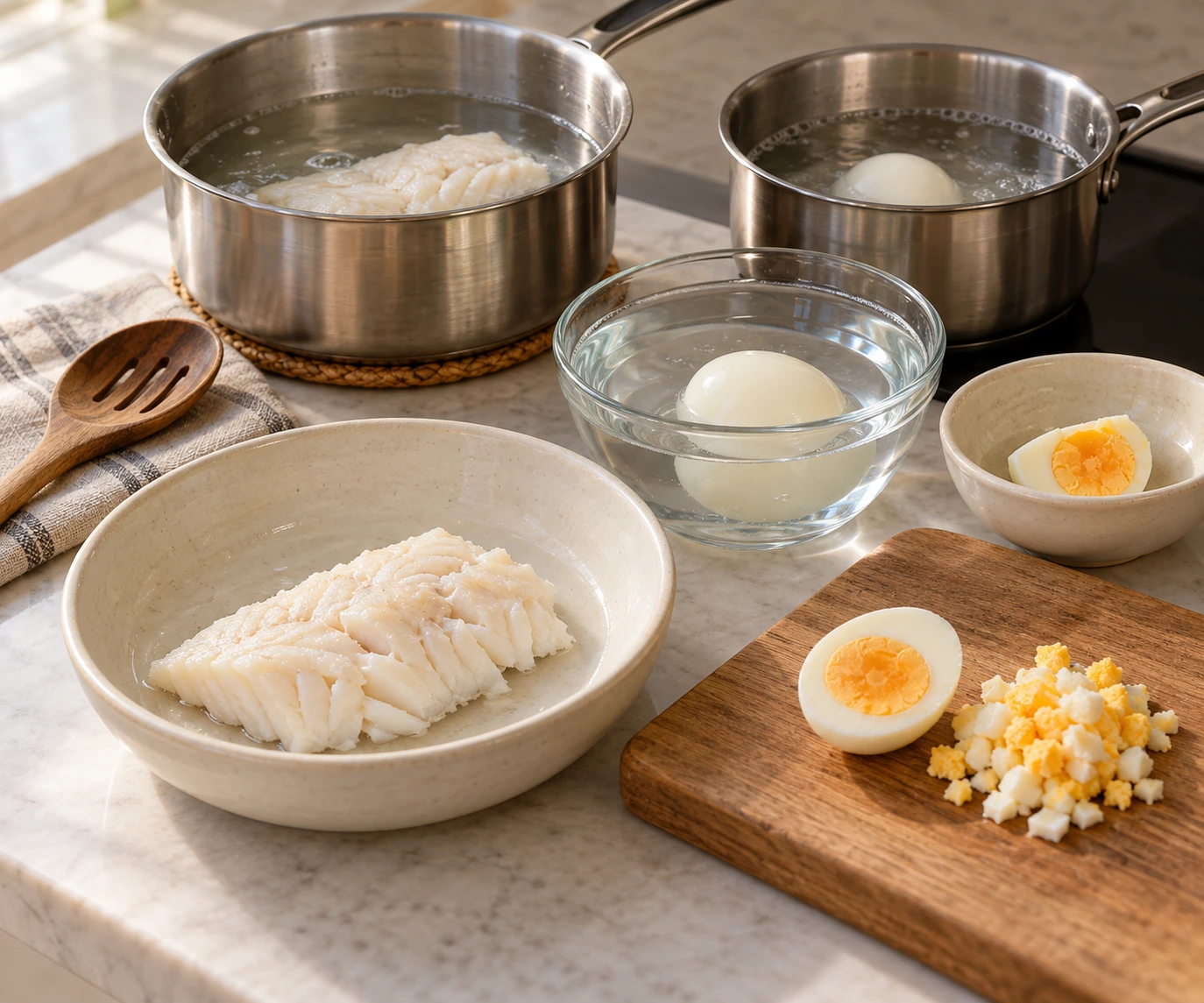
Inspect and Flake the Fish: Once the cod is cool enough to handle comfortably, move it onto a clean preparation plate and use two clean forks to separate it gently along its natural layers. Work through the whole fillet in small sections, feeling carefully with clean fingers for thin pin bones, hard fragments, skin, or anything else that shouldn't be there; even fish labelled boneless needs checking, so discard anything suspicious and leave out any portion you cannot inspect confidently. Break larger pieces into short, soft flakes suitable for your cat, keeping them loose rather than crushing them into a paste, and make sure the finished fish is tender, moist, and completely free of hard or
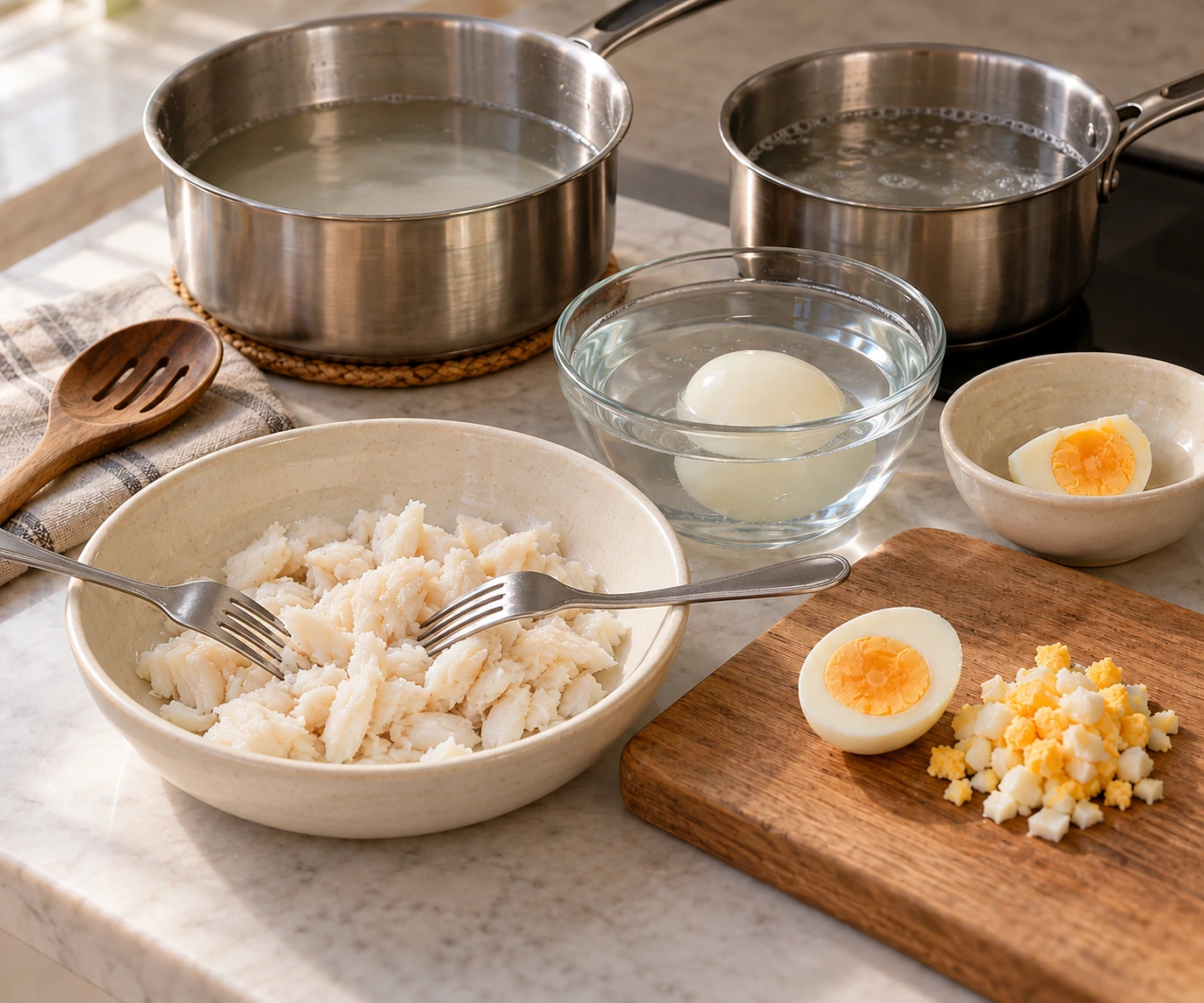
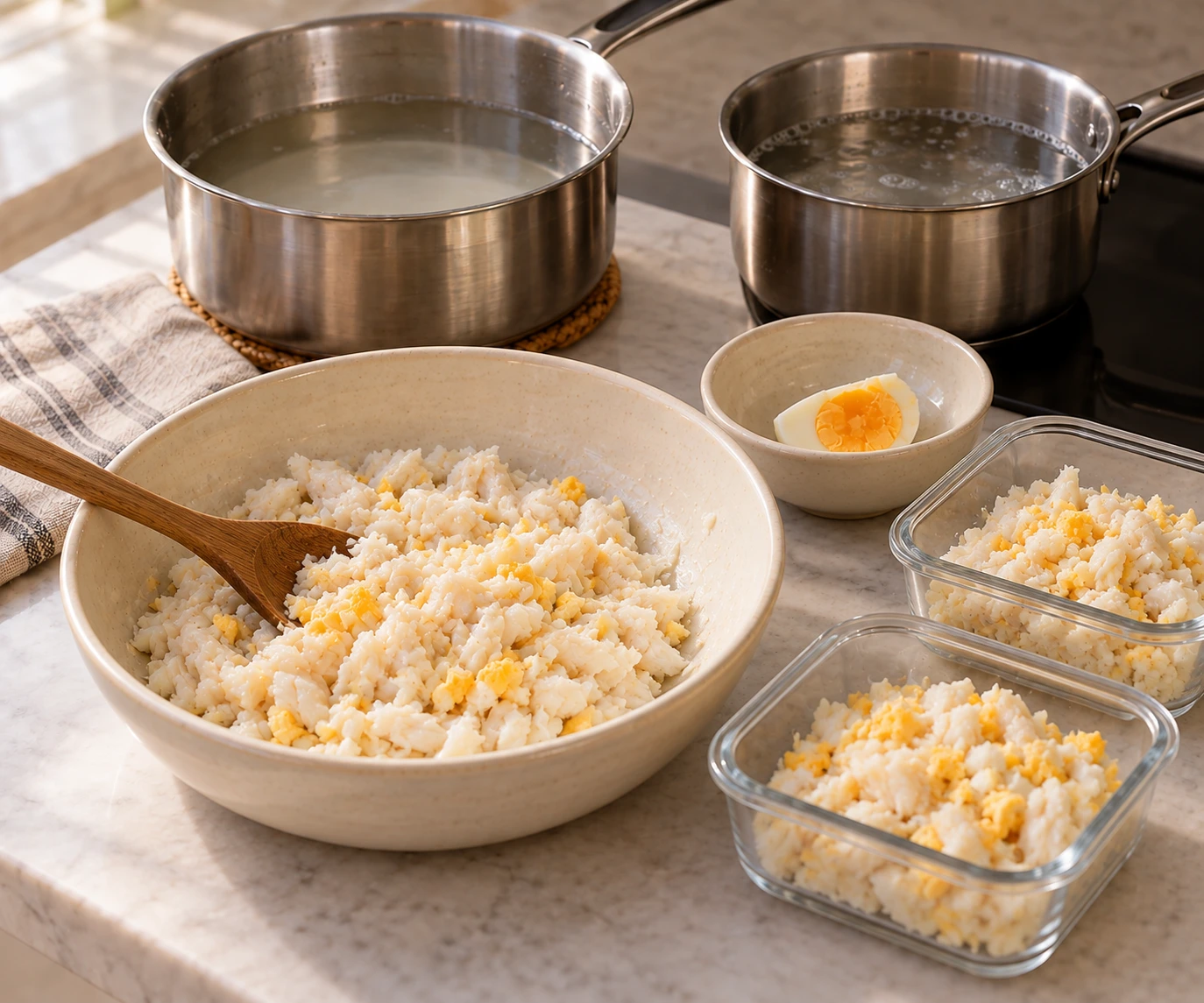
Combine the Flakes and Portion: Place approximately 135 g of the cooked, carefully inspected cod flakes into the cream ceramic mixing bowl, or use the available cooked yield if it differs slightly, then add the reserved 15 g of finely chopped, fully cooked egg and fold gently with a clean spoon. If the mixture looks dry, add 1 teaspoon of fresh drinking water, followed by a second teaspoon only if needed, stopping once the flakes are lightly moistened and the egg is evenly distributed without mashing, blending, or pressing everything together. Let the medley reach a comfortable serving temperature, spoon a small portion over your cat's regular complete food, and divide the remainder between
Made this recipe?
Tap the paw so other pet parents know it’s worth making.
Be the first to make it
Tips & serving
Start with a small amount, approximately 1 teaspoon of the finished mixture, scattered over your cat's usual complete and balanced food. A suitable portion depends on your cat's size, daily calorie needs, existing diet, and individual circumstances. Treat this medley as an occasional extra, with all toppers and treats together generally contributing no more than 10% of daily calorie intake. Reduce the regular food portion appropriately when additional calories are offered, following veterinary guidance where necessary. Serve at a comfortable temperature and watch how your cat responds to a newly introduced ingredient. Do not replace a normal meal with this mixture, as cod and egg alone do
- Uses a straightforward poaching method that requires no added oil, butter, salt, or seasoning.
- Produces naturally separated fish flakes that can be distributed easily across a regular serving of complete cat food.
- Combines two familiar animal-protein ingredients without relying on vegetables, grains, or unnecessary flavour additions.
- Provides a different homemade topper texture without requiring a blender, food processor, mould, or baking equipment.
- Allows owners to inspect each cooked fish portion carefully before preparing appropriately sized pieces for serving.
- Makes it convenient to prepare and store several small occasional portions from a single cooking session.
Storage
Transfer unused medley into clean, shallow, airtight containers as soon as preparation is finished. For this homemade fish-and-egg mixture, use refrigerated portions within 24 to 48 hours as a conservative storage recommendation. For longer storage, divide the mixture into individual serving portions and freeze promptly in separate food-safe containers. Use within approximately one month for best texture and quality.
Substitutions
Plain boneless haddock or pollock can replace cod when fresh cod is unavailable. Choose an unseasoned fillet, remove any skin and remaining bones, and poach it until fully cooked. Check the thickest part reaches 63°C or 145°F before cooling and flaking. Keep the serving size modest. If you prefer to use only cooked egg white, replace the 15 g portion of whole cooked egg with approximately 15 g of fully cooked, finely chopped egg white. This changes the proportion of yolk in the finished mixture while preserving its loose fish-and-egg texture. The additional fresh drinking water is optional.
Cats recipe FAQ
Can Gently Poached Cod and Egg Flake Medley for Cats replace my cat's regular diet?
Treat it as an occasional extra, not a meal plan. Start with a small amount, approximately 1 teaspoon of the finished mixture, scattered over your cat's usual complete and balanced food.
Is boneless cod fillet okay for cats?
This recipe uses boneless cod fillet in a small, cat-appropriate amount. Skip it if your cat has a known sensitivity, and read the foods-to-avoid note on this page before serving.
How should I store leftovers?
Transfer unused medley into clean, shallow, airtight containers as soon as preparation is finished. Refrigerate promptly at 4°C or below, keeping the total time outside refrigeration under two hours, or one hour when the surrounding temperature is above 32°C.
How should I introduce this topper?
Start with a taste-size portion next to your cat's usual food, and hold off on serving more until you have seen that it agrees with them.
Can cats eat cod and egg together?
Plain, thoroughly cooked cod and fully cooked egg can be offered together in small amounts to cats whose regular diet allows these ingredients. Remove every fish bone and avoid all seasoning. This combination is intended as an occasional addition to complete cat food, not a balanced homemade meal.
Why should I flake the cod instead of blending it?
Separating the cooked fish by hand makes it easier to inspect individual pieces for hidden bones before serving. It also preserves the naturally soft, loose texture that makes this topper easy to scatter over regular food. A blender can turn the fish into a paste and may conceal unwanted fragments.
Sources