
Turkey is a useful starting point when preparing an occasional homemade topper for a cat. Boneless, skinless turkey thigh has a naturally tender texture and provides animal protein without requiring oil, butter or seasoning. Cooking it inside folded parchment helps retain moisture and makes it easier to prepare small individual portions. For an autumn touch, this recipe includes a very small amount of ripe pear. The fruit must be washed, peeled, cored and completely free of seeds before being finely diced. Pear is optional and should remain a minor ingredient, not a substantial part of the serving. These parcels are complementary food only, not a nutritionally complete feline meal. Continue feeding a complete and balanced cat food as the dietary foundation.
Safety first: Start with a small portion beside your cat's usual food and confirm bigger diet changes with your veterinarian.
Foods to avoid
Never use turkey containing bones, skin, heavy fat deposits, marinades or seasoning. Raw or undercooked poultry can carry harmful bacteria, so the turkey must reach an internal temperature of at least 74°C. Pear must be washed, peeled, cored and completely seedless. Discard the core and seeds rather than including them in the parcels. Do not add onion, garlic, chives, leeks, salt, pepper, butter, cooking oil, stock cubes or sauces. Avoid waxed paper and unsuitable wrapping materials. This recipe is not a complete and balanced cat food and should never replace your cat's normal nutritionally complete diet.
Ingredients
Instructions
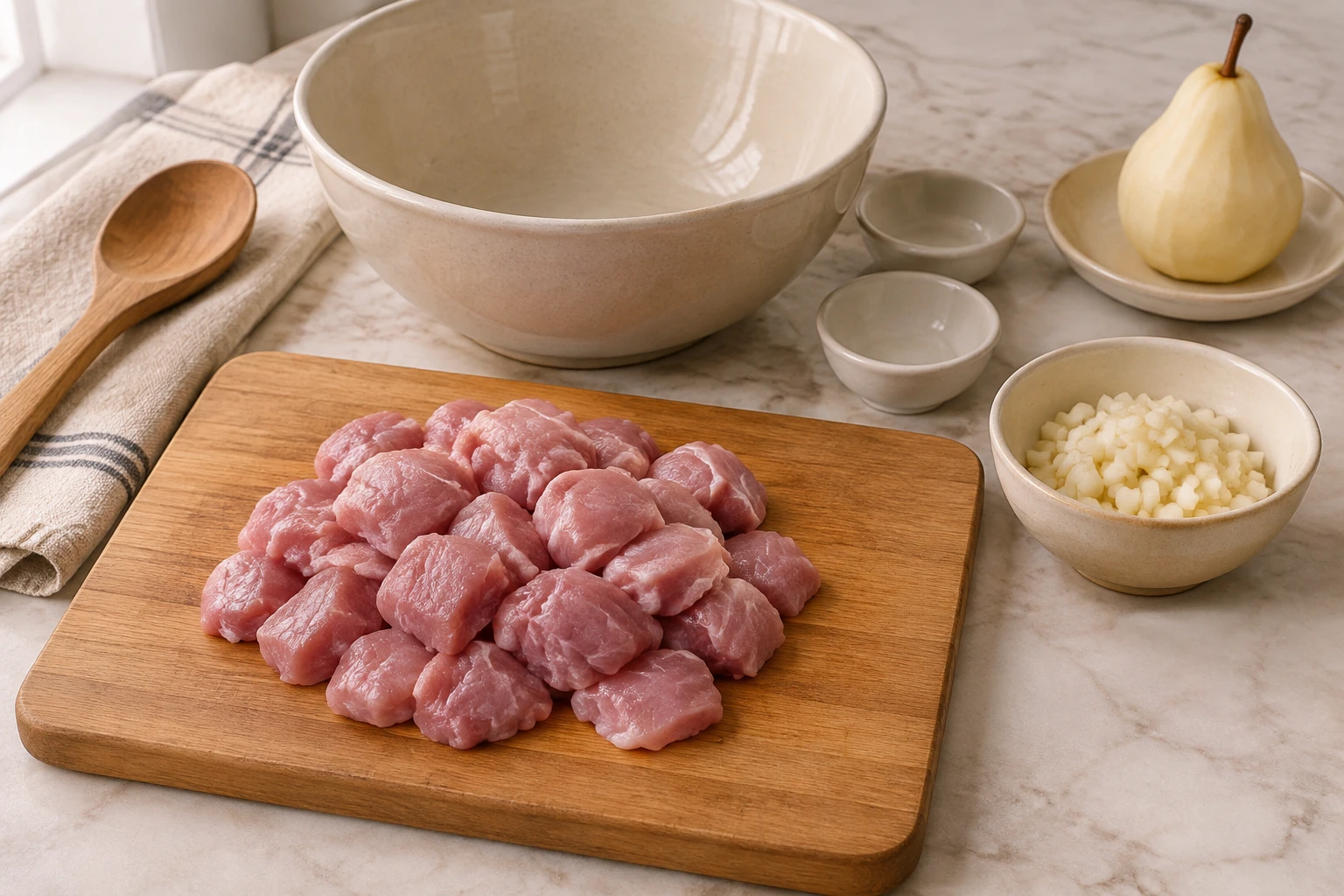
Prepare the Turkey and Pear: Wash your hands and prepare a clean cutting board for the raw turkey. Check the boneless, skinless turkey thigh carefully, removing any remaining bone fragments, tough connective tissue and excess visible fat. Cut the meat into small, relatively even pieces so that it cooks consistently inside the parcels. Wash and peel the ripe pear, remove the entire core and discard every seed. Finely dice just 15 g of pear. Keep the pear pieces noticeably smaller than the turkey pieces so they distribute evenly without becoming a substantial part of the recipe. Keep raw poultry separate from the prepared fruit and other ready-to-eat foods.
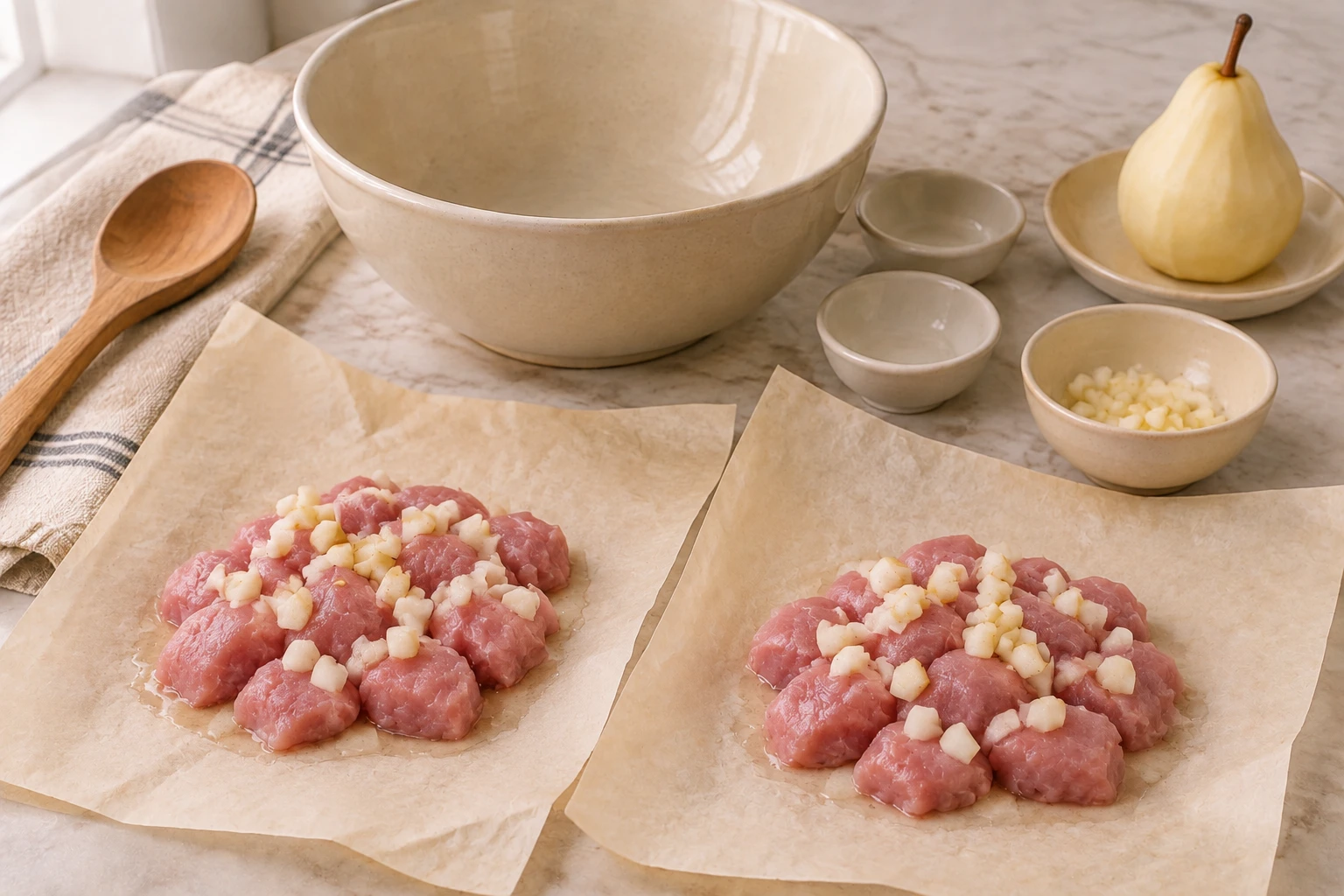
Arrange the Parchment Parcels: Preheat the oven to 180°C. Cut two generously sized sheets of food-safe parchment paper, allowing enough space to fold and seal each parcel without compressing the food. Divide the turkey pieces evenly between the sheets, arranging them in a single loose layer near the centre. Scatter a small quantity of finely diced pear over the turkey, keeping the fruit distributed rather than concentrated in one spot. Add approximately half a tablespoon of water to each parcel. The small amount of liquid creates moisture inside the folded paper as the turkey cooks. Do not add salt, oil, butter, stock cubes, pepper or other seasonings.
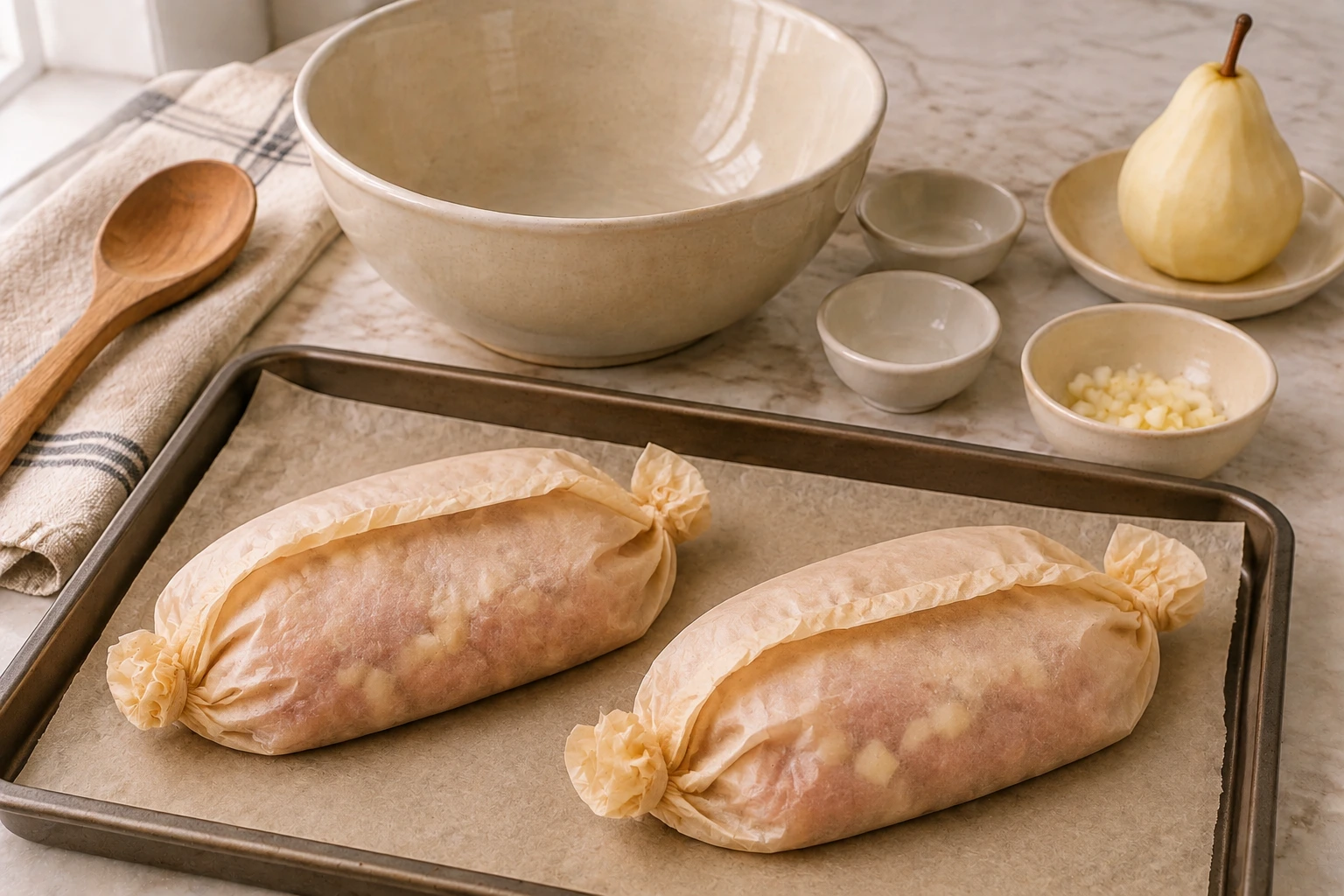
Fold and Seal Each Parcel: Bring the long edges of each parchment sheet together above the filling. Fold them over one another several times to form a secure central seam, then twist or fold both ends inward to close the parcels. Leave a little room inside each parcel for steam to circulate rather than wrapping the turkey tightly. Place the parcels seam-side up on the baking tray, leaving space between them. Check that no filling is exposed and that the parchment is suitable for oven use at the chosen temperature. Avoid using waxed paper or plastic wrapping. Securely folded parcels help retain moisture while keeping the preparation contained.
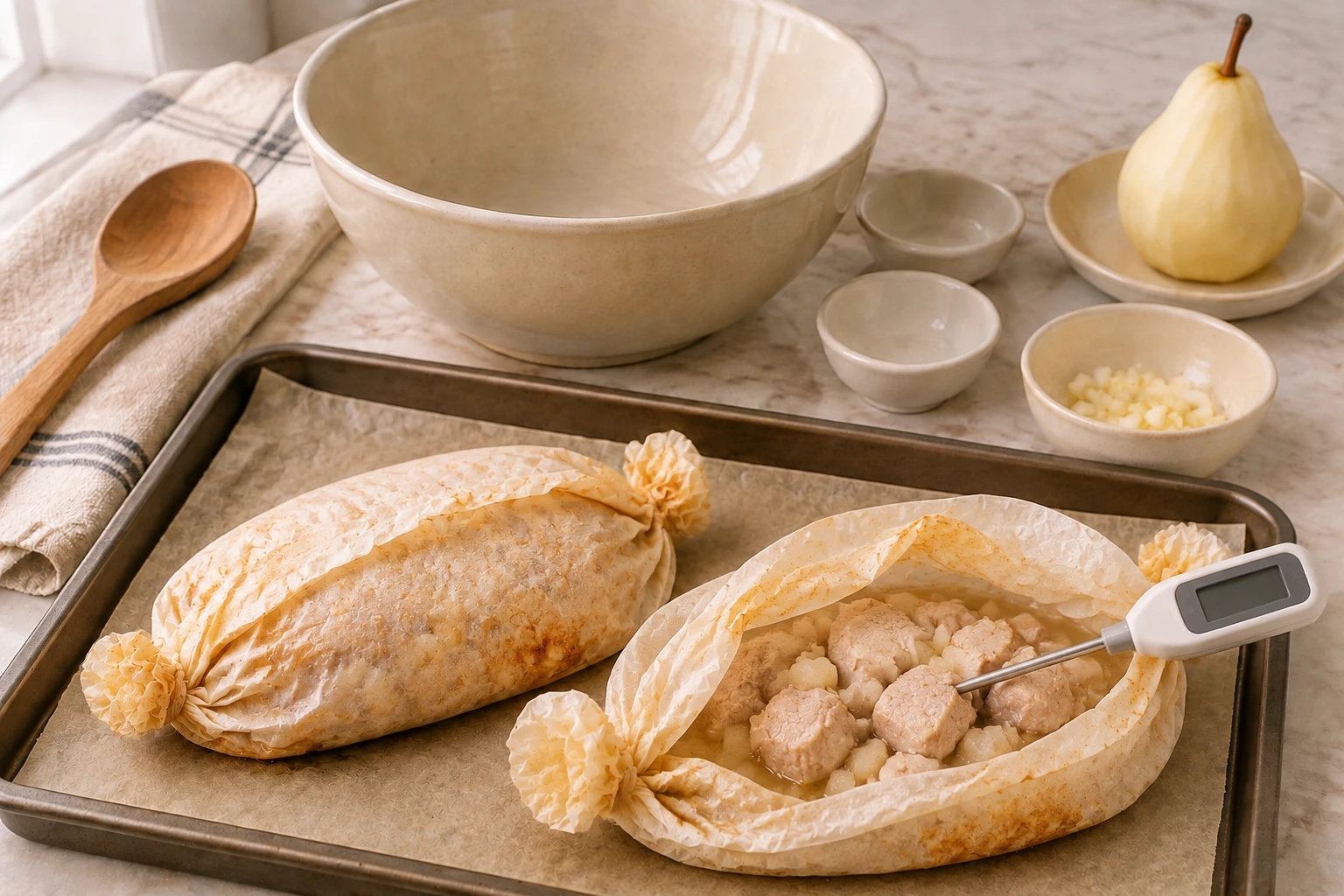
Bake Until the Turkey Is Fully Cooked: Transfer the baking tray to the middle oven rack and bake at 180°C for approximately 20 to 25 minutes. Cooking time depends on the thickness of the turkey pieces and the size of the parcels, so use temperature rather than appearance alone to determine doneness. Carefully open one parcel away from your face because trapped steam can escape suddenly. Check the thickest turkey piece with a clean food thermometer. Poultry must reach an internal temperature of at least 74°C. If the centre has not reached this temperature, reseal the parcel and continue cooking, checking again after a few minutes. The finished turkey should be fully cooked, with no raw or
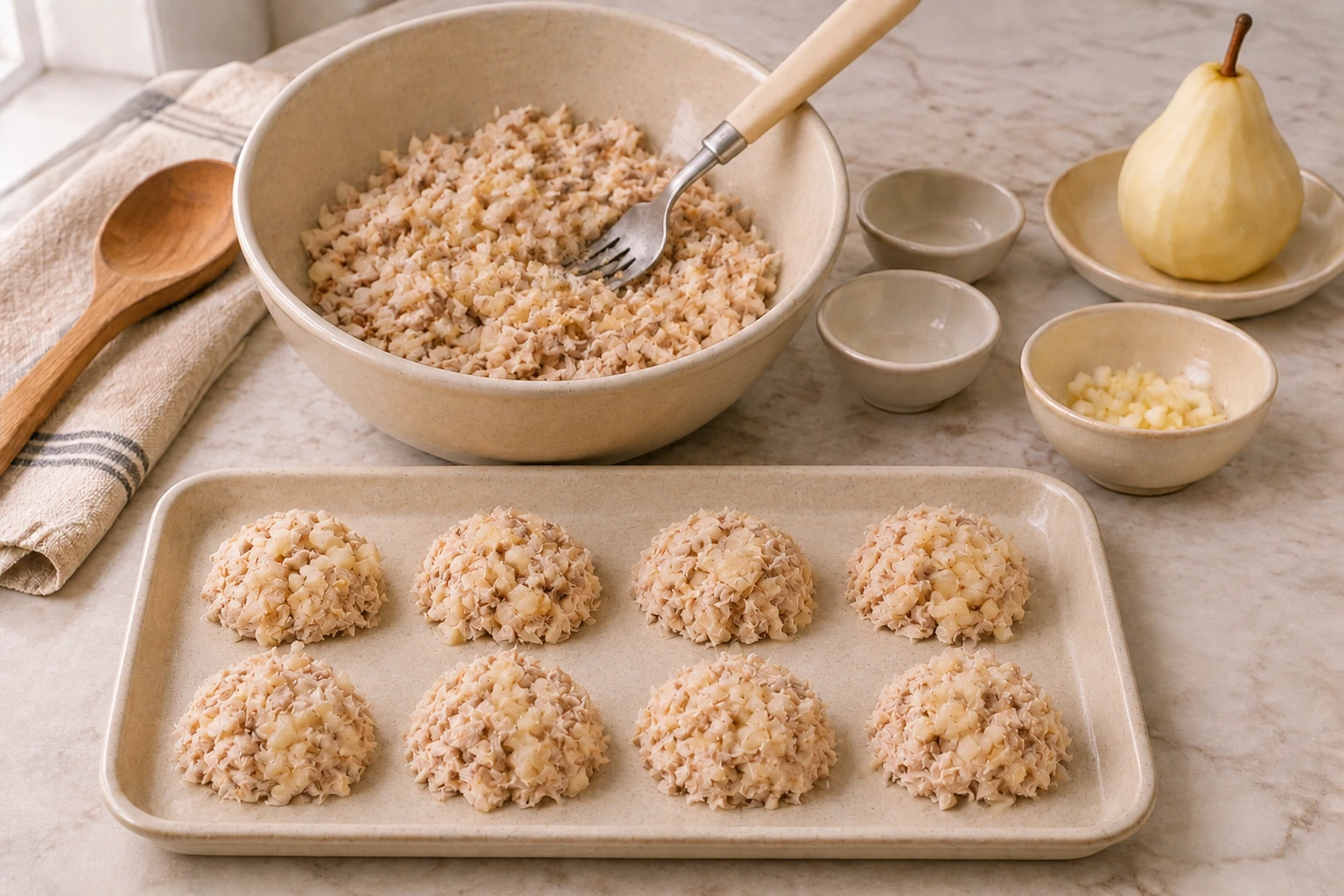
Cool and Divide Into Small Portions: Open the remaining parcels carefully and transfer the cooked turkey and pear mixture to the clean cream ceramic bowl. Allow it to cool completely before serving or refrigerating. Check several turkey pieces for bones or tough pieces and remove any unsuitable fragments. Once cool, use a clean fork to break the turkey into small, soft flakes. Distribute the finely softened pear evenly through the mixture, keeping the turkey dominant. Divide the finished preparation into approximately eight small portions using a clean spoon. Each portion should be suitable for mixing into a cat's usual food rather than serving as a separate meal. Refrigerate or freeze the
Made this recipe?
Tap the paw so other pet parents know it’s worth making.
Be the first to make it
Tips & serving
Serve only after the mixture has cooled completely to room temperature. Begin with approximately half a teaspoon mixed thoroughly into your cat's usual complete and balanced wet or dry food. If your cat enjoys it and tolerates the ingredients, a slightly larger occasional portion may be appropriate, depending on body size and daily calorie requirements. Keep all treats and toppers combined below 10% of daily calories, with complete food providing the nutritional foundation. Individual dietary needs differ, so ask your veterinarian about appropriate portions. Major diet changes should always be discussed with a veterinarian.
- Parchment cooking helps retain natural moisture, producing tender turkey that is easy to break into small flakes.
- Individual parcels make it convenient to prepare and divide small quantities without needing oil or added seasoning.
- The recipe uses a short ingredient list with familiar foods and straightforward preparation equipment.
- Finely diced pear introduces a small seasonal fruit component without displacing turkey as the principal ingredient.
- Cut the turkey into similarly sized pieces before wrapping so smaller pieces do not become overcooked while thicker pieces remain undercooked.
- Keep the pear quantity deliberately small. Its purpose is to introduce a little seasonal fruit, not to turn the preparation into a fruit-based recipe.
Storage
Refrigerate completely cooled parcels or divided portions in a clean, airtight, food-safe container at 4°C or below. For longer storage, freeze individual portions in separate airtight containers or freezer-safe portions. Label each container with its preparation date and use within 1 to 2 months for best quality. Thaw frozen portions overnight in the refrigerator. Use promptly after thawing and never refreeze a portion that has already been thawed.
Substitutions
If pear is unavailable, simply leave it out. The recipe can be prepared with plain turkey alone, and there is no need to replace the fruit with another ingredient. Boneless, skinless chicken thigh can replace turkey in an equivalent quantity if your cat already tolerates chicken. Cook thoroughly to an internal temperature of at least 74°C. Fresh drinking water can replace the plain homemade turkey cooking liquid. Avoid commercial stock, gravy and prepared broth because they may contain salt, onion, garlic or other unsuitable ingredients.
Cats recipe FAQ
Can Cats Turkey and Pear Parchment Parcels replace my cat's regular diet?
Treat it as an occasional extra, not a meal plan. Serve only after the mixture has cooled completely to room temperature. Begin with approximately half a teaspoon mixed thoroughly into your cat's usual complete and balanced wet or dry food.
Can cats have boneless, skinless turkey thigh?
This recipe uses boneless, skinless turkey thigh in a small, cat-appropriate amount. Skip it if your cat has a known sensitivity, and read the foods-to-avoid note on this page before serving.
How do I store this topper?
Refrigerate completely cooled parcels or divided portions in a clean, airtight, food-safe container at 4°C or below. Use within 2 days for this homemade moist preparation.
What's the safest way to try this with my cat?
Offer a small amount beside regular food, introduce one new recipe at a time, and watch appetite, stool, skin, and behavior for a day or two.
Can cats eat pear in small amounts?
Small quantities of plain, ripe pear flesh can be offered to many cats as an occasional extra. Wash and peel the fruit, remove the core and discard every seed. Introduce only a tiny amount, since fruit is not a necessary part of a cat's diet.
Can I prepare these turkey parcels ahead of time?
Yes. You can cook the parcels, cool the turkey completely and divide it into individual portions before storing. Keep refrigerated portions in an airtight container for up to 2 days, or freeze separate portions for longer storage. Thaw frozen portions in the refrigerator before serving.
Sources