
These rabbit and chicory savory rillettes are a simple, gently cooked topper inspired by traditional shredded-meat spreads. Tender boneless rabbit is pulled into fine, delicate strands and mixed with a little finely chopped chicory. A splash of warm cooking water brings everything together into a soft, moist mixture, with no butter, cream, milk or added fat needed. This recipe is intended as an occasional topper for your cat's usual complete and balanced food, never as a replacement for a nutritionally complete diet. Cats have specific nutritional needs that a simple meat-and-vegetable recipe cannot meet alone. Keep the chicory portion very small, introduce unfamiliar ingredients gradually and check with your veterinarian before making major changes to your cat's diet.
Safety first: Skip this recipe if your cat has a known sensitivity to any ingredient, and introduce anything new slowly.
Foods to avoid
Never include onion, garlic, leek, chives, salt, pepper, seasoning blends, stock cubes, gravy, butter, cream or milk. These additions are unnecessary and some can be harmful to cats. Never use rabbit containing bones, and never feed cooked bones because they can splinter. Raw or partially cooked rabbit should not be used. Chicory should remain a very small, fully cooked addition, not a substantial part of the recipe. Stop offering the preparation if your cat shows an unwanted reaction and contact your veterinarian if you are concerned. This recipe is an occasional topper, not a complete cat food.
Ingredients
Instructions
Prepare the Rabbit and Chicory: Measure out the rabbit and chicory before you start. Carefully check the rabbit for any remaining bones, hard pieces of connective tissue or unwanted material, then cut the meat into similarly sized small pieces for even cooking. Rinse the chicory under cool running water, remove any damaged outer leaves and finely chop a small 10 g portion. Keep the quantities modest, as rabbit is the main ingredient and chicory is only a minor addition. Wash your hands, knife and chopping board after handling the raw meat, and keep the raw rabbit separate from cooked ingredients and clean utensils.
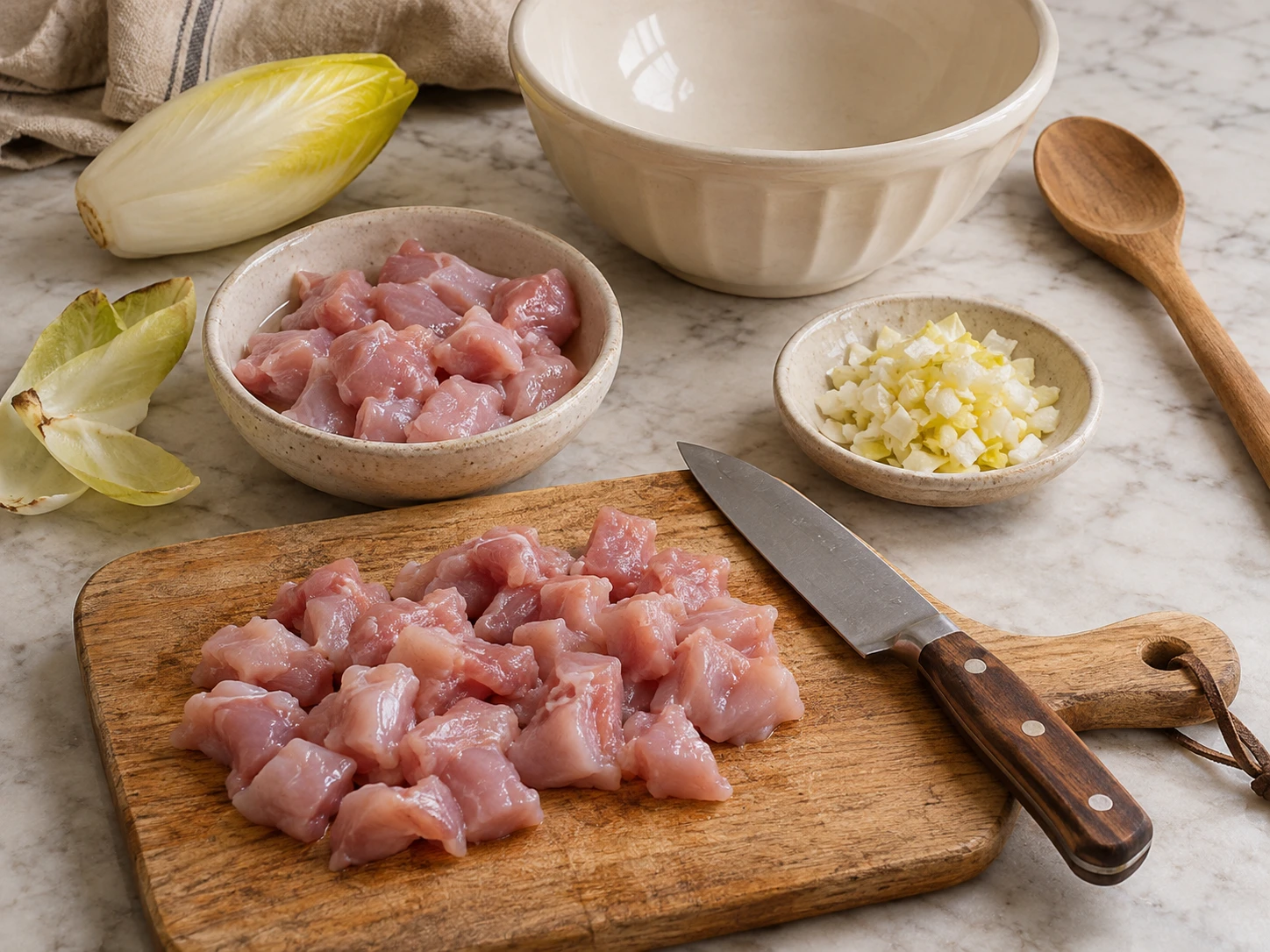
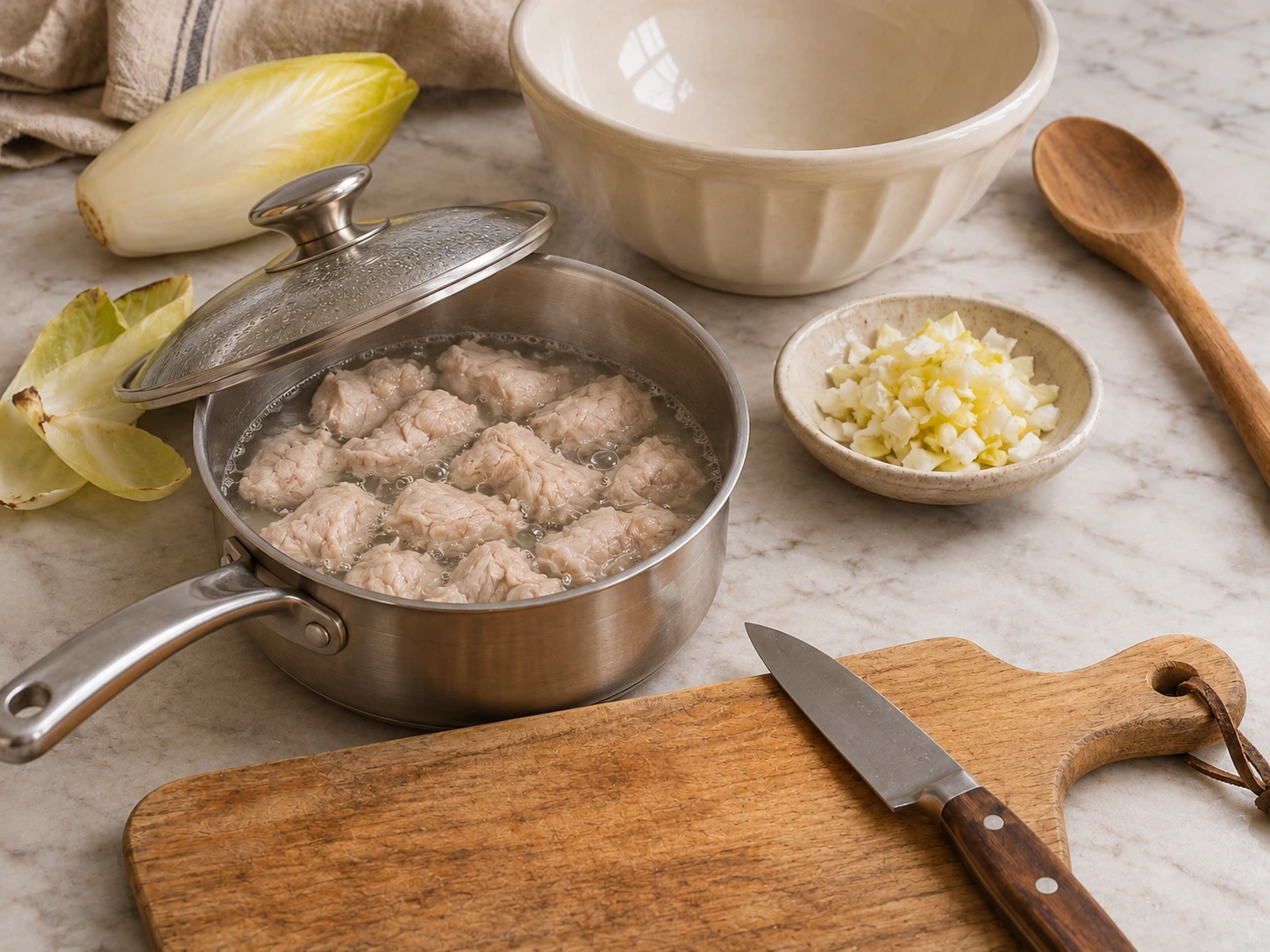
Gently Cook the Rabbit: Place the rabbit pieces in a small saucepan with approximately 60 ml of plain water. Partially cover the pan and bring the water to a gentle simmer, turning the pieces occasionally until the meat is completely cooked through and tender. Cooking time will depend on the thickness of the pieces, so check the largest one rather than relying on the clock alone. If you have a food thermometer, make sure the centre reaches at least 74°C. Avoid browning or frying the meat, and don't add oil. Set the cooking liquid aside, as a little will help give the finished rillettes their moist texture. Never serve rabbit raw or partially cooked.
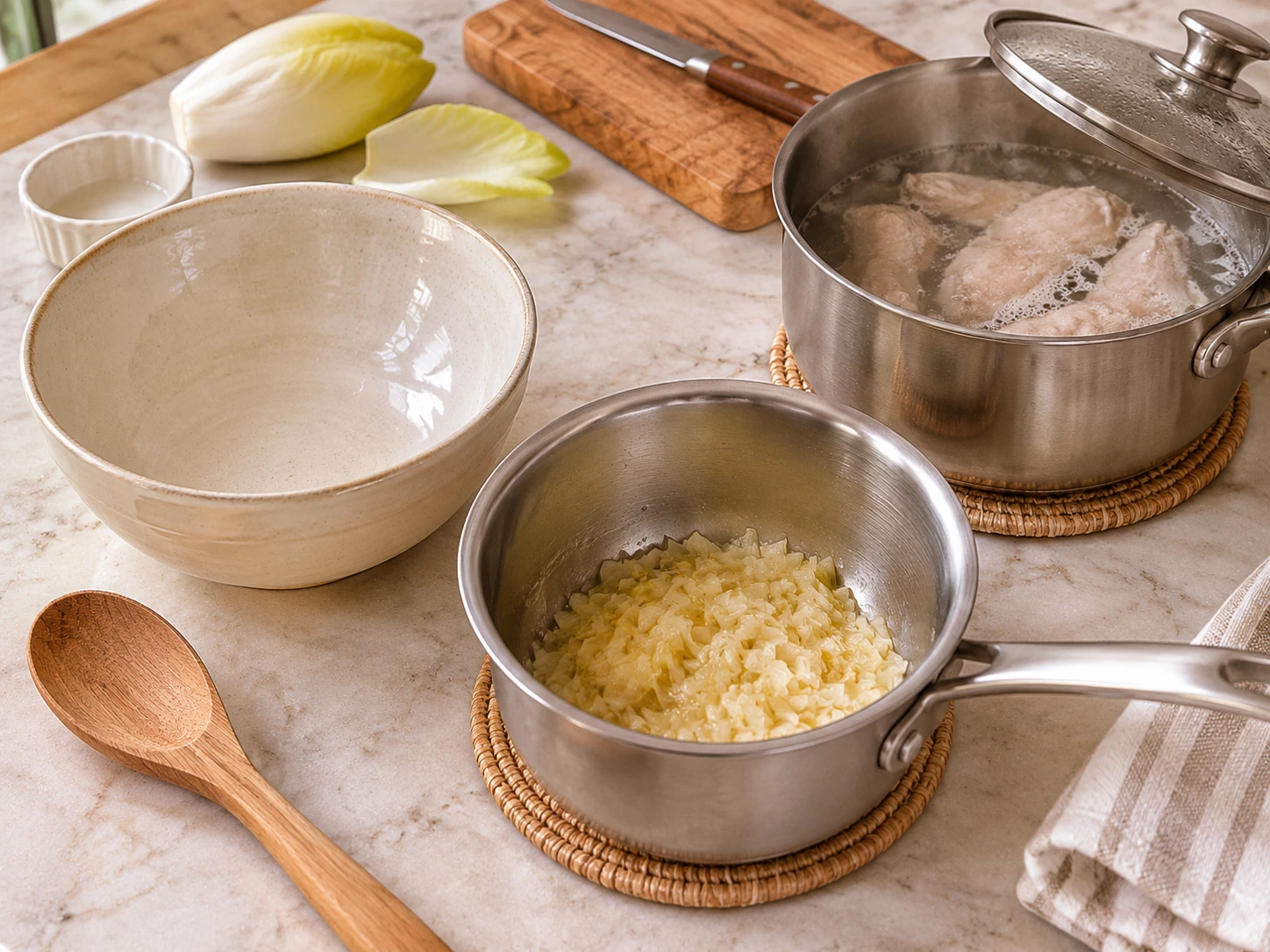
Soften the Chicory: While the rabbit cooks, put the finely chopped chicory in a small saucepan or steamer insert with a little plain water. Cook gently until completely softened, so the pieces flatten easily with the back of a fork without becoming browned or crisp. Drain off any excess water and let the chicory cool slightly. If any pieces are larger than a few millimetres, chop them again. Fine pieces will mix more evenly with the shredded rabbit and prevent large, fibrous bits in the finished preparation. Don't add salt, butter, stock cubes, onion, garlic or any other seasoning.
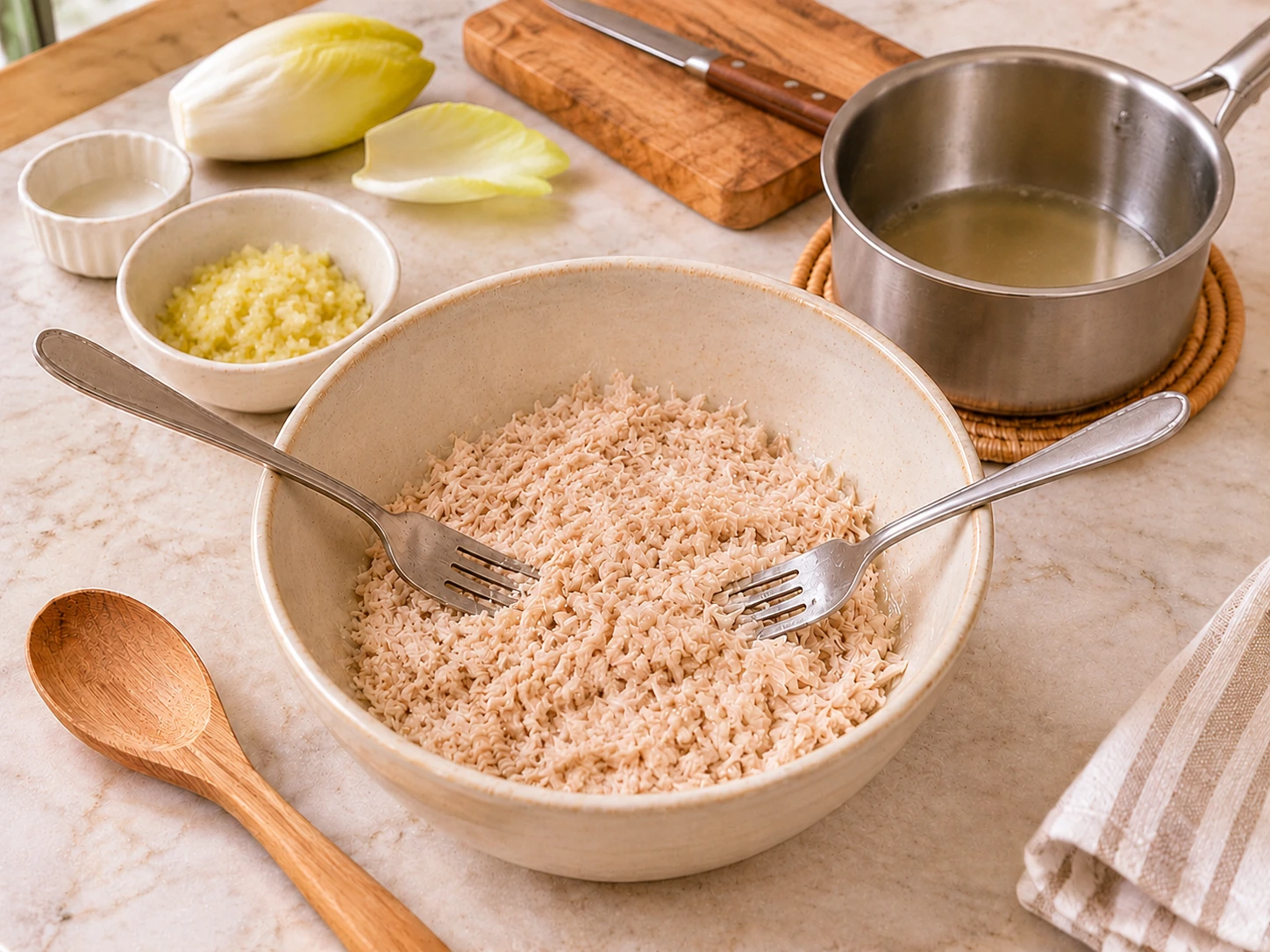
Shred the Rabbit Finely: Transfer the fully cooked rabbit to a clean mixing bowl and let it cool until comfortable to handle. Using two clean forks, pull the meat apart along its natural grain until you have very fine, short strands rather than long, stringy strips or large chunks. Take a moment to check again for any overlooked bone fragments, using your fingers or a fork. Add a small spoonful of the reserved cooking liquid and gently mix it through. The rabbit should look moist and pliable while the individual strands remain visible. If it still seems dry, add another teaspoon of plain water instead of butter, cream, milk or oil.
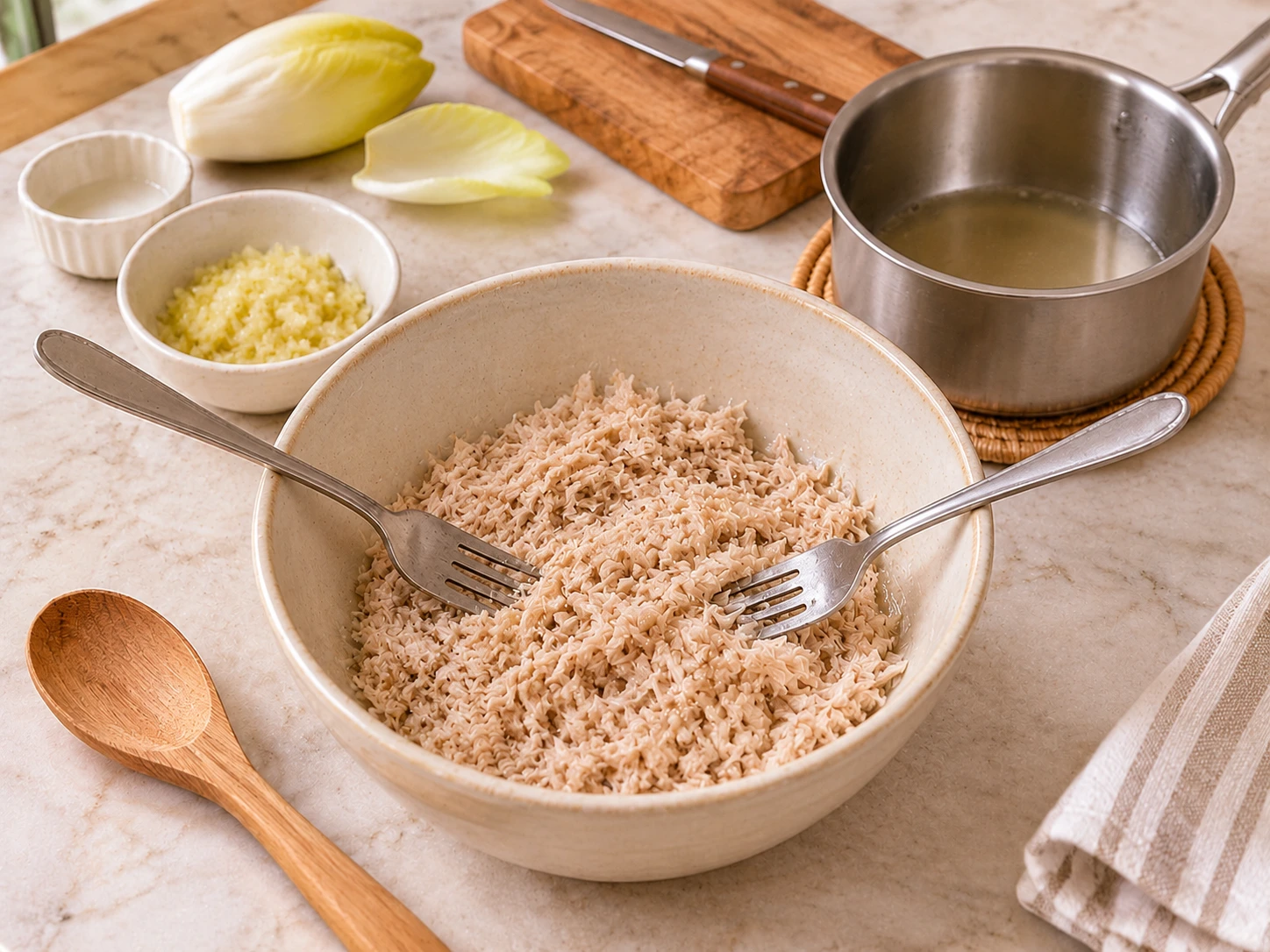
Combine and Adjust the Rillettes: Add the softened, finely chopped chicory to the shredded rabbit and gently fold everything together with a clean fork until evenly distributed. Slowly add plain warm water, approximately one teaspoon at a time, until the mixture is moist and easy to spread. It should hold together lightly when pressed with a spoon, while still showing the individual rabbit strands. Don't blend it into a completely smooth paste; that lovely shredded texture is what makes this preparation distinctive. Allow the mixture to cool completely before transferring it to a clean airtight container. Before serving a very small portion, check carefully for hard pieces, bone fragments
Made this recipe?
Tap the paw so other pet parents know it’s worth making.
Be the first to make it
Tips & serving
Allow the rillettes to reach room temperature before serving. Begin with approximately half a teaspoon mixed into your cat's familiar complete food, rather than offering a large separate portion. If your cat accepts it comfortably, follow your veterinarian's advice about an appropriate occasional quantity. Treats and toppers should account for less than 10% of daily calories and must never displace a complete and balanced diet. Always discuss major diet changes with a veterinarian, particularly for kittens, senior cats or cats with specific dietary requirements.
- Finely shredded rabbit provides a different meat texture from smooth mousses and conventional minced toppers.
- The small amount of cooked chicory introduces a recognizable seasonal vegetable ingredient without making it the focus of the preparation.
- Plain cooking water creates a moist consistency without relying on dairy, added fats or salty commercial stock.
- Preparing small batches makes it easier to control ingredient freshness, portion size and kitchen hygiene.
- Cut the rabbit into similarly sized pieces before cooking so the smaller pieces do not become excessively dry while larger pieces finish cooking.
- Keep the simmer gentle rather than boiling vigorously, which helps the rabbit remain tender and easier to shred into delicate strands.
Storage
Transfer completely cooled rillettes into a clean, airtight, food-safe container. Do not leave the preparation sitting at room temperature for extended periods. Use a clean spoon every time you remove a portion, rather than allowing a used feeding utensil to touch the stored batch. For longer storage, divide the mixture into small individual portions and freeze them in suitable airtight containers. For best quality, use within one month.
Substitutions
If chicory is unavailable, omit it rather than replacing it with a large quantity of another vegetable. The preparation can be made with rabbit and plain water alone. If considering another vegetable, ask your veterinarian whether that specific ingredient is suitable for your cat and keep any addition very small. If the rabbit is particularly lean or the shredded meat seems dry, increase the amount of plain warm water gradually. Reserved cooking liquid is also suitable provided it contains only the plain water used to cook the rabbit.
Cats recipe FAQ
Can Cats Rabbit and Chicory Savory Rillettes replace my cat's regular diet?
Treat it as an occasional extra, not a meal plan. Allow the rillettes to reach room temperature before serving. Begin with approximately half a teaspoon mixed into your cat's familiar complete food, rather than offering a large separate portion.
Is plain cooked boneless rabbit meat okay for cats?
This recipe uses plain cooked boneless rabbit meat in a small, cat-appropriate amount. Skip it if your cat has a known sensitivity, and read the foods-to-avoid note on this page before serving.
How do I store this topper?
Transfer completely cooled rillettes into a clean, airtight, food-safe container. Refrigerate promptly at 4°C or colder and use within 48 hours. Do not leave the preparation sitting at room temperature for extended periods.
How should I introduce this topper?
Start with a taste-size portion next to your cat's usual food, and hold off on serving more until you have seen that it agrees with them.
Can cats eat rabbit and chicory together?
Plain, thoroughly cooked boneless rabbit can be used as an occasional food topper for many cats. Chicory should be included only in a very small, finely chopped and thoroughly cooked quantity. Introduce unfamiliar ingredients cautiously and check with your veterinarian if your cat has dietary restrictions or a prescribed feeding plan.
How do I make rabbit rillettes soft without adding cream or butter?
The key is to cook the rabbit gently until tender, shred it into short, fine strands and gradually incorporate a little plain cooking water. The liquid coats the meat and helps the strands hold together. Finely chopped softened chicory adds moisture, while careful mixing preserves the characteristic shredded texture.
Sources