
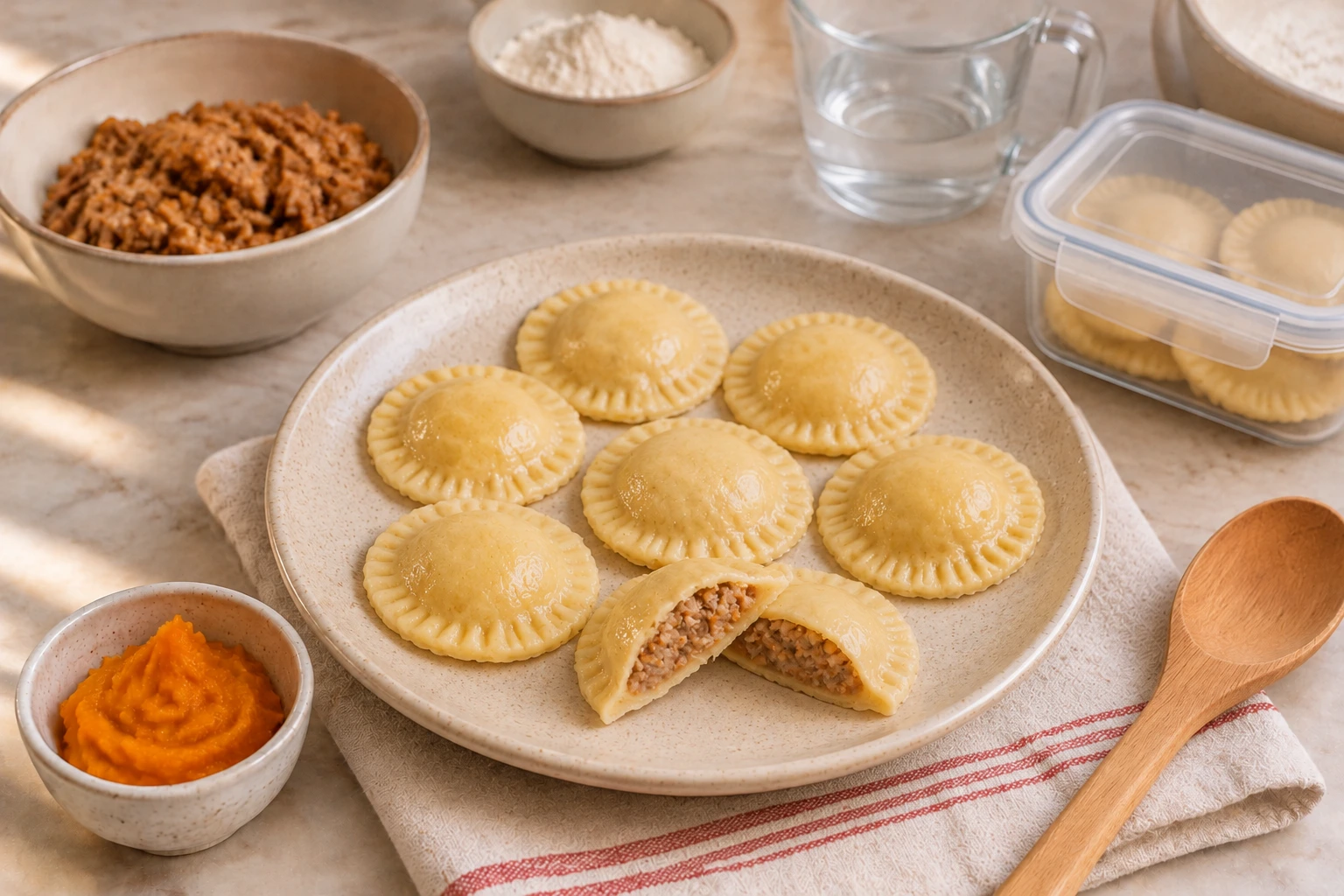
These duck and pumpkin ravioli are a fun little way to give your cat a homemade treat with a different texture. Each tiny parcel is filled with finely minced plain cooked duck and a little pumpkin, wrapped in a simple dough made from flour and water. The filling does most of the work here, while the wrapper stays thin enough to hold everything neatly together. This recipe makes a small batch of bite-sized parcels, not large pasta portions. Use fully cooked, boneless duck with the skin, fatty trimmings and seasoning removed. Boil the ravioli until the wrappers are thoroughly cooked, then let them cool completely before serving. These are occasional treats, not a substitute for balanced cat food. Introduce new ingredients cautiously and consult your veterinarian before major diet changes.
Safety first: Keep treats and extras under about 10% of your cat's daily food - the regular diet should do the heavy lifting.
Foods to avoid
Never use raw duck, cooked duck bones, skin, fatty trimmings or meat prepared with onion, garlic, chives, salt, pepper, stock cubes, gravy, butter or sauces. Onion and garlic can be toxic to cats, including when present in powdered form. Avoid seasoned pumpkin purée, sweetened pumpkin preparations and pumpkin pie filling. Do not add dairy, artificial sweeteners or human pasta sauces. Cook the duck thoroughly before mincing, seal the parcels carefully, cook the wrappers completely and allow everything to cool before serving. Discard spoiled food and never use ingredients of uncertain freshness.
Ingredients
Instructions
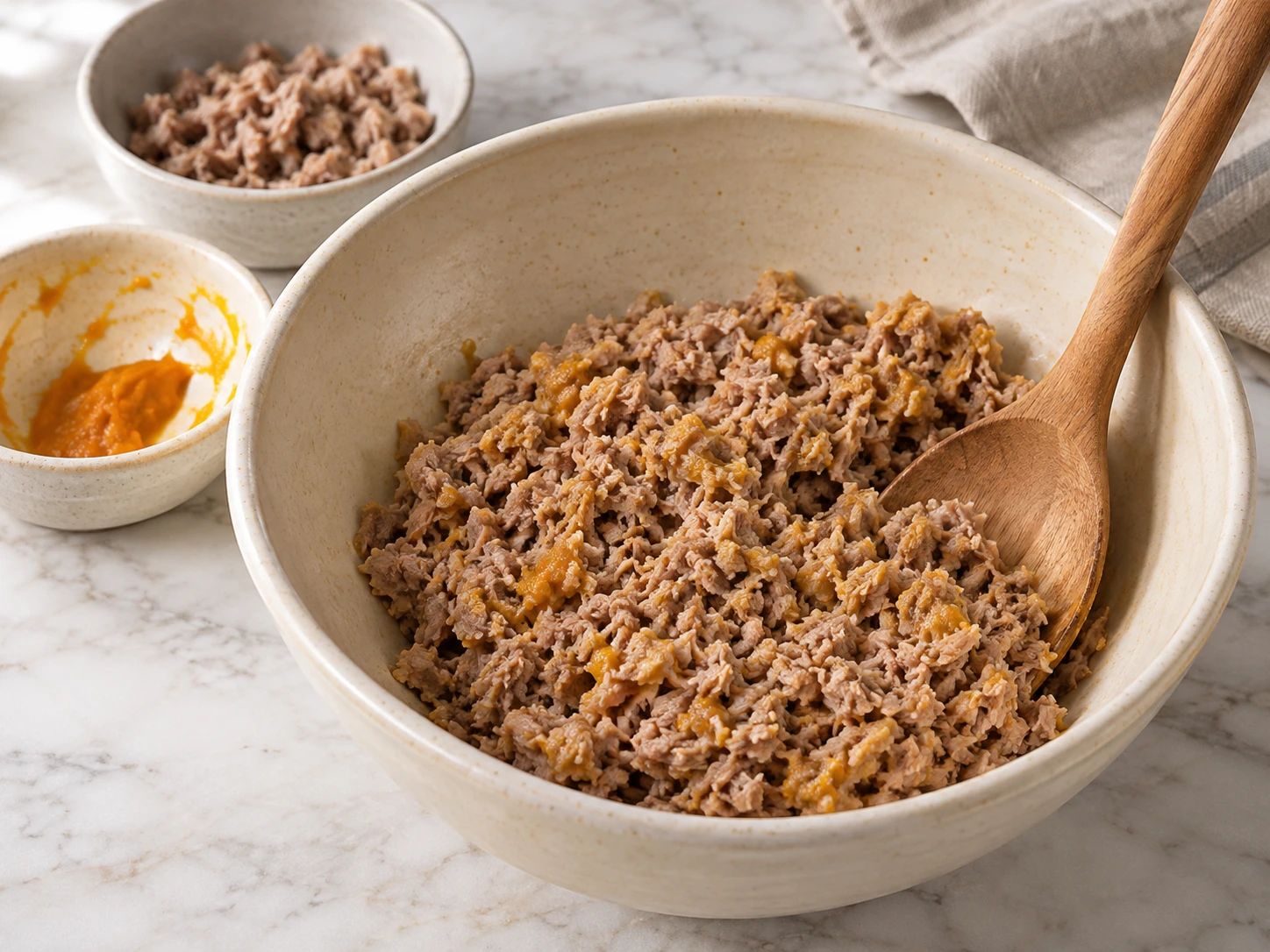
Prepare the Duck and Pumpkin Filling: Start with plain duck meat that has been thoroughly cooked. If you're cooking it from raw, use boneless duck and check that it reaches an internal temperature of 74°C (165°F) at the thickest point with a food thermometer. Avoid any duck prepared with garlic, onion, salt, butter, sauces or other seasonings. Remove all skin, visible fat, gristle and bones, then let the meat cool. Finely mince it with a sharp knife or food processor and transfer it to a small bowl. Stir in 15 g of plain cooked pumpkin purée. The filling should be moist enough to hold together when pressed, but never wet or runny. Keep duck as the main ingredient, with pumpkin playing a
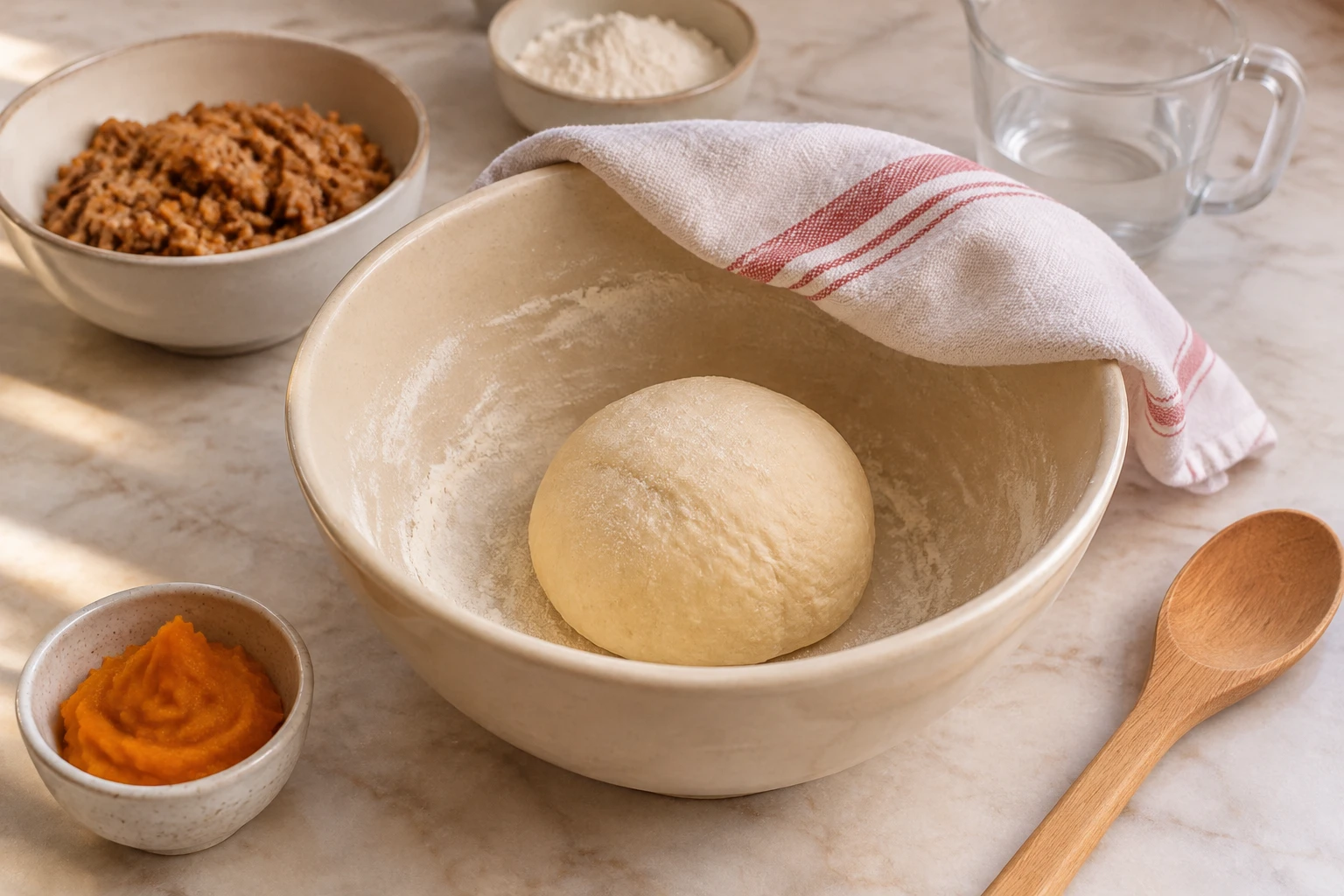
Mix the Thin Pasta Dough: Add the 30 g of plain flour to a clean mixing bowl. Pour in 20 ml of water to start, stirring with a fork until a rough dough begins to form. If needed, add the remaining water a few drops at a time. Knead gently for two to three minutes, until the dough feels smooth and holds together without sticking heavily to your fingers. It should be firm but pliable, rather than wet or crumbly. Cover with a clean damp cloth and leave to rest for approximately 10 minutes. This gives the dough time to relax, making it easier to roll and less likely to tear around the filling. Don't add salt, oil, herbs or seasoning.
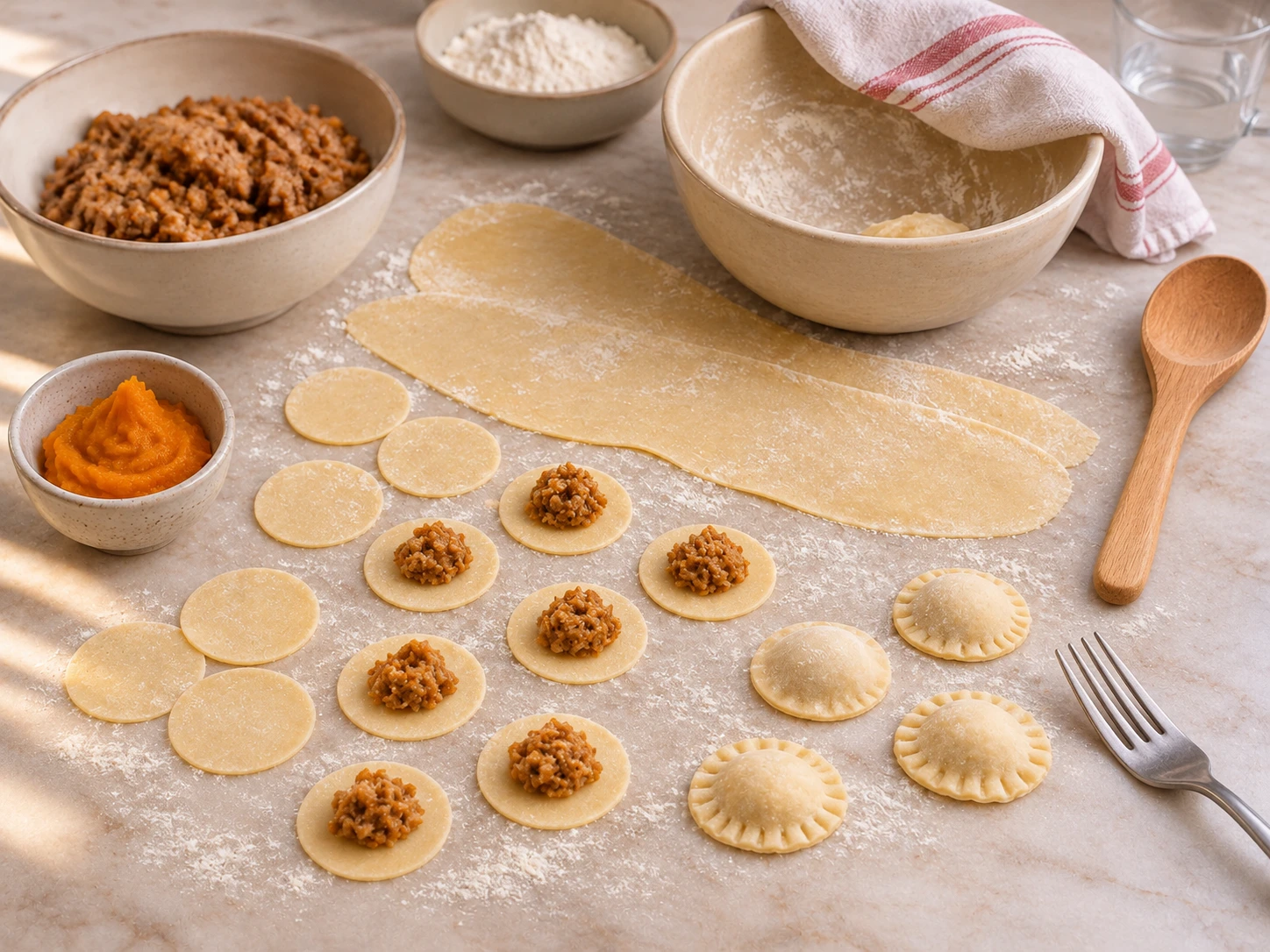
Roll and Fill the Miniature Ravioli: Lightly dust your countertop with flour and divide the rested dough into two portions. Roll each portion into a very thin sheet, approximately 1 to 1.5 mm thick. Aim for a wrapper that keeps the treats small and easy to portion without becoming so thin that it tears when handled. Cut out circles approximately 3 cm across. Spoon a small amount of duck and pumpkin filling, roughly half a teaspoon or less, into the centre of half the circles, leaving a clear border around each mound. Lightly moisten the edges with water, place a second circle on top and press around the filling to push out any trapped air. Seal firmly with your fingertips, then gently press
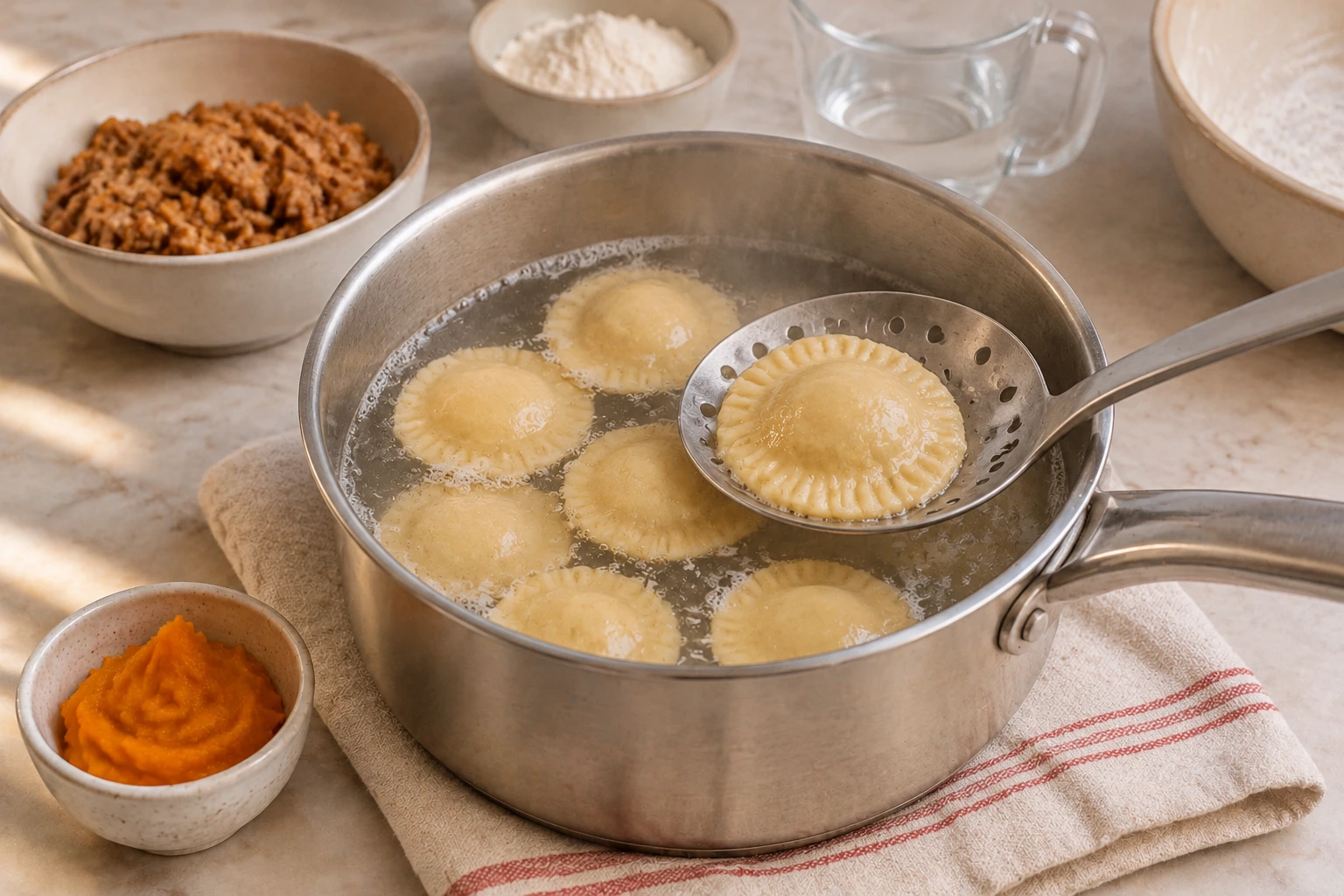
Boil Until the Wrappers Are Fully Cooked: Bring a small saucepan of plain water to a gentle boil. Lower the miniature ravioli carefully into the water in small batches, giving them enough room to move without sticking together. Give them one very gentle stir with a spoon to stop them settling on the bottom. Cook for approximately four to five minutes, adjusting the time to suit the thickness of the wrappers and the size of the parcels. The dough should be fully cooked, tender and slightly translucent, with no floury or hard centre. Although the filling was cooked before assembly, the complete parcels still need to be heated thoroughly. Remove one ravioli and check its texture before
Cool, Check and Portion the Ravioli: Lift the cooked ravioli onto a clean plate with a slotted spoon. Arrange them in a single layer so the steam can escape and they cool evenly. Let them reach room temperature completely before offering any to your cat. Cut one open to check that the dough is fully cooked and that there are no raw or cold pockets of filling. Once cooled, take another look at the size and texture. If any parcel seems too large for your cat, cut it into smaller pieces before serving. Set aside only the small amount intended for the first treat and promptly refrigerate the rest in a clean airtight container. Don't leave the finished ravioli sitting at room temperature for
Made this recipe?
Tap the paw so other pet parents know it’s worth making.
Be the first to make it
Tips & serving
Allow every ravioli to cool completely before offering it. Begin with a small piece rather than a whole parcel, particularly if duck or pumpkin is unfamiliar to your cat. Break larger parcels into manageable pieces and supervise your cat while eating. Offer these ravioli occasionally, not as a meal replacement. Treats should generally account for no more than 10% of daily calories, with the remainder coming from complete and balanced cat food. Individual needs vary, so ask your veterinarian about appropriate portions, especially if your cat has dietary restrictions. Major diet changes should always be discussed with a veterinarian.
- Finely minced cooked duck provides an animal-protein-based filling that makes up most of each miniature parcel.
- The small parcel format makes it easier to divide treats into modest portions instead of offering a large piece.
- A simple flour-and-water wrapper avoids unnecessary sauces, added salt and complicated seasoning blends.
- Preparing a small batch allows you to control the ingredients and keep the remaining treats refrigerated until needed.
- The combination of soft filling and tender wrapper offers a different texture from conventional baked or mashed cat treats.
- Chill the cooked duck before mincing because firmer meat is easier to cut into consistently small pieces without turning mushy.
Storage
Refrigerate completely cooled ravioli promptly in a clean, airtight food container. Remove only the portion needed for serving and do not repeatedly leave the whole container on the counter. Discard any ravioli that have developed an unusual smell, changed appearance or been left at room temperature for too long. For longer storage, arrange cooled ravioli separately on a lined tray and freeze until firm. Transfer the frozen parcels to a labelled airtight freezer container or bag.
Substitutions
If duck is unavailable, a small quantity of plain cooked boneless chicken or turkey can replace it. Remove all skin, bones, fatty pieces and seasoning, and mince the replacement meat finely. Keep the pumpkin amount modest so the filling remains predominantly animal-based. Introduce the replacement cautiously and check with your veterinarian if your cat has existing dietary restrictions. Plain cooked pumpkin can be replaced with a similarly small amount of plain cooked squash if needed. Choose an unseasoned preparation without butter, salt, sugar or spices.
Cats recipe FAQ
Is this treat a complete meal for my cat?
Treat it as an occasional extra, not a meal plan. Allow every ravioli to cool completely before offering it. Begin with a small piece rather than a whole parcel, particularly if duck or pumpkin is unfamiliar to your cat.
Is plain cooked boneless duck meat okay for cats?
This recipe uses plain cooked boneless duck meat in a small, cat-appropriate amount. Skip it if your cat has a known sensitivity, and read the foods-to-avoid note on this page before serving.
How long does Cats Duck and Pumpkin Savory Ravioli keep?
Refrigerate completely cooled ravioli promptly in a clean, airtight food container. Keep them refrigerated at 4°C or below and use within 2 days for this small homemade batch.
How should I introduce this treat?
Start with a taste-size portion next to your cat's usual food, and hold off on serving more until you have seen that it agrees with them.
Can cats eat duck and pumpkin ravioli?
Some cats can enjoy small amounts of plain, thoroughly cooked duck and pumpkin as an occasional treat. The recipe must contain no bones, skin, onion, garlic, salt or sauces. The flour wrapper should remain thin and minimal. Individual dietary needs differ, so check with your veterinarian before introducing unfamiliar ingredients.
Why should the ravioli wrappers be so thin?
A thin wrapper keeps the flour portion modest and allows the duck filling to remain the main ingredient. Thick dough can make the parcels unnecessarily bulky and may take longer to cook evenly. Aim for approximately 1 to 1.5 mm thickness and make miniature parcels rather than full-sized human ravioli.
Sources