
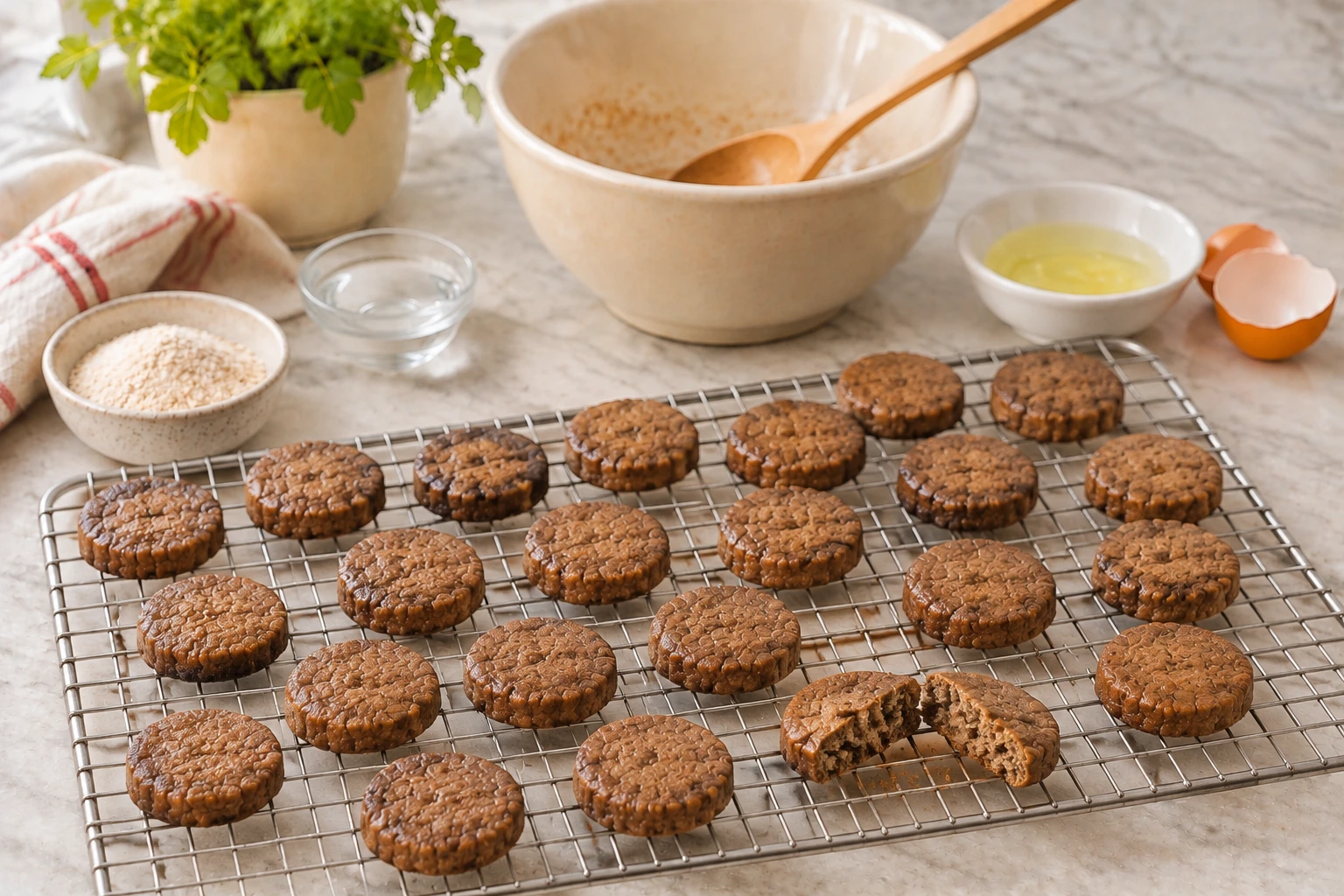
Beef kidney is an unusual ingredient in many homemade cat treat recipes, but it can be prepared into small, firm portions with just a few additional ingredients. Its distinctive organ-meat flavour and texture make these baked savory coins an interesting alternative to the usual chicken or fish treat. The key is choosing fresh kidney from a reliable butcher, trimming it properly and cooking it thoroughly before shaping the mixture. These treats are intended as an occasional snack, not a replacement for your cat's regular complete and balanced food. The recipe uses a little egg white and oat flour to help the minced kidney hold its shape. No salt, seasoning, garlic, onion or cooking oil is needed.
Safety first: Every cat is different: age, allergies, and health conditions all matter, so check with your vet when in doubt.
Foods to avoid
Never use raw or partially cooked kidney for this recipe. Raw animal products can carry harmful bacteria and parasites. Do not add salt, pepper, stock cubes, gravy, garlic, onion, chives, butter, cooking oil or human seasoning blends. Avoid kidney that is spoiled, improperly refrigerated or of uncertain origin. Remove all tough connective tissue before cooking and never include bones. These coins are treats, not complete feline nutrition, and should not replace a balanced cat food.
Ingredients
Instructions
Clean and Trim the Beef Kidney: Begin with fresh, properly refrigerated beef kidney from a butcher or supplier that can confirm its suitability for human consumption. Keep it separate from other foods while preparing it. Rinse the kidney briefly under cool running water, then pat it dry with disposable kitchen paper. Place it on a dedicated chopping board and carefully remove the tough white central connective tissue, excess fat and any particularly tough membranes using a sharp knife. Cut the trimmed kidney into several manageable pieces of similar thickness so they cook evenly. Wash your hands, knife and preparation surfaces thoroughly after handling the raw organ meat.
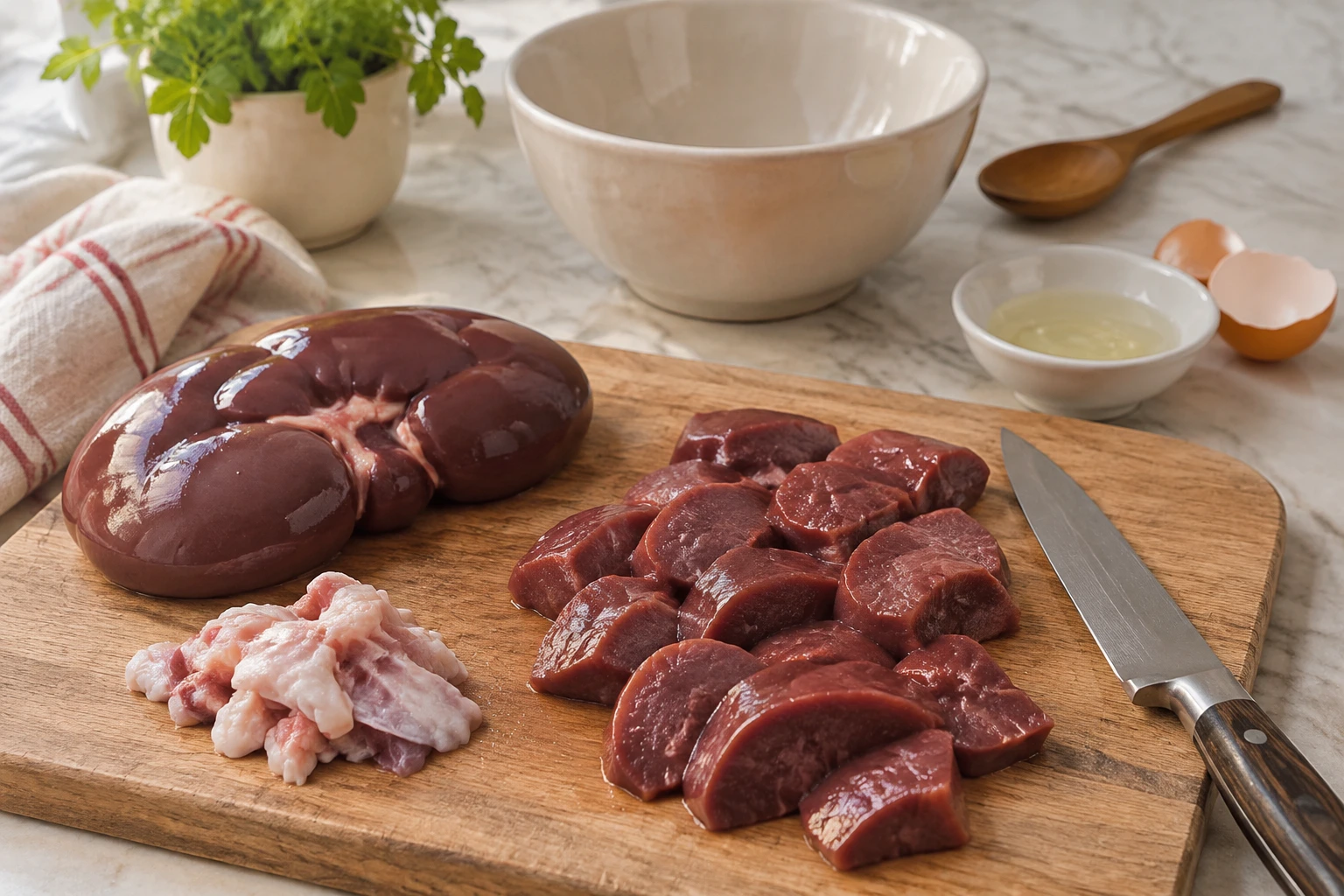
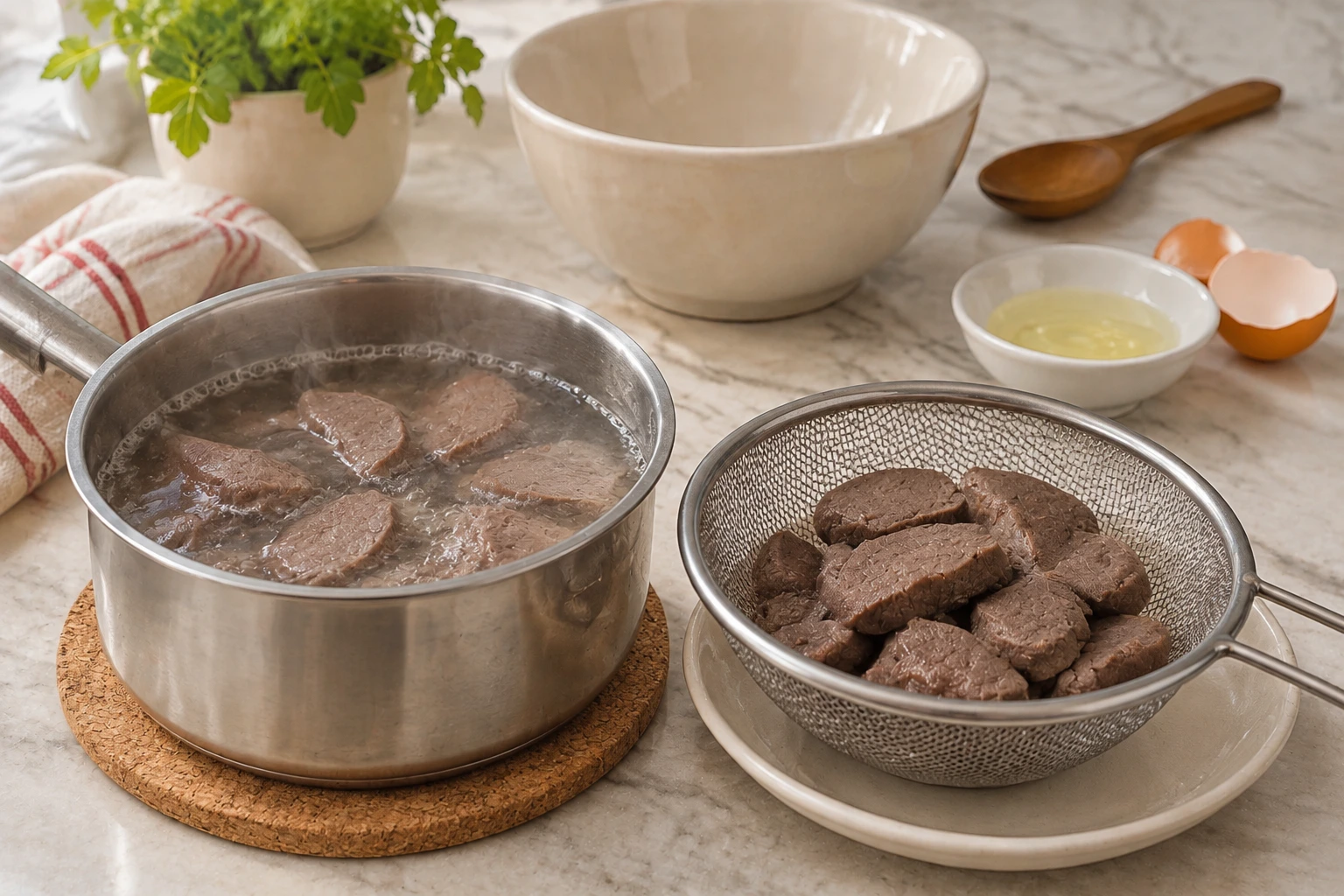
Cook the Kidney Thoroughly: Place the trimmed kidney pieces in a small saucepan and add enough fresh water to cover them. Bring the water to a gentle simmer and cook until the thickest piece reaches an internal temperature of at least 71°C (160°F), checking with a digital food thermometer. Do not rely on the outside colour alone to judge whether the kidney is cooked. This conservative cooking temperature follows USDA guidance for beef organ meats. Remove the kidney once thoroughly cooked and discard the cooking water. Allow the pieces to drain and cool sufficiently for safe handling before moving to the next step.
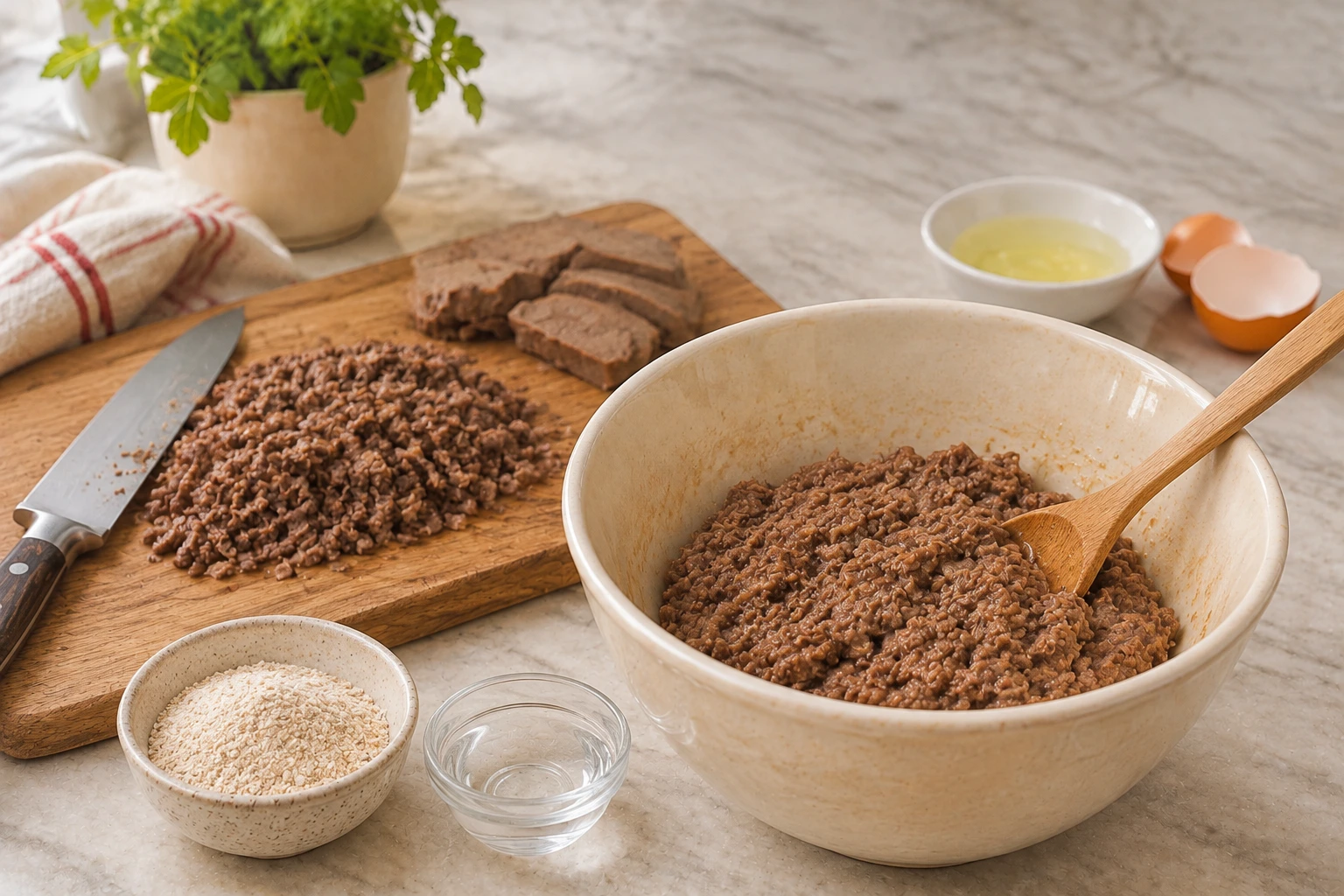
Finely Chop the Cooked Kidney: Transfer the cooked kidney to a clean chopping board and let it cool until comfortable to handle. Cut it into very small pieces, then mince it finely with a sharp knife or pulse it briefly in a food processor. Aim for a moist, finely minced texture without large chewy chunks. Transfer the kidney to a clean mixing bowl. Add the egg white and finely ground oat flour, followed by one teaspoon of water. Mix thoroughly until the ingredients form a thick mixture that holds together when pressed. Add the remaining teaspoon of water only if the mixture feels too dry to shape.
Shape the Small Savory Coins: Line a baking tray with unbleached baking parchment. Take small portions of the kidney mixture and roll or press them between your fingers into coins approximately 2 centimetres wide and 5 millimetres thick. Keep the portions as consistent as possible so they dry evenly in the oven. Arrange the coins on the prepared tray with a little space between each piece. Gently flatten any uneven edges with the back of a spoon. The mixture should be firm enough to retain its shape without spreading. If it feels excessively sticky, use a slightly damp spoon to smooth the surfaces rather than adding more flour.
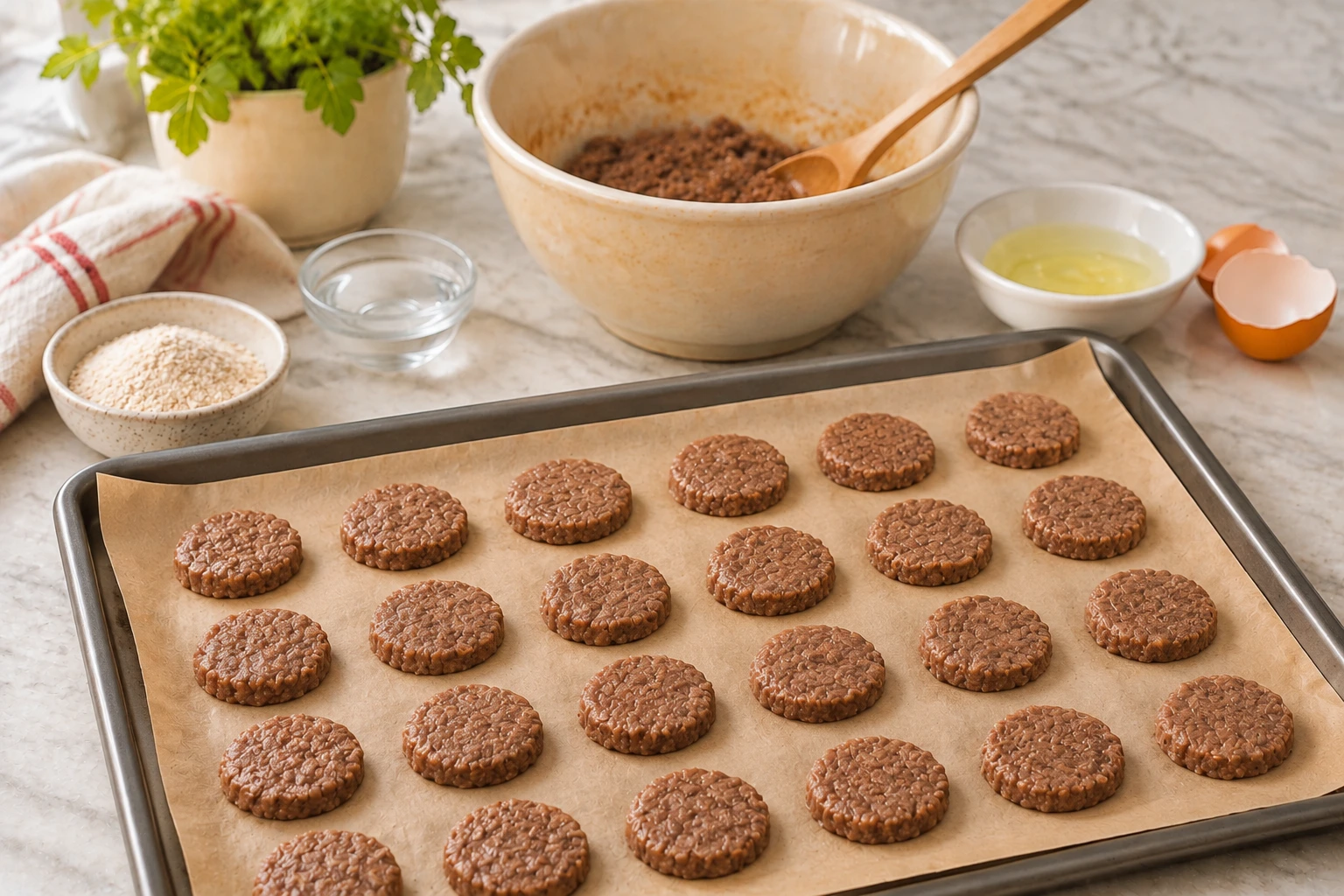
Bake, Cool and Check the Texture: Preheat the oven to 150°C (300°F). Place the prepared tray on the middle oven rack and bake the already thoroughly cooked coins for approximately 15 to 20 minutes, turning them carefully halfway through. The aim is to remove excess moisture and create small, firm pieces rather than deeply browned or brittle biscuits. Check that the coins are completely set, then remove the tray and leave them to cool for several minutes before transferring them to a clean wire rack. Allow them to reach room temperature before offering any to your cat. Break one coin open to check that it is cooked through, firm and free from a wet, sticky centre. Never serve them hot.
Made this recipe?
Tap the paw so other pet parents know it’s worth making.
Be the first to make it
Tips & serving
Allow the savory coins to cool completely before serving. Start with a very small piece, approximately one-quarter of a coin, particularly if your cat has never eaten beef kidney before. Observe how your cat accepts the unfamiliar flavour and texture before considering another small portion on a different occasion. Break larger coins into manageable pieces appropriate for your cat. Treats should account for no more than 10% of daily calories, with the remainder coming from nutritionally complete and balanced cat food. Cats with existing dietary restrictions or health concerns may need different treat choices. Always discuss major diet changes with a veterinarian, and ask for individual
- Introduces beef kidney as an alternative animal-based ingredient for cats accustomed to familiar meat treats.
- Small individual portions make it easier to control treat quantities and avoid offering oversized pieces.
- The firm baked texture provides a different eating experience from soft commercial meat snacks.
- A short ingredient list gives owners clear visibility into exactly what goes into each homemade treat.
- Preparing the kidney in batches makes it practical to portion and store occasional snacks for later.
- Ask your butcher for fresh beef kidney intended for human consumption, and transport it home in a chilled bag before refrigerating.
Storage
Once completely cool, place the coins in a clean, airtight food container and refrigerate promptly at 4°C or below. Use within 3 days and discard any pieces that develop an unusual smell, visible mould or changes in texture. For longer storage, arrange completely cooled coins in a single layer on a freezer-safe tray until firm, then transfer them to a labelled airtight freezer container. Defrost individual portions in the refrigerator rather than at room temperature, and use promptly after thawing.
Substitutions
If fresh beef kidney is unavailable, plain fresh lamb kidney can be considered as an alternative organ ingredient. It must also be trimmed, cooked thoroughly and introduced gradually. This changes the protein source, so do not assume your cat will tolerate or enjoy it equally. Finely ground plain oat flour can be replaced with a small amount of plain rice flour if needed for the binding texture. Check that it contains no salt, seasoning or added flavourings, and use only enough to hold the mixture together.
Cats recipe FAQ
Is this treat a complete meal for my cat?
Treat it as an occasional extra, not a meal plan. Allow the savory coins to cool completely before serving. Start with a very small piece, approximately one-quarter of a coin, particularly if your cat has never eaten beef kidney before.
Can cats have fresh beef kidney?
This recipe uses fresh beef kidney in a small, cat-appropriate amount. Skip it if your cat has a known sensitivity, and read the foods-to-avoid note on this page before serving.
How long does Cats Beef Kidney Baked Savory Coins keep?
Once completely cool, place the coins in a clean, airtight food container and refrigerate promptly at 4°C or below. Use within 3 days and discard any pieces that develop an unusual smell, visible mould or changes in texture.
What's the safest way to try this with my cat?
Offer a small amount beside regular food, introduce one new recipe at a time, and watch appetite, stool, skin, and behavior for a day or two.
Can cats eat cooked beef kidney?
Plain, thoroughly cooked beef kidney can be offered to some cats in small occasional portions. It should come from a reliable source, have all tough connective tissue removed and be cooked properly. It is not a complete food, so it should never replace your cat's regular balanced diet.
Why does beef kidney need to be cooked before making these treats?
Raw organ meat can carry harmful bacteria and parasites that may affect cats and the people preparing their food. Thorough cooking reduces this food-safety risk. For this recipe, cook the kidney until its thickest section reaches at least 71°C (160°F), using a digital thermometer.
Sources