
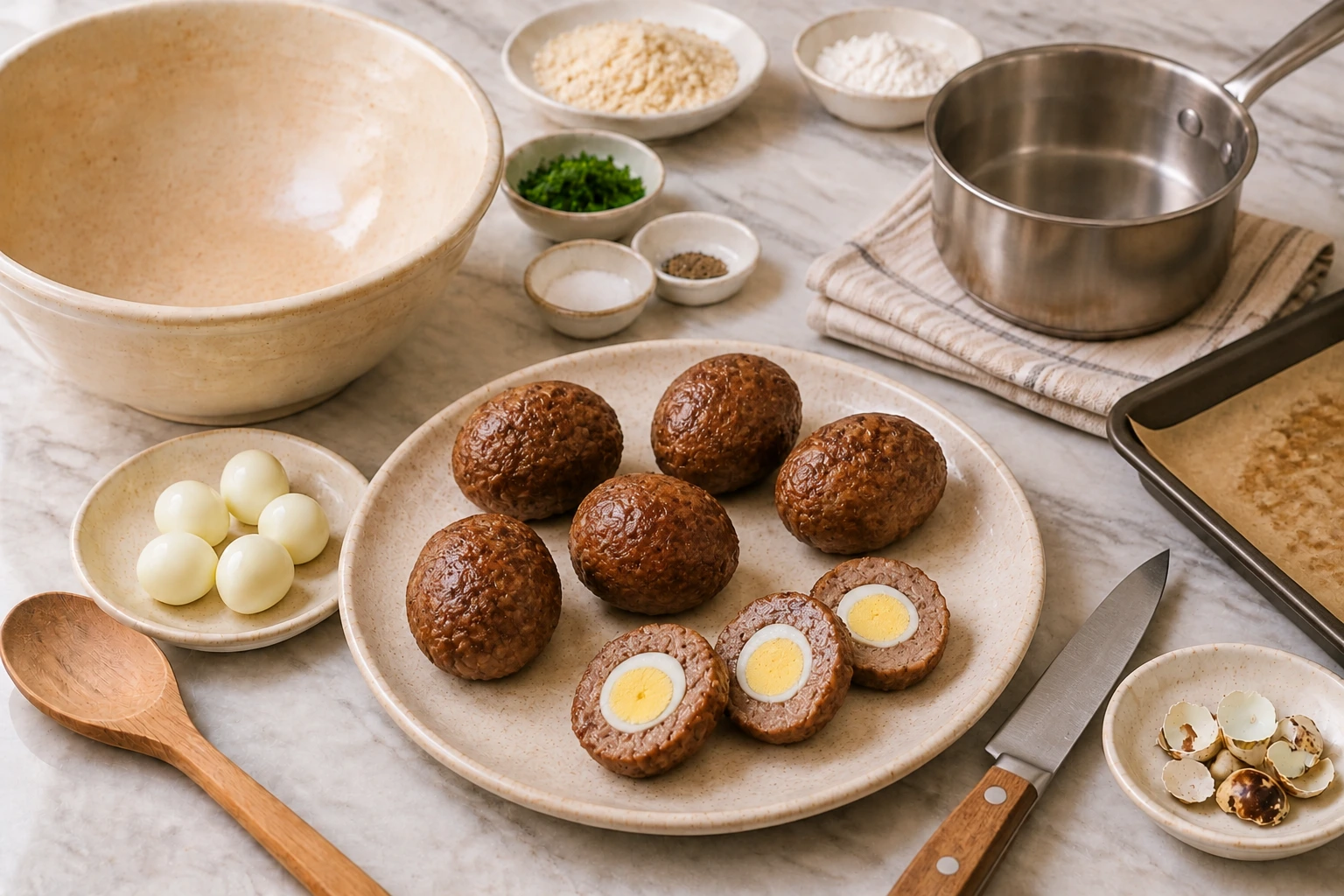
These little beef and quail egg Scotch eggs bring a familiar picnic favourite into the kitchen in a much simpler form for cats. Each peeled quail egg gets wrapped in a thin layer of plain lean ground beef, then baked until the meat is thoroughly cooked. The idea is to keep the coating light and even, so every bite has a little egg and beef without becoming too heavy. There are no breadcrumbs, seasonings, sauces or added salt here. Just two simple ingredients, careful cooking and a little attention to portion size when it's time to serve.
Safety first: Offer a small taste the first time and watch your cat for any tummy upset before serving more.
Foods to avoid
Never add onion, garlic, chives, salt, pepper, spice blends, gravy, stock cubes, or seasoned breadcrumbs. Onion and garlic are particularly unsafe ingredients for cats. Avoid fatty ground beef and do not serve raw or partially cooked beef or eggs. Remove every piece of eggshell, check for hard or sharp fragments, and never offer a whole Scotch egg as a single large treat. Cats with known food sensitivities or special dietary requirements should only receive new ingredients after discussion with their veterinarian.
Ingredients
Instructions
Cook the Quail Eggs: Place the six quail eggs in a small saucepan and cover them with water. Bring to a gentle boil and cook for approximately 4 to 5 minutes, depending on egg size and starting temperature, until both the yolks and whites are completely firm. Transfer the eggs immediately to a bowl of cold water; once cool enough to handle, peel them carefully, check for any remaining shell fragments and set aside. Do not use raw or soft-centered eggs for this recipe.
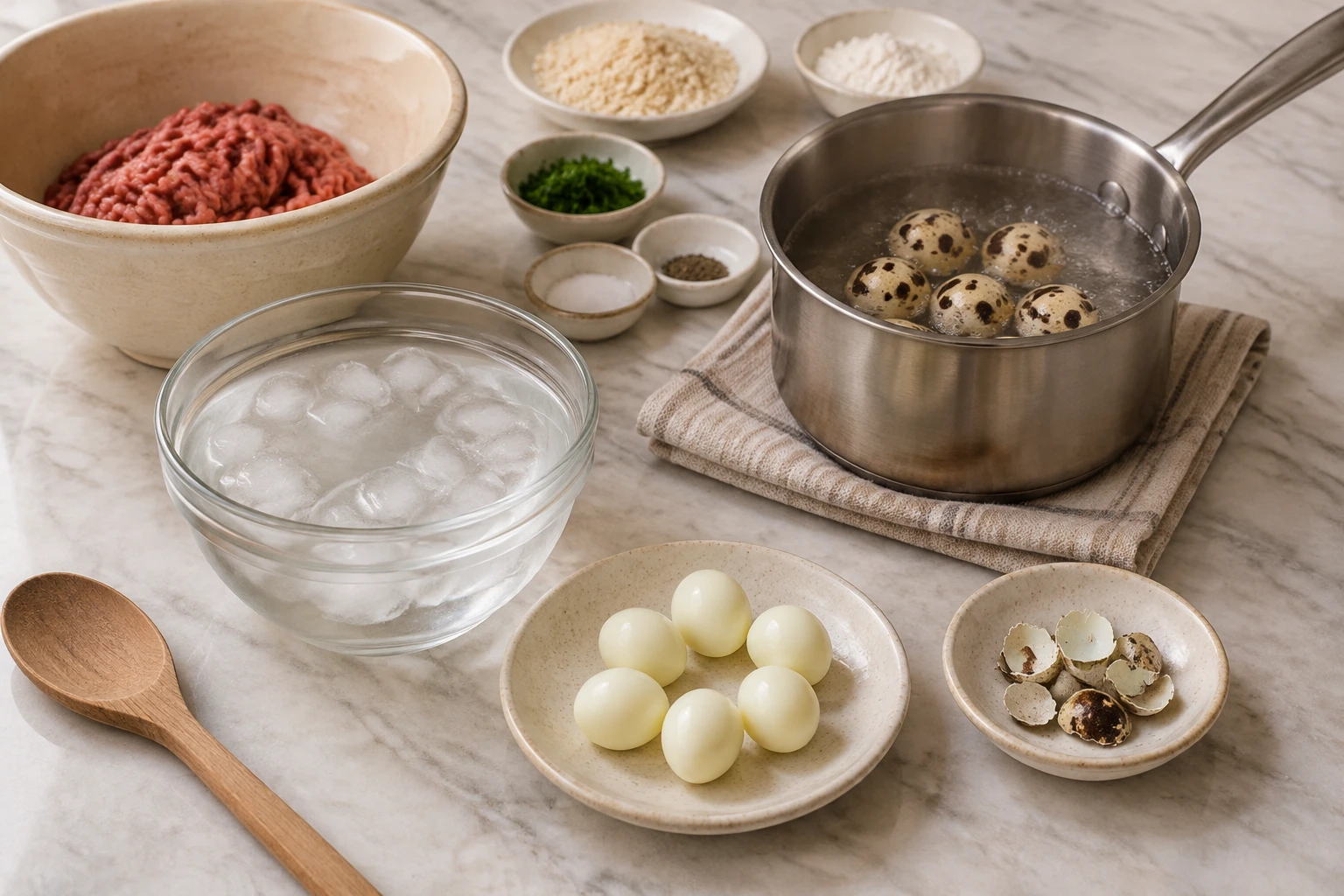
Prepare the Beef: Put the lean ground beef in a clean mixing bowl and break up any large clumps with clean fingers or a fork until the texture is even. Keep it completely plain: do not add salt, pepper, garlic, onion, herbs, stock, breadcrumbs or sauces. If the beef feels unusually dry and difficult to shape, mix in only a teaspoon of plain water. Divide the meat into six equal portions so you can wrap each egg in a thin, even coating without leaving thick sections that may not cook through.
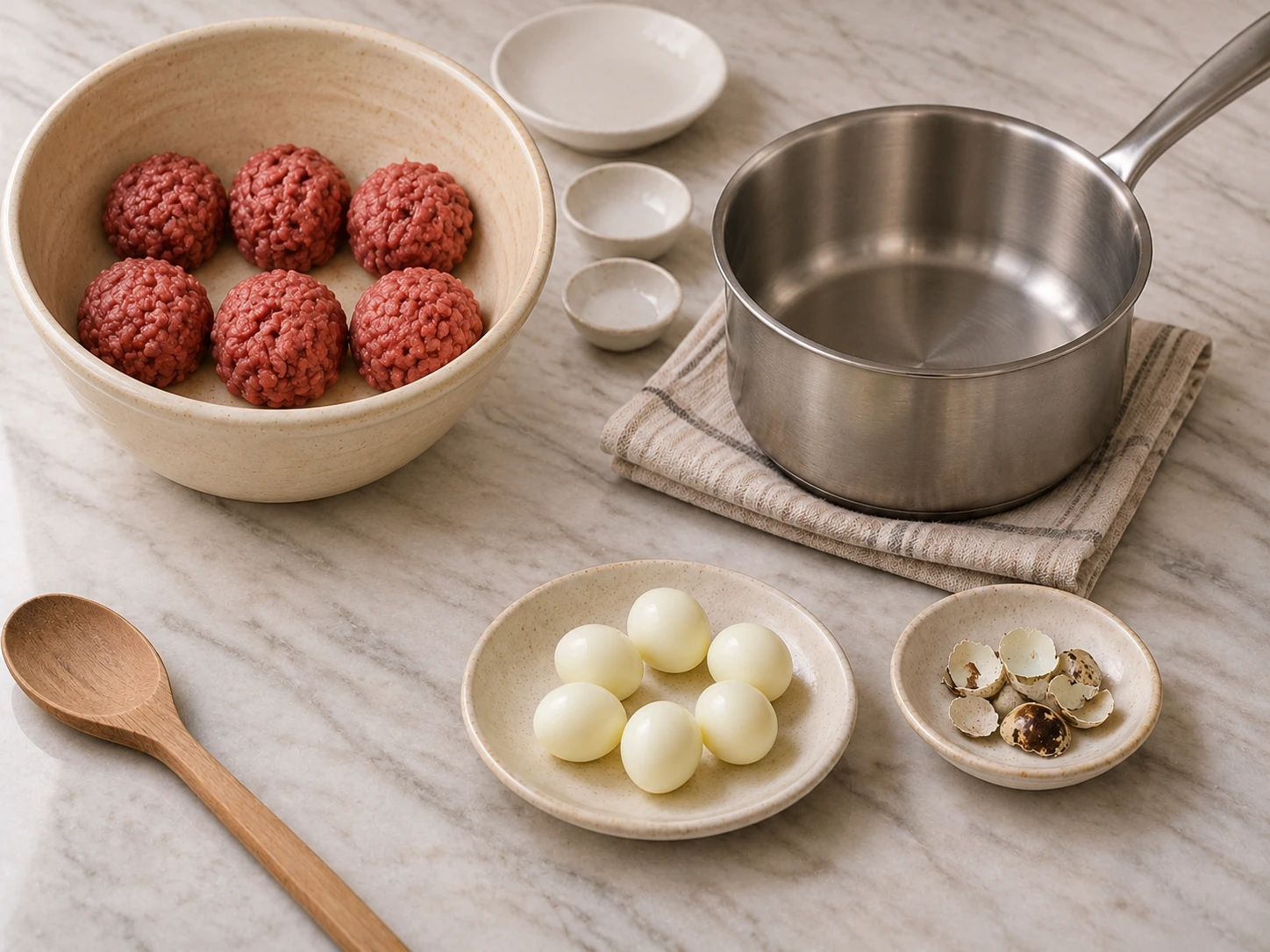
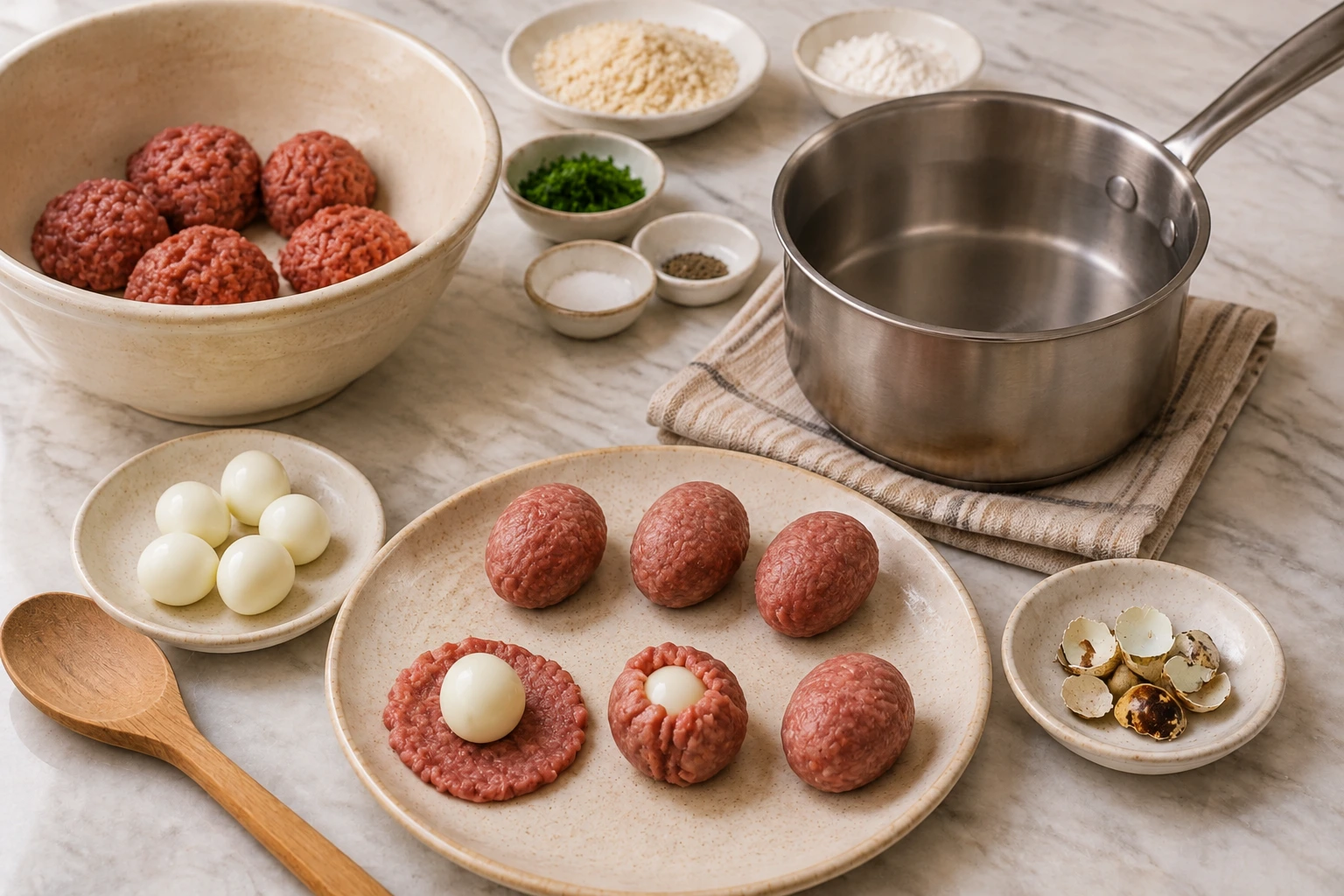
Wrap Each Egg: Take one portion of beef and flatten it between your clean palms into a thin oval, approximately 3 to 4 mm thick. Place a peeled quail egg in the center, gently bring the beef around it and pinch the seams together before rolling lightly between your palms to form a small, even oval. Avoid pressing on the egg or adding extra meat; the coating should be thin but completely closed, with no exposed egg or obvious gaps. Repeat with the remaining eggs and meat portions.
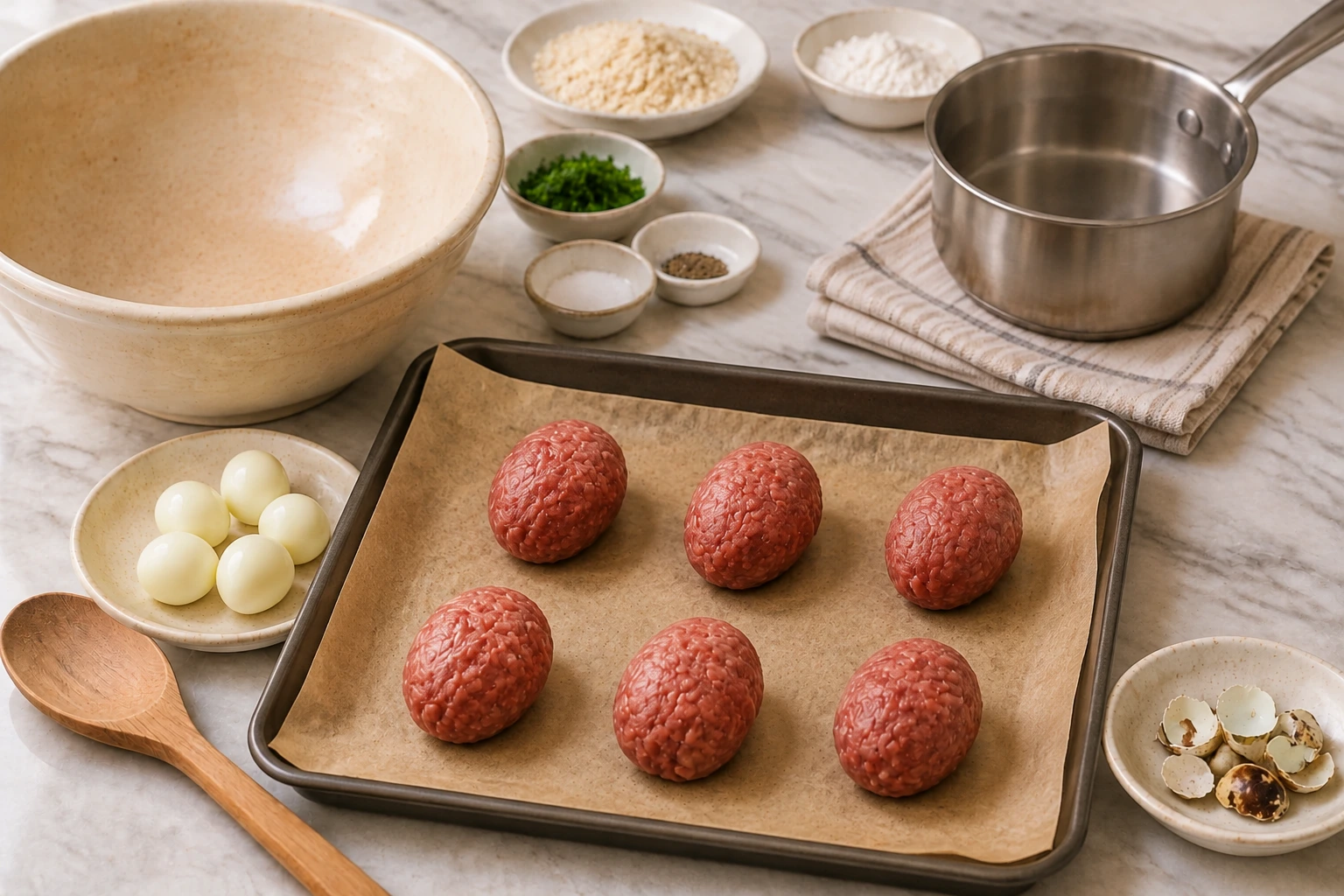
Arrange and Bake: Preheat the oven to 180°C and line the same baking tray with parchment paper. Arrange the six miniature beef-wrapped eggs on the tray, leaving space between them, and bake for approximately 20 to 25 minutes, turning them carefully halfway through if one side is browning more quickly. Check the thickest meat coating with a food thermometer to make sure the ground beef reaches an internal temperature of 71°C. If the centers have not reached that temperature, continue baking and check again; browned surfaces alone are not a reliable sign that the meat is cooked through.
Cool and Portion: Once the beef has reached 71°C throughout, remove the tray from the oven and transfer the cooked Scotch eggs to a clean plate to cool completely. Using a clean, sharp knife, cut each one into three small crosswise portions, checking that the center egg is fully cooked and the beef has no raw areas. For smaller cats or those that tend to swallow treats quickly, cut the pieces smaller still. Serve only a suitable small portion and refrigerate the rest promptly.
Made this recipe?
Tap the paw so other pet parents know it’s worth making.
Be the first to make it
Tips & serving
Treat these miniature Scotch eggs as occasional extras, not a complete meal or replacement for balanced cat food. Start with a very small piece, cut into manageable bite-sized portions, and supervise your cat while eating. The appropriate amount depends on your cat's size, normal diet, and individual needs. Treats should generally account for no more than 10 percent of daily calories, with complete and balanced food providing the remainder. Discuss major diet changes or regular additions with your veterinarian.
- The thin beef coating creates a compact, meat-based treat without unnecessary breadcrumbs or elaborate ingredients.
- The small egg centers make it straightforward to divide the finished preparation into individual portions.
- The simple ingredient list gives cat parents clear control over added salt, seasonings, and other unnecessary extras.
- The baked preparation produces a firm texture that can be cut into different sizes after cooling.
- Chill the peeled quail eggs briefly before wrapping so they are firmer and easier to handle without breaking.
- Flatten each beef portion evenly before wrapping, because thick patches take longer to cook and make portion sizes inconsistent.
Storage
Refrigerate completely cooled portions in a clean, airtight container at 4°C or below. Use within 2 to 3 days. Keep them separate from raw meat and use clean utensils when removing portions. For longer storage, freeze individual portions in a single layer until firm, then transfer them to a labeled freezer-safe container. Use within 1 to 2 months for best quality. Thaw frozen portions in the refrigerator, never on the countertop. Serve only once completely thawed and do not refreeze previously thawed portions.
Substitutions
Lean ground turkey can replace the beef if your cat already tolerates it. Use plain, unseasoned meat and follow the same thin-coating method and thorough cooking requirement. Chicken quail eggs should remain the center of the recipe. Do not substitute a large chicken egg without redesigning the portions and cooking method, because the larger size changes the meat-to-egg ratio and cooking time. If lean ground beef is unavailable, choose another plain, lean ground meat rather than adding oil or breadcrumbs to compensate for a different texture.
Cats recipe FAQ
Can I serve this treat every day?
Treat it as an occasional extra, not a meal plan. Treat these miniature Scotch eggs as occasional extras, not a complete meal or replacement for balanced cat food.
Can cats have lean ground beef?
This recipe uses lean ground beef in a small, cat-appropriate amount. Skip it if your cat has a known sensitivity, and read the foods-to-avoid note on this page before serving.
How do I store this treat?
Refrigerate completely cooled portions in a clean, airtight container at 4°C or below. Use within 2 to 3 days. Keep them separate from raw meat and use clean utensils when removing portions.
What's the safest way to try this with my cat?
Offer a small amount beside regular food, introduce one new recipe at a time, and watch appetite, stool, skin, and behavior for a day or two.
Can cats eat quail eggs?
Cats can have small amounts of fully cooked, plain quail egg as an occasional food extra. Cook both the white and yolk until firm, remove all shell fragments, and introduce only a small portion. Eggs should not replace a nutritionally complete feline diet.
Can I prepare these Scotch eggs with raw ground beef?
Start with fresh raw ground beef during preparation, but never serve the finished treats raw or undercooked. Ground beef can contain harmful bacteria throughout the meat, so bake until the thickest coating reaches 71°C. Cool the treats completely before offering them.
Sources