This fresh vegetable mix keeps every piece easy to see and explore. Instead of turning everything into a fine chop, sweet potato and carrot are shaved into thin ribbons, broccoli stays in small florets, and romaine is torn into soft strips. Those different shapes give birds more chances to pick up, pull apart, and investigate their food as they eat. Fresh produce should complement, not replace, the nutritionally balanced foods appropriate for your bird. Wash every ingredient thoroughly and size the pieces for the individual bird. Some birds readily tackle larger vegetables, while smaller birds may need narrower ribbons or smaller florets. Introduce unfamiliar produce gradually and discuss major diet changes with your veterinarian.
Safety first: Introduce new foods gradually and speak with your veterinarian before making major changes to your bird's diet.
Foods to avoid
Do not add avocado, onion, garlic, salt, sugar, butter, oil, dressing, seasoning, or sauce. Avoid canned vegetables packed with added salt or sugar. Wash fresh produce thoroughly, choose pieces appropriate to the size of the bird, and keep the mixture separate from foods prepared with seasonings or unsafe ingredients.
Ingredients
Instructions
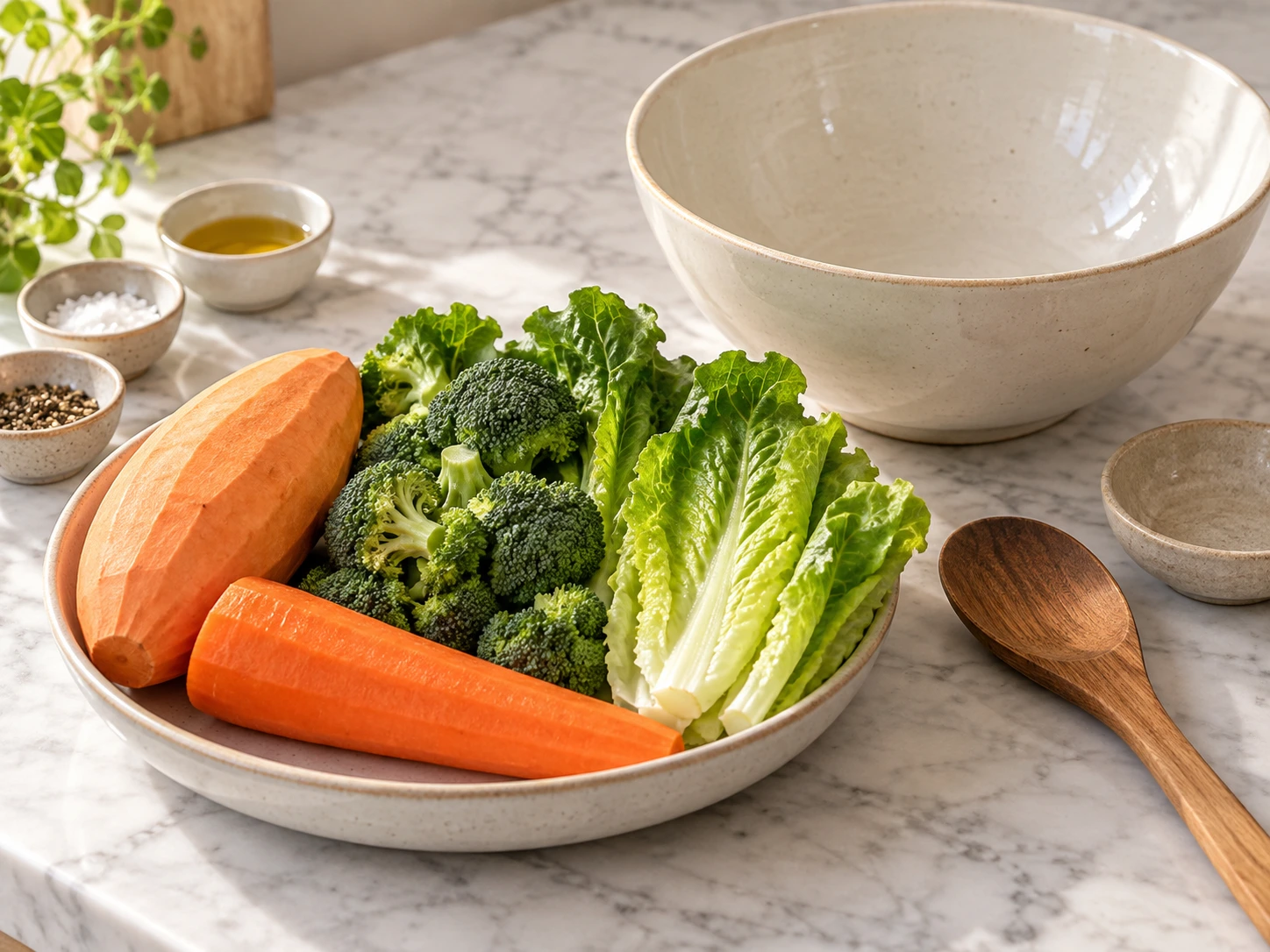
Prepare the vegetables: Wash the sweet potato, broccoli, carrot, and romaine very thoroughly under clean running water, then dry them. Peel the sweet potato and carrot, and place all four prepared vegetables beside a medium shallow bowl to keep the work surface organized.
Shave the sweet potato: Use the vegetable peeler to shave the sweet potato into very thin, flexible ribbons. Shorten any especially long ribbons with the paring knife so they stay easy for your bird to manipulate without turning the vegetable into tiny minced pieces.
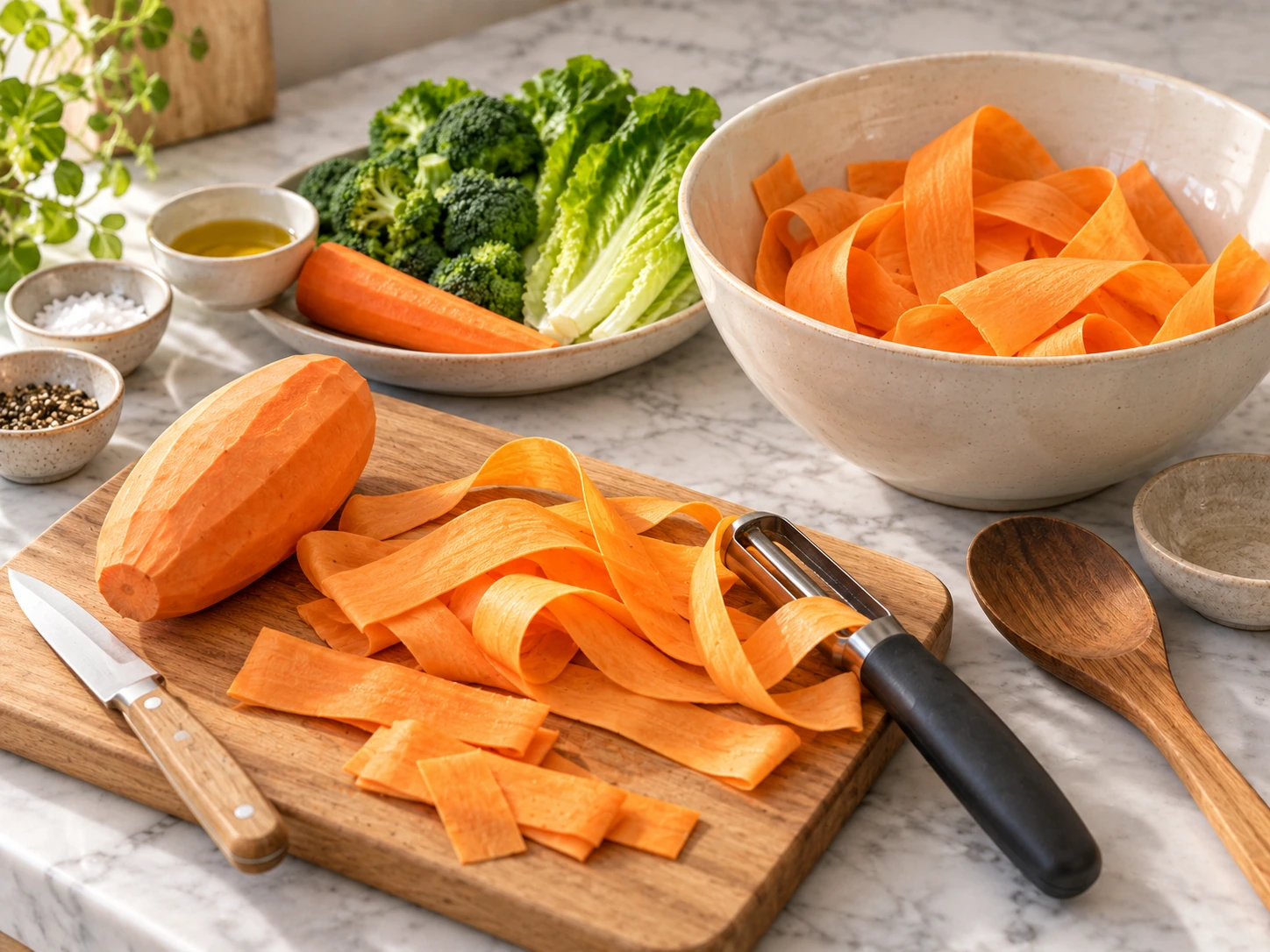
Add carrot ribbons: Shave the carrot into similarly thin ribbons, making them narrow enough for the size of your bird. Add the carrot and sweet potato ribbons loosely to the bowl rather than compressing them, which helps preserve their distinct shapes and textures.
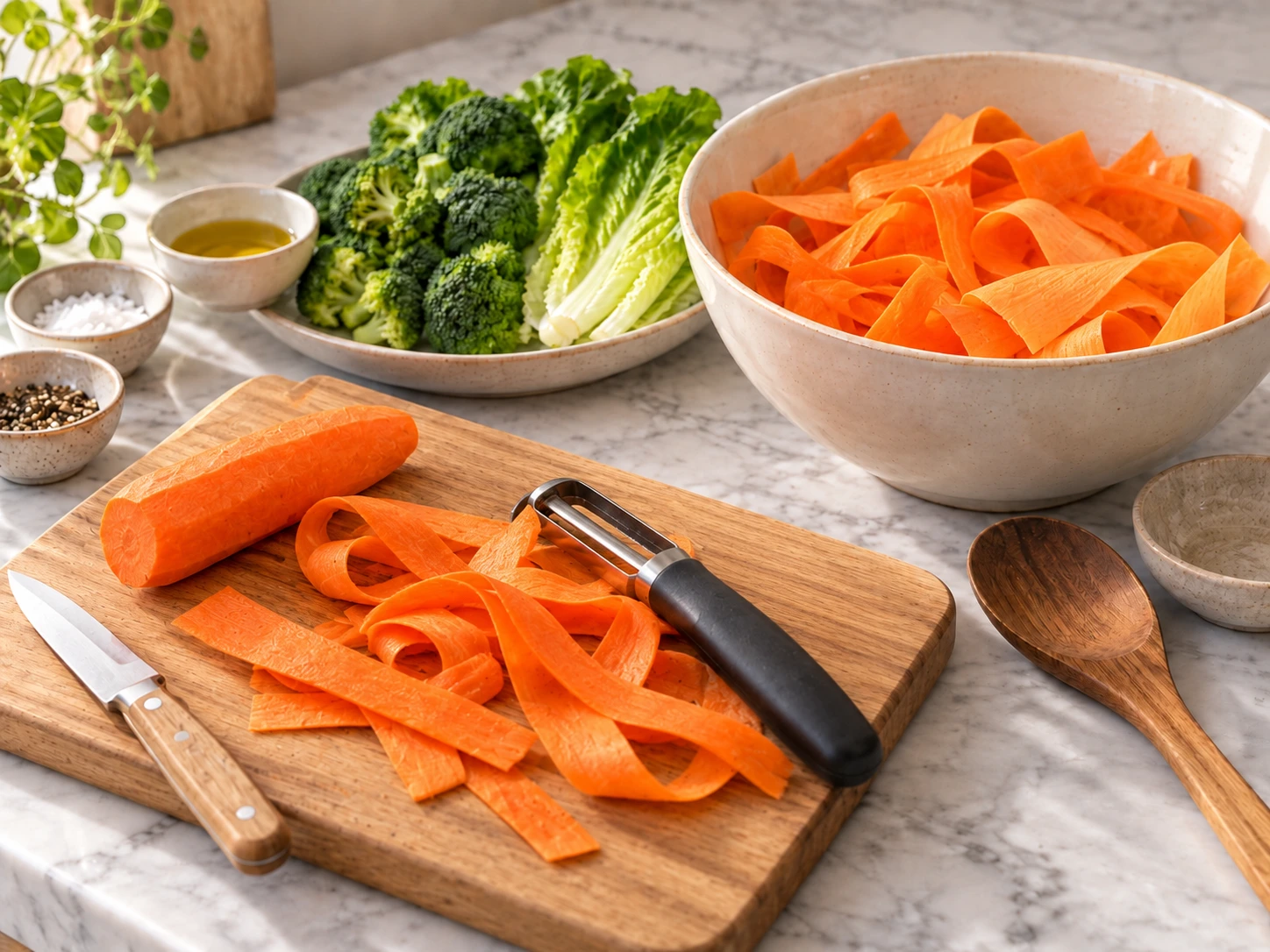
Prepare broccoli and romaine: Separate the broccoli into small florets appropriate for your bird, keeping enough stem for easy grasping when practical. Tear the romaine into short strips with your fingers or cut it with the knife, then add both vegetables to the bowl.
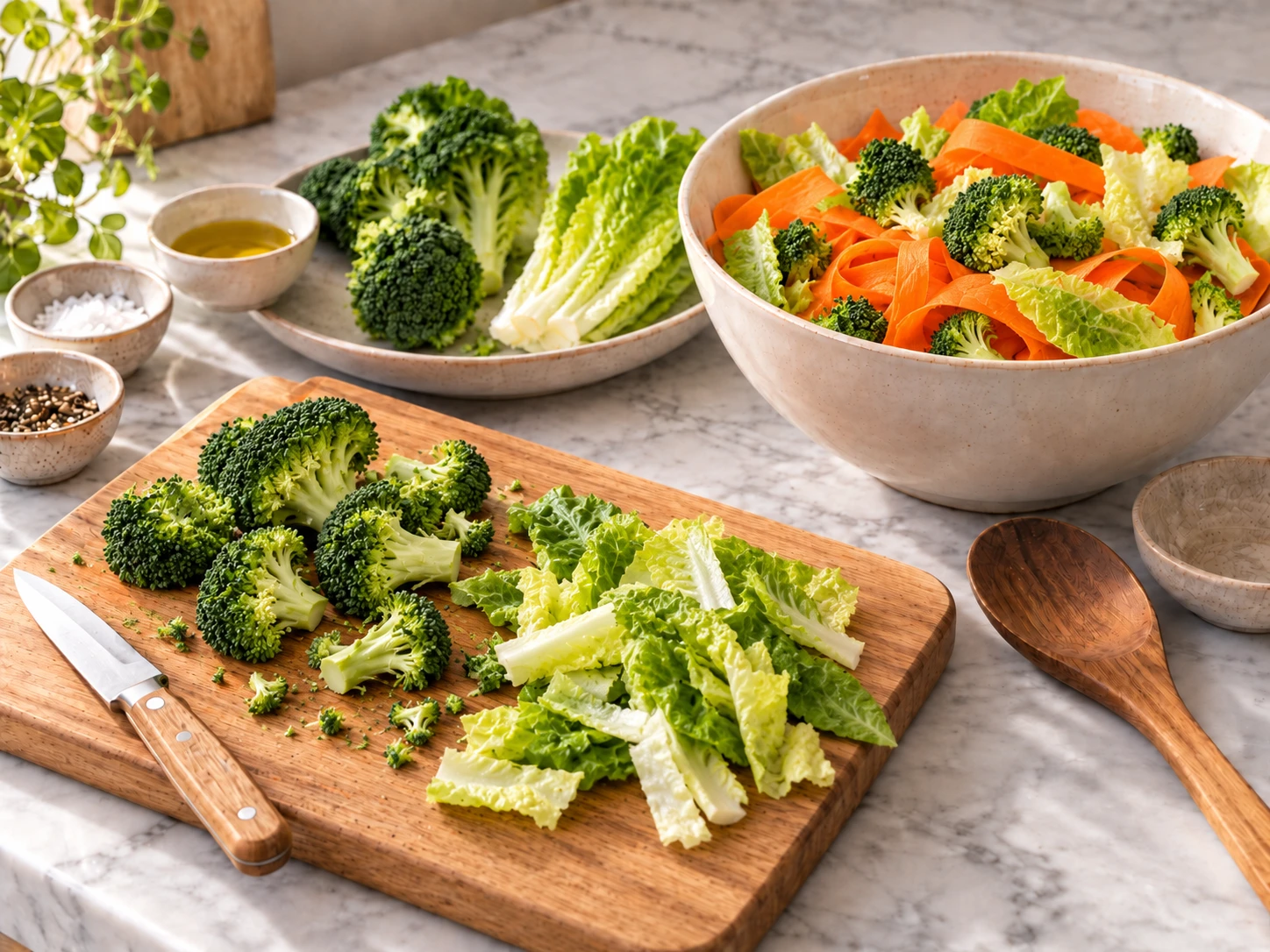
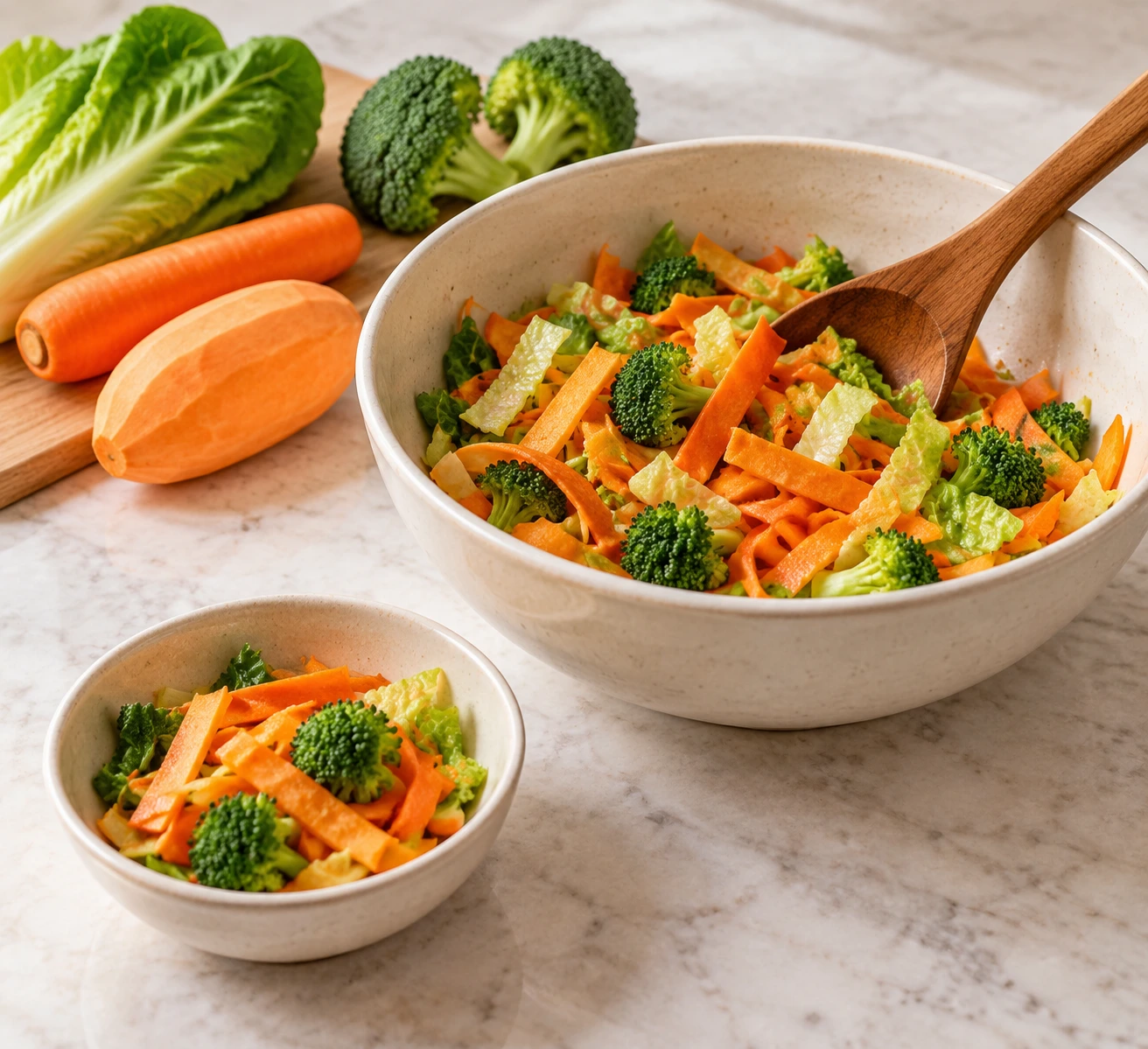
Toss and portion: Gently lift and turn the vegetables just enough to distribute the ribbons, florets, and leafy strips without crushing them. Portion only a small amount suitable for your bird into a clean feeding dish, and refrigerate unused mixture promptly rather than leaving the entire batch at room temperature.
Made this recipe?
Tap the paw so other pet parents know it’s worth making.
Be the first to make it
Tips & serving
Offer a small portion suited to your bird's species and body size alongside its normal nutritionally balanced diet, rather than using this fresh mix as a complete meal. For a bird unfamiliar with these vegetables, begin with only a few pieces and watch what is actually eaten. Adjust ribbon width and floret size for safe, comfortable handling. Major diet changes should always be discussed with a veterinarian, particularly for birds with existing health or dietary concerns.
- Larger ribbons and florets provide varied shapes birds can grasp, tear, investigate, and chew during feeding.
- Using several vegetables creates noticeable differences in texture and color without relying on another finely minced chop mixture.
- Make the sweet potato ribbons genuinely thin and flexible so even a small bird can investigate an edge without facing a thick, hard chunk.
- Leave some broccoli stem attached to each appropriately sized floret because the little handle can make the vegetable easier for many birds to grip.
- If your bird ignores the mixture, change the presentation before changing every ingredient, since some birds prefer a clipped floret, loose ribbon, or separate vegetable pieces.
- Prepare only a modest batch because fresh vegetables lose their best texture quickly, and this recipe works best when the ribbons remain crisp and distinct.
Storage
Refrigerate the prepared mixture promptly in a clean covered container and use it while the vegetables remain fresh, crisp, and free from off odors or excess moisture. Discard any portion that becomes slimy, wilted, contaminated, or questionable rather than trying to refresh it. Fresh produce should not remain in the feeding area for extended periods. Remove uneaten vegetables after a few hours, sooner in a warm environment, and wash the feeding dish before the next serving.
Substitutions
If your bird does not accept carrot, replace it with a similarly sized ribbon of washed zucchini or another veterinarian-appropriate vegetable your species already tolerates. Keep broccoli and sweet potato in the recipe so the mix retains its intended combination of ribbons and graspable florets. Romaine can be exchanged for another bird-safe dark leafy green that suits your individual bird, but avoid replacing it with iceberg lettuce merely to add bulk because it offers comparatively little nutritional value.
Birds recipe FAQ
Can I serve this fresh mix every day?
Treat it as an occasional extra, not a meal plan. Offer a small portion suited to your bird's species and body size alongside its normal nutritionally balanced diet, rather than using this fresh mix as a complete meal.
Is sweet potato okay for birds?
This recipe uses sweet potato in a small, bird-appropriate amount. Skip it if your bird has a known sensitivity, and read the foods-to-avoid note on this page before serving.
How long does Birds Sweet Potato Broccoli Ribbon Salad keep?
Refrigerate the prepared mixture promptly in a clean covered container and use it while the vegetables remain fresh, crisp, and free from off odors or excess moisture.
How should I introduce this fresh mix?
Start with a taste-size portion next to your bird's usual food, and hold off on serving more until you have seen that it agrees with them.
Can birds eat raw sweet potato in this salad?
Lafeber guidance indicates that sweet potato may be offered raw or cooked, depending on what an individual bird accepts. For this recipe, raw sweet potato is shaved into very thin ribbons rather than served as a hard chunk. If your bird prefers cooked vegetables, discuss suitable preparation with your veterinarian.
Do I need to chop the vegetables into tiny pieces?
No. VCA guidance notes that produce should be sized appropriately for the bird but does not have to be cut extremely small. Larger manageable pieces can encourage chewing and food exploration. For small birds, simply make the ribbons narrower and divide broccoli into correspondingly smaller florets.
Sources