
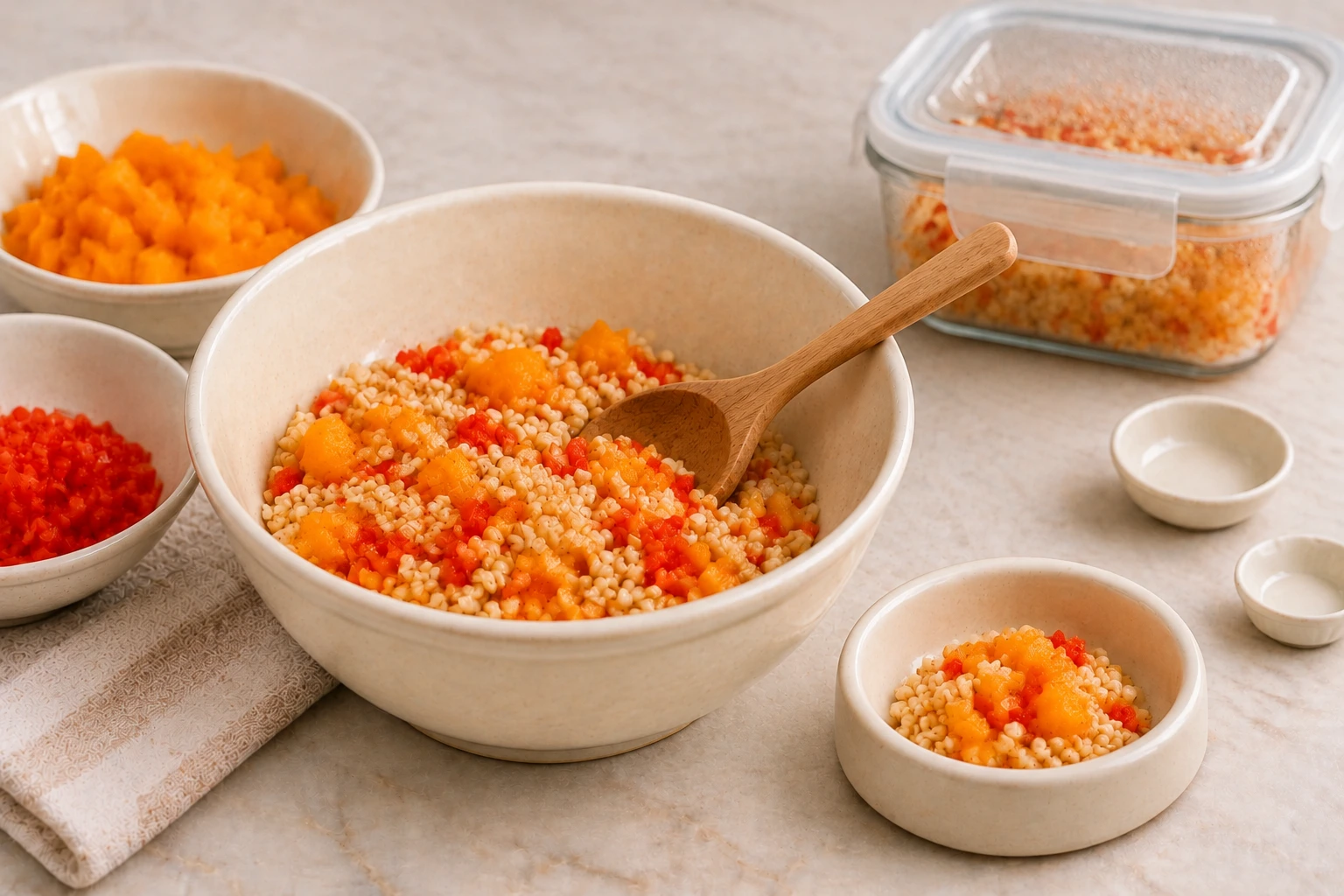
When the weather turns cooler, a little cooked pumpkin makes a useful seasonal addition to a homemade bird snack. Instead of blending everything into a mash, this pumpkin and barley pilaf keeps the ingredients separate, with tender grains, small pieces of pumpkin and finely chopped red bell pepper throughout. The preparation is deliberately simple. Barley is cooked until tender but not mushy, the vegetables are prepared separately, and everything is combined after cooling. The result is a moist but loose mixture that can be portioned according to your bird's size. This is an occasional supplemental snack, not a replacement for a nutritionally complete, species-appropriate diet. Cooked grains are not suitable in the same way for every bird species, so check individual dietary requirements before offering it.
Safety first: Offer a small taste the first time and watch your bird for any tummy upset before serving more.
Foods to avoid
Never add salt, sugar, butter, oil, garlic, onion, stock, seasoning blends or sauces. Avoid canned pumpkin pie filling, which may contain added sugar and spices. Do not use mouldy, spoiled or damaged produce. Avocado must never be included in bird food because it can be toxic to companion birds. Wash all vegetables thoroughly because birds can be sensitive to pesticide residues. Barley is not automatically suitable for every bird species or individual feeding plan. In particular, the feeding preferences and nutritional needs of smaller birds can differ from those of larger parrots.
Ingredients
Instructions
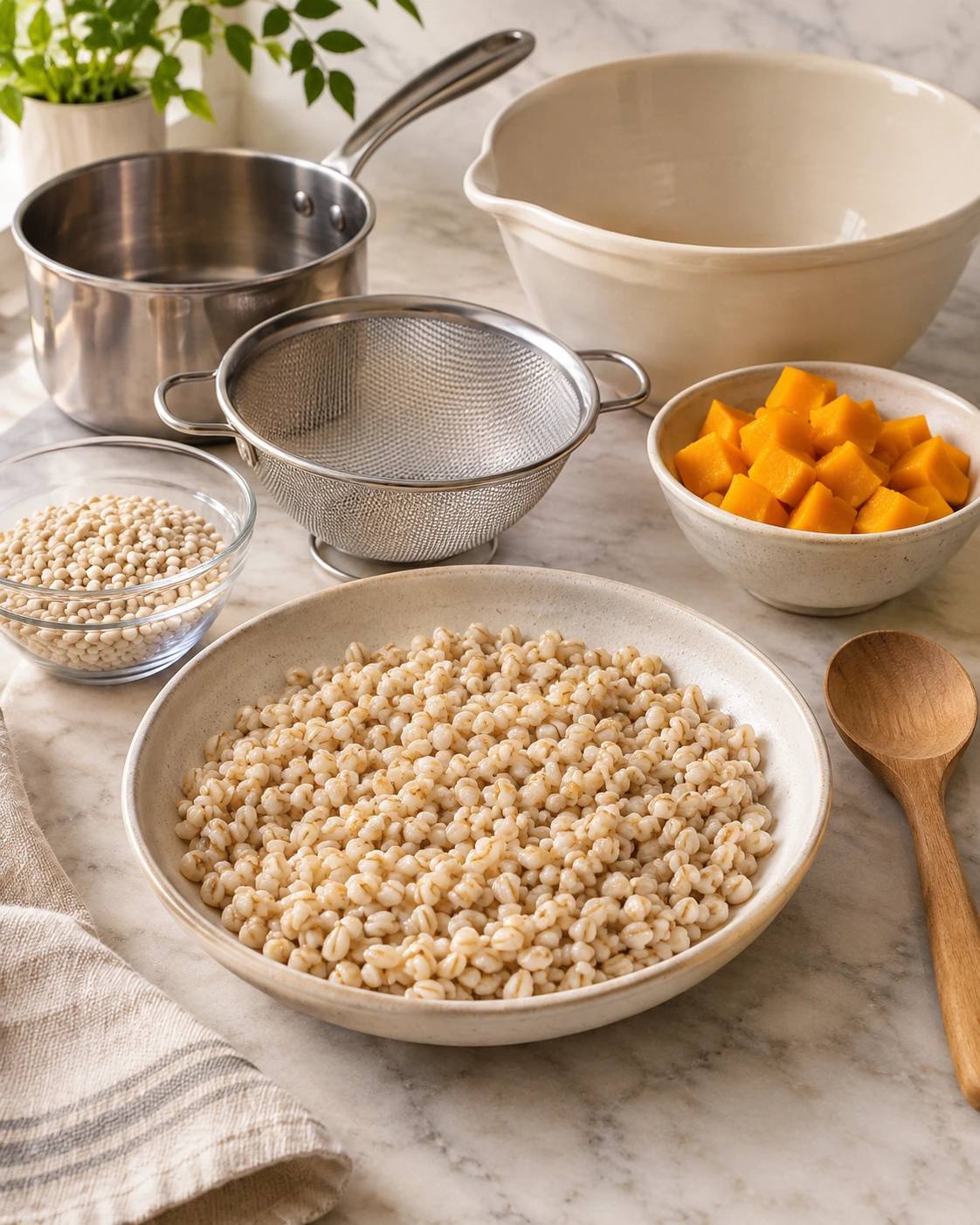
Prepare the barley: Measure two tablespoons of pearl barley and rinse it under cool running water using a fine-mesh strainer. Transfer the grains to a small saucepan and cover with plenty of fresh water. Bring to a gentle boil, then reduce the heat and simmer for approximately 25 minutes, or follow the packet instructions, until the grains are completely cooked and tender. Avoid adding salt, stock, oil or seasonings. Drain the barley thoroughly. Spread it in a clean shallow bowl so excess steam can escape and the individual grains remain separate rather than becoming sticky.
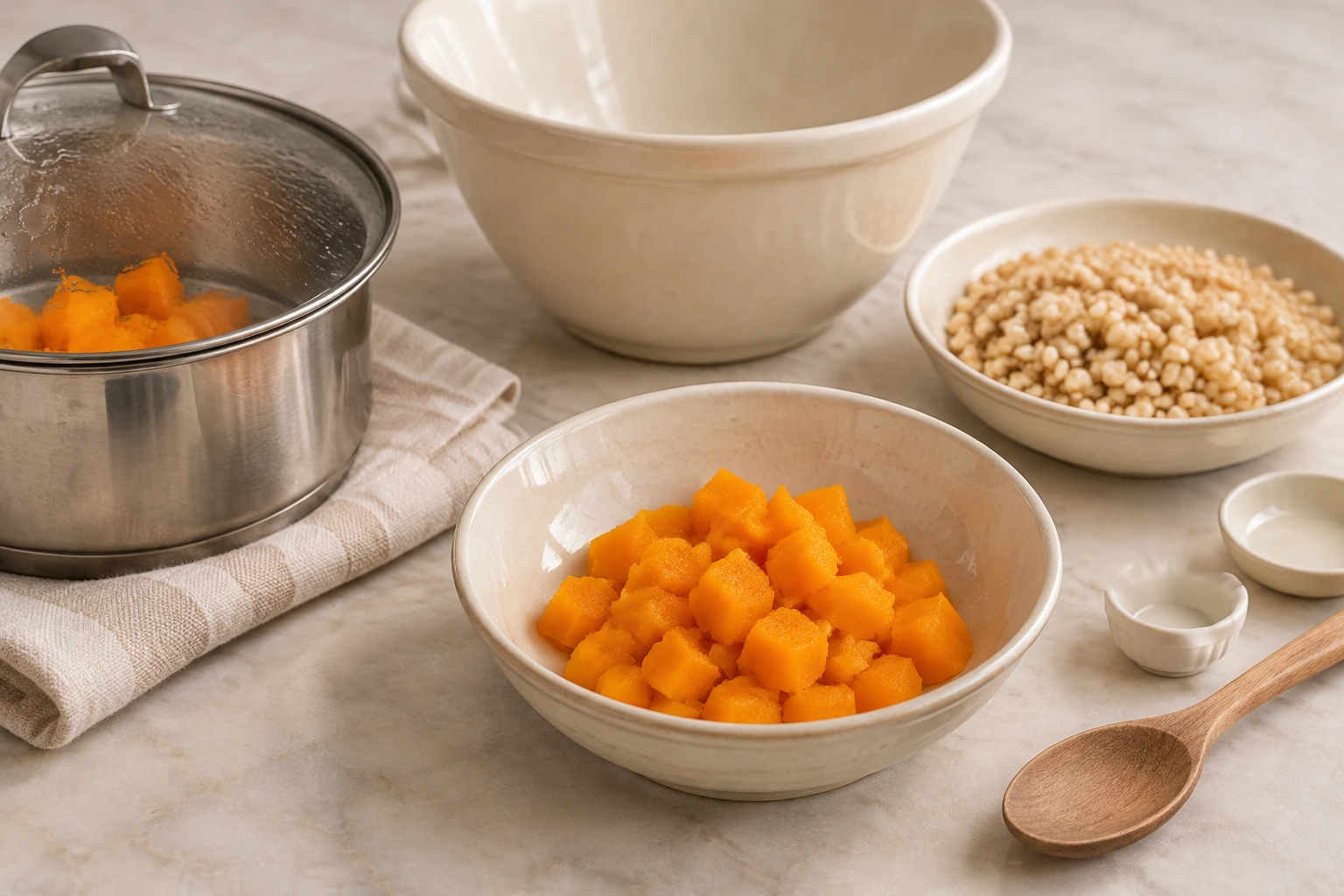
Cook the pumpkin: Remove the skin and seeds from a small piece of fresh pumpkin. Cut the flesh into small, even pieces appropriate for your bird's size. Steam the pumpkin over plain water until a fork passes through easily but the pieces still hold their shape. This usually takes around 8 to 12 minutes, depending on their size. Do not roast it with oil or add seasoning. Transfer the cooked pumpkin to a clean bowl and allow it to cool. If the pieces are particularly soft, gently separate them with a fork rather than turning them into a smooth puree.
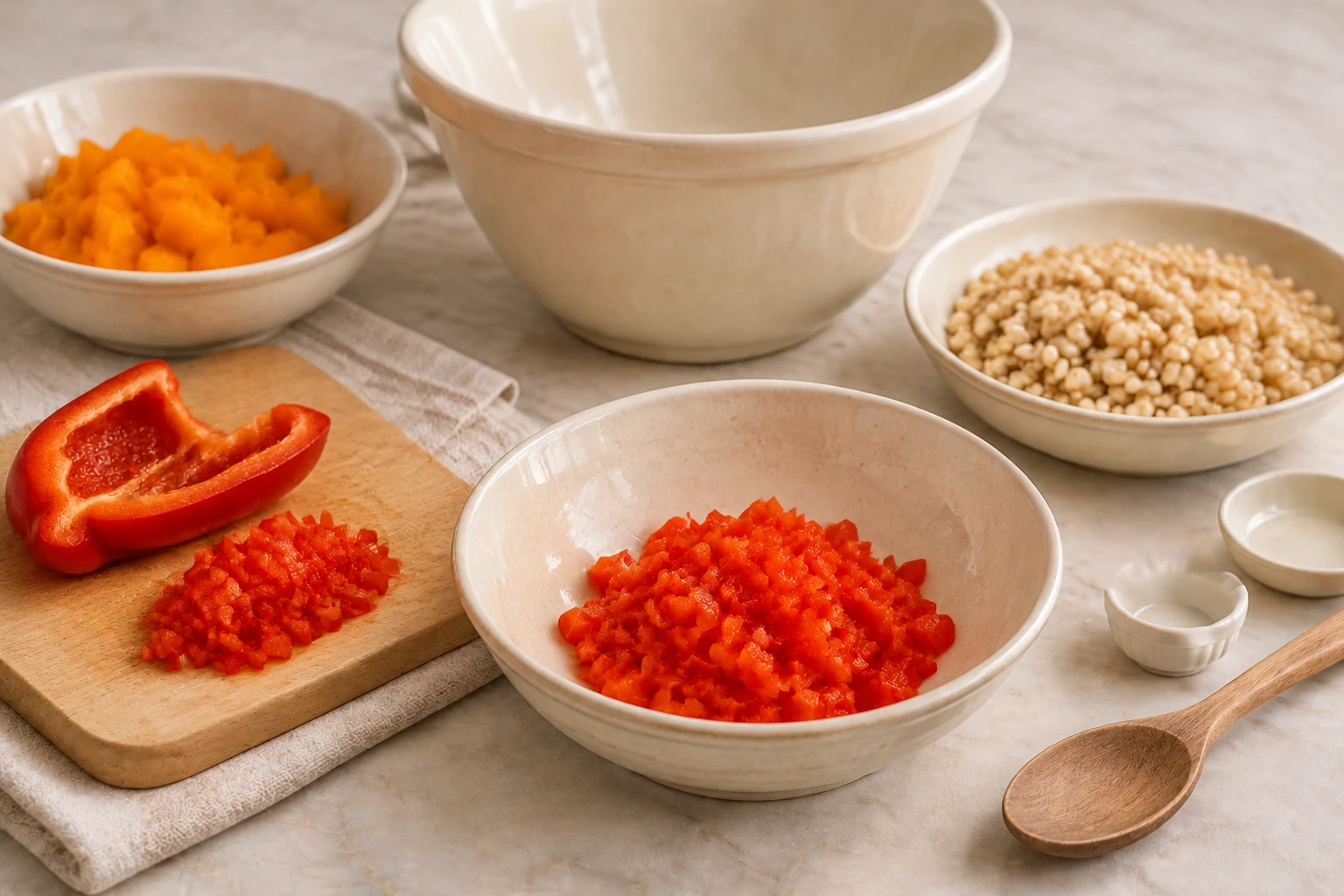
Chop the red bell pepper: Wash a small piece of fresh red bell pepper thoroughly under running water. Remove the stem, seeds and inner white membrane. Cut the pepper flesh into very fine pieces suitable for your bird's body size. For a small companion bird, use particularly tiny pieces; larger parrots can manage somewhat bigger pieces. The pepper should remain fresh and slightly crisp rather than cooked into a soft paste. Do not add it to a hot saucepan, as the aim is to retain its distinct texture and colour in the finished pilaf.
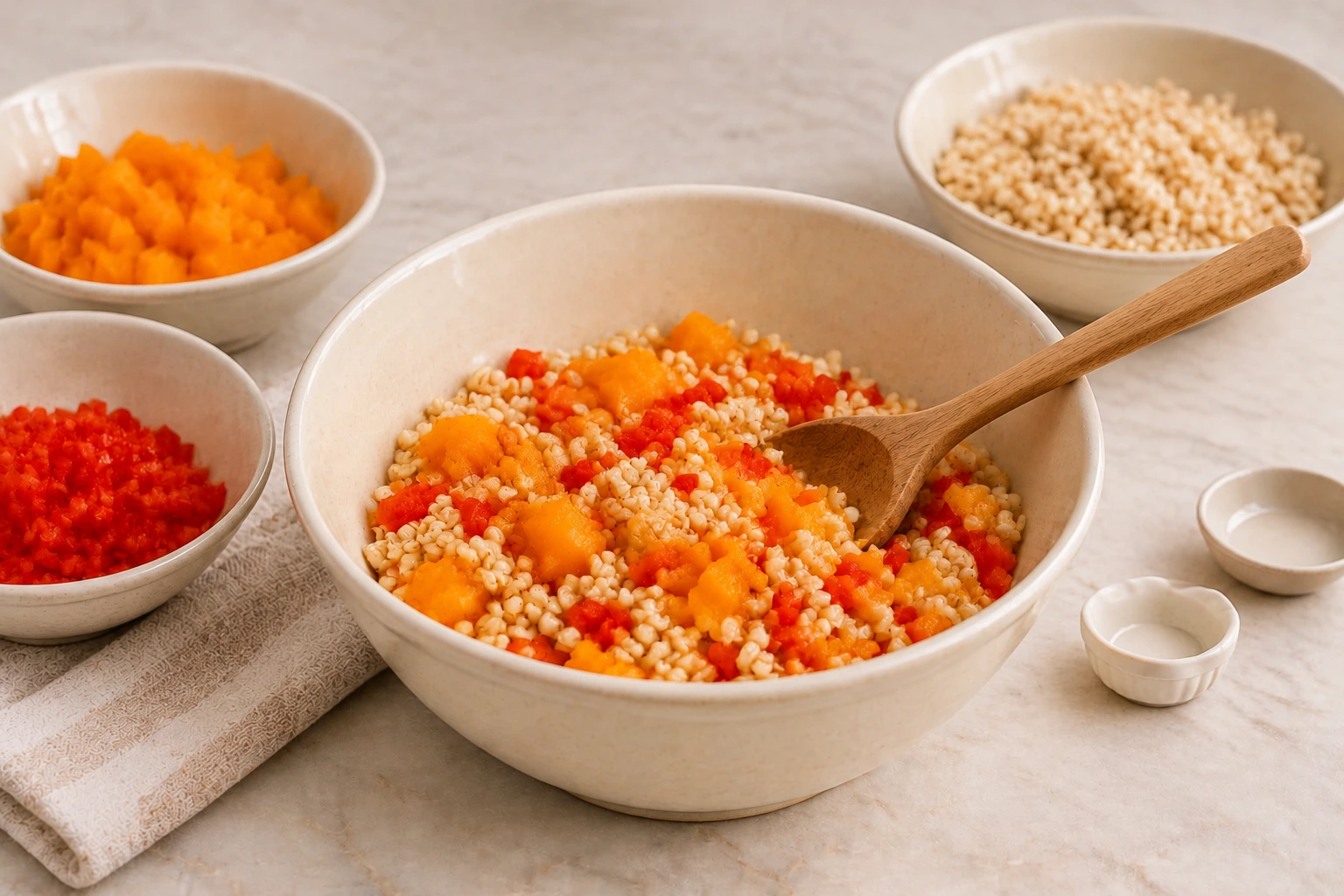
Combine the pilaf ingredients: Check that the drained barley and cooked pumpkin have cooled completely. Place the barley in the clean cream mixing bowl. Add the small pumpkin pieces and finely chopped red bell pepper. Use a clean spoon to gently fold the ingredients together, lifting rather than crushing them. The finished mixture should be loose and textured, with visible individual barley grains and separate pieces of pumpkin and pepper. If the pumpkin begins coating all the grains, stop mixing rather than continuing to mash it. Do not add water unless the mixture is unusually dry, and never serve it warm.
Cool and portion for serving: Allow the finished pilaf to reach room temperature before serving. Check the temperature by touching a small amount with a clean finger; there should be no remaining warmth. Prepare a very small sample appropriate to your bird's species and body size, placing it in a clean feeding dish. Keep the rest refrigerated promptly. Introduce the mixture gradually if your bird has not eaten these ingredients before. Remove any uneaten moist food from the cage within one hour, or sooner in a warm room, and clean the feeding dish thoroughly before its next use.
Made this recipe?
Tap the paw so other pet parents know it’s worth making.
Be the first to make it
Tips & serving
Serve this pilaf completely cooled, in a clean feeding dish, as a small occasional addition to your bird's usual species-appropriate diet. Start with a tiny taste rather than offering the entire batch. Adjust the size of the barley grains and vegetable pieces to suit your bird, and observe how much is actually eaten. Do not allow this snack to displace nutritionally complete pellets or other essential foods. Feeding requirements differ considerably between species, ages and individual birds. Consult an avian veterinarian before introducing unfamiliar ingredients, and discuss any major diet changes with a veterinarian.
- Provides a different texture from traditional soft bird mashes, with individual grains and small vegetable pieces that make the snack visually interesting.
- Combines a familiar cooked whole grain with two colourful vegetables commonly included in avian produce-feeding guidance.
- Uses a short ingredient list, making it easier to identify exactly what has been offered and monitor your bird's acceptance.
- Allows small portions to be prepared ahead of time, helping owners avoid preparing an unnecessarily large quantity of fresh food.
- Cook the barley separately and drain it well before combining, otherwise excess cooking water can turn the finished pilaf into a sticky porridge.
- Cut the pumpkin and pepper according to your bird's actual body size rather than following a single universal chopping size.
Storage
Refrigerate unused pilaf promptly in a clean, airtight food container. Allow only the portion being served to come to room temperature. For longer storage, freeze individual small portions in a clean, covered ice-cube tray or freezer-safe container. Use within one month for best quality. Thaw a portion overnight in the refrigerator, then allow it to reach room temperature before serving. Never return food that has been in the bird's feeding dish to the storage container.
Substitutions
Plain cooked brown rice can replace barley if it is already an appropriate grain for your bird's species. Cook it thoroughly without salt or seasoning, drain excess water and cool completely before combining. A small amount of plain cooked butternut squash can replace pumpkin. Remove the skin and seeds, steam until tender, and retain small separate pieces instead of blending it into a puree. Yellow or green bell pepper can replace red bell pepper. Wash thoroughly, remove the stem and seeds, and chop finely.
Birds recipe FAQ
Can Birds Pumpkin and Barley Savory Pilaf replace my bird's regular diet?
Treat it as an occasional extra, not a meal plan. Serve this pilaf completely cooled, in a clean feeding dish, as a small occasional addition to your bird's usual species-appropriate diet. Start with a tiny taste rather than offering the entire batch.
Can birds have fully cooked plain pearl barley?
This recipe uses fully cooked plain pearl barley in a small, bird-appropriate amount. Skip it if your bird has a known sensitivity, and read the foods-to-avoid note on this page before serving.
How long does Birds Pumpkin and Barley Savory Pilaf keep?
Refrigerate unused pilaf promptly in a clean, airtight food container. Keep it at 4°C or below and use within 24 hours because the cooked barley and moist vegetables can spoil. Allow only the portion being served to come to room temperature.
What's the safest way to try this with my bird?
Offer a small amount beside regular food, introduce one new recipe at a time, and watch appetite, stool, skin, and behavior for a day or two.
Can birds eat cooked pearl barley?
Cooked barley is included among suitable whole-grain choices in feeding guidance for certain commonly kept parrot species, particularly larger parrots. However, smaller birds may have different grain preferences and requirements. Check your bird's species-specific diet before offering this preparation.
Can I prepare pumpkin and barley pilaf for budgies and cockatiels?
Do not assume this cooked-barley recipe is suitable for every small bird. Some feeding guidance recommends uncooked or cracked grains for budgies and cockatiels rather than cooked whole grains. Ask an avian veterinarian whether the ingredients and preparation are appropriate for your particular bird.
Sources